Tag Archives: donation

Sami’s Special Gift: An Eid al-Adha Story by M.O. Yuksel illustrated by Huseyin Sonmezay

Standard
Sami’s Special Gift: An Eid al-Adha Story by M.O. Yuksel illustrated by Huseyin Sonmezay

img_5215-1

This sweet 32 page story, blends themes of loss, grief, giving, homelessness, Islam, Eid al Adha, and joy with simple early reader level text and beautiful illustrations. The book never gets preachy and doesn’t other, making it a great addition to all shelves, everywhere. There is information about Eid al Adha and what a homeless shelter is in the backmatter along with a glossary that explains, Islamic and Turkish terms.

Sami loves Eid and celebrating at the carnival with Dede, his grandfather, but this year, Dede is not there, and Sami is sad. When a package from Nene arrives from Turkiye with Dede’s favorite sheep decorated Eid tie for Sami, things start to look up. Sami never wants to take it off, and even wears it over his new Eid clothes as they head to the mosque for prayers. After salat and before the carnival, the family visits a local butcher and picks up meat to take to the homeless shelter.

Sami has never been to a homeless shelter and has only heard of his parents going and helping there. He asks his parents about it on their way and once they arrive heads off to play ball with a boy, as his sister shares her doll with a little girl. When it is time to leave for the carnival, Sami imagines what the his life would be like if he lost his home and belongings, and makes a decision, knowing exactly what his Dede would do.

img_5218-1

I love how the book weaves in information about Islam by having the family praying, listening to the imam, wearing new clothes, and giving in charity, without pulling out of the story. Same for the Turkish cultural inclusions of food and words. I also like that in the illustrations the mom wears hijab when out of the house, but not inside. It all comes together smoothly and is unapologetic, even while handling the sadness of his grandfather no longer being with him, the empathy at the homeless shelter, and joy at the carnival.

My only concern is when it says both in the text and in the backmatter that meat is given: one third to friends, one third to family and one third to the poor. I don’t know that it is wrong, but to clarify you keep one third for yourself (and family), and distribute one third to friends, and one third to the poor. Additionally, I also know a lot of people might not love the illustration style, but the picture of them in the mosque, won me over.
Zain’s Super Friday by Hena Khan illustrated by Nez Riaz

Standard
Zain’s Super Friday by Hena Khan illustrated by Nez Riaz

img_9576

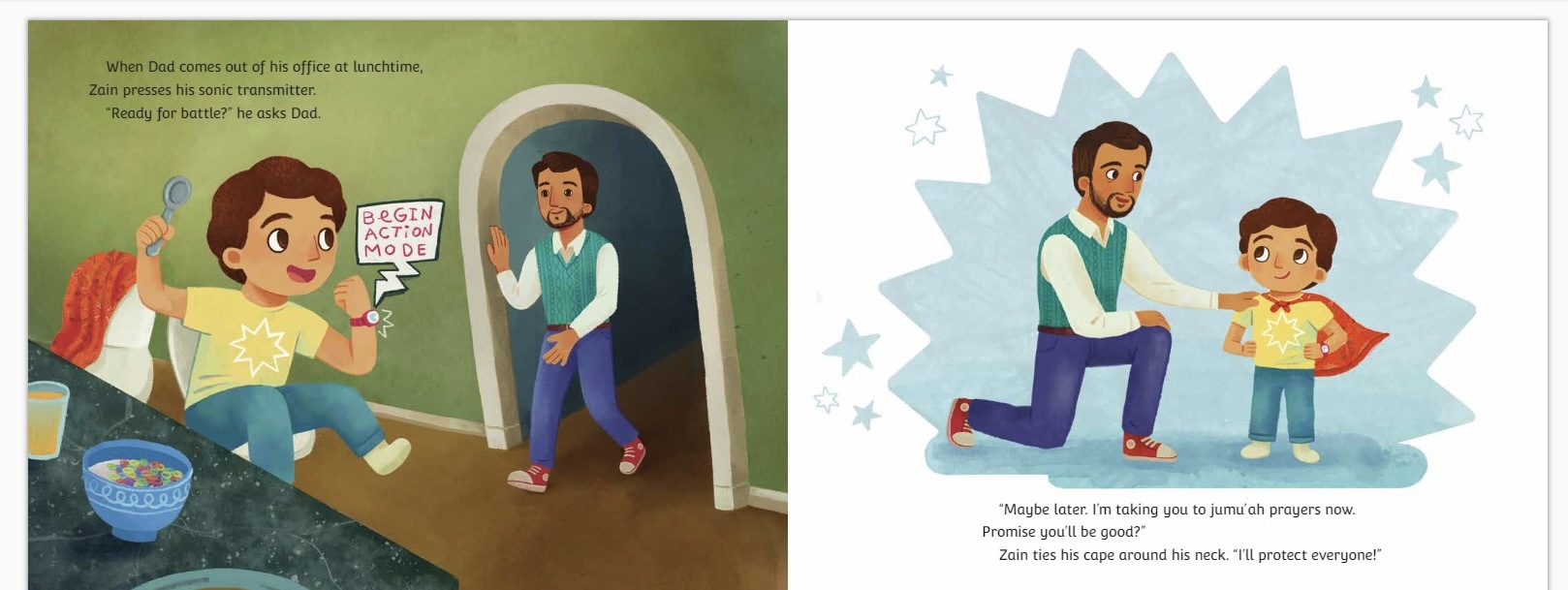
I love the joy and normalizing of mainstream titles celebrating salat, Jummah, and the masjid becoming increasingly available for us to read and share.  This particular book is great for preschool to early elementary aged children that enjoy going to the masjid, but sometimes want to put on a cape and be the hero battling aliens, that know how to behave during salat, but sometimes have a hard time sitting still, and parents that want to play with their kids, but sometimes have to get some work done first.  With  threads of patience, kindness, and determination woven in to masjid activities, the book is both a mirror for Muslim kids and a window for those that wonder what a Friday prayer service looks like.  The 32 page book is unapologetic, joyful, and a great addition to book shelves.

img_9578

Zain wakes up early Friday morning and is ready to save the world. Dad greets Zain with a “Jum’uah Mubarak,” but has to pass on battling the aliens taking over the kitchen.  At lunchtime, when dad takes a break from work, Zain tries again to engage him in heroic play, but it is time for Jum’uah.  Zain slips on his cape and vows to protect everyone.

When they get to the mosque, aka command central, Zain tries again, but dad redirects him to make wudu before salat. Heat action dries his feet, but the adhan starts and giant shoes and aliens will have to wait, yet again.  During the khutbah, wiggly Zain sits by his dad, but when the Imam encourages them to stand for salat and fill any gaps, Zain takes it as a call to duty and races to the front announcing, “Here I come, Commander Imam, reporting for duty.”

The kind Imam knows just what to do, and as Zain controls his focus, even dad finds time to be a hero and battle the aliens on this super Friday at the mosque.

img_9580

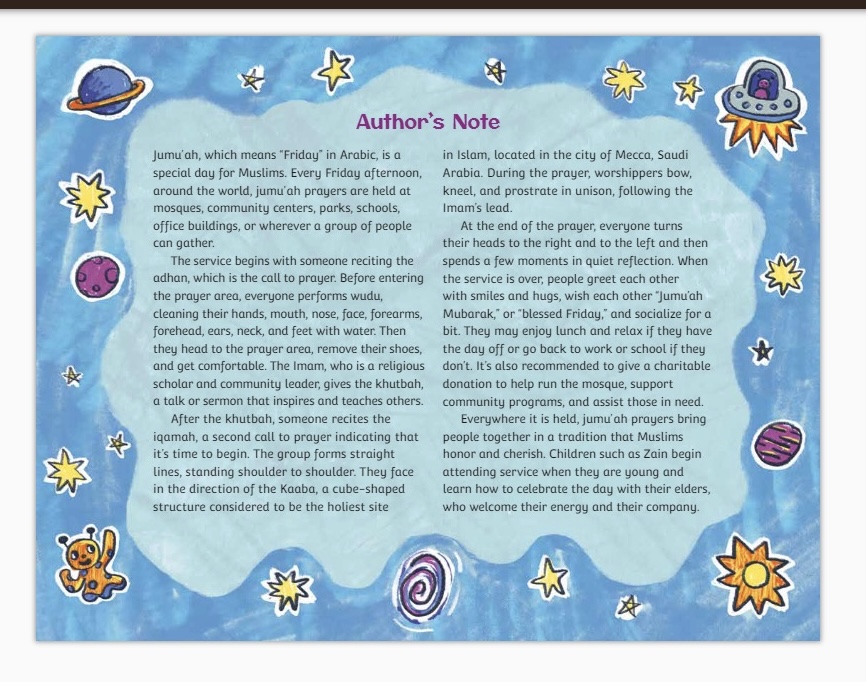
I love that wudu, athan, khutbah, Imam, are all used without a glossary and that the Author’s Note is informative and unapologetic in tying it all together and making the terms clear.  I wish masjid was used instead of mosque, but I know that is just my personal preference.  I love that the Imam is kind and the dad is gentle and playful.  Even when Zain is not getting to do what he wants, he is not unhappy with being at Jumuah, or making salat, or being redirected, he just wants to indulge his imagination.  The warmth and joy of the illustrations reinforces the tone of the book, and with the inclusion of charity, and the happy ending, I can’t wait to have a physical copy of this book in my hands.

The book releases on October 10, 2023 and can be preordered/ordered here on Amazon and I’m sure will be available once released at Crescent Moon Store, where my initials ISL at checkout will always save you 10%.

img_9582

Red Shoes by Karen English illustrated by Ebony Glenn

Standard
Red Shoes by Karen English illustrated by Ebony Glenn

img_8529

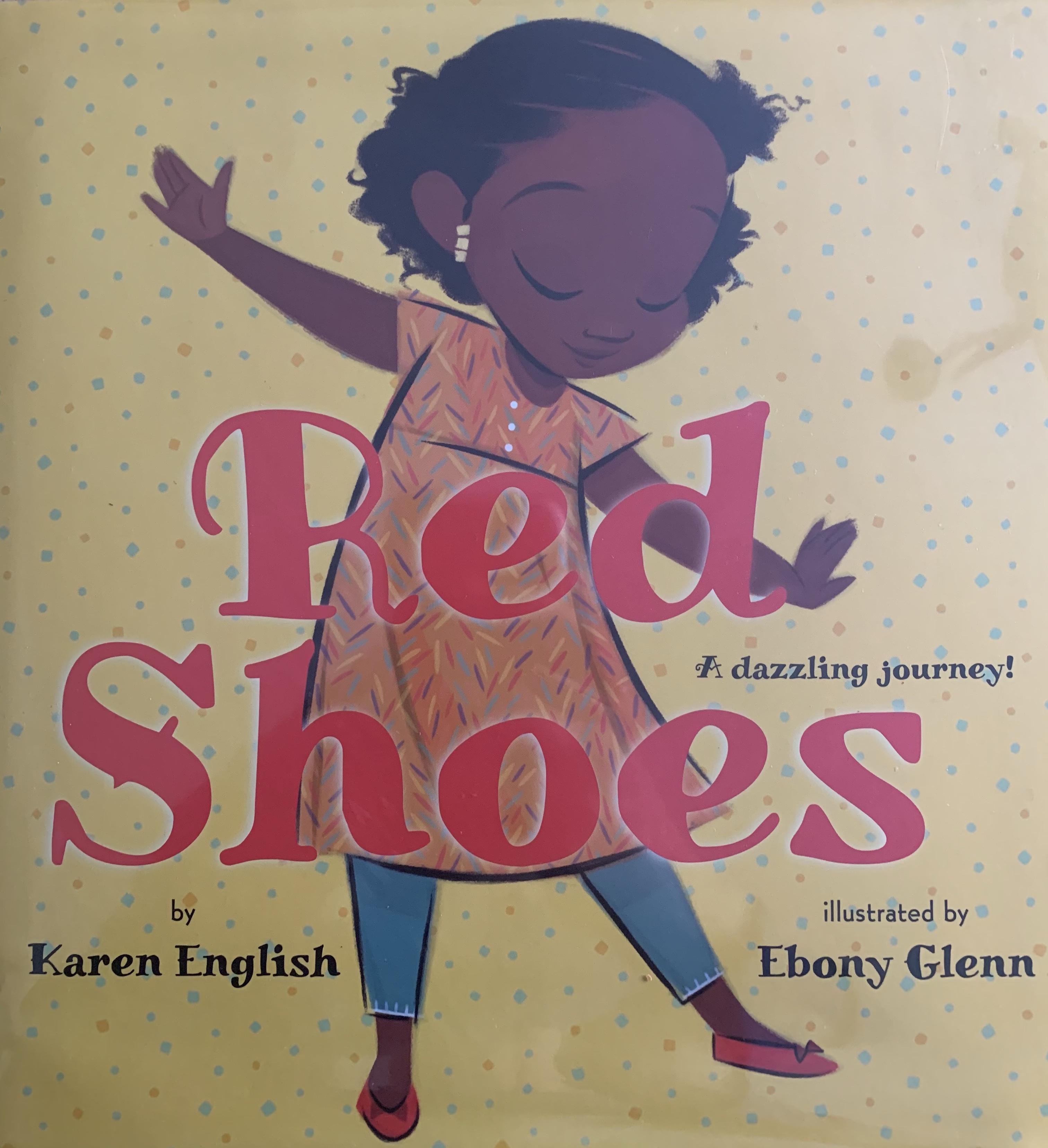
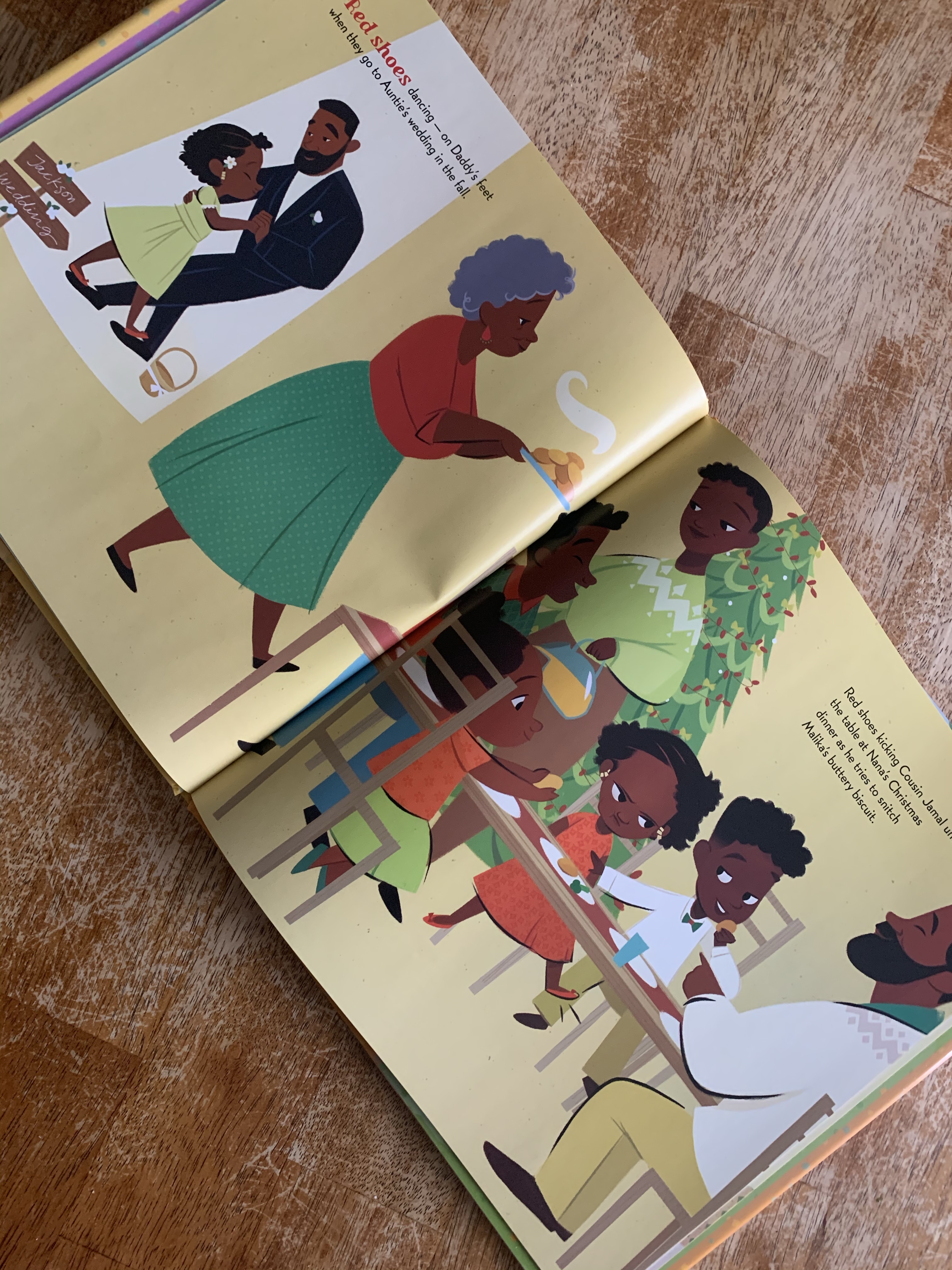
This delightful 32 page picture book links two girls, two ends of the world, two cultures and two stories together with a pair of red shoes.  The short sentences pop with action and the perfectly illustrated two-page spreads convey relatable emotion and joy.  The beloved shoes travel on the feet of one character to a wedding, Christmas dinner, and birthdays, they are then are donated and journey to West Africa to be given as a gift for a little girl who fasted half of Ramadan.   The message I hope children ages three and up will get from the story, is that we are more alike than different, that we should take care of our things (amazingly the shoes weren’t worn out), and that we should donate things of good quality that we ourselves value.  I hope it doesn’t lend itself to perpetuate the stereotype that we can send our castaway items to Africa, being the author comments in her bio on the back flap that her husband is from West Africa and that she frequently visits there, I’m hoping that this is just me being overly cautious in the messaging, and nothing is being implied or negatively taken from a casual reader.

img_8530

Malika and her Nana see a pair of dazzling shoes perched in the window, and Malika is enamored. Her grandma later surprises Malika with the shoes.  She quickly tries them on and tests them out.  She keeps them safe from the rain and dances with them on at her Auntie’s wedding.  She kicks her cousin Jamal with them on, under the table at Christmas when he tries to steal her biscuit.

img_8531

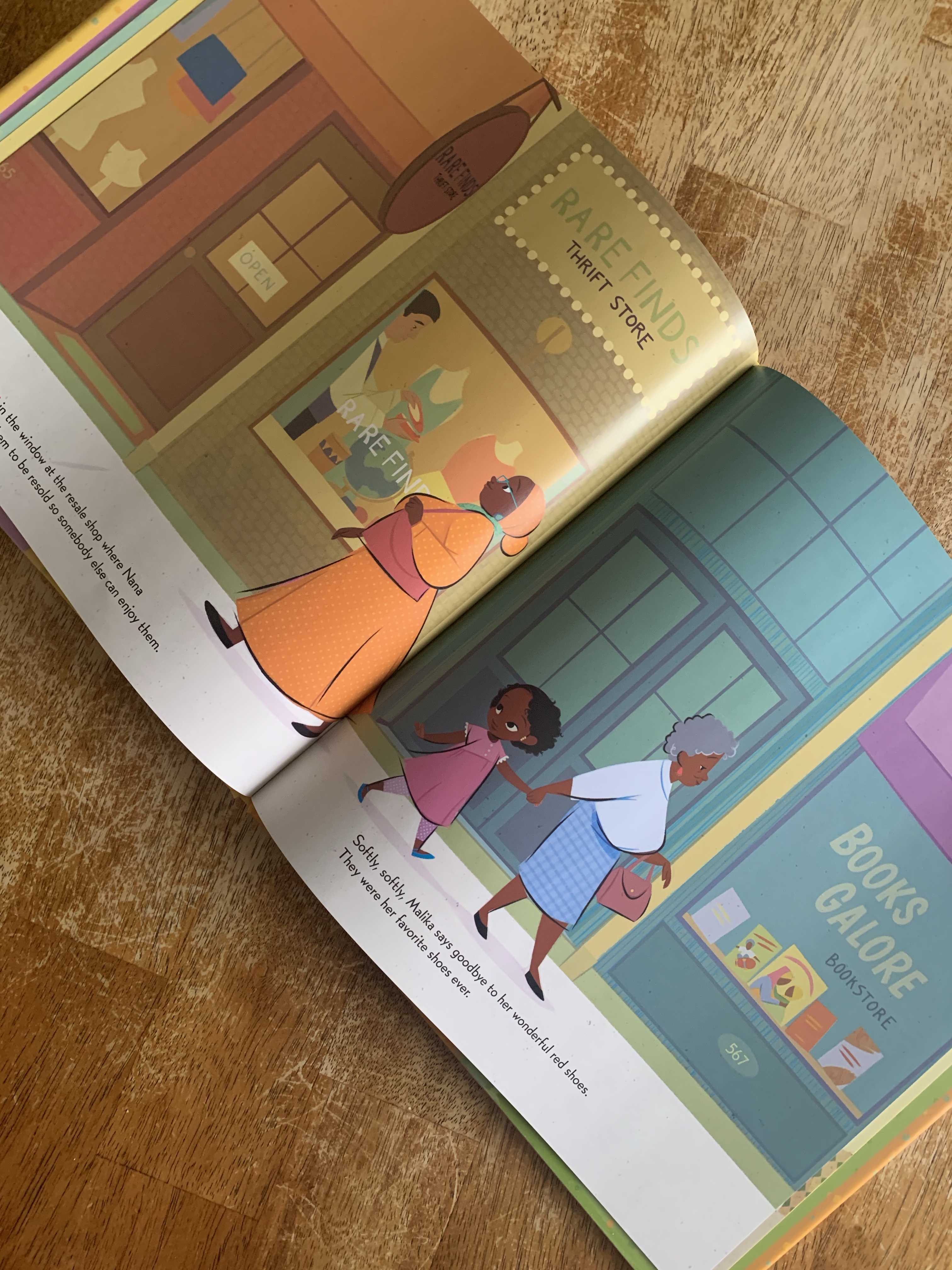
She stomps away from her best friend in her red shoes, and jumps double Dutch with them on when she makes up with her friend at her birthday party. But at Nana’s birthday, “the shoes don’t let her forget that her feet have grown.” Nana and Malika take the shoes to the thrift store to be resold.  A sad Malika says goodbye to them, they were her favorite shoes ever.

img_8532

Inna Ziya sees the shoes in the window and knows just the little girl who will love them.  She squeezes them in to her suitcase and they are off to Africa. They wait under a table selling claypots in a market waiting for the girl who fasted half the month of Ramadan.

img_8534

When Amina comes holding her mother’s hand, Auntie Inna Ziya delivers the promised gift.  Amina thinks they are beautiful and lovingly carries them in the box on her lap as they fide the tro-tro home.  Amina’s little sister Halima, can’t wait to see the gift as she too hopes to one day fast in Ramadan.

img_8535

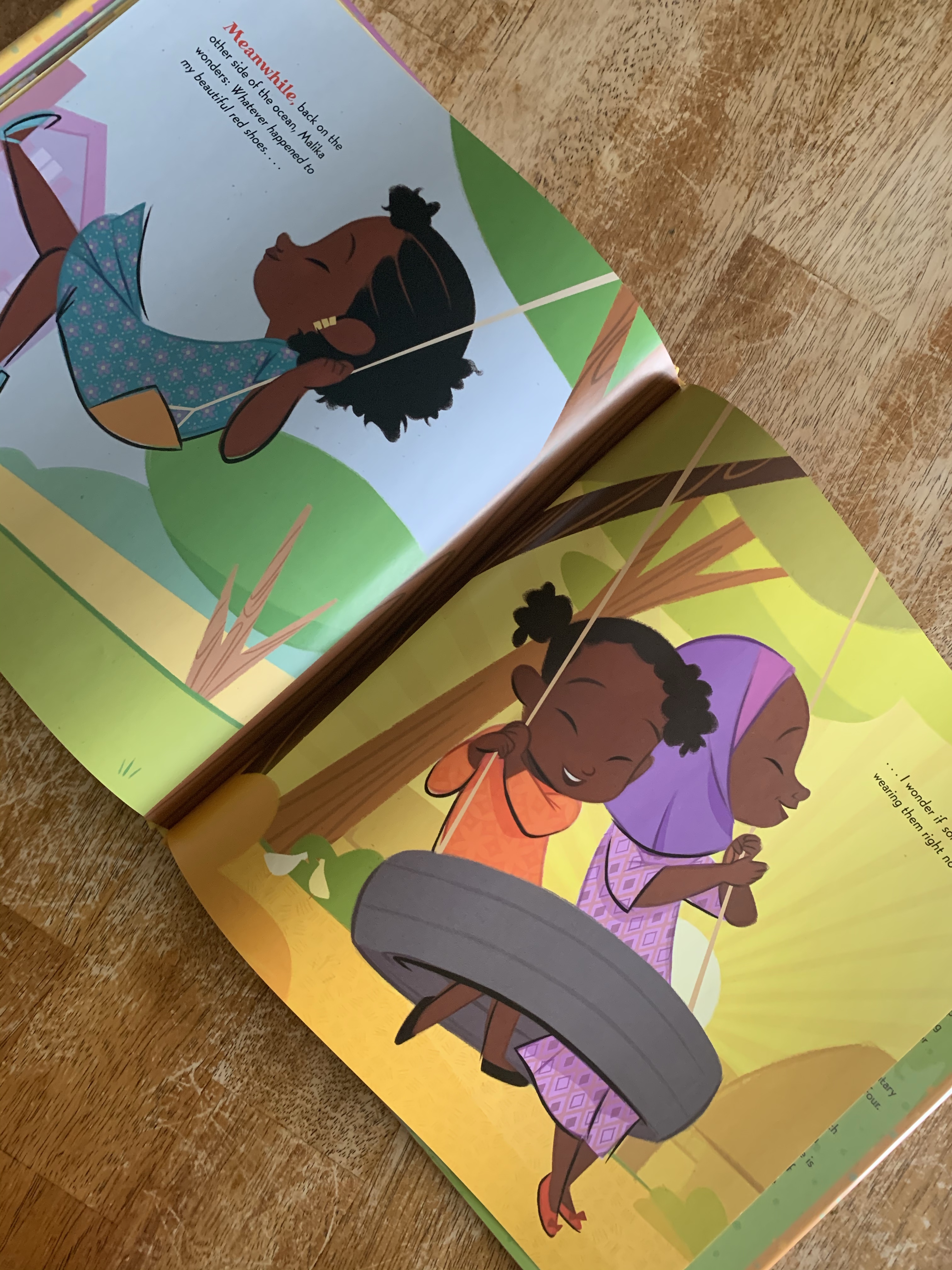
Amina lets her try them on and when she outgrows them she plans to pass them on to her.  Meanwhile, Malika is wondering whatever happened to her beautiful red shoes, and if someone else is wearing them.

img_8536

There is no mention of Islam nor is Ramadan explained.  There are women in hijab in America and in Africa, even in the books in a shop window there is representation.  I particularly love the shout-out in the illustrations to “Mommy’s Khimar.”

img_8533

The front of the book has Malika, and the back, Amira.

img_8537