Category Archives: Picture book

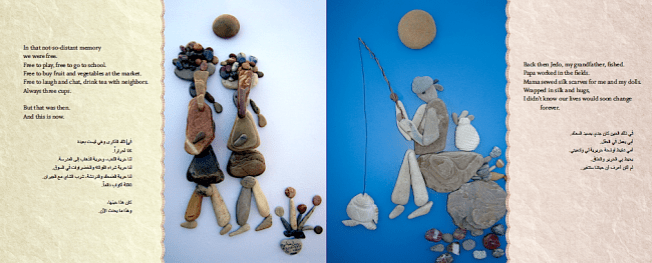
Stepping Stones: A Refugee Family’s Journey by Margriet Ruus Artwork by Nizar Ali Badr

Standard
Stepping Stones: A Refugee Family’s Journey by Margriet Ruus Artwork by Nizar Ali Badr

stepping stones

I usually have a running lists of books to check and see if the library has in their catalogue, and another list for when I have a few extra dollars and/or a reason/excuse to purchase books for my own.  I’ve seen this book recommend by countless critics, educators, refugee resettlement volunteers etc., and was thrilled that I could get it from the local public library.  However, it isn’t enough to have this book and mull over the artwork and prose for three weeks, it deserves a permanent place on the shelf.  Or better yet, open hands to pass the book around to within your home, to reflect on the humanity that binds us all, and the plight of so many in the world.

FullSizeRender (12)

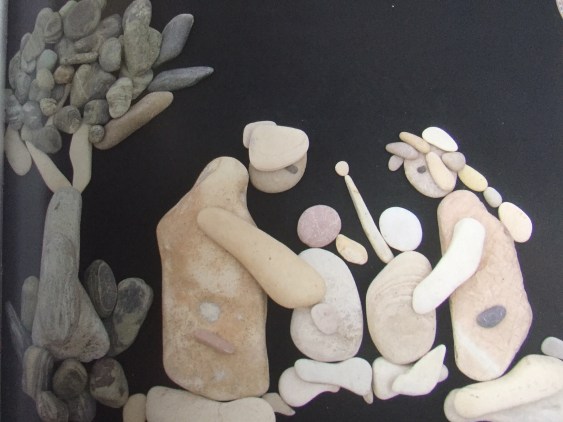
The story is fairly simple, Rama and her family have a good life in Syria and the war changes that, forcing her and her family to flee on foot to Europe with what they can carry.  The emotions on the other hand, are not that simple.  The book is illustrated in stone, but the reader would have to have a heart of stone to not be moved.  Written on an AR 3.2 with 28 pages, the book is written in both English and Arabic.  The book is not sensational, but it does discuss the shortage of food, and going hungry, how they are not free, not really, how bombs fall and kill people going to the market,  and it does show that people were lost in crossing the sea.  The family has to walk, there is no going to the airport or cars to take them across borders so easily, this is contrasted to the beginning of the book where Rama was free to play and go to school, things the reader can relate too.

stones

Ultimately the book is full of hope.  The fictionalized account of a horrific reality still on going, pales only to the story of how the book came to be.  The Foreword is wonderful and gives the book so much more warmth and heart.  How the author saw the artisans work, sought him out, and built the story around his pieces, gives even the youngest reader a sense of reality for an unfathomable situation.  After the story is more information about the author and the illustrator, as well as a list of resources to volunteer, donate and help.  Portions of the book sales go to help resettlement organizations across North America.

stones2

The publishers page gives info and has a youtube book trailer as well: https://steppingstonesthebook.com/

FullSizeRender (11)

The book would be great at story time or in a classroom setting followed by an activity with making pictures with stones previously collected.  At bedtime the book is great to read aloud and let the words sweep your listener toward empathy and compassion.  Check your library first, and if it isn’t there, I don’t think you’ll regret your purchase.

Zaahir & Jamel The Camel: At the Mosque by Amatullah AlMarwani illustrated by Sudha Choudhary

Standard
Zaahir & Jamel The Camel: At the Mosque by Amatullah AlMarwani illustrated by Sudha Choudhary

zahir and jamel

Another book in the Zaahir and Jamel the Camel series, this book explains to children how to behave at the mosque.  The pictures are colorful and busy, engaging children 2 and a half and up.  Younger children can enjoy the bolder aspects, and older children will enjoy the details.  Some of the text seems to hide behind the geometric shapes, but I would imagine the story is usually read aloud and not independently, so it isn’t too much of a problem.

zaahir 1

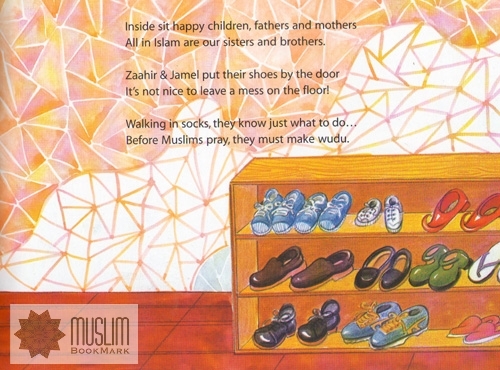
Just like when Zaahir and Jamel went for Hajj, the short rhyming sentences go step by step on what to expect as the story follows Zaahir and Jamel through the process: they take off their shoes, they make wudu, they stand for salat, they make du’aa, they stay quiet and respectful.

zaahir2

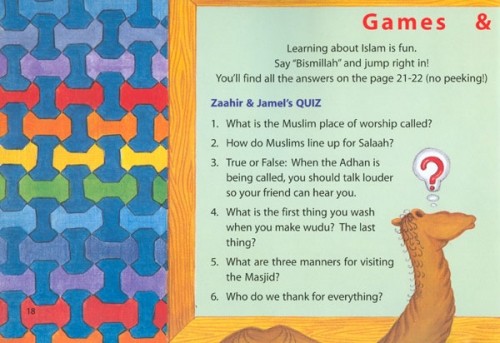
The book is 23 pages, but the story is really only 17 pages.  The story is followed by Games and Activities including a quiz and a crossword puzzle, and then a Glossary.  The quiz is great when reading aloud to a group or even just at bed time to make sure the children understood the key points.

zaahir3

The book is small and rectangular, which makes it work better in smaller groups (6.6 x 9.5), but for a book that cost less than a dollar online, it really should be in every child’s library.  Its a great review for little ones before Jumaah or just as a gentle reminder that praying in the mosque is something that all Muslims have in common.  It also works well for parents of non muslim kids that might be coming to the mosque and want to know what to expect, and how to act.

zaahir4


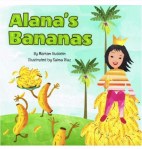
Alana’s Bananas by Mariam Hussein illustrated by Saima Riaz

Standard
Alana’s Bananas by Mariam Hussein illustrated by Saima Riaz

alanabanana

A silly, silly book about a girl’s love of bananas and her despair when a storm wipes out the banana crops in Costa Rica.  The moral of the story is to try new foods, and in 36 pages I think the reader will grasp just how over the top Alana’s obsession with bananas truly is and the lesson will be learned.

alana3

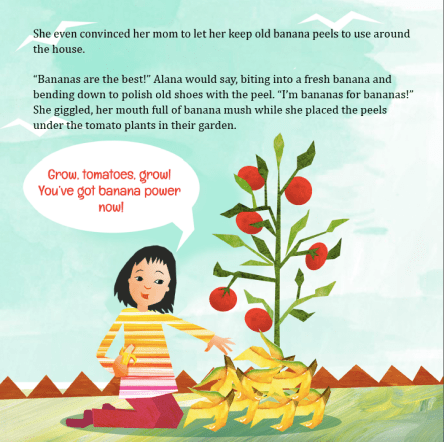
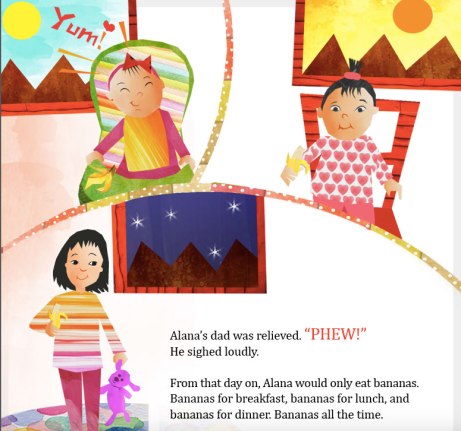
My only stumbling block is I’m not sure what age the book is for.  The bright silly pictures work well for ages 3 and up.  The theme works well for ages 4 and up.  The amount of text on the page, however, is more 6 or 7 and up, and the concepts of where banana’s come from, multiple uses for banana peels is about the same.  The character in the book, Alana, is eight and goes to the library and reads cook books and cooks independently, but the way her parents trick her into eating other foods is to hide eggs, peanut butter, rice, avocados and anything else they could find in banana peels, which keeps with the silliness of it all, but seems a bit off for 8 years old. Also talk about very patient parents allowing their 8 year old to only eat bananas for so long, and then not being upset when they have to resort to extreme levels of trickery.

alana1

There is nothing islamic in the text, and the only islamic elements are the author, illustrator, and the family based on the illustrations.  The mom wears hijab, but it is neither mentioned or referenced and no islamic vocabulary or phrases are in the story. In a scene at school, the girl sitting next to Alana is wearing hijab.

alana2

The book is about 10×10 and sturdy in its construction.  The back cover has a recipe for Alana’s Banana Breakfast Muffins. Enjoy!

A Bedtime Prayer for Peace by Akila Dada & Sukaina Dada illustrated by Michael Wagstaffe

Standard
A Bedtime Prayer for Peace by Akila Dada & Sukaina Dada illustrated by Michael Wagstaffe

MKPLC308-Bedtime-Front-Cover_frontzoom

This is a slow, deliberate, thoughtful book, that does a good job or setting a prayerful tone with short rhyming sentences.  Intended for preschool age children, early elementary children also will enjoy this book in rotation at bedtime or nap time.  

FullSizeRender (9)

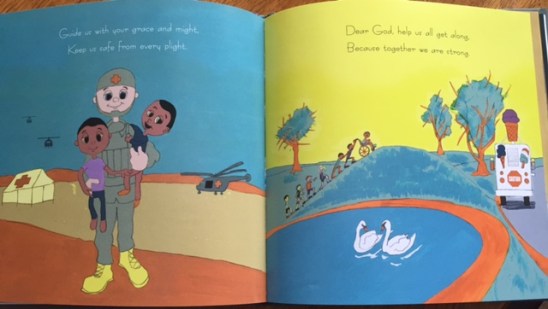
The book thanks the creator and asks for protection for all things small and large, seen and unseen, in a gentle dreamlike manner that really could go on for so much longer than the 32 pages present.  Some items mentioned like the plants and trees a preschooler will know, but some of the concepts introduce little ones to something bigger, “Give shelter to families who need a home, Help all the people who feel alone,” “Guide us with your grace and might, keep us safe from every plight.”  

FullSizeRender (8)

The prayer is voiced by a mom to her young boy, Esa, and the illustrations show traditional subcontinent dress as well as western clothes being worn.  The author’s are Muslim but the book is not overtly Islamic.  Sometimes the mom is in hijab, but when in the home she is not.  More distinctly, the word Allah is not used, only God is, and thus the book and prayer, really would work for any monotheistic child as the book does say, “Dear God, protect my beautiful son, You are the Truth. You are the One.”

FullSizeRender (10)

The true treasure of this book is that the main character is in a wheelchair.  Showing different abled characters is always such a blessing as it normalizes it and inshaAllah makes us more accepting when out and about.  The illustrations don’t wow me, but their quiet simplicity keeps the pace of the book, and don’t scream for attention.  Some of the smaller details are endearing and help sleepy eyes linger on page without feeling rushed.

With a hard 8×8 cover, the book is a good size for little hands to read over and over again, alhumdulillah. 


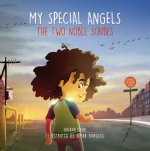
My Special Angels: The Two Noble Scribes by Razana Noor illustrated by Omar Burgess

Standard
My Special Angels: The Two Noble Scribes by Razana Noor illustrated by Omar Burgess

angels

The book starts with a brief introduction to Kiraman Katibin, the two recording angels, and reminds parents that before the age of maturity only the good deeds are recorded. That being established the book then works to develop the conscientiousness of having all of our actions recorded, so that we train ourselves from a young age to be mindful of what we do and say.

angel1

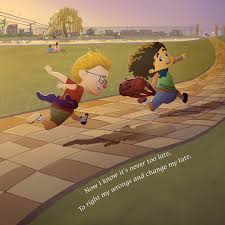
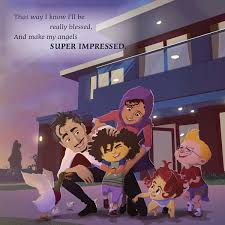
Following a precious little boy with fantastic hair, and a bit of a mischievous smile, the reader learns how we each have an angel on our right and left side.  We learn how sharing makes the angel on the right happy, as does stopping ourselves from getting mad.  We learn that its the little things and the big things, the stuff we do in public and the stuff that we think no one sees that get written down.  The angel on the left notes down all the mistakes too, and these make the angel sad.  But alhumdulillah apologies and forgiveness can rub away good deeds, guiding us on the path to jannah, inshaAllah.

angel22

The beautiful full color pictures are beyond adorable, and the rhyming couplets work perfect for preschoolers.  The font, the playfulness of the text on each of the 24 pages, the hardbound book and the 10 x 10 size make this book absolutely perfect for books shelves and for story time.  There is a glossary at the back that defines not just the Arabic words, but also some of the english vocabulary words that might need some explaining:  glee, deeds, angels.  My only complaint is that there isn’t a whole series of books by this author and illustrator coaching and guiding our little muslims in manners and basic belief.

angel 4

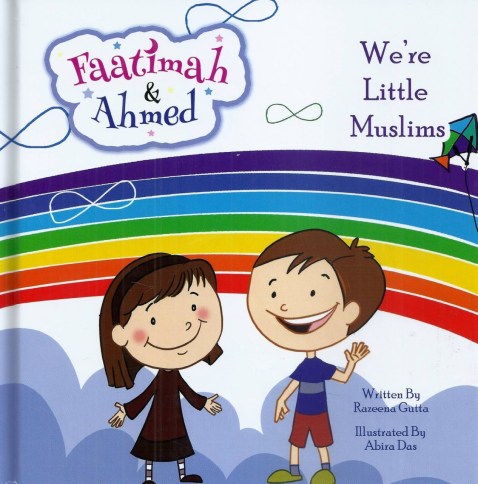
Faatimah & Ahmed: We’re Little Muslims by Razeena Gutta illustrated by Abira Das

Standard
Faatimah & Ahmed: We’re Little Muslims by Razeena Gutta illustrated by Abira Das

faatimah and ahmed

I found this book at the library and immediately loved that it talked about who we are as Muslims on a preschool level.  It is one of the few books that I have found on this age level or any age level that discusses Prophet Muhammad (peace be upon him), and it seems like there should be more, a lot more,books that do.  That being said, while the content is valuable, the story and presentation is a little jumbled to me.

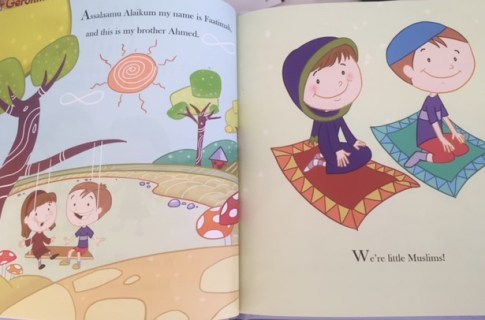
The book starts out with Faatimah introducing herself and her brother Ahmed as little Muslims, which is adorable.

faatimah page 1

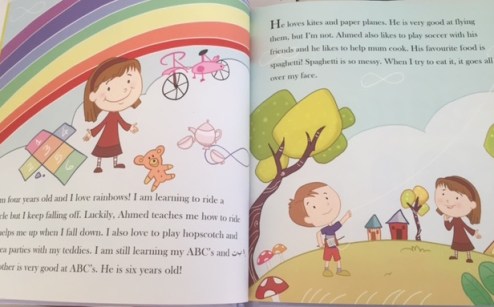
The bright playful pictures, the font, the number of words on the page all seem perfect for a four year old like Faatimah, but then you turn the page.

faatimah page 2

Woah! That’s a lot of text, and its all very stream of thought for a 4 year old.  Which after multiple reading I still can’t decide if I like or find annoying.  This story style returns later as she goes off for four pages about camels.  Here though it details what she likes, what she loves, that her brother is six, that he likes spaghetti, that spaghetti is messy. You get the point it is a lot of information for no real reason.  I see that the book is one of a series, so I’m hoping maybe if you read them all, these numerous little facts might connect you to Faatimah, but in a stand alone book it comes across as filler and an over bearing attempt to add character to a factual based story.

Flip the page again and the text slightly reduces as the stage is set to actually start the purpose of the book.  Ahmed comes home and is about to tell her about what he learned at school, mainly the story of Rasulullah.

fatimah page 3

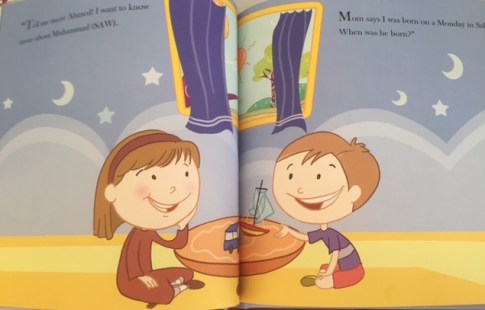
Sitting on the rug, Ahmed tells Faatimah who Aaminah and Abdullah and Abdul Muttalib are.  Faatimah can’t say Abdul Muttalib, which is cute and believable, but then she turns from being the day dreamy child, back to being the narrator and asks the reader, “can you say it?”

Ahmed tells where Arabia is and that he was born on a Monday in Rabiul-Awwal in the year 570. The kids simultaneously review Islamic months and days of the week in the illustrations.  They then finish with talking about the specialness of the name Muhammad itself, and how kind, truthful, and helpful he was.  Both kids decide they want to be like Muhammad (peace be upon him), alhumdulillah.

faatimah and ahmed average

Once the actual “story” starts, the amount of text on the page evens out and is appropriate.  I think the awkwardness of Faatimah rambling is a bit excessive, but the concept would work in moderation.  I want to read the other books in the series, and I want to test the book out to some three and four-year olds and come back and update this post, inshaAllah.

The book is 34 pages, hardbound 8.5 by 8.5.  There is a glossary in the back and works well for teaching Muslim and non-Muslim kids about Prophet Muhammad (peace be upon him) and getting a glimpse of what Islam is, in a non preachy positive way.

Yippee! Ramadan is over, It’s Eid by Farjana Khan

Standard
Yippee! Ramadan is over, It’s Eid by Farjana Khan

yipee

A friend loaned me this book from the local public library, so I was not only excited that a book about Eid was readily available, but also hopeful that it was good quality.  Then I saw the title.  I mean I get that the “Yippee!” is a title part of a series of books on the different holidays Muslim’s celebrate, but for as excited as Muslims are for Eid, they are usually very sad that Ramadan is over.

Nevertheless, I opened it up and hoped to be swept away.  The list of Eid activities and rituals however, were very dry and anticlimactic.  The characters are not named, the pages are meant for pre-schoolers I would imagine, but the lack of excitement in the language is disappointing.

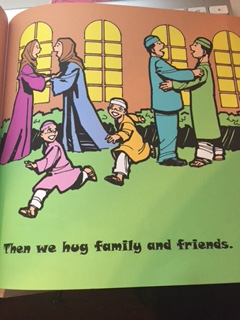
yippi hugThere are 19 pages of text, and the first few pages start off pretty well with a little boy seeing the Eid moon.  Then the family goes to the mosque and learn that Eid marks the end of fasting and the month of the Quran.  The boys father then gives money to the mosque, it doesn’t say that it is charity, but if one is familiar with Eid, one could assume. However, the book seems to be for those unfamiliar with Eid, so for me, this is where the book started to be lacking.  The next page also is where the list seems to start, and some of the items on the list are a bit of a stretch.  “We hug family and friends,”  followed a few pages later by a whole page dedicated to “My mother sets the table.”

yippi table

The book is also obviously desi as they eat parathas and firni.  At one point the kids play a game, not sure what game, it only says what sister’s favorite game is, and then a page is dedicated to the fact that “sister’s team wins.”

yippi fries

Perhaps I am too harsh, as the book is colorful and shows family and friends happily interacting.  There are women covered, not covered and with niqab, and there isn’t anything erroneous in what is written.  I just would hope for more.  The book is small in size, 8.5 x 8.5, and could have been fleshed out a lot more.  It reads like a child’s rough draft, each page or so, being a topic sentence, without the details.

I really don’t know what one would learn or get out of this book, that they wouldn’t get out of a fictionalized account or even a character driven story at Eid time.  Online prices don’t convince me the book is a stand out either.  There are much more fun, engaging, and memorable Eid books out there, not sure why the library chose to invest in this one, but alhumdulillah, I suppose it is better than nothing.

Hassan and Aneesa Love Ramadan by Yasmeen Rahim illustrated Omar Burgess

Standard
Hassan and Aneesa Love Ramadan by Yasmeen Rahim illustrated Omar Burgess

hassan and aneesa love ramadan

Another factual Ramadan book, with a fictional storyline that utilizes the banter between children and their parents to teach the reader about the blessed month.  Not a unique or original storyline, but somehow it still manages to be cute.  The book has very little doctrine discussed, and more hands on action of charity, visiting other families for iftar, and taking treats to non muslim neighbors as the focus of the book.

FullSizeRender (3)

Hassan and Aneesa are young, and the book is similarly written for young kids.  The back of the book says 2 and up, and the short declarative sentences definitely work for younger children.  The pictures are warm as the characters are smily and detailed, but not overwhelmingly so.  At home the mom does not cover, but does when she is out, as does the little girl.  The family is depicted as warm and affectionate to one another and I love that they visit a non-muslim-sounding-named neighbor and are rewarded with a non “ethnic” treat of chocolate cake.  I also like that the kids are encouraged to fast for parts of the day, even if it is the second half of the day.  The book appeals to today’s children who may at times chose “ethnic” food and clothes and sometimes not.  The book is small in size at 6.5 by 7.5 inches and is 24 pages with a glossary in the back.  It is for pre-school kids and while it might work for non-muslims, I think for the age group, if a child didn’t know a Muslim at least, the book would be a bit hard to grasp.

FullSizeRender

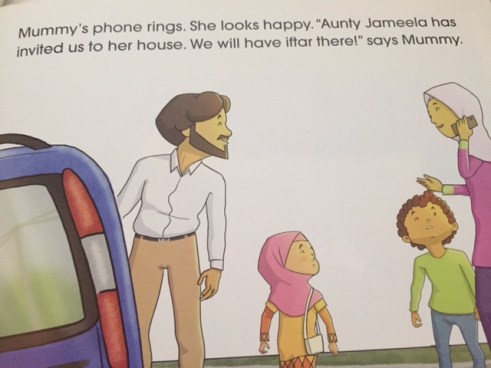
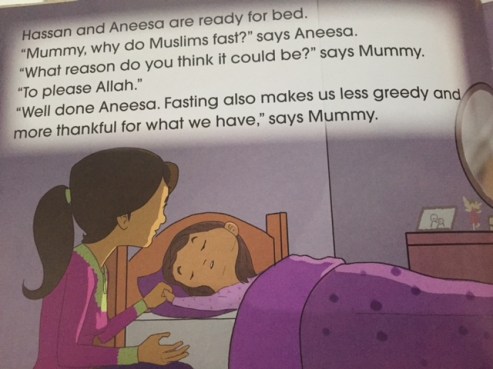
Hassan and Aneesa are excited as mom and dad tell them Ramadan starts tomorrow, but a confused Aneesa sneaks downstairs and suhoor time wondering why her parents are eating breakfast in the middle of the night.  The next day they read Quran and gather up toys to take to the thrift store.  While there Aneesa donates some money too.  As they leave they are invited to an Aunt’s house for iftar.  After iftar they have to rush to Tarawih at the masjid.  That night Aneesa and her mom discuss why Muslim’s fast in an age appropriate manner, and the two kids decide they want to try, even though they don’t have to yet.

FullSizeRender (6)

The next day the fasting kids cook enough dinner to share with their neighbor Mrs. Smith.  Aneesa breaks her fast early, but Hassan hangs in there, and all are rewarded with a surprise chocolate cake from dad!

FullSizeRender (4)

Zachariah’s Perfect Day by Farrah Qazi illustrated by Durre Waseem

Standard
Zachariah’s Perfect Day by Farrah Qazi illustrated by Durre Waseem

IMG_4757I was really excited to learn about this book from the author, as it seemed to be a book that would stand out in a very crowded genre and work for both Muslim and non Muslim kids.  When I tore off the package however, the face on the cover seemed a bit off for my taste, the glossary is on the back cover and while the pages are full size and full color, the book starts on the first page and somehow seemed more “home done” than “professional.”  Which isn’t a bad thing, and I’m happy to support local writers, but alas I do often judge books by their covers and format, and my first impression had to be stuffed away so I could give the book a fair chance.

The book is 20 pages with the 20th page being recipes.   I would guess children 5 and up would be considered the target audience.  It basically is a book telling about Ramadan with the author trying to blend in a story, that for me, sometimes worked and sometimes really didn’t.
FullSizeRender (3)

It starts with Zachariah, a 12 year-old-boy waiting for his mom to wake him up to fast, a day he has been waiting his whole life for.  Why he had to wait to fast at age 12 is not clear to me or made clear in the story.  His 10 year-old-sister only does half days, but in the illustrations she seems to only look about 3 years old, so I’m not sure where the arbitrary age requirements for fasting come from.  There is also a third sibling in the pictures that is never mentioned, not sure why, my kids and I speculated a lot more on that than we probably should have.  It isn’t told from Zachariah’s point of view but he is the focus as his day gets started.

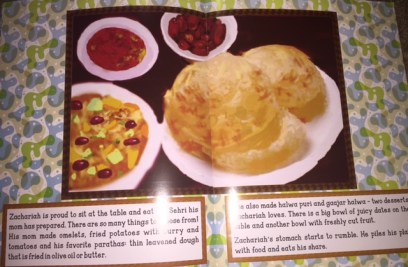
The characters are undoubtedly desi as the book is very steeped in subcontinent cultural over tones.  Sehri, the pre dawn meal, is described in abundance of detail, “His mom made omelets, fried potatoes, with curry and tomatoes and his favorite parathas: thin leavened dough that is friend in olive oil or butter”  It’s a bit detailed of how the items are prepared for a kid’s book, and that is just page one of two pages dedicated to detailing the food on the table for breakfast.  Iftar the meal to break the fast is also two pages of description and cooking methods, but about double the amount of text.

FullSizeRender

Culture is often food, and Ramadan has its own food traditions, but there is a lot of space dedicated to food in this book,  and it kind of takes away from the message of fasting, and moderation, and not going in excess.  Later in the book the mom does pack up some of the food to take to the less fortunate which is great, but she does it while the rest of the family is breaking their fast.  Not sure why she couldn’t have done it before or after and joined them.

After sehri is presented the family talks about Ramadan and what it means and what they like best about it.  There is a bit of dialogue that is actually sweet and funny, and gives some warmth to the story.  It is clear the author is just trying to flesh out the facts about Ramadan, but for a kid’s book, I think getting the facts in and presenting them in a fictionalized setting is a useful tool.
FullSizeRender (2)

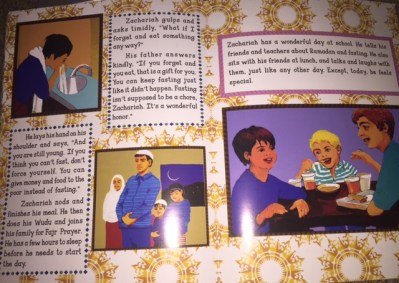
The story seems a bit lopsided when it shrinks Zachariah’s day at school to one five line paragraph saying it was wonderful and then moves on saying “Later, he helps his mom.”  After spending 10 pages on the predawn meal, I would have liked to know a bit more how school went for him, it is his perfect day after all.  Also, the lapse in time by the narrator seemed a bit off to me in the sequential flow of the story, as it was following him in real time so to speak, and then fast forwards the bulk of the day only touching on lunch time, and

FullSizeRender (1)

Alhumdulillah, the family is sweet and excited for Ramadan. They pray together and are seen with smiling faces.  There isn’t much diversity in the pictures, the family has darker skin, the friends at lunch are more fair.  The mom wears hijab and is in the kitchen, dad doesn’t seem to be, but Zachariah helps his mom.

The book is colorful, and busy.  I’m not sure if the pictures are meant to be a stylized reality or look computer generated, but they seem a little blurry in places.  The font and backgrounds are nice.  There is a verse from the Quran in English and Arabic, as well as the athan and some Islamic calligraphy.

Overall, there is nothing “wrong” with the book, it just isn’t memorable.  There are some really good Ramadan books out there, and this one does it’s job of explaining Ramadan, but lacks the characters to leave an impression.  I definitely don’t regret buying it, but I don’t know that my kids or I will read it again this Ramadan, it doesn’t create that reaction.  It will probably stay on the shelf until next year, when we can’t recall many of the details and give it another go.

IMG_4748 (1)


Zaid and the Gigantic Cloud by Helal Musleh illustrated by Sabrina Pichardo

Standard
Zaid and the Gigantic Cloud by Helal Musleh illustrated by Sabrina Pichardo

zaid

We all experience disappointment and frustration and feeling like a gray cloud is weighing us down, and for Zaid, it really is!  In 36 bright colorful pages, children ages 5 and up can see that bad days happen to everyone, and that sometimes it seems like nothing is going right.

Zaid has been waiting for months for a weekend camping trip with his uncle and cousin, but when Ahmed comes down with the chicken pox, the trip is cancelled.  That night Zaid barely sleeps he is so upset, and in the morning notices a small grey cloud hovering above him.  As he waits for the bus, the autumn leaves remind him that it will soon be too cold to play soccer outside, then he has to sit at the back of the bus, and needless to say its just the beginning of many disappointments in his day, that make the cloud above him grow.  But then, a little something out of the ordinary, in the form of a small bird needing help, presents Zaid with a change of pace and a chance to turn his day around.  Slowly but surely the cloud starts to shrink and Zaid copes with the rest of the day with a bit of perspective and a growing smile.

zaid2

The book is a much needed one in showing children coping with emotions in a somewhat autonomous manner.  The book doesn’t judge his feelings, but shows how he finds a way to see the silver lining and make do with a string of frustrations.  The adults don’t lecture him or solve his problems for him, but are definitely supportive and caring should he need them.  The story does a good job of flowing and not getting preachy.  I can’t wait to read it to my 6-year-old who has a gray cloud pop up at the slightest disappointment, but currently my 10-year-old has been sent to her room with the book to see if she can relate Zaid’s predicament with her own.  The handy discussion questions at the end also can help talk about feelings through Zaid, and hopefully making the child’s connection from a fictional character to their own experiences more poignant.

This book really cemented in my head the growing subcategories of Islamic fiction picture books.  Naturally there are books that are geared for Muslim kids only and ones that work for Muslim and non Muslim kids alike.  But this book, along with a few of the new releases like it, cover universal themes with Muslim characters (at least by name) and have diversity in their pictures.  They show a few characters in hijab but do not mention or explain it, in this book the marshmallow package says halal, again with no explanation.  However, there is no specific ayat or hadith that the book stems from or an Islamic pearl that is meant to get through.  The characters do not greet each other with salam, or say alhumdulillah and mashaAllah, making it more appealing to a wider audience, but words I hope when the story is being read aloud to Muslim kids, can be sprinkled in.  I think it is a great addition to the literary world when Muslims are seen in a larger community and is not jarring.  I hope parents of non Muslim children also appreciate this diversity in literature and I pray that it leads to more acceptance in the “real” world, ameen.

zaid3