Category Archives: High School

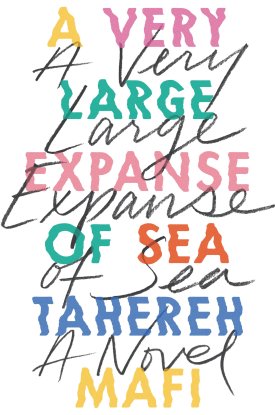
A Very Large Expanse of Sea by Tahereh Mafi

Standard
A Very Large Expanse of Sea by Tahereh Mafi

avleos

The book is often marketed as a Muslim coming of age story in a post 9/11 world.  The contemporary work is semi-autobiographical, but really I think the positioning is a bit misleading.  It’s a love story, and the main character is Muslim, and her environment is awful and she is angry. Its an engaging read, I read all 310 pages in one sitting, but I don’t know that the take-away will enlighten anyone about Islam, or really what it was like to be Muslim in the years after 9/11, I think people will remember how sweet the couple is and wonder how much of it mirrors the author and her husband, author Ransom Riggs (Miss Peregrine’s Peculiar Children), but not suddenly become knowledgable about more than what the main character experiences and endures.   I appreciate that the book challenges the stereotypes of Muslim women, there is authenticity as it comes from a writer who lives it, and I do think it shows evolution of attitudes that teens can benefit from.  The book is not yet in the AR database as it just came out, but I would imagine high school and up.  

SYNOPSIS:

Shirin’s Persian-American family moves a lot.  Her and her older brother are incredibly close as their parents are rather aloof to the day-to-day experiences the kids endure.  That isn’t too say her parents aren’t around, they eat two meals a day together and the parent’s are warm, but Shirin’s brother Navid is a much more present.  The story starts with 16-year-old Shirin starting her 12th new school.  Conditioned to not make eye contact, remember faces, or get affected by the trivialities around her, the reader sees how angry she is as she curses at a teacher that assumes she needs ESL not Honors.  Knowing how fleeting her time in any location can be, as her parents are constantly trying to find better jobs, Shirin doesn’t feel compelled to make friends or get attached to anyone or anything.  This intimidating vibe similarly keeps offers at bay, for the most part.  When she gets paired up with Ocean to dissect a cat, he tries to talk to her, and this throws her off her game.  Most every interaction she experiences at school are people making racist comments and being very one dimensional and bigoted.  Ocean tries to be nice, an attitude so foreign to Shirin that it begins to force her to change.  Simultaneously, Navid, who is charismatic and has no problem finding friends wherever they go, decides to put his and his sister’s dream into action and they start a break dancing club at school.  Three other kids join, and start becoming, not just Navid’s friends, but Shirin’s as well.  

Shirin and Ocean fall in love, despite Shirin fearing what the backlash will be for ocean.  She doesn’t really know anything about him, but feels strongly that all the racial slurs thrown at her on a daily bases will effect him and ultimately make them wish they didn’t pursue a relationship. She draws line after line in the sand, and crosses them all.  Only then does she learn how blind she has been, he is in two of her classes, not just one, he is a year older than her, and he is the golden star of the high school basketball team.  Being that the story is told from Shirin’s perspective, this is surprising to the reader as well.  The town turns on the pair and things get really ugly for Ocean who is willing to risk it all for Shirin.  Threats by the basketball coach, pictures of Shirin without her hijab being taken, accusations of terrorist ties and sympathies all challenge the couple and shape Shirin.

WHY I LIKE IT:

I really like the twist of having the relationship be difficult for the non Muslim, rather than going with the assumed Muslim girl having to sneak around.  Not saying that I support it, but interestingly she never mentions that what she is doing is going against anything religious.  She mentions twice that her parents wouldn’t like her with any guy, and that they view her as a child still, but she doesn’t explore Islamically any boundaries regarding their relationship.  She hides talking on the phone to Ocean, because her parents are adamant she gets enough sleep at night.  That is about it.  Shirin discusses that she wears hijab like an armor that she gets to pick who she shows her hair too.  I love the strength in that, but wish there was a bit of doctrine to back it up too.  At one point a Muslim, non hijabi, at school calls her out for wearing hijab and having a boyfriend, but she essential tells her it is none of her business, which it isn’t and who is to say that one sin is worse than another, but still it befuddles what exactly Shirin believes and why.  The book just paints her as a Persian Muslim, but never explores what that means other than the superficial outward appearance.  They do fast in Ramadan, no explanation about why is given, just that they not eat or drink during daylight hours, and right near the end, Shirin remarks how her mom asks her and her brother every morning if they have prayed and they lie and say yes, their mother sighs and tells them to make sure they pray the afternoon one, to which they lie and agree, only to have their mother sigh again.  AstagfirAllah, that is awful lying, and lying about Salat, but it is so real, I audibly chuckled.  

I like that the parents aren’t harsh, they just seem disinterested.  I didn’t want to read another book about the parent’s being the gatekeepers and bad guys, so that was really refreshing.  They mention they don’t celebrate Christmas, but they have an open door policy on Thanksgiving for any friends wanting to come.  I did hope for a bit more about them, why they don’t talk to the kids about moving, what makes them tick, because really they seem to have a solid relationship with the kids, they are just clueless to their social experiences and school environment stresses.

I love the growth and self reflection of Shirin, she holds a mirror to herself and she and readers are better for it.  She has to realize that she is doing so much of what she is accusing others of doing.  I love the support and genuine concern of the breakdancers and her brother.  It resonated to me as a girl with an older brother and the relationship feels very genuine. I just wanted to know more about Navid. 

FLAGS:

There is a lot of cursing. kissing, hand holding, romance, lying, and ditching school.  There is a brief mention of graffiti being sprayed.  There is racial slurs, threats of violence, violent physical outbursts by people of authority.  When a student throws a cinnamon roll at Shirin, Navid and his friends beat the kid up severely, it isn’t detailed, but it is mentioned.  Ocean  also gets suspended for a few games for a fight he engages in, and there is some detail of Shirin getting jumped in a previous city for wearing hijab.

TOOLS FOR LEADING THE DISCUSSION:

I don’t think I could in good conscience present this to a group of Muslim students.  I wouldn’t want them to think I was endorsing the violence and language and romance.  Like so many books of the genre though, if someone found it and read it on their own, I’d love to chat with them about it, as it is well written.

Youtube video about the book by the author: https://www.hypable.com/tahereh-mafi-a-very-large-expanse-of-sea-tour/

Anything But Okay by Sarah Darer Littman

Standard
Anything But Okay by Sarah Darer Littman

anything but ok.jpg

This 345 page contemporary book is brand new from Scholastic and isn’t yet in the AR database, it is billed as appropriate for ages 12 and up and is probably pretty accurate.  The cover, in my opinion, is rather a disservice for the audience.  The book would appeal to girls and boys, and isn’t really about school drama, which is the vibe I got from the cover.  The story is actually pretty deep and thought provoking, on a wide range of issues facing many young adults today.

SYNOPSIS:

Told from Stella Walker’s perspective, the book opens with her and her friends, Ken and Farida, reviewing old movies.  Farida, an Iraqi immigrant, is constantly pointing out the stereotypes, tropes, and bias they engage in regularly and see depicted around them.  She is constantly nagging her friends to recognize their privilege and check it.  Stella tries to get it, but it’s not that easy. Nor are the obstacles that the book explores. 

Stella’s parents are vets, and her brother, Rob, has just returned from his second tour in Afghanistan and is suffering from PTSD.  Additionally, Rob’s best friend commits suicide and yet, Stella’s family doesn’t involve her in the conversations and concerns, and as a result she doesn’t talk to her best friend Farida.  This tension is amplified when Farida wants to run for class president, but her parents advise her against it, as Islamaphobia is on the rise with the mayor, up for re-election, spouting hate speech, and his son, already in the race to lead the school. 

Stella, as a result, is convinced to run with the help and support of her friends.  All should be going well, but in a desperate attempt to get Rob out of the house, a trip to the mall to watch a movie results in Rob sticking up for a Sikh kid being bullied, and breaking the instigators nose.  The police are called in, and the real drama of the book takes center stage, as social media, a bigoted mayor, and a family’s member friendship with a Muslim paint Rob as a radicalized terrorist.  The Walker’s house is vandalized and Farida’s family’s restaurant is suffering and the mayoral election and class office election will all require some tough decisions and insights into honesty, framing, perseverance and friendship.

WHY I LIKE IT:

I don’t think I was expecting the book to explore so many topics and to do it, in a rather real and raw way.  The arc of concepts covered provides a lot of juice and relevance and the quick pace, makes it a quick read.  Some pages are letters written by Rob, a number of pages are the various police reports taken after the mall assault and the various points of view are great.  It explores how media editing and framing can change a narrative to one side or another. 

I love Farida, bless her, she is annoying and one-dimensional, but yet so relatable.  She is the token minority that ties it all together and is the billboard representation of “other.”  I can so relate to her, being the minority and the one that constantly had to be the gadfly on the masses.  

The school election is a little cheesy and overly elevated in importance, but it is the catalyst, so while I wasn’t really invested in who won, I liked the concepts it brought to the forefront of the characters lives.  The family struggles and retaking the truth and owning it, was the real strength of the book, and introducing kids to the horrors of war, returning from war, mental illness, the blind eye of politicians, the struggles of the VA, the power of the media, friendship, and concepts of patriotism, privilege, pride, suicide, and moving forward.

My biggest complaint is the awkward and forced romance.  It isn’t even romance really.  After the mall incident, Stella confides in a classmate, Adam,  who comes over to see if she is okay and they hold hands and kiss.  It is so out of left field and so awkward I would imagine for most readers, not just me the conservative muslim mama looking for books for my kids and their school book club.  In all they kiss five times I think, and mentions them holding hands twice.  It isn’t lamented or dwelled on, it just kind of boom, jumps in to the story and then yes, they kind of snuggle after the election results, which is a little more fitting (but still irritating).  Rob meets a girl, and again later on when she comes to celebrate the plea deal its nice that she is there, but they talk like once and he completely falls for her, kind of intense and random.  The discussions about letting someone in to your life and all is good, and more natural and they don’t kiss, but they do have “feelings” for each other.  

There isn’t much about Islam other than that Farida is Muslim and that her mom wears hijab.  Even the Islamaphobia is mentioned more for political and prejudicial purposes than as a segway in to understanding Islam.

FLAGS:

Kissing (see above), suicide, war, violence.  Beer is mentioned at the end when a college veteran gets one out of the fridge.  

TOOLS FOR LEADING THE DISCUSSION:

I really want to do this as a Middle School Book Club choice, yes I’m hosting those again.  I need to talk to the school counselor about the kissing stuff.  I think they can handle it, but I don’t know the kids well enough just yet, to verify this.   Being it isn’t the Muslim characters, I can’t imagine it is any different from what they see on TV or in Disney Movies, but still, I can’t confidently say it will happen.  Twelve and up is the non Muslim age point, I’ll have to think it over and update this once I investigate. 

Author’s website: https://sarahdarerlittman.com/books_2/young-adult/anything-but-okay-coming.html

Reading Guide: https://sarahdarerlittman.com/books_2/young-adult/abo-teaching-reading-guide.pdf


Mirage by Somaiya Daud

Standard
Mirage by Somaiya Daud

mirage+cover.jpg

I don’t read a lot of sci-fi books, ok so maybe I haven’t really ever read one…or maybe a few have snuck through and then been forgotten.  So, I was excited to read this book by a Muslim author with Arabic poetry and Moroccan inspired backdrop sprinkled in, if nothing else it had me intrigued.  The book is a 308 page YA book that came out two months ago and was available in both hardback and on audio at my public library.  I was thinking to listen to the audio version with my kids, but the book was ready first, and the reviews on the back cover by other authors, all mentioned that the book was “romantic” and “sexy,” huh? The synopsis online and even on the inside flap, hinted much more at rebellions and body doubles, and life on a small moon in a distant fictional galaxy.  Needless to say I didn’t check out the audio book and decided I should proof it for my self first.  I started the book, no less than five times.  Like I said, it isn’t a familiar genre and I was a little confused.  I decided to just keep plugging through the fifth time, and sure enough when my eyes started to get sleepy I realized I was more than half way done with the book.  I guess when you are building worlds and culture you have to start somewhere and the confusion worked itself out after that.  I’d say the book is for teens.  The romance isn’t explicit, save some kissing, but a lot is implied and better for kids a little older than middle school.

SYNOPSIS:

Amani is turning 18 and about to attend her majority ceremony, where her cultural daan, facial tattoos will be marked on her face.  Surrounded by her loving family of parents and two older brothers, and close friends, drones from the main planet attack the festivities and kidnap Amani to the palace that the Vathek empire has taken over after conquering the planet and two moons.  The storyline is pretty straightforward, the confusion for me was the world building of establishing the culture, the religion, the symbols and characters all intertwined at the start.  The understanding of what life was like before the occupation and now under Vath rule, about the tribes, the birds, and how so much has changed.  

Once Amani is enslaved in the palace and had her near identical features to the princess, surgically made to match the ruthless half Vathek, half Andalaan ruler, the setting is developed through stories and flashbacks that clear up the confusion and make the book a fast and fairly easy read.  As the princess’ body double Amani must learn to act and carry herself as Princess Maram so as to not be discovered when sent in to complete tasks that would put the real princess in danger.  The job of Amani, however, also develops in to her filling in for Maram, whenever the spoiled princess, doesn’t want to do things.  In the process of these engagements, Amani spends a lot of time with Maram’s fiance, Idris, who is Kushaila and as part of the war truce betrothed to Maram.  Maram and Idris are friends, who understand their roles, but when Idris figures out Amani is playing a role as well, the two of them fall in love, complicating matters considerably.  Throw in some Andalaan cousins, forced to the outskirts under the new rulers, a royal half-sister vying for the crown, and a rebel who looks like a beloved Prophetess recruiting Amani to join them as a spy, and you have a protagonist trying to stay alive while following her conscious as well.

WHY I LIKE IT:

I like that the world created seems plausible and real.  I love that I was engaged and intrigued and able to finish the book (yay!), but ultimately the book reads more like a romance book, than a sci-fi one.  Aside from the planet, droids, holograms, and modes of transport, it could be any culture and religion even here on Earth being fleshed out and established as the back drop for the story.  I love that Amani holds to her culture and the love she feels for her people, their language, poetry, and their history is palpable and descriptive. 

I love that society is focused so much on the strength of women.  Yes Maram’s dad is the evil overlord, but she is the future.  Amani is the protagonist, it is her mom’s strength that she calls on so often in her trials and torture.  The Prophetess that delivers hope is a female, that the poetry comes from women, and is gifted by women.  I love that the leaders of the rebellion are women, that the cousin that has not given up on the true bloodline of rulers is female and that the Dowager is such a strong, yet loving beacon that deserves the truth about Amani’s identity.  At one point, when presenting herself as Maram to Idris’s aunt, the two have a conversation:

“You must eat more,” she says in heavily accented Vathekaar.  “If you are to be any good at bearing daughters.”

“Why daughters?”

“Only your daughters will have the stomach for the future,”  she said.  “It is why your mother had you.”


I don’t really like the love story between Amani and Idris, it seems too easy, even though obviously it is plagued with impossibility, there should have been more tension.  Maybe it isn’t even the relationship, but more that Idris isn’t nearly as developed as Amani and Maram, and it shows.  I’m hoping there will be more books in the series and that he will be given some depth, because a lot is told about him, but the authenticity seems lacking.  The disjointedness of the romance could also be the pacing of the book.  I felt like somethings dragged and climaxes seemed rushed. Again, I’m hoping this is more setting the stage for further adventures, and that the next book will delve more in to the political-warring-rebel story line that the author definitely can delve in to and capitalize on along with Amani and Maram’s relationship.

Maram is my favorite character, how delicious that the antagonist is not one, or even two dimensional.  She is cruel, and scared, and vulnerable and everything in between.  I loved the interactions between the two young women.  I wanted to know more from Maram, how she felt about, well, everything, and I’m really hoping holding back on those insights was intentional for a purpose.  While she evokes both hatred and pity from Amani, she evokes so much curiosity and exasperation from the reader it is refreshing.

There is nothing Islamic in the book, the characters have their own fictionalized religion, and religious texts.  The names are familiar to the Muslim world, and arabic words sprinkled in with no definition, definitely will make Arabic aware children feel a connection to the characters and setting of the book.

TOOLS FOR LEADING THE DISCUSSION:

I think one could do this as a book club book for high school aged students.  And while I dislike labeling books for one gender or another and all the stereotypical tropes that that implies, I feel like because of all the romance and the amount of time spent on Amani and Idris the book might appeal more to girls.  The book spends a lot of time on these two as it is their talking that creates understanding of their world for the reader.  It is more telling than showing, and these two snuggled up or caressing each others faces is the manner in which the information seems to be expressed.  I’m holding out hope that the rest of the series will break away from this set up.

author’s website:  http://www.somaiyabooks.com/

article with excerpts: https://ew.com/books/2018/02/19/mirage-somaiya-daud-preview/

FLAGS:

There is kissing and affection.  There is also some violences broadly as the Andalaan’s are tortured and attacked and specifically, as Amani has a bird sent to attack her, and she is regularly hit and beaten. Nothing too extreme for high schoolers.


She Wore Red Trainers by Nai’ma B. Robert

Standard
She Wore Red Trainers by Nai’ma B. Robert

red.gif

After having fairly good luck with the Muslim YA Romance Novel Genre in An Acquaintance and Saints and Misfits, I was willing to give She Wore Red Trainers a try.  Na’ima B. Robert has written a lot of books and this 261 page book was an easy and entertaining read.  There are no plot twists, deep thoughts, or intense drama, its a light read that infuses religion and environment into a story that will be great for 14-16 year olds that have slim pickings of relevant, Islamic, “halal” fiction options.

SYNOPSIS:

The story is told from two 18-year-olds’ perspectives, Ali and Amirah. It goes back and forth and while the perspective is obvious, the bottom of the page identifies the character so there is no chance for confusion.

Ali has begrudgingly moved to London with his brothers and father.  Not very religious before his mother’s death, he and his father and younger brother have made a new start and commitment to Islam since losing her to cancer.  The middle brother, resists this, but isn’t too critical in the story, other than to add a voice to the concept that people have to come to Islam on their own, that the relationship between a person and Allah is not cookie cutter or often simple. 

Amira too has a past and a lot on her plate as she strives to balance her chaotic family life and moving past decisions of her rebellious self.  The two meet and in the brief second before gazes are lowered, they fall in love.  Ok, so it isn’t that cliche’ but it is close.

The two, as the dedication of the book states, “are striving to keep it halal.”  They have a few encounters and the sparks are there, but they both have their own stories and supporting cast of friends as well. It isn’t until the very end, SPOILER, they get married.

Yup. impromptu wedding of 18 year olds.  It isn’t out of left field though, there are passages that contemplate the Islamic merits of a young marriage, and perhaps that is the depth of the book, as far as giving the reader something to think about. That and choosing Islam and actively living it.

WHY I LIKE IT:

The stuff that makes the book interesting, isn’t really even the two love birds, it is the context.  The struggle of Amirah’s complex family situation with a mom that has had multiple husbands, and is suffering from depression.  Amirah also has a creepy stepdad (makes her uncomfortable and seems to make sexual advances toward her) and a sketchy past that isn’t really articulated but is hinted at enough to know that she did rebel briefly by running away and experimented with drugs and alcohol before realizing it wasn’t the life she wanted.  She takes tremendous care of her younger siblings, one who is deaf, and respects her older brother tremendously.  Her friends are not overly developed but provide enough diversity that the reader will see themselves in someone even if just fleetingly.

Similarly Ali is fleshed out by the company he keeps.  He has very religiously devout friends, a few rebellious ones and countless opportunities to define who he is.  His home life is a little chaotic, but they’ve gone through the destruction and are in the rebuilding phase. 

I like that the characters are fallible and represent a wide spectrum of religiosity.  The book isn’t political, nor does it discuss culture really, but it is meant for Muslim readers.  The characters throw in Arabic terms and while there is a glossary at the back, the religious rules, the contemplation of hadith and ayats, understanding Islamic divorce and the stress to be well established before marriage make it a book for those that can relate.  I love that part of keeping it halal is that they don’t talk and text.  I know that makes it a bit unbelievable, but I like that the line is drawn and established.

I wish that the past of many of the characters was clearer.  Not overly sensationalized, but a tiny bit more.  I wanted more information on what Ali’s dad’s new job was, and how far away they would be moving.  I wanted to know how Amira’s family would manage without her and the creepy stepdad, would the mom be able to step up and care for her kids.  I wanted more details about Amira’s family in general and why her older brother had to leave his studies permanently in Saudi Arabia, and wasn’t able to just delay graduation.  

I can’t criticize the writing too much because I did read the book in one sitting and it kept my interest.  I didn’t expect it to be deep or thought provoking, so for a light summer read, it was good enough.  I felt like the ending was a bit rushed, and yes there are some far fetched ideas, but I think it’s a romance novel, halal or not, so yeah, there are going to be some places that forgiveness is needed.

FLAGS:

There is mention of hooking up, drug and alcohol use, virginity, and a creepy sexual predator in the stepdad. It isn’t appropriate for middle school, but not so vulgar that one would need to be 18 to read.  I think high schoolers won’t find it too cheesy, and not be shocked by the content either.  Granted it depends on the reader. but I think it is better to be safe than sorry.

TOOLS FOR LEADING THE DISCUSSION:

I would consider the book for a high school book club. Might have to get parental permission, but I think it works well to consider how to have it all so to speak.  How to live within Islam and be smart about your choices.  The book doesn’t offer a lot to think about and mull over, but if you were a teenager, I would imagine that the book presents a lot of what you are feeling.  There is a lot to relate to in the friends, the deen, the emotions, and the temptations.  It also shows that just because families are Muslim, doesn’t mean that they are not complicated and troubled, a scenario that many would find reassuring at least superficially in the book.

Interview with the Author: http://www.kubepublishing.com/an-interview-with-naima-b-robert-about-her-forthcoming-book-she-wore-red-trainers/

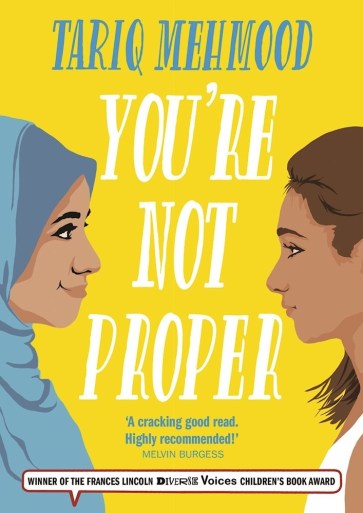
You’re Not Proper by Tariq Mehmood

Standard

your not proper

This highly praised British young adult novel is intense.  If I was trying to sell you the book I would say that it is relevant, gritty, raw, and real, but as a reviewer, it is definitely more rough, all over the place, and random.  There is so much going on in the book that it should be well over 400 pages to resolve it all, but almost as if the publisher required that the book be less than 200 to fit the demographic, it all gets tied up way too simplistically and leaves dozens of tangents unresolved, unexplored, and hanging.  The main characters are 14 years old, but I think it is a bit too harsh for that age group and should probably not be read by them.

SYONPSIS:

Karen’s mom doesn’t believe in God but takes her to church.  Karen’s dad is a Pakistani Muslim who loves bacon and beer.  The book opens with Karen’s gang marking her forehead with a cross against her will, and her soon after deciding that she doesn’t fit in with her friends and will now be Muslim.  Part of this transformation involves her wanting her name pronounced properly, as Kiran and her wearing a hijab.  Her parents are pretty ok with the decision, but the author foreshadows that this will be the undoing of her family.  

The book gets crazy, like all over the place crazy, but because of the little hints that all this craziness is leading up to something, I kept reading thinking that the author had it under control.  But no, I don’t think he does or did. 

The most craziness comes from Kiran’s rival Shamshad who leads another gang and pretends to be really religious, but is a bit of a rebel and bully herself.  The author is told from both Kiran and Shamshad’s perspectives, and while at times the reader sympathizes with Shamshad, as her influential father is abusive, many of her actions are so jarring and awkward, that no, she isn’t really like-able at all.  She wants a computer, her parents are that strict, yet she goes out with a guy, gets drunk, hangs all over him, goes to a Halloween party/dance without seeming to have to sneak about doing it.  She is regularly beating people up, threatening to kill and maim people with scissors, not a nice 14-year-old, nor a believable one either.  

As Kiran tries to learn about Islam and figure out what is tearing her family apart, and Shamshad is trying to find her place, the two storylines come closer together before the big climax of learning what tied the two girls’ families together in Pakistan and then here in the same English neighborhood.  The climax/ point of the story is actually a good one, but the resolution of it, is so simplistic that it cheats the reader of any potential investment they may have skimmed from the crazy build up.  It seems like the author had an idea and just worked backward for his big reveal, which is probably how most books are written, but in good books, you connect with the character and join them in their journey, here there is no character connection.

WHY I LIKE IT:

I like the idea of the book.  That there are good and bad Muslims and Christians, that things are diverse and complicated and that we all have our own baggage either at home, or in our heritage, or in our environment. But the book is not cohesive, the characters are really, really harsh.  And it doesn’t seem the author gets their voices right.  Plenty of males write beautiful complex female characters and vice versa, and plenty of adults get teens right, but I don’t think this author got either.  The girls are not believable and the minor characters are just as bizarre.

I think if you you live in a highly diverse area and you are acquainted with lots of minorities you can handle the way Islam is portrayed, but if you aren’t I think both Muslim and non Muslim readers alike will be shocked and offended by the portrayal of such crude characters.  This isn’t a book of accepting differences and finding a way to get along, it is more of a book showing how awful everyone is in varying degrees.  If it was an adult book perhaps you could argue it is realistic, but as a teen book, I think the lifestyle choices of all the characters will be eye-opening and not necessarily in a good way.  I do like that the book isn’t offering a moral statement or opinion on Islam, but the way Islam is presented isn’t inspiring either.

I’ll admit I’m a sucker for books that are meticulous, not boring, but deliberate.  Authors like John Irving who seem to map their stories with crime solving precision.  Where every sentence serves a purpose and every idea has a reason for being shared.  Most books leave something hanging, but this book, left everything hanging.

For two girls in gangs, the gang members by and large fade away before we even get to know them.  There is a rally being planned but resolved half heartedly.  Kiran has to fight with her parents to learn about herself in a really unrealistic way.  Kiran harasses her dad to learn about Islam, but then all of a sudden her paternal grandpa lives nearby and brings over a marriage proposal, why couldn’t she ask him about Islam, and why would a 14 year old be considering marriage?  The whole scene of Kiran getting a hijab is weird and pointless, why stress underwear and having another customer make a random comment for no reason.  What was the obsession with swimming for Shamshad and her mother, like there is a lot of space dedicated to this topic, and I don’t really get it.  Shamshad’s dad is also creepy, he seems to have a decent relationship with her, but is physically abusive to her mom, and he does a weird inappropriate thing with a pointer stick to Kiran at the masjid, that should be discussed more in my opinion.

Once the big reveal happens really there are more questions than answers.  Like I still don’t get why the families hate each other, if they had to make promises of secrecy in Pakistan, couldn’t they just ignore and be ambivalent to one another in England? Why so much hate and hostility? And what is up Jake? He seems like a good friend that makes some mistakes and Kiran is awful toward him, then all of a sudden she claims him as a brother.  And whats up with him going on and on about his brother in the military, I need closure! And last but not least why when Kiran’s mom is in the hospital after a failed suicide attempt, why does the Curry Club, that no one in the book ever liked, suddenly in the hospital room with them, when it should be a tender mother-daughter moment? Seriously, I was beyond annoyed.  There should have been a message, or a cathartic release, not annoying super side characters coming back for no reason.

FLAGS:

Lots of violence, alcohol, language. There are also romantic relationships and the celebration of Halloween.

TOOLS FOR LEADING THE DISCUSSION:

I don’t know that I would recommend this book to anyone.  I am willing to concede that some of it was lost in translation for me, but there is so much going on in the book that there is no way that it can excuse it all.  I would love to discuss some of my concerns with someone who has already read it though. So feel free to reach out, I’m all ears.

Skunk Girl by Sheba Karim

Standard

skunk girl

Having been pleasantly surprised with a few recent reads in the romance/islamic fiction genre I thought to give this slightly more cultural take a try.  Unfortunately, this book didn’t surprise me pleasantly, but rather left me disappointed and slightly annoyed.  At 231 pages and an AR 5.2, the book would have worked much better framed as a memoir or semi autobiographical dairy, as it stands as a novel there is no point to the story, no real character connection, no real lasting impression.  There are a few comical concepts, but only because I am Pakistani-Muslim and female did I get them, and sadly those few instances, aren’t enough to carry the book and make it worth recommending.

SYNOPSIS:

Nina Khan is in high school in a small New York town and her strict parents don’t let her do the typical high school stuff like date or talk to boys.  Her parents are not religious, unless her mom’s family is visiting and they put on an act.  Her parents aren’t awful, however, they are educated, kind, and quirky, but culturally strict none-the-less.  Nina has two amazing school friends, that she has grown up with that accept her and her social limitations for the most part.  When Nina falls for the new boy in school, Asher, though, they work overtime to figure out how to get them together.  In addition to the boy dilemma the other stress is Nina feeling like she is in her older sister’s shadow.  An older sister who is a genius and is away at Harvard. There’s a girl at school that annoys Nina, but really their interactions are petty and annoy the reader more than anyone else.

As Nina’s friends hook up with boys and Nina has various interactions with Asher, one involving him seeing down the back of her sweater and thus her stripe of back hair, we are also introduced to some of her Desi friends.  In my opinion the passages about her conversations with the ethnic kids trying to find their way in life and in love and still maintain their culture and religious values, is way more entertaining than the bantering back and forth with Helena and Bridget.  If the author were to rewrite the book as a diary or biography, and focus more on the Desi friends, the book would probably be more interesting, compelling, and relevant.

The climax, if there is one, is when Nina’s parents go out of town and she is able to sneak off to a party and try alcohol, getting blackout drunk, and then going on a ski weekend with Asher, making-out with him and then deciding that that’s not for her.  At least I think that is what she decided.  She decided she can’t be with him, and she heads off to Pakistan with her sister to meet her parents, but thats it.  There isn’t really a climax, there isn’t an ending. Literary structure might allow you to do one, but not having either a point or a conclusion, makes the book fall flat.

WHY I LIKE IT:

I read the whole book, so it wasn’t so atrocious that I couldn’t get through it, it just seemed to focus on the wrong things in the narrative and not make the main character relatable.  I wanted to grow with her, but her reflection at the end didn’t really make a strong point for her, so it didn’t make one for the reader either.  I think part of this is that the author, frustratingly to me, interchanges religion and culture a lot.  And while she might get them kind of right, I think non Muslims and non Pakistanis might find the two muddled.  She asks Allah to help her make a good impression with and Asher, yet constantly uses the Pakistani culture as the reason why she can’t date and drink in the first place.  My thinking is that the religion should trump the culture, but because being brown and Paki and Muslim are all viewed as being the same, the logic is kind of lost.  And granted in some households it really is that way with religion and culture, but the nuances aren’t explored, explained, or even acknowledged, unfortunately.

It is clear that the author knows Islam and Pakistan, her love of them (assumption) just doesn’t come through.  Her off hand remarks about a lota, and ayatul kursi, and her Pakistani ranking system are funny, and momentarily relatable.  Unfortunately, so often it seems the story is positioned so that the religion and culture are stifling and the western world is being denied to her.  Honestly after reading the book, I’m not really sure why she doesn’t rebel and do what she wants, the story doesn’t really show what she gets out of doing what her parents want her to do, and why it would matter to her in the long run to do what she wants as a “rebellious” teen.  

FLAGS:

There is alcohol mentioned and consumed.  There are a lot of relationship topics  explored throughout the book including the minor characters deciding to have sex and the  main character kissing.  For mature readers, high school and up.

TOOLS FOR LEADING THE DISCUSSION:

I wouldn’t present this book to a book club, nor can I see myself suggesting anyone to read it.


An Acquaintance by Saba Syed

Standard
An Acquaintance by Saba Syed

acquaintance.jpg

A young adult Islamic fiction romance novel, yes its a genre, albeit small one. I braced myself for stereotypes, cheesiness, over simplifications, sweeping condemnation, and preachy reprimands.  They never came.  I think this book is different, because from what I felt while reading it, and from what I’ve read the author say, this book is written for us: Muslim females, raised in the west, devout, strong, involved, and vulnerable.  It isn’t trying to convince anyone of Islam, or prove our place in America.  It isn’t trying to justify relationships or make us hide in our houses, rather it is taking us up to the line, showing us our strengths and weaknesses, and leaving us there to think.  In 282 pages, I saw myself crystal clear in the protagonist, the vilifying community, the determined best friend, and the steady parent.  It is easy to judge, but this book gets the nuances, the temptation, the justification, the internal battles, and it does it all without resorting to extremes that would make it inappropriate for upper middle and high schoolers. Yay!

SYNOPSIS:

Sarah Ali has grown up in small town Wickley, Pennsylvania, her whole life.  Her dad owns the local hangout, she is well known and well liked ,and very involved at school and in the masjid that her father helped start.  She has a best friend who is Muslim and although her mother has passed away, her home life with her dad and older brother is solid and supportive.  Senior year, however, is where the book takes place, and with Islamaphobes protesting and a new boy, Jason, in town coming to her rescue, the stage is set for her to have to decide how much their “friendship” crosses her internal boundaries of right and wrong, and when feelings are on the table, what choices she will make.

Throughout the book, there are numerous supporting characters that have their own roles in shining light on the situation from the outside and adding context to the world that Sarah lives in.  But this is ultimately Sarah’s story, told from her perspective, and the internal conflicts are believable because they are hers, the reader can see a mile a way what is going on and what will happen, but to see it unfold within her is at times a little naive, but considering her age, plausible.  It is her denial and acceptance of the situation at hand and what her role and hopes are that make the story very hard to put down.

The book in many ways is subtle, I don’t want to give to much of the plot away because it is obvious, it is a love story between two teenagers that can’t have a future based on the fact that she is Muslim and not willing to compromise that.  But that doesn’t mean there aren’t real feelings involved and real consequences to the choices that are made.  Throw in the gossip mongers at the masjid, an older brother who is concerned, an ever patient father, and a handful of others and the book feels incredibly real. 

WHY I LIKE IT:

Things are never black and white in real life, nor does reality prevent emotions and desires from breaking out.  There is no shaming in their tale (other than by the judgemental aunties), but there are consequences that are also given their time and spotlight.  From a parenting perspective it shows how a few questionable decisions can really get you in a heap of trouble and heartache, even if on the outside you can argue you did nothing wrong.  Even in the book Sarah remarks that they didn’t do anything, but yet, they did so much, this understanding is really powerful, and so needed for the teenage demographic. The book does not celebrate Sarah and Jason’s relationship, although I must admit I did kind of cheer for them at some points (I know, haram).  It shows that they are good people, but that there is a bigger picture.  It also shows there is life and hope, and forgiveness after, in the healing.

I love that Sarah’s dad is awesome and that his ultimate weapon is dua.  Not the stereotypical immigrant father trope, he is awesome.  I also love that Sarah’s best friend, Jasmine, is a person of color, so diversity gets a bit of a shout out.  The masjid politics is spot on, and the hypocritical aunties are as annoying in the book as they are in real life.  Yes, there are times where the dialogue is a little syrupy and long-winded, but overall, this book is calm and reflective and so, so important for high school and college girls to read.

Islam is the religion practiced, from praying, to how they talk, to how they dress, the subtlties there are brilliant as well.  You can tell the author is Muslim because it is natural and real, not researched and blotched.  The message is ultimately that Allah knows all, and that we do things for His sake alone.

FLAGS:

Truly the most Jason and Sarah do is hold hands, but the masjid ladies constrew that they do a lot more, and that Sarah ends up pregnant and gets an abortion. All untrue, but this revelation, that this is the gossip going around, is explored at the end of the book.

TOOLS FOR LEADING THE DISCUSSION:

Oh how great would this book be as a book club for high school or even college age girls.  But, alas I’m not involved in anything like that so I will have to just recommend this book to anyone that meets that criteria looking for a good book. 

Having said that, part of me really thinks this book doesn’t need to be discussed.  Saints and Misfits was a book that needs to be read and discussed with our youth, this book, I kind of like it to stir and fester within each reader.  The lessons are there, and are clear, and some days I could see a girl really feeling one way and switching another.  Like the father in the book, our kids, inshaAllah, have been taught right and wrong, we have to see what they do when tested.  And this book can really speak to them, and offer them a bit of conciousness when faced with a seemingly small decision that could have big consequences.  This book will stay with a reader, and that’s a good thing.  I just don’t know if it will manifest the same with everyone, and I think that is a great thing.


Book trailer: https://www.youtube.com/watch?v=fraVJZI1xNU

From the Author: https://muslimmatters.org/2017/11/10/an-acquaintance-a-young-adult-novel/


The Lines We Cross by Randa Abel-Fattah

Standard

LinesWeCross.jpg

It is kind of remarkable now that I look back on the book, that before reading it, I knew exactly what was going to happen based on the jacket flap synopsis, yet somehow the book held my interest and I finished it easily.  There were no surprises, no plot twists, not even any amazingly poignant passages, yet, I kept reading, so there is some merit, perhaps in ideas, even if the story line wasn’t meticulously crafted.  At 390 pages, this 4.8 level AR book is not for elementary or even middle school readers, it is a high school and up for content understanding and appropriateness.

SYNOPSIS:

The dual storylines are told from the intertwined perspectives of Mina, a Muslim refugee to Australia who fled Afghanistan in a boat, and Michael, an Australian upper middle class high school student whose parents run an anti-immigration group and oppose the arrival of refugees.  The two see each other on opposite sides at a protest, and reunite when Mina earns a scholarship to a prestige posh school, and the family moves so that she can attend.  Naturally the two clash, then fall in love.  Along the way there are slight changes as the characters grow, some side stories about friends and family members, and like the title suggests, crossing of lines, so to speak.

WHY I LIKE IT:

I like that the book in terms of its political plot is actually pretty nuanced.  You could say it is framed as a good vs. bad, but it isn’t that simple, and I think the characters shed light on the gray area in between.  In many ways Michael changes and grows and challenges himself to go out of his comfort zone created by his family.  He forces himself to see where immigrants live, he steps foot in a mosque, he researches the detention centers and what not, to learn that he doesn’t agree with his parents.  I wish, however, that all of these scenarios would have been slightly more memorable, maybe an interaction at the mosque, or follow-up by talking to Mina about it.  The lack of reflection made his journey seem like he was changing his views for a girl, and not because of a deeper understanding.  At the end his mom even asks him about it, and I kind of had to side with her in wondering about his motives.  Mina’s personal growth is more in that she learns to trust new people, and let them in.  Her growth is not as obvious as Michael’s and I think some would put her on the “good” side and see her as a stagnant character.  She is greatly shaped by the death of her father and brother, by the escape and journey to Australia, and then having to move again for school, but in the course of the books timeline, she really doesn’t change much.  Her Islam is really culture, she doesn’t pray, or mention anything about her belief or faith.  Halal is not explained, but is just seen as a political tool to protest and argue about.  Mina never goes to the mosque, and even for religious reasons never questions if she should have a boyfriend, but worries what her mother will say and thus does keep it secret.  For all realistic purposes, she is portrayed as a Muslim as a political identifier that illicits stereotypes and assumptions by others, not as a description of what she believes, behaves, or thinks.  Michael’s parents are where the real meat of the story for me was.  Understanding how they see themselves as “not racists” ordering ethnic foods from all over, but actively working to keep non-assimilating foreigners out.  Their organization claims to promote the idea of upholding Australian values, not of disliking other countries values, and I think this is really what so much of the world is facing right now. The ethnocentric idea of being so great and understanding in words, but not in behavior and policy making.  Michael’s dad goes overseas and feels sad, but doesn’t feel compelled to help, rather than to keep those people from changing, “his” world.  As the book mentions a lot, his parents in other ways are kind, good people.  It really isn’t good against evil in all facets of life.

I think my favorite part in the book are the female relationships.  I love Mina’s friend Paula, who quotes Oscar Wilde and while on the outside has it all together, lets Mina see the real her.  She is smart and feisty and seems to stay genuine throughout.  I like that Mina’s friends from the “old neighborhood” are still in her life and I even like how close she and her mom are.  It’s nice to see females helping each other, there is power in that, that fiction helps remind readers about.

FLAGS:

There is mention of sex, nothing explicit, but side characters hook up, are accused of being sluts, and it is definitely there.  The main characters kiss regularly.  There is some swearing and lots and lots of lying.  Mina can’t go out after library hours because that is where she says she is, when she is elsewhere.  There is fighting, alcohol, clubbing, and smoking mentioned throughout.  None of the aforementioned flags are glorified or even praised, but all are there.

TOOLS FOR LEADING THE DISCUSSION:

I wouldn’t do this as a student book club, but I think it could be done as an adult book club.  The politics need some background and understanding, that I think some discussion would be enlightening in a community or larger society setting.  Sometimes even in the real world, meeting people different than ourselves does wonders for changing preconceived notions and stereotypes.

Saints and Misfits by S.K. Ali

Standard
Saints and Misfits by S.K. Ali

saints-and-misfits-9781481499248_hr.jpg

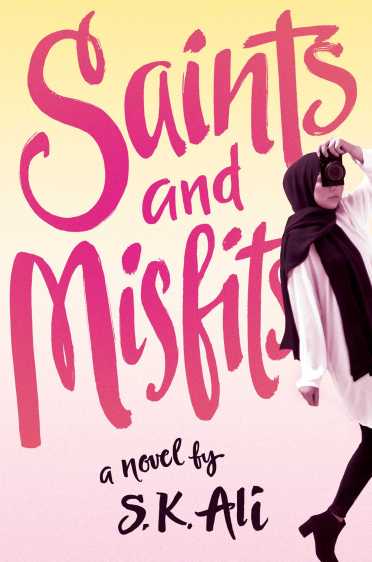
I enjoyed this book a lot. I had a bag of halal gummy bears, a rainstorm raging outside, and an excuse to snuggle in bed with a book, and I couldn’t put it down, even when I ran out of gummy bears.  I think mature 16 year olds and up could read it, and probably should, it is an important book, but I don’t know that I could recommend it to a young adult Muslim. Maybe, but probably college and up.  Not because high school students don’t read a lot about heavy stuff in English class. I mean Scarlet Letter, I Know Why the Caged Bird Sings or anything by Toni Morrison or Shakespeare are heavy, but they are removed from most Muslim teens.  They are old books, or about people from a different time and place. This book is real, and relevant, and relatable, and in 325 pages you feel connected to the characters as if you know them, or knew them, or more importantly for me, a 36-year-old Muslim American born and raised in America, as if they knew me.

SYNOPSIS:

Jannah Yusuf is 15 and in the opening chapter, less than 5 pages, she has to defend her choice to wear a burkini to her father, who assumes his ex-wife, her mom, has forced it upon her.  In the second chapter, we see that she has gone to visit her father to get away from a monster, her friend’s hafiz cousin Farooq, who attempted to rape her.  From there Jannah pursues a relationship with her crush, Jeremy, with the help of her best friend at school, Tats.  This pursuit involves intentionally having Jeremy see her without her hijab in gym class, and sneaking off to meet him.  Throw in the fact that he too is friends with the monster, Farooq, and the tension, anxiety, guilt, and shame that Jannah feels about her suddenly drama filled life is palpable.  Feeling increasingly isolated from her very amazing friends and family, she finds strength and support from a group of kids she is on an Islamic Quiz competition team with and an elderly Hindu man she helps once a week.  Eventually finding her voice, and reclaiming her strength to face her attacker is like a caterpillar coming out of her cocoon and you hope she soars and flourishes in reaching new heights and happiness.  The message of standing up against such acts and standing by those victimized by sexual predators helps puts the blame and shame where it should be, on the attacker, not the victim.

WHY I LIKE IT:

I like that it shows everyone in shades of gray. No one is good or bad or right or wrong, everyone is somewhere in the middle.  Even the most religious can be scum, and friends can both surprise you for good or for heartache.  At one place, Jannah considers telling her non-Muslim friend Tats about what is going on. “Almost.  The 60 percent reason that I hold back has to do with something I’m 100 percent sure of: I can’t handle people thinking I come from a messed up community.  I’d rather close the hamper lid on that one.” I think this is kind of where we are right now in real life and in literature. We want to be seen as complex characters, we aren’t a monolith, but we don’t want to celebrate our failures either.  This book does this really well, most of the time.  There is a girl who has memorized the Quran and wears niqab (a face veil) and has a vlog of stirring up stereotypes.  She helps Jannah get her revenge, and it doesn’t work, but at the same time she is never really nice.  Her friend Fizz, Farooq’s cousin, seems almost like family, but when told what has occurred, doesn’t believe her lifelong friend, and becomes rather disappointing and shallow.  Some of the friends, seem pretty stereotypical for the genre, the great non muslim side kick that supports and celebrates the protagonist, the endearing, yet annoying brother, the friend turned romantic interest when the dust settles, the Asian girl good at math, and the elderly neighbor who is wise, etc.. Yet, somehow I really wanted to know what happened to all of them.  I understand that for literary reason’s the book ended where it did, and there isn’t an epilogue, but from a reader point of view, I would like to know if Jannah’s brother got married, if her mom did, what course of action Jannah took against her assailant, what happened between her and Fizz, and if Jeremey and her became friends.

I think it is important to note, that Jeremy was awesome, like really a great respectful guy who knows about Islam and even that the hotdogs should be halal.  Jannah is figuring out who she is, and what direction to go in, which reinforces the female empowerment, but I think his attitude also deserves some credit in not taking her story and control away from her. The story doesn’t wrap up in a nice and tidy way, but I’d like to think they remain friends.  The reason the book gives that they can’t be more than that, is that he isn’t Muslim. It is echoed throughout that if he were Muslim, it would somehow magically be ok.  So, when at the end she realizes her feelings for the funny supportive friend Nuh, everyone seems ok with it.  Well, I’m not, yes I get that in real life people date and marry on their own and often people of different faith backgrounds. But, she is a Sophomore, who obviously isn’t looking to get married. She prays and covers, and seems to be an active and intentional Muslim. So, again, I get that it is more the norm than not, in the real world, but this is where I feel nervous about suggesting a teen to read it.  Muslims still are not regularly represented in print, and when you see an active and engaged Muslim doing so much, I feel like that does subconsciously form a connection to a reader and the line between right and wrong is blurred as a result.  Yes, I realize this contradicts the whole, we are not a singular entity, but I don’t know that many Muslim parents would encourage dating to their high school daughters as long as the boy is Muslim, despite it happening often.  I think we still want to see good idealistic messages from fictional Muslim characters in books that we suggest our children read.  And while we would want them to be inspired by Jannah’s strength to speak out against the crime commited against her, we may not want to give the message that we would also want them to be doing some of the other things she does.  Yes she is fictional, yes, most YA novels don’t have a moral theme, but like Jannah, I still want to keep the hamper lid on it all, even though I know that isn’t realistic.

There are a few plot inconsistancies, like how Jannah’s dad cuts the funding for her brother’s education, but when they are in Chicago visiting, their doesn’t seem to be any tension.  Saint Sarah’s background and motivation for change seemed a little choppy to me and the mom could have been fleshed out a bit more.  Overall though, even the visitors to the Mosque’s Open House ring relatable and comically true.  You can tell the author knows what she is writing about because it is familiar and funny, yet not judgemental.  I love that her characters are flawed and that it doesn’t define them wholey.  I love the way the author sneaks bits of practical Islam into the website updates Jannah does for her uncle and I love how the friends at school don’t read like an after school special.  Some attempts at getting people to change work, and others don’t, furthering the relatabilty of the book and keeping the preachiness at bay.

The book would work for Muslims and non Muslims and is a good entertaining read. There isn’t a religious or moral agenda that the author is trying to convince the reader of, but rather it is about reclaiming your voice when someone has tried to take it.  A message that never gets old.

FLAGS:

There is profanity, sexual assault, boy girl relationships, lying, mention of drugs and alcolhol, and bullying.  Its got it all.

TOOLS FOR LEADING THE DISCUSSION:

I wouldn’t do it as a book club read, not a youth one any way, adult one possibly.  But if a teen read it and wanted to discuss it, I would jump at the opportunity.  I think the book speaks pretty well for itself, but I’d love to speak to a teen to know it through their eyes.  To see what they found believable or far fetched, what they could relate to, how they process the crime and the recourse, what they would have done in a similar situation, what kind of friend they would have been, and ultimately what stereotypes the book forced them to confront.

I read something the other day that the way Muslims judge other Muslims on hijab is so inconsistent with our thoughts on praying or fasting or any other act of worship. If someone messes up we encourage them to try again, or ask for forgiveness or say it is none of our business and we will pray for them, but why with hijab do we feel justified in criticizing if they “try it out” or change their mind? For me, this book really drove the point home.  She is 15 and she lets a boy see her hair, I was bothered, and had to realize that, that really said more about me, than the fictional character I was reading about.  I like books that challenge my thoughts.  Like I said, I’d reserve suggesting someone read it, but I hope they find it and read it none-the-less, and then contact me so we can tear open a bag of gummy bears and discuss.

Watched by Marina Budhos

Standard
Watched by Marina Budhos

Watched-

This book is so incredibly timely that it feels like it could be real, granted its been timely since 911 and homeland security took to watching people more aggressively and openly.  But, New York police have been in the news about their methods regarding watching muslims and mosques, and this fiction book does a great job of getting inside a boy’s mind as he explores both being watched and being the watcher.  The book is 265 pages and is written on an AR level of fourth grade, but content wise I would not recommend it for anyone younger than high school.  The concepts and themes need to be put in perspective to appreciate the book.  And at the same time, being able to understand how terrorist recruit and how police aren’t always ethical, creates some gray area that require a certain level of maturity to make it resonate.  It isn’t a black and white story with good pitted against bad or legal verse illegal, the nuances in between are where the action takes place.

SYNOPSIS:

Immigrant. Muslim. Teenager. Screw-up. Lots of labels for high school senior Naeem Rahman.  Born in Bangladesh, he moves to Queens in New York, after his mother dies and his father has remarried in America and sends for him.  While there is a gap in his relationship with his father, the story doesn’t focus on issues at home.  He has a very strong relationship with his step mom, and his younger brother, making him very likable and endearing.  He has problems elsewhere, however, that stress his family and get him in to trouble.  His grades are poor and he learns he will not be able to graduate, which further distances Naeem from his small shop owning father.  And his friends have dwindled to a single friend, Ibrahim,  that enjoys weaving tales mixed with truth and fantasy and dreams, that gives Naeem a taste for living on the edge and running fluidly around the city.  When an adventure with Ibrahim goes bad, and Naeem gets stuck holding stolen goods, it is a deal with some cops that comprises the bulk of the story, and forces Naeem to decide if he can go from being watched, to being a watcher, an informant for the police.

With a prior run in with the law, some marijuana in his backpack, a working class family, and not wanting jail time, the police officers know that they can pretty much ask anything from Naeem and he will comply.  Naeem starts spying on his community online and by going to the masjid for prayers, volunteering with MSA’s, helping out with summer schools for Muslim kids, all things he and his family had stopped doing after 9/11 when cameras started going up on poles outside of mosques, and fellow worshippers started eavesdropping on each other to report back to the police.  But, now that Naeem is on the inside, he finds power and strength in what he is doing, a confidence he has never had before.  He starts helping neighbors, helping the family income, fasting in Ramadan, but all with a guilty conscience.  His foundation is deceptive.  When the story comes full circle and Naeem realizes the path he is on, he has to find a way to get out and own up to the choices he has made both to his community and to the police.

WHY I LIKE IT:

The story has moments of action and intensity, but it is also poetic and introspective.  Budhos really gets inside Naeem’s head and shares that with the readers.  Obviously, the book is for Muslims and non Muslims, it is a companion story to her book Ask Me No Questions, but I think the reason it resonated so much with me is because it is something I am familiar with.  So the poetic musings made Naeem more likeable to me, I didn’t see them as speed bumps in a book billed as a thriller.  I was glad that Naeem was charming and fleshed out.  His relationship with his little brother and with his step mom, really show that he has layers and isn’t just one label or another.  There is a lot of diversity in the Muslims presented and their backgrounds that make them who they are.  There are also a lot of cultures presented in this immigrant neighborhood that make the details solid.  There is no doubt that the author knows what she is talking about, that she is perhaps lived it in some capacity, the authenticity is definitely present.

FLAGS:

Aside from the arcing themes that raise flags for the younger, more sheltered readers. There are a lot of things mentioned, although not explicit or celebrated, they are presented in passing to create understanding of an environment.  There is drug use, kissing, violence and some profanity.  In a story like this there is obviously a lot of lying, stealing, talk of homegrown terrorism.

TOOLS FOR LEADING THE DISCUSSION:

The author’s website: http://www.marinabudhos.com/books/watched

Author interview with NBC news: http://www.nbcnews.com/news/asian-america/immigrant-teen-gets-swept-nypd-surveillance-marina-budhos-watched-n661171