Tag Archives: Olympics

Muhammad Ali and Malcolm X: The Fatal Friendship by Randy Roberts and Johnny Smith adapted by Margeaux Weston (A Young Readers Adaptation of Blood Brothers)

Standard
Muhammad Ali and Malcolm X: The Fatal Friendship by Randy Roberts and Johnny Smith adapted by Margeaux Weston (A Young Readers Adaptation of Blood Brothers)

bloodbrothers

A lot of us Muslims name drop Muhammad Ali and Malcolm X in discussions about civil rights quite often, and at least, speaking for myself, I thought I had the general idea about the relationship between these two iconic figures. I have read a fair amount of books in my quest to identify books that show how Islam shaped the men as opposed to those that tend to gloss over their eventual conversion to Sunni Islam, but I read this book as if it were fiction and I didn’t know what was going to happen next.  I have not read the original Blood Brothers, but this young readers adaptation is well done in conveying the politics, environment, struggles, and humanity of these two men.  Their flaws and growth, their tests, their friendship, it really is a compelling read. The focus on their friendship puts Nation of Islam as the focus, but the book does a good job of identifying it as being different than Islam.  As their friendship falters, Malcolm X goes for Hajj and is seen to change, and choices made by Cassius Clay show the men quite distant at the time of el-Hajj Malik el-Shabazz’s assassination, even though eventually their paths proved quite similar. The 240 page book is MG, but I think middle school readers (in classrooms, book clubs, and on their own) will better appreciate the intersection of these two giants, the events of their time, and the legacy they have left for us all.

SYNOPSIS:

The book is a snapshot in time, sometimes focusing on Malcolm X, sometimes on Cassius Clay, sometimes of their time together.  It starts with background insight and then shares the rise of both of them in their respective worlds, Nation of Islam and boxing.  Threaded through it all is the influence that Elijah Muhammad had on them, and key events they experienced that shaped their thoughts and opinions on race relations, politics, religion, and life.  It shows Malcolm X as the teacher, and leader taking in Clay and believing in him against the Nation’s wishes and thus when Muhammad Ali pushes him away the reader sees the Champ in a different light.  It shows deception and manipulation, as deep and riveting as the best fiction out there, but is very vulnerable in showing regret and both individuals’ ability to keep learning and growing.  The conclusion highlighting Muhammad Ali reaching out to Malcolm X’s daughter Attallah, and the forgiveness that took place in restoring the love between the two men and their families, really was a cathartic release that reminds readers that for as idolized as these two figures are in pop culture and history, they were very real people.  The book has a Biography at the end that breaks down sources by Government Documents, Archival Collections, Newspapers, Magazine Articles, Books, and Websites.  It is a “Selected Biography” that is seven pages long.

FLAGS:

Racism, manipulation, assassination, hate crimes, stereotypes, propaganda, oppressions, abuse, police brutality, assault, bombing, arson, attempted murder, fear, threats, killing.

TOOLS FOR LEADING THE DISCUSSION:

I have preordered a book for my own children to read and one for the school, I really think this book needs to be easily accessible for middle school students in libraries, classrooms, and homes.  I would love to do this as a middle school book club, I think the authentic perspective will give our youth who have heard of Malcolm X and think they know Muhammad Ali some insight into really spending time with what they did, what they faced, and how remarkable their friendship was.

Messenger: The Legend of Muhammad Ali by Marc Bernardin illustrated by Ron Salas

Standard
Messenger: The Legend of Muhammad Ali by Marc Bernardin illustrated by Ron Salas

img_9626

I’m always curious how books about Muhammad Ali will present his “Islam” and this 240 page graphic novel was no exception.  I was a little hesitant with the title, and with the foreword establishing that this book is akin to the heroic poems of Odysseus and Gilgamesh, and that “inspired by truth, and truth itself, aren’t the same thing.”  I did appreciate that it says if you are going to take a test on Muhammad Ali and this is your only source, you will fail.  It seems to recognize that Ali means a lot of very different things, to different people and this book at times is true and at times just feels true.  Broken into 12 chapters, 12 rounds, the author offers sources in the back, but leaves wiggle room for creative liberty.  I think if you are familiar with Ali’s life the book doesn’t provide anything shocking and you will enjoy seeing it play out in graphic novel form. If you aren’t familiar with him, the book is a little too choppy to paint a comprehensive biography and you will be confused and need outside clarification at times. I looked into the book before diving in, and many reviews say that the story makes his life accessible to middle grade and middle schoolers, the publisher says 10th-12th grade, and I think with the panel of a prostitute trying to talk to him, alcohol being offered to him, the recreation of him being positioned as a saint being martyred for a magazine cover shoot, comments about being with a lot of women, and some of the politics, the book is best suited for high schoolers.  
SYNOPSIS:

Framed around the lighting of the Olympic torch in 1996 the book then goes back and fills in the gaps on some of the big events of Muhammad Ali’s life:

Round One: Schwinn. 1954. Having his bike stolen and being introduced to boxing.

Round Two: Olympian. 1960. Winning Olympic gold.

Round Three: Church. 1961. Meeting Malcolm X.

Round Four: Sonny Liston. 1964. The fight.

Round Five: Media. 1967. Interview with Howard Cosell.

Round Six: Martyr. 1968. Esquire cover shoot.

Round Seven: Defendant. 1971. Draft evasion charges and fight with Joe Frazier.

Round Eight: Candle. 1974. Meeting a child with leukemia.

Round Nine: Rumble. 1974. Rumble in the Jungle.

Round Ten: Patient. 1980. Early signs.

Round Eleven: Shepherd. 1990. Iraq hostage negotiations with Saddam Hussein.

Round Twelve: Survivor. 1996. Lighting the Olympic torch.

WHY I LIKE IT:

It does articulate that he parted ways with Nation of Islam in chapter 11, Elijah Muhammad and Nation of Islam is pretty prominent in the book up until then, and then in Iraq it does show him praying salat, mentioning the blessings of Allah swt in freeing the hostages, and noting he is going as the most recognizable Muslim American.  I always enjoy reading about Ali and Cosell’s relationship, so I particularly enjoyed those scenes and like the premise of the book established, who knows if they are true, but they feel true and in many ways make Ali seem almost fictious with his equal parts arrogance, humility, humor, and insight.  I had to do a bit of outside reading about the Esquire cover shoot, and the Iraq hostage situation, the book did not seem to make it clear, and got me to thinking perhaps some of the other chapters only seemed clear because I had read about those incidents before.  

Normally I like books to be sourced and a book that is biographical to be accurate, but I almost wanted this book to just be extravagant.  To have fun with the persona of Ali and make him into something of legend that the foreword seemed to hint at.  What I thought was going to make him even more so “the greatest” seemed to just provide a safety net of protection to imagine what was going on in Ali’s head during the 12 rounds highlighted.

FLAGS:

There are some offers of alcohol which he refuses, some pointed political positions, a prostitute in a hallway invites him for free, he refuses. He recreates a martyr scene even once he established he was Muslim and wasn’t ok with it, but a phone call to Elijah Muhammad’s son, made it ok because it was for money, there is a lot to unpack there for kids.  He makes a comment about being with a lot of women at one point, not in your face, but in a graphic novel, to dedicate a panel to it, makes it stand out.  Racism, hate, bigotry, prejudice.

TOOLS FOR LEADING THE DISCUSSION:

I am a bit on the fence with this book.  I think it would work for a high school book club, but with a lot of context.  If you are discussing Ali, this would be a suitable supplement in a high school classroom.  If you are an English teacher talking about Homer and heroic poetry, I think this would be a great contemporary example. I don’t know that I would stop mature middle schoolers from reading it, but I don’t know that I would be suggesting it either.

If the book seems like a good fit for you, you can order it here.

Becoming Muhammad Ali by James Patterson and Kwame Alexander illustrated by Dawud Anyabwile

Standard

img_8575

This 310 page, AR 5.4 biography reads like a dream being remembered and flowing with newly awakened images presented in a lyrical way. The changes in point of view and writing style keep the book bouncing like a boxing match, and flesh out the early life of Muhammad Ali for middle grade readers.  Only at the very end does it mention that he changed his name when he converted to The Nation of Islam, it doesn’t detail much about it, and it doesn’t mention his eventual conversion to Islam, even though it does mention him being diagnosed with Parkinson’s and his death.  I understand that the book focuses on his preteen and teen years, but it seems like The Awakening of Malcolm X also intentionally cut that footnote out of the book, and having read that book a few weeks ago, it seems a deliberate exclusion in both cases and that bothers me.  It could be coincidence, as both 2020 published middle grade coming of age books have familial support in the writing and research, admittedly it just might be my timing of reading them makes it seem that something larger is at play.  Ultimately, this book gives insight into who Cassius Clay was, and what his life and friend circle looked like as a boy in Kentucky. The verse and flow of the text make the book an easy and enjoyable read.

SYNOPSIS:

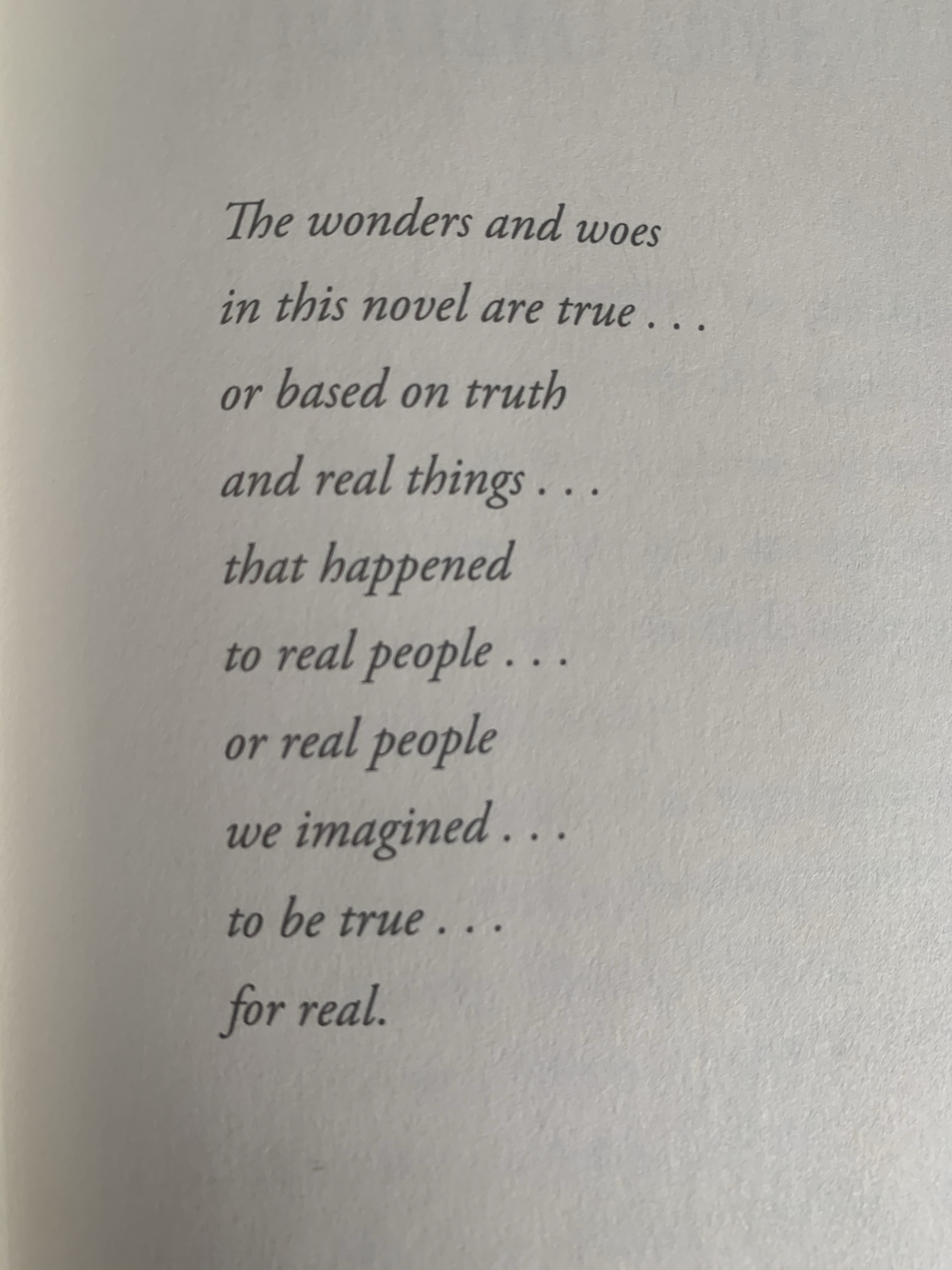
Lucky is Muhammad Ali’s friend growing up and is the narrating voice that sets up each chapter and overall framing of the book.  The bookish friend is a writer and eventually a journalist that moves the story forward.  The verses that follow each intro are the imagined voice of Muhammad Ali.  There is a bibliography at the back, but the story starts with this warning, or disclaimer, or wink of sorts:

img_8621

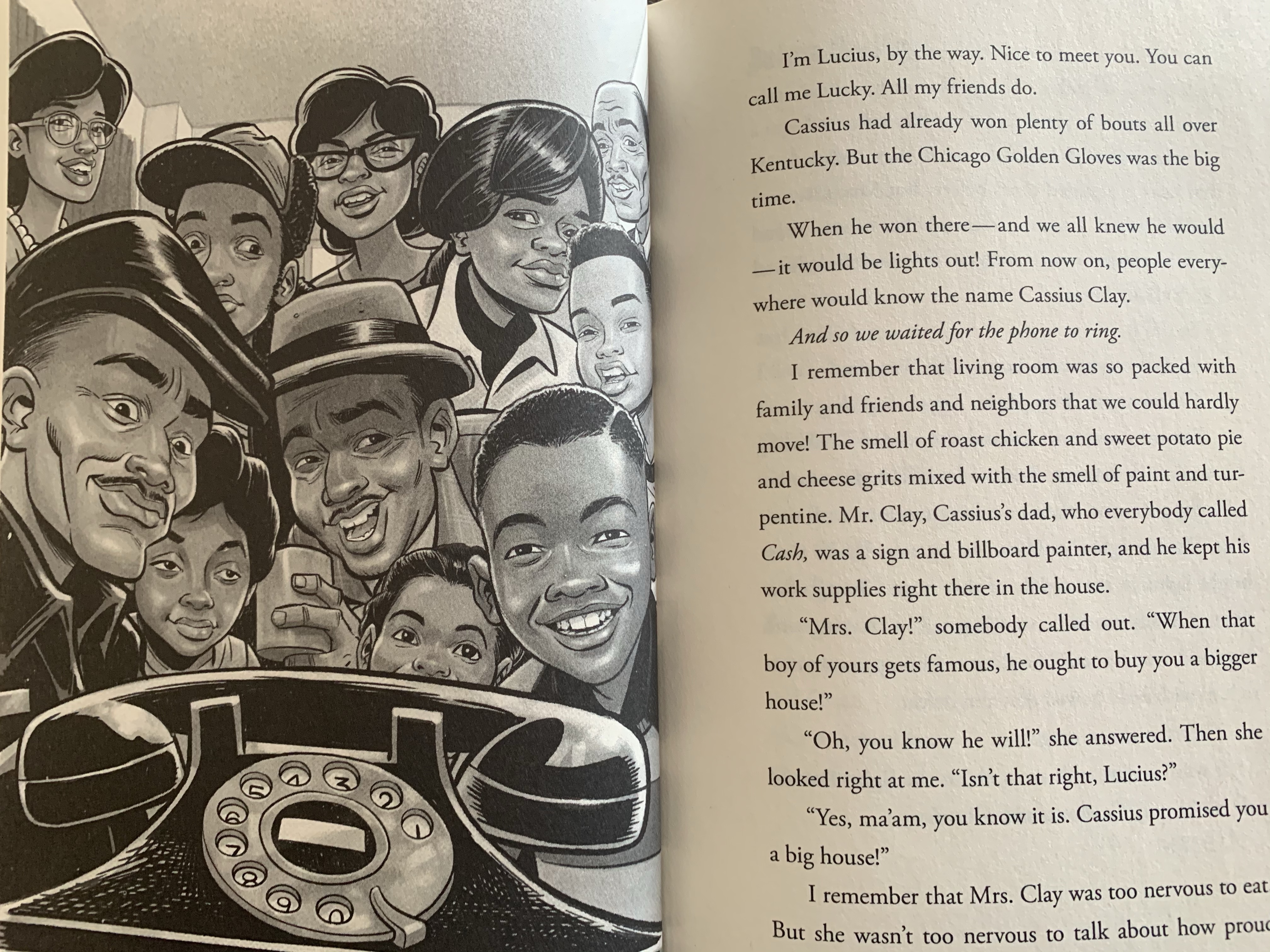
The book opens with Lucky and the Clay family waiting for the phone to ring in 1958 to find out if Cassius has won in Chicago.  He is there fighting for the National Golden Gloves.  He eventually loses the tournament, but he doesn’t stay down.  The book then rewinds and starts back before Cassius ever enters the ring.  The reader gets to know about Granddaddy Herman and the bond that the two share.  He is Cassius’s church and source of pride.  We also learn about how Cassius sees the world and the racism that exists in it. His humbleness and frustration with seeing how hard his mom has to work for so little reward.  We see how his friends shape him, but more importantly how he shapes them, and we see how although he struggles in school how he is articulate and respectful and beloved by so many.  His younger brother is a constant in the story, as is the narrator Lucky.  The book gets inside the character Cassius and if you didn’t know it was a biography, you would think it was a fictional coming of age book.  The ups and downs, the setbacks, the frustrations, the dreams, it all flows and makes you feel for this determined kid, who despite all his bravado, is really a down to earth human being.

img_8577

WHY I LIKE IT:

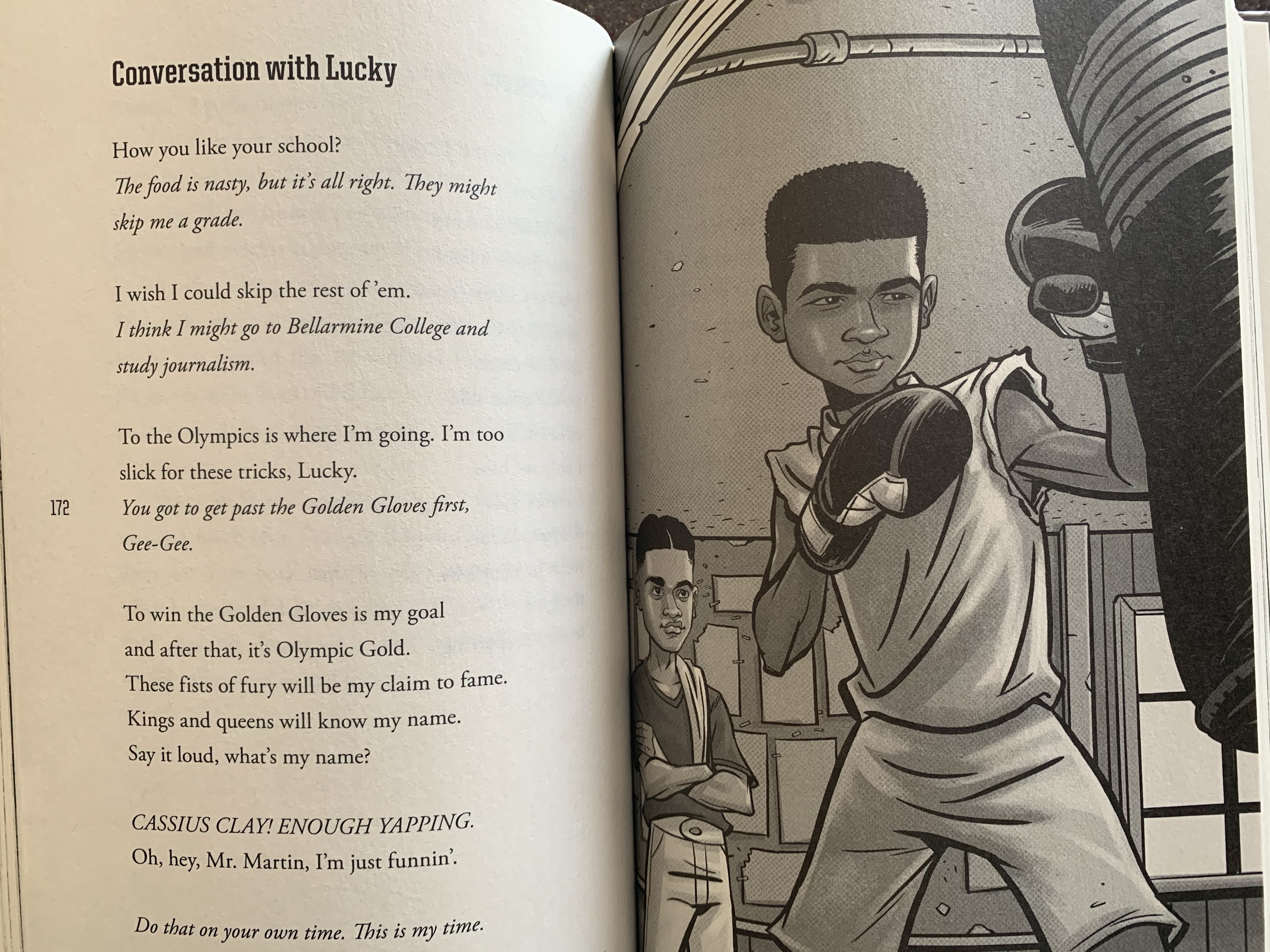
I don’t think I learned anything ground breakingly new reading this book, but I felt like I got to know the material in a more fleshed-out way.  It isn’t a list of facts or hight lights, it is the nuanced day-to-day that lift him off the page and out of the headlines.  I like the change of voice and style of writing, it made sense to me, and allowed the book to resonate differently than a traditional biography would.   I think it will also appeal to a wider audience because of the verse and easy flow.  I similarly enjoyed the illustrations that pepper the book.  I appreciate that the story is told from a friend looking in on someone that he knows well, but I almost would have preferred his brother being the voice and bringing the reader even closer to the boxer. Ultimately I want to know more about his parents and his brother and how they felt about his success.  The book didn’t answer a lot of question, but hopefully it will spark the curiosity of readers to go and learn more.

img_8578

FLAGS:

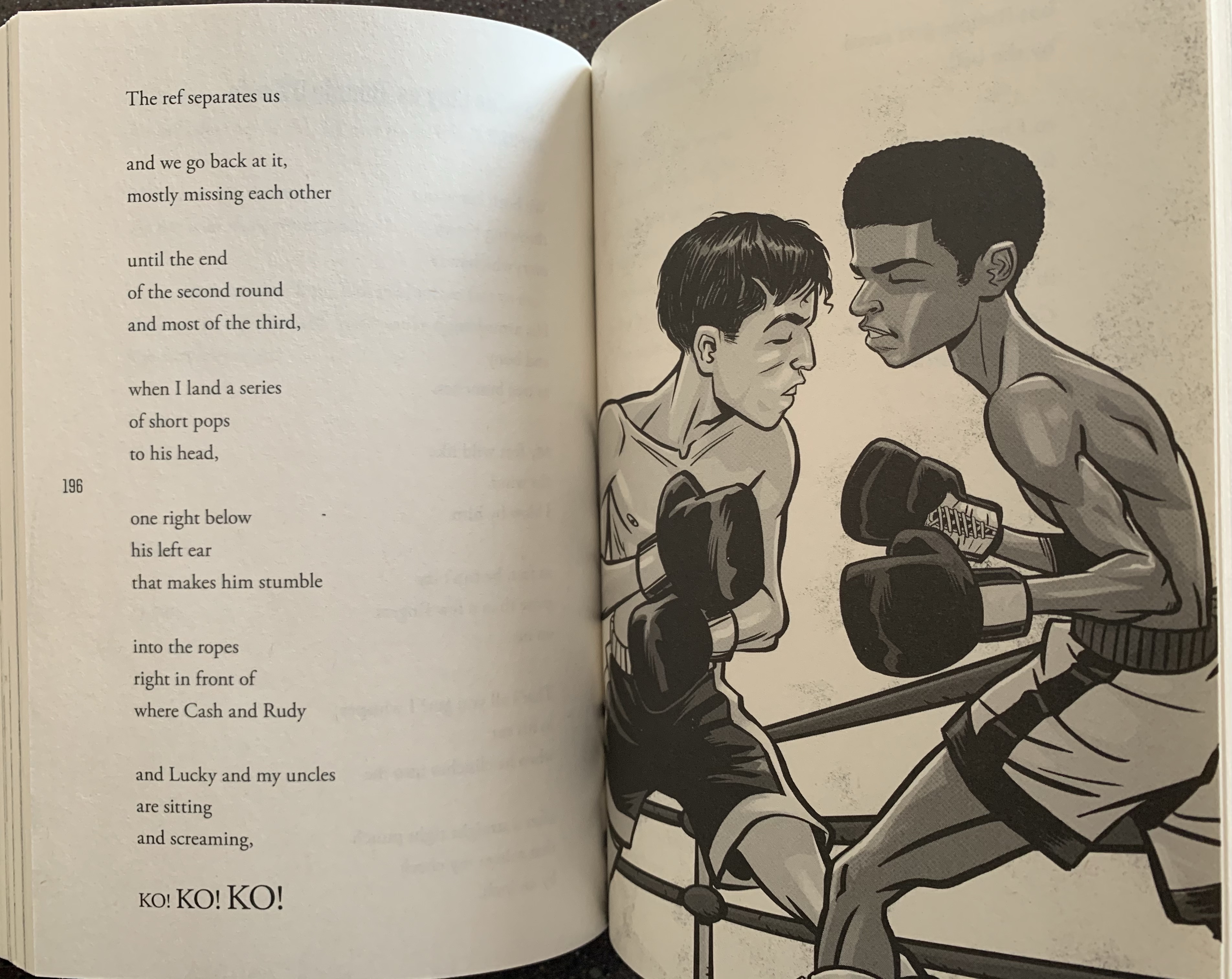
He slightly mentions crushes and dating, that his dad is out galavanting Friday nights until Saturday.  There is mention of a side character having part of his face damaged in an explosion, there is reference to the N word.

img_8576

TOOLS FOR LEADING THE DISCUSSION:

I would consider the book as a book club selection if it served a larger purpose or the group had a preexisting interest.  I think if I were to meet with a group of kids more than just once a month for an hour or so for a book club discussion, this book would have a lot of potential for introducing the athlete, writing styles, historical implications and so on.  I just don’t know that we could get to all that in such a limited time. If they had already learned about his boxing accomplishment,  his protesting of the war, his conversion for example, this book would be a great discussion extender to supplement basic knowledge of him.

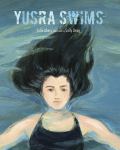
Yusra Swims by Julie Abery illustrated by Sally Deng

Standard
Yusra Swims by Julie Abery illustrated by Sally Deng

yusra

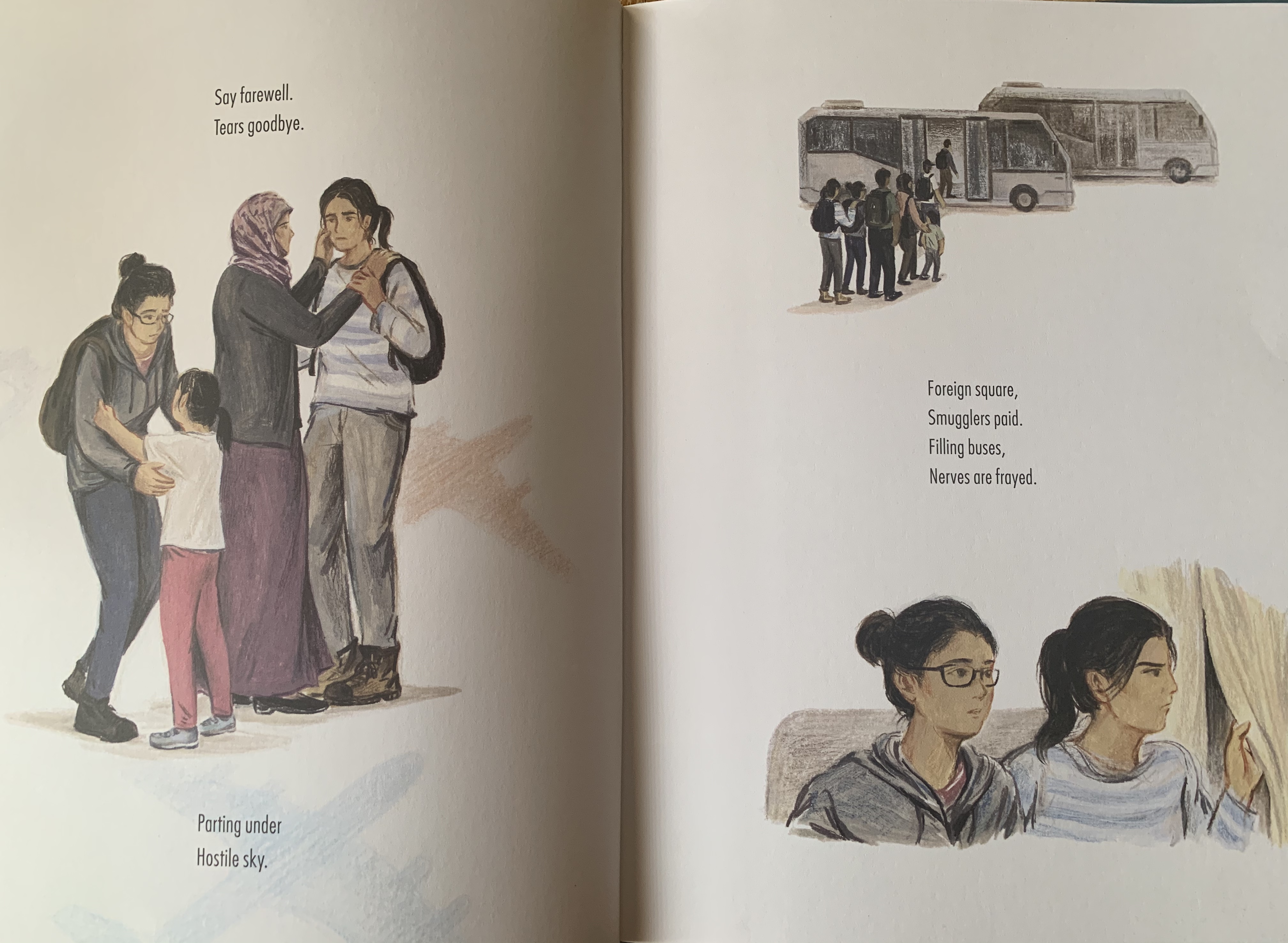
This 32 page biography told in sparse rhyme about Yusra Mardini is powerful in its minimal text and realistic illustrations.  Children as young as six could easily read it, but I think older kids will be more moved by the story of a 17 year old girls Olympic swimming dreams being derailed by war, and the difficult journey her and her sister took to escape.  With no more than 10 words on each two page spread, the vocabulary is more suited to perhaps third grade and up.

Yusra lives in Syria and dreams of the Olympics.  She trains even as conflict grows in the country.  When it gets bad, she has to flee, her father can only afford to send her and her sister.  Smugglers are paid and they leave.  They take on the open sea, and her and her sister steer the boat through the water when the engines stall.  Once they reach land, and pray, they are stared at.  A kind stranger offers her shoes. They continue on land by foot, bus and train.  They finally reach Berlin.

Once settled, she resumes her training, and a fact page at the end shares how the International Olympic Committee invited her in 2016 to join the Refugee Olympic Team and compete in Rio de Janeiro.  And thus she achieved her dream and was able to swim in the Olympics.

83175260-2878-4DDF-AA9F-3618FEEF41A5

There is nothing religious in the book, except when she is leaving and is hugging a woman in hijab.  Presumably it is her mother, and thus I’m assuming that she too is Muslim. When you google it some articles say she grew up in a muslim family while others say she is Christian, so I really have no idea.

DCAB592B-C32C-4FDB-AF1D-8CF13F36F164

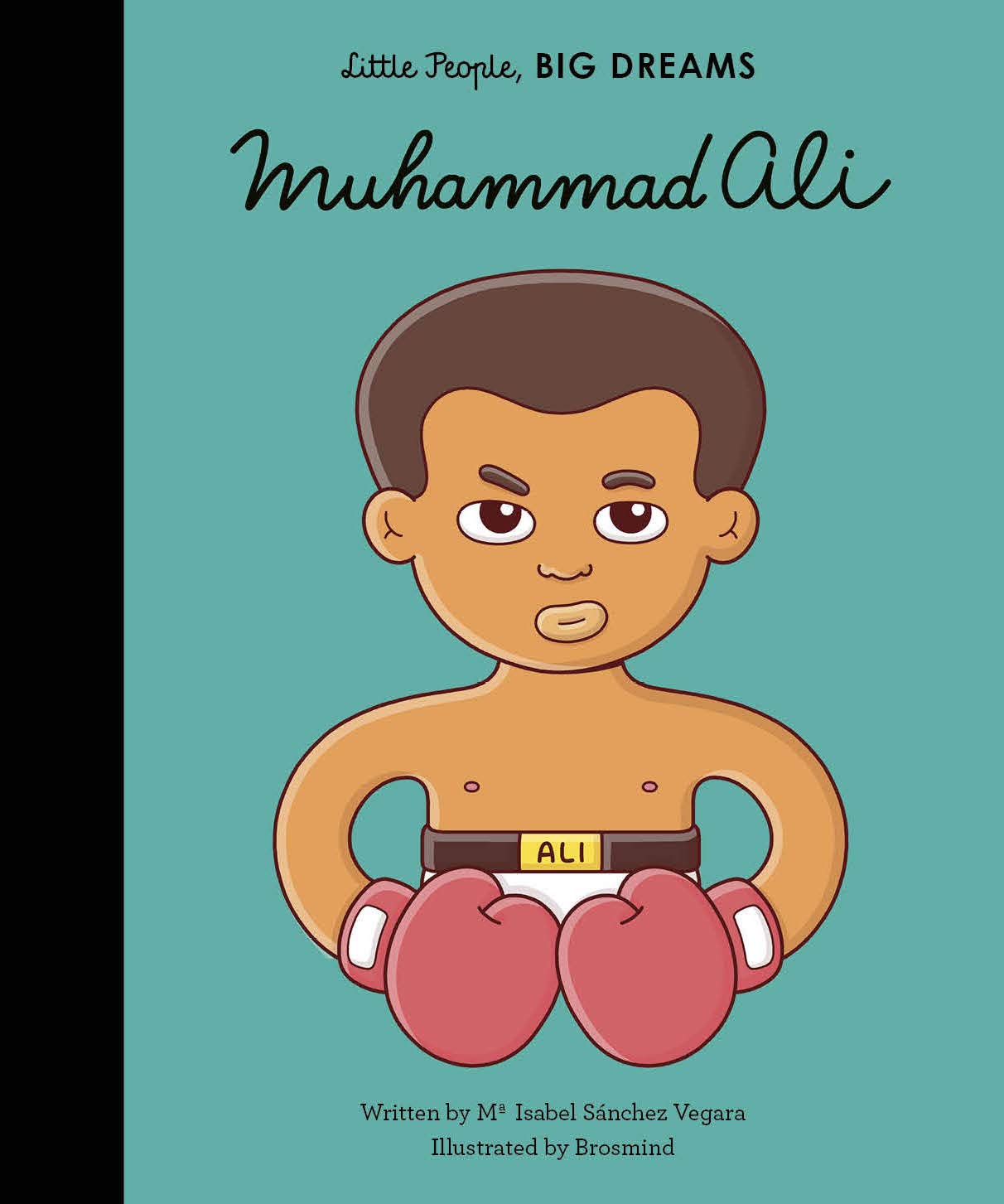
Little People, Big Dreams: Muhammad Ali by Isabel Sanchez Vegara illustrated by Brosmind

Standard
Little People, Big Dreams: Muhammad Ali by Isabel Sanchez Vegara illustrated by Brosmind

muhammad ali

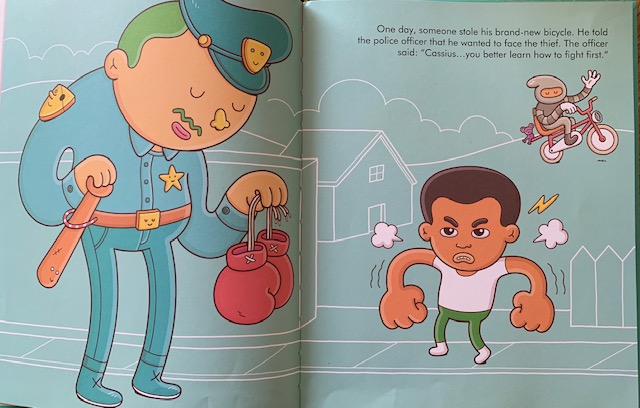
A few things surprised me in this latest addition to the non fiction biography series Little People, Big Dreams. First that a police officer told him to learn how to fight if he wanted to face the thief that stole his bike.  Second, that the 32 page book targeting 5 to 8 year old children has an AR level of 4.8 and finally that it does mention his conversion to Islam and shows him praying.

IMG_7247

The biography hits a lot of major milestones in the boxer’s life after showing he once was a little kid too.  He was born in Kentucky, had a younger brother and after his bicycle was stolen he started learning how to box.  He wasn’t the strongest fighter, but he was fast.

IMG_7243

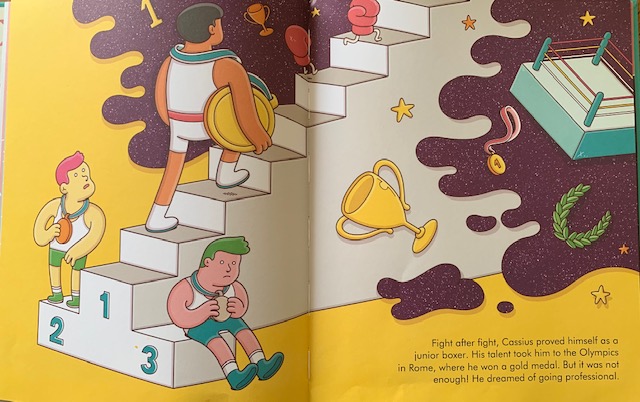
He won a gold medal at the Olympics in Rome, and then set his sights on being a professional boxer and becoming the world heavyweight champion.  Its nice that on this page the illustrations show that part of that pursuit involved physical training but the books and meditation show internal growth was valued and pursued as well.

IMG_7244

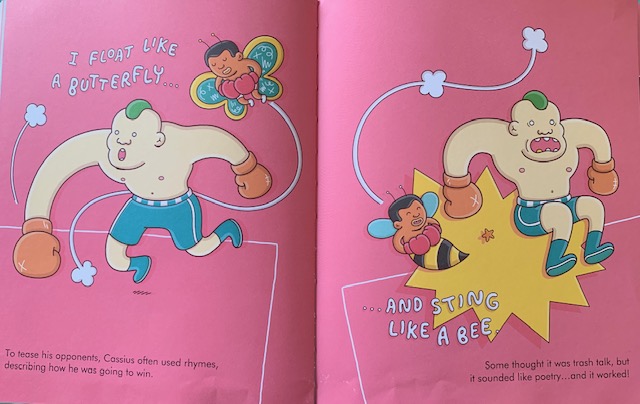
It shows how he used to taunt his opponents and that some thought it poetry, while other’s thrash talk. It also makes it clear that he used his voice to speak out for things important to him at a time when it was dangerous and accepted the consequences, whether it was African American rights or the war.

IMG_7246

The page about him becoming Muslim explains that he was inspired by Islam, changed his name and “felt strong and proud to be himself.”  After his ban from boxing, he won the heavyweight belt three times before retiring and dedicating his life to community and giving back.

IMG_7248

The book ends with a timeline and some real pictures of Muhammad Ali, along with some other books you can turn to for more information.  The illustrations are comical yet detailed in their emotion and the information that is conveyed.  Kids will enjoy them and find they give life to the simple text on the pages.

IMG_7245

I got my copy from the library and my children aged 4-12 enjoyed the book as they have the other books in the series.

IMG_7249


Proud: Living My American Dream (Young Readers Edition) by Ibtihaj Muhammad

Standard
Proud: Living My American Dream (Young Readers Edition) by Ibtihaj Muhammad

proud.jpg

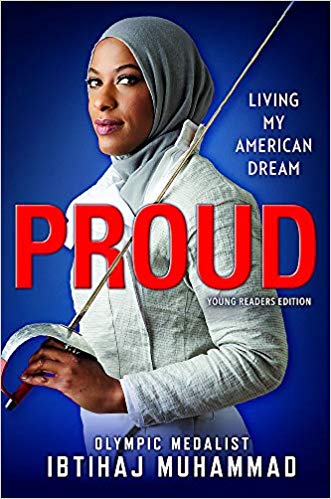
I had high expectations for a memoir about such an inspiring figure, so I treaded timidly into the book waiting to be disappointed, but after finishing the book in two days (high praise considering I have four kids), I realized I was holding my breath for nothing, the book and Ibtihaj are amazing! Now three days after I started, my daughter too has read it and I have ordered a handful of copies to offer as my next Middle School Book Club selection.  Inspirational, real, Islamic, hopeful, empowering, check, check, check, check, and well written too.  A great story and a great role model, alhumdulillah.  The Young Reader’s Edition is an AR 6.7 and 304 pages including Acknowledgements, Glossary of Fencing Terms, Ibtihaj’s Advice, and Q and A with Ibithaj.

SYNOPSIS:

Ibtihaj begins her life story establishing her background of who her parents are, how they met, how they came to Islam and how they are raising their children.  She also details how she is different and realizes it from a young age, whether it is substitutes not being able, or willing, to pronounce her first name, or not being able to sleep over at her friends’ houses.  She also sets the stage for the environment of Newark that she was born into and how it differs racially and economically from Maplewood where she spent most of her childhood.  The story then is pretty linear walking through some of the challenges of being highly driven and motivated and determined to succeed and get in college.  How she is first introduced to fencing and why she gives it a second chance after initially not liking it.   Along the way the reader gets to know how Islam influences her point of view as Allah is very central to her decisions and expectations of herself.  The quick pace is not depressing, while others at times do treat her differently she definitely doesn’t paint herself or seem to see herself as a victim or as privileged, she is just herself and this is her story.  It isn’t all rosy and it isn’t harsh, she is putting one foot in front of the other and there is amazing support from her family, and some of her coaches and some of her teammates, but not everyone and that is a very important part of her story too, which I think provides even more for young readers to relate and learn from.  Anyone not familiar with fencing and how the sport and its rankings work will learn so much reading this book, but thankfully not be overwhelmed with it all either.  The book ends shortly after the Olympics and her historic bronze medal win.  The title may reflect her being proud of what she accomplished and continues to pursue and her pride in being a Black American Muslim Woman, but I think anyone who reads the book will just be proud that someone like her exists, and that maybe some small part of ourselves can be great too.

WHY I LIKE IT:

I love that the book leaves in some of the naysayers and difficult coaches and teammates.  I really think it is easy to assume that people are great and things should all work out when you are competing on an international level, but alas no, completely not the case, yet differences aside, they still had to win an individual sport as a team. 

 I also love that she is truly what she claims, the way she practices Islam is who she is and she loves her family and her faith.  There are no contradictions she excels and perseveres and finds herself while acknowledging all parts of herself and it is so inspiring.  She portrays Islam as a way of life, she prays and fasts and has days when her iman is low and days her faith is rewarding.  She focuses on what she can control and has to learn to accept what Allah swt has decreed for her.  She has Muslim friends, and non Muslim friends and through it all she is finding her place and is surrounded by love and support from her family.  It really is a feel good story and we should all pray that it continues to be.  She doesn’t portray Islam as limiting, nor as her family an exception to what a Muslim home is, and this level of dawah can really change perceptions.  The book is not preachy or arrogant, it is simply her story and Islam is a part of it.

I like that she went to a prestigious university and it didn’t make all her dreams come true, she still had to work hard and find herself and humble herself to work at a dollar store to scrape by, it shows tenacity and a glimpse of the real world that privileged middle schoolers might not have had to consider before.

FLAGS:

The book is clean.  It talks about how uncomfortable she was at her first fencing lesson with her coach having to reposition her stances and thus touch her, and it discusses how she felt listening to music was ok in Islam even though her parents disagreed.  A few sentences at most, collectively, but kids will have thoughts on it.

TOOLS FOR LEADING THE DISCUSSION:

My 12 year old daughter read the book in a few hours and discussed it with me for even longer.  It was as if some tidbit from the book would blossom inside her and she would consider it, and want to discuss it, from why she would not talk to the kids she was substituting about fencing, to why her coach made her switch to saber, I don’t think there is a shortage of things to discuss, or more importantly listen to from the young readers.

There is a ton about her online as she became the first American Muslim to medal and the first to compete in hijab.  I highly recommend this book for book club, and will  hopefully add how our meeting went in a few weeks.