Tag Archives: muslim bookstagram awards 2021

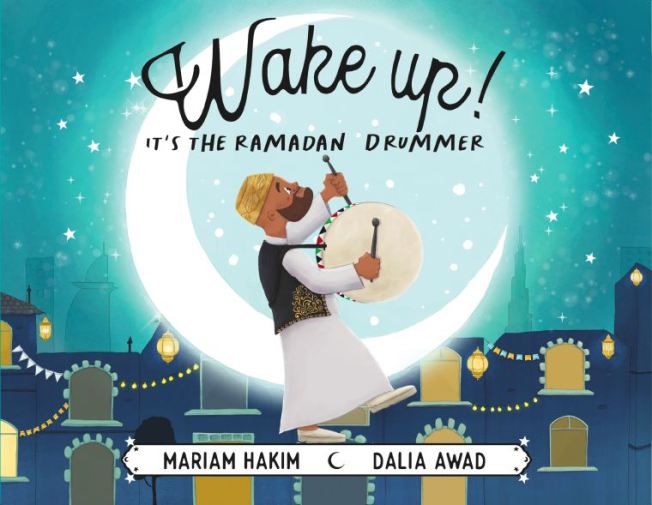
Wake Up! It’s the Ramadan Drummer by Mariam Hakim and Dalia Awad

Standard
Wake Up! It’s the Ramadan Drummer by Mariam Hakim and Dalia Awad

wake up

The beautiful shimmering cover of this new Ramadan book drew me in from the first few pages with the emotional impact of the father in the story losing his job.  Unfortunately the fun illustrations and overall story are not quite enough to make the book an enjoyable read over multiple readings.  By the time you read the book a second time, the missing punctuation, the assumptions and continuity holes, make the book unravel.  It has merit and highlights, I just really hope that an editor is brought in before a second printing takes place to clean up the sentences, patch the holes, and polish it to make it shine.  It has so much potential, but it is disappointing especially if you have been waiting, perhaps a bit impatiently, to share this with children to get them excited for Ramadan.  Even more so if you had hopes of reading it again and again throughout the month.

img_7075

The book summarizes Ramadan on the first page, presumably making the ideal reader a Muslim already familiar with Ramadan significance, and then jumps into revealing that the Baba has lost his job.  The optimistic mama isn’t deterred and sends the Baba and kids to the store so she can cook up something special.

img_7077

While at the store an elderly woman greets the kids and their father as, “Abu Tabla.” The son dismisses it until later that night when Baba has gone to the mosque and Mama surprises Adam and Anisa with the story of their Baba’s baba walking the streets before dawn to wake people up for suhoor.  She even digs out an old photograph, and with that, Adam is determined to get his father to revive the tradition.

img_7076

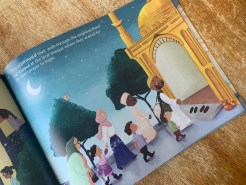
I love that Adam and his Baba work together to figure out lyrics and a beat.  I also like that it isn’t an instant success, but rather takes some grit, determination, and perseverance.  I also like that the whole family and eventually neighborhood come together, and that men and women go to the masjid for fajr.

There are some concerns I have though as well.  There are a lot of missing commas, the text uses mosque instead of masjid which reads inauthentic, and the whole old lady character, Hannah, is all sorts of underdeveloped.  She has to introduce herself, yet she knows where Abu Tabla lives, a drum magically appears in her hands, and her prodding is based on the premise that she knows what is going on inside people’s homes, what they are thinking, and what their intentions are.  I get that it is a kid’s story, but by the second or third reading it is hard to unsee how erroneous the logic is.  Especially when fasting like so many acts in Islam, are between a person and Allah swt, not for everyone else to judge.
img_7078

Presumably the story takes place in an Islamic majority setting and the neighbors are all Muslim, which offers a great discussion starter for readers in non Muslim majority places to find ways to maybe share Ramadan or to imagine living where everyone is fasting.

I feel like the last few pages about the drummer going viral is unnecessary, and the story could have, and probably should have, ended with the family and parade entering the masjid.  I particularly found it odd that a line reads, “News of the Ramadan drummer tradition starting up again reached as far as Pakistan, Egypt, Somalia, Turkey and even Indonesia,” why is Indonesia called out like that? Seems off putting somehow, not inclusive. The book concludes by circling back to the Baba getting paid to wake people up and finding jobs through the people also coming to fajr, which seems a bit raw for a children’s book.  A simpler, “even though Baba found another job, being the drummer was still the one he loved most,” would have tied everything up a little better for the demographic.  I’m hoping to include this story during one of my weekly Ramadan story times in my local community, and will probably skip the last few pages and just read the hadith at the end about waking up for suhoor.

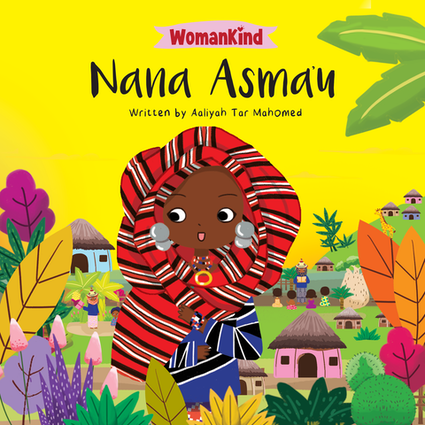
Nana Asma’u by Aaliyah Tar Mahomed illustrated by Winda Lee

Standard
Nana Asma’u by Aaliyah Tar Mahomed illustrated by Winda Lee

nana asmau

This book may only have 14 pages of text and be meant as an introduction for early preschool aged children and up, but I learned so much, or rather was made aware of so much that I knew nothing about, that I’m now eager to research her and the Sokoto Caliphate and the impact of Jajis.  The beautiful, bright, engaging pictures, the simple deliberate text, and the inspiring content matter make this a great book to share with little ones, and to keep on the shelf for repeated readings and reminders to learn more about this remarkable woman for older children.  My only wish was that there were some reference notes or sources included to give that extra reassurance of authenticity.

img_6076

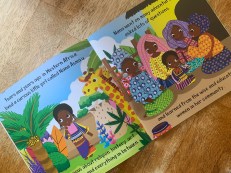
The book tells about Nana Asma’u’s life starting from being a curious child and asking questions to the wise women in her community.  By the time she grew up she had memorized the Quran and spoke four languages amongst many other things, and Nana loved to write poetry.

img_6077

During this time, there was a lot of conflict in Western Africa, and Nana’s father, Shehu Usman resolved the issues and created the Sokoto Caliphate.  With peace, Nana wanted to help educate the people. She thought long and hard about how to do it.

img_6078

She eventually brought together women from different regions of the Caliphate and taught them through poetry, she then sent the women back to their homes to share what they had learned.  These women were known as Jajis, and this tradition still exists today.

img_6079

I didn’t love the phrasing that she had learned all about Islam, seeing as one can always learn more.  And I would have like Prophet to have been capitalized and salawat given for respect.  Overall, a great book that alhumdulillah I was able to purchase from Crescent Moon Store.

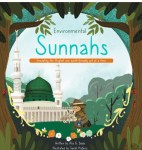
Environmental Sunnahs: Emulating the Prophet One Earth-Friendly Act at a Time by Alia G. Dada illustrated by Sarah Hafeez

Standard
Environmental Sunnahs: Emulating the Prophet One Earth-Friendly Act at a Time by Alia G. Dada illustrated by Sarah Hafeez

This beautiful book explores how intertwined Islam and caring for the earth are in a kid appropriate manner.  The rhyming lines and fun illustrations are accompanied at the end by very detailed sourcing, references, and tips.  All non fiction or fictionalized fact books should be sourced this well, it really has set the bar, and left most books in the dust.  My only real critique of the book is that I wish it was larger.  The pictures and dancing text need more space to be poured over and enjoyed. The 8×8 size doesn’t do the 36 page book justice.  The inside text should also be a more uniform/consistent in size.  At times the rhyme is off and feels forced, but because there are facts on each page the story isn’t read consecutively.  You break the rhyme scheme to ponder over the “Did you know?” sections, so the beat and cadence isn’t super important.  Overall, a well-done book to share and discuss with children ages 5 and up, and a great reference, resource, and memorable teaching tool to bring us all closer to the prophetic mannerisms we strive to emulate.

img_5042

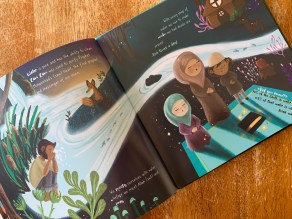
The book starts off with a message by naturalist, Director of the Art and Wilderness Institute and author of “How to Draw 60 Native CA Plants and Animals, a Field Guide (and my former childhood penpal) Sama Wareh.  It then jumps in to exploring the miracle of nature on land and under the sea. It shows desert landscapes, and mountainous ones, jungles, and farms, valleys and cities.

img_5043

The book talks about water: Zam Zam and wudu and where clean water comes from.  How little water we should use according to hadith and how to respect all living things. It talks about Prophet Sulaiman (as) showing kindness to even an ant. And how planting a tree is charity. It shares information about reusable goods, limiting waste, and understanding eco systems.

img_5044

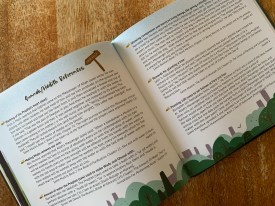
The book concludes with easy to read Hadith references, Quranic references, a glossary, and action items.