Tag Archives: blessings

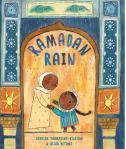
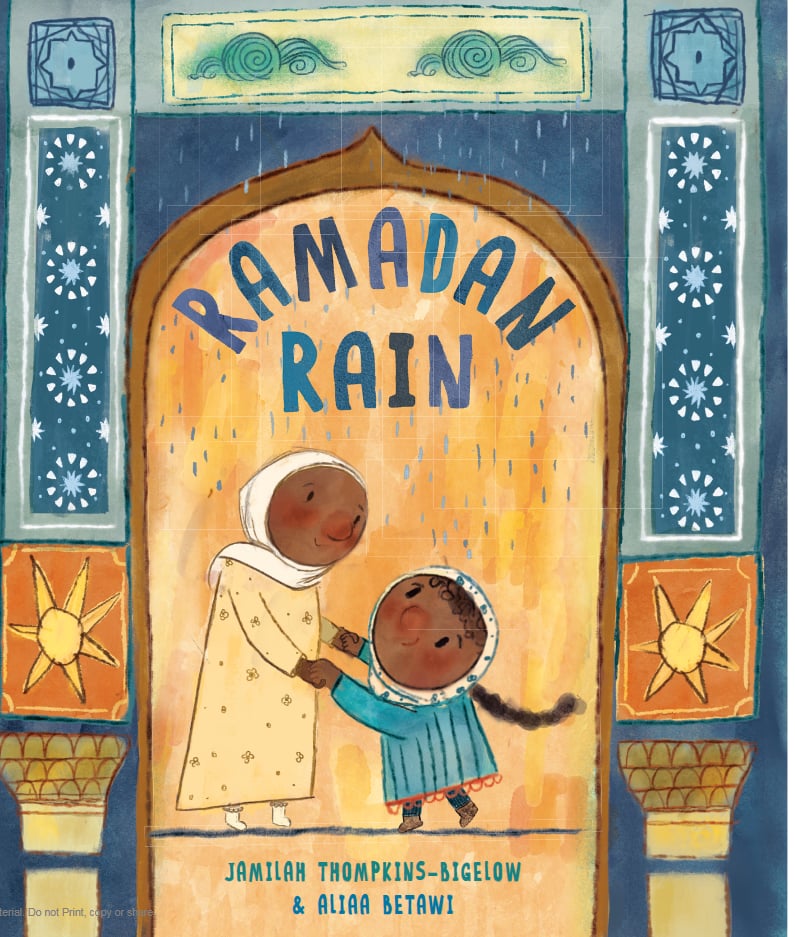
Ramadan Rain by Jamilah Thompkins-Bigelow illustrated by Aliaa Betawi

Standard
Ramadan Rain by Jamilah Thompkins-Bigelow illustrated by Aliaa Betawi

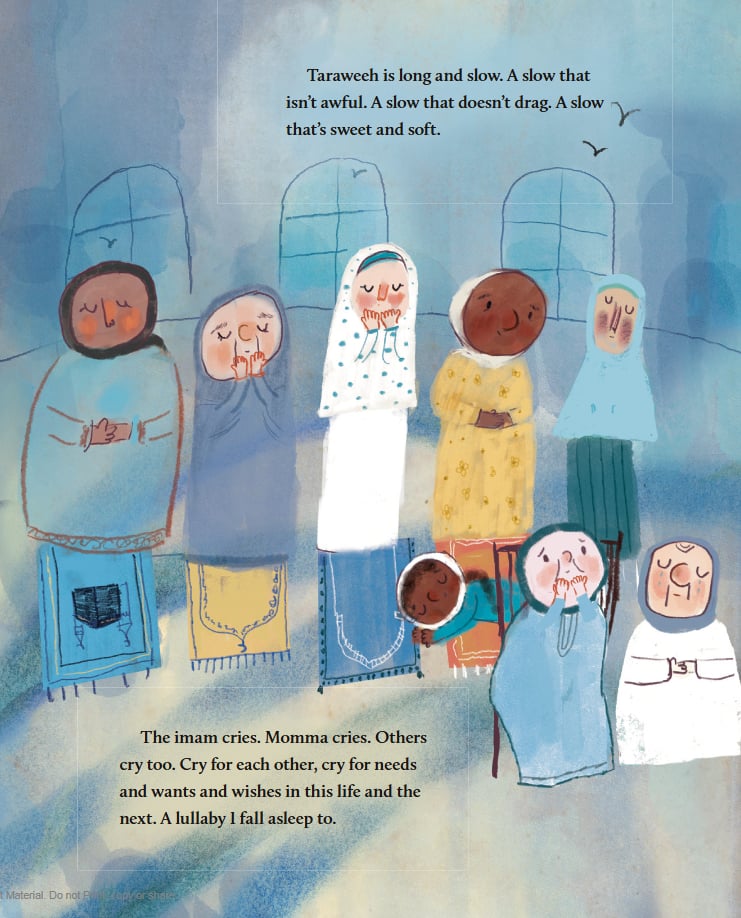
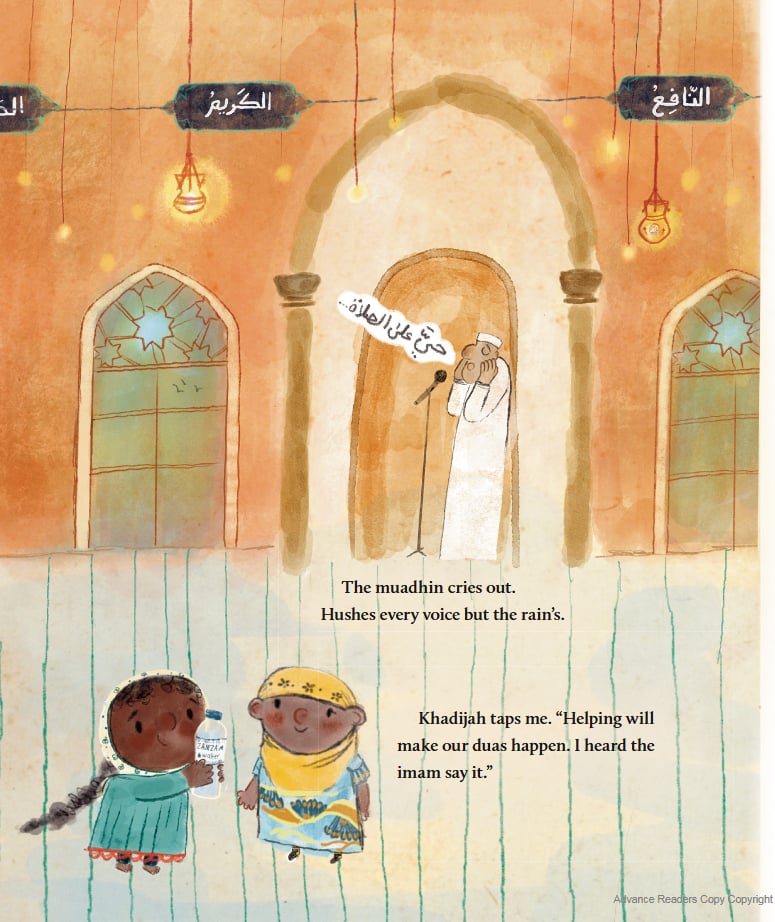
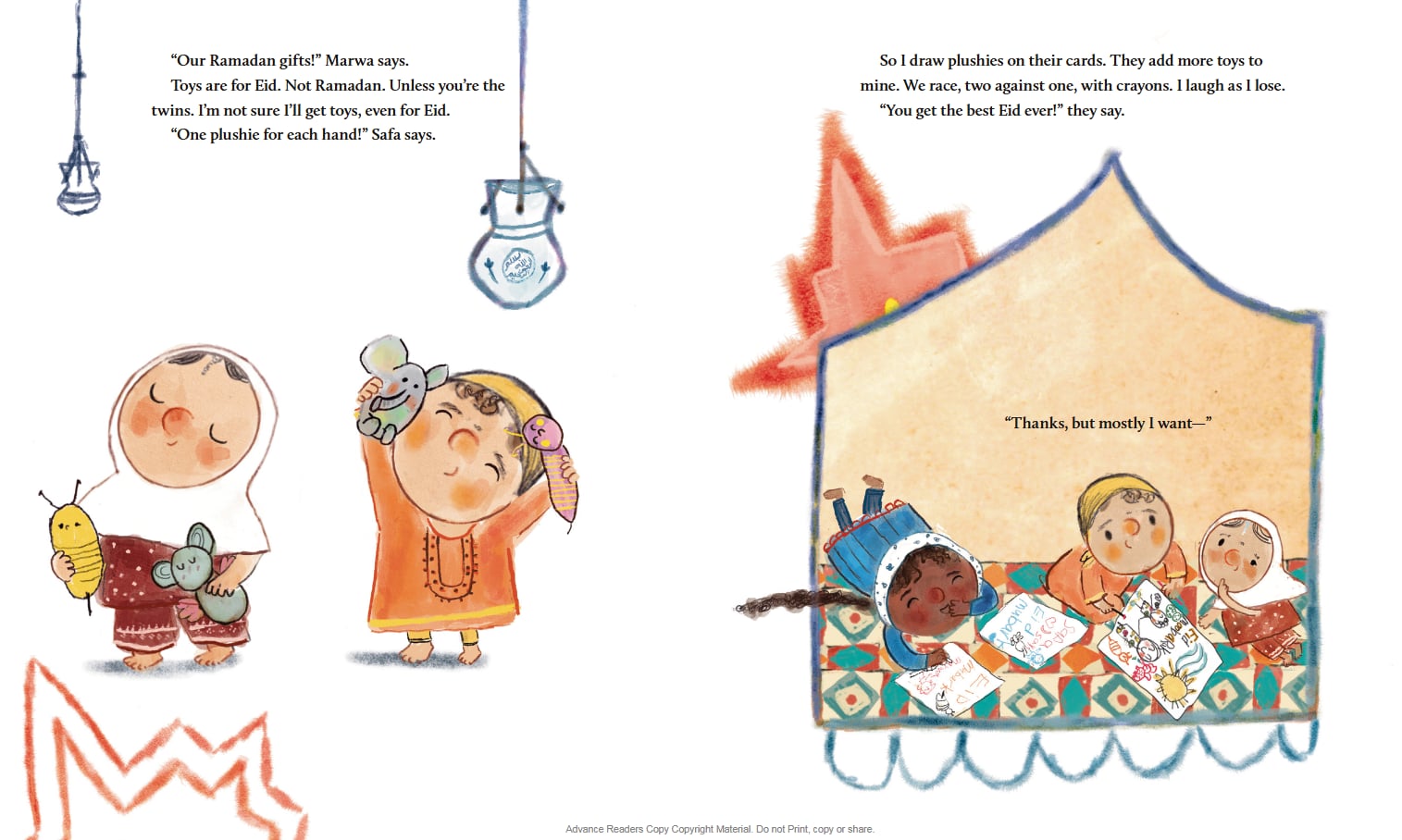
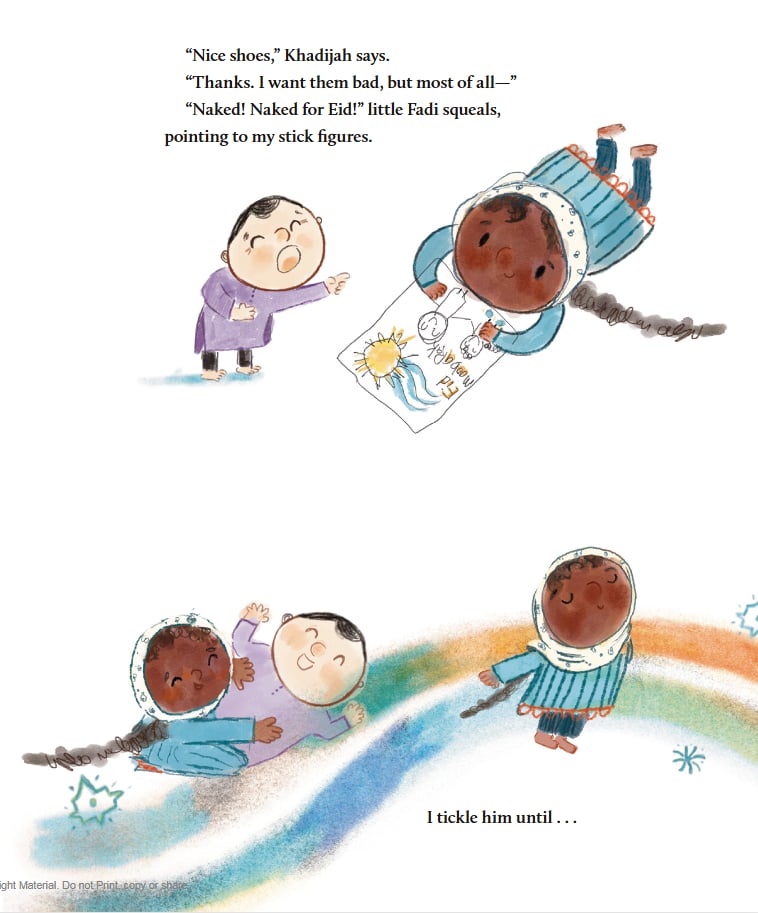
This 40 page book is all the feels as little Haneen’s Ramadan duas change from the material to the heartfelt while the rain pours down, taraweeh prayers are made, fun is had, and hearts are touched.  In true Thompkins-Bigelow fashion the book presents in layers that pull the emotional threads without turning didactic and preachy. The adorable illustrations complement the text and by the page when the characters are crying, I too, found tears in my eyes. I love that praying, duas, and practicing Islam is not sidelined, as current Ramadan and Eid books seem to do, but rather centered and celebrated as a source of comfort and joy. For the most part the external catalyst moving Haneen’s internal change were seamless, but the page with the little boy pointing and calling the drawings on her card naked, seemed a little jarring to the tone, even though I can see the function it served. I also acknowledge that a physical version might not make it as abrupt. Additionally it is worth noting the very nature of reviewing is to over think, so to be completely honest, by about the fifth reading I began to wonder, did her perspective change? There was no pivotal moment that set it in motion, it seemed she just got carried away in making the Eid card and never got to articulate what she really wanted to her mom. The initial dua is for the shoes that the family can’t afford, which I already felt was inconsistent because when asking Allah swt nothing is impossible, and the whole premise is that it is Ramadan and on top of that raining, but that aside, even when she first draws them, she states that it isn’t what “she really wants.”  So now, I’m wondering if anything really changed at all, or she just never clarified and thus the reader as well  her mom are taken along from Ramadan night to Eid day.  Also in the arc I read, it seemed a word was missing on page three that will hopefully be fixed in the final version. I love the tone and the warmth, and I know most won’t read it as deep as me, but the publication is not until March and I wonder, and hope, a few tweaks might still take place.  When my pre order arrives, I will revisit the review if need be, and yes, even with my critiques, I think this is a book that will delight all ages this Ramadan and give plenty to reflect on throughout the year.
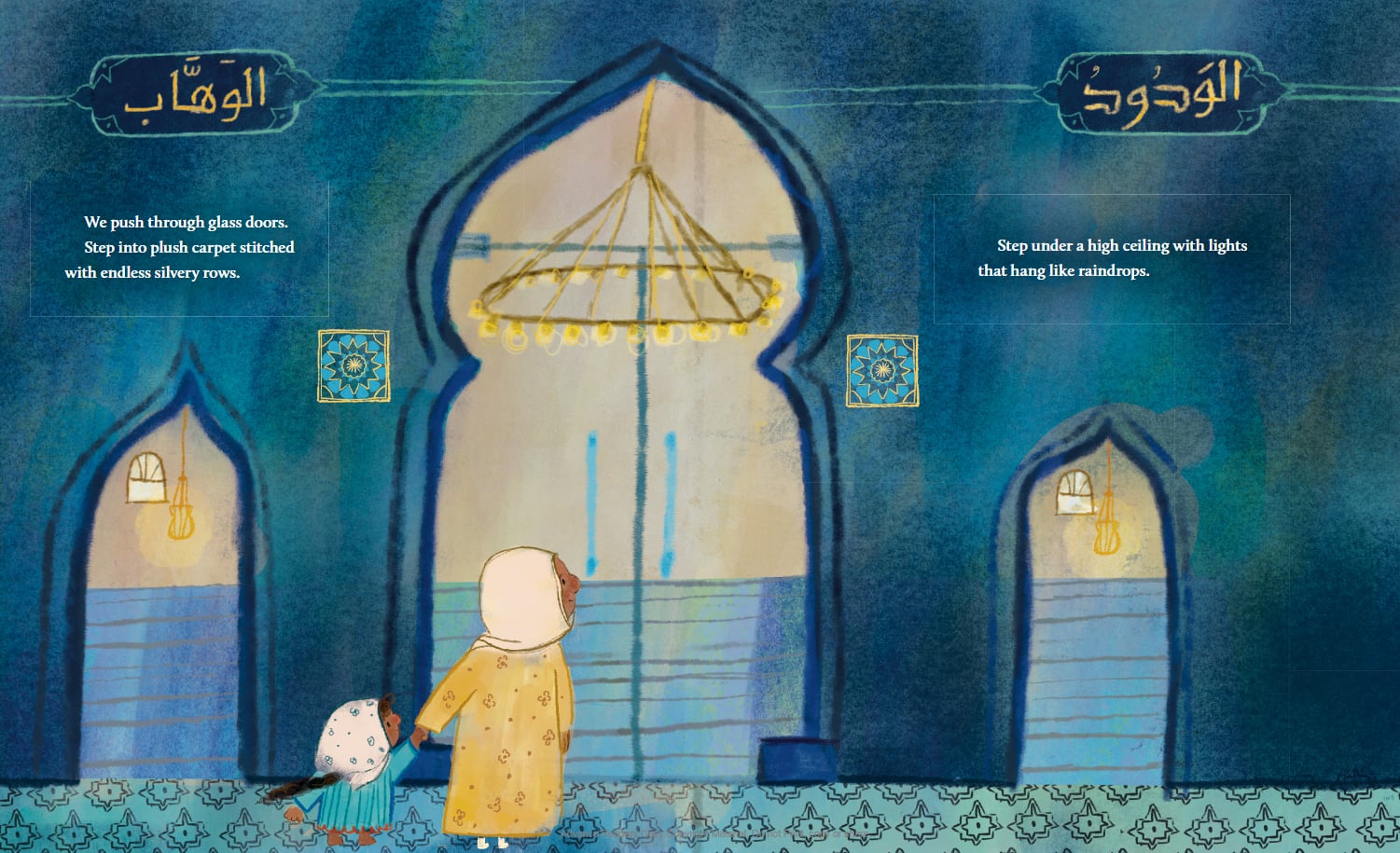
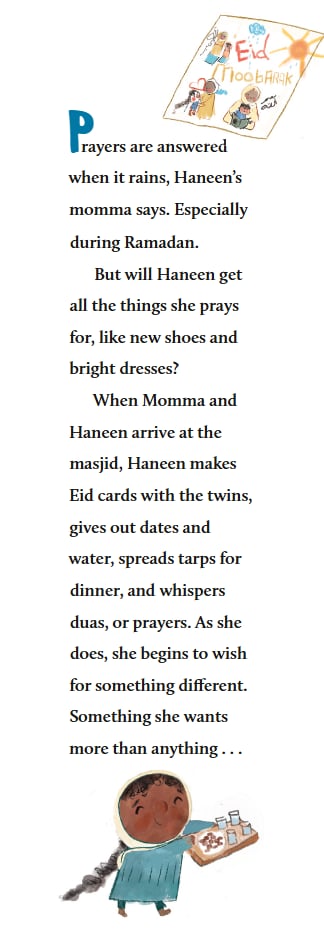
The book starts with a grumpy Haneen sitting on a bus, walking in the rain, and arriving at the masjid a little wet and muddy recalling when they had a car and things were easier.  She starts to complain but catches herself knowing that they can’t afford things, and Momma tells her that, “rain brings blessings.”  She also reminds Haneen that duas said on a rainy day get answered, especially during Ramadan.
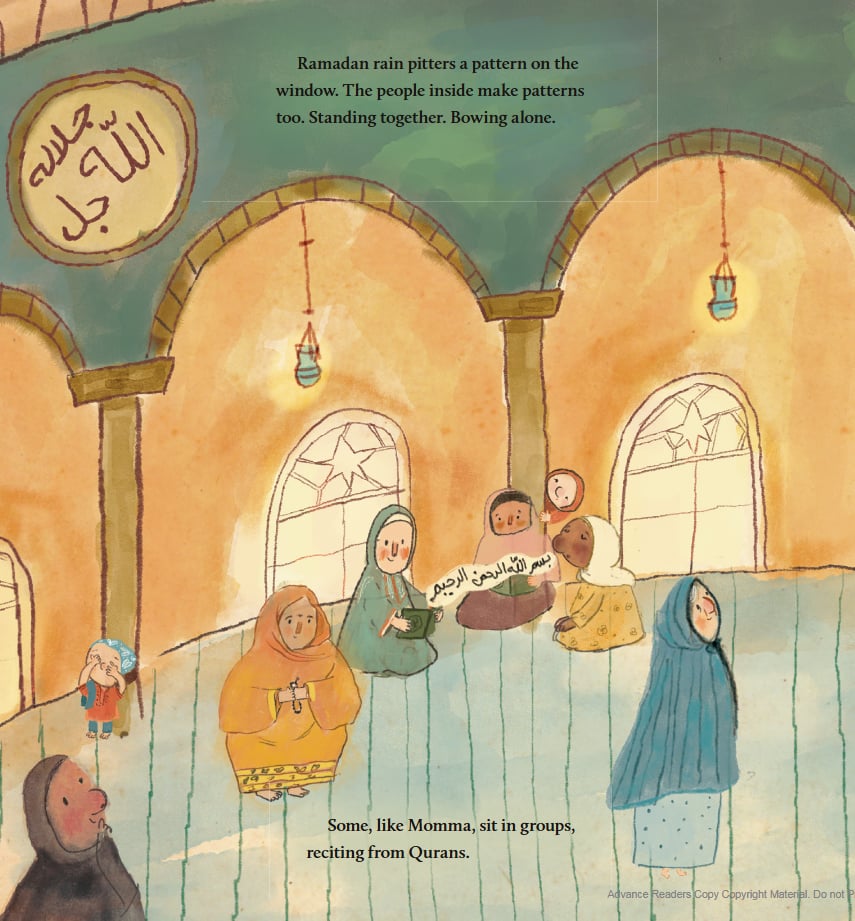
Once in the masjid, Momma reads Quran and Haneen starts to make duas for the shoes she wants but knows they can’t afford when she is distracted by friends, and they start making Eid cards. They children work together, and when it is pointed out that Haneen’s stick figure has shoes, but no cloths, she marvels at the different dressed women around her, before adding her favorite to the picture, wondering if she can get new clothes for Eid.  The pattern continues, she sees the twins with plush toys, and thus plushies are added to her wants, and filled in on her Eid card, as the congregation moves from athan, to iftar, to salat, to taraweeh.
When Eid comes, SPOILER gifts come from unexpected places, and a new card, showing what Haneen really wanted and prayed for that rainy Ramadan night are revealed, alhumdulillah.

Let’s Think about Allah’s Great Garden by Ali Gator

Standard
Let’s Think about Allah’s Great Garden by Ali Gator

allah's garden

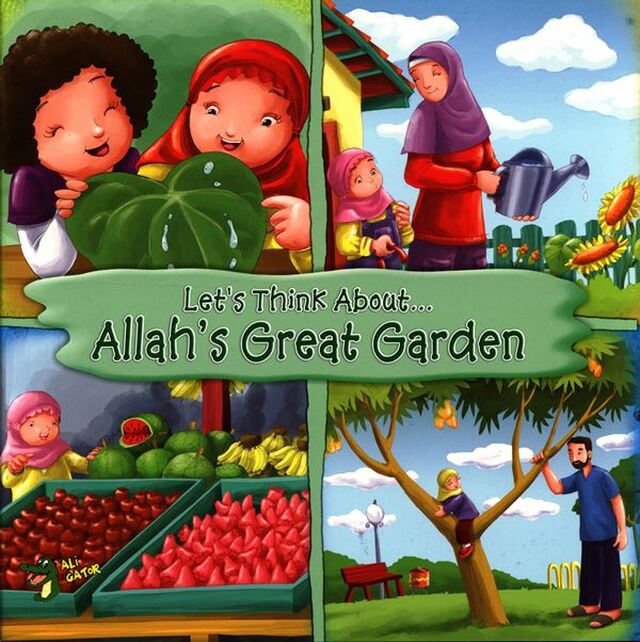
At 22 pages this book’s title aptly describes the contents within: at times factual, sometimes breaking down the fourth wall and asking readers to do something engaging, at times fictionalized, and often meandering and reflective.  The book is all over the place and only cohesive in theme.  It has sat on my shelf untouched by my children for quite a while, but when I needed options for the library during Earth Day, this book did a great job in facilitating discussion with pre k to 1st grade.  It isn’t a story time book so to speak, but it gets kids thinking and can be tailored to their level of discussion.  I don’t think that is how the book was intended, and as it is written it is rather unimpressive, but when pulled apart it did serve a very specific purpose.

img_9837

The book starts out with a few lines about Allah’s blessings of all things particularly trees and plants and gardens.  I wasn’t sure if it was trying to rhyme or not, but I think the first lines are just incidental rhyme as the flow and words quickly unravel. It talks of climbing trees and the narrator’s father telling him to be careful. It then discusses watermelons and how they grow in the ground, not on a tree and asks readers if they can see the watermelon seeds in the illustrations.

img_9836

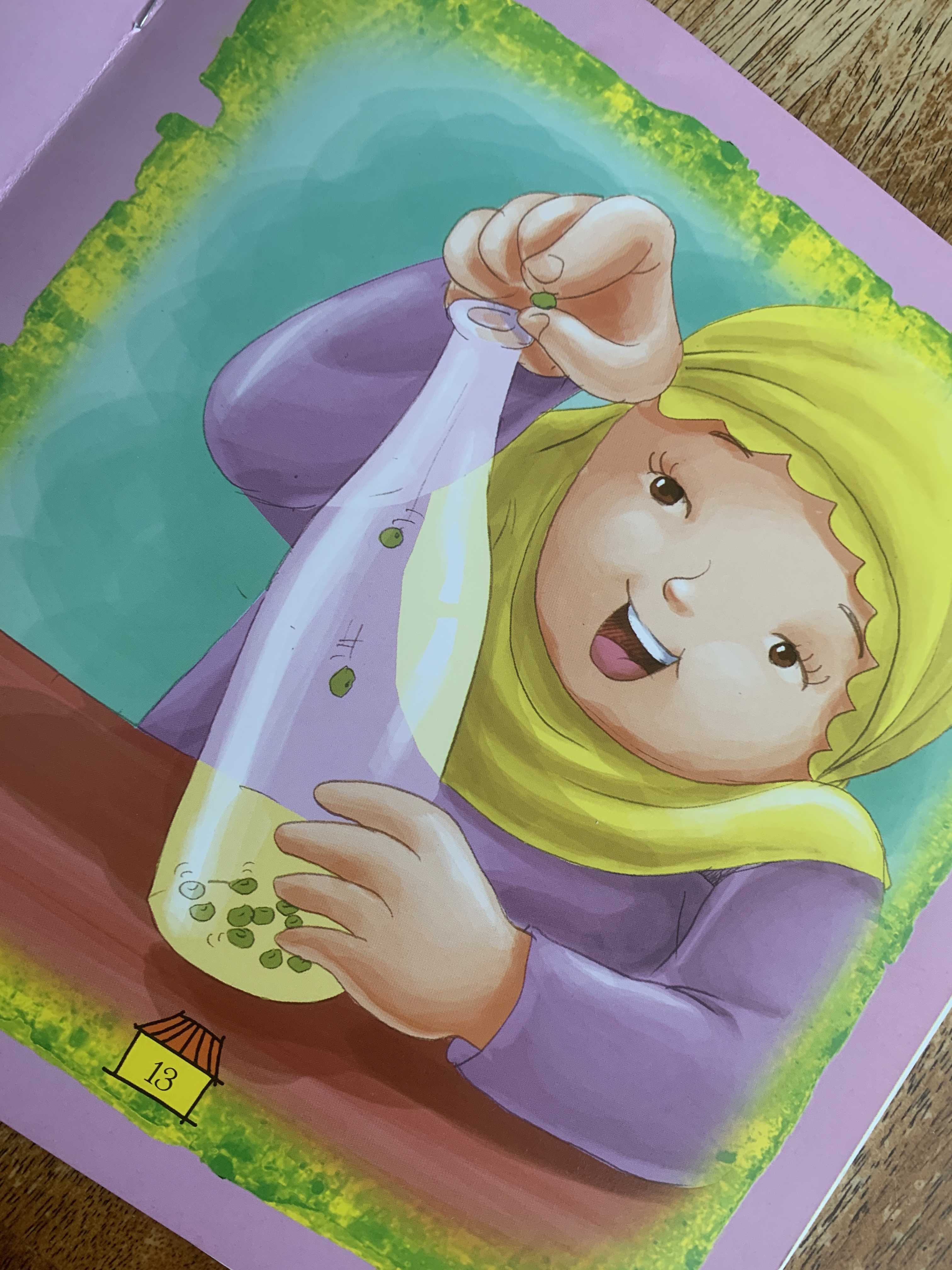
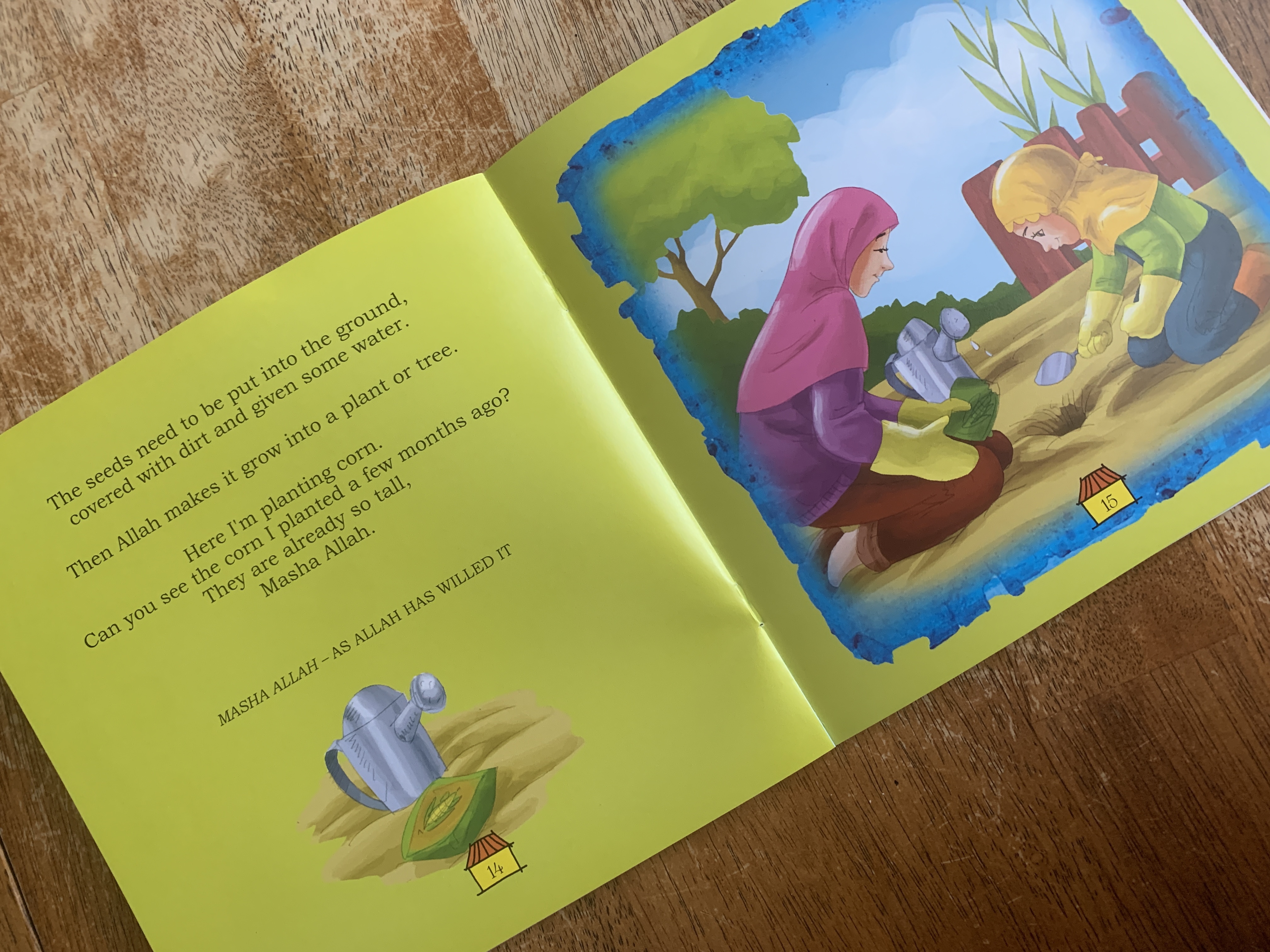
The book focuses on the life cycle of plants: seeds, flowers, trees. Drawing on that information it then shows the little girl collecting seeds to plant.  It then talks about the planting process and the needs all growing things have to prosper if Allah so wills it.

img_9838

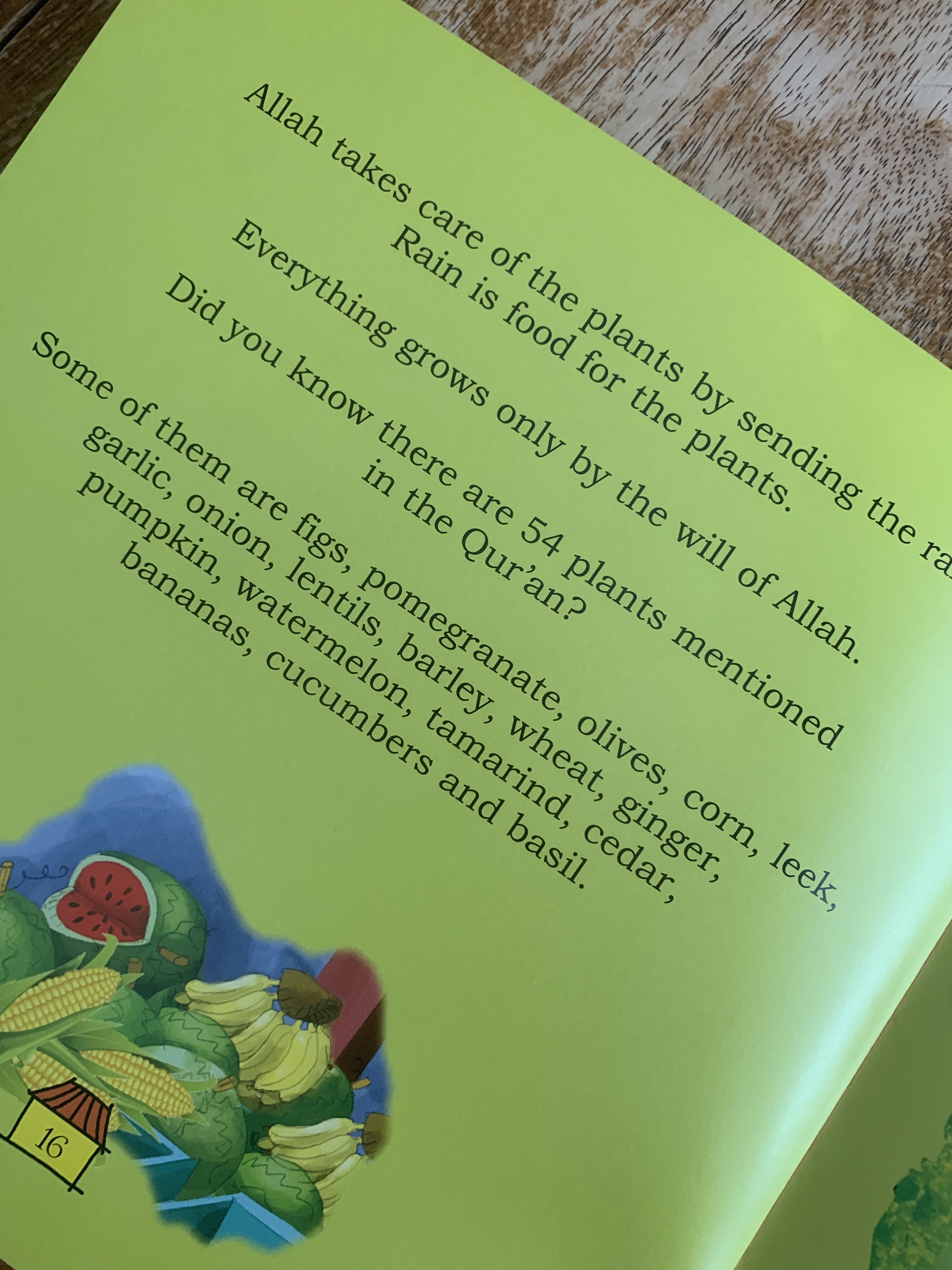
Then the book gets interesting and starts to discuss the plants mentioned in the Qur’an before returning back to the half hearted narrative remarking on how the flowers complement the color of their house.

img_9839

The story seems to then end, but it isn’t denoted that the remaining pages are factual or set aside as back matter, it just pivots and begins discussing rain in Surah an-Nahl, Trees in Paradise as mentioned in Qur’an and Hadith, and then again, but this time in table form, the fruits and vegetables mentioned in the Qur’an, and highlighting dates specifically.

img_9841

The book is all over the place, and I doubt it will be read again until next year.  There are a few other books that have come out about his topic, and I plan to look in to them to see if they work better for story time readings and child engagement.

My Grandfather’s Masbaha by Susan Daniel Fayad illustrated by Avery Liell-Kok

Standard
My Grandfather’s Masbaha by Susan Daniel Fayad illustrated by Avery Liell-Kok

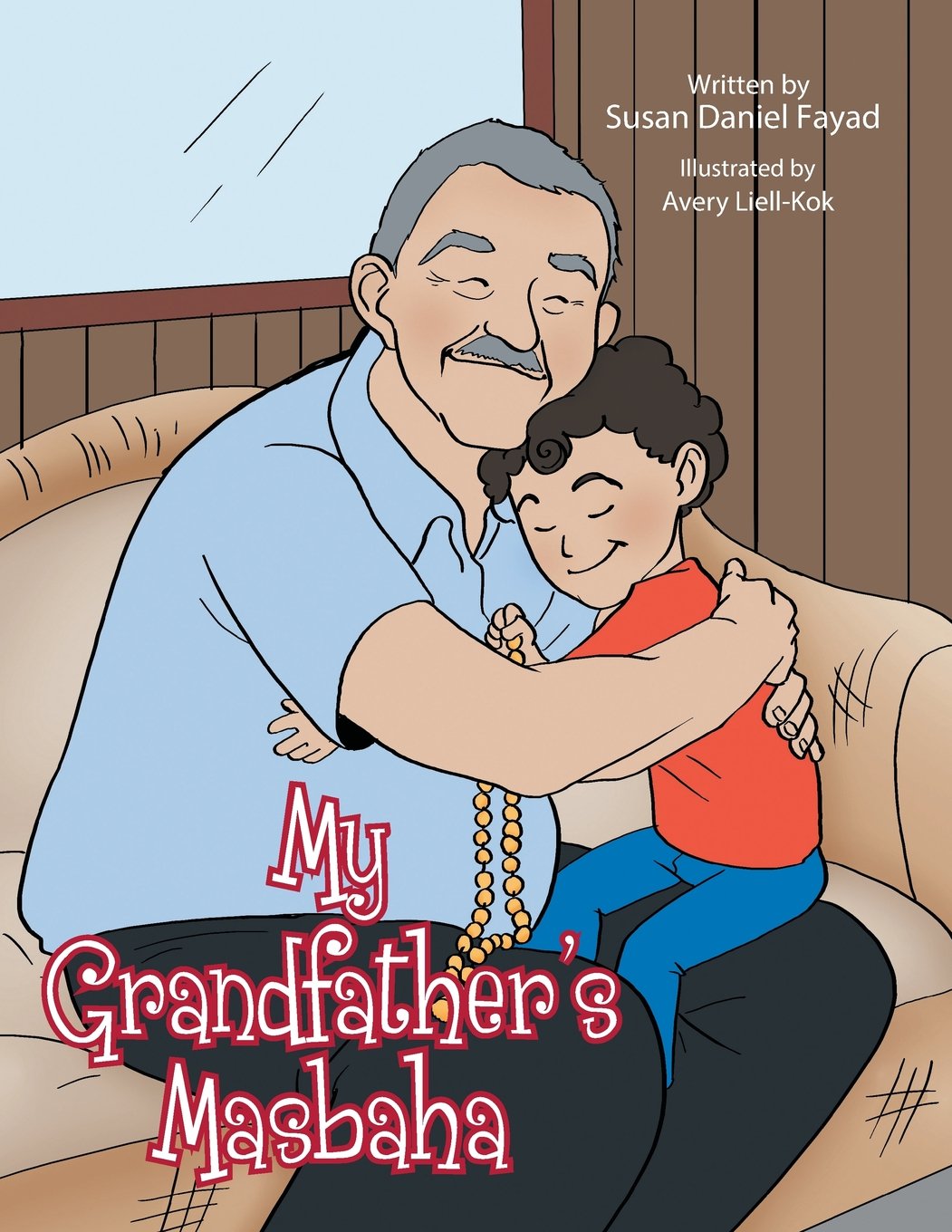
masbaha.jpgThis 20 page story is endearing and sweet for children aged 4 and up, with a great lesson.   At first I thought it was an Islamic fiction book, but after thinking about it, I’m not so sure.  Lots of faiths use prayer beads, although maybe only Muslims have 33, and the setting, Lebanon, is a pretty diverse place.  Regardless, the character’s names, and the lessons taught are universal and children will benefit from being reminded about how blessed they truly are, in a gentle loving way.
IMG_0113

When little Adam’s friends go home and he has nothing to do, he enters his grandparents house stomping and complaining.  In response, Adam’s Jidoo, grandfather, starts to laugh.  This only makes Adam more angry.

IMG_0114

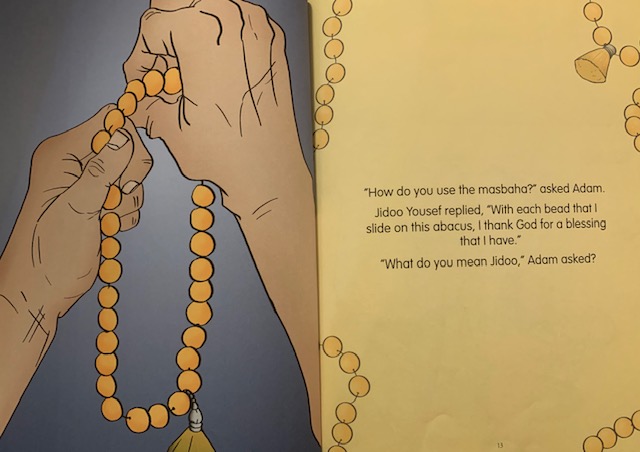
Jidoo Yousef then shows Adam his misbaha and explains that some people use it like an abacus to count, to mark prayers, some use it as decor, and that he uses it to remember God’s blessings.

IMG_0115

He and Adam, then go around and count all the blessings of toys, and people, and friends, and family, and food, and before Adam knows it, he is feeling blessed and thankful.

IMG_0116

The basic illustrations show the bond between Jidoo and Adam, but are nothing overly fabulous on the large 8.5 x 11 pages.  There is a lot of text on some of the pages, but it flows well and goes quickly.

IMG_0118

The book teaches a great lesson and if you get a chance to read it to your children, you definitely should.

Bibi’s Blessing by Lela Usama Goldsmith illustrated by Samantha Morazzani

Standard
Bibi’s Blessing by Lela Usama Goldsmith illustrated by Samantha Morazzani


IMG_8209

A wonderful lesson packaged in a sweet story about a girl learning to thank God for blessings, especially ones that don’t seem like blessings at all.  The 36 page book is meant for children age 4 and up and with its large 8.5 x 11 glossy full color pages it works well at bedtime and in small groups at story time.

IMG_8211

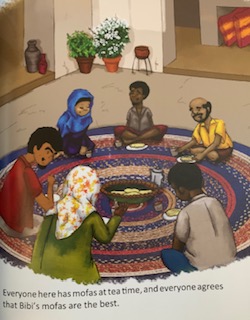
On the island of Lamu, Mwana lives with Bibi, her grandma who’s livelihood depends on making Mofa bread every day.  It is Mwana’s job to sell the sorghum ground bread in the streets for people to enjoy at tea time.

IMG_8210

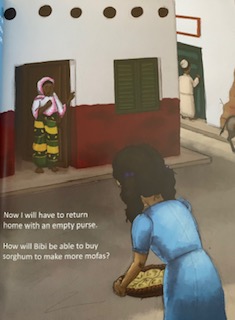
One morning a braying donkey frightens Mwana and she trips, spilling all the mofas on the ground.  When she tells her grandma what happened and how they have not made any money for the day, her grandma responds, “Thank God for this blessing.”

IMG_8212

Not believing Bibi, but being too excited to visit a friend, she doesn’t argue.  But then the power goes out and she can’t visit her friend and she gets grumpy. Grandma tells her to “Thank God for this blessing” and explains that sometimes not getting what you want is also a blessing.

IMG_8213

With nothing else to do, Mwana goes off to soak the rice pot, but instead accidently soaks the dusty mofas, to which her grandma again says it is a blessing.  She starts to feel she can do nothing right, and can’t believe there is any blessings in a pot of mushy mufas.

IMG_8217

But, with the power out many shops close and the owner of the donkeys has nothing to feed his animals.  He knocks on his neighbors door and Bibi and Mwana have just the thing.  He pays them for the food and alhumdulillah all is well, so many blessings from God.

IMG_8216

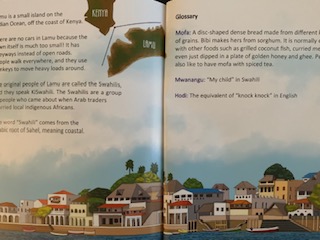
I love that the setting is a place many of us have never heard of and that there is information about Lamu at the end of the book along with a glossary.  The author is Muslim, the characters dress Islamically in the illustrations, and have Muslim names, but there is nothing Islamic specific in the text.

IMG_8214

Some of the sentences are worded awkwardly, for example, “We live in a small island by the Indian Ocean called Lamu.”  You typically say you live “on” an island not “in” it, and islands are in the ocean, not by them.  And some sentences read almost as run ons because of multiple conjunctions and their lack of punctuation.  I don’t love the illustrations.  The faces on many of the pages are really distracting and inconsistent, but the overall story is well done that I’m willing to over look my own critical opinions, and encourage y’all to give the book a try.