Tag Archives: American

Towers Falling by Jewell Parker Rhodes

Standard
Towers Falling by Jewell Parker Rhodes

towers falling


I realize the inherent difficulty of writing books for middle grades about the events of September 11, 2001: the author lived through it, the readers did not.  Yet, it seems like at some point a book regarding it, will just feel right, and I don’t think for this age group, I’ve found it yet.  This AR 3.3, 228 page book is a quick read, and while some of the characters have spunk and personality, a few of the storylines seem incredibly forced and the overall timeline and holes in the story will be ultimately disappointing for most readers.

SYNOPSIS:

Deja is starting a new school now that her family has gotten a room at a homeless shelter.  Immediately her fifth grade classmates are given an assignment about home, with the end goal that eventually this project will transform in to being about the change of New York’s skyline fifteen years ago.  The details regarding the attacks of September 11, are not given forthright and as Deja knows nothing about the attacks, and the fall of the towers, her inability to get answers adds to her frustration at home and school.

Deja is angry as she bares a lot on her young shoulders.  Her dad can’t hold a job, and his moods and ill health put caring for her younger siblings on her.  Her mom works as a waitress and is always tired.  They lost their house, lived in their car for a while, and now occupy one room in a shelter.  Deja refuses to lie about her home life and thus her aggressive attitude is always on guard.  Another new kid, Ben, joins the class and he and Turkish American popular girl, Sabeen, all quickly become really good friends.  Each have something brewing beneath the surface that they are dealing with, but their friendship helps them cope and bonds them together.

As the trio of kids work on their projects together, Ben finally shows Deja online footage of the attacks and clues her in to what everyone else in their Brooklyn class seems to know and has failed to tell her.  Deja links her father’s declining health to that fateful morning and decides she needs to go to Ground Zero and get some answers.

She doesn’t really get answers, but at least it is the catalyst for an overdue conversation with her and her father, and hopefully a start on the road to healing the family rifts.

WHY I LIKE IT:

Much like the book Nine, Ten there seems to be the token Muslim girl in the story to offer her perspective on the Islamaphobia that occurred after the attacks.  In this case Sabeen doesn’t detail anything specific happening to her, other than a clerk at a store telling her to go back to Saudi and her uncle getting screened regularly at the airport.  Of all the characters I feel like Sabeen gets the short end of the stick.  She is incredibly flat, stereotyped and undeveloped.  Her family is Turkish, she is wealthy, her mom wears niqab and they are all overly kind and sweet, which is great, but when Deja goes over for lunch, they ask her if she prays, which seemed so random and off to me.  A lot of the basics about the character the author got right, she says that the terrorists were Muslim, but they weren’t, sharing a sentiment many of us Muslims feel. She wears hijab, and takes it off when she gets home.  I don’t like that the mom speaks English, Arabic and Turkish, but is first introduced having Sabeen translate for her with another parent.  Seems incredibly pretentious and misleading.  Ultimately her storyline is just overly forced.  She has to leave Ben’s house when they talk about September 11, because she is so affected by it.  She wasn’t even alive when it happened, and I get that when it is discussed us Muslims are on guard, but the author makes it seem like it is her whole world and influences everything around her.  If you live in New York, especially, I’d imagine at some point you’ve had to come to terms with it, no?

That’s why I also struggled with Deja’s dad.  He is so debilitated by the events of 9/11 he can’t function, yet they happened 15 years ago, presumably before he met Deja’s mom and they started a family.  So, really she fell in love with him in his current condition and thought having three kids with him was a good idea? He was fine and then wasn’t? For 15 years he hasn’t been able to get some sort of help for his PTSD type symptoms?  Seems like a stretch in the timeline, and one that is hard to excuse even for 3rd and 4th graders.

I really like how Deja’s homelessness is brought out and hopefully readers can learn some empathy from her.  Unfortunately the entire 5th grade class is so idyllic that I don’t know that most if any kids reading the book will relate to such a well behaved, so accepting, forgiving and generous group of kids. I mean yeah that’s the goal, but its way too overdone.  Ben, Sabeen, and Deja are best friends after the first meeting even though Deja is rude, mean, and doesn’t like them.  I’m not even sure what Ben and Sabeen get out of being friends with Deja?  Deja undoubtedly benefits from them, but there aren’t a lot of compelling reasons given why they’d be so drawn to her.

And finally, I struggled with the theme of how being “American” united them all.  It makes sense when discussing it as a class, that it doesn’t matter their color, income, life experience, whether they were immigrants or born in America, but the concept comes up again at a critical point when Ben and Deja are on the subway and seems so misplaced to me.  On the subway there would be plenty of tourists and visitors, that wouldn’t be American, no?

FLAGS:

The book is clean, it does mention some drunk people at the shelter, but nothing specific, just in passing.

TOOLS FOR LEADING THE DISCUSSION:

I wouldn’t do this as a book club selection because the target age is lower than who I meet with.  But, even despite some of my criticisms I’d recommend this book be in classrooms and school libraries as it does offer up a perspective on historical fiction that hopefully could lead to a slightly deeper understanding of the events at a young age.


Love, Hate & Other Filters by Samira Ahmed

Standard
Love, Hate & Other Filters by Samira Ahmed

love hate and other.jpg

I seriously wish I could get back the few hours I spent reading this 281 page AR 4.8 book.  The blurbs talks about a girl being torn between the world around her and the world her Muslim-Indian-American parents want for her, unfortunately the protagonist is rather unlikeable and her worlds are actual not that different.  Islam is not represented at all, it is just mentioned as a checkpoint almost for the main character to continually justify her identity as “other” and try and illicit sympathy.  It seems to be a part of the story so that the story line of Islamaphobia can be addressed, but the book is cultural at best, and even that is rather lacking.

SYNOPSIS:

Maya Aziz is 17 and missing a dance her senior year to attend a wedding because she is not allowed to go to such events as the daughter of conservative Indian Muslim (dentist) immigrants living in Illinois.  But, immediately the hypocrisy shows itself as at the wedding, a boy, Kareem, deemed suitable by her parents is presented to try and woo Maya and possibly marry her, and the two of them wander off together, and consider meeting up at an after party.  As the reader gets to know Maya and her circle of characters, we meet her “cool” Aunt who lives alone and wants Maya to have a life of boys and partying and going to school in New York.  Her parents are never really defined except to maintain the stereotype of being controlling, focused on food and appearances, and not understanding their only daughter.  At school Maya has a best friend Violet who loves to flirt and remains loyal to Maya throughout, a cute boy Phil, who she has been crushing on for years, and some side figures that stir up some trouble.  

The premise of the book is that Maya loves film and wants to go to NYU to attend film school, her parents, want her to live at home and go to the University of Chicago.  The idea is that because they are immigrants, and culture and religion dictate all, that she get educated and married.  This conflict is intensified by Kareem, her sudden relationship with Phil, and a terrorist act that is first blamed on Muslims occurring hundreds of miles away in Chicago and giving someone at Maya’s school a reason to take out his anger on her and her family.

WHY I LIKE IT:

I don’t like it.  The book is presented as an own voice minority representation piece, but it isn’t.  I get that Islam is personal and that people identify with it and choose different paths, but this isn’t a case of her looking at Islam and saying it isn’t for me, this is a book that is billed as Islamic fiction, yet the character does nothing Islamic, seems to know nothing of Islam and has no moral conscious for anything about the faith.  She says she doesn’t pray or go to the mosque, the parents lament after hate crimes materialize against them, that maybe they should have gone to the mosque at some point.  She wears shorts, and tank tops and a bikini and doesn’t feel a tinge or reflection.  Even if she were to remark that this is an act of rebellion the reader would know, oh because she was perhaps raised with modesty, but no, she wears whatever.  She constantly mentions that she can’t have a boyfriend because she is Muslim, but then makes out with Kareem on like their second meeting, kisses him in her parents living room before deciding she doesn’t like him, repeatedly kisses Phil, practically spends a night with him, and then in the epilogue is kissing a Hindu guy she kind of just met.  Yes, there are Muslims that do this, I’m not judging, but how exactly is being Muslim then stopping you from doing that you want to be doing?  At one point when out with Kareem, he is drinking wine, Maya remarks she has had it before, and that at least it isn’t eating pork.  Misguided and off the mark, yes  some Muslims do drink, but with all build up that she can’t do things like that, only to find out she has, and it isn’t a big deal, and she doesn’t even see it as a deal breaker or worth mentioning to her parents who have set her up on this whole path to semi arranged marriage, seems so off.

Anyone hoping to pick up a pice of Islamic fiction to identify with, are going to be so completely let down.  The book seems to be written for non Muslims to feel good about having read a book with a minority character.  It’s like a coming of age story, except there is no self reflection or understanding of the world, no lessons learned, or wisdom gained, unfortunately.

I kept reading hoping that if even the Islam was poorly done that the love story would be sweet, or the presentation of hate and Islamaphobia would be on point, but it also was shallow.  Really only one kid had it out for Muslims, and yes he got violent with Maya and threw a brick through her parent’s dental practice, but it could have been used to show light on misguided hate and it didn’t, I don’t really even know what it was used to show.  Maya’s parents got scared and wanted to keep her close, thus forbidding her from going to NYU, but they were already on the fence about it.  Yes, maybe it added to the catalyst of her running away from home an in to the arms of Phil, but even that ended up seeming lame, as she left for NYU and was in someone else’s arms by the end of the book.  So, not sure really, what religion at all had to do with anything, and why the author and publishing team would want to advertise the book with such a strong religious angle, or even cultural one for that matter.  The parents are both successful dentists, who let their daughter do whatever, yes they have an opinion on her future, but Maya reads like a brat, I wish I could like her, and take her side against her tyrant parents, but they don’t actually seem written that bad, and Maya doesn’t make any effort, so she really comes across as whiney, privileged, and entitled.  

FLAGS:

Alcohol, lying, hate crime, terrorism, physical altercation, kissing, hand holding, talk of condoms, sneaking out.  I would not let a 4th grader read this or even a 7th grader, based on content.  Quality, I’d encourage most kids to skip it altogether.

TOOLS FOR LEADING THE DISCUSSION:

I wouldn’t consider this as a book club, I considered not even reviewing it, with the fear that people wouldn’t read the whole review and would just assume I was throwing my support behind it.  I am a bit disappointed that the book is available through Scholastic as its back flap reads very different than the text within.  


Proud: Living My American Dream (Young Readers Edition) by Ibtihaj Muhammad

Standard
Proud: Living My American Dream (Young Readers Edition) by Ibtihaj Muhammad

proud.jpg

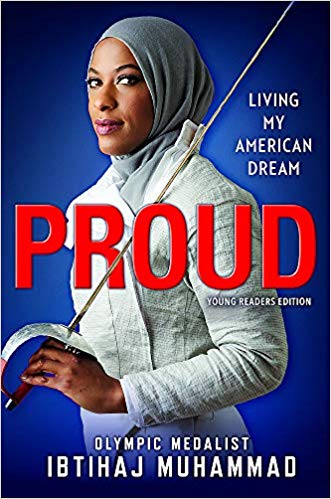
I had high expectations for a memoir about such an inspiring figure, so I treaded timidly into the book waiting to be disappointed, but after finishing the book in two days (high praise considering I have four kids), I realized I was holding my breath for nothing, the book and Ibtihaj are amazing! Now three days after I started, my daughter too has read it and I have ordered a handful of copies to offer as my next Middle School Book Club selection.  Inspirational, real, Islamic, hopeful, empowering, check, check, check, check, and well written too.  A great story and a great role model, alhumdulillah.  The Young Reader’s Edition is an AR 6.7 and 304 pages including Acknowledgements, Glossary of Fencing Terms, Ibtihaj’s Advice, and Q and A with Ibithaj.

SYNOPSIS:

Ibtihaj begins her life story establishing her background of who her parents are, how they met, how they came to Islam and how they are raising their children.  She also details how she is different and realizes it from a young age, whether it is substitutes not being able, or willing, to pronounce her first name, or not being able to sleep over at her friends’ houses.  She also sets the stage for the environment of Newark that she was born into and how it differs racially and economically from Maplewood where she spent most of her childhood.  The story then is pretty linear walking through some of the challenges of being highly driven and motivated and determined to succeed and get in college.  How she is first introduced to fencing and why she gives it a second chance after initially not liking it.   Along the way the reader gets to know how Islam influences her point of view as Allah is very central to her decisions and expectations of herself.  The quick pace is not depressing, while others at times do treat her differently she definitely doesn’t paint herself or seem to see herself as a victim or as privileged, she is just herself and this is her story.  It isn’t all rosy and it isn’t harsh, she is putting one foot in front of the other and there is amazing support from her family, and some of her coaches and some of her teammates, but not everyone and that is a very important part of her story too, which I think provides even more for young readers to relate and learn from.  Anyone not familiar with fencing and how the sport and its rankings work will learn so much reading this book, but thankfully not be overwhelmed with it all either.  The book ends shortly after the Olympics and her historic bronze medal win.  The title may reflect her being proud of what she accomplished and continues to pursue and her pride in being a Black American Muslim Woman, but I think anyone who reads the book will just be proud that someone like her exists, and that maybe some small part of ourselves can be great too.

WHY I LIKE IT:

I love that the book leaves in some of the naysayers and difficult coaches and teammates.  I really think it is easy to assume that people are great and things should all work out when you are competing on an international level, but alas no, completely not the case, yet differences aside, they still had to win an individual sport as a team. 

 I also love that she is truly what she claims, the way she practices Islam is who she is and she loves her family and her faith.  There are no contradictions she excels and perseveres and finds herself while acknowledging all parts of herself and it is so inspiring.  She portrays Islam as a way of life, she prays and fasts and has days when her iman is low and days her faith is rewarding.  She focuses on what she can control and has to learn to accept what Allah swt has decreed for her.  She has Muslim friends, and non Muslim friends and through it all she is finding her place and is surrounded by love and support from her family.  It really is a feel good story and we should all pray that it continues to be.  She doesn’t portray Islam as limiting, nor as her family an exception to what a Muslim home is, and this level of dawah can really change perceptions.  The book is not preachy or arrogant, it is simply her story and Islam is a part of it.

I like that she went to a prestigious university and it didn’t make all her dreams come true, she still had to work hard and find herself and humble herself to work at a dollar store to scrape by, it shows tenacity and a glimpse of the real world that privileged middle schoolers might not have had to consider before.

FLAGS:

The book is clean.  It talks about how uncomfortable she was at her first fencing lesson with her coach having to reposition her stances and thus touch her, and it discusses how she felt listening to music was ok in Islam even though her parents disagreed.  A few sentences at most, collectively, but kids will have thoughts on it.

TOOLS FOR LEADING THE DISCUSSION:

My 12 year old daughter read the book in a few hours and discussed it with me for even longer.  It was as if some tidbit from the book would blossom inside her and she would consider it, and want to discuss it, from why she would not talk to the kids she was substituting about fencing, to why her coach made her switch to saber, I don’t think there is a shortage of things to discuss, or more importantly listen to from the young readers.

There is a ton about her online as she became the first American Muslim to medal and the first to compete in hijab.  I highly recommend this book for book club, and will  hopefully add how our meeting went in a few weeks.


A Very Large Expanse of Sea by Tahereh Mafi

Standard
A Very Large Expanse of Sea by Tahereh Mafi

avleos

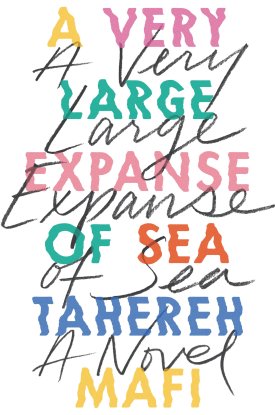
The book is often marketed as a Muslim coming of age story in a post 9/11 world.  The contemporary work is semi-autobiographical, but really I think the positioning is a bit misleading.  It’s a love story, and the main character is Muslim, and her environment is awful and she is angry. Its an engaging read, I read all 310 pages in one sitting, but I don’t know that the take-away will enlighten anyone about Islam, or really what it was like to be Muslim in the years after 9/11, I think people will remember how sweet the couple is and wonder how much of it mirrors the author and her husband, author Ransom Riggs (Miss Peregrine’s Peculiar Children), but not suddenly become knowledgable about more than what the main character experiences and endures.   I appreciate that the book challenges the stereotypes of Muslim women, there is authenticity as it comes from a writer who lives it, and I do think it shows evolution of attitudes that teens can benefit from.  The book is not yet in the AR database as it just came out, but I would imagine high school and up.  

SYNOPSIS:

Shirin’s Persian-American family moves a lot.  Her and her older brother are incredibly close as their parents are rather aloof to the day-to-day experiences the kids endure.  That isn’t too say her parents aren’t around, they eat two meals a day together and the parent’s are warm, but Shirin’s brother Navid is a much more present.  The story starts with 16-year-old Shirin starting her 12th new school.  Conditioned to not make eye contact, remember faces, or get affected by the trivialities around her, the reader sees how angry she is as she curses at a teacher that assumes she needs ESL not Honors.  Knowing how fleeting her time in any location can be, as her parents are constantly trying to find better jobs, Shirin doesn’t feel compelled to make friends or get attached to anyone or anything.  This intimidating vibe similarly keeps offers at bay, for the most part.  When she gets paired up with Ocean to dissect a cat, he tries to talk to her, and this throws her off her game.  Most every interaction she experiences at school are people making racist comments and being very one dimensional and bigoted.  Ocean tries to be nice, an attitude so foreign to Shirin that it begins to force her to change.  Simultaneously, Navid, who is charismatic and has no problem finding friends wherever they go, decides to put his and his sister’s dream into action and they start a break dancing club at school.  Three other kids join, and start becoming, not just Navid’s friends, but Shirin’s as well.  

Shirin and Ocean fall in love, despite Shirin fearing what the backlash will be for ocean.  She doesn’t really know anything about him, but feels strongly that all the racial slurs thrown at her on a daily bases will effect him and ultimately make them wish they didn’t pursue a relationship. She draws line after line in the sand, and crosses them all.  Only then does she learn how blind she has been, he is in two of her classes, not just one, he is a year older than her, and he is the golden star of the high school basketball team.  Being that the story is told from Shirin’s perspective, this is surprising to the reader as well.  The town turns on the pair and things get really ugly for Ocean who is willing to risk it all for Shirin.  Threats by the basketball coach, pictures of Shirin without her hijab being taken, accusations of terrorist ties and sympathies all challenge the couple and shape Shirin.

WHY I LIKE IT:

I really like the twist of having the relationship be difficult for the non Muslim, rather than going with the assumed Muslim girl having to sneak around.  Not saying that I support it, but interestingly she never mentions that what she is doing is going against anything religious.  She mentions twice that her parents wouldn’t like her with any guy, and that they view her as a child still, but she doesn’t explore Islamically any boundaries regarding their relationship.  She hides talking on the phone to Ocean, because her parents are adamant she gets enough sleep at night.  That is about it.  Shirin discusses that she wears hijab like an armor that she gets to pick who she shows her hair too.  I love the strength in that, but wish there was a bit of doctrine to back it up too.  At one point a Muslim, non hijabi, at school calls her out for wearing hijab and having a boyfriend, but she essential tells her it is none of her business, which it isn’t and who is to say that one sin is worse than another, but still it befuddles what exactly Shirin believes and why.  The book just paints her as a Persian Muslim, but never explores what that means other than the superficial outward appearance.  They do fast in Ramadan, no explanation about why is given, just that they not eat or drink during daylight hours, and right near the end, Shirin remarks how her mom asks her and her brother every morning if they have prayed and they lie and say yes, their mother sighs and tells them to make sure they pray the afternoon one, to which they lie and agree, only to have their mother sigh again.  AstagfirAllah, that is awful lying, and lying about Salat, but it is so real, I audibly chuckled.  

I like that the parents aren’t harsh, they just seem disinterested.  I didn’t want to read another book about the parent’s being the gatekeepers and bad guys, so that was really refreshing.  They mention they don’t celebrate Christmas, but they have an open door policy on Thanksgiving for any friends wanting to come.  I did hope for a bit more about them, why they don’t talk to the kids about moving, what makes them tick, because really they seem to have a solid relationship with the kids, they are just clueless to their social experiences and school environment stresses.

I love the growth and self reflection of Shirin, she holds a mirror to herself and she and readers are better for it.  She has to realize that she is doing so much of what she is accusing others of doing.  I love the support and genuine concern of the breakdancers and her brother.  It resonated to me as a girl with an older brother and the relationship feels very genuine. I just wanted to know more about Navid. 

FLAGS:

There is a lot of cursing. kissing, hand holding, romance, lying, and ditching school.  There is a brief mention of graffiti being sprayed.  There is racial slurs, threats of violence, violent physical outbursts by people of authority.  When a student throws a cinnamon roll at Shirin, Navid and his friends beat the kid up severely, it isn’t detailed, but it is mentioned.  Ocean  also gets suspended for a few games for a fight he engages in, and there is some detail of Shirin getting jumped in a previous city for wearing hijab.

TOOLS FOR LEADING THE DISCUSSION:

I don’t think I could in good conscience present this to a group of Muslim students.  I wouldn’t want them to think I was endorsing the violence and language and romance.  Like so many books of the genre though, if someone found it and read it on their own, I’d love to chat with them about it, as it is well written.

Youtube video about the book by the author: https://www.hypable.com/tahereh-mafi-a-very-large-expanse-of-sea-tour/

Anything But Okay by Sarah Darer Littman

Standard
Anything But Okay by Sarah Darer Littman

anything but ok.jpg

This 345 page contemporary book is brand new from Scholastic and isn’t yet in the AR database, it is billed as appropriate for ages 12 and up and is probably pretty accurate.  The cover, in my opinion, is rather a disservice for the audience.  The book would appeal to girls and boys, and isn’t really about school drama, which is the vibe I got from the cover.  The story is actually pretty deep and thought provoking, on a wide range of issues facing many young adults today.

SYNOPSIS:

Told from Stella Walker’s perspective, the book opens with her and her friends, Ken and Farida, reviewing old movies.  Farida, an Iraqi immigrant, is constantly pointing out the stereotypes, tropes, and bias they engage in regularly and see depicted around them.  She is constantly nagging her friends to recognize their privilege and check it.  Stella tries to get it, but it’s not that easy. Nor are the obstacles that the book explores. 

Stella’s parents are vets, and her brother, Rob, has just returned from his second tour in Afghanistan and is suffering from PTSD.  Additionally, Rob’s best friend commits suicide and yet, Stella’s family doesn’t involve her in the conversations and concerns, and as a result she doesn’t talk to her best friend Farida.  This tension is amplified when Farida wants to run for class president, but her parents advise her against it, as Islamaphobia is on the rise with the mayor, up for re-election, spouting hate speech, and his son, already in the race to lead the school. 

Stella, as a result, is convinced to run with the help and support of her friends.  All should be going well, but in a desperate attempt to get Rob out of the house, a trip to the mall to watch a movie results in Rob sticking up for a Sikh kid being bullied, and breaking the instigators nose.  The police are called in, and the real drama of the book takes center stage, as social media, a bigoted mayor, and a family’s member friendship with a Muslim paint Rob as a radicalized terrorist.  The Walker’s house is vandalized and Farida’s family’s restaurant is suffering and the mayoral election and class office election will all require some tough decisions and insights into honesty, framing, perseverance and friendship.

WHY I LIKE IT:

I don’t think I was expecting the book to explore so many topics and to do it, in a rather real and raw way.  The arc of concepts covered provides a lot of juice and relevance and the quick pace, makes it a quick read.  Some pages are letters written by Rob, a number of pages are the various police reports taken after the mall assault and the various points of view are great.  It explores how media editing and framing can change a narrative to one side or another. 

I love Farida, bless her, she is annoying and one-dimensional, but yet so relatable.  She is the token minority that ties it all together and is the billboard representation of “other.”  I can so relate to her, being the minority and the one that constantly had to be the gadfly on the masses.  

The school election is a little cheesy and overly elevated in importance, but it is the catalyst, so while I wasn’t really invested in who won, I liked the concepts it brought to the forefront of the characters lives.  The family struggles and retaking the truth and owning it, was the real strength of the book, and introducing kids to the horrors of war, returning from war, mental illness, the blind eye of politicians, the struggles of the VA, the power of the media, friendship, and concepts of patriotism, privilege, pride, suicide, and moving forward.

My biggest complaint is the awkward and forced romance.  It isn’t even romance really.  After the mall incident, Stella confides in a classmate, Adam,  who comes over to see if she is okay and they hold hands and kiss.  It is so out of left field and so awkward I would imagine for most readers, not just me the conservative muslim mama looking for books for my kids and their school book club.  In all they kiss five times I think, and mentions them holding hands twice.  It isn’t lamented or dwelled on, it just kind of boom, jumps in to the story and then yes, they kind of snuggle after the election results, which is a little more fitting (but still irritating).  Rob meets a girl, and again later on when she comes to celebrate the plea deal its nice that she is there, but they talk like once and he completely falls for her, kind of intense and random.  The discussions about letting someone in to your life and all is good, and more natural and they don’t kiss, but they do have “feelings” for each other.  

There isn’t much about Islam other than that Farida is Muslim and that her mom wears hijab.  Even the Islamaphobia is mentioned more for political and prejudicial purposes than as a segway in to understanding Islam.

FLAGS:

Kissing (see above), suicide, war, violence.  Beer is mentioned at the end when a college veteran gets one out of the fridge.  

TOOLS FOR LEADING THE DISCUSSION:

I really want to do this as a Middle School Book Club choice, yes I’m hosting those again.  I need to talk to the school counselor about the kissing stuff.  I think they can handle it, but I don’t know the kids well enough just yet, to verify this.   Being it isn’t the Muslim characters, I can’t imagine it is any different from what they see on TV or in Disney Movies, but still, I can’t confidently say it will happen.  Twelve and up is the non Muslim age point, I’ll have to think it over and update this once I investigate. 

Author’s website: https://sarahdarerlittman.com/books_2/young-adult/anything-but-okay-coming.html

Reading Guide: https://sarahdarerlittman.com/books_2/young-adult/abo-teaching-reading-guide.pdf


A Tale of Highly Unusual Magic by Lisa Papademetriou

Standard
A Tale of Highly Unusual Magic by Lisa Papademetriou

a-tale-of-highly-unusual-magic-L.jpg

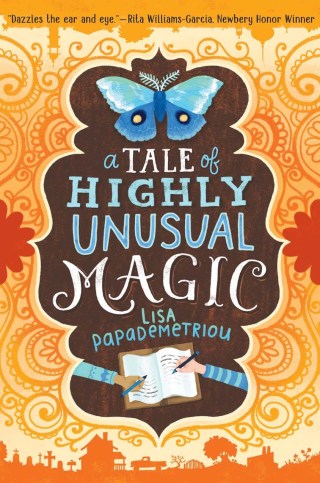
For a book about magic, featuring a girl who admittedly knows very little about Islam, a surprising number of tidbits sneak through and work to introduce Islam and Pakistani culture to those unfamiliar, while similarly exciting Muslims readers who can see a major climax point a mile away and get to feel “in” on the unavoidable “aha” moment.  Written on a 4.9 level this 297 page book, is clean and engaging, a rare combination, especially for advanced readers who are having a hard time finding books that are content appropriate.  I’m fairly confident that anyone, of any age, who reads this will learn something, whether it be about lepidopterology, violins, occupation and partition of the subcontinent, Rudyard Kipling, caskets, friendship, Islam, and finding a place to belong.

SYNOPSIS:

There are three main storylines in the book, Leila’s, Kai’s and The Exquisite Corpses’.  Leila is a Pakistani-American girl growing up in America who decides to visit her Pakistani dad’s family in Lahore for the summer.  Unfamiliar with the language and customs, she has a good attitude of learning as much as she can, and absorbing new things.  Her dad’s family speaks English, is not very religious, is wealthy, and pretty modern.  They have servants, and drivers, and while she gets to go to museums and landmarks, the lifestyle is partially simplified for reader understanding, and partially to not take away from the real point of the story: Leila moving out of her sister’s shadow, and finding comfort in her own multi-cultural skin.  

Kai is spending her summer with a great paternal Aunt in Texas that she has never met.  Her father passed away and her mom has recently lost her job, so a change of scene is what she is presented with.  Her Aunt is a character in and of herself, but by and large leaves Kai to her own devices and supports her adventures from a distance.  The real story for Kai is a budding friendship with the neighbor girl, Doodle who is determined to find and save a rare moth no longer found in the area.  Nervous to make friends Kai learns sometimes the value of things isn’t in the winning, or being the best, but in doing something because you enjoy it and it is the right thing to do.

The two girls story is tied together by them finding two parts of a magic book, The Exquisite Corpse.  The old book tells the story of Ralph T. Flabbergast and Edwina Pickle, in bits prompted by the girls’ own writings.  Like the game of writing a few sentences, folding over the page and having the next person add to the story, the book connects the girls and the readers in a tale that is as much about the two long ago sweethearts, as it is about families, overcoming obstacles, and believing in happy endings.

WHY I LIKE IT:

I like that it is told from various voices, and as much as the story is plot driven, I truly felt connected to the main characters.  The only magic is the book, so the realism is very critical to gaining the readers interest and thankfully once you read about 70 pages or so I feel like the book does suck you in and take you for a fun ride.  The first few chapters are a bit confusing and I wasn’t sure where the story was going, Finally, at my 11-year-old daughter’s prompting I had to just barrel through without asking and wondering too much.  You don’t find out about Kai’s mom and dad or how Rudyard Kipling and “Kim” tie in to it all, almost until the end.  I like that the author doesn’t talk down to the reader, and as a result I learned a bit about so many things.  The twists and interweaving of stories and characters, and things as random as moths and music and saurkraut, remind me of well written adult novels that often aren’t found in books for fourth graders.  

Their isn’t much religion in a doctrine or even practicing sense, but through culture some is learned and shared, and I like that it isn’t completely washed out or removed.  The main character’s father says that he wasn’t religious in Pakistan so when he came to America he wasn’t about to start.  Leila mentions that her mom wants him to take the girls to the mosque or to see Eid, but again, they don’t, but do celebrate Christmas.  So, when she is in Pakistan and sees masjids, and fakirs, and people feeding birds as a sadaqa it is a nice inclusion.  Especially because the vocabulary is used and explained.  She mentions that her extended family goes for Jummah, yet doesn’t pray five times a day, she also touches on Ramadan as being a time of fasting but doesn’t know that there are two Eids.  As she learns, the reader does too.  It definitely isn’t how any practicing Muslim would want Islam portrayed, but it isn’t disrespectful and it is realistic.  Again, because the author doesn’t seem to talk down through her characters, there doesn’t seem much judgement and thus, hopefully also shows most readers some diveresity to the Pakistani stereotypes in the media.

FLAGS:

None, the book is clean, the love story between Ralph and Edwina, is just that they love each other. Nothing more than a sweet sentiment.

TOOLS FOR LEADING THE DISCUSSION:

I would definitely use this book as a Book Club selection because I think there is so much to connect to and discuss.  It would be fun to do as an interfaith book club with kids for the same reason.  While the main characters are girls, I think boys would enjoy it as well, there is some spying, sleuthing, action, and a whole goat debacle, that I think would be a blast to explore with students.

I don’t see any online reading guides, but there is so much to discuss it won’t be a problem.  Enjoy!