Category Archives: Muslim Author

Amina’s Voice by Hena Khan

Standard
Amina’s Voice by Hena Khan

amina voice

This book really marked a shift in Islamic fiction for me and the genre.  First of all I was waiting for the book to come out.  I didn’t stumble upon it or hear about it from someone else.  I knew when it was going to be released, and I knew I wanted to read it. Additionally it was the first books published by Salaam Reads, an imprint of Simon and Schuster. Which according to their website was “founded in 2016, Salaam Reads is an imprint that aims to introduce readers of all faiths and backgrounds to a wide variety of Muslim children and families, and offer Muslim kids an opportunity to see themselves reflected positively in published works.”  This is big, huge in fact.  The bar has been raised, and a platform has been given, no more excuses.

Alhumdulillah, Amina’s Voice is a beautiful 197 page book for children ages 8-12.  The book is not AR, but probably will be in a few weeks.  I think it is spot on for 3rd through 5th grade in terms of content, message, and appeal.  The book caters to females and Muslims, but naturally is not limited to those two demographics exclusively.  There are characters of a variety of ethnic and religious backgrounds in the novel that play significant roles in saving the day and keeping the book powerfully optimistic and inspiring.

SYNOPSIS:

Amina is starting middle school and everything is changing for Amina. Her friends are acting different, her older brother is skirting with trouble and her religious uncle is coming to visit from Pakistan.  Internally, she doesn’t like the spotlight but desperately wants to get out from behind the piano to sing.  All of this combines in a climax that pivots around the destruction of the mosque she attends and her having to find her voice, and use it to take center stage in her own life.

WHY I LIKE IT:

There is a lot going on in the book, but it doesn’t get over whelming with Amina’s voice keeping the reader focused on her and her view of the events around her.  The author does a good job of getting inside a 12 year-old girls head without being condescending or heartless.  The reader feels her stress that she is losing her best friend, Soojin to Emily, a girl who used to torment the two “ethnic” girls, without belittling her concerns.  You also feel her love of Islam and struggle to understand if music and singing is permissible within Islamic rules.  The book is realistic fiction with school, friendships, and family guiding the story.  Everything from the ups and downs of group projects, inside jokes between siblings, and trying to pronounce the big HAA in Arabic.  The macro of middle elementary years combined with the micro facets of culture, religion, and current events, and you speak to a section of readers that will connect with Amina and what she goes through in a very authentic, relatable story.

The only points that gave me pause is the premise and music in the book.  It is a point of disagreement amongst nearly every group of Muslims, so to have the Imam sitting and listening to her play the piano, is a bit hard for me to accept as the norm, no matter how cool Imam Malik is.  Additionally, I wish that Amina’s mom had some depth, and the relationship between Amina and her uncle, Thaya Jaan, was fleshed out just a tad more.  In both cases I felt something was lacking, and I wanted more.

FLAGS:

Nothing major, but a few minor issues, that a parent may want to be aware of for younger readers.  Mustafa, Amina’s brother, is seeing skipping Sunday school class and reeking of cigarette smoke.  He denies it, and the issue is definitely not glorified.  There is also crushes discussed amongst Amina’s friends and when Amina spills a secret, she has to own up to it and work it out to maintain her friendships.  The destruction of the mosque could also be upsetting to younger readers.  It isn’t graphic, but her emotional response and the intensity of it, is the climax, and a very real part of our world sadly. For parents, this fictional vandalization could possibly be a great place to start a discussion from if your children are somehow unaware of the current status of Islam in the west.  It also shows that people are good, as the whole larger community, comes together to show unity, love, and respect are values to us all, alhumdulillah.

TOOLS FOR LEADING THE DISCUSSION:

This book would be perfect for a 3rd through 5th book club.  If I was starting a new book club I would start with this book.  It has it all. It has real issues, religious issues, universal issues, and heart.  All while staying on age level and all in a realistic fiction safe space to have an opinion about objectively.  The discussions after the book is read will flow naturally, but just in case:

Reading Group Guide:  http://www.simonandschuster.com/books/Aminas-Voice/Hena-Khan/9781481492065/reading_group_guide

Author’s Page: https://www.henakhan.com/


What Does a Muslim Look Like? by Mohamed Abdel-Kader illustrated by Abdullah Badawy

Standard
What Does a Muslim Look Like? by Mohamed Abdel-Kader illustrated by Abdullah Badawy

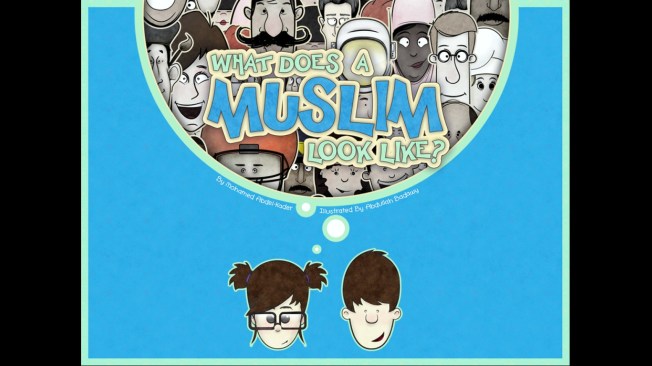
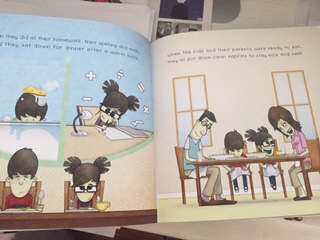
what does a muslim look like.jpeg This 22 page, simplistic book written in rhyming couplets, is such a timely and necessary book.  Much like Owl and Cat: What Islam Is… this book has value that extends far beyond its audience level (not AR but, I’d say three years and up), as the content breaks down stereotypes while being framed in a positive, non condescending way.
IMG_3160

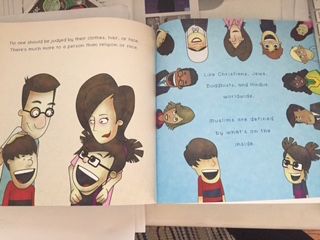
A brother and sister pair, Jack and Jane, go about their day when at dinner Jack remarks that he learned that two of his classmates are Muslim and they look like them.  Thus arises the question, what do Muslims look like?  The book then goes on to break down stereotypes and broaden views in the same rhyming manner that keeps the book light and child friendly.  The conclusion is that like people of other faiths, everyone is different, and that no one should be judged on what is on the outside.

IMG_3161

The book appears to have been started on Kickstarter in 2012 and Alhumdulillah it got the needed funding to get published.  I got my copy through the public library system, and I am beyond thrilled that I found it where hopefully a lot of people can get their hands on it.  Reading the author’s campaign on where the concept came from, he would have had no idea how much more timely the book is now, then when it was first published.  I get asked quite regularly from old school friends, how they can introduce Islam or get the ball rolling  to talk to their kids about Muslims, and this book would be a great start.  Told from non Muslim kids perspectives, with very hip parents, the book does not discuss any tenants of faith or belief, it just identifies the many shapes and sizes and colors that Muslims come in.  It would work well to show that Muslims are everywhere not just in the news, without overwhelming even the youngest of readers.

IMG_3162

The pictures in the book are absolutely perfect in complimenting the story. They are not only silly, but also diverse as the book’s text would require.  Interestingly there are ladies with hijab and those without, and scarves are not mentioned in the text, and also noteworthy is there are no bearded men in the pictures.  Overall, a wonderful book that I would love to have on my shelf with extras to hand out.

Snow White: An Islamic tale by Fawzia Gilani illustrated by Shireen Adams

Standard
Snow White: An Islamic tale by Fawzia Gilani illustrated by Shireen Adams

snow-white_cov

A lot of the twists that I was surprised by and endeared to in Fawzia Gilani’s Cinderella, seemed lacking in her re-telling of Snow White.  Perhaps it is the mere fact that Cinderella has a legacy of being re-told from different cultural perspectives and in different time periods, where Snow White doesn’t, that made this book stumble where her other sailed much more smoothly.

The basic premise of this Snow White version is naturally the classic tale.  Snow White is the envy of her stepmother, in this case however, it isn’t a magic mirror, but a jinn who answers her questions. Once the huntsman is convinced not to kill her, and a boar’s heart and liver are taken instead,  Snow White finds the companionship and shelter of the dwarves.  In this re-telling, it is a female crew with countless skills that they are happy to pass on to their newest friend.  When the evil stepmother finds out Snow White still lives she concocts poisonous dates to present in disguise to Snow White who is awaiting the appointed iftaar time.  The dwarves arrive home too late to save Snow, but see who has done the evil deed.  The Prince makes his brief appearance as he arrives at the cottage, makes dua’a for Snow and then sends his mother to nurse her back to health.  In fairy tale tradition a wedding soon follows, but the evil step mother has one more trick up her sleeve, she poisons a comb that Snow is surely to use as she prepares for the big day.  The dwarves cannot thwart the stepmother and Snow is only saved when the stepmother in all her vanity accidentally picks up the comb to fix her own hair.  Over time she recovers and Snow forgives her and they all presumably live happily ever after.

snowwhiteanislamictalepage2

Perhaps it isn’t fair to compare the two books, but I would imagine they are often purchased together and I feel like there are some notable differences that are worth mentioning.  In Cinderella, the setting is Andalusia and they are all about the same skin tone.  Snow White seems to resort back to old stereotypes and the stepmother seems to be the only one with a darker complexion with all the others being more fair.  Granted her name is Snow White, but it is established on the first page that her mother prays for a child with a “heart as pure as snow,” so really that doesn’t hold up.  Also, where I felt that Cinderella could work for Muslims and non Muslims alike, I think this one would be a hard sell for non Muslims.  There are a lot of references to dua’as of Noah and Job, there is Ramadan, the role of the jinn, she even does tayammum at one point and readers may be confused why sometimes she is in hijab, and when home with the women she is not.

Like Gilani’s Cinderella, the book is very thorough in being Islamically appropriate.  The sisterhood is a nice twist and the Prince has a really small part.

snow-white-1-300x286

The illustrator is the same, yet for some reason the pictures seem a bit dull in this book.  The bottle of poison is shimmery, but the other illustrations seem muted and almost rushed.  The book is 41 pages with a glossary and Reference for Quran in the back, and is very text heavy.  Probably 3rd or 4th grade level with some assistance on the Islamic concepts.

Cinderella: An Islamic Tale by Fawzia Gilani illustrated by Shireen Adams

Standard

cinderella

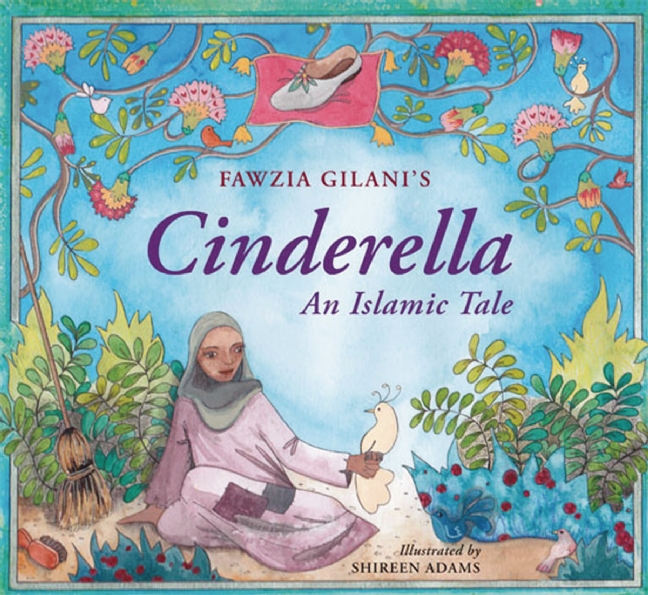
I’ve seen this book countless times online and honestly have never given it a second glance.  I mean Cinderella is a classic fairytale and I have a few different versions from around the world, but an Islamic one? It seemed like it would be awkward or overly preachy and forced.  I should have given Fawzia Gilani’s version a chance though, she has surprised me with her other re-tellings of Eid Kareem Ameer Saab and Nabeel’s New Pants. And, mashaAllah, to her credit she manages to weave a decent story full of Islamic tenants, void of magic, and more feminist than the Disney or Grimm versions.

I’m not going to summarize such a familiar tale, but I will point out major twists.  Zahra is a practicing Muslim who is very devout in her prayers, fasting, and reading of the Quran. Her step-sisters nickname her Cinderella after some cinders from the fire burn holes in her clothes.  A bit of a stretch, from Zahra, but I think even the youngest readers will know the original Cinderella story and be ok with it.

cinderella3.jpg

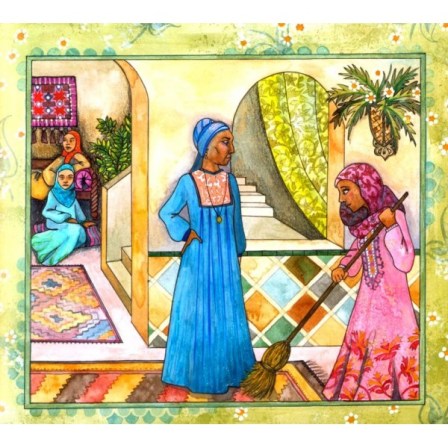
Cinderella is constantly remembering to be patient despite the treatment of her step family through various duaas, ayats in the quran, and fasting on the day of Arafah.  When an invitation to an Eid Party at the palace comes, she naturally is forbidden from going unless she completes all her chores.  Luckily her Grandmother returns from Hajj with servants to help clean the house and a new abaya to wear to the party.  At the palace the women and men are in different rooms, but Cinderella catches the King, the Queen, and Prince Bilal’s attention when passing in the hallway for being in full hijab.  She continues to impress the Queen, when she remains quiet during the athan, prays in jammat, and shows grace in her manners and speech. After winning over the mom, the slipper and happily ever after follow the traditional script, however, like the story of Yusuf (as) and how he forgives his brothers, Zahra forgives her step-family as well.

cinderella-text

The 41 page story is heavy on the text and is not AR.  I would imagine that it would be on a third grade level for Muslim children familiar with the vocabulary, and fourth grade for those that are not.  There is a glossary at the back, but not all of the Arabic words are included, and I’m not sure that the context would allow for them in some cases to be understood.  This book would be hard to do in a story time setting because of the length, at bedtime, however, the pictures are detailed and rich enough that one-on-one could hold a five or six year olds’ attention.

Overall the story doesn’t feel forced, and you’ll find your self smiling at some of the “islamicifaction” of the plot.  Most of it flows really well.  I love that it isn’t focused on her appearance alone.  I also like that she isn’t helplessly waiting to be saved or alleviated from her burdens.  By and large it doesn’t feel like a love story, Prince Bilal is pretty much a minor story point.  The book works for Muslims and non-Muslims alike.  It isn’t preachy, but it definitely is strong in it’s moral messages. I think non Muslims will find the Islamic version just as fun as the hundreds of other “twists” on Cinderella and Muslim children will love to see someone like them living happily ever after as well, inshaAllah.


The Treasure at Bayan Bluffs by Farah Zaman illustrated by Kim Zaman

Standard
The Treasure at Bayan Bluffs by Farah Zaman illustrated by Kim Zaman

img_2961

At 231 pages this book claims to be for ages 9 to 18 and that’s a pretty large spread for a mystery, yet alone an Islamic fiction one by a first time author.   In a tone reminiscent of Nancy Drew and the Hardy Boys,  it should really should just say 9 and up, I was hooked!

SYNOPSIS:

Adam and Layla along with their younger twin brothers Hassan and Hakeem from America are visiting their family home of Bayan Bluffs in Midan for the summer.  Their grandfather and great aunt and a few long time servants aren’t much entertainment for the children, so their parents arrange for their college friends kids’ Zaid and Zahra from Crescent City, a few hours away, on the other side of Midan to join them.  The children get along right away and decide to try and solve a mystery of a hidden treasure that they have heard bits and pieces of over the years.  Their search for the Moon of Masarrah starts innocently enough, but quickly escalates as they learn they aren’t the only ones searching for the missing gem.  As they learn more about the jewel and the circumstances of its disappearance the gem and the murder of Adam and Layla’s great grandfather get further entwined.  With a few of the suspects still alive and many of their family members still in the city, the children soon find they themselves in danger as well.

WHY I LIKE IT:

The biggest reason I like it, is it is well written.  There aren’t confusing passages, or too many characters or boring preachy paragraphs.  The plot is good, the dialogue believable and the fact that they are Muslim children, just depth to the story.  They plan to meet after asr or before Jummah, and they say inshaAllah and mashaAllah, and its just a really good balance of who they are, but not all they are.  In retrospect, maybe they all get a long a little too well, but it isn’t syrupy and they have some minor annoyances, so it doesn’t hinder the story.  The only thing I caught myself looking back on was the age of the twins.  At times they seem like toddlers and at other times much, much older.  Even the author says they are “about six years old,” and having a six year old myself, I do believed that they can vacillate to both extremes in any given moment and thus I accepted their antics and let it go.  Additionally I wish she included a map.  It isn’t confusing, but it would have been great to look back upon as the action speeds up, and would definitely help younger readers visualize the details.  The terrain vocabulary for anyone younger than nine might need some explanation.  There is a glossary at the end for some of the Arabic words, and for some of the specific ships and weapons mentioned.  Their are a few illustrations that I think help the younger readers, they aren’t needed for the story, but they don’t impede it either.  I wasn’t crazy about them within the story, but I did appreciate that they show the girls in hijab and the illustrator clearly put a lot of work in to them.

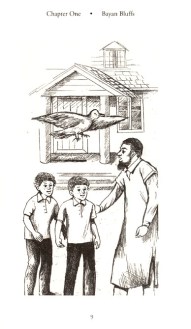
bayan.jpeg

I wish that the cover was more appealing, for a story that was so good, I wish it begged to be picked up.  InshaAllah word of mouth will carry the book, so that more like it are written and published.

FLAGS:

None, mashaAllah it is clean and wholesome.  There are good and bad Muslims and no judgement is put in a religious context.  There is some violence, but it is nothing even a seven year old would find offensive.  Alhumdulillah.

TOOLS FOR LEADING THE DISCUSSION:

I would love to do this as a Book Club book for 5th through 8th grade.  The writing quality and the different characters the students would be able to identify with, would make it a lot of fun.  There isn’t any deep or though provoking discussion points to accompany the book, but I think the genre is hard to come by and Muslim kids seeing Muslim kids solving a crime and going on a treasure hunt, is just exciting.  I couldn’t find any study guides or even much information on the book or author, but none is needed to enjoy the story.  Farah Zaman if somehow you see this review, know that I hope you keep writing, and I thoroughly enjoyed your book!  Happy Reading Everyone!


Princess Siyana’s Pen by Zainab Merchant

Standard

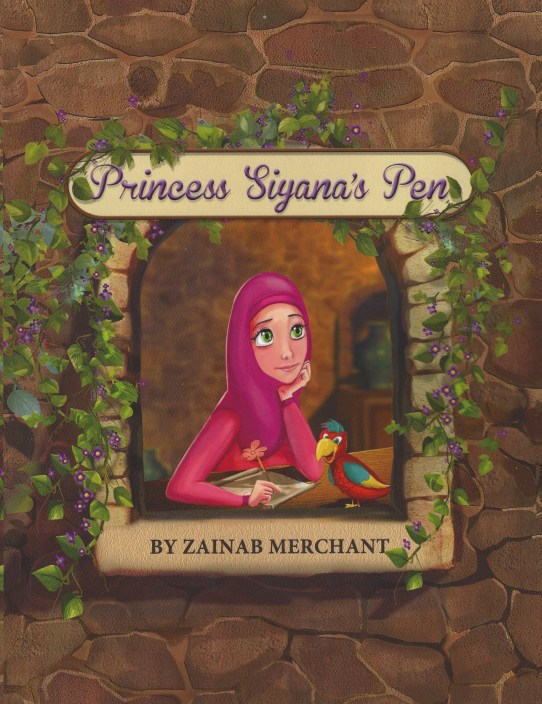
Princess_Siyana_s_Pen.jpg

It is hard to not compare a big, brightly colored Princess book to the golden standard of a Disney princess story, which obviously isn’t fair. But for as much as I wanted to love this strong Muslimah and her doe-y eyes as she saves herself and the kingdom, I felt the author let me down.  The plot feels overly familiar, it is like a mix of Rapunzel in Tangled (minus the tower and Mother Goethel), Anastasia (not Disney, but in the same genre), throw in Jafar and (a nice) Iago from Aladdin, sprinkle in Islamic wisdom and insights, and tada you have Princess Siyana.

Siyana is the daughter of King Tariq and Queen Fatimah, the wonderful rulers of Lusitania.  While still a baby, the evil Chief Advisor Shargor kidnaps the young princess and leaves her in the neighboring mountainous kingdom of Baetica.  As her kingdom searches for her, a traveler in Baetica finds her and gets her to Ms. Salma at El Sol Orphanage.  Her life is good growing up. She shares her knowledge of modesty and salat with the younger girls at the orphanage, and has a very close relationship with Ms. Salma.  Meanwhile, in Lusitania, Shargor has imprisoned the King and Queen and is ruling unjustly and ineffectively.  When Siyana is 16 years old Ms. Salma surprises Siyana with a trip to Baetica for an interview at Baetica Academy, Siyana’s dream school.  While there, a tornado tears the two apart, and Siyana is rescued by an elderly couple.  This couple is struck by her name and fill her in on the story of the missing princess.  Siyana boldly journeys to the castle, storms in, frees her parents, forgives Shargor and presumably they all live happily ever after.

The author puts not just Islamic values of forgiveness, and kindness to others in the story, but pushes the point of hijab and talking to Allah (swt) as well.  Siyana discusses how at the orphanage they don’t cover, but when they go out they do.  One of the younger girls even asks her, “why wear such a pretty dress if no one can see your hair?”  Hijab comes up a few times through the book and isn’t too awkward.  However, I felt the concept of writing letters to Allah (swt) a little forced and less smooth, especially considering it is the title action of the book.  Once a week the girls at the orphanage write letters to God with special pens Ms. Salma had given them. They then drop these letters in the lake.  A bit odd for the environment in my opinion, but I get it I’m cynical.  In her first letter she writes about wanting to help others and even remarks, “Oh my Lord, my Guide, my Everything, How I’ve missed you, even though I talked to you just an hour ago in my Salaah!” The author has Ms. Salma explain that you can always talk to Allah (swt) and that duaas and letters are good, but remembering Him in your heart is the best.  Siyana writes two letters in the book, and the letters aren’t long, but it seems like the lead up in to them and after them, explaining the connection to God through many different forms is good, and which are better, and which are required, etc., gets a bit wordy.  Again I do acknowledge my own unease with writing letters so formally to Allah (swt) in literature. I have now reviewed a few books were it presents itself, and in all cases I find it weird, and I don’t know why.  Interestingly the Author never uses the word Allah (swt), but she does use hijab and salaah.  And there is space at the back of the book to write your own letter to God.

I do like that the plan is for Princess Siyana to rule the kingdom and that she is traveling for educational reasons when the tornado strikes.  I also like that Ms. Salma seems to be a strong independent woman and that Siyana, doesn’t wait around for someone to save her parents, she takes control, trusts Allah, and saves the day.

12729432_218382801843197_1944575424_n

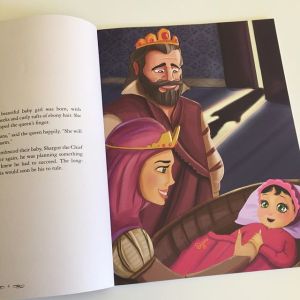
The book is beautiful and big.  The illustrations are radiant and well done.  At 40 pages long, there is also a recipe for Macaroons and amaze at the end, the story is quite long in both the number of pages, and in the amount of text on each page.  I would place it on at least a 3rd or 4th grade level for reading, and possibly a KG or 1st grade level for story time.  The book isn’t dry, but it would definitely test a 3 or 4 year old’s attention span.  Obviously it is an Islamic alternative to the mainstream princess story, but at $19 and the way it is beautifully presented, I guess I wanted more than just Islamic morals infused into something so familiar.  I feel like the author could do more, it is definitely within her writing ability and the publisher, Sun Behind the Cloud, who it seems is responsible for the illustrations as well, definitely know what they are doing.

There is a youtube teaser: https://www.youtube.com/watch?v=6qS_Jw2rp8Q

and an interview with the author https://www.youtube.com/watch?v=HCclUg9pUXI

siyanas-pen-1-600x600


Jannah Jewels by Umm Nura illustrated by Nayzak Al-Hilali

Standard

Strong muslim girls  (check)

Historical fiction (check)

Elementary level chapter book (check)

Beautifully illustrated (check)

Action, adventure, fun (check, check, check)

Really what more can you want from a book, or better yet a series of books?

The premise of Jannah Jewels is four Muslim girls each with specific skills that travel back in time to various places in the world to retrieve artifacts to save the world before the “villians” do.  Along the way they share knowledge of hadith, Quran, and Muslim achievements and advancements while meeting with influential Muslims.  I mean really, what is there not to like.  This is historical Islamic Fiction for 2nd through 5th grade at its finest, yay!

So far there are nine books in the series, and based on the premise that they must find 12 artifacts to put in a golden clock, I would assume there will be 12 books.  I decided to review only the first two as I think they set the stage and give the reader a good feel for the series’ standards, the tone, and direction the consequent books will follow.  The series is to be read in order and they range in length from 69 pages to 165.  Each book has a description of the main characters, a visual of the supporting characters and is followed after the story by a sneak peek at the next book, a glossary, and some manga anime of the heroines.  Some of the books are co authored (Ustadha S. Karim & Tayyaba Syed), but based on the website http://www.jannahjewels.com Umm Nura is the main author and creator of the series.

SYNOPSIS:

Hidayah sees a woman with a bow and arrow and watches her for many days until finally she musters the courage to meet her.  This meeting is the start of Hadiyah’s training in present day with the Master Archer.  The story however, starts with a prologue of the past and how different approaches to archery have lead to a rift between those entrusted to keeping evil at bay.   The collision of those actions and today occur as Hidayah and her friends Jaide, Sarah, and Iman are chosen to retrieve artifacts scattered around the world and throughout time.  They must bring these artifacts and place them in the golden clock before Jaffar and his son Khan do, to obtain a secret locked away inside.  Each girl has incredible skills and strength as well as fears and doubts.  The stories are action pact as well as enlightening and empowering.  The girls are smart, strong, and supportive of one another and they use team work to make for a smart inspiring read.

In the first book the foundation is laid and the details of time travel and the task are put forth, it is a tiny bit cumbersome, but is quickly believable and accepted as the action picks up.  The Jannah Jewels travel to Timbuktu and meet with Mansa Musa to rescue a lost manuscript.  In the second book they journey to China aboard the ships of Chinese Muslim Admiral Zheng He to recover a medicinal plant.  The recap of the first book and the premise of what has to be done is seamless and quick.  Thus allowing the story to move further below the surface to provide more insight into who the four girls are, and understanding into what occurred in the past that made the Jannah Jewel adventures necessary.

WHY I LIKE IT:

I love historical fiction, so Islamic historical fiction is like a gift, when done right.  To give young muslims a glimpse at some of the remarkable accomplishments and contributions Muslims have made throughout time, in a manner they don’t even know they are learning it, is so needed.  Our kids should know about Mansa Musa, Al-Kindi, Fatima Al-Fihri, Sultan Muhammad II, and more, and sadly many are not tempted to pick up a non fiction book to learn about them.

The Jannah Jewels are also admirable and have the ability to inspire our girls to be better Muslimah’s through their examples of intelligence, strength, and deen. Each book reveals more about their hobbies, passions, and past, and does a good job of giving them each their own personalities. That being said, these books are engaging for both boys and girls.  My own children have read the first four multiple times as have I.  Initially I didn’t think my son would be interested as it seems like a very “girl power” type read, but the story is strong enough and the characters have depth that they work well for all kids and their parents.

In addition to the stories, visually the books are absolutely gorgeous and appealing.  The manga anime style of art is bright and colorful on the covers, and detailed and complimentary throughout the text.


FLAGS:

None, alhumdulillah

TOOLS FOR LEADING THE DISCUSSION:

The website is engaging for those wanting to know about the characters and writing team.  The FAQ section is good background as well.  www.jannahjewels.com

The books aren’t complicated as they are for elementary aged children, that anything more than the story is not needed.  If your readers are like mine, however, you will need some reference books or google on hand for those that would like to learn more.  I think these books would be great in a classroom setting to get students reading.  I also think they would work well in 1st grade for read a loud story time.  I don’t know that they would be ideal for book club, but definitely could be used to compliment lessons in Language Arts and Social Studies.

Bedtime Ba-a-alk by Rukhsana Khan illustrated by Kristi Frost

Standard
Bedtime Ba-a-alk by Rukhsana Khan illustrated by Kristi Frost

bbaaalkcover

I know, I know another book by Rukhsana Khan, but really how great is she.  She writes books with religious references sometimes, cultural ties sometimes, and sometimes just fun books. I love that kids of all backgrounds associate her with good stories, and that she hasn’t limited herself to just one demographic.  img_1893

Bedtime Ba-a-a-lk has no religious or cultural connections and is just about a girl dealing with rogue sheep in her mind that don’t want to be counted.  The AR level is 2.6 but I don’t know that 2nd graders and below would really “get” the story.  The vocabulary is great, with a little assistance: balk, conjuring, deliberate, snub, mutiny, haunches, eider-down, furrowed, etc..  And the concept of a girl creating her imaginary dream world and conversing with the characters in it, is grand, but I look forward to testing out which age groups grasp it, and which ones just think it is a funny story with an obstinate ram.

img_1894

The book is 30 pages and beautifully, playfully illustrated.  The pictures are just “fuzzy” enough to give a sleepy feel, and bold enough to stretch the imagination.  The lines do not rhyme, but flow easily.  The font is large and inviting, and well placed on the page.  The book is clean, and the girl in her pleading with the sheep uses “please” and good manners in her firm demands.   It does use the word, stupidly and darn, once each, but overall a silly fun read.


Umar and the Bully by Shabana Mir illustrated by Asiya Clarke

Standard

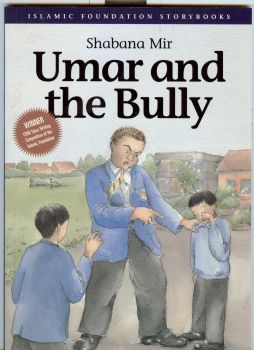
Umar and the Bully.jpg

With it being October and Bullying Prevention Month, I thought to review a book that has been on my bookshelf for a long, long time.  It won the Islamic Foundation Story Writing Competition in 1996 and is just as relevant today.  At 44 pages, the story, the layout, and writing style appeal to children on a second or third grade level.

SYNOPSIS:

Umar stumbles across some older kids plotting something covertly in the school yard and some money being exchanged.  He then encounters a younger student upset.  Being a kind person, Umar gets Asad to confide in him what the bullies, Harith and David, are up to, and vows to keep Asad safe.  While all that seems simple enough, the true battle begins within Umar,  as he has to figure out what is he going to do, and how is he going to stop the bullying.

WHY I LIKE IT:

I love the length and the target audience.  My six-year-old son summed it up perfectly when he finished.  “Woah, that was a good book, I didn’t expect it would give me so much to think about.”  The author follows the bullying strategy of telling an adult, or a teacher, but gives some depth when that teacher doesn’t care or take the time to help.  It also shows a variety of people that you can go to for help and characteristics you should look for when deciding who a good person to talk to would be.  Umar decides to talk to a good friend of his about what is happening to Asad and devise a plan to help.  Mohammad is kind and trustworthy.  He also gets some advice and encouragement to be brave from Mohammad’s older sister and brother.  All this is done within an Islamic context of asking Allah swt for help, of finding inspiration from stories of his namesake Syedina Umar Al-Farooq. It also, as we get in Umar’s head, reveals how he himself is scared of facing the bully.  This is great because it shows that it can be scary to confront someone even if you are not the victim.  Umar feels he shouldn’t be scared because he is a Muslim, which I really don’t understand, but he turns to Allah swt asking for bravery to do what is right and to be strong.  And beautifully, after it undoubtedly raps up in a happily ever after children’s story way, he does remember to thank Allah (swt) for being there for him and gives credit to Allah for giving him strength.  The book shows the responsibility we have to do what is right even if it isn’t being done directly to us.  It also shows one or two children can make a difference.  I really like that the point of view is from Umar, not the one doing the bullying or receiving it.  Allowing the reader to see how empathetic he is to another person is a wonderful lesson in and of itself.

The book also has mostly Muslim characters, but a few names sprinkled through out as victims and perpetrators could suggest non muslims as well. This is great in showing that bullies are everywhere and that perhaps being in an Islamic school or in a majority Muslim school does not mean bullying doesn’t exist.  Similarly it is good to see that bullying isn’t just non Muslims disliking Muslims, as often time books about bullying for Muslims would suggest.  I think the book could be for Muslims and non Muslims alike, but with the religious reliance, it is geared more for Muslim readers.

FLAGS:

The book is clean, it mentions that the bullies are violent, and possibly smoking.  The children being bullied obviously are lying but it is clear that it is done out of fear, not because they are deceitful by nature.

TOOLS FOR LEADING THE DISCUSSION:

There aren’t any reading guides or activities to accompany the book that I could find online, but I think the natural discussion that would follow make it a great option to read as a book club book, or in small groups.  There are a lot of very easy places to ask children what they would do, if Umar made a good decision, and how they would feel as the story unfolds.


The Roses in My Carpet by Rukhsana Khan illustrated by Ronald Himler

Standard

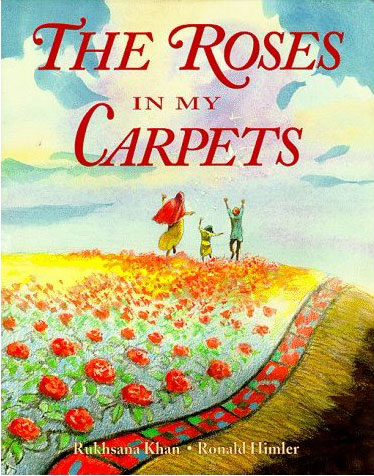
roses-cover

The concept of “refugees” is not a new one, but with the pervasiveness of the term in the news right now, children are starting to need some understanding of what it means to be a refugee, and how to empathize with what their classmates and friends may have endured.  Books like One Green Apple, The Red Pencil, and Four Feet Two Sandals are great, and I excitedly hoped this one would be a great addition to the theme.

roses-2

The book is leveled as an AR 3.2, but I don’t know that many eight and nine year olds would be able to grasp some of the content unassisted.  This is a good example of the limitations of Accelerated Reader.  Yes, diction and sentence length are third grade level, but content is a bit heavy in this 32 page water-color illustrated book.

roses-1

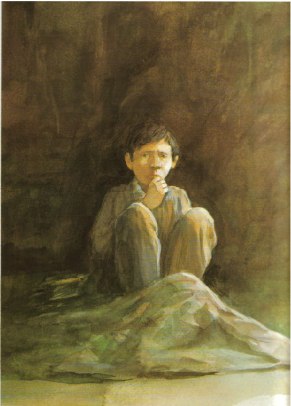
A young boy is telling the story of his life in a refugee camp in Pakistan.  The nightmares of jets dropping bombs opens the story and sets the tone of a very frightening reality that this boy, his mom, and his sister Maha face.  His father, a farmer, had been killed, and I think the author does a good job of showing readers that although the characters are now in a refugee camp, food and safety are still not a given.  I think we as westerners tend to think, ok they had to leave their home, and that is sad, but now they are taken care of, and this book clearly shows that, that is not the case. The boy mentions that someone has sponsored him and helps them with money, something his father wouldn’t have accepted, and I’m not sure why this is included.  Perhaps to show that people still can help and need to, or to show that affluent people donate as a way to ease their conscious without working to fix what caused the problem in the first place? I don’t know. It would lead to some good discussions with older children, perhaps fifth grade and up, as the author doesn’t make it a good or a bad thing, but does introduce it none the less.

The environment is drab, “Here, the walls are mud, the floor is mud, the courtyard is mud, too” and the day-to-day chores monotonous, lining up for water, for food, going to the mosque to pray, and going to school.  For some reason, not sufficiently explained in my mind, the little boy hates school.  A sharp contrast to stories that show how appreciative many children in other parts of the world are at the opportunity to study and learn. The boy rather, loves weaving.  He looks forward to escaping his reality and getting lost daydreaming in the weaving of beautiful colorful images where the bombs can not get him.

The characters are clearly Muslim, as they pray and wear hijab and go to the mosque.  They trust Allah when they are faced with challenges, but no details of belief are conveyed and it simply describes the characters. The book does not come across as whiney to me, and while there is some hope that radiates through when the boy is weaving, it really is a sad book.  It is made more depressing when Maha is hit by a truck, she thankfully survives with broken legs, and by the thought that although the boy wants to use his weaving to provide for his family, the future doesn’t seem bright.  In the end perhaps running free on a rose filled carpet where the bombs cannot get them only exists in his dreams, a sobbering thought for the characters and readers alike.

roses_in_my_carpet_p30-31