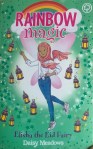

If you are familiar with the Rainbow Magic fairy books, you know they are never ending, there are currently 228 titles in the collection that cover beginning readers, early chapter books, and longer solo chapter books. They cover seasons, colors, flowers, jewels, musical instruments, pets, friends, holidays, etc., and now festivals. They may not be the most intellectually stimulating, but they serve a purpose in getting young readers confident and engaged. My daughter loved them in first and second grade and when this book was delivered a few days ago, she was so excited to see a Muslim fairy. She is 14. Representation will always matter, even when the story is a bit hokey and random, to see yourself in a beloved series, has power. Yes, the story is predictable in the 80 drawing filled pages, but for first and second graders it is fun. Elisha wears western clothes with her hijab, has a magical Pelita lamp that brings Eid joy to the human world, and hosts feasts with international foods. Yes, the fairy is Muslim and Eid joy after Ramadan comes from an oil lamp apparently, it is a stretch, and if you are not comfortable with this imaginative representation of Eid joy coming from a magical creature’s enchanted item, then please don’t waste your time. If your kids already read books about fairies, this book might be of great delight to them, and be a great conversation starter for you to have about what really makes Eid a joyous time.

SYNOPSIS:
Jack Frost is still determined in this the third book in the four part festival series, to cancel Eid, Diwali, Hanukkah and Buddha Day to create his own Frost Day. With the sighting of the new moon, in this book Eid is under attack. Humans Rachel and Kirsty are summoned to help find Elisha the Eid Fairy’s magical Pelita lamp. But, Elisha goes missing and the girls arrive on Festival Island to find goblins destroying the Eid decorations. The fairyies divide up and Rachel and Kirsty in their fairy form are off to find Elisha, while the other fairies handle the goblins. They find her in a tower surrounded by a hail storm, the can’t get her out unless they find her wand. Once they find her wand they have to find her magical item. The goblins have it and are trying to teach it to make Frost Day treats instead of the kleichas and baklava and turkish delight that it keeps creating. With quick thinking, and an impromptu dance lesson, the lamp is recovered, Eid joy is saved, and the girls return to the human world, knowing that one more festival will need saving in the near future.

WHY I LIKE IT:
First of all, I didn’t know what a pelita lamp or kleichas were, so I did learn something once I Googled it, but I’m not entirely convinced that a pelita lamp (sometimes it is capitalized and sometimes it isn’t) is critical to the celebration of Eid. Aside from the religious uncomfortableness of attributing Eid joy to a magical creature and her enchanted item, the concept of the lamp seems a bit weak. I like that information about Ramadan is included and Eid Mubarak is mentioned a few times, but a little bit more about a lamp or lantern perhaps as a cultural relic, would have really made more sense even in this fragile framework.
I like that multiple cultures are represented in the concept of Eid and Elisha, she isn’t boxed in to one culture, she is universal. The themes of team work and friendship are always present in these books which is a great way to show respect for multiple religions and festivals. Jack Frost at times seems to be a good villain, but more in theory than in reality. His spell that the fairies are trying to break: “Ignore Eid and Buddha Day, Make Diwali go away. Scrap Hanukkah and make them see- They should be celebrating me! I’ll steal ideas and spoil their fun. My Frost Day plans have just begun. Bring gifts and sweets to celebrate The many reasons I’m so great!” spells out his plans and make him the right amount of scary for early readers.

FLAGS:
The premise of where Eid joy comes from. The goblins say “shut up” at one point.

TOOLS FOR LEADING THE DISCUSSION:
It is a little young for a book club selection, but if you have Rainbow Magic books on your shelf, you should definitely have this one too.



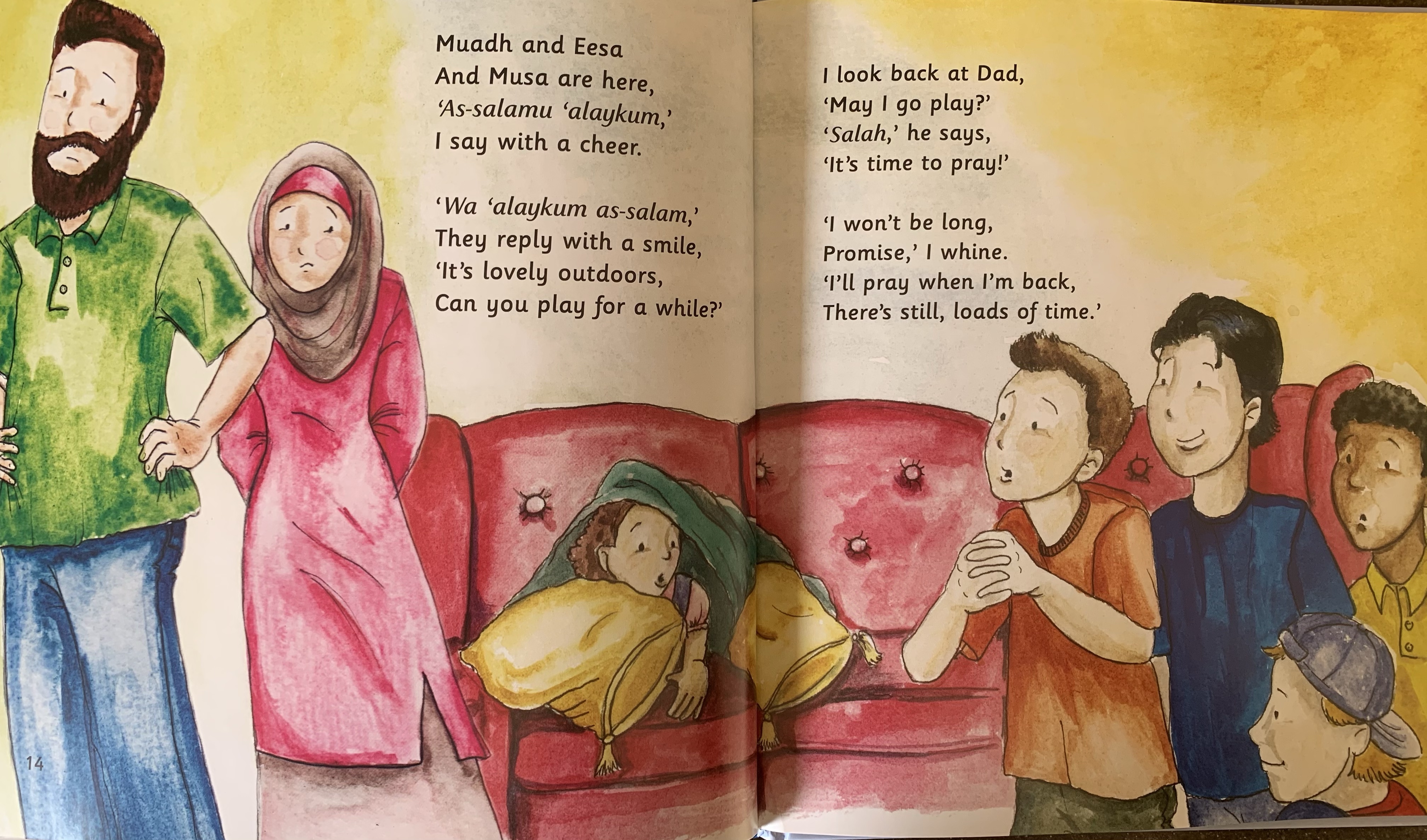
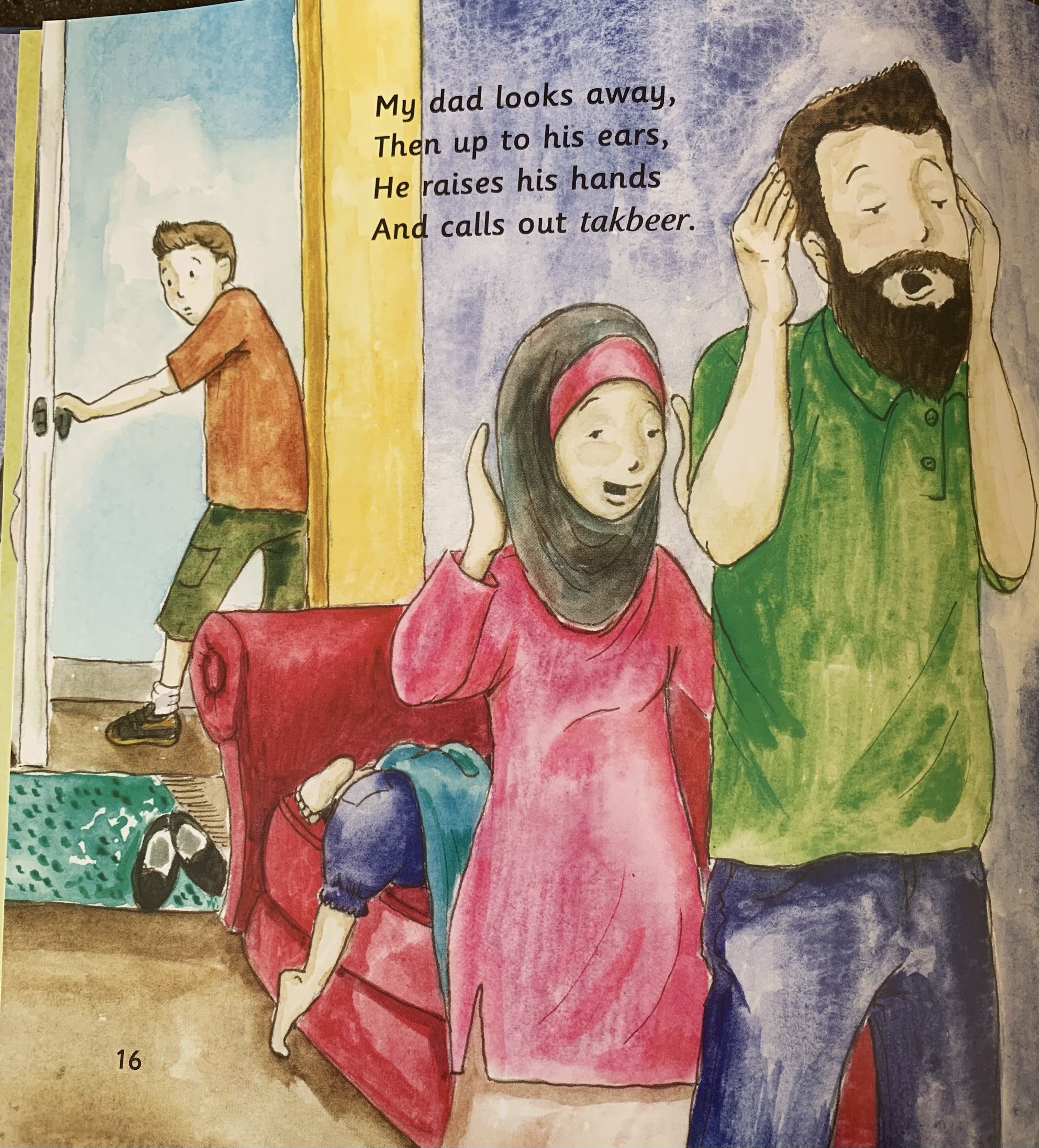


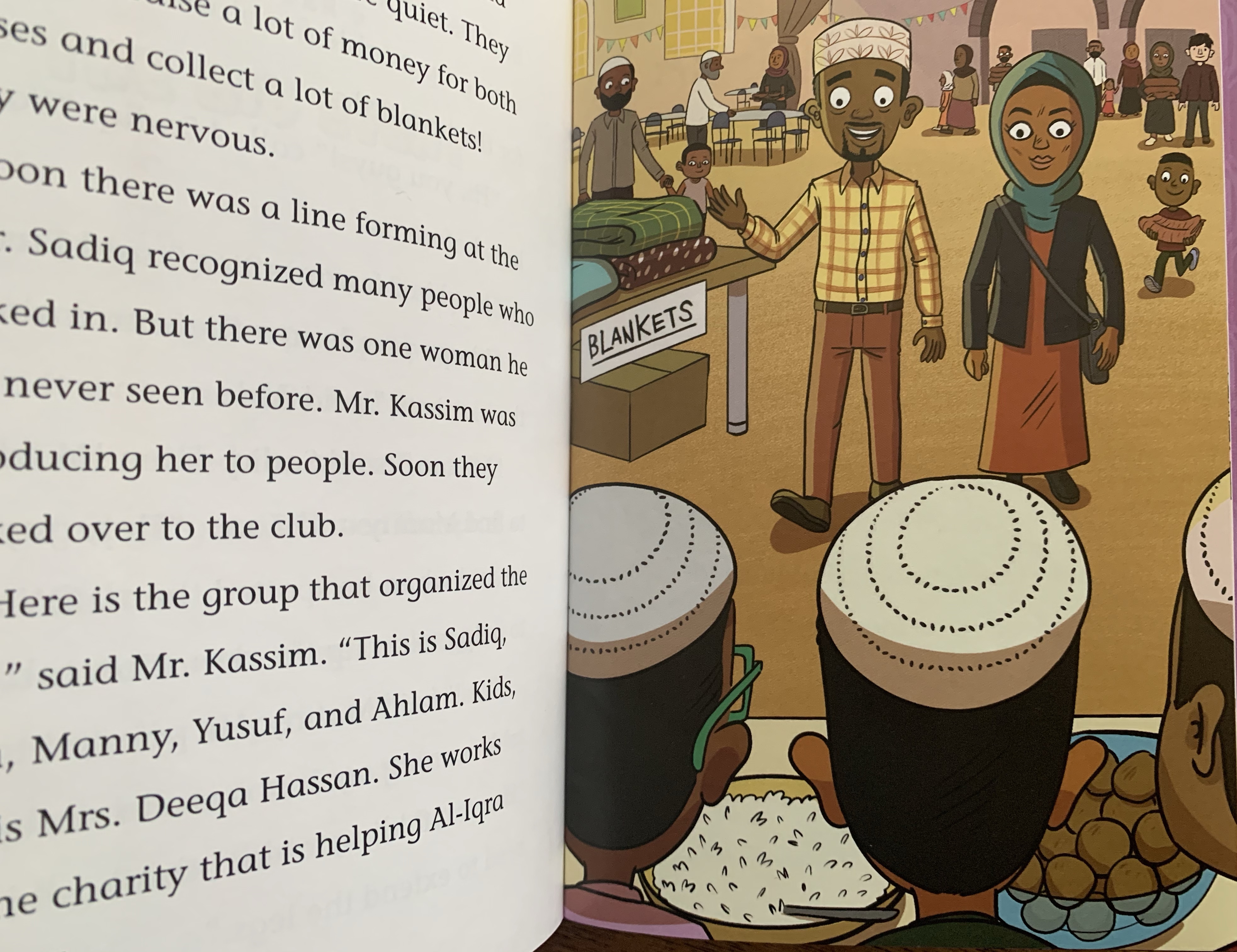
 This 65 page early chapter book in the Sadiq Series does a great job of introducing Ramadan, giving a glimpse of Somali culture, and conveying a relatable and engaging story about friends with a lesson/reminder about the values of communication. A group of boys hosting a fundraising iftar to help a school in Somalia have to figure out the logistics, the marketing, the cooking, and the execution, as they become socially aware and active in helping meet the needs of their community, both locally and afar. This OWN voice tale doesn’t shy away from authentically drawing on religion and culture to make characters and a plot that all readers can enjoy. The book is not preachy, but the characters know who they are in their manners, dress, speech, and environment. A great book any time of year for first grade and up.


 Islamic School Librarian