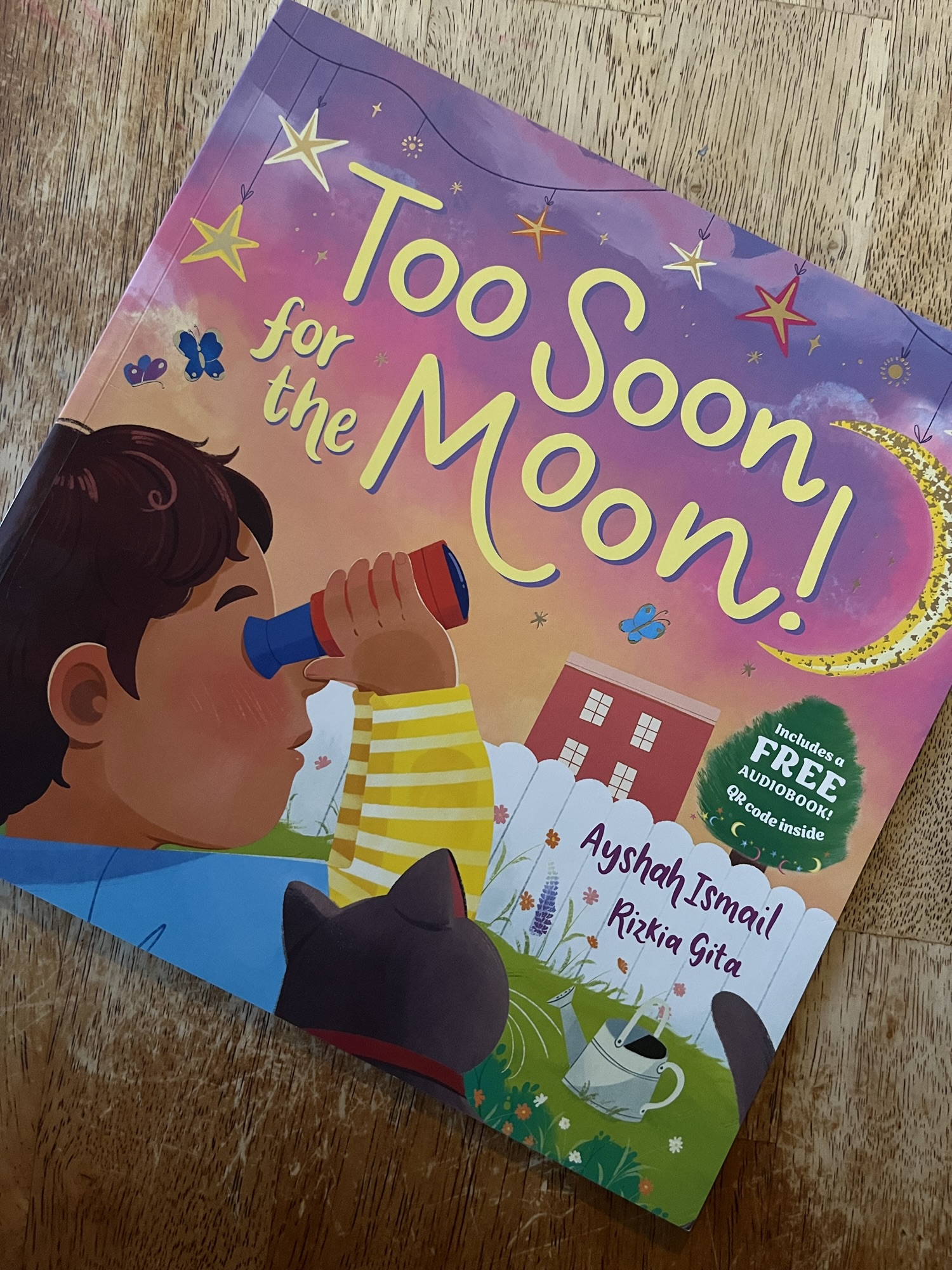
Yep, another story about the moon, at least this one attempts humor and doesn’t completely neglect religion. So as I write this, I’m reminding myself that most folks don’t read as many Ramadan and Eid books as I do, and thus won’t be comparing or rolling their eyes at the familiar plot points. The book is for the younger crowd, as its premise is that it is too soon in the day to see if the moon is shining to indicate that Ramadan is over and Eid is here. The little boy also doesn’t know what the crescent moon looks like, so Mama tells him it is like a smile and draws a curved line in the flour as she bakes. With that, Khalid is off looking for the moon, and being told that it is too soon to see it whenever he mistakes something else for the moon, clearly not knowing what they mean by “too soon.” I do like that Khalid and his Baba go to the mosque to pray, but I’m again wondering why everyone at the mosque praying maghrib does not look for the moon as a community. There was a similar book I reviewed with the same exact premise and this same exact oversight, it also really stretched out the time window available to see the moon, which has me wondering if it is not the same for us all? I do like that the book comes full circle and he does find the moon in a funny place, spoiler, reflecting on the ground in a puddle. I also like that there is a scannable QR Code for a free audiobook version and that it gets creative with not depicting faces.
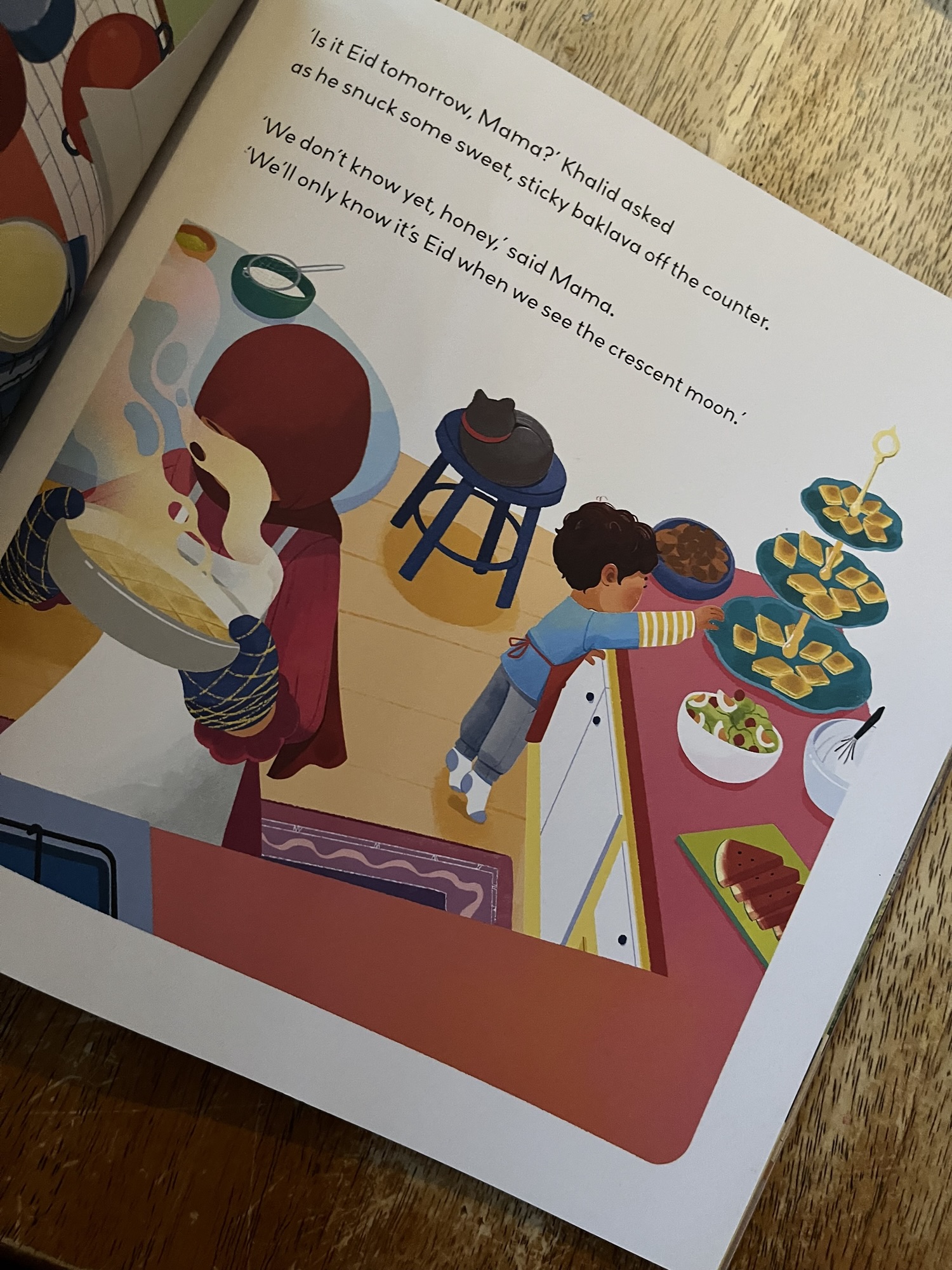
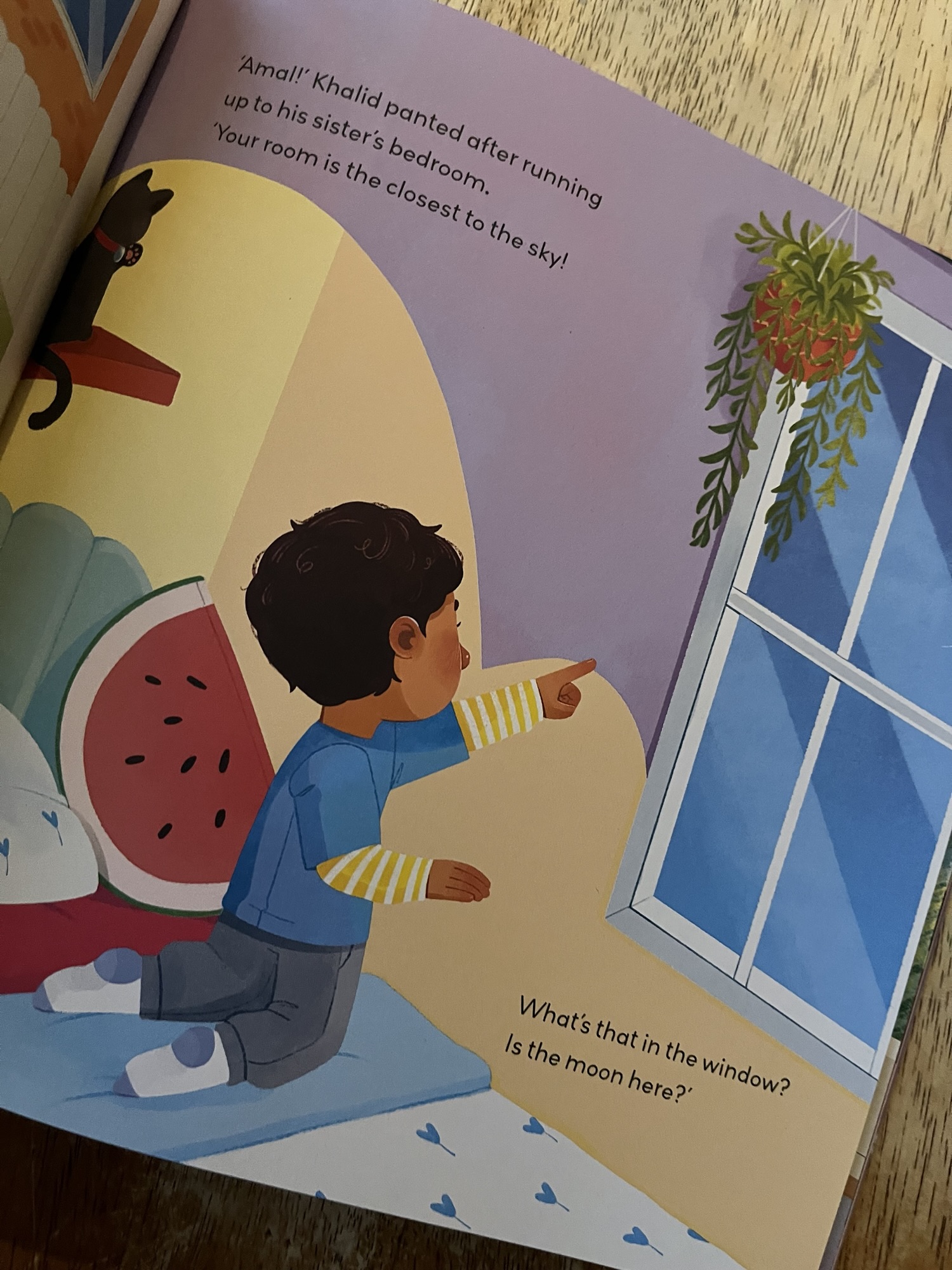
The book starts with Khalid helping Mama bake baklava in the kitchen asking about the Eid moon. Concluding that the sooner it is found, the sooner they can enjoy the treats and gifts, he is determined to find it. The holiday lights outside obscure his view with Baba, so he heads up to his sister’s room for a better vantage point, but the cat’s collar reflecting is all he sees out the window, the glint of his aunt’s bowl back down in the kitchen also doesn’t help him find the moon, and they all keep telling him that it is “too soon.”
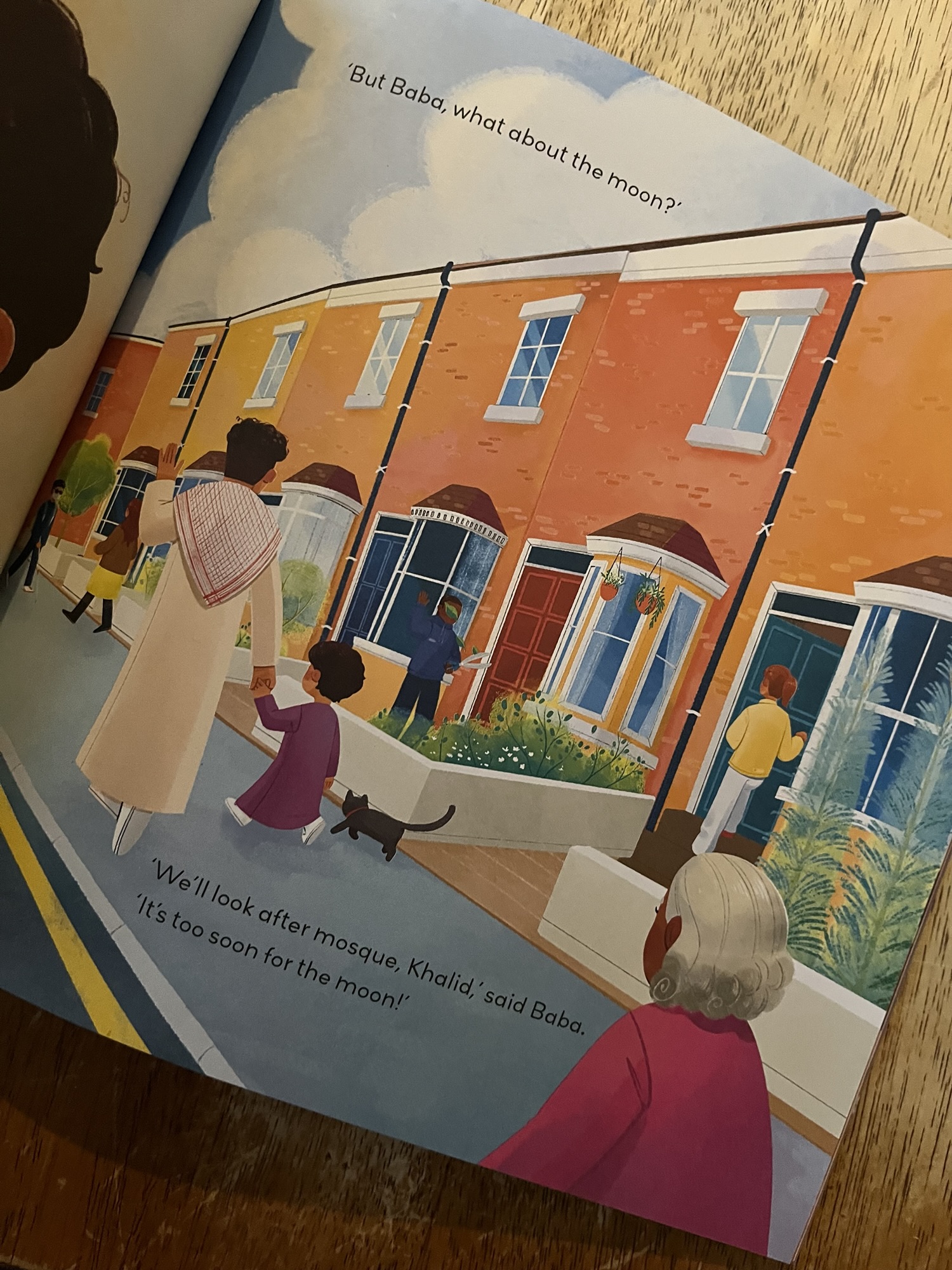
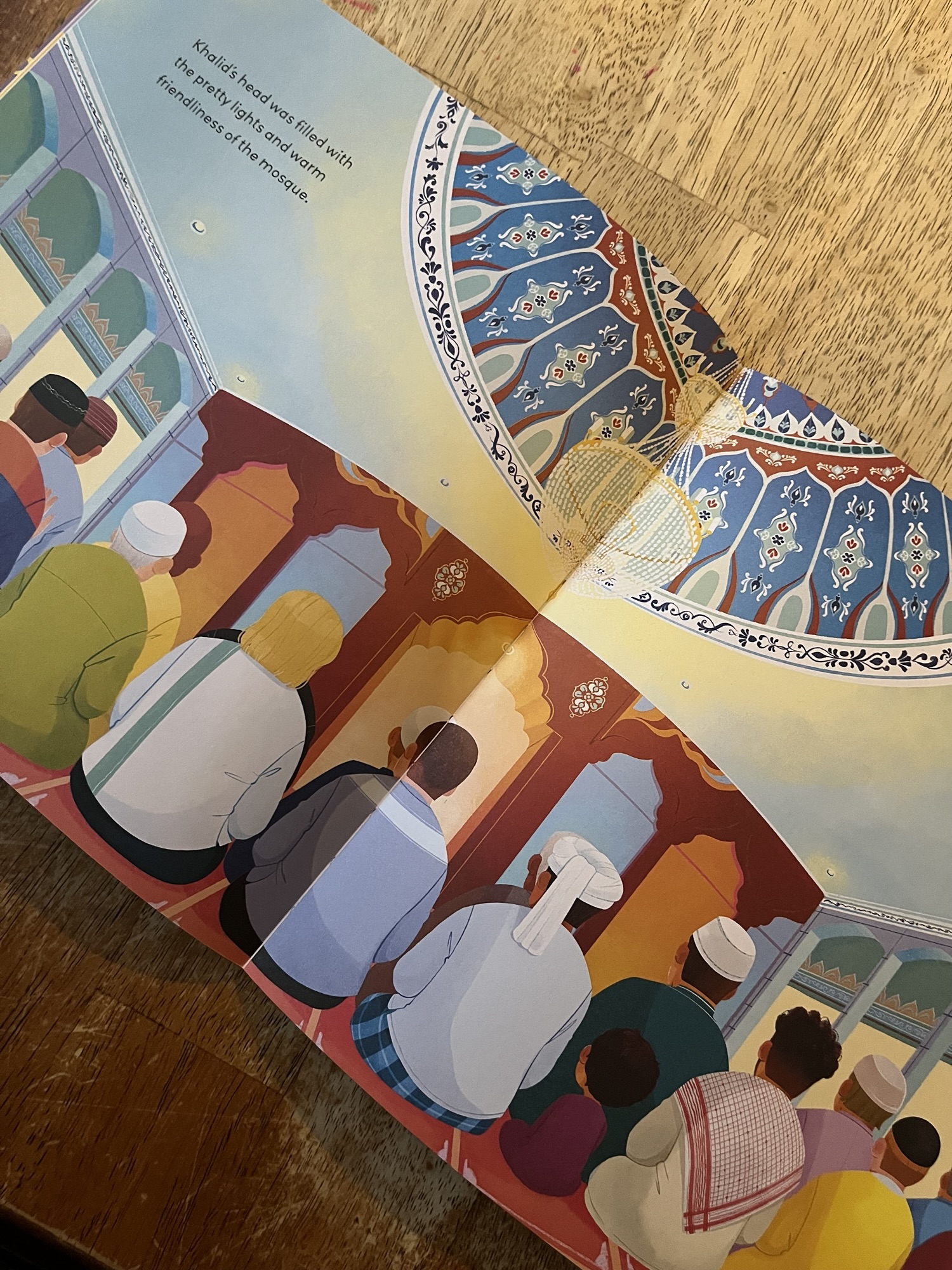
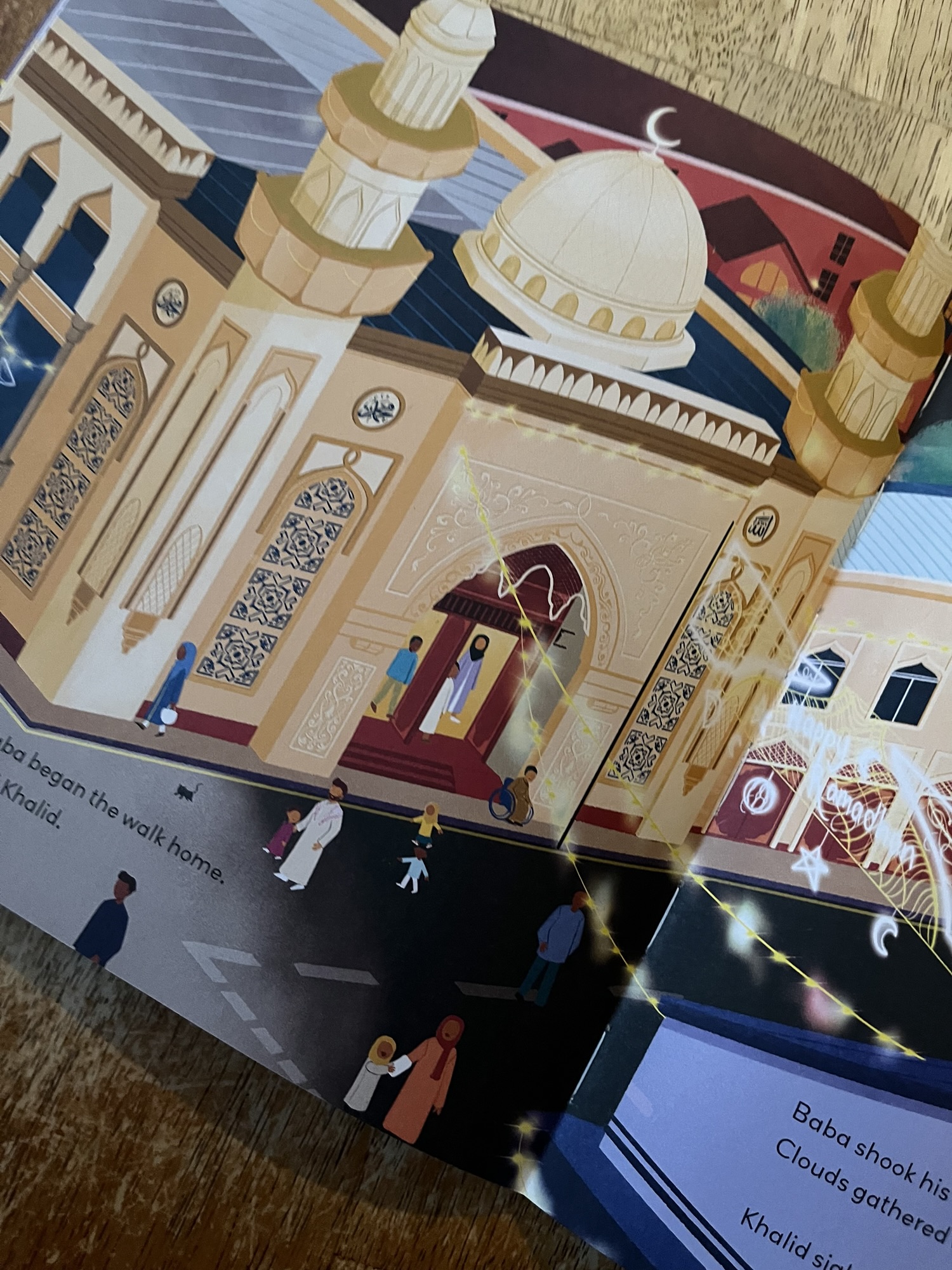
Baba and Khalid head to the mosque to pray, it is still too soon to see the moon, and when they are done, it is raining. A sad Khalid sits dejected, but when the clouds part and the moon’s reflection hits the puddle, the joy of seeing the Eid moon finds the protagonist, and all is well.
The large 10 x 10 size makes the book suitable for bedtime or story time, and while it might have been better as a board book with a premise of a child not knowing what the moon looks like and where to find it. I found it more troubling that the rest of the family and masjid community didn’t take looking for the moon more serious.




 Islamic School Librarian