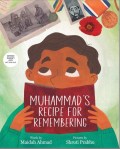

I feel like the idea and heart of this 40 page picture book is decent, but the story, presentation and takeaway are just really poorly executed. The pitch is a Muslim Desi kid feeling left out when all his friends are rehearsing for the upcoming veterans assembly because he doesn’t have anything to share. He then starts asking his family, and the Muslims and non Muslims hanging out at the mosque to find out about Muslim and Indian involvement in the World Wars. A rarely explored topic, considering in the West WWI and WWII are taught from a Western centric perspective, no doubt. Unfortunately, most early elementary readers, the book’s target audience is 4-7, have limited knowledge of the World Wars, let alone about the subcontinents own politics and that they were occupied themselves under colonial rule at the time, and this book does nothing to explain any of it. The inconsistencies, plot holes, vocabulary and ultimate lack of sharing a single story from a descendant of someone who fought, make the book rather pointless and forgettable. Truly the take away is that there were Muslims among the Indian army, they made roti and prayed. No real idea what they experienced, saw, endured, or gained in return for being forced to fight for Britain on the global stage.

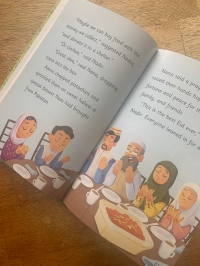
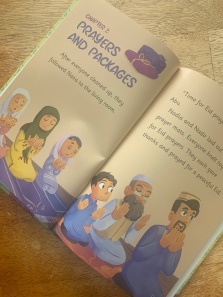
The book starts with Muhammad listening in to his classmates talk about their family members that are veterans and him feeling left out. At recess they don’t let him battle in the reenactments and instead make him be the cook. When he gets home his dad is making rotis and Muhammad asks his dad if they have veterans in their family, they then go ask his grandfather if his great great grandfather fought in either World Wars. Dada jaan recalls that “they sent my grandfather to France in World War One.” But he never spoke about it except to mention that they shared rotis. He suggests they go to the mosque the next night as that is where, “a kaleidoscope of people gather.” He learns from a Sikh uncle in a turban that whole villages went to fight and from Imam Rafiq that the soldiers fasted in Ramadan, prayed, and celebrated Eid. No one has any visible tokens of their family’s service as they were lost over time. Determined not to let the stories be lost, Muhammad shares roti at the assembly.

Ok, buckle up, I have a lot to point out, but first the positive. I like that the dad makes rotis. Mom isn’t in the book, but there are a lot of pictures of a lady hanging on the walls of the house, so possibly she has passed and dad has to cook, no matter, it is nice seeing a Desi dad in the kitchen. I also like that the mosque is central to the story, I wish it was called a masjid, and that it was explained why people that are not Muslim are hanging out there. Brown people are generally lumped together and this seems to reinforce that stereotype, which makes me less than thrilled. It seems like a social environment with ping pong tables and snacks happening, so why not say it is a social hall at the masjid where people of all faiths often gather. A “kaleidoscope of people” does not explain people of different religions at a mosque to most four year olds. The book claims the assembly is honoring veterans, so why is Muhammad only curious about WWI and WWII is never explained. He is teased and forced to be the cook by his friends, with a very negative connotations and depiction in the illustration, but that notion is never pushed back upon, and is actually heightened with rotis being the thread that ties the entire book together. A missed opportunity to be sure.

I really struggle with the reality that the majority of Indians were forced to fight, and the book keeps it vague in the text with lines such as “joined the war effort,” and “they sent..” who is they? It sounds nice that Muhammad doesn’t want the stories, like the artifacts to be lost, but WHAT STORIES? If the book is about remembering, and stories are to be shared at the assembly, I feel short changed that the reader doesn’t get a single story about a Muslim or Indian that fought in one of the World Wars. Isn’t that the point of the book? Yes the book has sources at the end, but it is fictionalized, make up a story, give the reader and Muhammad something to take pride in, to understand through, to imagine, what it was like for his great great grandfather.

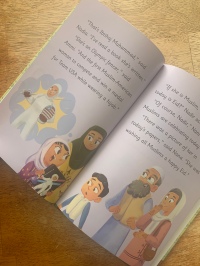
I struggled with the illustrations as well, Imam Rafiq looks off in the final image, I don’t get why Dada jaans memories seem to be on the TV either. I also didn’t understand why rotis were the thread, but then it is paratha at breakfast that gives the idea, and who really is constantly spreading ghee on paratha or roti let alone at war, or at recess.
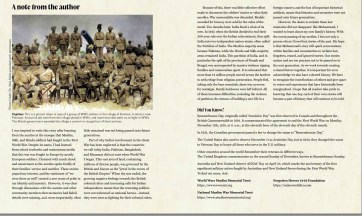
War is not a trivial matter, and I kind of feel like this book reduced it to food, and allowed some racism, classism, and Islamophobia, to go unchecked along the way. I like that the backmatter has a recipe and an author’s note, but colonialism, service, war, are all heavy topics that are hard to bring down to an early elementary level picture book, and sadly this book is unable to connect and inform readers about this time in history.
 Islamic School Librarian