Tag Archives: nonfiction

Ramadan by Mari Schuh

Standard
Ramadan by Mari Schuh

ramadan edelweis

This 16 page holiday book is one in a series of six.  It keeps the text simple, the images bright and inviting, and turns the pages in to a search and find activity to increase time spent with the material.  The information is accurate and basic, there is nothing wrong (phew) with this recent addition to the very crowded nonfiction holiday book field.  In fact I appreciate that dates are explained and that the food looks tempting even if non Muslim children aren’t familiar with the dishes.  It shows a child in sajood and explains that he is praying. The realistic pictures show smiling faces and Muslim kids will feel represented. Non Muslim readers will become familiar with Ramadan as a time of fasting, the Quran, and prayer.

The pictures to look for are given at the beginning and again at the end with the “answers.” The limited pages have very minimal text.  The first one mentions a lantern being hung for Ramadan. It then states that Ramadan is a Muslim holy month where people fast, don’t eat or drink.

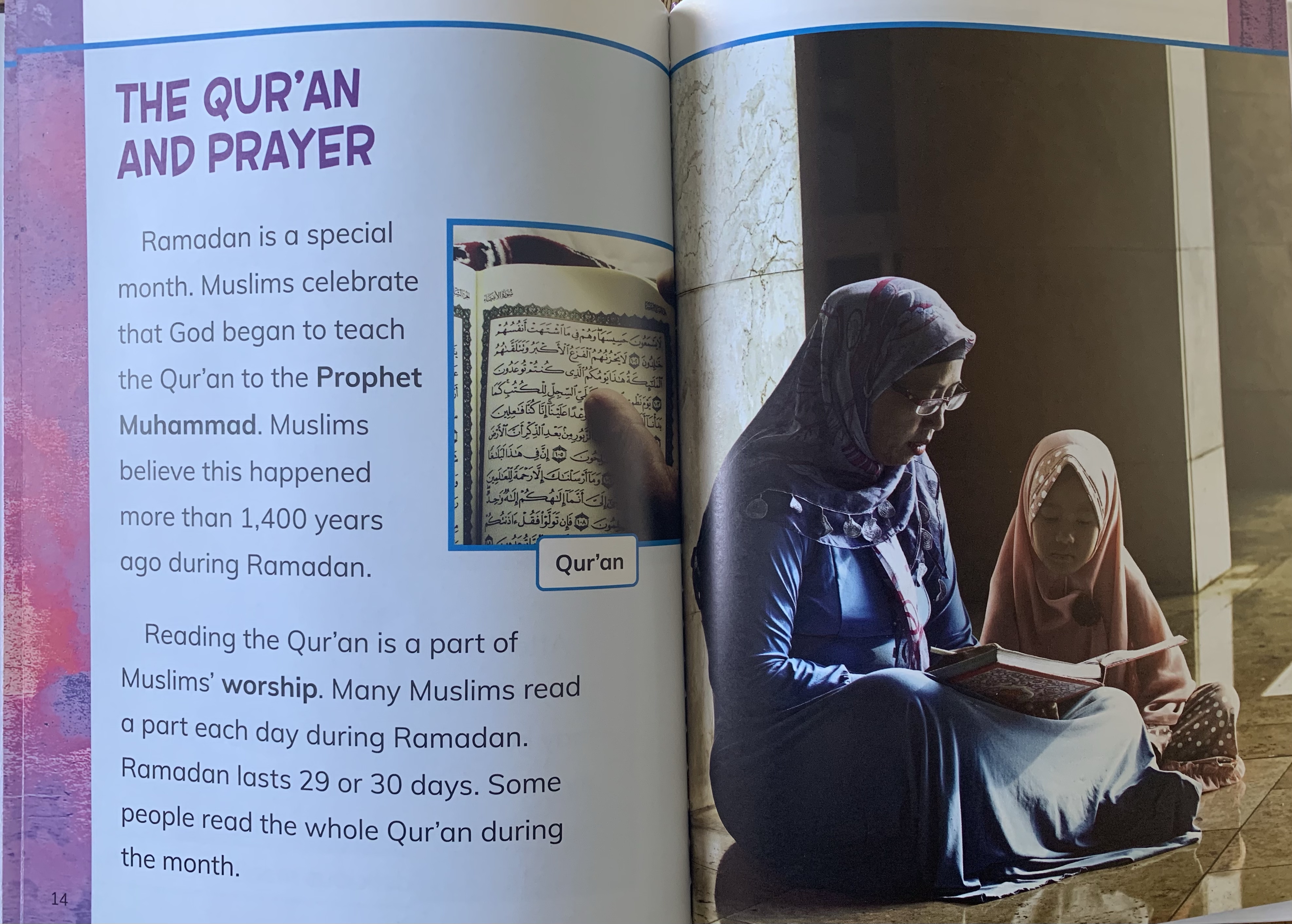
It shows a picture of the Quran and says it is used to pray, before showing someone praying on a prayer rug. When the sun has set it is time to eat. Dates are a sweet fruit to snack on after dark. It then shows a child and adult making dua and again reiterates that the holy month is for praying and helping others.

Ramadan and Eid Al-Fitr: Traditions and Celebrations by Melissa Ferguson

Standard
Ramadan and Eid Al-Fitr: Traditions and Celebrations by Melissa Ferguson

This 2021 nonfiction middle grade book about Ramadan and Eid al-Fitr breaks sections down by key concepts and the use of stock image photographs. The information is fairly accurate, no major flags, just a few awkward stresses: that kids look for the moon, that meat is so important at iftar, but most of the information is conveyed well. There is a glossary, more books to check out, internet sites to visit, an index, and pronunciation guide. The Capstone published, 32 page book, shows diversity in the pictures- some women with hijab and some without, different skin tones as well, and while it might not be the most tempting book to pick up, the text is inviting for non Muslims to understand Ramadan and Eid, how to join their Muslim friends in being kind and forgiving, and answers a lot of questions in a straightforward manner. Muslim children will also enjoy seeing their beliefs explained in a positive manner to readers in a book that stays religion focused and doesn’t get distracted by culture.

The book sections are: What is Ramadan?, When is Ramadan?, What does Fasting Mean?, Suhoor, Iftar, The Qur’an and Prayer, Acts of Kindness, Ramadan at School, and Eid Al-Fitr. It starts by introducing a fictional character named Ayesha reading the Quran with her family. It is the start of Ramadan, a month of praying, fasting, spending time with loved ones, and trying to be better people.

It then explains the lunar calendar before discussing that fasting is a choice to not eat or drink from dawn until sunset. It also notes that children and the sick and elderly are not required to fast.

It talks about eating healthy foods early in the morning before praying the first prayer of the day. It details iftar being dates and water, followed by the sunset prayer and then a large meal after that.

It is very clear in explaining that Muslims believe it was during Ramadan that God began to teach Prophet Muhammad the Quran more than 1,400 years ago. It identifies our five prayers and that people can pray at home or in mosques and that children learn to pray with their parents as they grow up.

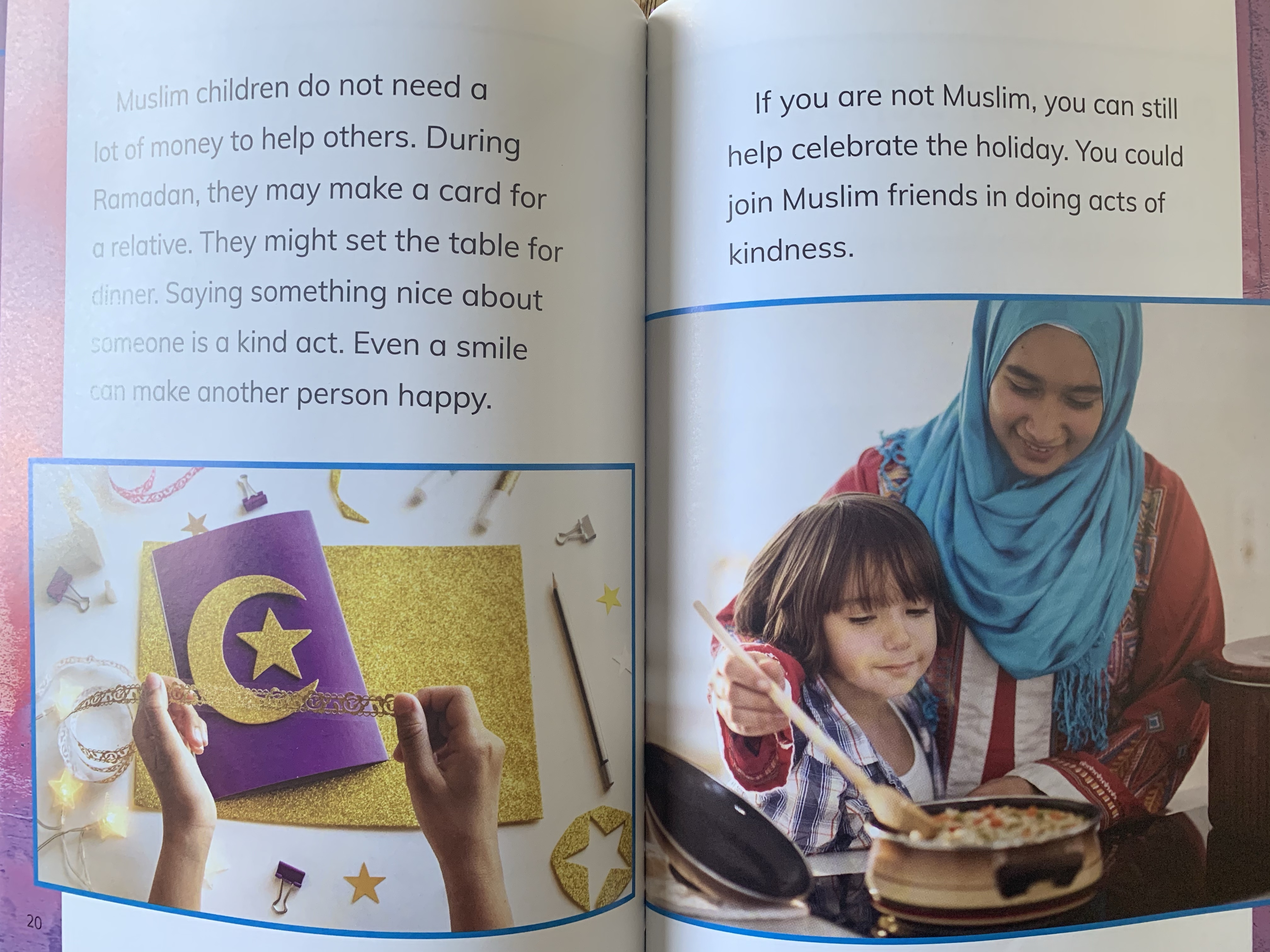
The book then becomes a little more unique as it gives time to the aspect of kindness in Ramadan. It gives examples of what Muslims do, from raising money and hosting large dinners, to buying and donating a toy. It even dedicates a whole page to children doing kind acts with little to no money: setting the table, making a card, smiling. It encourages non Muslims to join a Muslim friend in doing an act of kindness too.

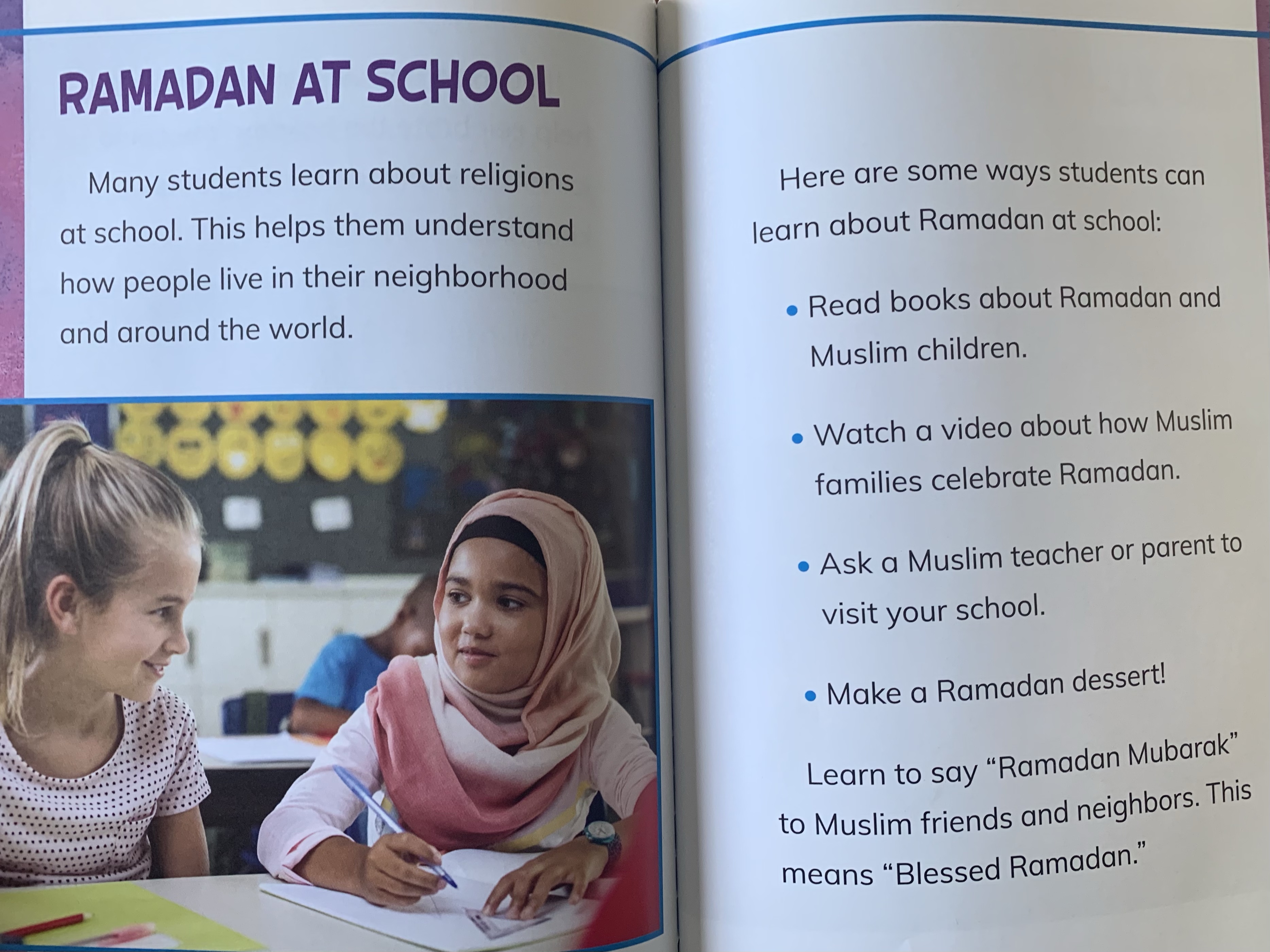
The next section, is similarly unique in talking about Ramadan at school and how often at school we learn about different religions in our neighborhood. It gives bulleted suggestions on how to learn about Ramadan in school and how to say Ramadan greetings. The book concludes with Eid Al-Fitr and coming back to Ayesha and her family celebrating.

Float Like A Butterfly by Ntozake Shange illustrated by Edel Rodriguez

Standard

img_8250

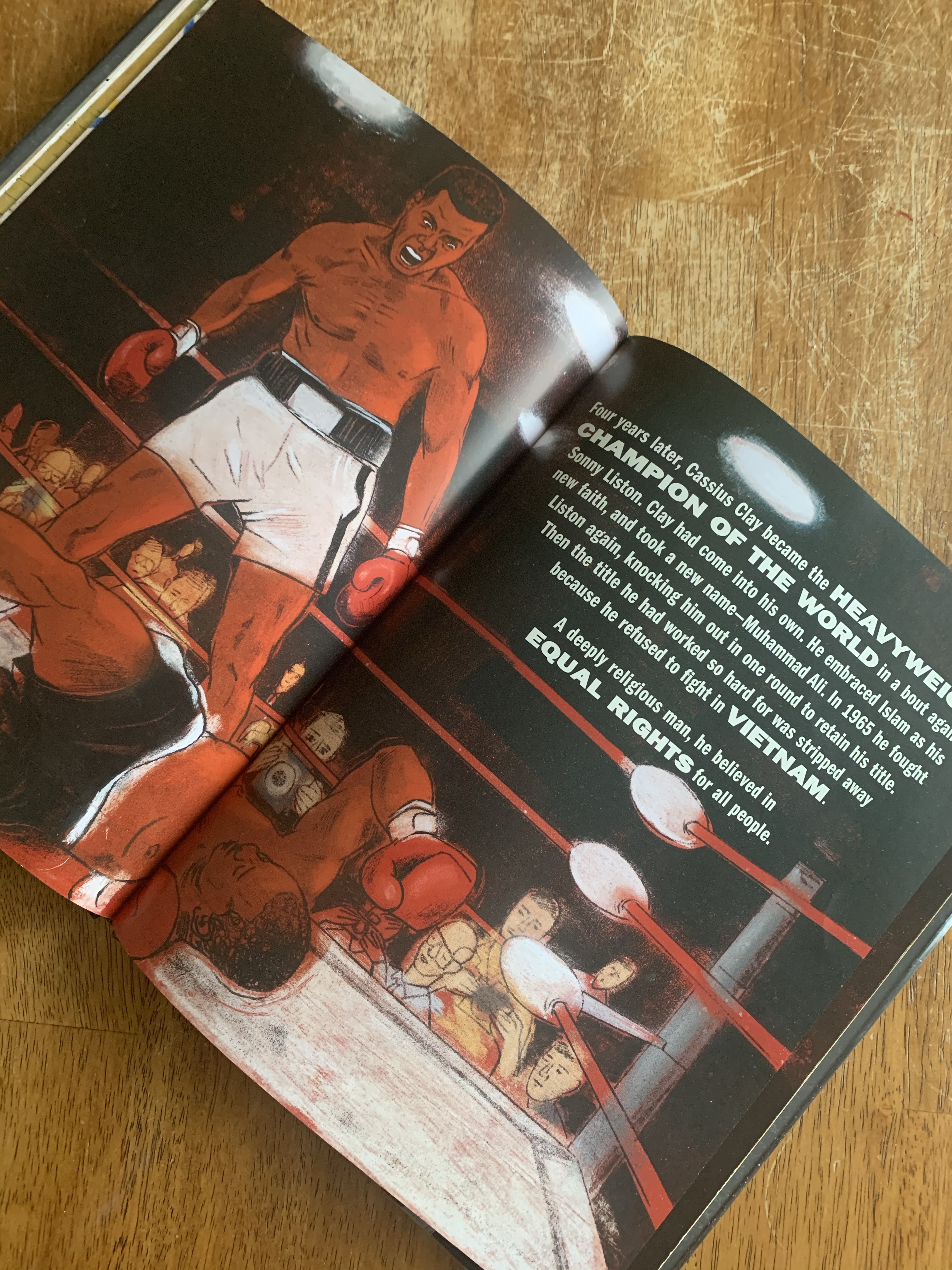
This 40 page biography beautifully presents major events of the famous boxer’s life without going in to much explanation. While it is an AR 4.7, it is still a picture book, and might work better for younger kids with some conversation and context, than for middle grade readers looking for anything in-depth about the beloved hero. While following his life, the reader sees him as a child growing up before he becomes famous, and sees that even after he retires, he is so much more than just a boxer, he is a compassionate leader, icon, and humanitarian.

img_8251

Born in Louisville, Kentucky in the Pre-Civil Rights South as Cassius Clay, he struggled to understand why there was only a white superman, and questioned if heaven was divided up by color and income like Smoketown.

img_8252

Cassius loved the power of words and would help his father make rhymes as a sign painter. When his bike gets stolen he is motivated to learn to fight so that nothing else is ever taken from him and his. He may not be the colored superman, but he is determined to be lightening fast and have fists that fly.

img_8253

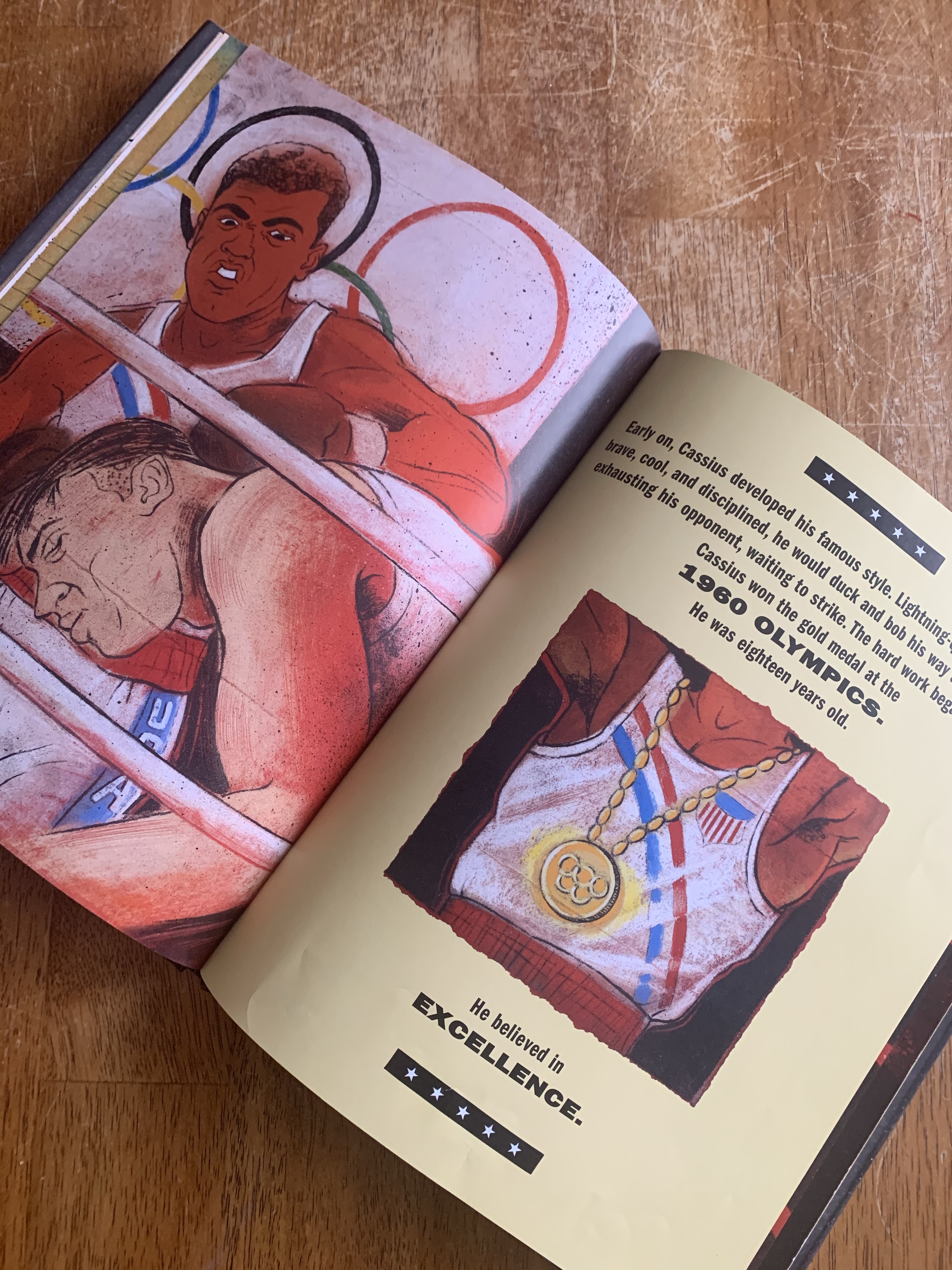
In 1960 at age 18 he won Olympic Gold. In 1964 he converted/reverted to Islam and changed his name to Muhammad Ali days after becoming the Heavyweight Champion of the World. His titles were stripped from him, however, when he refused to fight in Vietnam.

img_8254

Years later in 1971, the Supreme Court reversed his convictions for not fighting and in 1974 he reclaimed his title by beating George Foreman in “The Rumble in the Jungle.” In 1981 after winning, keeping and losing the title, Muhammad Ali retired from boxing for good.

img_8255

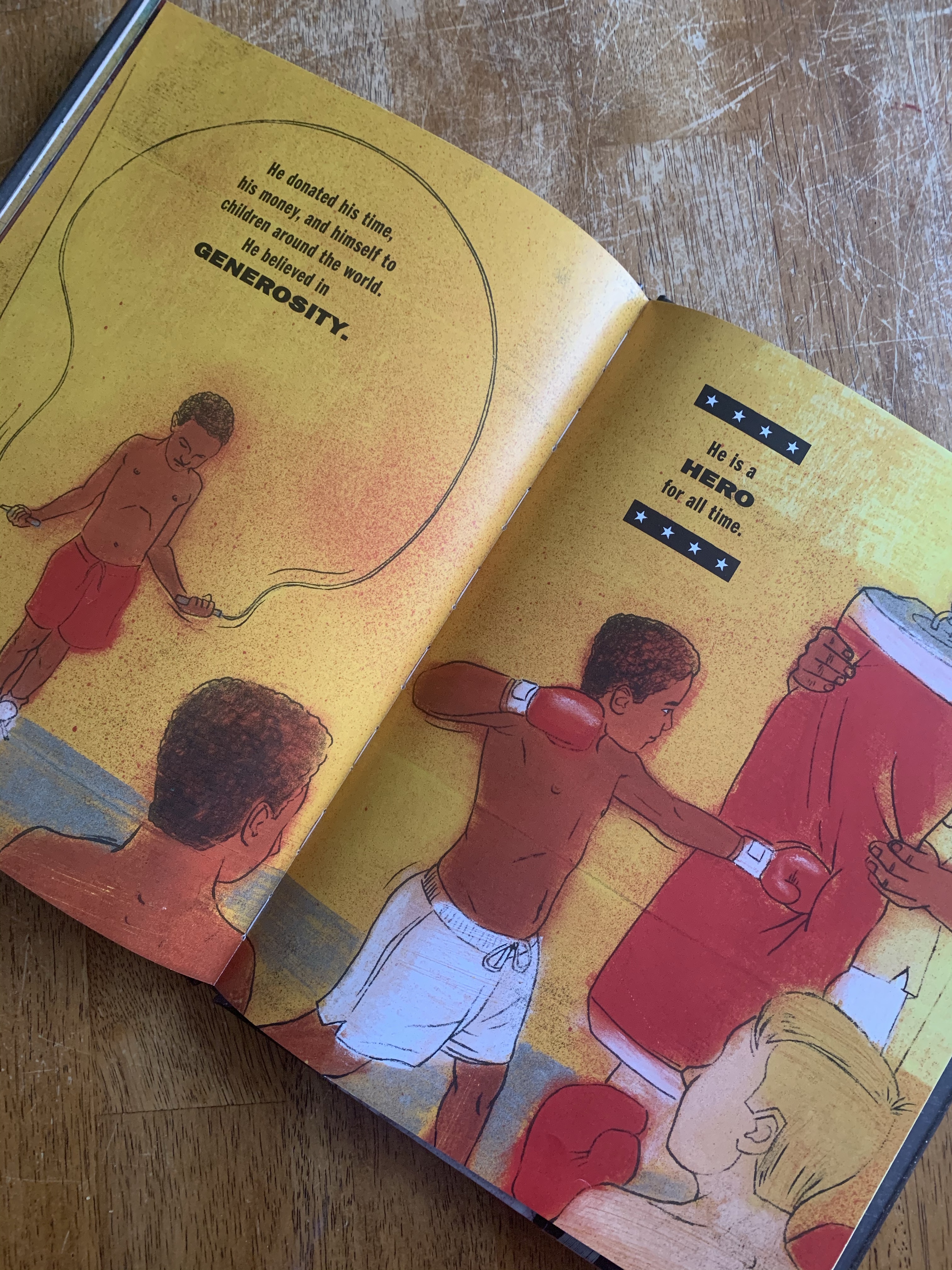
Muhammad Ali suffered from Parkinson’s disease but still donated his time, his money and himself. He believed in perseverance, and equality, and fought for what he believed in. He passed away in 2016 at the age of 74.

img_8256

This is an updated edition from the 2002 originally published book, it now includes his death. I wish it was more than a fleshed out timeline and showed him as a person, or what it was like to lose everything when standing up for something you believe in, or explained what some of his catch phrases meant, or really just as a more high energy celebration of his life.

img_8257

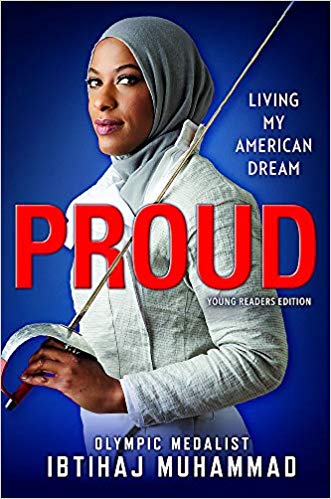
Proud: Living My American Dream (Young Readers Edition) by Ibtihaj Muhammad

Standard
Proud: Living My American Dream (Young Readers Edition) by Ibtihaj Muhammad

proud.jpg

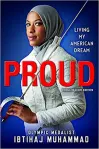
I had high expectations for a memoir about such an inspiring figure, so I treaded timidly into the book waiting to be disappointed, but after finishing the book in two days (high praise considering I have four kids), I realized I was holding my breath for nothing, the book and Ibtihaj are amazing! Now three days after I started, my daughter too has read it and I have ordered a handful of copies to offer as my next Middle School Book Club selection.  Inspirational, real, Islamic, hopeful, empowering, check, check, check, check, and well written too.  A great story and a great role model, alhumdulillah.  The Young Reader’s Edition is an AR 6.7 and 304 pages including Acknowledgements, Glossary of Fencing Terms, Ibtihaj’s Advice, and Q and A with Ibithaj.

SYNOPSIS:

Ibtihaj begins her life story establishing her background of who her parents are, how they met, how they came to Islam and how they are raising their children.  She also details how she is different and realizes it from a young age, whether it is substitutes not being able, or willing, to pronounce her first name, or not being able to sleep over at her friends’ houses.  She also sets the stage for the environment of Newark that she was born into and how it differs racially and economically from Maplewood where she spent most of her childhood.  The story then is pretty linear walking through some of the challenges of being highly driven and motivated and determined to succeed and get in college.  How she is first introduced to fencing and why she gives it a second chance after initially not liking it.   Along the way the reader gets to know how Islam influences her point of view as Allah is very central to her decisions and expectations of herself.  The quick pace is not depressing, while others at times do treat her differently she definitely doesn’t paint herself or seem to see herself as a victim or as privileged, she is just herself and this is her story.  It isn’t all rosy and it isn’t harsh, she is putting one foot in front of the other and there is amazing support from her family, and some of her coaches and some of her teammates, but not everyone and that is a very important part of her story too, which I think provides even more for young readers to relate and learn from.  Anyone not familiar with fencing and how the sport and its rankings work will learn so much reading this book, but thankfully not be overwhelmed with it all either.  The book ends shortly after the Olympics and her historic bronze medal win.  The title may reflect her being proud of what she accomplished and continues to pursue and her pride in being a Black American Muslim Woman, but I think anyone who reads the book will just be proud that someone like her exists, and that maybe some small part of ourselves can be great too.

WHY I LIKE IT:

I love that the book leaves in some of the naysayers and difficult coaches and teammates.  I really think it is easy to assume that people are great and things should all work out when you are competing on an international level, but alas no, completely not the case, yet differences aside, they still had to win an individual sport as a team. 

 I also love that she is truly what she claims, the way she practices Islam is who she is and she loves her family and her faith.  There are no contradictions she excels and perseveres and finds herself while acknowledging all parts of herself and it is so inspiring.  She portrays Islam as a way of life, she prays and fasts and has days when her iman is low and days her faith is rewarding.  She focuses on what she can control and has to learn to accept what Allah swt has decreed for her.  She has Muslim friends, and non Muslim friends and through it all she is finding her place and is surrounded by love and support from her family.  It really is a feel good story and we should all pray that it continues to be.  She doesn’t portray Islam as limiting, nor as her family an exception to what a Muslim home is, and this level of dawah can really change perceptions.  The book is not preachy or arrogant, it is simply her story and Islam is a part of it.

I like that she went to a prestigious university and it didn’t make all her dreams come true, she still had to work hard and find herself and humble herself to work at a dollar store to scrape by, it shows tenacity and a glimpse of the real world that privileged middle schoolers might not have had to consider before.

FLAGS:

The book is clean.  It talks about how uncomfortable she was at her first fencing lesson with her coach having to reposition her stances and thus touch her, and it discusses how she felt listening to music was ok in Islam even though her parents disagreed.  A few sentences at most, collectively, but kids will have thoughts on it.

TOOLS FOR LEADING THE DISCUSSION:

My 12 year old daughter read the book in a few hours and discussed it with me for even longer.  It was as if some tidbit from the book would blossom inside her and she would consider it, and want to discuss it, from why she would not talk to the kids she was substituting about fencing, to why her coach made her switch to saber, I don’t think there is a shortage of things to discuss, or more importantly listen to from the young readers.

There is a ton about her online as she became the first American Muslim to medal and the first to compete in hijab.  I highly recommend this book for book club, and will  hopefully add how our meeting went in a few weeks.


Thura’s Diary: My Life in Wartime Iraq by Thura Al-Windawi Translated by Robin Bray

Standard

Thura's Diary

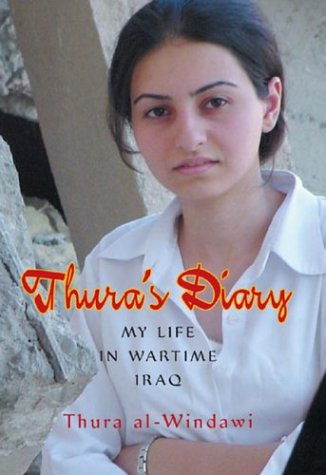
It has been a while since I’ve read a wartime diary from a young woman’s perspective, but if memory serves, both Anne Frank: The Diary of a Young Girl and Zlata’s Diary: A Child’s Life in Sarajevo, not only enlightened me to what living through the atrocities was like, but also emotionally established a connection of how horrific the truth of war really is; this book unfortunately, did neither.  To give it the benefit of the doubt I am now reading it as an adult, which may have changed my expectations and hardened my understanding of war, but very little in this 136 page book was memorable to me.  An AR level 6.1 the book is a quick read with some odd footnotes and definitions on each page.  I’m assuming the translator wanted to make sure the book flowed, but for some reason the bold words and obvious definitions annoyed me.  The center of the book is filled with pictures of Thura and her friends and family in both England and Iraq, which I found misleading since she never really introduces us to her friends so frequently pictured.  Overall I felt like I had more questions about what her life was like during 2003 then she answered.  I understand that it reads like a rough draft, because it is presumably her true diary, but it seems if you were going to publish it you would flesh it out a bit, explain why you ended up not going to the countryside on various occasions, explain your father’s role in the Baath party, what happened with your BBC interviews, explain why you feel that women have no rights, did you feel this way before shock and awe? What did you come to America to study? etc..

SUMMARY:

Nineteen year old Thura is in Pharmacy School when news breaks that the coalition forces are going to start bombing Iraq.  Her family is middle class, religious, but liberal, and as they prepare for the inevitable their lives become uncertain to say the least.  The oldest of three daughters Thura attempts to articulate the fear of bombs falling, the anxiousness of what will happen to their homes, friends, and families, while not necessarily being “adult” enough to be privy to all information to share insight into the rational that is now her life.  At times she seems to whine about her situation, and at other instances she has patience and maturity to appreciate that they are safe and together. The choppiness of why one day she is able to go to the journalist’s hotel, but the next day can’t leave, and her back and forth feelings about school are never explained and leave holes in her narrative.  If the intent is to explain what life in wartime Iraq was like, relying on the readers to fill in the gaps is counter productive and inaccurate.

WHY I LIKE IT:

I like that it is written by a young, modern girl, and is a conflict that in many ways is still ongoing, and providers children today with some insight beyond the headlines.  The book on the surface will allow a dialogue to take place potentially forcing students to imagine what their lives would be like in a similar situation, and how quickly the safety and security you feel can be uprooted.  She is a relate-able figure in that she is in college and she worries about her friends and family.  It is also a fairly easy read.  Non-fiction for many is dry and factual and this book reads more like a story, which I think would appeal to many students, particularly those with ties to Iraq.

FLAGS:

The book does use strong language on a few occasions: hell and bastard.  It also mentions pornography a few times, in the context that once Saddam is overthrown pornographic magazines and films are becoming commonplace and it makes her uncomfortable.  She mentions that culturally growing up she is even “embarrassed just to hear the word ‘sex’.”

She is very anti hijab and it isn’t explained why.  She discusses religion in a more cultural way, but does discuss reading Quran on one occasion, and mentions the masjid. As a whole, it doesn’t seem to be a big part of her life, but obviously is a part of her environment.  She mentions the lack of women’s rights and her frustration with her own people preventing her from moving about uncovered after the soldiers occupy Baghdad, but not knowing why she is against hijab specifically leaves a lot of guesswork that could be taken many ways in the reader’s mind.

TOOLS FOR LEADING THE DISCUSSION:

I don’t know if I would do this as a Book Club book.  I would probably discuss it with the Middle School Social Studies teacher and see if it could supplement a lesson or be offered as extra credit perhaps, but because there are such holes in the narrative I would be nervous to be presumptuous about what she means, or what was going on in certain places, being that it is a work of non-fiction.

A 7th grade lesson plan: http://chippewavalleyela.pbworks.com/f/Gr+7+Unit+3+Teacher+Lesson+Plan.pdf

The copy I read has questions and things to consider every few pages and an “Exchange” on the back inside cover with ideas, questions, and reflections outlined.