Tag Archives: History

Mansa Musa: The Lion of Mali by Kephra Burns illustrated by Leo & Dianne Dillon

Standard
Mansa Musa: The Lion of Mali by Kephra Burns illustrated by Leo & Dianne Dillon

mansa8

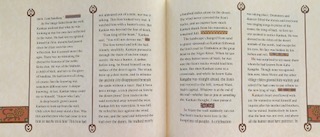
This beautiful work of historical fiction/folklore is both moving and visually breathtaking.  The 56 page book presents as a picture book, but with an AR 6.4 and the amount of text, it reads like a chapter book.  Thus, I’m going to review it as a chapter book, but keep in mind that it is hard bound, 11 x 9, horizontal and while there are frequent small story breaks, there are no chapter breaks.  
IMG_3078

SYNOPSIS:

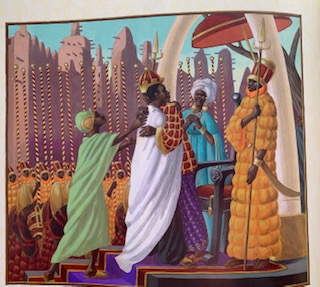
There is little historical fact about Mansa Musa as a child, thus this story while rooted in fact about the time, about Mansa Musa as an adult, and about what is known regarding Mali and the Malinke and Tuareg tribes, is a work of imagined fiction.  The story begins with premonitions and dreams from Kankan Musa of the Kaba Kangaba tribe.  Kankan and his two brothers live with their mother, and do not know who their father was, a source of stress and teasing for the young boys.  Having just turned 14, Kankan is treated as an adult, but because he has yet proved himself as a hunter, he may sit with the adults, but not yet join their conversations.  Mali in the years after the great King Sundiata had passed away has begun to fade, but their wealth and hospitality still prospers in the desert. 

One day a desert nomad from the Tuareg tribe dressed in flowing blue robes appears and is welcomed by the village elders.  That night he regales stories about jinns, and the sea, and time spent in the desert, and fears he has for their King, when slave raiders tear through the night and kidnap Kankan.  When Kankan awakens days later, enslaved, the same mysterious man, Tariq al-Aya, again appears and buys him from the raiders.  Tariq vows to accompany Musa on his journey to learn who he is and the two spend seven years together learning about the desert, about the larger world, about themselves, in trial and test and challenges.

When Musa journeys back to his home, and Tariq disappears as mysteriously as he appeared, Musa must make himself known to the new Mansa of Mali and see if his wisdom and knowledge can ensure the success of Mali in the future.
IMG_3079

WHY I LIKE IT:

I’m not from Africa and my heart was cheering Musa on as if, my own families success was rooted in his growth and understanding of the world.  As a Muslim, I was proud to know of the success Mali found in Mansa Musa and the historical significance of his rule throughout time.   I wish there was more Islam in the book, his Hajj is well documented and thus tidbits of Mecca and his understanding of it is sprinkled through the story.  There is no talk about prayer or what Islam is, just that he is Muslim and that most of the villagers “had converted to Islam, but at the same time, they had not given up their traditional religious practices or their belief in the ancestors.”  It mentions at the end that he built mosques wherever he went, but prior to this it never mentions him spending any time in a mosque or worshiping in any way. 

I love that the story is told like all great stories, it makes you want to settle in and drink up the details and imagery and got lost in the pictures.  The author weaves in cultural phrases and descriptions, that hopefully readers can unravel from the context as there is not a glossary.  There is a map at the beginning, and author’s note at the end that reveals what is fact and what is fiction in the story.

IMG_3080

FLAGS:

None

IMG_3081

TOOLS FOR LEADING THE DISCUSSION:

This book should be in every school library and used in classrooms to learn about West Africa, cultures, 14th Century, Islamic history, culture, you name it.  I think this book would work wonderfully in home school environments, where the child could dictate how much to supplement, how much to cover, and the wisdom shared could really be understood.  This isn’t a book that most kids would pick up and read, they would need prodding and guidance, but be better for it.  

IMG_3082

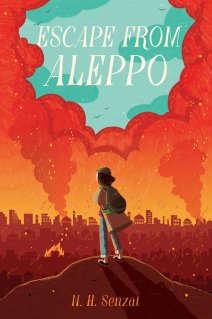
Escape From Aleppo by N.H. Senzai

Standard
Escape From Aleppo by N.H. Senzai

escape from aleppo.jpg

N.H. Senzai’s newest book (published in January 2018), gives a face and a voice to the grave situation in Syria.  Like Senzai’s other books, she uses the rich culture and history of a country to inform the reader, and a compelling front story to keep middle school readers entertained.  This 336 page book is not in the AR data base yet, but fourth grade and up should be able to follow the story and be able to handle the violence and destruction presented.  The story is unique in the genre, in that it doesn’t focus on getting to a safe country, but rather on the heroine’s journey to simply get out of a dangerous one, Syria.  The storyline is fairly linear with flashbacks of life before the war making the story informative, but not necessarily gripping.  I wanted to love it, but found myself forgetting about it when I stopped reading.  

SYNOPSIS:

Fourteen-year-old Nadia, has a fun full life in Syria: a large extended family, she stars in a commercial, has good friends, and a lot of opportunity and perhaps privilege.  All that, however, slowly disappears as civil unrest and ultimately war consume the country.  As a child she gets glimpses of the changes coming, but is able to still hide in her ignorance and focus on things like her nail polish and Arab Idol.  As food gets short however, she sneaks out to get bread with some cousins, and is hit by shrapnel.  While, her leg is able to heal, her anxiety of going out alters her life and makes her family’s attempt to get to the Turkish border later, a hard mental obstacle she must face.  Her inability to move quickly with the family on their covert escape route, and the bomb that hits their home, separates her from her family and leads to her getting left behind.  As she tries to remember how to get to the designated meeting location, she must navigate Syrian soldiers, rebel factions, ISIS, secret police, violence, hunger, and being lost.  With her cat, Mishmish, for companionship, Nadia reaches the location only to find that her family has left for Turkey and will wait on the border for her.  Luckily for Nadia, amidst this devastating news, she meets an old man, Ammo Mazen, and his Donkey, Jamilah, willing to help her reach the border.  Along the way the two face long odds of surviving, not only from the war around them, but also the weather, the old man’s illness and lack of food and water.  As they journey through Aleppo, snippets of history and culture are shared, two more children join their journey and mysteries as to who Ammo Mazen really is come to light. 

WHY I LIKE IT:

The book’s premise is simple, allowing the reader to focus on Nadia and her companions and not get bogged down in the political factions and names and alliances.  The book is not about all of the aggressors, it is about a girl trying to reach her family, and the growth and ability to choose kindness that she learns along the way.  The girl is not religious, but culturally it is a part of her environment.  Her companion Tarek, is religious and he spouts Islamic tidbits as they journey, adding some knowledge to be conveyed about Islam which is sometimes informative and sometimes comical as his character is often a bit awkward. 

I love the cultural beauty that is conveyed, and the heaviness in Syrian’s heart that “What had taken five thousand years to build had taken less than two to ravage.” The saving of historical artifacts, the showing of cooperation between people of different faiths as the characters meet in mosques and churches and meet people of all backgrounds, makes the loss of humanity and history so palpable. 

I also love that there is an Author’s Note at the end.  The whole book I kept having to shush my mind as I felt like this was the story of Mariam in Senzai’s book Shooting Kabul.  Yes that takes place in Afghanistan, but it was so similar in that it was a girl getting separated from her family in an escape attempt during a war, and sure enough she mentions that, that is where Nadia’s story grew from.  

FLAGS:

There is a lot of violence and death, but nothing gruesome or sensationalized.

TOOLS FOR LEADING THE DISCUSSION:

This would be a great Book Club choice, because it would encourage readers to keep at it and finish the book.  While reading it, the book is wonderful, but for some reason, I had to urge myself to pick it up and start it again.  Perhaps it is because I have read all of Senzai’s books and I was pretty confident all would end well, or because I’ve read quite a few books now about war and refugees and Syria, but while it reads quick it did take me longer than it should to finish it.  I think parts of the book that detail a lot of the skirmishes and fighting might be hard to visualize in the mind’s eye so as an assignment or Book Club selection would benefit the readers to allow them to discuss all the mini climaxes, understand the terrain and architecture, and to really put themselves in Nadia’s shoes.  The transformation in Nadia from a brat, more or less, to a compassionate, strong, determined young woman is a journey that I would love to hear feedback from other kids about.  I think they would definitely have thoughts and opinions that would really bring the humanity of us all out, and make us connect with the plight of those trying to get out of such horrific circumstances.

Publisher’s Page: http://www.simonandschuster.com/books/Escape-from-Aleppo/N-H-Senzai/9781481472173

Teaching Guide: https://www.teachervision.com/teacher-discussion-guide/escape-aleppo-reading-guide

Author’s Page: http://www.nhsenzai.com/escape-from-allepo/


The House of Wisdom by Florence Parry Heide and Judith Heide Gilliland illustrated by Mary Grandpre’

Standard
The House of Wisdom by Florence Parry Heide and Judith Heide Gilliland illustrated by Mary Grandpre’

house of wisdom

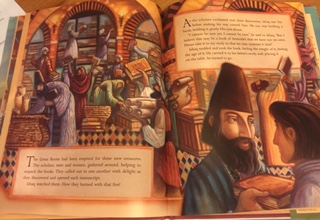
This 37 page, non fiction book written on a AR 5.1 is a beautiful telling of 9th century Baghdad and the quest, collection, and love of knowledge.  It follows the true story of Ishaq, a young boy who’s father translates books and documents in the House of Wisdom, the intellectual center of everything.

FullSizeRender

Ishaq has a lot to learn from his father and the books in this majestic place, before he can lead one of the Caliph’s expeditions to search for books.  However, while he acquires his knowledge or Aristotle, Galen, Plato, and Hippocrates, and more, he doesn’t feel the fire, so to speak, of a powerful burning to seek knowledge.

FullSizeRender (1)

He finally gets his chance to lead an expedition and he travels the wold for three years, learning, collecting, and experiencing things.  Walking the streets of the great teachers of long ago and readying himself to be a scholar upon his return to Baghdad.

Upon his return, Ishaq’s father presents him with a book by Aristotle and when he opens it he finds the flame consume him.  Ultimately, history will credit Ishaq with translating the entire known works of Aristotle and he and his father Hunayn, and the Caliph al-Ma’mum, with carrying the torch of civilization to the rest of the world.

The book does not mention religion or Islam, but Muslim children at least should recognize names, and words like caliph, and geography enough to know that this is indeed their history.  Non-Muslim children probably will not make the connection, and in some ways, possibly selfish ones, I find that unfortunate.

The illustrations are beautiful and rich in both texture and detail.  They compliment the text wonderfully and really bring the grandness of the story to life.

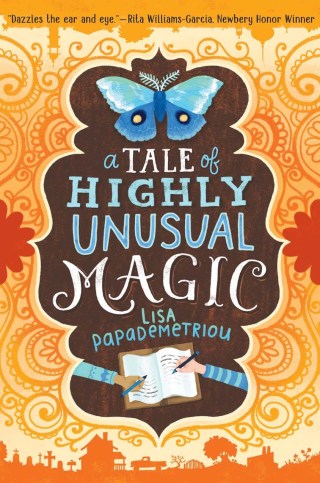
A Tale of Highly Unusual Magic by Lisa Papademetriou

Standard
A Tale of Highly Unusual Magic by Lisa Papademetriou

a-tale-of-highly-unusual-magic-L.jpg

For a book about magic, featuring a girl who admittedly knows very little about Islam, a surprising number of tidbits sneak through and work to introduce Islam and Pakistani culture to those unfamiliar, while similarly exciting Muslims readers who can see a major climax point a mile away and get to feel “in” on the unavoidable “aha” moment.  Written on a 4.9 level this 297 page book, is clean and engaging, a rare combination, especially for advanced readers who are having a hard time finding books that are content appropriate.  I’m fairly confident that anyone, of any age, who reads this will learn something, whether it be about lepidopterology, violins, occupation and partition of the subcontinent, Rudyard Kipling, caskets, friendship, Islam, and finding a place to belong.

SYNOPSIS:

There are three main storylines in the book, Leila’s, Kai’s and The Exquisite Corpses’.  Leila is a Pakistani-American girl growing up in America who decides to visit her Pakistani dad’s family in Lahore for the summer.  Unfamiliar with the language and customs, she has a good attitude of learning as much as she can, and absorbing new things.  Her dad’s family speaks English, is not very religious, is wealthy, and pretty modern.  They have servants, and drivers, and while she gets to go to museums and landmarks, the lifestyle is partially simplified for reader understanding, and partially to not take away from the real point of the story: Leila moving out of her sister’s shadow, and finding comfort in her own multi-cultural skin.  

Kai is spending her summer with a great paternal Aunt in Texas that she has never met.  Her father passed away and her mom has recently lost her job, so a change of scene is what she is presented with.  Her Aunt is a character in and of herself, but by and large leaves Kai to her own devices and supports her adventures from a distance.  The real story for Kai is a budding friendship with the neighbor girl, Doodle who is determined to find and save a rare moth no longer found in the area.  Nervous to make friends Kai learns sometimes the value of things isn’t in the winning, or being the best, but in doing something because you enjoy it and it is the right thing to do.

The two girls story is tied together by them finding two parts of a magic book, The Exquisite Corpse.  The old book tells the story of Ralph T. Flabbergast and Edwina Pickle, in bits prompted by the girls’ own writings.  Like the game of writing a few sentences, folding over the page and having the next person add to the story, the book connects the girls and the readers in a tale that is as much about the two long ago sweethearts, as it is about families, overcoming obstacles, and believing in happy endings.

WHY I LIKE IT:

I like that it is told from various voices, and as much as the story is plot driven, I truly felt connected to the main characters.  The only magic is the book, so the realism is very critical to gaining the readers interest and thankfully once you read about 70 pages or so I feel like the book does suck you in and take you for a fun ride.  The first few chapters are a bit confusing and I wasn’t sure where the story was going, Finally, at my 11-year-old daughter’s prompting I had to just barrel through without asking and wondering too much.  You don’t find out about Kai’s mom and dad or how Rudyard Kipling and “Kim” tie in to it all, almost until the end.  I like that the author doesn’t talk down to the reader, and as a result I learned a bit about so many things.  The twists and interweaving of stories and characters, and things as random as moths and music and saurkraut, remind me of well written adult novels that often aren’t found in books for fourth graders.  

Their isn’t much religion in a doctrine or even practicing sense, but through culture some is learned and shared, and I like that it isn’t completely washed out or removed.  The main character’s father says that he wasn’t religious in Pakistan so when he came to America he wasn’t about to start.  Leila mentions that her mom wants him to take the girls to the mosque or to see Eid, but again, they don’t, but do celebrate Christmas.  So, when she is in Pakistan and sees masjids, and fakirs, and people feeding birds as a sadaqa it is a nice inclusion.  Especially because the vocabulary is used and explained.  She mentions that her extended family goes for Jummah, yet doesn’t pray five times a day, she also touches on Ramadan as being a time of fasting but doesn’t know that there are two Eids.  As she learns, the reader does too.  It definitely isn’t how any practicing Muslim would want Islam portrayed, but it isn’t disrespectful and it is realistic.  Again, because the author doesn’t seem to talk down through her characters, there doesn’t seem much judgement and thus, hopefully also shows most readers some diveresity to the Pakistani stereotypes in the media.

FLAGS:

None, the book is clean, the love story between Ralph and Edwina, is just that they love each other. Nothing more than a sweet sentiment.

TOOLS FOR LEADING THE DISCUSSION:

I would definitely use this book as a Book Club selection because I think there is so much to connect to and discuss.  It would be fun to do as an interfaith book club with kids for the same reason.  While the main characters are girls, I think boys would enjoy it as well, there is some spying, sleuthing, action, and a whole goat debacle, that I think would be a blast to explore with students.

I don’t see any online reading guides, but there is so much to discuss it won’t be a problem.  Enjoy!

Ticket to India by N.H. Senzai

Standard

In terms of plot and and believability, this 274 page 6.3 reading level book has moments of unrealistic twists, but the historical flashbacks and context make up for it as it delves into Pakistan, India partition without getting overly bogged down in politics and bitterness.  You can tell that the author writes from a place of love and warmth, as she talks about all sides involved: Pakistan, India, Great Britain.   The stories, fictional and historical, that weave through the novel make it informative and entertaining irregardless of one’s prior knowledge.

SYNOPSIS:

Maya is 12, and a little shy, especially compared to her older sister Zara.  The book starts with her writing a journal entry about her visit to Pakistan in an airplane somewhere over the ocean.  Maya, her older sister Zara, and their mother are heading to Karachi from America because of the death of Maya’s beloved grandfather.  Frequent visitors to Pakistan, Maya is familiar with the sights, traditions, and language.  As other family members arrive, Maya and Zara overhear their elderly grandmother planning to runaway to India to retrieve family heirlooms that were left during partition.  The plan had been in the works for the whole family to go, visas were already obtained, but with the unexpected death, the urgency is amplified.  Grandma wants to find a ring to bury with her husband.  In Islamic custom burials happen very very quickly, often the same day, so the delay and sending the body to America, is something you just have to go with as the reader.  Rather than convince Grandma to stay, the girls threaten to tell their mother if she doesn’t take them along, and the next thing you know the trio are off to India and on a treasure hunt.  There is a map at the beginning of the book, which is very helpful.  However, the adventure isn’t straightforward, not only in the trio’s adventures, but in that grandma ends up in the hospital, Zara and Maya decide to pursue the lost items on their own, and then Zara and Maya get separated.  Twelve-year-old Maya then is forced out of her shell as she is kidnapped, and running for her life, trying to keep her promises, and also in desperately trying to save her family from having to pay a ransom to save her.  A lot happens, and the intensity amplifies as it starts out as a elementary aged family story and turns into a middle school adventure.  A long the way are beautiful passages about the scenery, amazingly simplified, but factually and emotionally accurate explanations about partition and ultimately, through Maya, about finding your voice. 

WHY I LIKE IT:

The framing of the fictional story and the historical context is wonderful.  Partition, is such a pivotal moment for those that lived through it, but has less and less relevance to today’s generation that lives abroad.  So, to find a book that makes the gist of the events come through, is why I love using fiction to connect people and ideas.  I am making my daughter read this tomorrow, no question. She needs to know what her own grandmother endured, what decisions her family had to wrestle with, and this book allows us to have those discussions in an informed way.  I’m sure many would disagree and say that the reader should know about partition before reading the book, but I think the tidbits and delicate way the author convey the horrors, the agony, the manipulation, and the struggles in todays time, is far better than I could do to a sixth grader. 

Maya’s abilities seem to grow overnight, so while she was an ok protagonist, she might annoy some.  I actually had to google in the middle of reading how old Maya is, at times she seems like she is eight or nine and at other times like she is 15.  I do like that Maya constantly remarks how alike India and Pakistan are, a reality that today’s generation definitely agrees with, but is often afraid to voice to their parents.  I also like that there are good and bad everywhere, a theme that doesn’t get old, especially in books that deal with cultural and religious elements as presented to a wide audience.

There isn’t much religion in the book, the characters don’t stop and pray or wear hijab, but the setting does allow for mention of masjids, and a kind Imam back in California, the characters identify as Muslim and they discuss Muslims as a minority and political entity regularly.  One of the treasures the grandma is looking to retrieve is an old Qur’an with the family tree drawn within.  The book talks about how intertwined the two countries and many religions of India are, and Maya’s name articulates many of these crossroads.  In the end, perhaps the best lesson from the book, is how much alike we all really are.

There is a wonderful Author’s note in the back, along with a glossary.

FLAGS:

The book has some violent images as it discusses trains coming from India to Pakistan with only a few living aboard and vice versa.  The intensity as Maya is robbed, and then kidnapped, and then held hostage, could also be jarring for some younger readers. 

TOOLS FOR LEADING THE DISCUSSION:

Like all her other books, I would absolutely include this in a Book Club, there is a lot to discuss, lots to understand, and lots to enjoy.

Author’s website: http://www.nhsenzai.com/ticket-to-india/

Reading Group Guide: http://www.nhsenzai.com/wp-content/uploads/2017/09/Ticket-to-India_ReadingGuidePDF.pdf

YouTube book trailer:

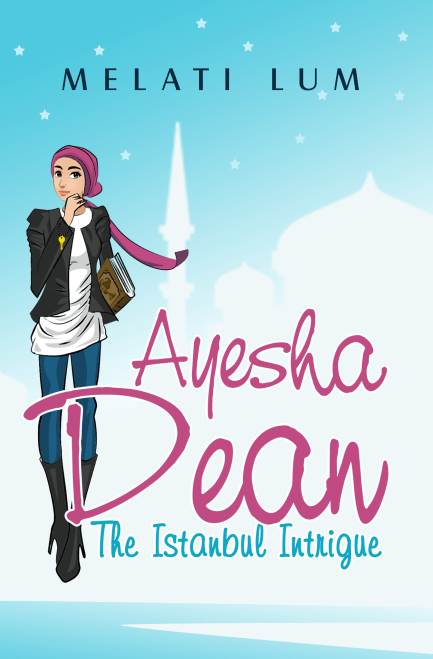
Ayesha Dean: The Istanbul Intrigue by Melati Lum

Standard
Ayesha Dean: The Istanbul Intrigue by Melati Lum

ayesha dean.png

I’ve tried numerous times to get my preteen daughter to read a Nancy Drew book with little success, yet she devoured this mystery and is eagerly waiting for more.  The protagonist is relevant, resourceful, fun, and a practicing Muslimah too.  At 240 pages, the spacing and large font make the book easily accessible, and tempting to dive in to.  The pacing is pretty good, and while there are a few hiccups with storytelling style, the book overall is worth adding to yours and your child’s reading list.

SYNOPSIS:

Ayesha’s parents are deceased, but her Uncle Dave has raised her as a Muslim following her parent’s wishes.  Having graduated high school she is off on a celebratory trip with her two closes friends: Jess and Sara, her uncle and her friend’s dad to Istanbul, Turkey.  The adults have a business conference and the girls are hoping to explore and enjoy all the sights of the Turkish Bazar, the Hagia Sophia, the Blue Mosque and more.  While looking for a book to gift Uncle Dave, Ayesha and her friends discover a secret message sewn into an old book of maps and set off to collect clues and solve a 100-year-old ibn-Arabi mystery.  Obviously, I don’t want to give too much away but there are villains, and shady characters, and dear friends, and lots of yummy food.

WHY I LIKE IT:

I love that the heroine is a hijab wearing, salat praying, Tae Kwon Do trained, fashionable, kind, young lady.  She has integrity and resourcefulness, that make the reader want to cheer her on.  Her friends are significantly less developed, I really couldn’t tell you much about them, and honestly had to look back to recall their names.  I understand why they are in the story for Ayesha to play off of, but I’m hoping that they will have a bit more substance in future novels.  Other side characters had more depth than Sara and Jess did, and even getting them out of the way for the climax seemed to further diminish their roles and importance.

I loved learning about Turkey through the characters, the history, architecture, the food.  The author really shined when talking about Islamic history as well.  When Ayesha and Emre explore the Sultan’s Privy Chambers at the Topkapi Palace, and look at Prophet Muhamad’s (saw) sword and bow, the excitement and reflection is palpable.  In other places however, I felt like the narrator’s voice was completely jarring and distracting to the engaging story at hand.  In the midst of pursuing a lead, the story comes to an almost standstill to say, “the friends chatted amiably as they walked, admiring the city as they went (69).”  The majority of the descriptions are so vivid that the few places where they cease are noticeable and awkward.

I also loved the diversity of the friends, even Ayesha’s own personal makeup adds some depth and appreciation that she has chosen to practice Islam.  Ayesha prays and tries to make sure she is not alone with a boy, she is conscious of her hijab and notes the Islamic elements in her own life and in her environment.  Obviously the book takes place in Turkey and she is unraveling an Islamic mystery of sorts, but I think the book works well for Muslim and non Muslim middle schoolers alike.  The book is not preachy, and the translations of prayers and poetry are framed in a historical or inspiring, not doctrine manner.  Similarily, I think you might be able to get boys to read it too.  It inspires girls who perhaps can identify with the main character, but I think even boys will be impressed with what Ayesha can accomplish.

FLAGS:

The book is fairly clean, there is some intense moments with kidnapping and having guns drawn, but nothing too haunting.  Ayesha obviously makes a good “friend” but nothing happens or is even detailed as wanting to happen between her and Emre.  Just Emre’s dad regularly teasing them as he looks for a wife for his son.  The only real flag for me was the exploring of the harem at the palace and the mention of concubines, and eunuchs.  A lot of detail is not given just that the women must have felt trapped, but it is a heads up if your child asks you about it, to be ready to answer.

TOOLS FOR LEADING THE DISCUSSION:

I think this would be a fun book club book to explore deeper some of the sites and history of Turkey.  I would have to explain the harem before hand I think, but I think it can be done factually to avoid to much over thinking for the young readers.  I think to track the clues and “map” out the trail in a group completely with pictures of the real places would really bring the story to reality.

Interview with the author: http://mvslim.com/meet-melati-lum-criminal-lawyer-who-also-has-a-passion-for-writing/

Why we need more heroines like Ayesha Dean: http://www.muslimkidsguide.com/why-do-we-need-more-muslim-heroines-like-ayesha-dean/


Khadijah: Mother of History’s Greatest Nation by Fatima Barkatulla

Standard

khadijah.jpg

I depart from the Islamic Fiction that I enthusiastically seek out and read, to share and review a work of non-fiction that swept me off my feet.  Perfect for children eight and up, and particularly ideal for girls, this book is absolutely physically beautiful and the content is as well.  This 176 page book flows like a story not a history book, and at times a love story between Khadijah (RA) and our beloved Prophet (SAW).  The font and spacing invites young readers to absorb each word without feeling rushed or overwhelmed.  

SYNOPSIS:

The book is a biography of our mother, Khadijah bint Khuwaylid.  It starts just before she is made aware of Muhammad and ends with her death, followed by a few reflections of RasulAllah missing her.  For the most part the story keeps her at the focus and for the age group the slips into seerah are no problem.  But I wanted more about her.  I learned that she was married twice before she wed Prophet Muhammed, but I wanted to know more of her children with these other men.  I wanted to know if they ever accepted Islam.  I wanted to know of Khadijah’s childhood and her parents, and her tribe.  I wanted to know more about her sister who sounded like her, and if she had any other siblings.  It scratched the surface, and even my 10-year-old daughter wanted more, in a good way.

It covers their marriage, and it reads like a sweet fairy tale that is absolutely full of noor and love.  It shares how she supported the Prophet at every turn and the hardships of the boycott.  It drops names and places, but not in an over burdening way. In many places I actually wanted more detail as to how they all fit together in time and place. As she has children and grows ill and time passes, the story comes to an end.  Almost too quickly, as her day-to-day life as a mother and wife are missing, and I was hoping there would be more.  Yes the  growth of Islam and the plots of the Quraysh are so important, but I wanted more Khadijah, in a book claiming to teach us about our “legendary mother.”

WHY I LIKE IT:

Obviously the story is great, and really the way it is presented is how our kids need to know our history: with love and compassion and enthusiasm.  You feel the love between Khadijah (RA) and Prophet Muhammad (SAW) you see how patient and devoted she is in a very emotional way.  Truly the author has given life to a story many of us know, and filled us with a connection and relationship that is very personal and inspiring in nature.  When you finish the book, you feel like Khadijah is a friend, an amazing friend, but someone you know intimately and proudly, not just as a historical figure.

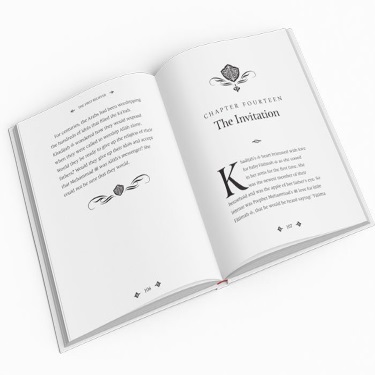
innerpages2_1024x1024

FLAGS:

None

TOOLS FOR LEADING THE DISCUSSION:

I would absolutely do this for like a 4th -6th grade book club.  I think it should be mandatory reading.  I would probably invite someone well versed in the seerah and Khadijah to answer the children’s questions.  How wonderous it would be to hear the kids discussing her life and offering parallels, lessons, and inspiration to one another from their new found knowledge of Khadijah (RA).


nine, ten: A September 11 Story by Nora Raleigh Baskin

Standard
nine, ten: A September 11 Story by Nora Raleigh Baskin

nine, ten.jpg

I still struggle with the fact that 9/11/2001 is taught as history, it seems so current and fresh in my mind, that I really struggle with how works of fiction (and non fiction too) try to tell me about the pulse and the mood and the impact of something that I lived through and recall so clearly.  I suppose this isn’t a unique predicament, but because of the magnitude, one that I still wrestle with.  The author of nine, ten glosses over the big picture and in a lot of ways, the events of 9/11, but instead tries to show the paradigm shift that occurred and the division drawn as life before and life after.  She attempts to do this on an AR 4.8 and in 197 pages.  No easy feat, but one that definitely has some hits, and for me at least,  a few misses too.

SYNOPSIS:

Told from four different perspectives that intersect at the opening and at the close, the reader meets the characters two days leading up to 9/11, spends some of September 11 with them, and then peeks in on them again a year later.  The characters all cross paths at Chicago’s O’Hare Airport.

The first character is Will.  A middle school boy struggling to come to terms with how his father died helping someone on the side of the road.  Often more responsible and mature for his age as he helps his mom with his younger siblings, he lives in Shanksville, Pennsylvania and finds healing with helping those affected by the plane that goes down there.

Next we meet Aimee, who has just moved to California and is starting a new school.  Her daily drama is more missing her mom who travels a lot to New York for business, but is relatable as she tries to make new friends, fit in, and find her place in a new environment.  Her mom is in New York during the duration of the book, and has a meeting in one of the Twin Towers on the 11th.

Sergio lives in Brooklyn, New York and is a math wiz who gets a special award and recognition for his achievements.  He lives with his loving grandma, but it is the stressful encounter with his deadbeat father that sets him on a fateful subway trip that introduces him to Gideon, a New York fire fighter.

Naheed is the fourth character, and is an Iranian American Muslim girl, who is struggling to handle friends, and new questions about the hijab she wears.  Her friend drama consumes her, until 9/11 happens and she has to now prove her love of America at every turn.

The characters each take chapters divided by dates and while short, they do form a connection in their snapshots.  You feel like you get to know the characters and you do feel a tinge of stress knowing how they are all related geographical to what will transpire on the 11th. But in the afterward, the author explains why she intentionally keeps the carnage at bay to show how connected we all are, especially children, at the forefront of her fictionally retelling, and to show how much we all were affected that day.

WHY I LIKE IT:

I like that breaking up of the story, it adds some dimension to the book.  I know some reviews feel it is over done, but I think it is deliberate, and highlights how we all are inter connected and for late elementary, early middle school readers, I think the choppiness it allows, keeps the book on their level.  I like that each character has their own struggles, it isn’t that life was rosy and then 9/11 ruined everything, these kids have their own issues and stresses and realistic personalities before and after.  I also like that the Muslim character is not from the Middle East, it further shows how groups get lumped together for different reasons giving the book a bit more for readers to consider.

There are however, some real issues in how they present Naheed, which seems odd, since the book is so politically correct, and given the topic, you’d think the author and editors would work overtime to get the islamic parts correct.  But alas at one point Naheed’s visiting Uncle wants to know why Naheed doesn’t pray the mid day prayer, thuhr, at school, to which the mom replies, “she makes up her prayers at third prayer.” What? Yes I laughed out loud, no one calls the prayers by their numbers! I have never used numbers to describe our prayers, they have names, and we use their timings to describe them to others, not numbers. At one point, Naheed is making wudu, ablution, and the author gets it wrong. “And lastly, feet.  Right foot with right hand. Left foot with left.  Toes to ankles.” Left hand for both feet.  I also take some issue with Naheed having to wear hijab at age nine.  Hijab becomes required at puberty, so yes it could have been when it became required of her, but it seems a little young for her, and it seemed a bit forced.

In terms of plot, I would have liked a day or two after 9/11 to juxtapose the differences in priorities and the lens of how we got to a year later, or two years later, or 15.  Also, how they all went to New York on the anniversary to tie the story together made for a nice ending, but why they all went was a bit of a stretch, ok a big stretch.

FLAGS:

For a book about 9/11 there is relatively no violence.  The only death is in talking about Will’s father and the only blood is when Sergio helps a man on the subway.  There is some hate speech at the end, but even that is minimal.  Will does kiss a girl he likes. And both Will and Sergio skip school.  Aimee worries if her mom is having an affair (implied) and if her parents are getting divorced, but it isn’t explicit.

TOOLS FOR LEADING THE DISCUSSION:

I think this would be a good book for a younger book club.  With its overt commitment to political correctness and breaking down stereotypes, it reinforces how similar we all are through strengthening bonds of humanity, rather than being divided by our skin color, or religion.  I think it would also lead so easily into faccilitating discussion of today’s kids putting themselves in the story.  What in their lives wouldn’t matter any more or what would matter more. There is a Reading Group Guide at the end of the book, along with an Author’s Note and Acknowledgement, that easily lend themselves to more discussion ideas.

Curriculum Guide: http://www.norabaskin.com/nine-ten-curriculum-guide/