Tag Archives: fantasy

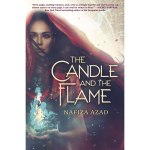
The Candle and the Flame by Nafiza Azad

Standard
The Candle and the Flame by Nafiza Azad

flame

It takes about 124 pages to be swept away to the city of Noor, but once it happens, it is hard to come back.  The 391 page fantasy story takes a while to get going, but the character driven plot filled with amazingly strong and diverse women is worth the slow start.  Middle school readers and up (AR 5.8) will enjoy the blend of Islamic imagery, sub-continent Asian culture, fire, Ifrits, Djinn, family, relate-ablity and good quality story telling.  The fact that it is a main stream book, with so much religion and culture makes it all the more remarkable in its universal appeal.

SYNOPSIS:

Fatima is a Muslim girl adopted by a Hindu family, only everyone in the entire city was killed eight years ago except for Fatima, her adopted sister, and an elderly lady, when the Shayateen attacked.  The orderly Ifrit were asked to defeat the Shayateen and protect the city, and when they did, the wealthy returned along with people from other cities.  Thus Noor is now a vibrant city of different backgrounds, cultures, religions, and languages repopulated and ruled in halves by the Maharaja, Aarush and Ifrit Emir, Zulfikar.

Fatima works as a messenger and her favorite place to deliver packages to is an old book shop owned by Firdaus, an Ifrit she regards as a fatherly figure.  He has taught her languages and provides her a place to learn and grow.  When he dies in front of Fatima, she is forever changed, literally, he transfers his powers to her, and she is now not only part human, part Ifrit, but also the Name Giver, an incredibly powerful and important being in bringing the smokeless Djinn from their wold to her hers.

With rebel forces threatening the Maharaja’s rule, Ghul and Shayateen entering the city, a taint threatening the leader of the Ifrit, a traitor in each palace, and a budding romance between Fatima and Zulfiqar, the characters pull you in and create an enjoyable story that is vivid, fantastic, and hard to put down.

WHY I LIKE IT:

The story doesn’t have a neat and tidy plot culminating in a climax, but the character arcs and vivid world building pull you in and keep you interested.  I love that the characters are different and complex and unique, and that women are so so strong and celebrated for their strength in all spheres, not at the expense of the males, but solidly in their own right.  It is refreshing and glorious to see the matriarchal Ifrit world contrasted with the human world, and the strong females that emerge in both.

I love that there is so much diversity and tolerance and the book doesn’t shy away from presenting faith practices and acceptance in such an honest manner.  There is a four page glossary and it is needed, yet not overwhelming at the same time.  The most read page in the book for me however, was the Dramatis Personae page listing the characters.  Until that 124 page mark, I was constantly flipping back trying to keep everyone straight, not so much because the characters are confusing, but “what” they are took a little while to stick.

I got sucked in by this book truly, I ignored my children during our Corona virus quarantine one day to read the second half, and I don’t regret it one bit.  The romance, was a bit cheesy at the end, but it was clean, and sweet and presented as a way forward, not as a settling or sacrificing choice for either character which was greatly appreciated.

FLAGS:

There are a few kisses once the two main characters are married.  There is stalking and attempted sexual assault by a character, but Fatima more than took care of that with the support of many strong females.  There is mention of a homosexual relationship, but not dwelled on, and I think one could argue that there is  possibly something more going on between two of the females, but it isn’t explored.  There is death and killing and violence, but nothing extreme.

TOOLS FOR LEADING THE DISCUSSION:

I had hoped to sneak this in for book club next month, but with school closed indefinitely, it might have to wait until next year. I think girls will gravitate more to it than boys, but I think that is ok, because often girls need more of a nudge, in my experience, to give fantasy a try.  I am trying to convince my daughter to read it, but the first 100 pages are pretty slow, so if I can’t force her through it, I don’t know what chance I’ll have, here’s hoping.

NPR Review: https://www.npr.org/2019/05/18/724120066/language-has-magic-in-the-candle-and-the-flame

Interview with Nafiza Azad and Hafsah Faizal (We Hunt the Flame) https://www.slj.com/?detailStory=hafsah-faizal-and-nafiza-azad-interview

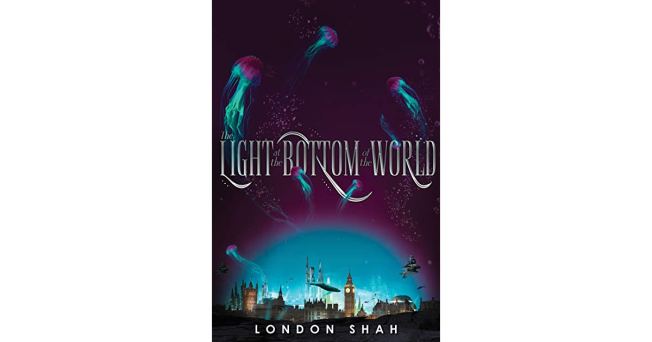
The Light at the Bottom of the World by London Shah

Standard
The Light at the Bottom of the World by London Shah

light at the bottom

At the risk of sounding pretentious or like I have written a book before, sadly this really reads like a debut novel.  At 311 pages, there is a lot to love about this Muslim authored, Muslim protagonist sci-fi/dystopian adventure, but I have so many more questions about everything after reading the book, than I did before I started, that unless the next book (assuming there will be one), really steps it up- all the world building will have fallen flat with the lack of character connection I felt. At times I had to force myself to read through the lulls in the story, while at other times, I sacrificed precious sleep to read just a bit more.  The story is pretty clean and would have no problem letting my 5th grader read it, even while knowing it will have more appeal to my 8th grader.

SYNOPSIS:

It is 2099, and Earth has flooded forcing everyone to live underwater.  Set in London, 16-year-old Leyla McQueen, a submersible racer, lives alone with her dog Jojo.  Her mother has passed away and her father has recently been taken away to an unknown place for an unknown reason.  It is Christmas, and Muslim Leyla spends the day with her best friends, twins Theo and Tabby.  With futuristic technology, the wealthy twins show the reader what life under the sea entails and the world the characters now inhabit.  Pausing to recall the day the Earth flooded, New Years brings a huge race, the London Marathon, and Leyla somehow gets one of the 100 spots to enter the dangerous submersible race.  The winner gets whatever they want, and Leyla hopes to win, so that she might ask for her father to be released.

By opting to not harm someone, Leyla’s last minute reactions earn her the championship title of the race, however, her request to have her father freed is denied and instead she is gifted a submarine and the attention of the authorities who have ransacked her apartment, and stolen and destroyed her home.  Feeling like she has no reason to stay in London, she plots to escape the borders and go search for her father alone.  A family friend, she calls Grandpa, knows more than he has ever let on, and forces a friend’s son to keep an eye on Leyla, Ari.

Ari and Leyla explore the ocean, while Leyla whines and makes poor decisions, narrowly getting out of each situation, but not seeming to really learn her lesson.  As people appear and help them along the way, she finds where her father is being held, but not much else, and then poof, a few action scenes later to try and rescue her father, and Ari is captured and the book ends.

WHY I LIKE IT:

You have to respect the author who’s bio on the back flap of a Disney, Hyperion published book starts off with, “a British-born Muslim of Afghan descent,” and who dedicates the book to “my fellow Pathans.  We too are worthy of taking the helm.” I love it! Seriously, way to be so confident in who you are, and your story, that you own it and wear it with pride.  Truly, I felt empowered and can only imagine what Pathan girls everywhere would feel opening the book.

Similarly, Leyla, owns her Islam by praying, reading Quran, saying Bismillah before she races, and inshaAllah when she hopes in for things in the future.  She does get a bit close to Ari and doesn’t find that a problem.  She doesn’t cover, and there are no other Muslim characters in the book, but she is definitely religious, and it is seamlessly woven into her character without mentioning anything about what Islam is or stands for, but giving it authentic attention.

There are a few twists, one particularly large one, but not a whole lot of answers, or details.  There is no understanding as to why Leyla’s father has been taken, what happened to everyone other than those in the UK (especially Afghanistan, where Leyla presumably would have family), why so many people are willing to help Leyla find her dad, why Grandpa tells Leyla nothing at all, about Ari’s friend who died, and so much more.  So often it just feels that Leyla is whining and getting no where in her rash and stubbornness, but everyone seems to love her. Perhaps, everyone but me.  I really never felt connected to her, and her annoyingly ever-present dog.  There is more telling about how great she is or her father is, and very little showing.  I think if there is a second book, it could really elevate this one, but as it stands, so little is resolved, explained, or emotional resonance, that I don’t know that the characters or book will leave a lasting impression.

FLAGS:

Some language and a kiss.  There is death, and disease, and battles and government lies.

TOOLS FOR LEADING THE DISCUSSION:

I’m tempted to do this as a middle school book club selection, despite the one-dimensional characters, simply because it is clean and might introduce students to a genre they might not otherwise read.

Author’s website: https://www.londonshah.com/


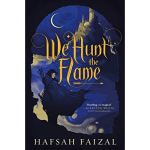
We Hunt the Flame by Hafsah Faizal

Standard
We Hunt the Flame by Hafsah Faizal

we hunt the flame.jpg

A mature upper middle school/high school aged fantasy romance, written by a nikabi and filled with ancient Arab imagery and Arabic words.  Story-wise it read to me like a mashup of Hunger Games and Ember in the Ashes, and while the overall story is good, the first 60 pages of world building were utterly confusing to me.  I told myself I would read at least 100 pages and then decide if I wanted to continue, luckily before I hit 100 pages I found a glossary of terms, characters, and places online, and the story moved from world building to character development and I enjoyed the rest of the ride.

SYNOPSIS:

In a world that is slowly being taken over by the dark magic that is the Arz, a deadly forest that surrounds the country of Arawiya, one girl in one of the five Caliphates, Zafira, dares to venture into the darkness to hunt game and prevent her people from starving.  Unfortunately the Caliph of her state looks down upon women and this regular heroic act must be done with her impersonating a man and keeping her efforts as covert as possible.  Life for Zafira is hard as she not only juggles this masquerade, but her father has recently been killed, her mother is mentally absent, her best friend is getting married, the Arz is growing, and the people around her are starving.

In more or less alternating chapters we also learn of Nasir, the ‘Prince of Death’ who is an assassin for the Sultan who has also now taken over as Caliph of Sarasin.  Forced to kill innocent people by his heartless father, Nasir also is mourning the loss of his mother,  as he tries to earn his father’s approval and find some validation for his current life.

The two characters come together when an immortal witch summons Zafira to retrieve a magic book from a cursed island beyond the Arz and Naisr’s father sends him to intercept her.  The majority of the book takes place on the island of Sharr, an island that is not only a location, but a living consuming character, and involves a variety of other enchanted beings from the various states.  An immortal Safin, Benyamin, one of nine elites, Kafirah, and Altair, a general from Sarasin that weaves them altogether and complicates everything.   This group, the zumra, must work together to save Arawiya, while constantly evaluating how much they can trust one another, as well as themselves.

WHY I LIKE IT:

I love the detail and was pleasantly surprised with the pacing.  The chapters are short and kept the plot from dragging for 471 pages.  Having read it and enjoyed it, I don’t know that I can properly discuss it though.  There are things that I just accepted and moved on with without pondering over, because I don’t know if I understood it well enough to even ask the question aloud.  That being said, I feel like I got the story and I understood where the characters were coming from and I closed the book feeling satisfied and willing to read the next one in the series.  The characters grow and develop and they have a satisfying arc without being overly cliche or predictable.  I think Nasir grows much more than Zafira and knowing that the next book is more focused on him, intrigues me.  Altair is by far the most fascinating character and I hope to see more of him as well.

There is a map at the beginning of the book that I referenced A LOT, and truly I have no idea why the glossary and character list was not included in the book, as it is desperately needed. There are a lot of Arabic words and I would like to get an Arabic speaker’s perspective on how knowing what the terms meant affected the story comprehension. 

I like that Zafira has to find confidence in shedding her cloak and stepping in to herself, but I felt it told it more than it showed.  Some of the states are governed by women, the founders are women, that I didn’t feel her fear in hiding her gender.  Similarly, I wanted more information on who/what exactly the Lion of the Night was/is and where the affinities come from.  Perhaps minor points, but details that kept me from immersing myself in this fantastical land and kept me feeling like an outsider peering in and trying to connect with events just out of reach.

FLAGS:

There is a lot of killing, and some of it gruesome.  There is abuse and details of branding and a tongue being cut out.  There is alluding of sexual acts but nothing defined, random comments between characters and implications of girls in a room in the morning.  There is kissing and an intense makeout session that is used to achieve a battle goal, but it is detailed and the characters reflect on how it made them feel in terms of desire, longing, wanting, etc.  So, while it is there, it is there for a purpose other than titillation, that is why I think mature middle school could handle it.  There is a scene in a bar, but none of the main characters drink.  There is some language, albeit not in English.

TOOLS FOR LEADING THE DISCUSSION:

I don’t think I could do this with 6th graders in my middle school book club, but I will definitely suggest it for the high school one.  I think there are a lot of ways things can be interpreted and because it is a fantasy there is no right or wrong which would make the discussion fascinating.  The romance I think makes the book lean to being more female oriented, but I think there is enough action that boys will also enjoy it overall as well.

Book Website: https://www.wehunttheflame.com/

The book just came out, so I’m sure in the next few weeks and months there will be more tools, more interviews, and more details of what is to come in the series.


Nimrullah: The Quest for the Green Dagger by Aaron Spevack

Standard
Nimrullah: The Quest for the Green Dagger by Aaron Spevack

nimrullah

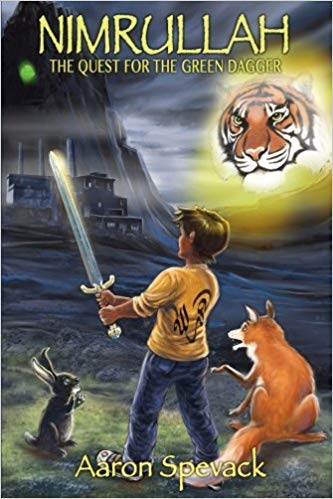
Oh this one was hard for me to finish.  It was the only thing I took to keep me entertained on a 7 hour plane ride in February as I was determined to read this, and even between the going and return flight, I couldn’t force myself to get through it.  Four months later out of sheer stubbornness I finished this 204 page book and I’m not better for it.  If it was your thing, I’m glad for you, but I didn’t get it, I don’t know what age group I’d even suggest it for, and for all the potential it could have had in being a fantasy series with religious overtones like Chronicles of Narnia by C.S. Lewis or some grand adventure with moral highlights, for me it was just a simple story made complex by huge religiously vague passages and too many dozens of characters.

SYNOPSIS:

The bare bones of the book is pretty straightforward.  Much like even Lord of the Rings or any basic video game, the main character has to do this, then do this, then do that to succeed and win and reach the end.  In this book it is a ten year old boy named Ahmad who crawls under the mimbar of his Massachusetts mosque and finds himself in a land of talking animals who need him to go on a quest to save their way of life.  His sister Amina also finds her way to this enchanted land and Nimrullah’s garden, but they have little interaction with each other or with Nimrullah, a tiger and head of the Dar al-Ashjar folk.  Along the way Ahmed meets beavers, and snakes and rabbits, and dragons, all with names and random tidbits of information flung in, but no real purpose or back story or attachment.  Ahmad is given a book by a turtle that will guide his internal journey, that quite often Ahmad doesn’t understand and the author doesn’t even share the text so the reader doesn’t understand, and when the author does share the text it is paragraphs and pages long, that what it means is baffling to me as an adult, let alone any elementary aged child.  The point of the journey is to get to a green dagger that is on an island in a crystal sea, but he isn’t going to an island to get it, he is going to a mountain and then a cave.  The villains are the Kadhibun that mine crystal and enslave the animals from Dar al-Ashjar in factories destroying the crystal sea, and thus the environment and animals’ way of life.

WHY I LIKE IT:

I love what the author tried to do.  Even comparing it to C.S. Lewis’ work gave some hope that Muslim children would find a surface level adventure story to fall in love with, and be compelled to understand the symbolic undertones of religion, morality and faith.  However, it not just fell short, it never really gave itself a chance.  There is too much telling and not enough showing.  All the characters and animals and references to things are not explained and lose the reader, and even when I would go back I wouldn’t find concrete points to fall back on.  There are too many characters that are just name dropped and become more words to skim over.  Major battle scenes are never detailed, and the narrator resorts to saying, “it would be hard to explain.”  Characters are trusted, but no reason to trust or mistrust them is provided. Litany’s are to be recited, but aren’t shared. “Ahmed opened his book again, and started reading the commentary, which contained the litanies.  Their details cannot be mentioned here, as such a sword cannot be handed to anyone.” There is a litany of the mountain, litany of the cave and a litany of the crystal sea.  But, apparently the litany of the sea is the same as the cave one, huh? It really is a mess, I’m sad to say.  It builds up to something and then just lets it drop.  On top of that, and now I’m just ranting, there are no page numbers!  

The overall moral of Ahmad learning self contron and slaying his ego and trusting Allah and being patient is all there, but it is so hidden and muddled that I don’t think the average reader will find it inspiring or triumphant.  It is almost like the author tried to put a ton of Sufi knowledge into a children’s book, but forgot to simplify it for children.  Just having the framework of a ten year old boy surrounded by talking animals isn’t enough to deliver the message, the message itself has to be palatable for kids too.  And basic writing and story telling are critical as well.

FLAGS:

The book is clean

TOOLS FOR LEADING THE DISCUSSION:

I wouldn’t use this book for a basic book club, I couldn’t even get my 9 year old son who reads over 300 pages a day to get past the first third.  If I am missing major Sufi tenants, which I definitely could be as I know very little about Sufism, and this book is a foil for much bigger and more critical concepts then perhaps someone with Sufi knowledge teaching children in a clever way, will find this book useful, unfortunately I’m not that person, so I think I’ll have to pass on suggesting the book to others.

Shadow Magic by Joshua Khan illustrated by Ben Hibon

Standard
Shadow Magic by Joshua Khan illustrated by Ben Hibon

shadow magic.jpg

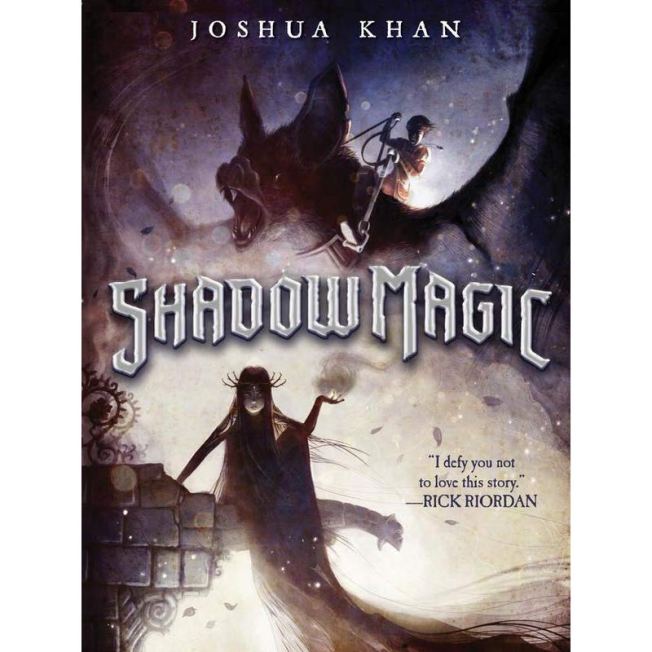
This book is fun and enchanting, whether you read all 321 pages and fall in to the occasional illustrations and pour over the map, or listen to the audio and get swept away.  It is an AR 4.1, and the first in the three part series.  Told by the point of view of two characters, the book’s short chapters and high action speed are expertly crafted to keep suspense and interest high, while maintaining solid world building events and making the character’s history come alive.  There isn’t anything Islamic in the books, save some critical and cleverly named characters and ideas, but the author in interviews has said he is Muslim, and that is enough for me to share a book I thoroughly enjoyed on this blog!

SYNOPSIS:

Thorn is a fugitive kid, on the run from something left intentional vague and possibly the son of an outlaw.  Raised on the edge of Herne forest (earth), he is good with animals, feels comfortable in nature, has a soft heart for doing what is right, and isn’t afraid of hard work.  He finds himself being sold as a slave to the executioner of Gehenna, Tyburn, and is off to Castle Gloom where he will meet and befriend the new ruler of House Shadow (death/darkness), Lily.

Lillith Shadow’s parents and brother have been murdered and she is now the ruler of Gehenna.  She is also still a child and events around her require her to grow up fast.  To end hostilities with House Solar she is to wed Prince Gabriel, a pompous idiot, who she despises in principle and in person.  

When an attempt is made on Lily’s life, Thorn and an unexpected ally, K’leef a Prince from the Sultanate of Fire, must work together to figure out who is trying to kill Lily, possibly who killed her parents, where Thorn’s father is, who is raising an army of zombies, and now how to get out of this wedding without causing continued war.

The history of the six founding houses that make up this world, and their elemental magical rules and limitations as magic dies out with each passing generation, come together and a tale is told that contrasts easy everyday language in a mystical proper world of royalty and dukes, colored by the dark of death and necromancy and shadows, while somehow remaining light, and funny, and completely relatable as the kids come of age and learn who they are and what they are capable of doing and accomplishing.

WHY I LIKE IT:

I love that the book is clean and that it has both Thorn and Lily’s perspectives to move the story along and give insight into the characters.  I love the world building and how the history of each of the houses is so well thought out and clear.  

“The whole idea of House Shadow is based on the Middle-East. Lily’s dad’s name is Arabic for the devil. Her mother’s the great villainess of the Old Testament and Lily is Lilith, a Hebrew demoness. The view people have of House Shadow mimics the fear the West has of East, and specifically Islam. For that reason all of House Solar is named after archangels. . . Some houses were easier to establish than others. House Djinn was fire as djinns are (out of Arabic lore) beings of smokeless fire. Herne’s an ancient English forest deity, so again a pretty easy fix” (http://www.cybils.com/2017/03/interview-with-joshua-khan.html).

A big plot point is that Lily is magical, and it is against ancient laws, meaning all six houses agree, that women cannot practice magic.  The irony is great, in that even kids can pick up on the fact that the six brothers and founders of the magical houses acknowledge that the source of their magic comes from their mother, a woman, and the hypocrisy of it all is frustrating.  I love that three very different characters have to work together, and pick their battles, it really is a testament to the strength of friendships even with people so very different than yourself.

FLAGS:

Pretty clean, not recalling anything cringeworthy as we listened to it in the car (kids ages 3, 8, 9, 12).  The book is dark in that it takes place in Gehenna and there is talk of the undead and bringing the dead back to life and they really celebrate Halloween in their own dark way.  There is murder and death and assassinations, but it isn’t overly morbid or gory or violent.

TOOLS FOR LEADING THE DISCUSSION:

I think I’ve already 90% decided to start next years middle school book club off with this book.  It is fun and engaging and the discussions would connect this fantasy story to so much in the kid’s lives and greater world that I get giddy just thinking about how fun a discussion it will be.  Sadly the school year is wrapping up and I’ll have to wait until fall.  Here are some of my favorite interviews online with the author:

http://www.cybils.com/2017/03/interview-with-joshua-khan.html

https://www.greenhouseliterary.com/authors/joshua-khan/

Author’s Website: http://www.joshuakhan.com/


Peeper and the Peeping Boy by Ayesha Marfani illustrated by Aisha Aamir

Standard
Peeper and the Peeping Boy by Ayesha Marfani illustrated by Aisha Aamir

peeper.jpeg

I see the author regularly posting positive feedback for this book and after feeling let down by the last book of hers that I read, that had a great premise, I tentatively reached for this one.  The book is meant for children in grades 2 through 5, but the writing seems a bit all over the place and some of the vocabulary is above that level. The book is 67 pages and reads like a rough draft that has so much potential to be fleshed out, enhanced, and cleaned up.

SYNOPSIS:

The book takes place in Pakistan and is told from the perspective of Akram, an 11-year-old boy and a Jinn who he names Peeper.  Akram is apparently funny looking and behaves old for his age.  Those around him find him too contemplative and off compared to his peers.  He seems to be an only child and his family is middle class, but they live in a really weird neighborhood and while they have a maid, they are really tight with food and money.  Akram has a passion for peeking in on old houses and imaging stories for the inhabitants. 

Peeper is a Jinn, a good one, who doesn’t like to see suffering of small children.  He sneaks on Akram and sees what praying is and what being a Muslim is.  When he says “no” to his tribe to help plan a party for shaytan, he is punished and made human.  And as a human he and Akram explore the six abandoned houses next to Akram’s house snooping, making assumptions, involving the police and ultimately saving the day.

WHY I LIKE IT:

I love the premise of a boy and a jinn learning about Islam and trying to help those around them who are suffering.  I like that the foundation of being Muslim is what shapes both boys perception of the world as they pray and use AllahuAkbar as a super word to protect themselves.  Unfortunately the author’s writing style is very befuddled and these lessons are not clear.  The tenses change through out as does the point of view, with sometimes it being the characters being in the story and sometimes them preaching to the reader.  There is a lot of repetition of ideas, often disconnected random ideas, and in such a short book it really stands out.  Similarly, everything is really vague, no characters other than the main two are named, numbers of people aren’t identified, “…came in with 10 to 15 people, (page 62).”  Everything is very fluid and not in a helpful way.  The verdict of Peeper getting expelled from his tribe should have been a major plot point, but it is so quick and anti-climatic, that it really makes no impact. In a fantasy story, world building is critical, and there is nothing understood about the world of the jinns.  It says they are evil and horrid, but Akram misses them and wants to go back, which makes no sense and their are no details to show why he would think some in his tribe are good and kind, so when at the end they take shahada, it is completely fuzzy and confusing how one concept links to another.  Even the point of the story is befuddling, sneaking is wrong, but their intentions were pure, they got all their assumptions wrong, so they get medals and get rewarded and are encouraged to sneak more, but with permission? So, ya, all over the place.  The happy ending is that the mom is suddenly praying and religious, but no explanation of what changed her is given, so it falls rather flat.

Aside from my own thoughts on the story, there are blatant contradictions that aren’t explained.  Peeper says he wish he knew Arabic, but he came from Syria, Afghanistan, and Iran, so how does he know English, but not Arabic from Syria?  Peeper also says on page 28 he doesn’t understand fajr, but on page 23 he says he watched Akram pray all 5 daily prayers.  The whole premise of Akram and Peeper being drawn to each other is their nosy curiosity and their compassion for others, but the whole scene with how they let the maid take the fall for the missing food is so out of character, and then when Akram is rude to Peeper about what his parents would say if they saw him is very jarring to how the character has previously been presented.  Neither situation is really resolved either and I really am worried that the maid lost her job and Akram didn’t even try to fix it.  The author tells us they are nice, but shows us two examples when they are not, so it isn’t very convincing that they truly are nice until they try to help the neighbors.  The inhabitant in one of the abandoned bungalows they assume is poor and deliver biscuits to him, but they note that he has bars of gold in his cupboards, so obviously he isn’t poor.  It is noted that Peeper can deliver the mail secretly with no one knowing where they came from, yet the police know that Akram is the one that alerted them to everything going on in the six bungalows, another contradiction that isn’t explained.

Some of the vocabulary was also troublesome for me.  The glossary at the end of the story and before the activity coloring and word search pages, jinn is defined as ghost, but they aren’t dead human spirits, so I disagree with that.  At one point the book mentions “elders of Islam” which is vague and odd, as well.  There are poems at the beginning of each of the 21 chapters, that are very forced rhyme and use words I had to look up:  hoary, momento mori, atavistic, not saying that kid’s can’t handle hard words, but there are many passages that have words more middle school in nature and with unconnected concepts, context clues are rather non existent.

There are little illustrations scattered throughout, but they are inconsistent in style and the copy quality is a bit poor, so they are not really helpful.  Akram does not have a face drawn in, but the jinn does. 

FLAGS:

There is nothing alarming.

TOOLS FOR LEADING THE DISCUSSION:

I wouldn’t do this as a book club book, and I wouldn’t stress having a copy on a library shelf as I don’t think a child would willingly read it and understand it.  


An Ember in the Ashes by Sabaa Tahir

Standard
An Ember in the Ashes by Sabaa Tahir

Our local library automatically renews books, so I’ve had this 446 page AR 5.0 novel sitting on my night stand since October.  I got the online version when I went overseas, and I even downloaded the audio book.  Needless to say, I never opened it, in any form.  And then four days ago, I did.  I read the first page and then the second, and soon enough I knew that I would quickly be annoyed by my children needing food, and clean clothes and rides to school because, I was no longer present in the day-to-day functions of my life, I was in Serra hoping for happy endings and being really angry, like ready to contact the Muslim author during certain scenes, as I felt tears reminiscent of when Cedric Diggory was killed in book 4 of Harry Potter brimming.  The book was amazing, and yes, my kids are fairly well cared for, but there are two more books in the series out, and the fourth one apparently in the works.  I hope to read the series, but I have a feeling, this epic fantasy series will not be a happy read, it is dark, and violent, and definitely more suited for high school readers because of content then the AR level would suggest.  

SYNOPSIS:

Told from two different characters ‘perspectives: Laia and Elias, the world of Serra has tastes of the Roman Empire, current political headlines, Middle Eastern names, subcontinent ideas and lots of action.  Laia is a Scholar, an oppressed people who a half a millennium ago crumbled beneath the Martial invasion.  Her parents led a resistance and were killed a long with a sister.  She and her brother, Darin, are now raised by the grandparents: gentle people who heal others, keep their heads down, and don’t make waves.  The story quickly advances with Martials raiding the family home and Masks, the elite warriors of the Martials, killing Laia’s grandparents and imprisoning Darin.  Laia escapes by running, but hates herself for not staying and fighting for her brother, the only family she has left.

Elias on the other hand is a Martial soldier about to graduate as a Mask from Blackcliff Academy, a brutal (that’s putting it mildly) nearly all boy’s military school.  Abandoned by his mother as a baby, Elias is contemplating running away from the school, as his soul and conscience can no longer be pushed aside to complete the acts he is expected to do.  The complications abound, however, as the Commandant, is his mother, who wants nothing more than to see him dead, the penalty for desertion is death, but the penalty for most every infraction is a severe beating, and if death happens in the process, so be it.

The two characters come together as Laia reaches out to the Resistance to find help in rescuing her brother and in exchange is assigned to be the Commandant’s personal slave.  As the Empire is on the cusp of change, a new emperor is to be selected from the top four of the current graduating class, Elias, is the top of his class.  The four trials will leave one triumphant and the new leader, second place will be the Blood Shrike, the emperors blood bonded butcher, the others will be killed. 

The trails are named: Courage, Cunning, Strength and Loyalty and are administered by immortal, mind reading, cave dwelling Augurs.  The trails are vicious and cruel and evoke not only putting friends against friends, and test one’s fears, but they are amplified by creatures such as jinns, efrits, ghuls and wraiths.

WHY I LIKE IT:

The book is incredibly well written.  The way the author builds her characters’ worlds is seamless and smooth.  I didn’t get lost or confused, I never once felt bored by explanations or felt that something didn’t make sense, a feeling that makes fantasy stories cumbersome and daunting to me, and what I feared all those months looking at the book, too afraid to open it and dive in. 

The action and characters are well developed.  While the book is fast paced, I felt every character was given some nuance and depth.  It really isn’t a good vs. evil story.  Each character has more than one trait at any given time, and it makes them delightful to interact with and mull over.  There are strong females and sprinkled in ethnic names like Sana, Illyas, Tariq, Afya Ara-Nur, Mazen, Zain, Zara.  The subcontinent concept of Izzat, honor, is prominent among the Resistance and Scholars which is a nice bit of resonance in this fictional world as well.  And the concept of jinns, and the stories about their role in the book, reads like Arab folklore.

FLAGS:

The book has profanity, not a lot, but it is there, especially when talking about women.  The violence is incredibly graphic, killings, beatings, brutality, whippings, suffering, and death are on nearly every page.  The Martials are ruthless not only with those they occupy, but even amongst themselves: the students fight to their death, they lock their own children in cages without food so that only the strong of their society survive.  But even worse is that many of the people outside of the ruling elite are taken as slaves, and thus women are seen as property and rape abounds.  Rape by name is mentioned a lot, but it isn’t graphic, save one or two climactic points, if anything it is more disturbing because it is the norm and is accepted.  Prostitutes are mentioned, again, nothing detailed, but mentioned that the boys at the academy visit the docks to see prostitutes.  As Laia is being sold to a slave master, he considers placing her in the brothels rather than at the school.  Laia is nearly raped by a student, and a simmulated rape saves her at another time, in both instances the higher ups dismiss that there is anything wrong with raping a slave and the winner of the third trial is even given a slave for the night.  When the Masks kill Laia’s grandparents, one says he will rape Laia before he kills her.  So it is very much a part of the culture of the book, but it isn’t defined, just the words are used, which means I think high school kids could handle it, because it is not celebrated or graphic, but younger than that will have too many questions that can’t be swept away easily given the environment of the book.  

TOOLS FOR LEADING THE DISCUSSION:

This book could work for a high school book club, because there is so much to talk about.  It won’t work for middle school, and I will keep my daughter from reading it until she is in 9th or 10th grade probably, even though she has read Hunger Games and the Divergent series.  Just want her a little older to handle all the rape references, in more mature way.

As for teaching or presenting this book, this series has a HUGE fandom, you can find everything on the book online and with little effort (maps, character lists, chat groups etc.).

The Author’s website: https://www.sabaatahir.com/

Teaching Books: https://www.teachingbooks.net/tb.cgi?a=1&tid=42018&s=n

One of many book trailers: https://www.youtube.com/watch?v=sbvyCrkVT7M

Enjoy! Happy Reading!

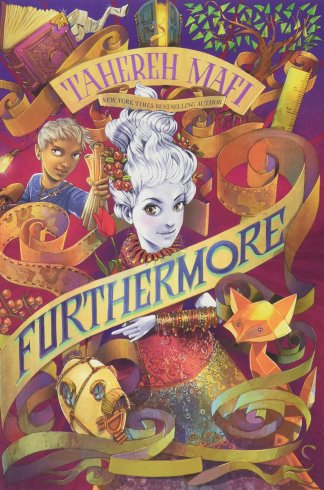
Furthermore by Tahereh Mafi

Standard
Furthermore by Tahereh Mafi

furthermore.jpg

I put off reading this book (I read the companion, Whichwood, first) because I had heard that the audio book was great and I wanted to listen to it with my kids.  Read by Bronson Pinchot, Cousin Balki from Perfect Strangers, the audio book takes 8 hours to cover the 401 page book, and it is delightful.  While Mafi’s circular repetitive world building, takes some slowing down to get used to, listening to it made the story move along when a physical book may have been abandoned.  An AR 5.5 the book is clean, but not gripping until about two-thirds of the way through.  As the main character grows in maturity, the story gets better and better, a mix between Alice and Wonderland and A Wrinkle in Time.  The book will require some determination to get through, but the journey will be worth it in the end.

SYNOPSIS:

Alice Alexis Queensmeadow is missing her father who left 3 years ago with only a ruler in his pocket, and hasn’t been seen or heard from since.  Her life is a bit messy as she is being homeschooled by a mother who she doesn’t really think likes her and thus spends most of her days outside eating flowers and trying to avoid wearing clothes.  Alice lives in a world of magic and color, but Alice has no color, at least not externally, her magic, which she must learn to accept is to add and manipulate color to the world, to anything and everything, except herself.  As a 12-year-old she must surrender her magic and be given a task to prove her place in her world.  She thinks her best gift is dance and her surrender goes terribly wrong.  With no where to go after her humiliating performance, she decides to take Oliver Newbanks up on his offer to go with him to help him on his task, he is 13 years old, and find her father.  Their unlikely assistance to one another is fraught with mistrust and bickering as they journey to a world Alice didn’t even know existed, Furthermore.

In the land of Furthermore, magic is used very differently then in Ferenwood, and on their journey where up is down and paper foxes rip limbs off, and Time is actually a person.  The two companions will have to learn to be honest with one another as well as themselves in order to survive, let alone to find Alice’s dad.  With the threat of death and being eaten constantly plaguing them, they journey from village to village where the rules are different and the laws of logic ever changing, with the hopes of completing the task and reuniting a family.

WHY I LIKE IT:

The details in the story are luscious and beautiful, and once you fall into it, you really do want to stay and look around a while.  There were times when listening to it, that the kids would get bored, yet now that we have finished it, all have mentioned that maybe we should get the book so they can reread parts again.  Mafi’s writing style is very thick that you don’t feel like you are making any progress, yet when you start to digest what you know, you realize in fact you have.  

At the beginning Alice is very annoying, and she stays that way for a while.  Her whiney nature isn’t sympathy evoking, but rather gets you irritated with Oliver as well, that he doesn’t just tell her stuff.  Both combined need to be bopped on the head.  Seriously, a bit of communication would really have taken out a lot of the unnecessary frustration the readers feel for the characters, and let the personal stuff they were hesitant to share with each other have more value.  It is a middle grades book, the empathy of understanding Alice and Oliver’s own fears and reticent in opening themselves up is a great lesson to explore through fictional characters, but because the kids have such poor communication skills about anything, their own fears lose potency.  The pacing of the story, is just as random as the villages they pass through as well, while they always seem in a rush, some of the places they stop they could chat at, rather than while they are running to save their lives, or while they are walking they could talk to give description through their eyes, to build up the characters, not just the world they are in.

Like in Whichwood, the narrator talks to the reader which is fun, and provides information that otherwise couldn’t be shared.  The characters names in each of the villages are clever and while the story could be mapped pretty straightforward, girl journeys to a new world to find her father with the help of a boy, who will become her friend, the twists and details, make the book memorable and worth the strain to get to the climax. 

I know this review sounds back and forth, and I think a lot of it stems from what you expect from the story before you begin.  I had tried to read the book and got a little discouraged, but I had a good feeling the audio book wouldn’t disappoint, so I plugged through and found myself enjoying and loving the story.  If you are expecting an action packed fully fleshed out rational story, you will be let down.  If you can just enjoy the whimsy on the surface and let the little tidbits of the larger story come at different times to complete the larger puzzle, you will love Alice and Oliver’s magical world and the fantastic journey that they go on.

FLAGS:

The book is clean.  A bit disturbing is that the people of Furthermore want to eat Alice and Oliver to absorb their magic.  It isn’t vulger, but it is silly that Alice doesn’t like wearing clothes.  While one could be nervous that Alice and Oliver develop a romantic relationship, rest assured they do not, they become friends and are 13 and 12 years old, so phew.

TOOLS FOR LEADING THE DISCUSSION:

I can see me doing this as a book club selection, although I’d probably lean more to Whichwood, in an Islamic School environment because of the names. I think young Either one though, I’m positive Muslim kids will enjoy seeing a hijab wearing Muslimah pictured on the back flap and seeing that she can write a mainstream engaging fantasy novel about whatever she likes.

Author’s website: http://www.taherehbooks.com/book/furthermore/

Whichwood by Tahereh Mafi

Standard
Whichwood by Tahereh Mafi

whichwood.jpg

I am admittedly late to the Tahereh Mafi fan club, and to rectify that I checked out all her books from the library (There’s quite a few).  Yeah, I have four kids and not a ton of time, so I decided to start reading Whichwood thinking then I could review it here due to it’s jacket claiming “Persian Fantasy,” plus noticing characters having names tinged with Islamic culture: Benyamin, Roksana, and Laylee Layla Fenjoon.  So, while I guessed the 368 AR 7.5 wouldn’t have anything Islamic, I figured it would at least give Muslim kids a taste of themselves in some of the words and representation by the hijab wearing author. And I think I was right. 

SYNOPSIS:

Laylee is a mordeshoor, which means she is responsible for caring for the dead and moving them to the next world. Its hard physical work, and since her Maman has passed away and her Baba has gone a bit crazy, the grueling job is left to her.  She is desperately tired and overworked and behind, and the people of the town, Whichwood, abuse and ridicule her relentlessly.  Laylee’s world is a frozen wonderland filled with odd characters and occurrences and magic of all random and gruesome sorts.  Two children, Oliver and Alice, from a different magical land show up unexpectedly to help Laylee with her burden, but Laylee is not well and is on the verge of death, and their help is not initially wanted.  As Laylee starts to die, it will take her living friends, with their variety of magical gifts to bring her back to life, and the dead ghosts that she can speak with, to help her live a life worth enjoying.

WHY I LIKE IT:

I love that Rumi is mentioned and quoted.  I love that words such as hamam and halva are tossed in, it gives flavor to a book that doesn’t need it, but is enhanced by it none-the-less.  The world created is so bizarre, that I was pleasantly surprised how the author kept the descriptions from becoming confusing albeit at times circular and tedious, the book starts out slow, but speeds up as you progress.  The narrator is telling the tale, and speaks often directly to the reader, which is a literary device that one doesn’t see that often in YA books, and I really enjoyed it.  It kept the book inline and avoided plot holes, as the narrator could just tell you how she knew and keep the timeline of the story intact.  

The characters are amazing.  Laylee is 13 and on her own, washing and scrubbing and pulling nails out of corpses before burying them in the frozen earth.  All while being harassed by the ghosts around her.  She has dropped out of school, the community doesn’t even pay her financially or with respect for the work she does, and yet she plugs along.  The reader wants to feel sorry for her, but there isn’t time, there is a lot going on.  Alice’s magic is she can color the world, and Oliver has the gift of persuasion.  Benyamin, Laylee’s closest neighbor on the peninsula, has insects and spiders that live in him and that he can communicate with.  His ailing mother can speak with whales, and rides inside them as a form of transport.  Yeah, it’s a bit nuts.  And because it is so fantastic, at times the story isn’t predictable or even really seeming to move to a clear climax, there is just so much to take in.  

I don’t really even know what to critique in terms of what I wish I would have seen or felt was lacking because there was no expectation.  The book is a companion book to Furthermore, which I think I will do as later as an audio book with my kids.  Perhaps once I read that one I’ll know more about Oliver and Alice’s gifts as the book is about them, as I do have some lingering questions about their whimsical abilities and backstories.  I would have also like a bit more on the mordeshoors, how they are trained, when they marry what enchantments that entails etc.  Seems like the concept in its most basic form could have benefitted from a little more detail.

The book is dark, and there is some darkness in Laylee, and I think that is what makes me like her as a character.  There are some emotions that she really has to work through, and I like that it is fuzzy and messy, I think the target audience of the book will really identify with some of Laylee’s internal struggles. The heart of the book is solid and is very grounded in reality even with all the fantasy on the surface.  I love that Laylee isn’t affected by what other’s expect her to be, there is amazing strength in this being brought to the forefront.  Also, the crystallization of giving someone what they need, not what you think they need is a lesson that will hopefully linger in the readers. 

FLAGS:

The book could be seen as grotesque, but I didn’t find it overly icky, I think middle school and up will  be perfectly ok with all the death.  Oliver is completely star struck and in love with Laylee and her beauty.  But, the book hints only at a future romance.  Similarily, Benyamin and Alice might have a future, but it isn’t mentioned more than a crush and isn’t dwelled on or annoying to the action of dead bodies coming out of their graves or anything like that.

TOOLS FOR LEADING THE DISCUSSION:

Author’s Website: http://www.taherehbooks.com/

A youtube review: https://www.youtube.com/watch?v=bgwtFqiFIi0

Freeze-Land: A New Begininng

Standard

IMG_1828

Let me start off by saying that the fact alone that this book (and series) was written by a 9 year old is amazing.  As a former 4th grade teacher, if I saw this type of writing come across my desk, I would have probably pushed her to keep writing and publish one day too.  But, for all the support and love I wanted to give the book and the author, I really didn’t like the story.  So much so, that even with the second book, Good or Evil, in my hands, I couldn’t justify spending less than an hour to read the 124 pages, which is heartbreaking to say, but honest, none-the-less. 

The series is published by Archway Publishing which is a self publishing company through Simon and Schuster, so I have no idea if they have editors, or what the publishing process was for this book.  But, while you might forgive a few plot holes, and story gaps because of the author’s age, there are sentences that simply don’t make sense, words that are missing, and passages, that seem to be arbitrarily made-up on the spot.  So often the book reads like a child telling a bed time story and realizing they hadn’t explained something earlier and have to wiggle out of a tight spot, “and then, and then” become mechanisms to move the story along, when no other logical connection can suffice.

img_1823.jpg

At 93 pages the books is written for 2nd – 4th graders, and while they might inspire others to write, I don’t know that they will get enough out of the story to read the four book series.  The covers depict a girl that looks like Disney’s Belle and the title might excite fans of Disney’s Frozen.  I would like to think the writing improves as the author develops and grows, and I’m fairly confident that I’ll check out one of her future books, however, I think I’ll sit the rest of this series out.

SYNOPSIS:

Fourth grader Samantha Ringle loves snow, and can’t wait for the next storm to arrive on Christmas day.  After opening presents and celebrating the holiday, she meets Rebecca, a snow flake fairy from Freeze-land.  Six children have gone missing in Samantha’s area, six children that were chosen by Santa and infused with his saliva.  The children have gone to a distant planet to try and save it from the evil Lord Ninstagger, and return it to the snowy wonderland the Freezians once knew.  

Lord Ninstragger has a wand and a creates rhyming spells to make it work, he also has some other weapon an any-weapon-a-tor that I never really understood, and he can only be defeated if a word is said, but the word will also kill all the inhabitants of the planet.  To save the planet and free the other six children that have gone missing, she must defeat Ninstragger and his ninsting minions or Earth too will be destroyed.

Needless to say, she succeeds by having the good little cloud fairies cover their ears so she can say the word that will destroy the evil.  She then has to get all six of her friends and her annoying brother who got caught in the wind that brought her to Freeze-land, home.

WHY I LIKE IT:

I love that this author can articulate a creative imaginative story in her head and that her family supported her endeavors and got the book published.  I love that the author is Muslim and feels confident writing and sharing her words with the world.  Outside of that, I’m not sure the story would have the same appeal if it was written by a 19 year old, or anyone older than a teenager. 

There are huge plot holes.  The book says that all the children are taken to the dungeon, but when Ninstragger is defeated it says that only Jake is in the dungeon, the rest are in jail.  When freed all six show up instantly but the walk to the exact same place to free Jake is long and arduous and the climbing over the mountain is unbearable.  Samantha seems to be surprised that Jake is there, but early had overheard a ninsting talking about Jake by name, to Ninstragger.  Samantha doesn’t recognize the freed children or them her, even though some were her friends and they have been gone a year or less.  Some things also don’t seem to make sense, such as how are their rain cloud fairies in a frozen wonderland? Why does the word kill the inhabitants, what does it mean, how did they learn it? Why are their ghosts that come out of the letters and give the wrong advice? How did Rebecca get all six to Freeze-land, but claim she hadn’t thought how to get Samantha there?  Really the story is all over the place, and I could go on for many many paragraphs, but I think you get the point.  

There is nothing Islamic about the book, and I understand that there doesn’t need to be, but I don’t understand why all the Christmas and Santa stuff is needed.  I understand that the author may have used winter to set the stage for the story, but it seemed awkward to me that Santa randomly died going down a chimney into a lit fire, but yet sensed his time was coming and made a ton of arrangements for a future he would not have known would occur.

TOOLS FOR LEADING THE DISCUSSION:

I would not use this book as a book club selection, but if a child read it, I’d like to know there thoughts.  To see if the wholes and inconsistencies are noticed by the target reader.  My 11-year-old daughter struggled to make sense of the book, and while I tried so hard to force her to read the second one, after I read the first one I realized her hesitance and apologized.

Authors website: https://www.ayazsisters.com/

FLAGS:

The girl lies a lot and acknowledges that she lied to save Freeze-land, but then says that the book is completely true and not a lie.  Obviously there is Christmas and Santa mentioned and celebrated as well.

The word “stupid” is used a lot, and when Samantha and Jake are interacting they are pretty rude to one another.  While at the end, Samantha gains confidence and stands up a bit to a class bully, there is no reconciliation of her and her brother’s relationship.  She shows no concern other than consenting to take him back to Earth, and doesn’t seem to have been worried or relieved to see him in any of the situations presented.

IMG_1827