Tag Archives: theft

Zeyna Lost and Found by Shafaq Khan

Standard
Zeyna Lost and Found by Shafaq Khan

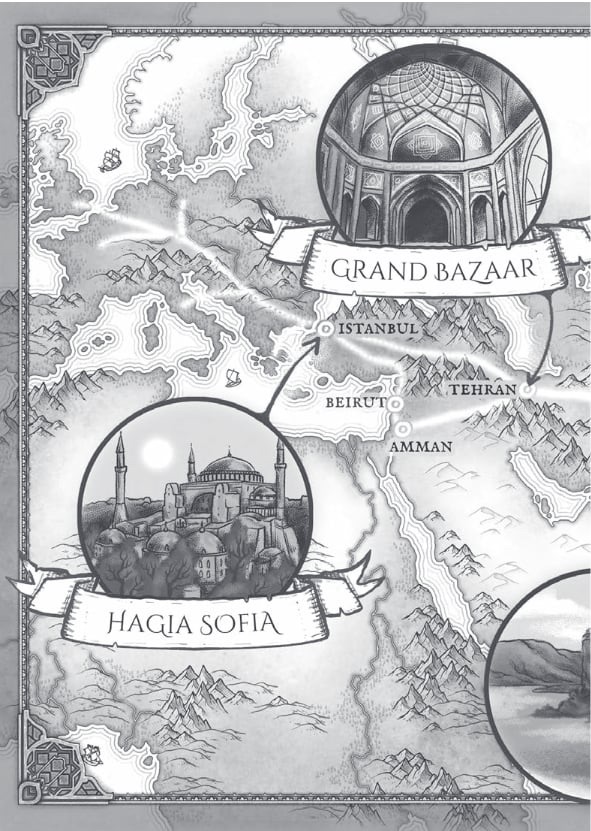
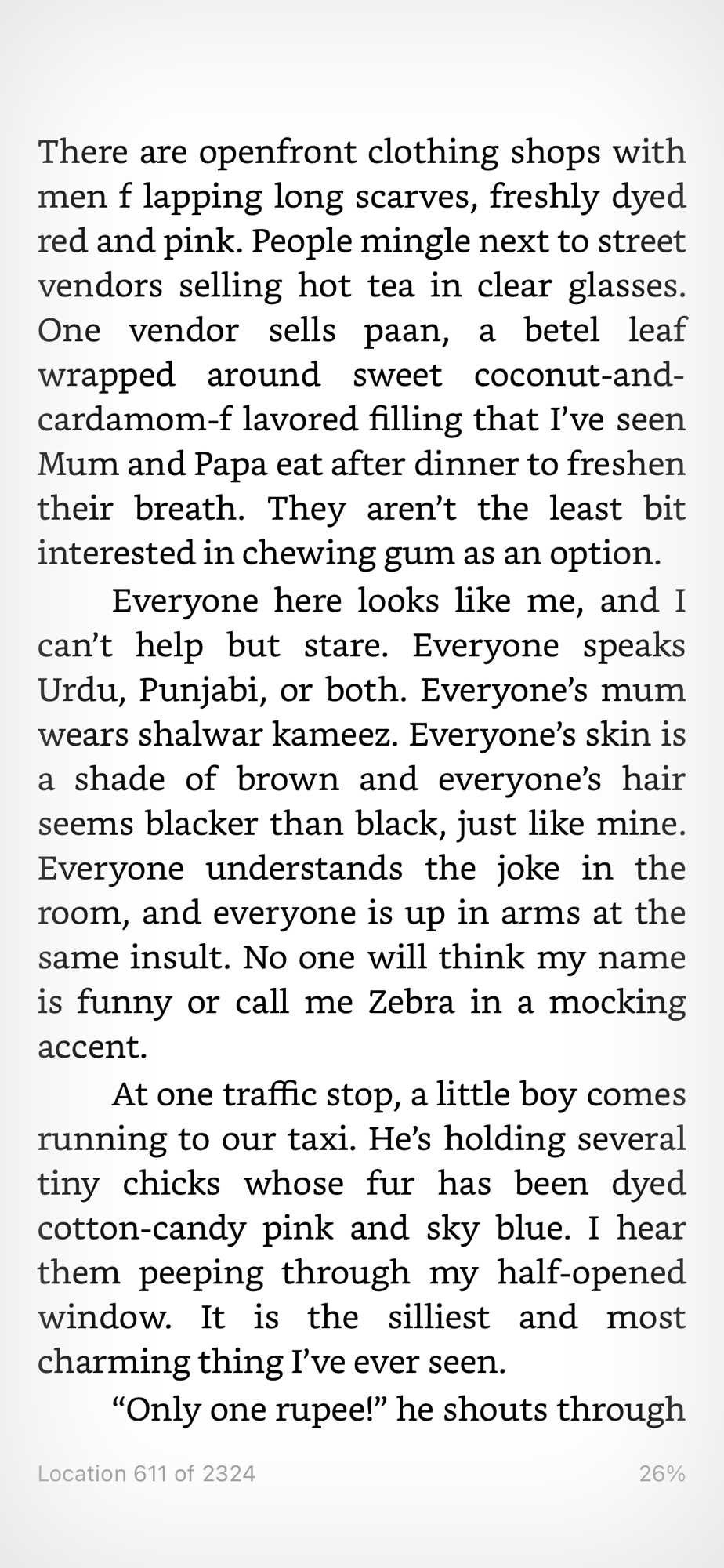
I think I needed this 336 page middle grade book that gets parents out of the way and lets a trio of kids  hop from country to country to solve a mystery, track down the bad guys and save the day. Set in the 1970s in the UK and on the Hippie Trail between Lahore, Pakistan and Istanbul, Turkey, the book is a fast paced read with humor, heart, and adventure.  I absolutely love Zeyna’s snark and voice, and her relationship with her brother and cousin, ground the story and make you cheer for them even when their antics are incredibly dangerous and improbable.  As an Islamic school librarian, my one critique with the book is that I wish there was more/any Islam. I, at one point considered that they are not Muslim, and I’m not sure what the author identifies as, but she does thank “Al-Barr, for all that is good” in the acknowledgements, and Zeyna does mention an Eid party in passing, so while I’m still on the fence, I’m going to assume they are all Muslim.  Major beats in the plot are meeting at both the Badshahi and Blue Mosque, but none of the characters ever pray, or mention the names of prayers when the athan is heard.  When they see women in burkas and chadors, Zeyna stares, not connecting the clothing to hijab, that one would hope she would know. There is only one salaam in the whole book, and the story is predominately set in Pakistan, Afghanistan, Iran, and Turkey. Granted I am sensitive, but it almost feels like a deliberate exclusion to the point of going out of the way to not let those details be present.  There are plenty of Urdu and Punjabi words and titles and cultural commentary, so it doesn’t seem that the author was concerned about watering down authenticity, a theme of the book infact is finding your place and accepting yourself.  All that aside I really enjoyed pickpocketing, imaginative, determined, sarcastic, loyal detective Zeyna, and I think kids will join me in hoping this is the first in a series.
SYNOPSIS:
Zeyna is 12, and likes to imagine she is a detective on a case, sneaking and snooping, and roping her inventing younger brother Mahir to be her Watson. The city is on edge with the theft of the Shirin Jewel, a large Persian ruby, a case involving the 15, that Zeyna would love to solve.  When she sees a man with knife in London, who later seems to be following her and her mum, and then drops a paper with their street name on it, Zeyna is convinced this her chance to prove her self. A sudden trip to Pakistan though dampens her mood as the clues to the case will be left in the UK. She doesn’t stay down long though, as her parents start acting peculiar in Lahore, meeting with strange people, lying about why they suddenly made the trip at all, and when the police show up at the familial home to arrest her parents, they all discover that her parents have vanished.  Zeyna realizes her parents and the events in London are tied to the missing ruby, and with the help of Mahir and their cousin Amina they set off to solve the case and find her parents.
WHY I LIKE IT:
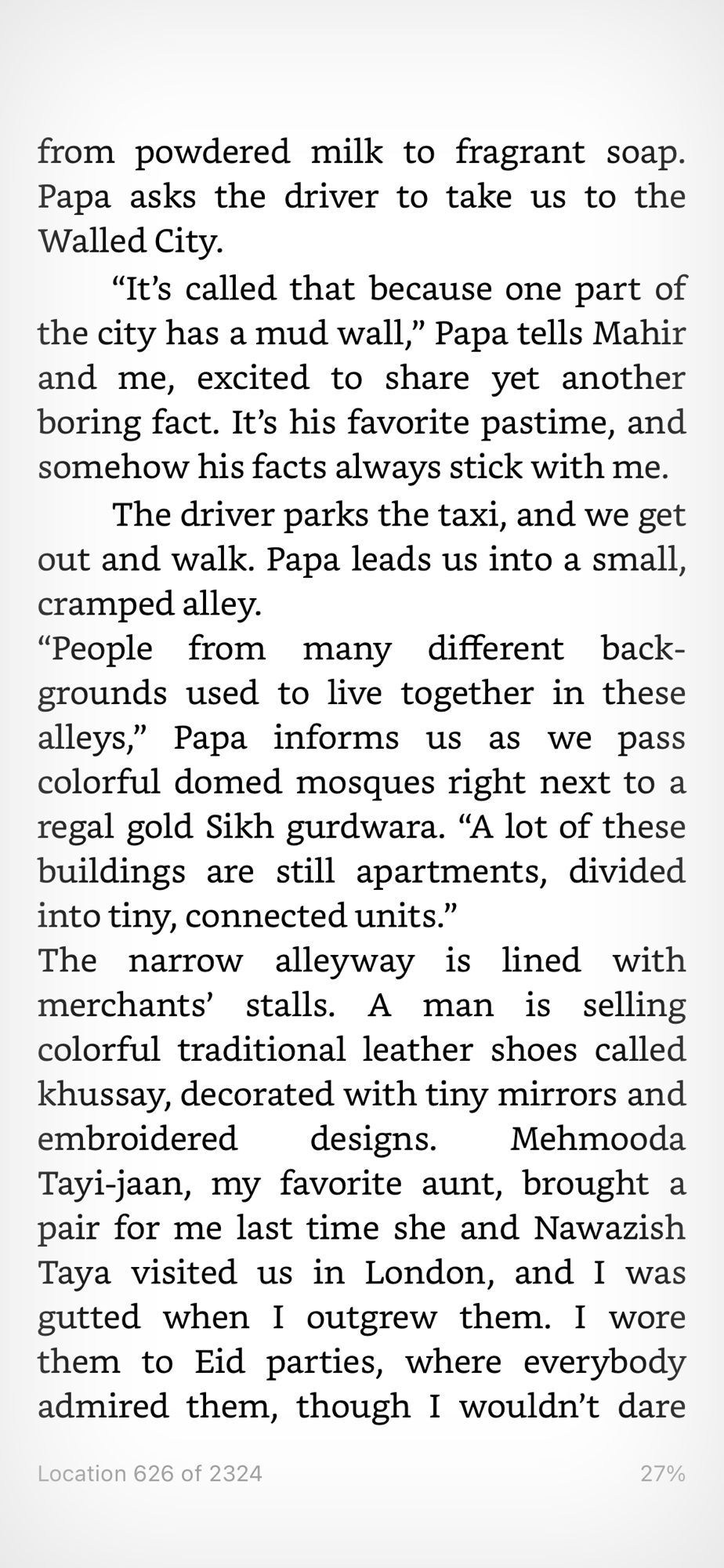
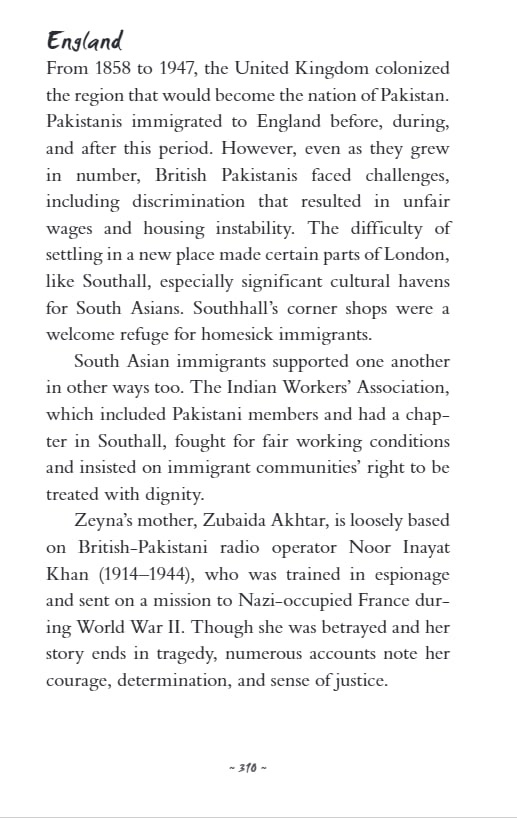
It’s hard to review a book like this without giving the twists and climax and resolution away, but more than once I gasped in delight when something happened on the page, and it crystalized where the book was going in my head.  Sure there were some particularly outlandish connections and a few plot holes, I even Googled when fax machines were invented, but I had a blast reading the book.  I loved the historical backmatter discussing the events in post partition Pakistan, a year before Bangladesh was independent, Soviet Union and UK competing over influence in Afghanistan, the discontent voices in Iran toward the shah, and the role of the Pudding House for messages in Turkey.  There are also discussion questions, a glossary, acknowledgements, and about the author at the end.

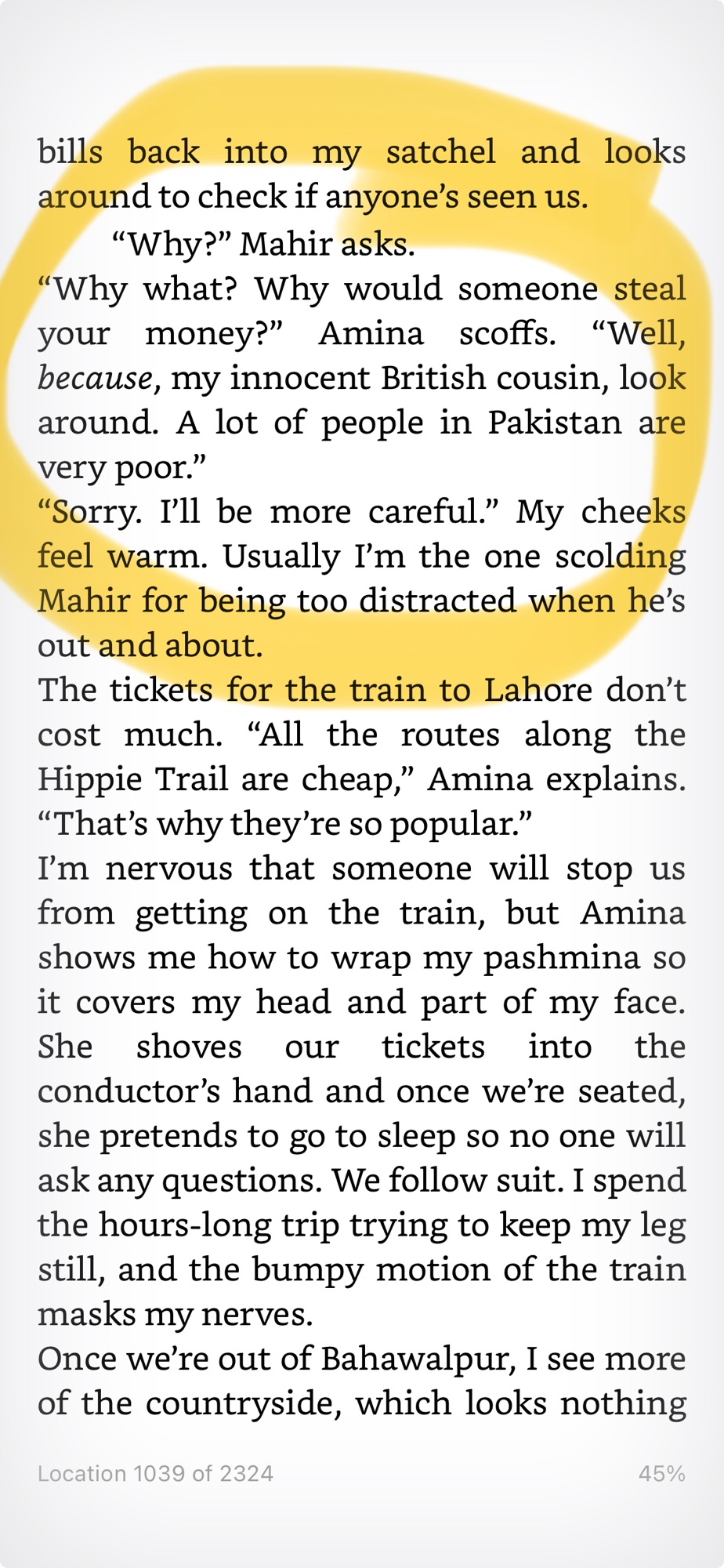
One tiny concern was the assumption that money could be stolen because the people around them are poor, it is just one paragraph, it isn’t a constant in the book, but it struck me as odd and stereotypical, and really not needed.

FLAGS:

Lying, stealing,  deception, pretending to be someone you are not, breaking and entering, eavesdropping, snooping, its a heist book!
TOOLS FOR LEADING THE DISCUSSION:
This would be an awesome book club book or novel study read, I can’t wait for it to be released in a few weeks so that I can have my kids read it.

Kicked Out by A.M. Dassu

Standard
Kicked Out by A.M. Dassu

81h06Amch6L._AC_UF1000,1000_QL80_

The first few chapters of this 336 page middle grade book were rough. It is a stand-alone companion novel, and I have read the previous works, so I don’t know if my expectation of myself to know the characters being introduced, was additionally muddled because the memories were faint, or as I actually suspect, the writing at the beginning is just weak. Like really weak, but I’m stubborn, and I kept reading, and I was rewarded, alhumdulillah. The book found its voice, its pacing, its heart, its relatability, its layers and I am so glad that I didn’t dnf it. The characters, their community, their tenacity, the exploration of family really stays on level with providing the reader insight and messaging to make them reflect on their own lives, without feeling preached to. The focus of football (soccer) keeps the book light and hopeful, while the difficult themes of deportation, Islamophobia, refugees, theft, absent parents, self doubt, forgiveness and second chances with adults, thread in and out. Many of the characters are Muslim, halal food is normalized as is saying salam, it isn’t focused on Islam but the kids make duas before they start a sting operation and when life changes are presented, also they consider Qadr of Allah when things occur. It feels authentic, and Muslim kids will enjoy that the focus isn’t a religious or cultural identity crisis, but just part of who they are as they take on this next chapter of their lives, non Muslims will feel the same.

SYNOPSIS:
Ali, Mark, and Sami are living it up since Mark’s mom won the lottery and they move in to a mansion with a pool. Sami’s brother Aadam starts doing the lawns to help pay for his lawyer fees to appeal his deportation, and things are looking up, expect for Mark’s mom’s new boyfriend though, he seems to be a bit of a racist. It all comes pouring down when Aadam is accused of stealing money, the boys are no longer allowed at the house, and Mark is prevented from hang out with his friends. Ali and Sami are not about to take this treatment without a fight, they have an idea to raise some money for Aadam with a charity football match, and Mark knows his mom is being influenced by her boyfriend and doesn’t abandon his friends. Ali though, is preoccupied, his absent father shows back up, and his step-brother has just been enrolled in their school. It is a lot but together Ali, Sami, and Mark support each other, stand up for what they believe in, and find ways to make sure they and Aadam are not “kicked out.”

WHY I LIKE IT:
I love the commentary on refugees, that it isn’t a political issue, but a human one. The exploration of found family and born family, and giving family second chances impressed me in a middle grade book. I also liked the kids hyping up the community and getting creative to solve a problem, rather than wait for the adults to step in. Whether it was to raise money for legal fees, or solve a mystery and clear someone’s name, these kids really have each other’s backs while dealing with a lot of heavy stresses. They mess up and make mistakes, but the book spending time to show them come back from them is a level of emotional intelligence and maturity that I think readers will benefit from.

I was thrown at a passage that mentioned that Ali can’t go to the mosque because he doesn’t have his dad around. Which made no sense to me as the kid goes to restaurants, parks, stores, on buses, on his bike alone throughout the book. Alhumdulillah, I have wiser folks I can ask concerns to, and my Lit Sister Zainab explained that in fact in the UK some masjids don’t allow women all the time and kids are not encouraged to come unsupervised, so if that stands out to you as well for being completely off, recognize it doesn’t mean it is wrong, like I did.

Truly the book is terrible at the beginning. The barrage of character names, the unlikability of Ali because of how he treats his brother, and the stress of how winning the lottery has made Mark’s life better, is all over the place. I must have read the first three chapters at least four times, before I just decided to plow through and see if the pieces fell in to place, which alhumdulillah, they did.

FLAGS:
Lying, stereotypes, racism, Islamophobia, accusations, theft, lottery, Mark has a crush on Grace, but it is subtle, anger, jealousy.

SPOILER: Ali’s dad was in love with a lady before he married Ali’s mom. His parent’s had him marry Ali’s mom to tame their “wild son” and at some point in the marriage, the dad had a nikkah with the first lady and eventually left Ali, his mom, and two siblings for his other family. The focus is how Ali feels about having his dad leave their family, being jealous of his step brother, and dealing with his return. It doesn’t make it a religious issue or judge if this was permissible, it really stays focused on the parent children relationship and the emotions involved in the leaving, not staying in touch, and the returning. I think middle grade can handle it.


The Girl Who Stole an Elephant by Nizrana Farook

Standard
The Girl Who Stole an Elephant by Nizrana Farook

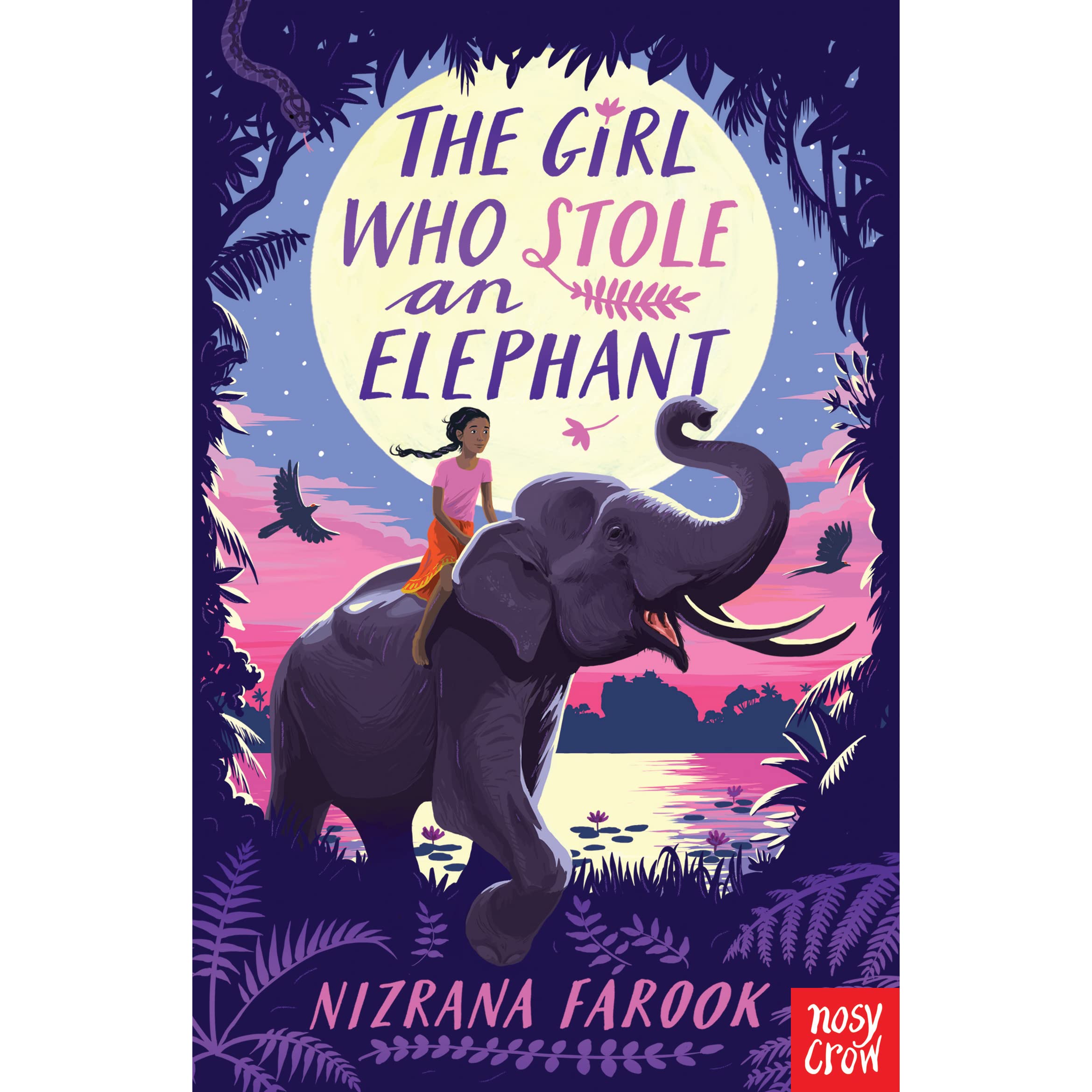
elephantI have to admit this 240 page middle grade OWN voice book had me invested and glued to the pages.  I was swept away to Sri Lanka and in disbelief at the boldness, cleverness, and spunkiness of the Robin Hood-esque 12-year-old protagonist.  I could not put it down as my head worked over time to figure out how this trio of children, one being a Muslim girl, was going to get out of the heap of trouble they had caused.  Yes, admittedly it wraps up a bit too quickly and simply, the main character Chaya doesn’t learn her lesson and is a terrible friend, and there isn’t a good moral of lying and stealing being bad.  But all that aside, the book is a fun adventure that while written pretty straightforward and clearly, is rich in adventure, culture, and excitement for second to fourth grade readers (and 40 year old moms that love strong girls).

SYNOPSIS:

Chaya is the daughter of a tribal representative, whose mother has passed away.  She goes to school, attends the temple once a week to learn Sanskrit, and at dawn is known to steal things to give to those in need.  At night time, people are on guard, expecting trouble, but dawn seems to be the perfect time to take what she needs from people that won’t even notice.  The book starts out with her stealing jewels from the Queen with the hopes of helping a friend who was bitten by a crocodile get medical help in the next town over.  The people in Sarendib have an unjust king, and stealing from his wife to help take care of people that need assistant is a job Chaya takes seriously.  Her heart is in the right place, but when a guard sees her she stops to visit a friend who works in a wood shop to hide the jewels until the heat dies down.  The box they hide the stolen goods in is purchased by a young Muslim girl, and now Chaya has to steal them back from her to get them to people that are in need.

The chain of events is just getting started, and when the jewels are discovered the wood working Neel takes the blame and is imprisoned, and the new girl in town, Nour, is determined to help free Neel from prison and save the villagers from being tormented by the royal guards.  Chaya devises a plan to free Neel from the palace dungeons, but nothing ever quite goes to plan and all the prisoners are freed.   As she runs to escape her own doom, she steals an elephant to get away, the king’s elephant.

The entire story is a series of follies and at each turn the children have really good intentions, they just keep snowballing into situations beyond their control with the stakes constantly multiplying.  I really don’t want to give it away, but they might just bring down a monarchy as they tromp through the jungle on an elephant, accidentally burn down villages, and find that even though Nour is a wealthy meat eater, they can in fact be friends.

WHY I LIKE IT:

I love that the story is outrageous, yet grounded.  I was sucked in from the first few short chapters and didn’t look back.  Chaya is oh so plucky and her fallibility and flaws make her so endearing.  She is a bit of a mean girl to Nour, but I think she shows growth.  The slight raised eyebrow regarding her, is that she didn’t learn some grand lesson, and in fact is possibly emboldened by her thieving and getting away with it.  There probably should have been some humbling at the end, but she is bold and outspoken, and not one for regrets.  I absolutely love the letter she left her father owning up to her role in the whole hullaballoo, and as an afterthought acknowledging that she skipped two days of school.  She is a cheeky one, but her heart is huge and she has her own sense of integrity that is unwavering.

I like that Nour is acknowledged as being Muslim, eating meat, and going to mosques before she moved.  It doesn’t articulate that Chaya doesn’t like her for her faith, but it isn’t helping the two girls befriend each other either.  I love the elephant, and the plants, and fruits, and animals that bring the story to life.

FLAGS:

Lying and stealing. Some destruction of property.

TOOLS FOR LEADING THE DISCUSSION:

I can’t see me doing this as a book club selection, it is just too young of a target audience, but it would be a blast to read aloud to a second or third grade class, or to assign in a classroom setting.  The chapters are really short that early chapter readers will feel accomplished when they complete the book, and the subject matter will compel them to keep turning the pages to find out what happens next.