Tag Archives: tea

Always Be My Bibi by Priyanka Taslim

Standard
Always Be My Bibi by Priyanka Taslim

I had pretty low expectations going into this 368 page YA romcom- as often YA is really “adult” and if the characters/author are Muslim in a “romance” it tends to become a heavy handed rebellion against Islamic principles. So imagine my surprise when the book really is meant for teenage readers. The protagonist loves her culture, and it is established really early on that they are Muslim, but aren’t religious.  Sure as an “Islamic School Librarian,” I wish the characters practiced Islam, and that the the kissing and hugging was labeled as haram, but for the fictional story on the page, that is cultural based, it is a delightfully chaotic and fun read.  Note, the kissing and haramness occurs when they are “sneaking out,” and reads as if they are sneaking out from parental rules, not Islamic ones, as they do not view the world through an Islamic lens.  The protagonist’s sister is presented as religious in that she wears hijab, and left a prestigious private school to attend a local Islamic one, but it is not a major plot point, and if anything shows that Islam is not a monolith or something forced, really though it just shows how different the siblings are.  Does that mean the writing is some literary genius? No, not really, but it is a quick light summer read that I enjoyed. The main character, Habiba, aka Bibi, reads as a Bangladeshi Cher from Clueless through and through, and while at the start it was a bit annoying, I ultimately found her endearing by the end.  There are plot holes, but I didn’t care too much given the quick pace and the nature of the book. The ending though, was drawn out and too long, and the book could have been easily 50 pages shorter. All in all it was fun to be transported to a tea estate in Bangladeshi for a wedding, and I wouldn’t have a problem with 15 – 16 year olds or so reading the book.

SYNOPSIS:

Bibi is in hot water with her father for sneaking off to prom with a boy, the deal has always been no dating until her older, perfect, law school bound, sister Halima gets married.  And her punishment for the summer is working at the family restaurant, one of the many Royal Fried Chicken locations in the chain they started that makes her family, chicken royalty. When hijab wearing, no haram dating Halima springs on her family that she is getting married, the family all heads to Bangladesh for the summer to get to know the groom’s family on the massive tea estate, and celebrate the wedding. Oh and Bibi’s punishment will be transferred from working fast food, to working in the fields under her new brother-in-law to be’s grumpy, serious, younger brother, Sohel.  Bibi also holds her father to his end of the deal and when the big book of biodatas arrives, she is ready to have her chaperoned dates as promised.

As the prickly family of inlaws look down on Bibi and her family, Bibi and surprisingly, Sohel join forces to break the pair up. As the book unfolds their mission changes, the bio data book causes drama, old flames are sought after, and the wedding takes some surprising turns.

WHY I LIKE IT:

As I write this, I’m rolling my eyes at the fact that I really did read it in two sittings and was amused. Bibi is spoiled and clueless and yet does have a good heart.  As with most romantically inclined books, a whole lot of suspension of reality takes place and side characters are not fully fleshed out.  Halima and Sunny met in college, and there families are from the same part of Sylhet, infact Baba worked on the Rahman’s tea estate before coming to America.  The grandma is woefully underdeveloped, I get that she is a side character but the girls spend so little time with this woman they love so dearly is a blaring hole. I really didn’t get some of the scenes after the midpoint, they felt like filler and they felt forced: friends coming from America, the bachelorette party turned amusement park trip, Sohel not sticking up for Bibi, the half hearted love triangle, and the Bibi Baba multiple rehashings.

I did like that the title of the book though comes from something Baba says to Bibi, and not from a love interest, that made me smile. And I liked that the “dates” were supervised, it is vague if the dates in America would have been, or if once Halima was married she would have been allowed to “date” with a western definition, but I kind of liked that it wasn’t defined.

FLAGS:

Disrespect, sneaking out, kissing, hugging, close boy girl friendships, sneaking out, language.

TOOLS FOR LEADING THE DISCUSSION:
Definitely not a book to spotlight as a book club selection, but one that I would have on the shelf and not mind older high schoolers reading.
A Tempest of Tea by Hafsah Faizal

Standard
A Tempest of Tea by Hafsah Faizal

tempest

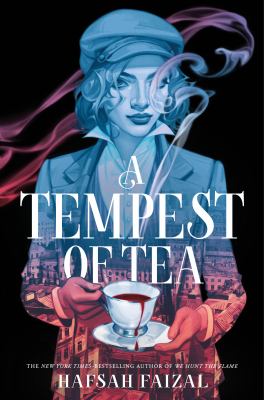
At 352 pages this YA vampire book is remarkably clean, a little slow burn, a few kisses, and some killing, but for the genre, I was quite impressed.  The book is written by a Muslim, but there is no Islam in the book, the closest it gets is a character named Laith Sayaad, but he is from Arawiya, so the fictional world stays in its lane.  The commentary of colonialism, classism, found family, however is very real.  Throw in some tea, some vampires, and a heist with a less than trustworthy crew and I was swept away.  As a Muslim book reviewer, I often schedule in breaks to read books I don’t have to screen shot, annotate, and scrutinize, aka non Islamic books.  So this book was a bit of a surprise for me once I realized I would not have to read it with all the critical lenses in place, but would still feature it because the author is Muslim.  As a result, this review will be a little different from my normal format.

Told in multiple voices, Arthie, Jin, and Flick, the linear story moves along with each characters progression. The story however, twists and in a style that feels a bit slight of hand, we are told what to look at and see, but in an unveiling that makes you want to slow down, flip back, reread, and then carry on.  Honestly at times the book is utter chaos, but again, because I knew this wouldn’t be a typical review, I kept on keeping on.  When plot pieces started to fall into place, about two-thirds of the way into the book, and details in passing started carrying weight, the book was impossible to put down.  I didn’t find many of the “plot twists” super surprising, but I was utterly delighted to know that they connected so many crumbs of the story.  I’m a bit of a sucker for “no loose ends,” and while the ending left a lot for me to desire and grapple with, the story for the most part felt satisfying at its close.

Arthie Casimir and Jin Casimir, siblings by choice, run a tea house by day, a blood bar by night.  Always on the run from the ruling Ram, they have networks of spies, and years of criminal experience, to make it all look rather easy.  When Spindrift is threatened, the two will be tested to pull together a team, enter the dark vampire world of the Athereum and take on the colonizing rulers that hide behind masks.  Things don’t always go according to plan, and their plotting, successes, failures, and backstories make the book a fast-paced read that ends too soon.

FLAGS: Death, attraction, romance, fantasy, colonization, violence, stealing, systemic corruption, spies, etc.  I would be fine with 15 and up reading it.

Palestine: The Special Edition by Joe Sacco

Standard

img_2164-1

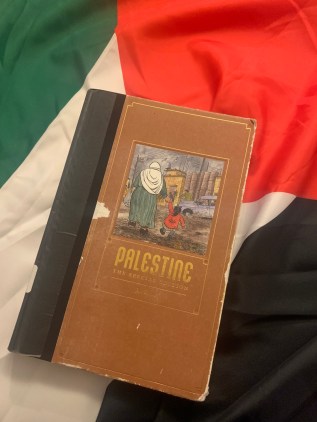
Written between 1993 and 1995, and compiled as a complete set in 2001, this 285 page adult non-fiction graphic novel is not really something I can review, even if I knew how.  As we have passed 100 days of the escalation in Gaza, on top of the ongoing horrors of Israeli occupation, I am hoping to broaden my literary awareness to include not just children’s fiction and non-fiction about Palestine, but also adult works by those living it, those moved by it, and those reporting on it.

This particular “special edition” has a forward by Edward Said, and an introduction by the author and illustrator.  Once I started the actual story, I’ll be honest it took a few attempts to hook me, with the starting being in Cairo and being a little aggressive with alcohol and talk of women, but once I decided to just keep going, the book finds a bit of a rhythm.  It shows the author himself shaping his own opinion as he interviews, and sees, and reports on the events around him.  It is non-fiction, it is written by a journalist, at some points he acknowledges his bias, but the overall picture presented, is heart wrenching.  That the humiliation and torment and occupation of a people has been so well known and documented and ignored, in light of current events, and even in isolation, is devastating.  The exhaustion the writer feels just witnessing it, is palpable, and the complete ignorance of Israeli, former IDF soldiers none-the-less is stark.

The book is both a reflection of the time with internal political factions playing roles differently than they do in todays conflict.  There are also views about Iraq and Saddam Hussein, which might surprise readers today.  But the power of this book is what hasn’t changed, the torture, the imprisonment of children, checkpoints, illegal settlements, humiliation, restrictions from working, from moving, from being treated as equal.

I’m glad I read it, and spent time among the the ink filled pages. I am certain that many of the stories, particularly the ones from inside the prisons will stay with me and haunt me as I read headlines and scroll endlessly through the statistics occurring in real time.  How can we be so blind, for so long, how can a people endure so much and keep fighting, how does any of this make sense?

Babajoon’s Treasure by Farnaz Esnaashari illustrated by Nabi H. Ali

Standard
Babajoon’s Treasure by Farnaz Esnaashari illustrated by Nabi H. Ali

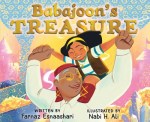
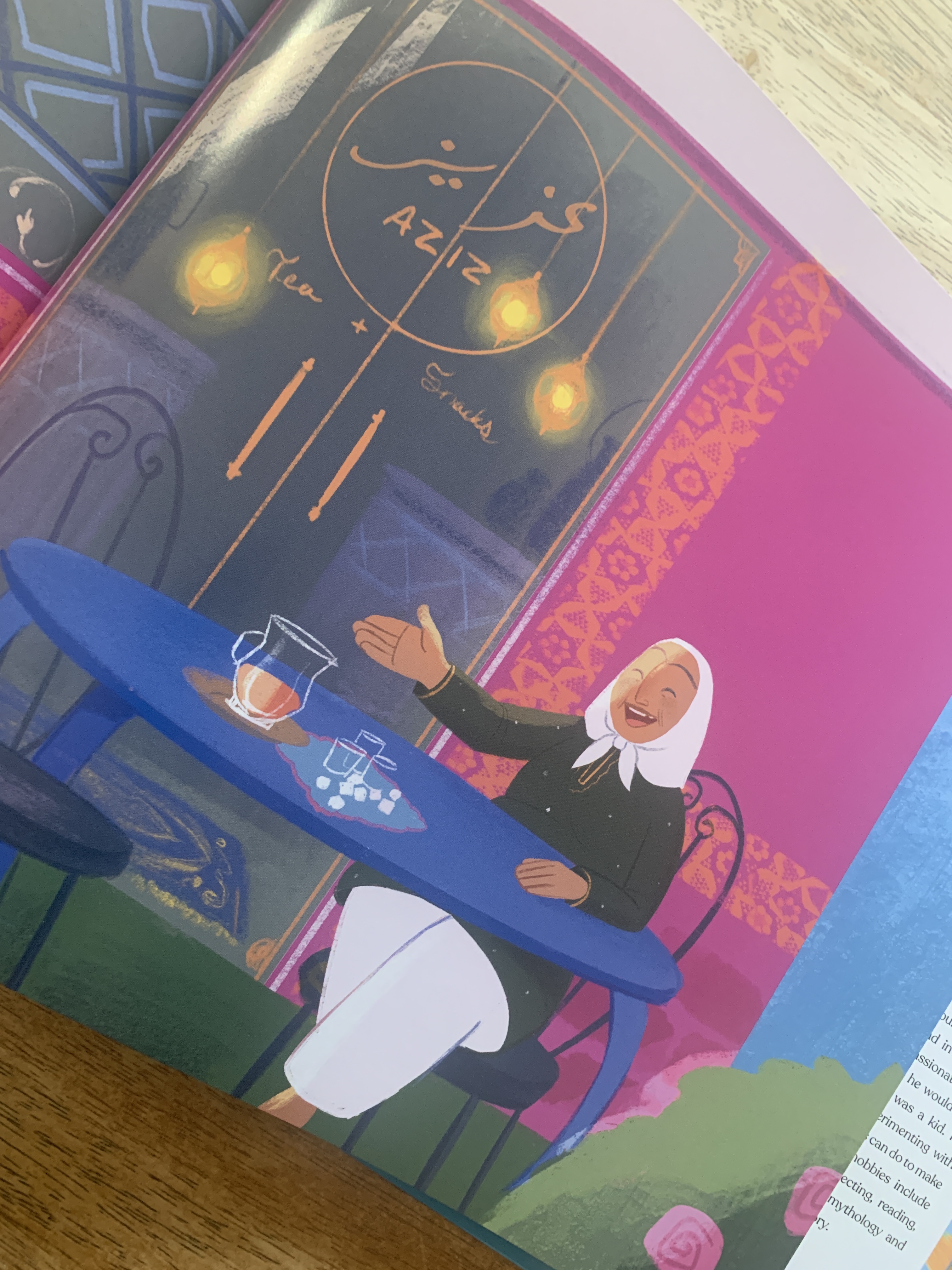
This beautifully illustrated imaginative story focuses on Persian culture and a grandfather-granddaughter relationship.  I have no idea if the characters, author, or illustrator identify as Muslim, the scarf on the grandma and the salaam greetings might just be cultural, but Muslim kids will see themselves in those words and images and thus I am reviewing the book.  Young Miriam spends a week with her grandparents, Babajoon and Mamanjoon, every summer, and on this trip, she has reason to believe her grandpa is a pirate.  The progression of Babajoon sharing his culture with his granddaughter who has misread the signs is silly, but honestly also a little sad.  It seems she is very unaware of her family’s culture, not just generational details, but basics.  The story itself is for kids, but I think parents will find a deeper message in the importance of maintaining cultural ties and familiarity no matter where our children are raised.

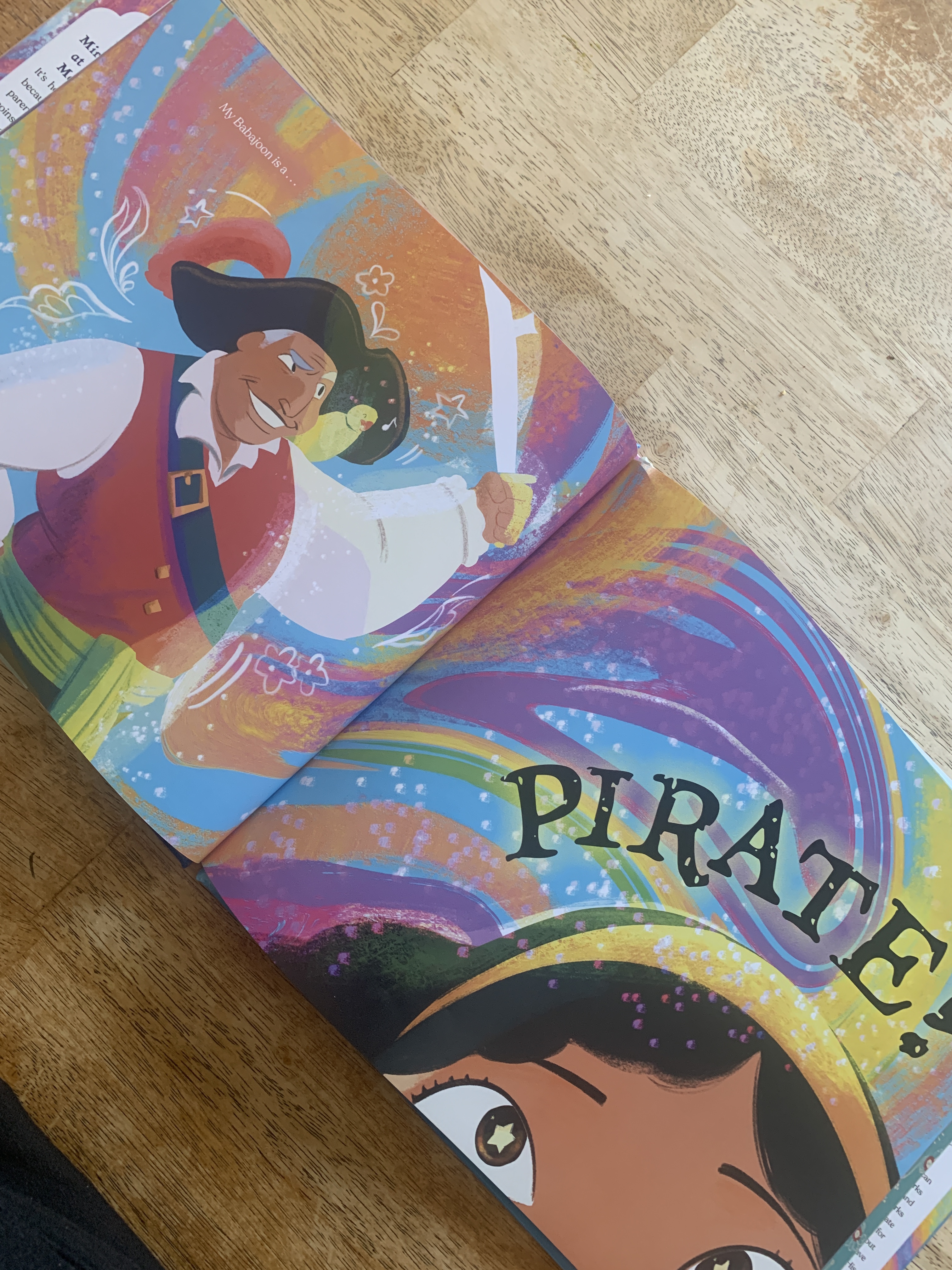
Miriam loves her week every summer with her grandparents, it is a magical adventure spending time with them at their tea shop.  One day Miriam and her Babajoon head out for rocket pops and a mysterious gold coin falls out of her grandpa’s pocket.  As they enjoy their popsicles, Babajoon starts singing with a parrot, and he has a secret language with an old friend before crystals are revealed, the only possible connection for the young girl, is that her grandfather is a pirate.

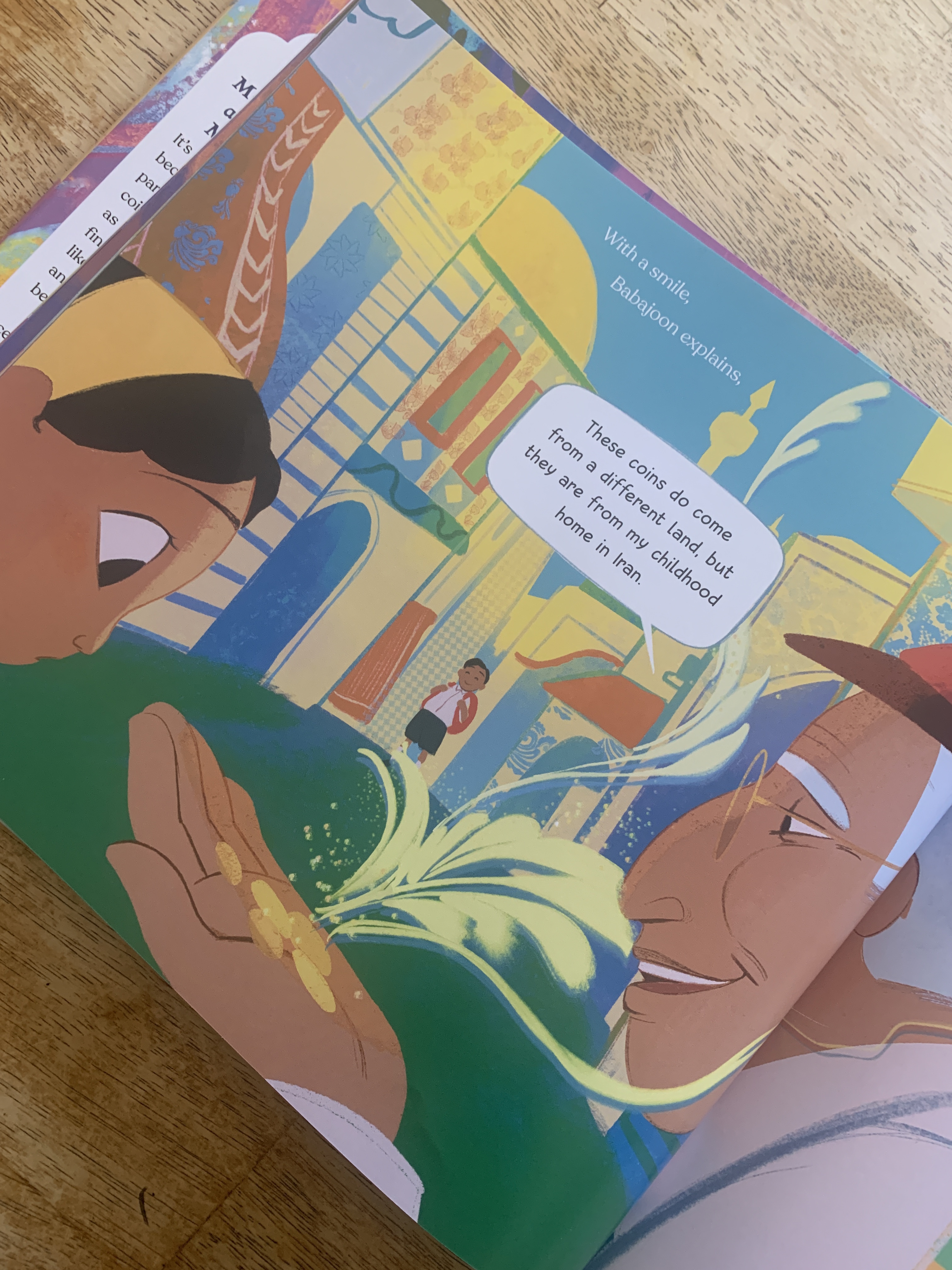
Babajoon reveals the cultural context of all the days adventures tying them back to his childhood in Iran.  He encourages her to ask questions, and Miriam worries that she isn’t like her beloved Babajoon.  His reassures her that they are alike and that they will teach each other, leaves the book with both appreciation and hope and a whole lot of love from a little girl to her family and culture.

There is a bit of a continuity issue for me as the little girl is excited her grandfather is a pirate, and then at the end, glad he isn’t.  Also that she doesn’t know what Farsi sounds like or where her grandfather is from seems a little bit of a stretch as she herself calls them Babajoon and Mamajoon and says salaam to them.  They also own a Persian tea shop called Aziz and the sign board is written in English and Farsi.  If the little girl is aware enough and old enough to piece together the clues to discern that he is a pirate, clearly she recognizes the difference in the titles, foods, and clothing her grandparents wear to the larger society.  I know, I’m being picky, but it took me a few readings to get past all that, and appreciate the story for what it is, and how beneficial it really can be to encourage children to ask about their family heritage and traditions.

The 40 page horizontal hardback book is beautiful to share in groups or one-on-one.  The illustrations are enjoyable, and the pirate aspect will make this book a frequently requested read.  You can preorder your copy here, after March 28, 2023 you can still purchase through that link.