Tag Archives: slavery

Tyger by SF Said illustrated by Dave McKean

Standard
Tyger by SF Said illustrated by Dave McKean

I don’t know that I’ve ever read a book like this 304 page middle grade fantasy, dystopian, highly illustrated adventure. It delves into philosophy, alternate universes, slavery, racism, politics, magic, identity, friendship, betrayal, human rights, education, following your dreams, saving the world, and a talking immortal tiger. It started a little stilted for me, but as the book progressed, I began to see that a lot of detail about all the above mentioned threads would make for a very adult, very lengthy read, and this is meant for 9-12 year olds, albeit they would need to be able to handle the darkness of the book at times, and caregivers, be aware there is a public hanging of a child. The author is Muslim, and the protagonist and a side character identify as Muslim.  There is not much about Islam, or shown in practice, but that they are afraid to learn and practice their faith is mentioned briefly. I think kids will enjoy the read, and not get hung up on threads unexplored as I did.  The illustrations really make it a book that feels exciting to spend time with, and one that will linger with the reader.  I look forward to sharing it when it releases soon in the US, as it was published in 2022 in the UK.

SYNOPSIS:

In short the book is about a boy, Adam, living “in an alternate London where the British Empire hasn’t ended and slavery was never abolished.” In a partitioned off Ghetto as a minority from the vague “Middle East,” who is unable to go to school, or even draw, he makes deliveries for his family to help keep them afloat. During one such delivery he encounters a tiger, an animal like so many others that is extinct, her name is Tyger, and she speaks.  She is an immortal searching for Guardians to help her heal and open a portal to the city.  When Adam, who is immediately connected to her, cannot find a Guardian, she begins to train him, time is short and when he discovers his friend Zadie, short for Scheherazade, has some training from her father, the two set out to open the doors of perception, imagination, creation, and  revelation, to save the day.

WHY I LIKE IT:

I really like that this book opens up larger discussions about society, self, literature, imagination etc, and can really be adapted to mean different things depending on what the reader brings to it. The book addresses these themes in a way that doesn’t talk down to the reader, and in many ways allows the simple bad guy of the story to not be the takeaway point, but rather the journey of understanding perspective, points of view, empathy, creating something, and hope to be far more important.

The identity of the characters being Muslim initially was just a label, one that just made Adam and Zadie more “other,” but a few cleverly crafted sentences about hiding their names, their skin color, and whether it worked or not, allow the reader to reflect on if denying yourself to appease others is effective or not, or rather more importantly knowing when and in which situations it could be a benefit or a selling out of who you are.  Zadie and her father seem to practice, and one point Solomon ( Suleiman), offers his prayers, he says Assalamualaikum and Bismilliah. Adam and his family on the other hand, have hidden their faith so as to fit in better, and thus it is simply an identity label.

I liked that the illustrations weren’t just stunning in their own right, but also highlighted the mood, and metaphysical elements of the story.  I feel like I could teach not just a few lessons on this book, but dozens, and who knows if they would be correct, but I think this book would be fantastic as a read aloud in a classroom for the story at hand and for the discussions.  The darkness, the excitement, the hope, really gripped me, and while I could opine on plot holes and lack of articulation, in some key scenes, I appreciate that over explanation would take away from all that the book gets right.

FLAGS:

Racism, oppression, colonialism, slavery, hanging, power imbalance, betrayal, lying, sneaking, fighting, killing, magic, fantasy elements.

TOOLS FOR LEADING THE DISCUSSION:

Where to even start, this book needs an educators guide, stat. I looked online and couldn’t find one and I hope that will be corrected soon because if you read my thought above, you know there is a lot to discuss.

Prince Among Slaves by N.H. Senzai illustrated by Anna Rich

Standard
Prince Among Slaves by N.H. Senzai illustrated by Anna Rich


462575630_1072301494218509_2457799047040333197_n

This 48 page biography tells a story that we all should know, yet are probably hearing for the first time.  The story of how West African Prince, Abdulrahman Ibrahim Ibn Sori, was forcefully taken and sent to America to be a slave on a plantation, what he endured for decades, and how he made his way back to the African continent.  The large emotional illustrations and poignant text tell of his his life in Fouta Djallon, the painful journey to Mississippi, the trials as a slave, the joy of being a husband and father, and his attempts to return home a free man.  With each challenge and at each stage, him additionally showing amazing strength and trust in Allah swt.  The heartbreaking tale unearths so much evil, ignorance, and faith, that the story is not meant to be read once, it begs to be reflected on, pondered over, and shared far and wide. The treatment of Prince Abdulrahman shown in some of the illustrations are difficult to look at, as they should be, there is also a very passionate kiss shown up close between him and his wife.  I think the story’s words and illustrations emphasize the anguish, the strength and the humanity, but I mention the illustrations for each to decide on their own.  There is not a biography or sources in the book, but rather mentions in the Author’s Note the source matter being a film by Unity Production Foundation.  It is not unusual to adapt a biography from a film, and I read an ARC, but I do hope the final copy will be sourced.  The book is for middle grade readers, and I cannot wait to add a physical copy on my own bookshelves, and gift numerous ones to teachers to share in their classrooms.

WARNING: SPOILERS: THE SYNOPSIS CONTAINS A FULL RETELLING, as it is historical, I hope that is ok, but in no way shape or form is my summary taking away from the details, emotion, and writing the actual book contains. 


In 1762, the Fulbe enjoyed prosperity and peace under the king, and when Abdulrahman was seven he started school in Timbo. He loved learning about the Prophets in the Qur’an, and excelled at his studies.  So much so that his father sent him to Timbuktu to continue his studies at age 12. Five years later he returned to train as a warrior, when the first white man, a surgeon, Dr. John Cox appeared injured and lost, they helped heal him and sent him back home to Ireland.

By age 26, Prince Abdurrahman was a warrior, a scholar, soon to be king, a husband and a father of a son.  One day while on patrol, he was captured. He and 170 others were loaded on a ship, for eight months, and sent over 3,000 miles across the Atlantic Ocean.

On August 16, 1788 he arrived starved in Natchez, Mississippi, for $930 he and another man became the property of Colonel Foster.  Resigned that this was his fate, he helped share his knowledge of cotton, and the plantation prospered. In 1975 he married, Isabella.  They had nine children and eight grandchildren.  

In 1807 while selling goods in the market, Abdurrahman sees Dr Cox (subhanAllah), and the doctor pleads with Colonel Foster to free the Prince.  Foster could not be moved and when the doctor died, Abdurrahman once again accepted his fate. 

His story though had started to spread, and a printer, felt a softness to the Prince turned slave and printed often embellished stories trying to help his cause.  He asked the Prince to write a letter, the Prince wrote an ayah from the Quran and the printer passed it to Mississippi senator Thomas Reed explaining the Prince’s desire to return to Africa.  Senator Reed got the letter to Henry Clay, the Secretary of State under John Quincy Adams, who then got the message to the President of the United States.

The letter was written in Arabic, and they assumed Prince Abdurrahman was thus from Morocco.  The Sultan of Morocco was touched by his plight and petitioned for his release, and the Prince kept quiet not wanting the truth of where he was from to remove the help he was receiving.

He was finally freed and able to purchase the freedom of his wife Isabella with the help of those who had heard his story, but the efforts to free his children were not as successful.  The truth about him not being Moroccan became known, and despite extensive travels and pleas, his declining health forced him to leave America with out his children.  He arrived in Monrovia, Liberia, but would die before he could reach his home of Fouta Djallon.

462563778_440473032154161_1815006209353878188_n


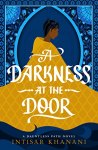
A Darkness at the Door by Intisar Khanani

Standard
A Darkness at the Door by Intisar Khanani

darkness

Y’all I was devastated when Theft of Sunlight ended on a cliffhanger, but Alhumdulillah, this conclusion was well worth the wait.  My heart is at ease, even if I am trying to figure out how to get the “Blessing” so that I can forget I read the book, and enjoy it all over again for the “first” time.  I don’t normally review second books in the series, and this won’t be a typical review, but truly if you have not read Thorn or Theft, what are you waiting for, go get those books and start reading.  I don’t know a lot about the publication drama of this fantastic book, but I do know that it was not published in the USA by the same publisher as the first book in the duology, and the thought that we, the readers, could have stepped up the pre-sales and shown our love for the series, the author, and the characters weighs heavy on me.  Thankfully, the UK publisher kept the book and the author found a way to get Darkness to us in the US (it publishes later this summer), but truly we have the power to support good, quality stories, and we must actively show it so that they get published, rather than simply complain about what options are made available to us. This is the author’s website: http://booksbyintisar.com/ if you sign up for her newsletters you can get all the bookishly delicious info.  She is not asking me to promote her or her books, but I happily share and direct support to her, because her stories really are great, and from what I can fangirl find out about the author, so is she.

The book picks up where Theft leaves off, and manages to remind readers what might have been forgotten in the interim.  It had been over a year since I read book one and while I fumbled a little at the beginning, the author caught me up to speed and didn’t let me lose a beat in Rae’s latest and ongoing adventures.  It starts with Rae aboard a slavers ship with children bound for a horrible fate.  More than just her life is at stake, as the information she has recently discovered implicates palace officials, the Circle of Mages, an heir to the throne and so much corruption.  With the help of street thief Bren, Rae gets herself in and out of trouble quicker than most expect.  Her clubfoot, sharp brain, and genuine values, force anyone who underestimates Rae to find themselves scrambling to keep up.  She has grown to love her body and the strengths that it affords her, and in her actions and dedication to changing the world she becomes a formidable river Pirate Queen that you genuinely care for, cheer on, and hope gets a happy ending.

Yes, if you have read Theft and are wondering why I didn’t mention Princess Alyrra, Red Hawk, the Cormorant, Niya, Stonemare, Artemian, and everyone else, fear not, they are all present, and get their story arcs, I just don’t want to risk a single spoiler.  If you’ve waited for this conclusion, you will find yourself desperately dreading the final pages, and wishing the story would never end.  The fantasy, action, characters, world building is all incredible and so hard to put down.  The author is Muslim, but there is no Islam present in the stories, although hints of desi culture do seem to present in the Sweetening atleast. 

The book is YA, but I think 15 and up or so would be a good fit. Like the others in the series, it has magic, murder, killing, lying, thieving, alcohol, corruption, implications of sexual abuse, assault and threat of rape, but this book also has some language, talk of infertility, and some implied banter about marital relations. The romance is very halal and clean, but the violence is graphic as dealing with the implications of murder and slavery are grappled with and thus a thematic element of the story.

Thank you Netgalley UK for the arc, if the book looks interesting and fun for you, please preorder the book wherever you are.