Tag Archives: New friends

Cookies and Crescents: An Eid Story by Nada Shawish Dutka illustrated by Zelma Firdauzia

Standard
Cookies and Crescents: An Eid Story by Nada Shawish Dutka illustrated by Zelma Firdauzia


We can always use more Eid al Fitr stories, but to stand out in an increasingly crowded field, really requires something special, impeccable story telling, and repeatability.  Unfortunately for me, this book just comes up short.  Food centered books are already so over done, toss in small font that nearly bleeds into the binding where you would hold the book for story times, top it off with a vague story lacking the OWN voice charm that a religious holiday centered book, by a Muslim, that is noted to be slightly autobiographical should have, and the recipe is just going to feel lacking.  There isn’t anything “wrong” with the book, it just doesn’t really seem like it will be memorable or asked for again. Focusing on a mom and daughter moving the night before Eid, the book has elements of adjustment, new traditions, change, nerves, salat, iftaar, looking for the moon and making a new friend- layers that should resonate with readers, but somehow for me, stayed on the surface of this 32 page book for preschool to early elementary aged children.

The book starts with the protagonist talking about the city where she was born, the community, the family atmosphere, and her mama’s famous Eid cookies.  But this year will be different, it is almost Eid and Reem and her mama are moving away from the city to a house with a yard. Reem is not excited, in fact, she spends much of the drive feeling carsick.  Once they arrive it is time to unpack, break their fast, pray and look for the moon.  The excitement of making making cookies with her Mama sustains her, until she notices the walnuts are missing. Change is inevitable, and Mama is determined to show Reem that they can make do with what they have.  When neighbors come over to welcome them to the neighborhood, a new friend might be just what Reem needs to settle in.

The book seems to be deliberately vague, and I don’t know that it will bother children, but it bothered the journalist in me.  Why are they moving, what city are they leaving, is Sarah Muslim or just knows to say Eid Mubarak, but doesn’t say walaikumasalam.  I also feel like the publisher didn’t properly invest in the book.  The text is tiny, when ample space is available on nearly every spread.  Blocks of text on the lower inner binding make one’s hand cover the words when reading to a group, and certain paragraphs seem to be erroneous or at the very least awkward.  Take for example this paragraph when they are unpacking, that I stumbled over every time I read it. “Tonight, it’ll be just me and Mama who look from between tall boxes.” Maybe it is in reference to looking for the moon, but the next page does have her and Mama planning to look for the moon.  Similarly, when the walnuts can’t be found, Reem wants to go back, but Mama says the store is too far. The mother in me was fuming that she didn’t see it was more than about the nuts, go give the girl a hug. Earlier Reem remarks that “Finally, Mama kept her promise,” in regards to the cookies, but is it finally they are making cookies or does Mama not normally keep her promises. I know I’m being picky, but it starts to add up, the reader doesn’t feel that Mama and Reem are in this together. That they listen to each other. So it is hard to get emotionally invested. And when I review I try and unearth why a book doesn’t work for me, and all these little hiccups for me, become obstacles that keep the book from being great.  Sadly all it needs is some good editing and my critiques really could have been resolved, sigh.

Even though the book is set at Eid, and shows the mom and daughter praying, they say salaam, they look for the moon, there is no real Eid as a religious holiday stressed, the focus is the cookies and the new friend.  Culture also seems to be noticeably absent, the cookies are Arab, the phrase “Al Harakah Barakah” is Arabic, but it isn’t sourced, the reader is never told where that sentiment comes from and it isn’t explored as much as the inner flap would suggest. The book concludes with an author’s note and a recipe for ma’amoul.

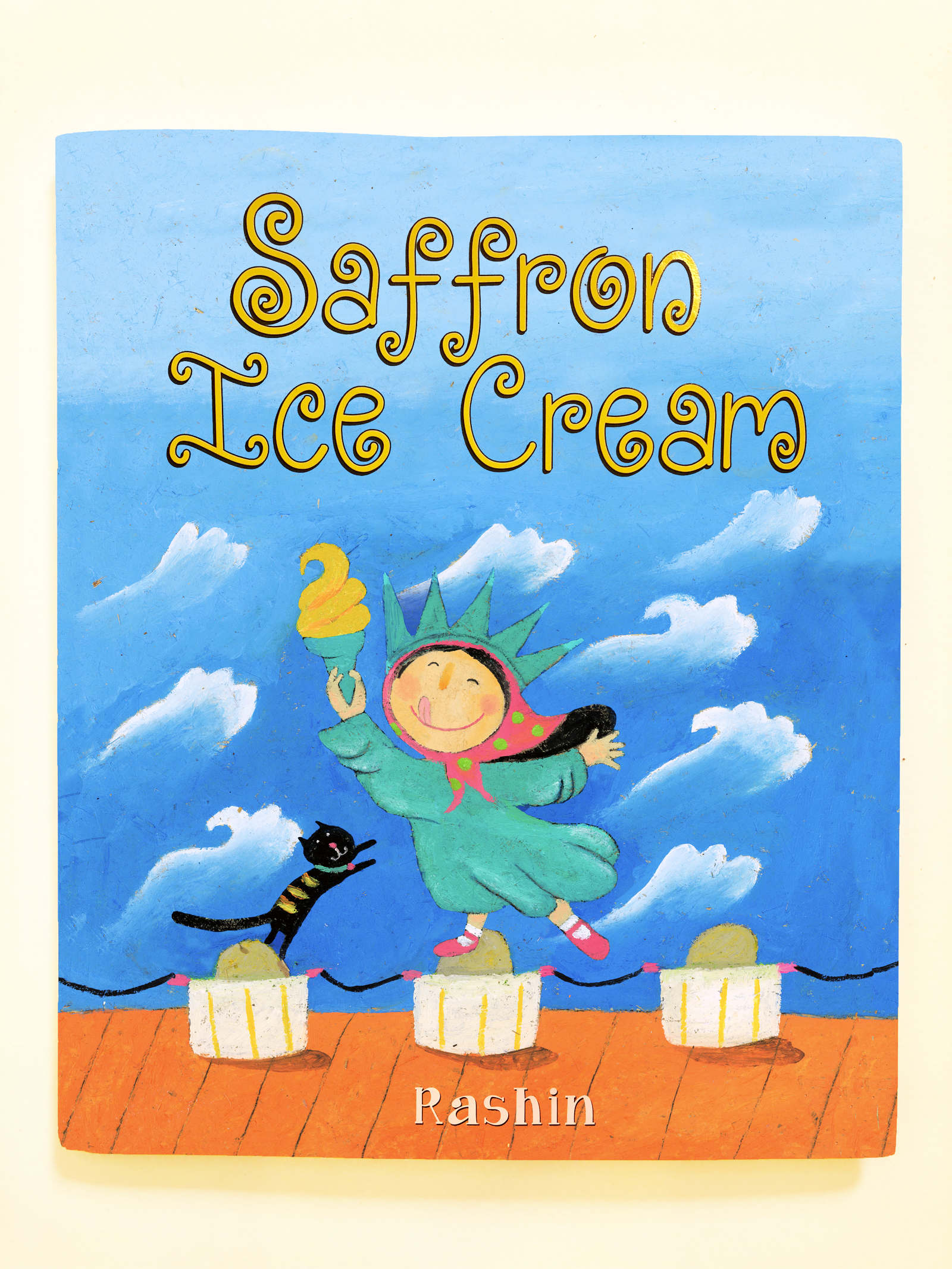
 

Saffron Ice Cream by Rashin Kheiriyeh

Standard
Saffron Ice Cream by Rashin Kheiriyeh

saffron-ice-cream_1600_c.jpg

The book may seem to be a lighthearted diverse read about a little girl comparing a beach in America to those of Iran, BUT there is also some pretty charged portrayals about gender divided beaches, religious police, and hijab.  I’m not saying this own voice book is exaggerating or saying anything that isn’t true, but it is an oddly belittling perspective to slip into a brightly illustrated children’s book with the words “ice cream” in the title.  The 40 page book for ages 4-8 is not one I would recommend for its negative undertones and dismissal of understanding another culture.

6BC28B43-0CB0-468A-A866-35A02C7DE210

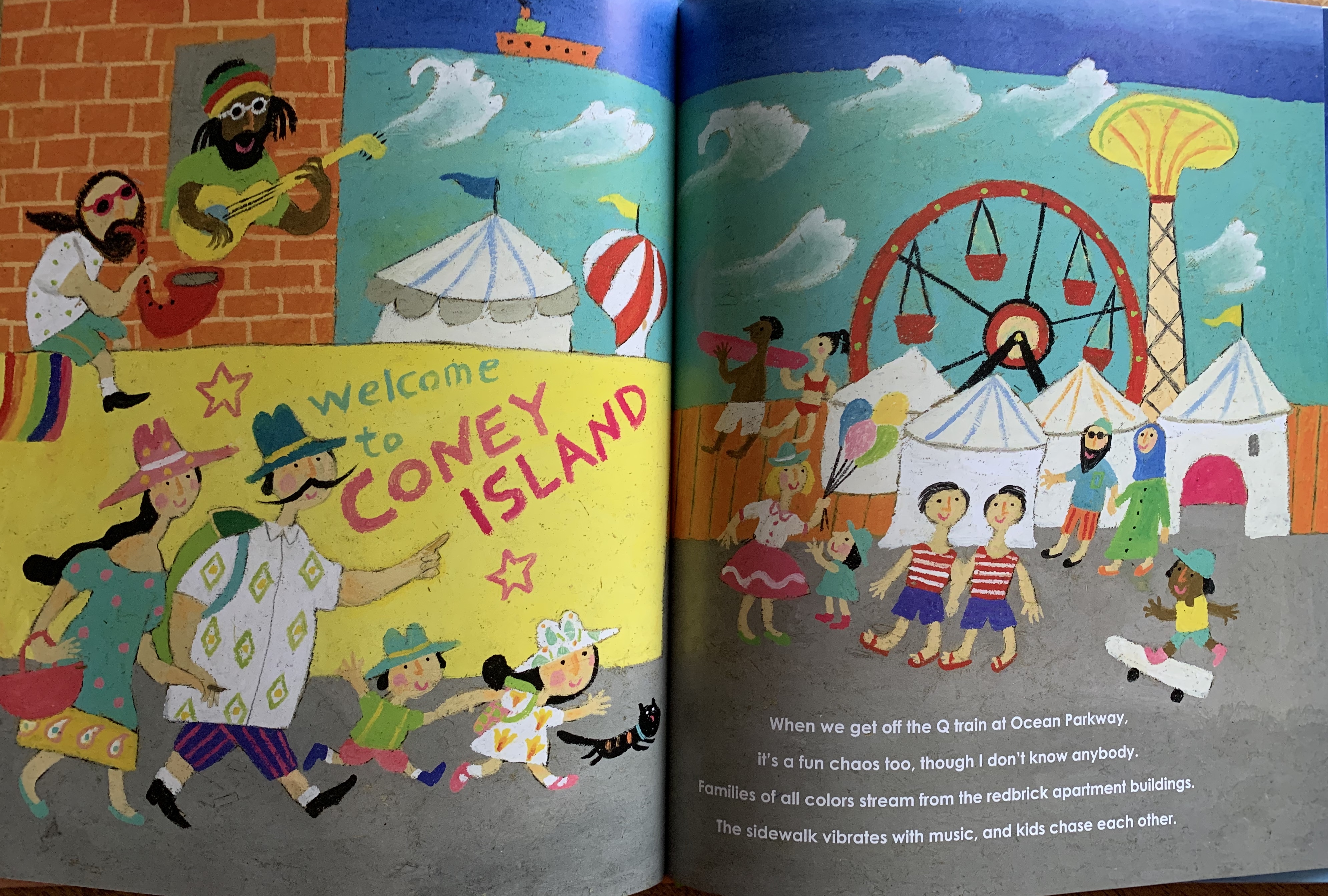
Rashin’s first trip to a beach in America has her and her family getting ready to go to Coney Island.   She remembers past trips to the Caspian Sea in Iran.  Trips where they would wake up early, her mom would prepare halim and they would drive through the countryside stopping for a picnic lunch.  Often her best friend Azadeh would come along and they would listen to Persian music and share kebabs.  On this trip they are going on the subway and there is diversity and music and excitement too.

6EC8AC6A-577A-4D94-B7EA-85AF22BDE8EC

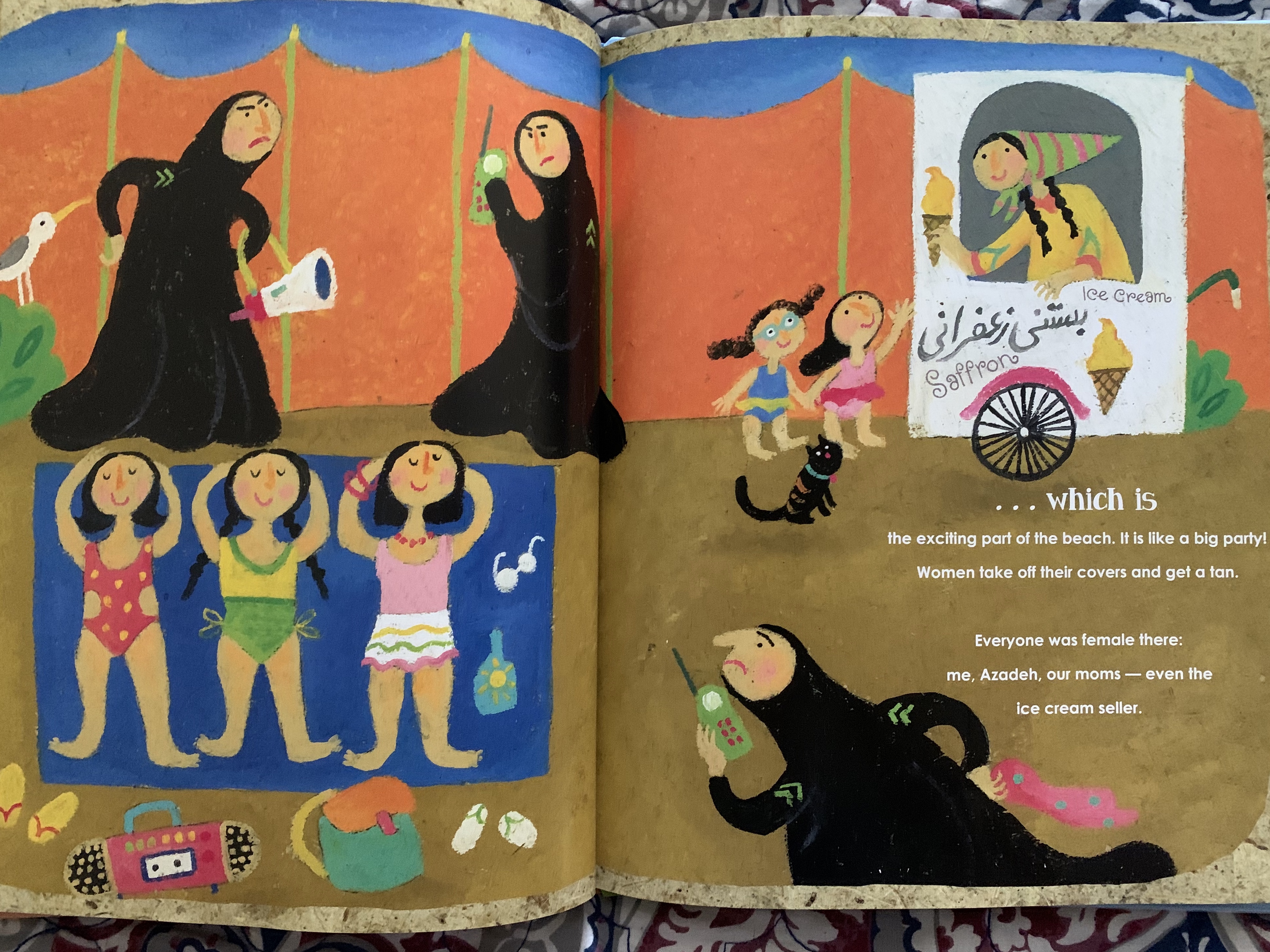
The next few pages detail and depict the curtain that would divide the women’s side of the beach from the men’s.  While the words say how fun the women’s side is and that even the ice cream vendor is a woman and the beach goers can remove their covers and get a tan, the inclusion of the Islamic guards with their aggressive faces and full black abayas and hijabs, is a stark contrast to the happy faces throughout the other pages.

4DA05BB7-D867-4E6C-BA2D-2D0C4BB10222

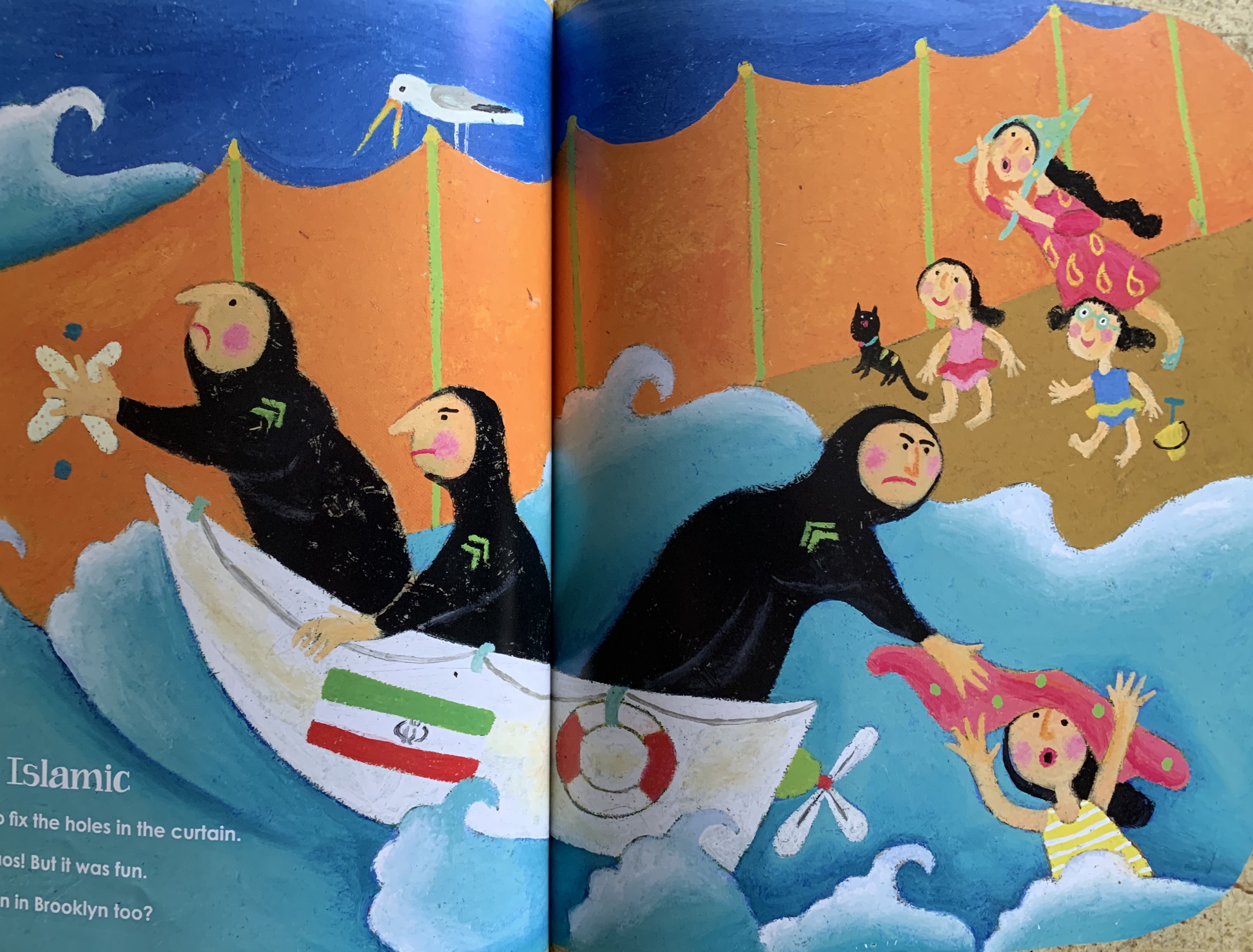
Rashin then recalls one trip where little boys poked holes on the men’s side to look at the female’s side. While it might be taken as silly to children, there is a lot to unpack with such “peeping,” the concept of respect and of covering.  It then seems to make the whole situation seem ridiculous by having the women covering themselves with umbrellas, newspapers and whatever they can find.

1B468F58-7A51-4523-9973-D1DA5F935B3B

When Rashin finally gets to Coney Island, the ice cream stall doesn’t have saffron ice cream and another little girl suggests she try chocolate crunch, she concedes and discovers it is pretty good, and the beginning of a new friendship is implied.  She then asks the girl about the rules of the beach and the accompanying illustration has the Islamic police seeming to try and stop the fun.

8C418BFD-96ED-4D1F-B065-C4EA97167CFF

It is natural to compare new things to those that we know, but this book has a very strong negative, judgmental tone to what could have simply been presented as different without the criticism.  The author is the illustrator as well, so there wasn’t a divide in continuity.  I appreciate that there is a visibly Muslim family at Coney Island, but it seems too little, in a book very aggressively passing opinion on a religion and how it is “enforced.”

3E7C76A7-22DE-4F8A-B87F-F3DC91982D33

I find it rather disappointing that Scholastic chose to publish such an angry book masked in smiling characters and a trip to the beach.  It may be how life is in Iran, but I don’t know that a children’s book is the platform to air grievances without explanation.  This book does nothing to open dialogue and acceptance, it definitely would cause more harm than good.

Sameerah’s Hijab and the First Day of School by Janette Grant Illustrated by Fatimah Ashaela Moore

Standard

sameerah's hijab

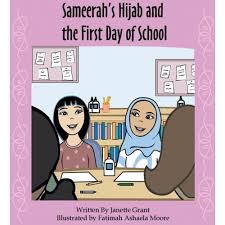
This book is perfect for 1st through 3rd grade girls, as it focuses on Sameerah’s first day of school in America and meeting new friends.  Sameerah and her family have just moved from Yemen and Sameerah is nervous about fitting in, however her love of wearing hijab and Islam radiate through her as her new classmates ask her questions.  Before long the students have found they have more in common than differences and Sameerah can’t wait to go back to school the next day, alhumdulillah.

This book works well for students to see how confidence, patience, and kindness can go a long way in understanding those around you.  Sameerah is articulate and confident and a great example in knowing your deen well enough to present it to others.  It is also a way to introduce Muslim children to how others may worship as Sameerah also learns about her classmates.