Tag Archives: Muslim Author

My Name is Bilal by Asma Mobin-Uddin, Illustrated by Barbara Kiwak

Standard

bilal

The other book I discussed during my Story Time theme of bullying was, My Name is Bilal, by Asma Mobin-Uddin,  The book is an AR 3.5 so I summarized parts when reading it aloud, but at bedtime one-on-one my five-year-old was able to grasp what the characters were going through and how best to handle “mean” people.

The premise of this 32 page, fairly content heavy picture book, is a new family starting at a new school.  The main character Bilal does not stand up to some boys teasing and pulling off his sister’s hijab, and then chooses to tell people his name is Bill instead of Bilal so that no one knows he is Muslim.  Fortunately, Bilal has a Muslim teacher who doesn’t jump in to “save” Bilal, but instead shares with him a book about Bilal Ibn-Rabah, the slave who was tortured by the people of Mecca in their attempts to get him to renounce Allah (swt) and Islam.  Young Bilal, finds strength in this story to stand up to the bullies as well as compassion in giving them a second chance.  He even finds there are more Muslim’s around him and being true to yourself is something even those different than you can understand and respect.

Yes, the book is to neat and tidy and it all works out in the end.  But, I think it is a good introduction to being proud of who you are and not backing down.  I like that the kids essentially handle things on their own and that no one is painted singularly as “good” or “bad,” both Bilal and the other kids are flawed and figuring things out. When I read this during Story Time we talked about it from the “bullies” point of view of what a better way to handle someone or something that you don’t understand would be, a scarf in this case, and how asking questions is always more respectful than teasing. We also talked about being the different one in a new environment and how to be prepared if someone does give you a hard time.  The characters in the book are older presumably than 4th or 5th grade allowing this to be a gateway into discussing bullying a bit abstractly, inshaAllah not once it has already begun.

The illustrations are colorful and realistic, not detracting from the seriousness of  the subject matter.  Overall the book serves a purpose and tells a good story.  Plus, the reader learns a little about Bilal and how the early Muslim’s struggled and encourages them to seek out what their own names mean and represent.
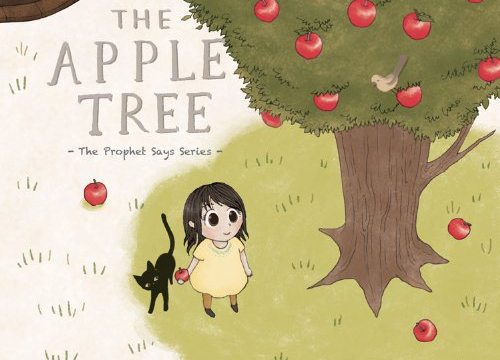
The Apple Tree by Mariam Al-Kalby, Illustrated by Yee Von Chan

Standard

appletree

I have been looking forward to obtaining this book for a while (it was back ordered on Amazon) and over all it was worth the price $16, and worth the wait.  The illustrations are absolutely beautiful.  At story time the kids constantly urge me to take my time in turning the page.  They aren’t incredibly detailed, just very whimsical and engaging, that you want to take a peek and stay a while to play with little Shaima.

The book’s moral comes from two hadiths (sayings of Prophet Muhammad (p.b.u.h.)) “When a Muslim plants a tree, whatever is eaten from it is charity from him, and whatever stolen is charity, and whatever is subtracted from it is charity” (Sahih Muslim), and ” There is no Muslim who plants a tree or sows seeds and then a bird, or a person, or an animal eats from it except that it is regarded as charity for him” (Sahih Bukhari).

The main character, Shaima, wakes up one morning at fajr to find her Baba planting an apple tree.  The two discuss what “reward of charity” means and the value of sharing.  Time presumably passes, although the tree does seem to grow and produce incredibly fast.  Once the apples are ready to be picked, Shaima finds everyone taking her apples: a little boy, a squirrel and her babies, some birds, what can she do?  The solution is both a lesson and inspiration for the character and the reader and makes for a fun book to get the discussion rolling on a wide variety of topics: patience, charity, sharing, generosity, humility and more, alhumdulillah.

The book is not AR, but is relevant to 4 year old children and up.  The book is hardcover and 32 pages. There are six Arabic words which are explained in the glossary and do not impede the story in any way.

The Friendship Matchmaker Goes Undercover

Standard

friendship

I’m posting yet another Randa Abdel-Fattah book that my mom stumbled upon and sent me 10 copies to do for our Book Club. I didn’t love the book, but it is clean and brings up the issue of bullying, friendship and honesty.  So, I’ve decided to do a 3rd- 5th grade Jr. Book Club and use it as a starting point to discuss this critical social realms that they are facing.  The book is a 4.4 Accelerated Reader level and has no Muslim characters or themes.

SYNOPSIS:

This book is the second in the series, and, thankfully, having not read the first book, The Friendship Matchmaker, didn’t hinder my understanding.  Told from the perspective of Lara Zany, a former friendship matchmaker of Potts Middle School, the reader gets to know the major characters at the school and their problems.  Lara now has a best friend and has retired from the matchmaking business, but old habits are hard to kick, and as a new student from Somali out plays the school bully in soccer, Lara is forced to go undercover to help her classmates.

WHY I LIKE IT:

The book doesn’t stand out in the genre, but it is fun because I think 3rd through 5th graders deal with everything in the book, every day.  The book shows restraint where a lot of books over do it.  The characters show growth, they aren’t disrespectful and they aren’t all painted with a simplistic brush stroke.  The bully has redeeming qualities and no one is perfect or hopeless.

FLAGS:

The book is clean in regards to violence, relationships, and language.  The only concern I have is there are two major instances where the characters lie, and there are no consequences.  The smaller breaches of honesty the characters in some way or another must own up to, but there are two scenarios: a forged field trip signature, and an untruthful excuse given for being late to class, that rubbed me the wrong way.  Before allowing students to check it out for the purposes of Book Club, I sent a note to the parents with these two concerns and left it to them to encourage or discourage their student’s from checking it out.  My goal is to discuss why the author included these in the book, and realistic alternatives that would promote honesty, but still allow for a happy ending.

The Perfect Gift by J. Samia Mair

Standard

The Perfect Gift

Is there anything sweeter than a little girl feeling sad that she doesn’t have an Eid gift for her mother and then finding the perfect gift in nature? Probably, but it is still a great premise for a sweet story about a young girl named Sarah and how remembering the hadith “Allah is beautiful and loves beauty” starts a new Eid ul-Adha tradition for her family.

The Perfect Gift is simply written with adequate pictures that move the story along.  The text is short and clear leaving the reader or listener with a clear message about Allah’s perfection and gifts, but keeps it on a preschool to first or second grade level.  The book is 28 pages and has a few words defined at the end for clarity.  While the book takes place close to Eid ul Adha, there is no mention about what the holiday is for and how it is celebrated, the focus is on the beauty of nature and perfection of Allah (swt).

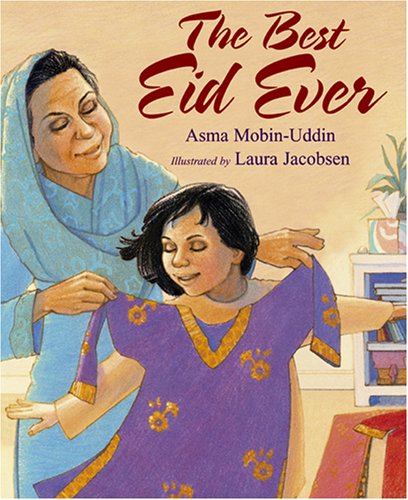
The Best Eid Ever by Asma Mobin-Uddin Illustrated by Laura Jacobsen

Standard

best eid ever

For some this book may have a lot going on it’s 32 pages: Eid ul Adha, parents at Hajj, refugees, charity, Pakistani culture, but if you are reading this book to Muslim children (or they are reading it independently, it has an AR level of 3.8) i think it is delightful.

Aneesa wakes up on Eid morning missing her parents who are in Saudi Arabia performing Hajj. Her grandma, Nonni, surprises her with three new outfits complete with bangles and shoes for each of the days of Eid and is preparing her favorite dinner, lamb korma, for them to eat after Eid prayers.  At Eid prayers Aneesa meets some refugee girls and wants to do something to make their Eid a little brighter.  Nonni and Aneesa come up with a plan and the result is “the best Eid ever!”

I love that it has morals and plot and sparks dialogue.  The message is so simple yet beautiful, that it stays with the reader, adult and child alike.  The illustrations are beautiful and warm providing a nice balance to the long passages.  There is an author’s note and Glossary in the back, but I think this book is really intended for a Muslim audience familiar with Hajj, Eid, and Paksitani culture.  It wouldn’t be lost on someone new to the vocabulary and customs, but definitely wouldn’t be as magical or memorable.

My 3rd grader loved the book and we were able to talk about it and reflect upon it long after the initial reading.  My younger boys enjoyed it, but didn’t get as much out of it.  I think this book works better in smaller groups rather than story time, or simply to have on the shelf to sweep the reader up and allow them to draw their own conclusions on what it means to do something for someone else.

Ramadan by Susan L. Douglass Illustrated by Jeni Reeves

Standard

ramadanThis is a non Fiction book about Ramadan that is thorough and accessible.  It has an AR level of 3.7 (third grade, seventh month), and with the short sentences and well-spaced text, I wanted to include this book so that those looking for an informative book for their independent readers (second grade and up) would consider this one.  At 48 pages, the book isn’t divided up into chapters but there are headings that keep the book flowing from one topic to the next. The illustrations supplement the text giving them context and there is a list of “New Words” in the back making this book appropriate for Muslim and non Muslims alike.  

Overall a good read for those looking to learn more about Muslims and Ramadan, or for those looking to see themselves in a book that isn’t too childish. The book is clean and factual, and keeps a nice balance between giving solid information and overwhelming the reader with details.  The book also includes examples of Ramadan in other countries as well as students fasting in America.  We have this book in our school library and the students that have stumbled upon it are excited to check it out, and when they ace the AR test they are absolutely beaming.  


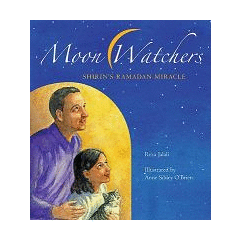
Moon Watchers Shirin’s Ramadan Miracle By Reza Jalali Illustrated by Anne Sibley O’Brien

Standard

moon watchers


This book is similar to Night of the Moon By Hena Khan as it focuses on a young girl experiencing the month of Ramadan and Eid, through the waxing and waning of the moon.  This is an AR book 3.5 and the text is driven by dialogue between nine-year-old Shirin and her Persian American family.

Too young to fast Shirin is feeling left out of the blessed month of Ramadan, her older brother Ali and her bicker until her Grandma encourages her to do “part-time fasts.”  Facts about Islam and Ramadan are slightly peppered in to the story, primarily through vocabulary, and the characters do discuss hijab and why Shirin’s mother doesn’t wear it.  It is important to note that the tale is told from a Shia perspective that is made clear as it explains how the family prays, touching the prayer stone, and kissing it three times.  The illustration here is more peculiar as it shows Shirin praying next to her dad and her brother, mom, and grandma in the row behind.

The pictures show a happy family that most readers or listeners would probably be able to identify with, along with the sibling bickering and excitement felt with the blessed month.  Persian culture is represented in the foods and sweets they prepare as a family and the henna Shirin gets on her hands.  The family prays together, spends time together and they discuss doing good deeds, not just fasting in Ramadan.

The book is beautifully done, but I think because of the brushing aside of hijab being a cultural practice, not a religious one and the presentation of prayer, I don’t know if I would give the book without discussion to a third grader in a Sunni school to read independently.  As for story time, I might simply omit those few sentences, but I’m not sure, it would depend on my audience.

If your children are aware of the differences between Sunni and Shia or you are Shia, this book is wonderful.  If your children would be greatly confused or get hung up on a few lines in a 32 page book, then it would be better to hold off.


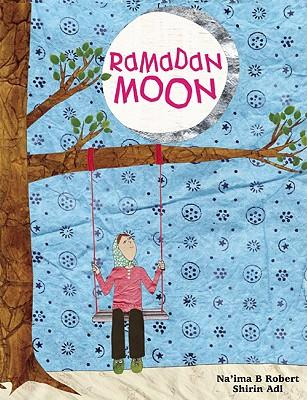
Ramadan Moon by Na’ima B. Robert Illustrated by Shirin Adl

Standard

ramadan-moon

This book is fantastic and one of my children’s favorite.  The text is lyrical and simple and the pictures are charming and sweet.  I wait for the day I can read this to a larger group of children than just my own, but until then I have no problem reading this one over and over again.  It has an AR level of 4.6 and is 28 pages.

Told from a child’s perspective and voice, the free verse poetry lilts around in a playful way conveying what Ramadan is, what fasting is like, going to the mosque, what Muslim prayers entail, giving charity, being kind, and celebrating Eid.  While it would work for both Muslim and non-Muslim children, the vocabulary isn’t well defined and there really isn’t a story it is more of an overview.  Muslim children will enjoy it because they are familiar and probably have experienced most everything presented, however, if that connection isn’t made, the story may fall a bit flat.  That being said a brief explanation can easily erase that obstacle and make it a fun book for all kids pre-school and up.

I’m learning about Eid-ul-Fitr By Saniyasnain Khan Illustrated by Pulak Biswas

Standard

i'm learning about eid ul fitr

I’m learning about Eid-Ul-Fitr is a really dry book.  It is written as fiction, but it is more educational, than entertaining in nature.  Siblings Farah and Faisal are fasting, then celebrating Eid.  The story is told about them, but not really from their perspective.  They are just secondary vehicles to convey the main components of Ramadan and Eid.  The language is choppy and unimaginative.  My guess is that the story was translated from another language as grammatically it is awkward to read.  A few examples: “Maria’s parents belonged to Kuala Lumpur in Malaysia” and later, “Everyone was in his best clothes.”  The illustrations are adequate, with the exception of the pictures of a couple of Mosques from Delhi, Lahore, Kuala Lumpur, and Samarqand, which are quite nice.  Overall the book is sufficient.  If it is the only book your children have access to, there is nothing wrong with it, there are just a lot better, more engaging picture books, fiction and nonfiction, about Ramadan and Eid out there.


Night of the Moon By Hena Khan Illustrated by Julie Paschkis

Standard

night of the moon

Night of the Moon is a beautiful book both visually and content wise.  The pictures are bright and inviting and consume the entire page, keeping even the youngest of listeners engaged.  The book has an AR level of 4.1 and has 32 pages, making it work great for story time and well for independent readers too.

The book tells of seven-year-old Yasmeen, a Pakistani-American girl experiencing Ramadan. The story is moved along by the ever changing phases of the moon. While this book is adequately called a Muslim Holiday Story, it is very cultural.  The characters go to the mosque, but the focus of the story is not why we fast, the revelation of the Qur’an to Prophet Muhammad (peace be upon him), or even manners.  The story focuses on going to iftar parties, having henna painted on your hands, presents, and the very Pakistani-tradition of celebrating chand-raat, the night of the moon.

I like that this book shows Yasmeen talking about Eid at school with classmates of other backgrounds, I even like that her grandma wears hijab and her mother does not.  I also like that they eat a variety of foods, from kebobs to cupcakes.  Thus far, so many of the Ramadan and Eid books I’ve read contain the same information in a fictionalized setting, this one is definitely different, instead of focusing on what Ramadan is, it shows how it is celebrated.  The book works well for Muslim and non Muslim children from all around the world.  If your audience lives in American and has ties to the Asian subcontinent they will see them selves in this book, and even if they don’t, they will probably want to join Yasmeen and her family is celebrating Ramadan and the Night of the Moon.