Tag Archives: Marzieh A Ali

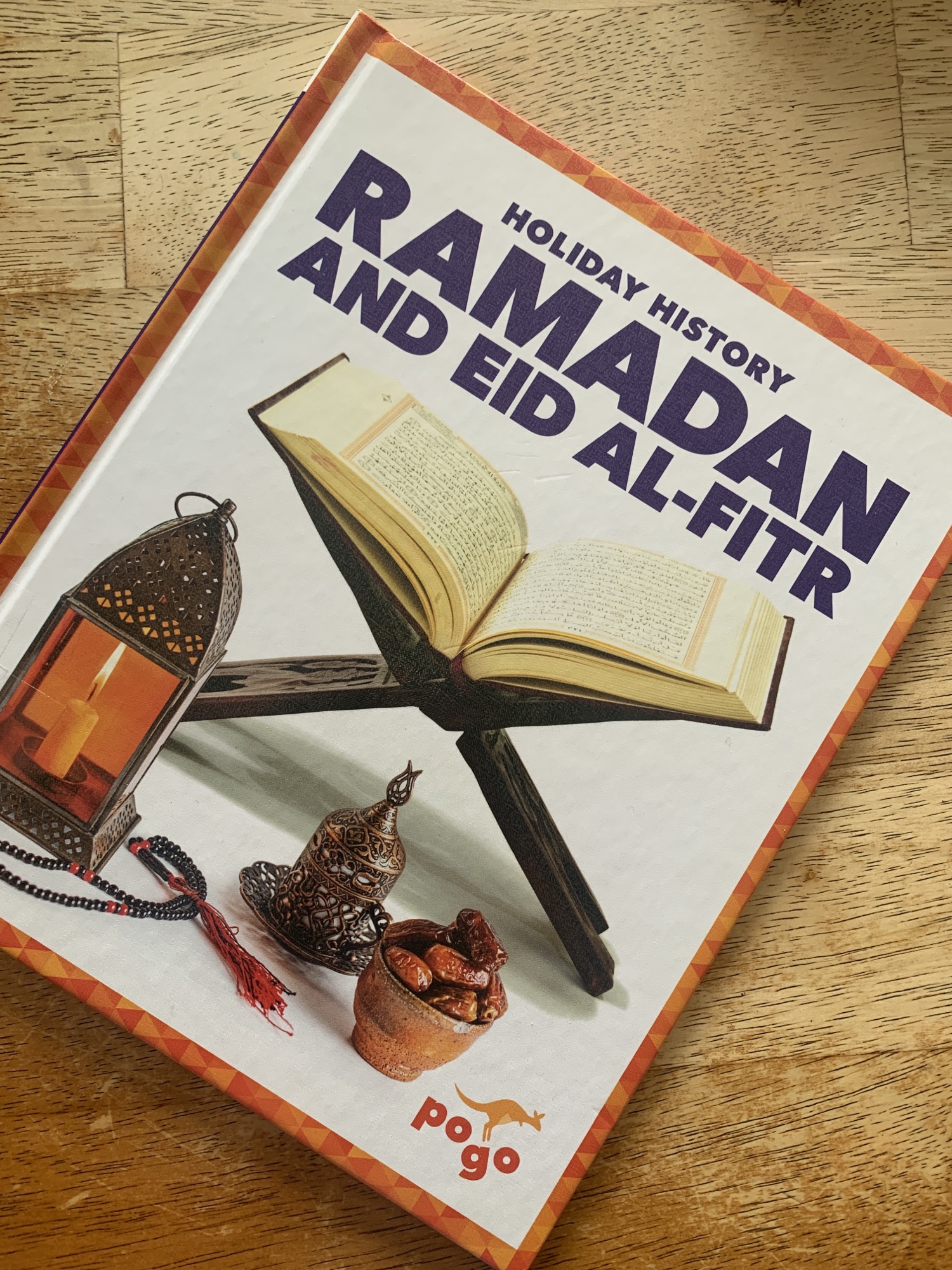
Holiday History Ramadan and Eid Al-Fitr by Marzieh A. Ali

Standard
Holiday History Ramadan and Eid Al-Fitr by Marzieh A. Ali

img_2952-1

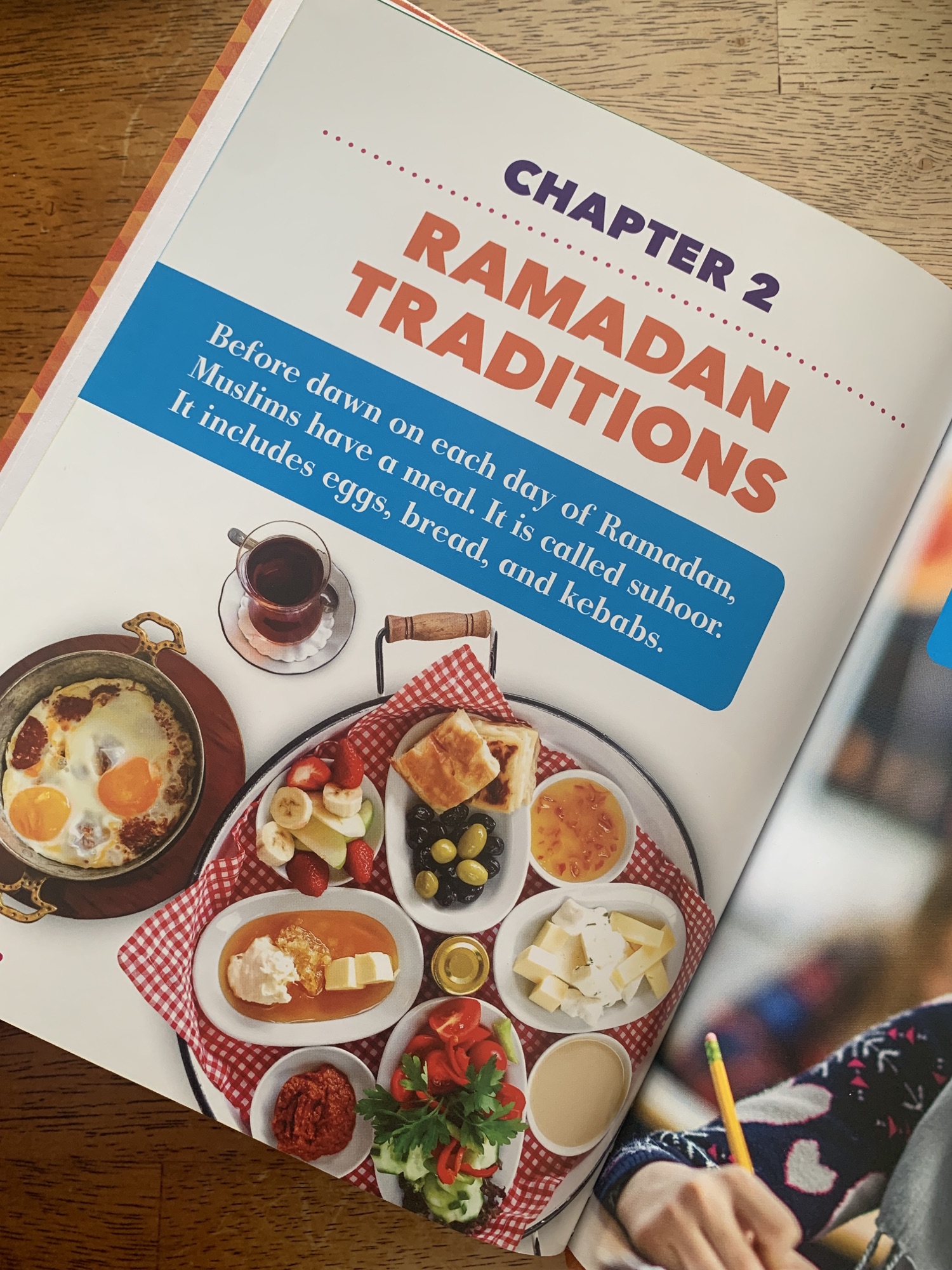
Traditionally published non fiction Ramadan and Eid books have more errors than they should.  I was hopeful with this one, the author is a Muslim and accomplished author, and it started out good, but then it hyper fixated on the foods eaten which can never be accurate.  Muslims are everywhere in the world, and no two people like the exact same foods anywhere, not even siblings  So why it would so clearly articulate, without qualifiers, what Muslims eat for suhoor or iftar is beyond me.  I do not eat eggs, bread, and kebabs for suhoor, we tend to enjoy brownie sundaes and pizza, and dates, broth, and fruit for iftar, sure makes me wonder if my nachos or pesto, rendered my fasts invalid?  Snark aside, it takes away from the quality information in the book that highlights that while fasting Muslim kids go to school and adults to work.  I also don’t like the suggestion that Ramadan is a time to reflect, pray, cook for others, and help those in need. It truly reads that this is when we do it, as if it is the only time we do it, and not that we do these acts all year, but do it MORE in Ramadan.  I know, I’m being picky, but these types of books are standards in public and school libraries, and in a world where Muslims are by-and-large having to prove their humanity, words have power, and need to be conveying that we pray five times a day, and more in Ramadan.  That we help those in need all year long, and more in Ramadan. The book is only 23 pages long, so when it spends so much space on these items worded in this way, it really becomes the takeaway message.

img_2953-1

The book starts pretty well, with clear precise sentences telling that “Islam is a religion practiced by Muslims” and that “they believe in one God” (note in the book God is not capitalized). It has that “Ramadan is the ninth month in the Islamic lunar calendar,” which I am ok with in non fiction books. And tells that “more that 1,400 years ago, the Prophet Muhammad received the first verses of the Quran” and that “they were sent by Allah through angel Gabriel.” 
img_2954-1

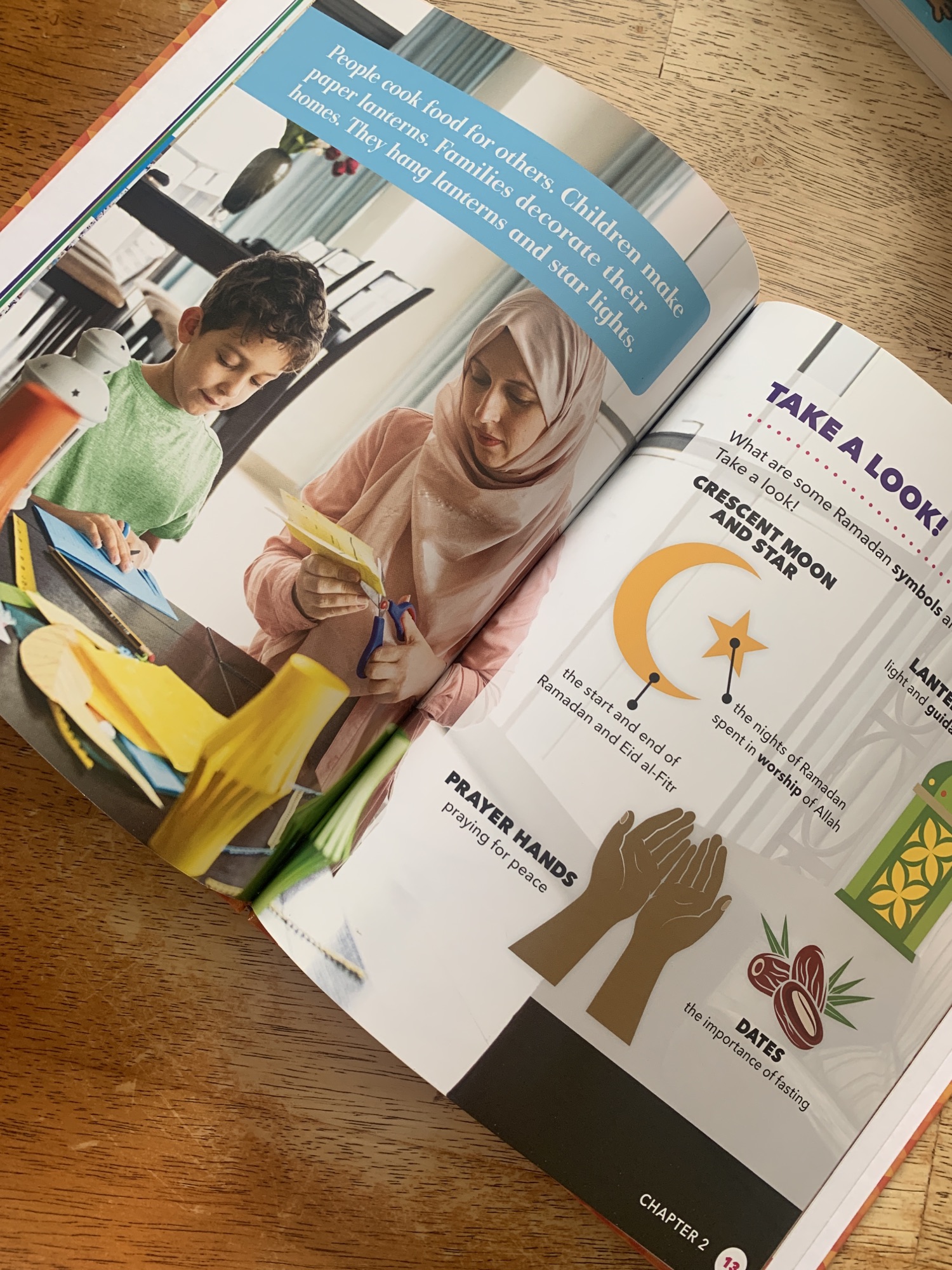
We then get two pages about specific foods, and told “Ramadan is a time to help.”  “It is also a time to pray and reflect.  People go to mosques.  They read the Quran.  They talk about Islam.” Stated just like that.  Making it seem that only in Ramadan are these things done. The unqualified statements make it seem that just as “They read the Quran” “Children make paper lanterns.” Apparently it isn’t optional, or a fun craft, it is just what is done.

I like that the five pillars are included, I wish it gave the terms of shahada, and sawm, and salat, and zakat and hajj, “journeying to Mecca” is a bit vague, and not at all sufficient.  I don’t know about they weight of the symbols either.  Dates show the “importance of fasting.” No they are the sunnah.  The star on the crescent symbolizes “the night of Ramadan spent in worship.” I think the symbols are a stretch to be honest.
img_2957-1

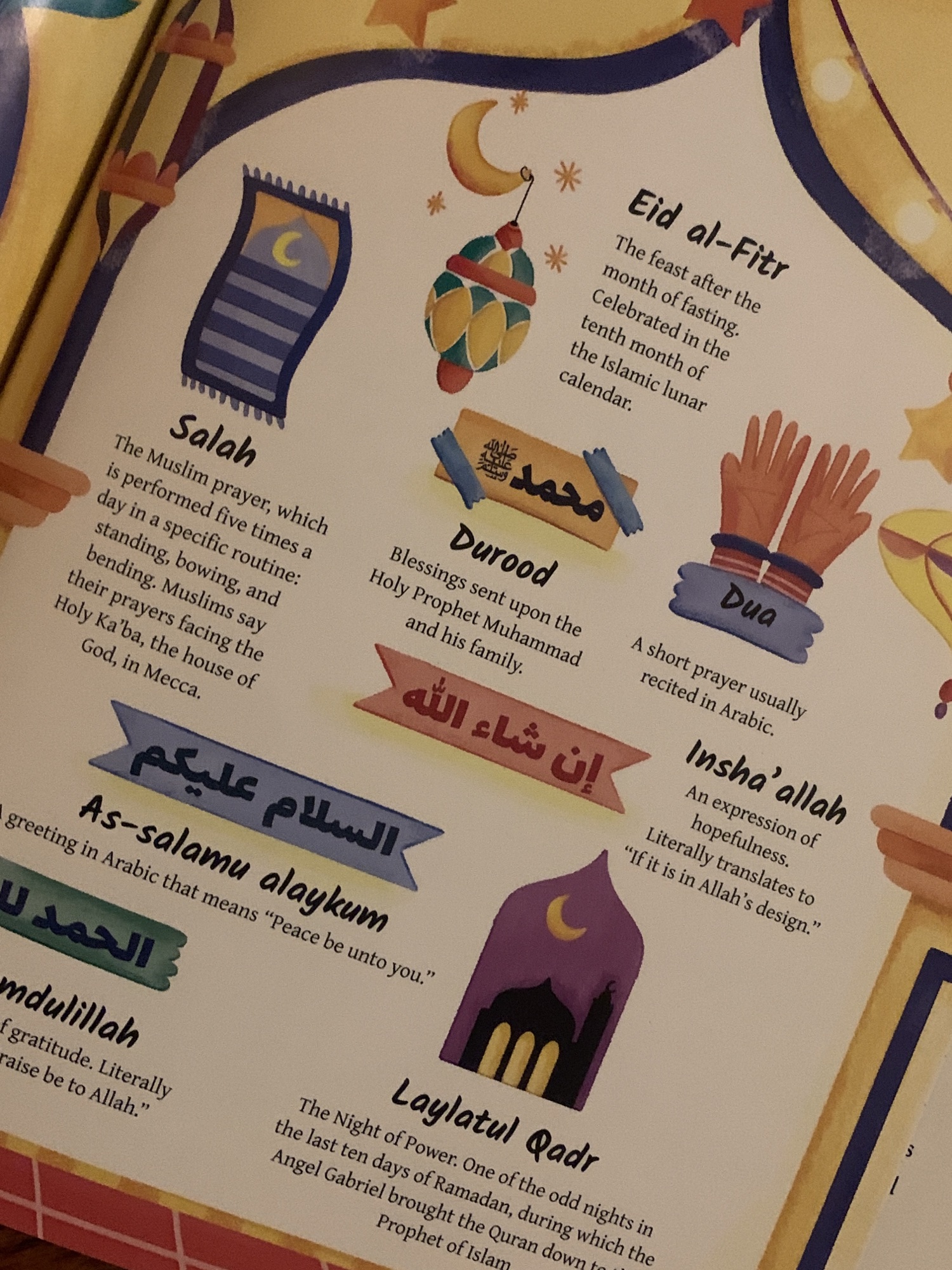
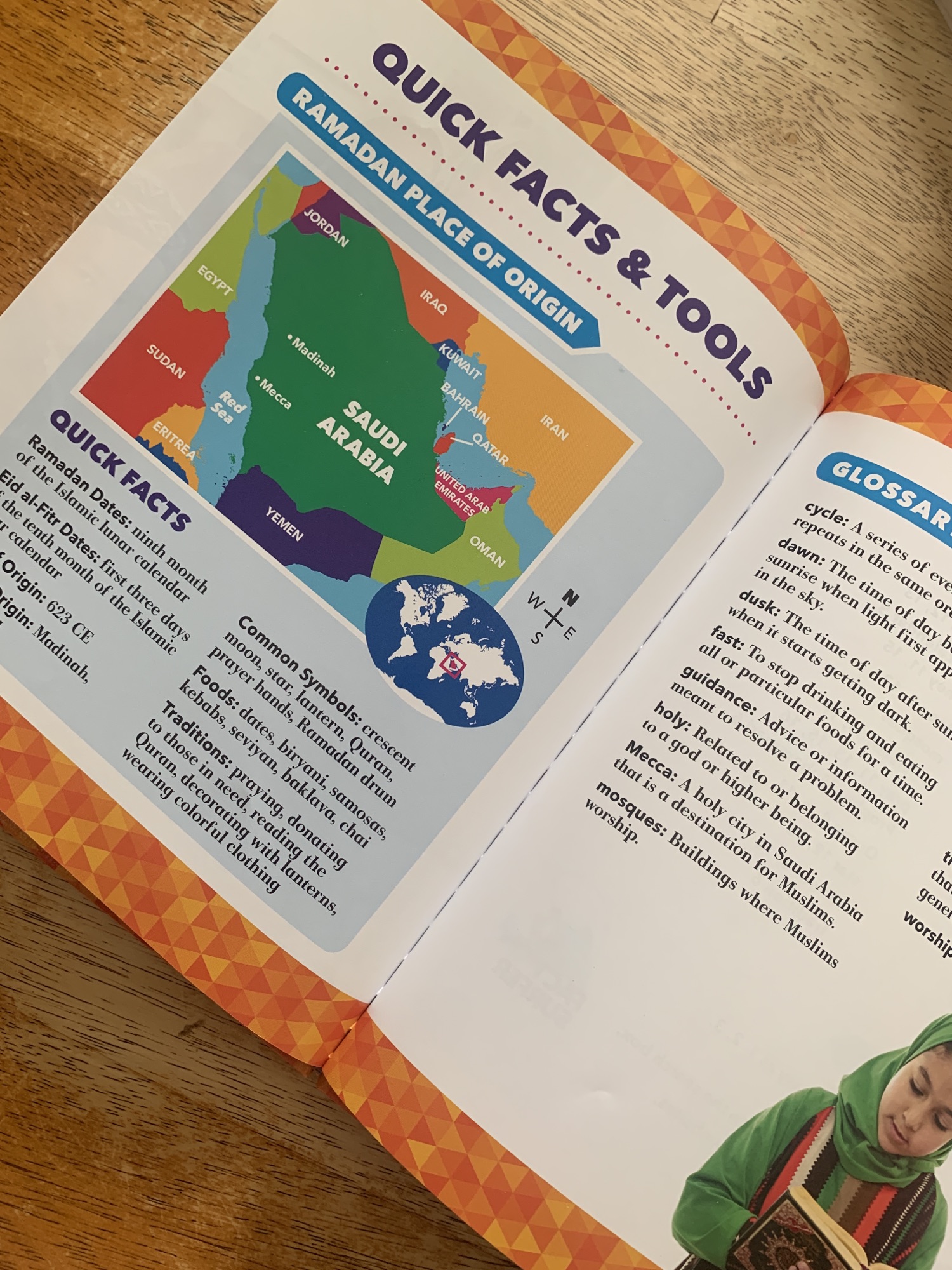
Eid al Fitr is one day not three as the book states.  The next spread then revisits the food, as if Biriyani is only eaten on Eid and all Egyptians make baklava.  The end is a one page Quick Facts and Tools and a glossary.  I have once again sent an email to the publisher asking them to edit future reprints of the book. 
img_2958-1


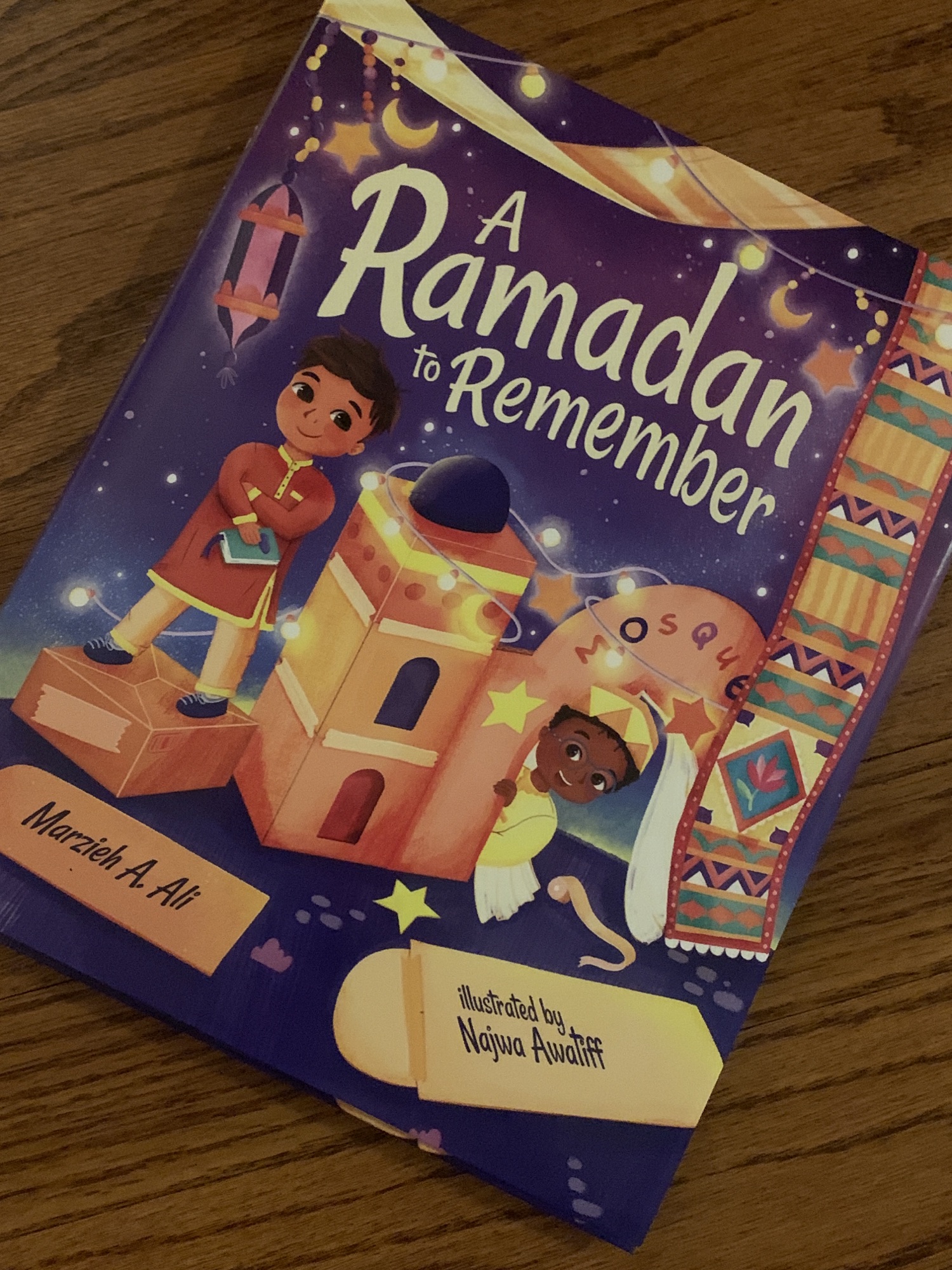
A Ramadan to Remember by Marzieh A. Ali illustrated by Najwa Awatiff

Standard
A Ramadan to Remember by Marzieh A. Ali illustrated by Najwa Awatiff

img_2876-1

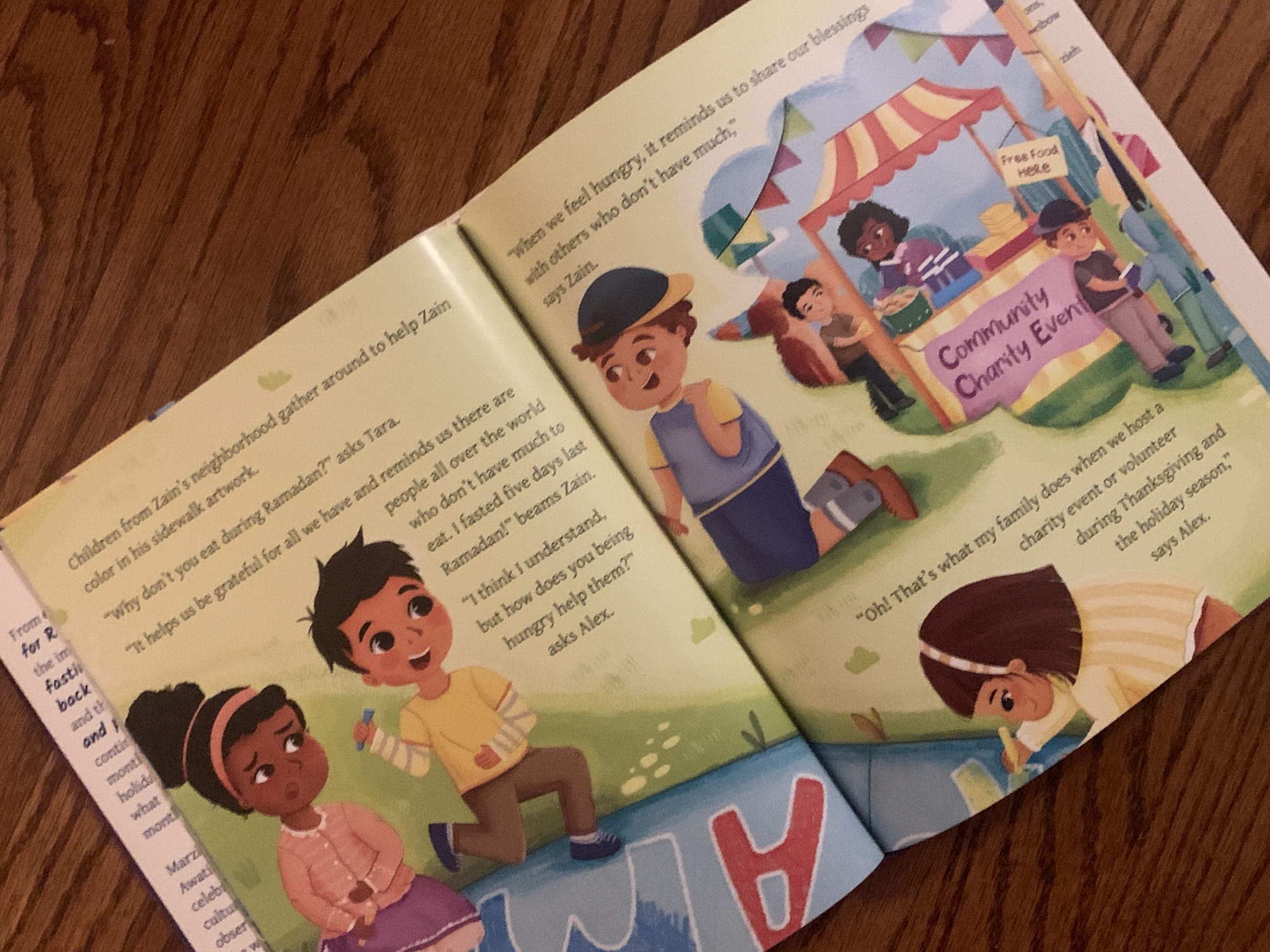
A problem solving kid that loves his faith, finds himself in a new neighborhood at the beginning of Ramadan without a mosque or a Muslim community.  I appreciate that this 32 page book actually has a bit of a plot, not just the overly done fictional story crafted around basic Ramadan facts of a child’s first fast.  Sure, it mentions most of the expected concepts in a similar manner, but it also centers acts of ibaada, shows more than tells, is brightly illustrated, and is unapologetic. The kid is a doer, a problem solver, and isn’t unsure about who he is, which is refreshing. That isn’t to say that it gets everything right, it still attributes fasting to feeling compassion for the poor.  Even when a side character challenges the notion, the character doubles down that it makes us more appreciative, which inshaAllah it does, but it isn’t WHY we fast.  Overall though, I think the book still is a benefit in Muslim and non Muslim spaces. The story and illustrations make it appealing at story times and bed times, and the backmatter is equally engaging.

img_2877-1

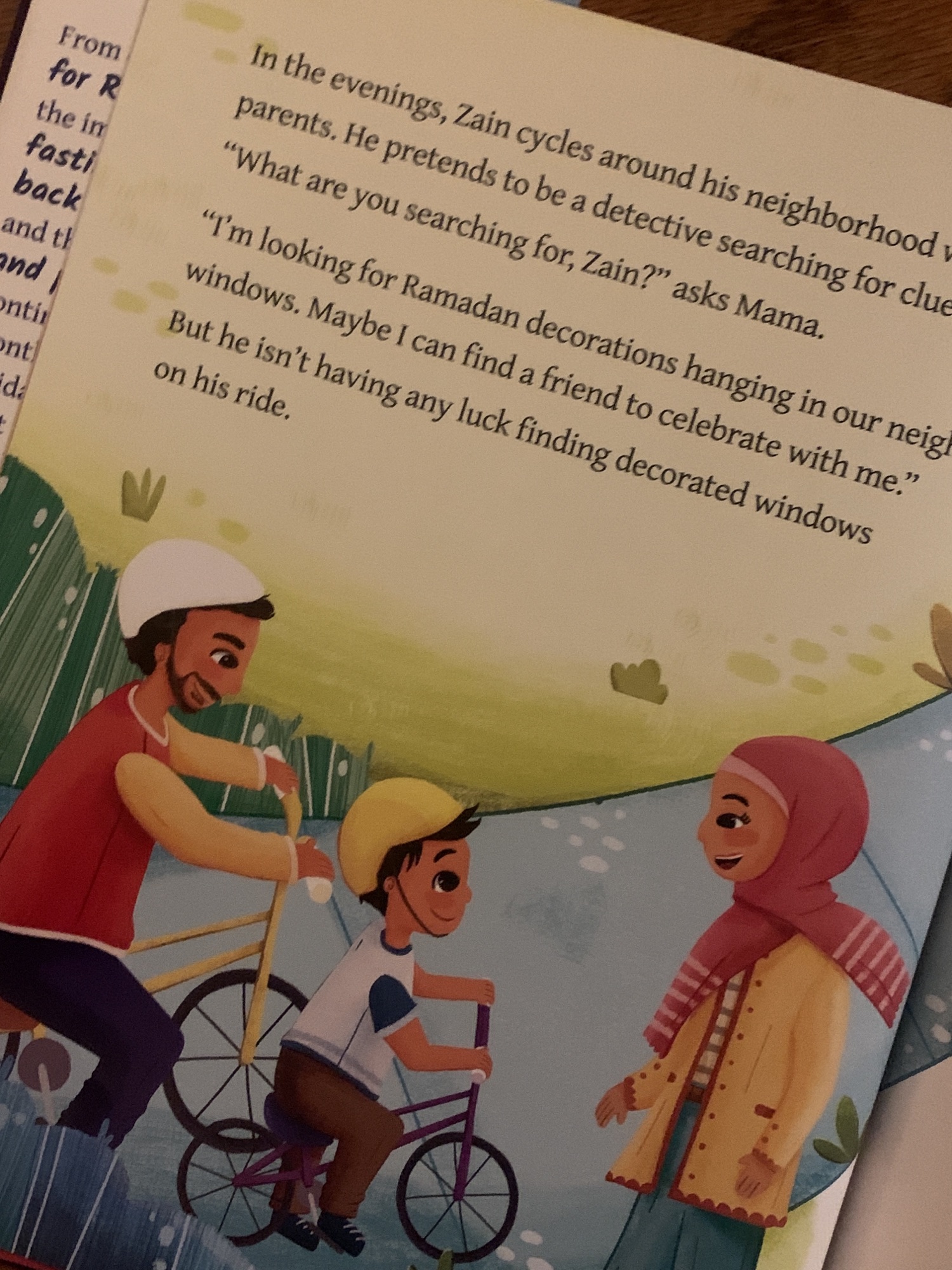
The book starts with Zain getting excited for his favorite time of year, Ramadan.  Only this year the decorations are still in boxes, Mama and Baba are busy with their new jobs, and there is no mosque or Muslims in the neighborhood.  Zain knows, he rides around looking for clues, has even checked the newspaper, and had his dad look on his phone.  It is a big change from the Islamic school he used to go to, and the busy mosque he used to volunteer at.

img_2879-1

Then Zain gets an idea, to build a mosque with all the moving boxes.  Neighbor kids come and ask questions, and Zain is happy to explain as they join in the building.  One night while praying outside under the stars in the cardboard mosque, a friend joins the family, and this Ramadan just might turn out to be pretty wonderful after all.

img_2878-1

I love that Zain doesn’t wait around for his parents to figure everything out, he is motivated. I also really like that he knows who he is, is comfortable sharing his faith and beliefs, and that the neighbor kids find connections to him, not the other way around.  I wish he would find a place to volunteer at, our charity isn’t restricted to helping only Muslims, though I might be the only one to pick up on that unresolved thread.  I also get that the kid that joins the salat for story purposes, is seen after prayer, but he didn’t join the prayer right and my older kids were sure to point that out.

The backmatter has a glossary, but in a more engaging format that I think kids will actually stick around for, and the Ramadan essentials and crafts make for a nice extension for those wanting to add a craft to the story time activity.

img_2882-1

The book is traditionally published and widely available.  You can find it here at Amazon, or here at my favorite store Crescent Moon.  It is also available in public libraries and would be a great addition to classroom and school library shelves.

Nadia and Nadir Lunch in the Leaves by Marziah A. Ali illustrated by Lala Stellune

Standard
Nadia and Nadir Lunch in the Leaves by Marziah A. Ali illustrated by Lala Stellune

nadia

This 32 page early reader is absolutely adorable with jumping in the leaves, sibling love, imaginary unicorns and dragons, yummy food, Pakistani culture and delightful illustrations.  Books in this genre aren’t particularly known for their story telling, but with chapter breaks and relatable experiences I was absolutely pulled in to Nadia and Nadir’s world and family.  My seven year old loved that he could read it independently and was delighted to see himself so reflected in the text, infact I have given in and we will be having chicken tikka and raita for dinner tomorrow, but I’m not raking the leaves, haha.

img_4006

SYNOPSIS:

Siblings Nadia and Nadir are woken up by there mother with the promise of a surprise.  The hints are crunchy and colorful, and when the kids realize it isn’t a giant bowl of cereal outside, they are excited to jump into the giant pile of leaves their abu has raked up in the yard.  The kids dive and swim and imagine themselves to be dinosaurs and unicorns as their dad grills chicken tikka and their mom watches on shelling walnuts.

The kids bump heads and decide to play something a little safer by making faces with the leaves, branches, walnut shells, and flowers.  They create a family portrait and then it is time to eat lunch and drink chai.

img_4005

WHY I LIKE IT:

I love that it is a very recognizable family: the women are wearing hijab, urdu words are sprinkled in, and Pakistani foods are being eaten, there is no othering, all kids will enjoy the story, and Muslim and desi Muslims specifically will feel seen.

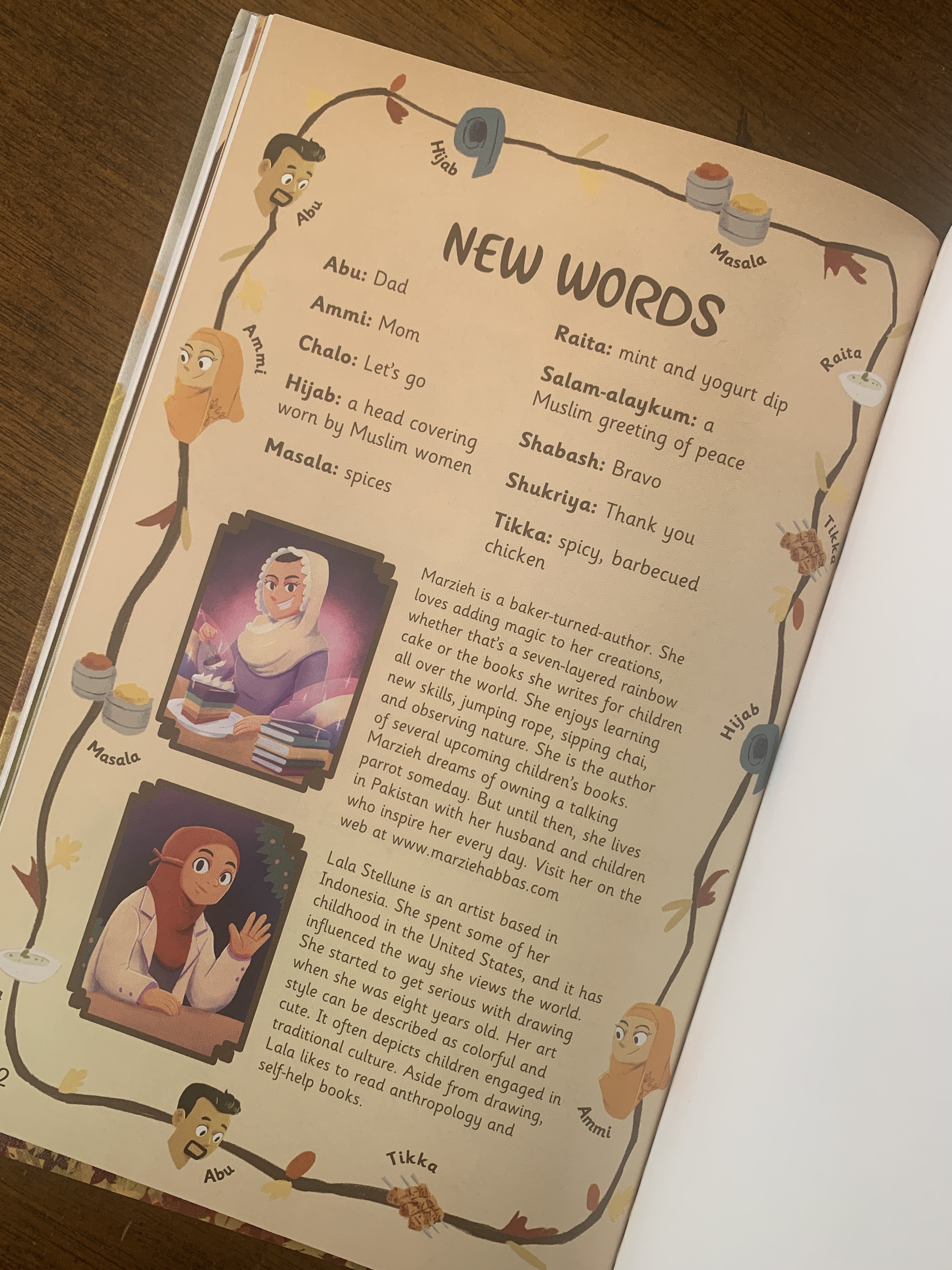
I love that there is imagination and dad cooking and hanging out in a chill environment.  There is a glossary at the back, but for this demographic I actually really like it.  It allows for the independent reader to use a book tool to understand a word.  I also like that illustrations of the words flutter around the cartoon author and illustrator blurbs.

There are details about the trees dropping the leaves as well as why the leaves are changing color.

img_4007

FLAGS:

None

img_4008

TOOLS FOR LEADING THE DISCUSSION:

Too young for a book club selection, but ideal to have on the shelves of a classroom library, school library, or home library.

Well done alhumdulillah.  Paperback and library bound additions available here.  The book is part of a series, but can be purchased individually or as a set.  I plan to review each of the six books over the next few months.