Tag Archives: lesbian

Fatima Tate Takes the Cake by Khadijah VanBrakle 

Standard
Fatima Tate Takes the Cake by Khadijah VanBrakle 

fatimatate

I really want to be raging furious and upset by the lying, premarital hetero sex, normalized/celebrated lesbian Muslim, internalized Islamophobia, gaslighting, abuse, and labeling of Muslims as “conservative” and Islamic principles as “ancient and ridiculous” (keep in mind the characters and author are all Muslim). But honestly, the writing is so terrible that to feel that much emotion is just not that warranted for what the story is. I’m so disappointed in the entire writing quality of the book, that I couldn’t appreciate the characters or story as written.  I know elements of the story probably ring true, my privilege and arrogance don’t blind me to recognizing that, and whether I agree or relate or identify with the Islamic representation is subjective, but it is not a good sign when reading- that screen shots are not enough, and I have to break out paper and pens to note the contradictions, plot holes, and inconsistencies.  The cover is the best part, with its beautiful Black Muslim inviting YA readers to crack open the book and spend time with Fatima who dreams of following her culinary dreams despite family and toxic relationship obstacles.  Sadly though, the text does not live up to the expectations the cover sets forth.  It reads like a very early draft where the plot points, the climax, and the conclusion are laid out, but the dialogue, backstories, and relationships are yet to come in this very mature 304 page book.

SYNOPSIS:

Fatima Tate dreams of culinary school, but her mother demands a more practical degree of nursing.  The only child of a nurse and mechanic, Fatima goes to a virtual charter school and has a best friend since 5th grade, Zaynab. who goes to a private school, yet constantly chauffeurs her around, covers for her, and whose relationship with Amber is a major thread in the story.  One day, when Zaynab fails to pick Fatima up from her shift at the soup kitchen, Raheem, her crush who she has never really spoken to, offers to drop her off, he uses the excuse of not wanting to miss Asr salat to get in her house, and by the time the prayer rug is put away the two are kissing and holding hands.  It has been a busy day for Fatima, she was also invited to join a teen cooking competition, and with that, all in the first chapter, the direction of the story is set.  Add in the twist that her parents don’t know about her joining the cooking competition, Raheem being revealed as a narcissistic, controlling, wealthy, manipulator who has his mom properly meet Fatima’s parents resulting in the two quickly become engaged, and Fatima at some point having to finalize her college plans and you have most of the plot and spoilers of the book.

WHY I LIKE IT:

I wish there was more OWN voice Black Muslim culture inclusions.  As with all the potential themes of the book, the writing just feels so superficial.  The only thing quicker than the instant romance, is the reader’s (my) instant disdain for the creep that Raheem is: from his arrogance to his ghosting, his hypocrisy to his gaslighting.  There is no angst, attraction, sympathy, intrigue, nothing in his character makeup or in the relationship he and Fatima have.

The cooking thread is equally lackluster, I think most bakers have heard of refrigerating cookie dough, and where I should have been hungry or had my senses tingling, I found myself annoyed by the almost childish portrayal of the food scenes.  If it was meant to show passion or a divide with her parents, it was all talk and no show.  At times the text says how close Fatima is with her parents, how much she respects her mother’s strength and her father’s kindness, but lie after lie to them and their distance from the heart of the book, definitely do not show a complicated relationship, it once again, yep you guessed it, reads really flat and one dimensional.

Islamically there are concerns with the premarital relations, but even before that with the male and female being alone, the lying, the lgbtq+ relationships.  I never understood why Fatima refuses to pray in congregation and attend Jummah it just says she doesn’t join the community prayer, but she also doesn’t pray with Raheem, which might have actually been sweet.  She is noted to pray fajr late and it is a point of contention, she wears hijab, and says a lot of inshaAllahs, but while the text sprinkles in these touchstones, they don’t seem to shape her identity, it feels like it is just the paradigm that she knows.  She finds the mahr concept to be “ancient” and “ridiculous.” The one character that speaks out against same sex relationships wears abayas, black abayas to be exact. She is also labeled the “haram police.”  Zaynab doesn’t pray, doesn’t cover, but presumably identifies as Muslim.  Raheem says he is fine with her lesbian identity, but fears Fatima’s relationship with her will ruin his future political career.  The book never has any substantial commentary on the Islamic view of queer relationships and labels any one that has a problem with them as being “strict” and “conservative.”  The book says “love is love” and leaves it at that.

Constantly the reader is told that Fatima and Zaynab are best friends since 5th grade, no backstory as to why Fatima left for virtual school and Zaynab for private.  We never see Fatima add anything to the friendship, Zaynab drives Fatima, feeds Fatima, consoles Fatima, it is all very one sided.  So many story lines just fall off the page without resolution or insight.  At one point Fatima is angry at Zaynab and doesn’t want to share her with Amber, but then is mad that Raheem is wanting to take her away but nothing is ever done or explained or internally pondered over, it is just forgotten.  I really despise how we are also told that Zaynab and Amber are the ideal couple, but nothing ever shows it. NOTHING. They are always fighting, Fatima is always on edge to even ask Zaynab about Amber.  Zaynab and Amber fight about their graduation party and it magically all works out.  Amber is shocked to know that Muslims won’t accept them, and they seem to break up, but then they are together at the end so how did that get resolved?

Major plot holes: When Fatima’s mom asks Fatima if she knows Raheem, she says no and four pages later her dad asks her what she thinks about Raheem and she answers him.  This inconsistency mitigates the “reveal” at the end that they knew each other at the soup kitchen.  Speaking of soup kitchen, the reader sees she goes once and then stops for finals and never resumes going, so how is it such and important part of her or Raheem’s life? Does he return? Fatima gets driving lessons and a car, and is then driving alone, time line doesn’t work, nor does what she is driving get articulated if she returned the Lexus.  Extravagant gifts aside, it never fully explains where Raheem’s grandfather made his wealth, it seems lacking because he doesn’t want Fatima to work, but his mother does, in managing her father’s inherited wealth.  At the walimah it is very awkward between Zaynab and Fatima’s mom, almost to the point I thought they might not know each other, or might have issues with her lifestyle, but by the end it is clear they know each other well, so I think the scene is just written poorly.  I went back and read it and the familiarity of the families is definitely unclear and not consistent throughout.  For Fatima’s graduation Raheem gets permission to take her to dinner alone, for someone who is constantly watching money and loves cooking, it felt like it would be a big deal to be able to go out alone with her finance, to a fancy restaurant and savor all the flavors and ambiance.  Nope, the scene is skipped, no details, no nothing.  Lots of little details are skipped quite often, for example five people are qualified for the finals, only three names are given, just throw two more names in there, nope we get dot dot dot- it reads unfinished.  At one point when Zaynab once again saves the day and picks up Fatima, they come back to Zaynab’s house with Starbucks and meet at the fridge to get Pepsi’s out, like three sentences later, Starbucks on the table forgotten.

Zaynab does have a slight character arc, but throughout needs someone to constantly side with her, and I don’t know that she is very independent at the end.   I don’t think there is a decent relationship in the book between any of the characters, which is unfortunate, and religion and the masjid (labeled “patriarchal”) are often portrayed in a negative light. The internalized Islamophobia was hard to swallow.  At one point Fatima shakes a man’s hand and says that she isn’t one of those Muslims that has issues with that.  It seems like this book checked a lot of boxes and for whatever reason didn’t get the polishing it needed.  It is unfortunate because OWN voice Black Muslim books with authentic rep and joy and complexities and nuances are so desperately needed, and this one just felt underdeveloped and raw.

FLAGS:

Language, closed door premarital sex, talk of sex, talk of condoms, child out of wedlock, cheating, lying, hetero and same sex couples, dancing, music, physical abuse, verbal abuse, gaslighting, controlling, stereotypes, internalized Islamophobia, male and female friendships, manipulation, blackmail, judging, deceit, hypocrisy.

TOOLS FOR LEADING THE DISCUSSION:

The cover will tempt younger readers to pick up the book, my only hope is the poor writing will cause it to be abandoned before the haram is glorified, normalized, and celebrated.

Hungry Hearts: 13 Tales of Food and Love edited by Elsie Chapman and Caroline Tung Richmond

Standard
Hungry Hearts: 13 Tales of Food and Love edited by Elsie Chapman and Caroline Tung Richmond

hungry hearts

Occasionally I get asked about short story and/or essay from a collection that a college or high school student is hoping to share with a class that doesn’t take long to read, but shows Islamic representation.  And I never have a suggestion.  The middle grade collection Once Upon an Eid is amazing, but for younger readers.  When I learned about this collection that features two known Muslim authors, Karuna Riazi (The Gauntlet series) and S.K. Ali (Saints and Misfits, Love from A to Z), and involves food, I thought to take a look and see if I might finally have a suggestion.  Sadly, no.  None of the 13 stories wowed me, or really impressed.  A few I started then skipped, and none were really memorable.  The premise is unique: all the stories take place in the same neighborhood, feature food, and crossover characters, but some are love stories, others redemption, some have super heroes, others murder and gang violence, some really keep the food central, and others just mention it as being present.  There is familial love, romantic straight, lesbian, and trans love, there is friendship and food from many cultures served up to varying effects.  I admittedly read few short story collections, but even with that taken in to consideration, I think skipping this 353 page YA/Teen book is probably the best option.

SYNOPSIS:

I’ll only summarize the two Muslim authored stories.  A few of the others are culturally Indian, but they eat pork, so I’m assuming they are not Muslim, and the Persian one by Sara Farizan features alcohol and a lesbian romance, so since in a past book of hers I noted that I didn’t know if she or her characters identify as Muslim, I will skip reviewing hers as well.

Hearts a’ la Carte by Karuna Riazi:   Munira works at her families food cart, King of Kuisine and serves up Egyptian food to the people on Hungry Heart Row.  When a guy falls from the sky, she finds her self also falling hard for Hasan, as he regularly starts coming to eat and visit, but when it is revealed that he is a super hero (the Comet) and the reason her families cart is destroyed, Munira is not willing to pursue things further.

A Bountiful Film by S.K. Ali: Hania and her family have recently moved to Hungry Heart Row, where her father grew up and grandma Valimma lives.  Irritated that she had to leave her school, her job at Daily Harvest and friends behind, Hania is hoping to lose herself in putting together her film for the upcoming competition and beating her long time rival Gabrielle Rose.  With no clear idea of what her film should be about she starts with interviewing Valimma and her friends, which turns up a bit of an unsolved mystery involving a missing boy that keeps showing up on the security footage from local businesses.  Hania decides to pursue it, but finds herself being watched, and filmed in the process.

WHY I LIKE IT:

I like that the stories are interconnected, I don’t know that it works, but I like the idea of it.  As for the two Muslim authored stories, I like that Islam and culture are included slightly, but that the story is much more than that, and the characters have more pressing issues to figure out.  I wish in both of these two stories, food was more fleshed out.  They seemed to be lacking the magical food premise that many other stories in the collection had.

img_7244

FLAGS:

See above paragraph for some collection flags.  Riazi’s story has crushes and a budding romance, but nothing overtly “haram.” Ali’s story is clean.

TOOLS FOR LEADING THE DISCUSSION:
I wouldn’t probably even shelve the book in our Islamic school library, it doesn’t offer much in my opinion.

Ace of Spades by Faridah Àbíké-Íyímídé

Standard
Ace of Spades by Faridah Àbíké-Íyímídé

spades

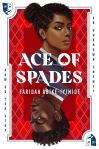
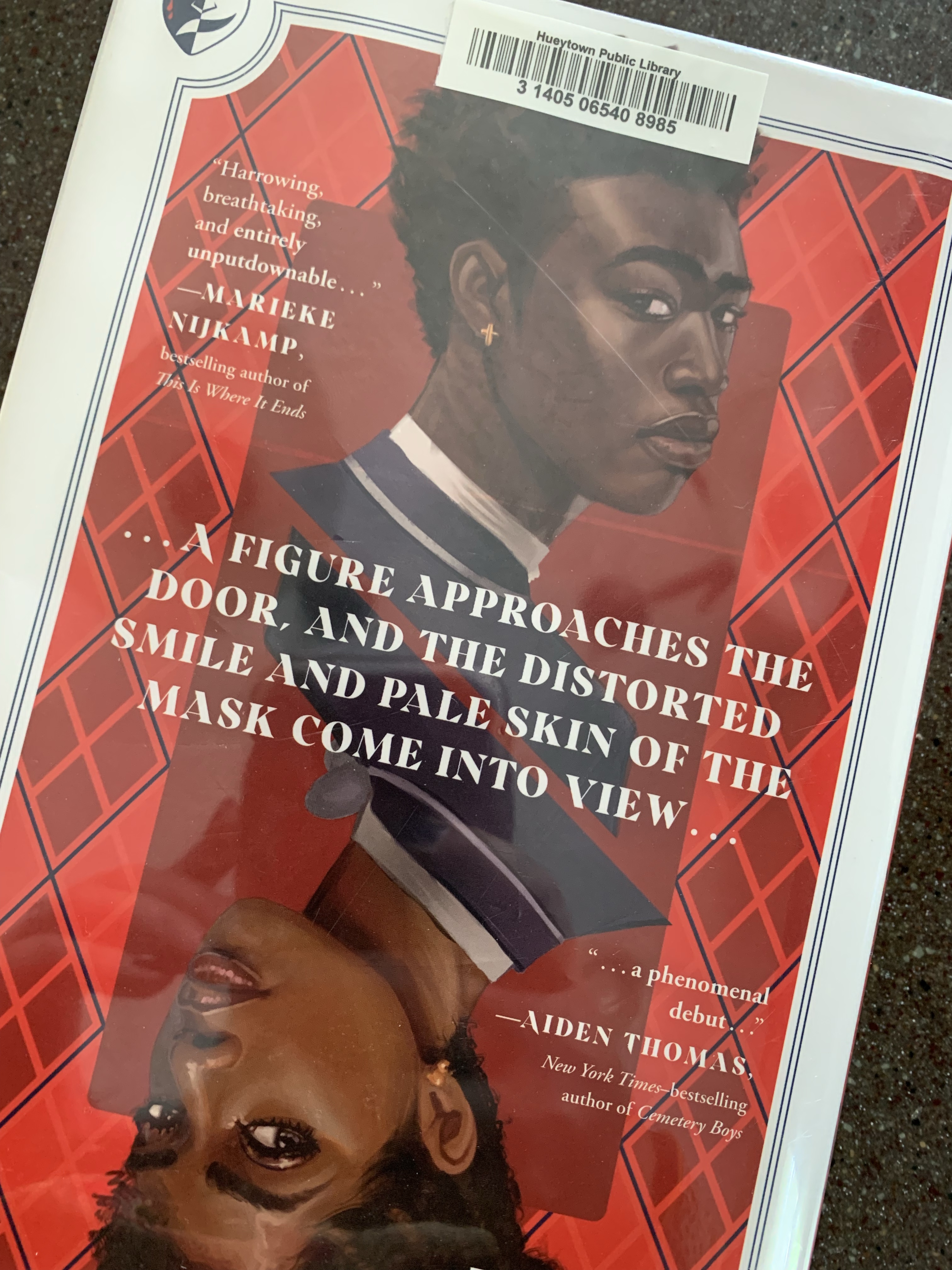
I had heard about this 420 page YA thriller and how it was written by a Muslim student at University and the seven figure book deal that she earned. It is constantly described as a combination of Gossip Girl and Get Out, having never seen either of those, I relied on the back of the book and the inside flap to see if it was something I would like to read and suggest my young teenage daughter, (and followers to read). Based on the suspense teasing and plot involving racism, I figured a contemporary YA book set in high school would have some relationship, sexuality, language and drugs, so at the last minute I decided to read it first. Alhumdulillah, I’m glad I did. The book has sex and relationships and sensual encounters between gay, queer, lesbian, bisexual, and heterosexual characters on EVERY SINGLE PAGE. I considered stopping, it was a over the top, forced, and honestly a little hard to read at times, but I continued because the commentary on racism and suspense storyline was well done that I was genuinely curious to see the climax and resolution. I write this review as a heads-up and to opine on the lack of mention of the amount of romance and sex in the book and in its blurbs. As a reader and someone who recommends books to people a lot, knowing what the majority of the book is about is helpful. To completely not mention something that is such a huge part of the book is frustrating, and so I’m writing this up more as an FYI, than a thorough and in-depth review. There are no Muslim characters, and the only mention of religion is a side character reading the Bible. Coming from an Islamic School Librarian standpoint, without exception this book would be considered inappropriate.

SYNOPSIS:

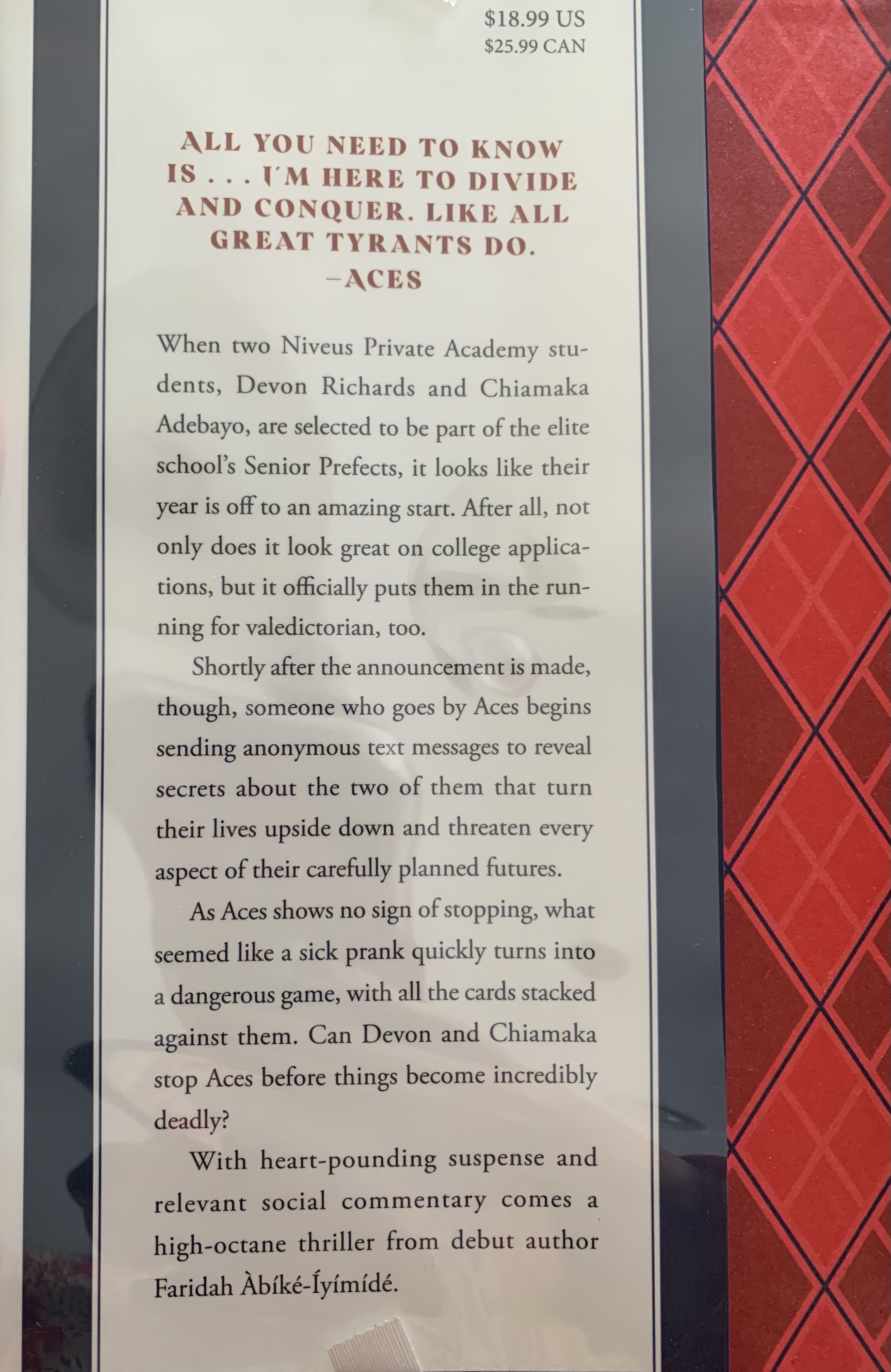
The book is told in two alternating personalities, Devon and Chiamaka. Two senior black students at a prestigious private high school. The only two black students. Chiamaka is the top of the school hierarchy, head prefect, planning on Yale for pre-med and the girl everyone wants to be. Devon is a scholarship student who plays music and dreams of Julliard. He flies under the radar and has one friend. When the book opens both are named Senior Prefects at the opening assembly of the school year, and no one is more surprised than Devon. The glory of such an honor is short lived however, as anonymous texts start popping up exposing secrets about the two. The two characters have skeletons they would rather not have exposed, and even though they barely know each other, they eventually resolve they must work together to figure out who is out to destroy them.

WHY I LIKE IT:

I like that the whodunit aspect really had me on my toes. I honestly, however, didn’t like either of the characters at all. The book has a lot going on, aside from the texts and secrets being exposed, that I wish would have gotten more page time. The two characters have very different, but very impactful home lives. Devon’s father is absent and it is learned he was executed on death row, his mom works three jobs, he has younger brothers and they struggle financial so that he has a chance at education. He lives in a tough neighborhood and runs drugs to help out with money. He hooks up with multiple guys in the book, and tries to keep it a secret so that he doesn’t get further harassed by the neighborhood guys, but it seems everyone knows he is gay even before the texts start coming. Chiamaka is Nigerian from her mom and Italian from her father. Her father’s family doesn’t accept her and her mom because of their skin color, so they no longer go to Italy to visit. Both parents are physicians and are never around. Chiamaka has no friends, picks boyfriends to further her power agenda, and spent her entire junior year having sex with her best friend, Jamie, with the hopes that he likes her too. She eventually realizes she likes a girl and hooks up with her. By-and-large for both main characters, only their sexual relationships are really explored, and most of them are brief. Thus it kind of limits the relatability to the characters in other facets of their lives. Not that people and characters have to be like-able, but they have a lot of layers, and it would have been nice to get to know them better as people, not just as shell minority representatives in a system built for them to fail.

Only a few side characters are developed, presumably just enough to make them suspect, but to drop information like one of them getting incarcerated and not explored, one diagnosed with diabetes and told without prompting and then dismissed, makes it feel like a lot is crammed in for no real purpose. As a debut novel by a young author, the writing is obviously amazing. I just didn’t connect to the characters, and the parts of the book I did like were overpowered by parts that I felt were overly forced. I will definitely read anything she writes in the future, although I will definitely research the books more thoroughly know what I’m getting in to.

FLAGS:

There is violence, sex (hetero, gay, and lesbian), cursing, drinking, drug use, drug selling, romance, kissing, hit-and-run, conspiracy, making out, drug dealing, physical beatings, passing out drunk, drunk driving, lying, cheating, racism, bigotry, hate speech, gaslighting, privilege, death, gun violence, destruction, murder, attempted murder, crude language, assault, blackmail, misogyny, homophobia, voyeurism, institutionalized racism, and probably more. Mature content.

TOOLS FOR LEADING THE DISCUSSION:

There is no way I would suggest, recommend, or encourage this book to Islamic School high schoolers.