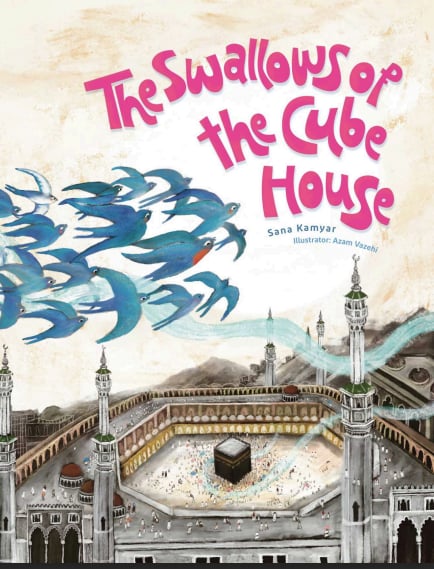
With vibes of a folktale or myth, the imaginative story of how the swallows took up residence at the Kaaba is a sweet story with beautiful illustrations. How the story actually reads though, is a bit awkward for me. Told from the personified perspective of a swallow, it seemed a little odd that the names of the birds: Redbreast, Skytail, Whitewing, did not start appearing until page 12, the Kaaba is never named, and there really isn’t any religion articulated. The language is lyrical, which conveys the emotions of some of the worshippers that the swallows see, but also leaves it all so very vague. The birds giggle and laugh (yes the word giggle appears frequently), happy that they found a new home that is like the mountains, the beach, and cities, this, along with kids playing, are the main takeaways, not even hinting that the Kaaba is a place that has everything to fill one’s heart or that the acts are being done in worship to Allah swt. The culmination of it I felt needed to be stronger, why the swallows too are circling the house of Allah, swt, but it once again is so vague, and the final page breaking the fourth wall, unfortunately just seems unnecessary, it could have been done better with informative backmatter.
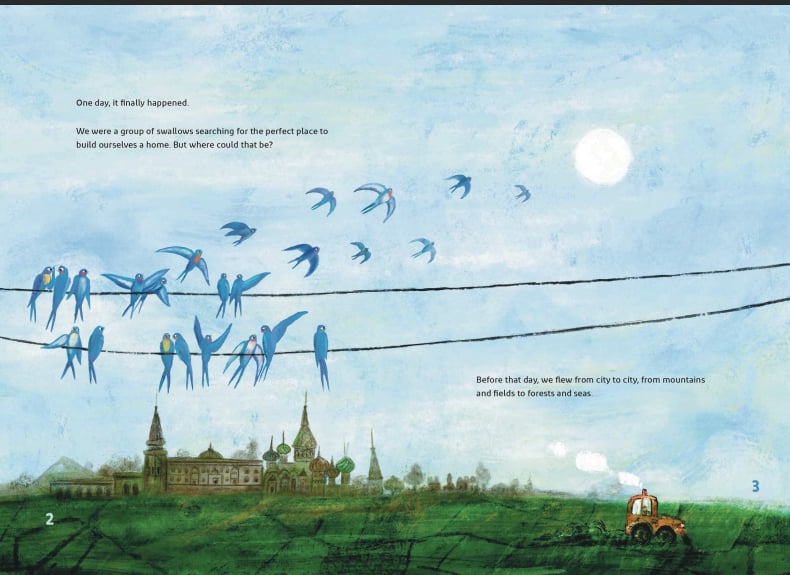
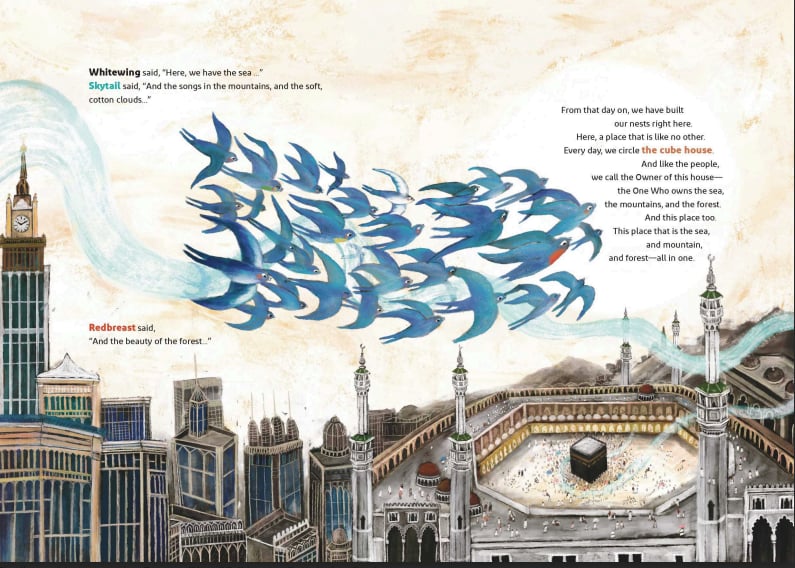
The book starts with a swallow telling the reader that, “One day it finally happened.” Not sure what it is, the story then tells how the swallows fly from location to location liking certain aspects of the mountains and coast and forest and cities, and how being in one place though, makes them miss the other places. They come to the “cube house” and all there needs are met by the sounds, the tears, the giggles, the playing of children, etc. and so they stay.
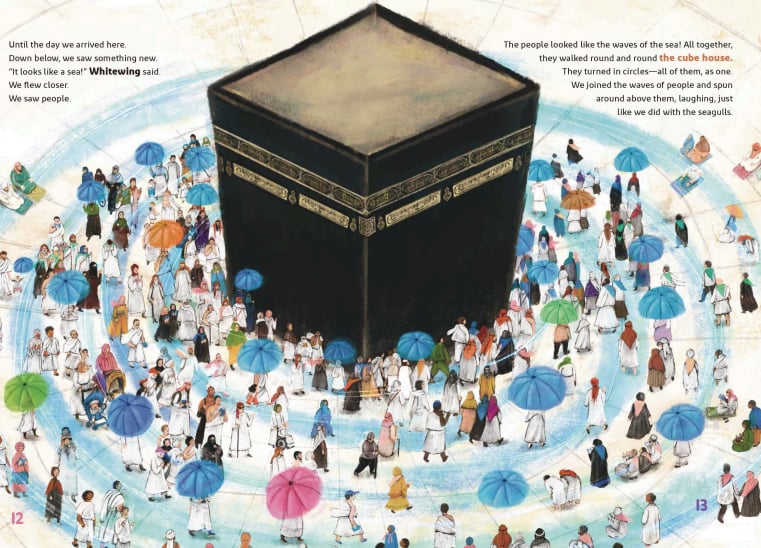
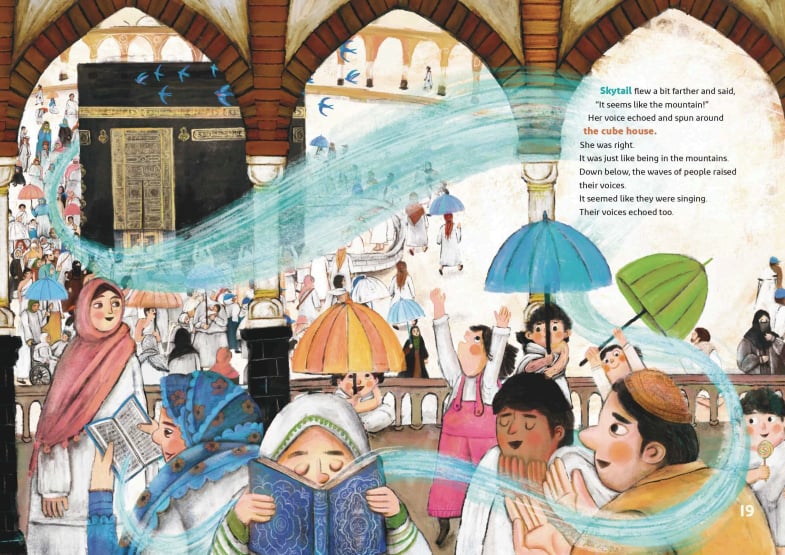
I could see the book being a decent starting point for discussion if it crossed in to talking about how animals worship the creator, or if it gave any backmatter about swallows and their environmental or migratory tendencies, so that readers could appreciate them settling in Makkah, or even if it talked about the parts of hajj or umrah, but as just a story imaging why they settled where they did, to me feels a little short. That it is based on a real flock of birds is amazing and I just don’t think the text gets readers to truly appreciate it, and the illustrations, while wonderful, can’t do it all on their own.





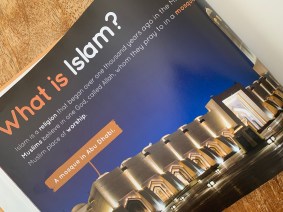
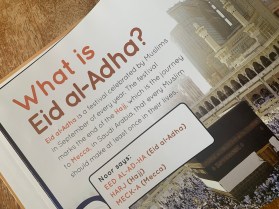 The book starts out with a two page spread defining what a festival is. The next two pages define Islam. Page 8 then states that “Eid al-Adha is a festival celebrated by Muslims in September of every year.” And page 9 of the book says we throw pebbles at a wall, not that we throw pebbles at three representative pillars. It also says that Eid is celebrated for two to four days depending on the country. Religiously, it should say it is a three day holiday.
 It then tells the Story of Eid al-Adha aka Ibrahim (as) being to told to sacrifice his son. I’m not sure why the book doesn’t says that Muslim’s consider Ibrahim a Prophet (peace and blessings be upon him), and instead call him a wise man. Indeed he was, but it seems very awkward to not mention how Muslims regard him, and seems to go out of its way to not say he is a prophet in Islam.
 Islamic School Librarian