Tag Archives: islamic fiction

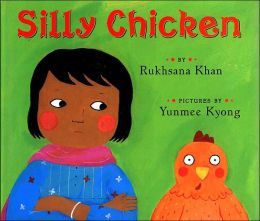
Silly Chicken by Rukhsana Khan illustrated by Yunmee Kyong

Standard

silly chicken

Silly Chicken is a story about sibling rivalry, except there isn’t a sibling, there is a chicken.  Rani feels that her mom, Ami, loves a chicken, Bibi, more than she loves her.  Rani is jealous of the attention Bibi receives and finds the chicken in general, silly.  One day when Rani and Ami leave their home by tonga to visit her father’s grave, a dog gets in and when they return, Bibi is no more.  Ami is devastated and Rani is sure she closed the gate.  It isn’t until Bibi’s egg hatches by surprise, that the story comes full circle and Rani responds to Ami’s chiding that she loves the baby chick more than her mother, that the reader and Rani realize how silly that would be.

I really liked this 32-page, brightly and playfully illustrated book.  It is written on a AR 2.3 level and is fun out loud or at bed time.  The story takes place in Pakistan and a lot of reviews online remark that it is a good book about Pakistan or for showing Pakistani culture, critiques that I both agree and disagree with.  Every kid, everywhere, through out time, can probably relate to being jealous of something or someone occupying their mother’s attention.  The concept of a pet and loving it and being sad and feeling guilty, are all universal themes.  That being said, both the author and illustrator do a remarkable job of breaking stereotypes without drawing attention to them.  Ami and Rani are relatable and are clearly Pakistani, subtly removing an us and them stance.   Rani’s dad has passed away, but Ami and Rani seem to be doing well.  Ami seems very self-sufficient in daily activities and brave when they think a burglar may be present.  The two chat with neighbors and travel independently breaking down the erroneous stereotype that women cannot go out or be recognized without a male.  The mother wears hijab and traditional Pakistani clothes while Rani being young obviously does not cover.  Their clothes are bright and colorful and their expressions relatable and inviting.  The way that Bibi’s death is handled is age appropriate and a child could possibly think she simply was run off rather than killed, either interpretation would allow the reader empathy for Ami and be a great topic to explore with a child.  Enjoy!


Ten Things I hate About Me by Randa Abdel-Fattah

Standard

Ten Things I Hate About Me

I’ve read and reviewed a few Randa Abdel-Fattah books and read and reviewed even more cheesy West-meets-East-and-my-parents-are-so-strict-so-I-will-rebel books, that with such a flimsy title referencing a movie which references Shakespeare, I didn’t expect much.  With such minimal standards, the book didn’t disappoint and the surprising warmth of many of the characters actually left a pleasant smile on my face.  I’ve had this book on my to-read list since it came out in 2006, and for some reason it is a bit hard to find now a days.  There seems to be a few covers out there, and I don’t know if they differ, but the one pictured above is the one I read, and it is 297 pages and written on an AR 4.8 level, but probably would appeal and be more content appropriate as a light read to 9th through 12 graders.

SYNOPSIS:

Jamilah Towfeek leads a double life.  At home she is a proud Lebanese Australian that goes to Madrassa, plays the darbuka drums in an Arab band, and identifies as Muslim.  She has recently dyed her hair blond and wears contacts to hide her Arab heritage and doesn’t allow her sister who wears hijab to pick her up from school where she is known as an all Australian girl, Jamie.  Her mother has passed away and her father is pretty strict about who she goes out with and her curfew.  They even have a contract posted on the fridge. Despite this, Jamilah and her dad seem to have an ok relationship and it is definitely something they both are fighting to improve.  Jamilah’s older brother is a bit of a rebel and goes out with girls to bars and the book definitely discusses the double standard.  He however, isn’t painted as “bad” or as presented as an outcast, he just does things differently, and must wage his own path to build a relationship with their father.  At school Jamilah has acquaintances more than friends, as she is constantly pushing people away.  The stage is set that she has to keep lying to her friends, but it is more in her head than in reality.  She doesn’t open up to her friends, nor they to her.  As a result the Jamie at school amongst her peers are presented as incredibly shallow, which is partially intentional I think, and partially, under developed.  She makes up excuses to not attend parties and it isn’t a big deal until the most popular guy at school starts to take an interest in her.  In frustration she starts opening up to someone who has started e-mailing her.  Her user name is Ten_Things_I_Hate_About_Me and the dialogues between her and Rage_Against_The_Machine reveal a lot about how she sees the world.  There is some tension with immigrants in Australian and Jamilah starts to realize that her silence is consent to the bigotry and bullying around her, and that there is no way to stay neutral.  There really aren’t any major plot twists, you can see a mile away who the mystery email boy is, and that he likes her, you can see that her friend Amy will come through, and that she will have to reconcile her two identities.  There are a few minor ones with her dad getting remarried and thankfully with her opting to not “hookup” with anyone in the end despite a climatic kiss in order to stay honest with her father.

WHY I LIKE IT:

I’m obviously older than the target audience and the characters, as is the author, but compared to a lot of the other books of similar content, I feel like this book stays the most grounded.  There are some pop cultural references, and obviously the kids are naive, but there are some universal truths and experiences brushed upon that I think a lot of high schoolers can relate to, not just immigrant Muslim ones.  The idea of having to be two different people at home and at school, family relationships, cultural identity, being true to yourself, dealing with the loss of a parent, taking a stand when you see something wrong, etc.. All that being said there is a huge gaping plot hole.  How her friends that have known her from elementary school when her mom brought Arab food suddenly don’t know she is Arab, or don’t pick up on her ethnic last name is beyond even a 5th grader to over look.  If you can tune out your internal sense of logic for the premise, the book is much more enjoyable, but it really is a stumbling point.

I wish that Jamilah was a bit religious.  She identifies as Muslim and clearly her sister is, but pretty much all of her actions and gripes come more from her culture than from her faith.  Many of her father’s friends drink, as they are either not religious, or Christian, which is fine, but part of me really wanted her to live up to the picture on the cover of the book and discover her religious stance alongside her owning up to her cultural one.  I love that at it’s core it is a book about a girl’s relationship with her dad and being true to her self, but somewhere her religion fizzled out of the narrative and I wish it hadn’t.  I Would have loved that she turned down the prospect of a boyfriend because it wasn’t Islamically permissible, in addition to her wanting to be honest with her father.  But, alas the author didn’t pursue that.  She did however, do a good job of not making it a judgement of culture or faith, just as attributes of her characters.

FLAGS:

There are racial slurs, drinking, dating, and kissing.

TOOLS FOR LEADING THE DISCUSSION:

Surprisingly I wouldn’t completely disregard this book for a Book Club selection.  It would be for older kids, ideally upper High School.  But I think especially in an Islamic School setting the discussion would be so much better than the book.  Many send their children to Islamic Schools to reduce the need for dual identities and I would love to see how the kids view the effectiveness of it.  I would also enjoy hearing students’ perspectives on going to formal dances with siblings or a group of girls, the double standards of boys in girls, and dealing with Uncle’s and Aunty’s constant opinions.

Author’s Website 


Written in the Stars by Aisha Saeed

Standard

written in the stars.jpg

It has definitely been done before in books dealing with the crossing of desi and the west with a female lead, that there must be: forbidden love, physical and or sexual abuse, a a sympathetic side kick, and evil parents or in-laws.  So, perhaps this book just assembles the ingredients in a new way, or my deliberate hiatus from said genre softened my heart with time.  But, either way Written in the Stars was an enjoyable read that didn’t get caught up in the dichotomous rhetoric of good vs. bad, us vs. them, right vs. wrong, and I found that refreshing.  It is in the AR database as a level 4.1 book, but there are sexual references and rape, so while it is written very simply and linearly, I would not let an elementary student read the book.  The protagonist is 17, so really the story line is more high school relevant.

SYNOPIS:

Naila is a senior at a Florida high school with scholarships and dreams to be a doctor. She has friends and stability at home. However, she also has a boyfriend, a big no-no to her conservative Pakistani immigrant parents.  When she sneaks out to prom and gets caught her parents drag her to Pakistan and secretly work to marry her off.  The premise isn’t very original, but the author keeps it interesting by having the boyfriend also of subcontinent descent, and Naila being naively clueless about what her parents and extended family are doing to her.  As she begins to realize what her parents’ end goal is, she gets desperate to return home, putting her against her family.  The story is quick and Naila is definitely a girl of action as she tries to escape, as she gets drugged, gets married and pregnant.  And remarkably she doesn’t spend too much time bemoaning her situation, which is nice as the book is only 284 pages with the Author’s Note, Glossary, Resources, and Acknowledgements.  A long the way you meet some kind characters and minor villains, you see a bit of the culture and Naila’s determination.  The parents are underdeveloped and I wish they were fleshed out so that the reader could see their perspective.  They are presented as pretty vile and cold and nothing more than that unfortunately.

WHY I LIKE IT:

At first I found it odd that religion was not in the book, like at all.  Her rules regarding boyfriends and male friends are presented as being cultural.  While in Pakistan and being shown around a cousin points out a mosque, tells Naila her father is in there, and if she wants to see inside they can come back when it isn’t pray time. That is it. So, the characters are Muslim, but Islam is not mentioned.  The author on the jacket flap states that she is Muslim and had a good arranged marriage.  So as I’ve reflected back on the book, I think I kind of like how she left religion out of it.  Albeit leaving a gap in the narrative, it allows the book to be seen in a character driven way more than a “that’s how they do it” sort of way and thus opening it up to a wider audience.  Also, seeing both good and bad in the same cultural population removes the idea that different is bad, which is often lacking in these “cultural” novels.  I really want to meet the author and see what her reasoning is, but I think it was deliberate and thus I’m growing to appreciate her restraint on bringing the religious tinge into the book.  I wish it was written a little more complexly.  In addition to more about the parents, I wanted to know more about Saif, the boyfriend, I wanted to know about the future of her cousin Selma, who was her confidant, and about the aunt that never married, just to name a few.

FLAGS:

There is kissing, and while not detailed, Naila is raped by her husband and it is implied and reflected on. There is some additional physical violence as well.

TOOLS FOR LEADING THE DISCUSSION:

I would consider this for a selection if I did a high school book club. Definitely not middle or elementary.  I would possibly suggest the book to older middle school if they could handle it.  There are lots of talking points, and some girls are so drawn to the romance genre that at least this one isn’t too over the top.

Curriculum Discussion Guide

Author’s Blog 

The Lost Ring: An Eid Story by Fawzia Gilani-Williams illustrated by Kulthum Burgess

Standard

The Lost Ring.jpg

This is a good little story about Eid ul-Adha for 2nd through 4th graders.  It is not AR and at 29 pages it balances information about Islam and Eid with a simple little story that keeps the target demographic interested.  It isn’t great, but for a book that would probably be a level reader equivalent of a three, it suffices in being a bit of a mystery, a bit of a comedy, and bit of a lesson on why and how we celebrate Eid.

Rahma’s Grandma and cousin, Muslimah, are visiting for Eid. The girls start off the story trying on their beautiful dresses and feeling like princesses.  The girls and Grandma then get to work on making samosas for Eid.  Rahma sees her grandmother’s ring next to the bowl of dough and tries it on. The story moves fluidly and the girls take turns helping  with the folding of the samosas.  Some more adults come in and add tidbits to the story about giving gifts on Eid and getting ready for Salat and depicting a typical practicing family.

The story shifts to dad asking the kids what they remember about Eid-ul-Adha and what they know about Eid-ul-Fitr, the Festival of Sacrifice. On the day of Arafat the children fast, visit the hospital and take gifts to people in the community and the neighbors.  After Salat-ul-Maghrib dad reviews some of the sunnah acts for Eid as well.  It doesn’t get too preachy, or overly detailed, it is more highlights and brief summary revisions.

Eid day is fun and exciting, but when night falls and the family prepares for people to come over, Grandma can’t find her ring.  The kids want to be detectives, but Rahma suddenly realizes that the ring must be IN one of the samosas. So the children decide to eat them all to check. When the ring doesn’t turn up, Rahma and her cousins recite Ayat-ul Kursi, ask Allah for help and decide to tell Grandma the truth.  Just then Mum yells and the ring is found in her samosa, the truth is revealed and they all enjoy a good laugh and resolve to “always remember this as the Samosa Eid.”

The Lost Ring inside

There is a lot of text on the page, and a fair amount of “foreign” words that I think the book is probably meant for Muslim children, or those familiar with the basics of Eid.  There is a Glossary in the back, but it still might be a bit too much for non Muslim children to grasp without someone to answer their questions. The illustrations have the elder females with hijab and the girls uncovered when not praying.  The small pictures are detailed and complimentary, but the younger readers will wish they were a bit more engaging.  Overall, a good book to have in a classroom, and a great one to check out from the library to encourage young readers, or just to enjoy before Eid-ul-Adha.

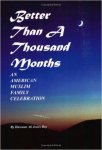
Better Than a Thousand Months: An American Muslim Family Celebration by Hassaun Ali Jones-Bey

Standard
Better Than a Thousand Months: An American Muslim Family Celebration by Hassaun Ali Jones-Bey

Better Than a Thousand Months.jpg

To be honest, I didn’t get the book.  I mean I understand that it was derived from stories the author told his children, and I’m guessing it was written to show similarities between Muslims and Christians, but I don’t understand how the 168 pages with lots of photographs and text from the Qur’an got published as a book.  That is not to say it isn’t without merit, it just leaves a lot to be desired.  The teacher in me really, really, really, wanted to pull out a purple pen and start editing.  I checked twice to see if I had an advanced copy or uncorrected proof, I even Googled the book to see what I was missing.  It doesn’t work for me as a completed book.  To me, however, it is a wonderful outline that is desperately wanting to be fleshed out.

SYNOPSIS:

A man in San Fransisco is sitting on the train when there is an earth quake, thus delaying his trip home.  As he dozes off he imagines interactions with his children that share his knowledge of Islam with them, and thus the reader.  The first interaction is with him and his young daughter discussing Christmas, and how Muslims view Jesus and the power of Allah the creator of all.  They jump in the “time machine” truck and drive through the hills of San Francisco reflecting on the concept of patience.  As Ramadan comes and the narrator dreams we get bits of how Muslims in America celebrate Ramadan, and some of the tenants of faith.  When he is awake we get some story about his family, how he came to Islam and his Grandma passing away.  But nothing is explained or even connected.  I have no idea how many children he has, what the story is with the step children and the confusion from having two daughters with the same name.  The story goes back and forth with his dreams being more “real” then his awake time, and both kind of moving in the same direction of explaining how Islam is practiced as a family in America (praying together, waking up for suhoor), the questions that arise from the children (how to pray at school, why Ramadan decorations don’t decorate the city), and how we are all more alike than different (same Prophets, similar stories).  The final dream sequence is sweet with the father and daughter showing, not just talking, about giving and charity, that I really want to send the author back to finish writing the book.  There are so many tangents that would give it depth that are stated in a few sentence paragraph that could so easily be developed in to whole chapters.  Unfortunately, as is, the reader is just left disjointed and confused.

WHY I LIKE IT:

I really like the premise, I like the literary flip of telling the story in the dream.  The ideas are just not presented smoothly.  I don’t think that a tween would get it, and the choppiness of the ideas bouncing around from short paragraph to short paragraph would dissuade even the most seasoned middle school reader.  The book has some good tidbits, but they are lost in the short glimpses of story and long passages of meaning of the translations from the Quran.  The Arabic Calligraphy is nice, but it isn’t stop in your tracks beautiful, and the font of the English translations are difficult to read.

FLAGS:

None, the book is clean.

TOOLS FOR LEADING THE DISCUSSION:

I tried to get my daughter to read it, but she was so lost and even asked if it was a collection of stories or a chapter book, that I couldn’t force her to finish.  If you can get through it, one could discuss how to “fix” some of the struggles the book has, thus emphasizing what the reader liked and imagining the back story for all the questions that arise but are ultimately not answered.

Muslim All-Stars Helping the Polonskys by Khaleel Muhammad

Standard

Muslim All Stars

A mishmash of young teen characters come together to form the Muslim All-Stars, the first book in a new series that will hopefully stick with the same set of characters doing good deeds in their community.    With only 67 pages and colorful illustrations of a variety of sizes scattered through out, the book is enticing, but not memorable.  I never bonded with any of the characters, and really couldn’t even list them all or identify them in the pictures.  Hopefully the series will continue and their individual personalities will take shape.   There are a few plot holes: how did Leila have a note from her parents if she just read the advert, how did none of the kids know each other or recognize each other if they all went to the same school, why would something done outside of school warrant recognition in school? And some random unresolved ideas: the Polonsky’s harbored a burglar or was it a rumor, why did Mr. Polonsky call Leila three times just to tell her to go?  Despite it all however, it is overall a fun book for both girls and boys in grades 2 through 4.

SYNOPSIS:

Mr. Polonsky’s wife is coming home after having surgery and their home is a mess. Overwhelmed by the prospect of cleaning it, he gets the brilliant idea of hiring kids to do it, for cheap.  A handful of kids, all Muslim, show up to do the work.  But even overcoming Mr. Polonsky’s rotten attitude, the mountains of rubbish, the menagerie of critters that have taken up residence in the home, and a crazy washing machine, is not enough to prove themselves in the face of Mrs. Polonsky’s anger when she gets home.

WHY I LIKE IT:

I love that within the Muslim group there are kids of different ethnic and cultural backgrounds and abilities; one kid is a convert, one is Pakistani, one is good with machines, one has Aspergers, one seems to get in trouble a lot.  They all answer the advert for different reasons, but after some convincing of sorts, they all agree to help the Polonskys because it is the right thing to do.  MashaAllah the girls wear hijab, they break for salat as a group, verify the food is halal, and generally just work well together.

FLAGS:

Clean alhumdulillah

TOOLS FOR LEADING THE DISCUSSION:

There is nothing online.  It is a book that if you recommend it to a child you simply would want to follow up with them by asking about what they thought about how the kids were treated, what they would do if Mr. Polonsky treated them that way, if they were surprised by the ending etc..

The book is written in British English and American kids shouldn’t have trouble understanding what is going on, but might need some help figuring out some of the words, such as rubbish, bin liners, skip, etc..

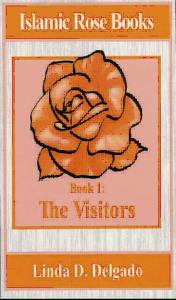
The Visitors by Linda Delgado (Book #1 of Islamic Rose Books)

Standard

Islamic Rose Books The Visitors

I first read this book in 2004 and it was pretty much my first introduction to what elementary aged/young adult Islamic fiction could and should be.  It set the standard and I think subconsciously I’ve held every other Islamic fiction book up to this series as a comparison.  I’ve taught it to 4th graders and 5th graders, I’ve purchased the series and left it for the students at every school I’ve ever been a part of, I’ve even exchanged emails with the author with students’ questions and been impressed by her responses.  So, after reading so many other books in putting this blog together, I thought it is finally time to revisit a book and series that is dear to my heart, and see if my memories are accurate.

Alhumdulillah, they are.

The book is a bit bumpy at first with the chattiness of the main character Rose, but either like real children, you grow accustomed to her and find her endearing, or the author pulls back as the story progresses and the book finds a more readable and engaging rhythm.  Either way, I still felt a pull to keep reading the book, and feel confident that those that read it, and the entire series (I haven’t read the latest book, “Reunion”) are better for it, alhumdulillah.

SUMMARY:

Nine-year-old Rose is excited that her grandparents, who live next door, are going to be hosting two Saudi Arabian Police Officers who are coming to America to learn English and train with the Arizona Police Department.  In anticipation of their arrival Rose and Grandma do what they can to learn about the food, culture and religion.  Rose’s dad however, is not comfortable with Abdul and Fahd being so close to his family, and for Rose to be so curious about Islam.  Rose works on PLAN after PLAN to try and help her dad and the officers connect, but will it be enough?

WHY I LIKE IT:

The book actually addresses some harsh realities of how Muslims are perceived, yet does so in a tender way.  When Rose wants to go to the Islamic Center and her father objects, or she talks about Muslims at school and her teachers get mad, it opens the discussion for why people may have negative views of Muslims, how to deal with such negativity and how to move past stereotypes.  The book also does a really good job of introducing Islam and Saudi culture to its readers in a fairly non preachy manner.  The inner workings of Rose’s family are also surprising raw and relatable.  Her Mom is not in the picture and Rose must deal with the stresses of a single parent home, luckily her grandparents are next door, but even then, there are stresses and issues that arise.  Rose also deals with a friend moving away, teasing at school, and disappointment.

FLAGS:

None, just some of the stereotypes from Rose’s Dad that may introduce some negative views non Muslims have of Muslims, such as: Muslims as terrorists, Muslim’s being abusive and controlling to women, etc.

TOOLS FOR LEADING THE DISCUSSION:

There are a few different versions of the book, mainly just cover changes depending on the publisher, but this version:

The Visitorshas appendixes in the back that include a glossary and recipes and facts about Islam as well as Arizona.  The newer version (as pictured at the top of the post) doesn’t include everything and refers those looking for more to see a website.  That website however and all other links to online study guides and reader guides are no longer available or now have different owners.  I’m not sure what happened to Linda Delgado, and if anyone knows how to contact her, I’m hoping you will let me know.

So as of now there are no links to suggest for teaching the book unfortunately.

Layla Deen and the Case of the Ramadan Rogue by Yahiya Emerick

Standard

layla deen

I remember my 2nd graders reading this many years ago and strongly disliking it.  And I vaguely remember agreeing with them, but perhaps at the time, there weren’t a lot of Islamic fiction options for the age group, so I decided that the pros out weighed the cons and left the book on the classroom bookshelf.  Fast forward to today where mashaAllah there are more options, yet this book is still often a staple on most school and family book shelves.  That being said, I thought a revisit was in order, and yikes I agree with my 2nd graders of so long ago, and I have major issues with this book.  At 42 pages, the clipart illustrations and wide spaced font seems a bit dated, but with the short chapters and Islamic backdrop the book overall would still appeal to 2nd to 4th grade Muslim students. The story is sweet in merit and intention, however, some of the details make me hesitate to recommend this book.

Overall, I feel like the author tries too hard, he is trying unsuccessfully to relate on a students level, trying to sound cool, and ultimately in the process uses unnecessary language in my opinion.  The manner in which siblings Layla and Ahmed speak to one another is incredibly harsh, and while perhaps realistic for some families, there is no reprimand or apologizing.  The name calling and yelling at one another throughout makes their collaboration at the end seem unlikely.  Even how Layla talks to her mom about the homeless man at the store, saying he is dirty and gross and a “stinky bum”, seems jarring to a book that is trying to teach a moral lesson.  Layla’s mom gently reminds Layla that Prophet Muhammad (saw) was kind to those in need, but I feel like the mom doesn’t go far enough in correcting Layla, and Layla dismisses rather arrogantly what her mother has to say.

Later, some bullies taunt Ahmed, and while in her head Layla defends her brother which is nice, out loud she resorts to calling the bullies “idiots” and “freak squad” which seems to be a form of bullying as well, and at the very least don’t empower the students to know how better to deal with bullies.  She then remarks that they smell bad and smoke pot and hopes her brother will “kick their butts.”  If the author wanted to make a comment on the ill effects of recreational drug use ok, but for this reading level to mention it as an insult in passing does little to benefit the story and even less to help the reader grasp what pot is and that children using it (irregardless of how one feels about adults using it) is not a joking matter.  Later when something is stolen Layla assumes it is the bullies who have committed the crime and sets up a sting to catch them.  Needless to say it isn’t them, and I wish the author would have at least had her feel bad that she assumed someone to be guilty when in fact they were innocent. A premise that I feel needed some addressing or reflective growth to benefit the reader.

My next concern, would not have been a concern ten years ago, but with the current situation regarding how police are being treated in response to the actions of a few, I wouldn’t want to perpetuate a stereotype that widens the gap between police and the communities they work for.  In the book when a crime is committed Ahmed dismisses going to the police remarking that the police do little and just sit around eating donuts.

And finally the climax of finding out who stole the food and why is sweet, but I really felt could have been handled so much better.  (SPOILER) The homeless man stole the food to feed it to some kittens he found in a garbage bag.  On the surface that is sweet, but I don’t think that, that justifies theft.  Furthermore he didn’t want to take the cats to the shelter because they would be gassed. Again, like the pot reference, that is a bit heavy to just leave hanging out there without explanation or background for such a young reading audience.  Layla then offers to take the cats to her friends and assures the man they will have good homes.  To me a better option would be to purchase the cats from the man so he can have some income and also assure the cats a good home.  It seemed to me that she took them from him in a rather abrupt fashion as if because he was homeless he didn’t have a right to his property, and getting a meal in exchange didn’t cut it for me as the happy ending I was hoping for.

SUMMARY:

Layla and her family are preparing for Ramadan, which starts in a few days, Layla joins her mom for a trip to the grocery store to stock up and they see a homeless man begging for money.  Disgusted Layla not only can’t stand to be near the man, but it is appalled that her mother stops to talk to him.  When the food set out for the nightly iftaar goes missing from the kitchen window, Layla and her brother take advantage of a night when their parents are out to try and catch the thief or thieves.  They discover the homeless man, and in a change of heart, Layla arranges to meet him at the grocery store the next day with her mom so that they can invite him to dinner.

WHY I LIKE IT:

I appreciate what the book tried to do: blend a fictional story in an Islamic context for a younger elementary aged Muslim child.  I also like that it showed a Muslim family, praying, fasting, and going about their normal life so to speak.

FLAGS:

Pot drug reference, less than ideal handling of bullies, negative unsupported stereotypes.

See beginning of this review for detailed concerns.

 TOOLS FOR LEADING THE DISCUSSION:

For some reason, despite all my concerns with the book, I have been trying to find a way to still utilize it.  And I think the only way I could comfortably convey this story to kids would be to read it aloud and self edit it while reading.  I think there are too  many issues to let a second or third grader read it independently and then discuss, but I think if I were to edit out some of the random comments that have no bearing on the story, and then paused to discuss some of the bigger issues of bullies, assumptions, treatment of the less fortunate, and a better way to help others and animals the book might still be successful.  I think it could be read aloud in less then an hour and if today’s students are as perceptive as my students years ago, they not only will pick up with what is wrong in the story, but also devise ways to make it so much better.

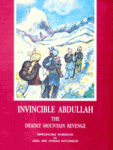
Invincible Abdullah: The Deadly Mountain Revenge by Haji Uthman Hutchinson

Standard
Invincible Abdullah: The Deadly Mountain Revenge by Haji Uthman Hutchinson

invincible-abdullah-the-deadly-mountain-revenge-workbook-aziza-and-uthman-hutchinson-2

I’m pretty sure I’ve seen and handled this book hundreds of times in my involvement in four Islamic Schools, as a teacher, a librarian, and host of book fairs.  So, it is a little embarrassing to admit that this is the first time I actually cracked open the cover and read the book.  Written in 1992 with a less than attention grabbing cover, I had minimal expectations, but with a newborn and down time, I thought I needed to give it a chance, and I’m glad I did.  The book is definitely geared to boys (there isn’t even a female character in it), and is pretty action packed and quick paced.  You know the boys will get out of the predicament at hand, he is “Invincible” after all, and there are three more books in the series, but you don’t feel bad reading it anyway, because it is sufficiently entertaining.  The book isn’t amazing, but it holds its own largely because it doesn’t talk down to the reader.  The characters are independent and thoughtful and yes they are teenagers battling drug carriers in the tribal areas of Pakistan, and yes they are wielding guns and hiking over glaciers, but mind you they never miss their salat or fail to thank Allah (swt) for their success which kind of makes the book that much more fun.  The book is 218 pages with a glossary at the back.  It is not an AR book, but I probably will make it into one at about a fourth grade fifth month level (4.5).  I also am considering doing it for book club, but might wait and read the rest of the series to see which one will have a wider appeal.

SUMMARY:

Abdullah travels to Pakistan from England to visit his cousin Hasan.  At the airport Abdullah’s bag gets switched with someone else’s and the boys find themselves getting accosted by the rightful owners who have a half a million dollars in their suitcase.  The boys talk to the police and learn that the money is part of a heroin operation going on in the tribal areas and that the inadvertent switch messed up the police’s sting to catch the criminals.  The boys run in to the drug runners again in the bazaar, and after an all out brawl decide when an opportunity to go into the tribal areas presents itself, that they should take it and do what they can, to put a stop to the criminal’s drug ring.

WHY I LIKE IT:

There is drugs, violence, and guns, but it is all done for the right reasons, in an action filled manner.  The “good” guys are all religious, and while the “bad” guys have religious sounding names, clearly are not, which lends it self to a decent discussion about what makes a good person and what makes one religious, clearly not just their name or culture.  It also lends itself to a realistic conversation about drugs, their effects on the users, and on drug culture as well.  The guns, well the guns are there to make threats, and to hurt people, at best it gives you a seg-way to discuss your views on guns with your children, but in the book, it is what it is, not a moral or religious issue as the drugs are made out to be.  The boys, the heroes of the book, are all very devout mashaAllah, and their actions, manners, and thoughts reflect this.  I like that this is consistent with their character.  They are respectful to their families, to each other and are ever mindful of themselves as Muslims in all facets of their adventures.

FLAGS:

Just the content of drugs, violence, and death. Mild compared to most TV shows or movies, but present, none-the-less, nothing a third grade and up can’t handle. (Spoiler, only one person dies and it isn’t directly at the hands of anyone, nature steps in to save the day).

TOOLS FOR LEADING THE DISCUSSION:

There is a workbook that apparently can be purchased to accompany and teach the book: http://www.islamicbookstore.com/b9648.html

The author gives pause as the characters have to decide what to do next and to weigh the pros and cons and possible repercussions of their decisions.  These moments would lend themselves well to a book club discussion to find out what the students would do, what they would be willing to risk, and at what cost.

Burning Boats by Zaynab Dawood

Standard
Burning Boats by Zaynab Dawood

burning boats

This book came highly recommended from a friend that read it aloud to her Kindergartener and I ordered a class set based on her raving review.  After trying to get into the book on three separate occasions I concluded that yet again I should have waited and read the book myself before ordering it.  So I handed it over to my avid reading eight-year-old who read it in a day and said it was pretty good, asked a few questions, and continued on her way confused as to why I couldn’t finish it.  So, I started it again determined to get through it and with Ramadan quickly approaching I thought I could motivate myself to do so.  However, I could not, and it sat on the shelf for the entire month with a book mark only a few chapters in.  At the prodding of my guilty conscious to return the book to my friend, I continued reading from where I left off, rather than starting over, again, and found that by dismissing completely who any of the characters are and how they are related, the story does get off the ground and I was able to finish it.  That being said, I think the story might have appeal if read aloud one chapter at a time. To read it in one setting did not help the story that can’t seem to decide it if wants to be character driven or action driven.  The sheer number of characters is completely over the top, there are at least 20 characters mentioned by name and the book is only 137 pages.  And honestly I never bonded with any of them.  There is action in the book, but the details seem misplaced.  The author details characters all saying salam and walaikumasalam to one another and giving moral reproaches based on Quran and Sunah, but I never felt I understood why the main characters were leaving, why the villain was so bad, or how (spoiler alert) a pivotal character in the book died. I guess by never connecting to the characters or feeling an emotional tie, positive or reproachful, the book didn’t live up to it’s potential.  The book is recommended for ages 12 and up, but I think younger children could read it and even younger could listen to it being read to them without any major concerns.  With guidance the book is by no means a waste of time, but if you recommend it to a child and they struggle to get into it, you might just have to let them find something else to read.

SUMMARY:

A small fishing village is being harassed by a corrupt businessman’s attempts to take over the entire industry in Tobay.  The principal of the school and a few close friends are trying to stop him, but have decide they cannot and thus are planning to move elsewhere.  The children are forbidden to go to the harbor as boats are being burned and crimes committed to persuade the local fisherman to abandon their solo endeavors.  With few places to play, the loss of the harbor affects the children greatly as well.  A tropical storm complicates matters as it tears through the village destroying the poor inhabitants meager dwellings as well as the damaging the school and the mosque.  With friends taking in homeless neighbors and the main family planning to leave the children plan one last game that turns dangerous when all the boats in the harbor are set a blaze.

WHY I LIKE IT:

There are some definite good qualities in the book, despite the holes.  It opened up a good discussion between my daughter and I about preparing a body for ghusl and Janaza.  It does show that people can change and that when people are sincerely apologetic and are striving to correct their behaviors, those around them should offer forgiveness in not just their words, but in their actions as well.  It also shows that good kids can make bad choices, and that the consequences can also be very real.  Similarly it shows that adults also don’t always know what to do, and that they can be forced to reconsider as well.

FLAGS:

There is violence in the book and death.  Nothing too graphic, but one might have to explain to younger, more sheltered reader,  that just because someone has a Muslim name doesn’t mean they are practicing Islam and are good people.

TOOLS FOR LEADING THE DISCUSSION:

There aren’t any online tools, but I would suggest having the readers keep a character journal.  Every time a new name appears, write down who they are, (and who they are related to), so later they can look back on it if they become confused.

Because of the “holes” in the story I would probably ask the students to give their thoughts as to what happened or why the characters decided to do what they did and then turn it back on them and ask them what they would do.

Why was Ibrahim leaving? Would you have left? What made Nasser change? Would you have forgiven him? How do you think Ayesha died? Etc.