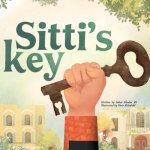

I try and buy, read, and review every children’s book about Palestine that is published, it is the least I can do. I also try not to compare them to each other as they present different aspects of oppression, perspectives of strength, examples of joy, and messages of hope, even among many similar themes of food, keys, traditions, and culture. I really appreciate that this book though is incredibly blunt. It isn’t lyrical, it isn’t poetic, and as Israel is bombing Jenin as I write this I’m glad it doesn’t mince words about the Nakba. I do think caregivers though, should probably read it first as it might be a little triggering for sensitive children. The story is OWN voice and probably best suited for middle elementary aged children. It is perhaps also worth noting that the book could be seen as making Jews synonymous with Zionists. The characters are Muslim, Islamic phrases and Arabic terms are sprinkled throughout, and even despite the pain the family has endured, the book stays hopeful and proud.


Sitti is coming and Amal is excited, it has been two years since she last saw her. She loves how excited her mom and grandma are to unpack gifts of olive oil, dates, and zataar from friends. Amal isn’t sure what to do with the “old lady thoub” she has been gifted, but she smiles in appreciation none-the-less. When Sitti pulls out an old key, Amal starts to ask her about it, but her mother shuffles her off to bed.
The next day at school, Amal has to work on a presentation about “culture,” but there are no Palestinian books in her school library, so she just watches the other kids. At home they eat and listen to Sitti’s stories of long ago in Haifa, and Amal asks her why she left Palestine. Despite her mother trying to redirect, Sitti says it is time she knew about the Nakba.
Sitti tells about living on the land for generations and how the Jews believed the land belonged to them. In 1948 the British decided Palestine would be the homeland for the Jews. Armed men came and arrested anyone who tried to stay in their homes. Sitti’s brother was handcuffed and never seen again. The family grabbed what they could including the key to their home as they made their way to a refugee camp in Lebanon. They stayed for three years, before making their way to America.
When Sitti concludes her story she hands the key to Amal and her hope that she will return to their home inshaAllah. Feeling the pride and warmth of home, Amal has a determination to reclaim her heritage and share her “culture” with her classmates.


The illustrations are sweet, the mom and Sitti wear hijab even in the home, and the inshaAllahs and salams come naturally. The book does not stop to define zataar or marimya, which helps the flow. I also like how it shows that there aren’t books about Palestine in the school library, it is strong and important detail. I don’t understand where Sitti is coming from though, it would seem Palestine as she is bringing gifts from friends, but in the story it says after Lebanon they made their way to America, so I’m not sure where Sitti lives, and how the logistics of the family work to be honest. I also kind of wish there was a recipe for zataar in the book and lyrics with translation for the song the family sings.


Book is available on Kindle or can be ordered from www.littlehibba.com




 Islamic School Librarian