Tag Archives: granddaughter

Kamal’s Key by Rifk Ebeid illustrated by Sophia Soliman

Standard
Kamal’s Key by Rifk Ebeid illustrated by Sophia Soliman

This 44 page hardback book gently, yet powerfully, focuses on the Palestinian resistance symbol of the key, by sharing a multi generational tale of new beginnings, heartache, hope, and resilience. The writing is moving, and flows with simple lines, beautiful illustrations, and maintaining a focus on a singular theme. So often well meaning books about oppression, war, politics, try and include numerous details that the picture book suffers in its appeal to younger audiences, the opposite is often true with books being so generalized that it isn’t clear exactly where refugees are from or what turmoil is being discussed. This book strikes a beautiful balance of calling the incoming occupiers a dark cloud and not giving them space or attention, while focusing on Palestinian experiences through a lens of hope, joy, and love.

The book starts with the key. It is a beginning to Kamal’s home. It is on his belt at his wedding, it is the beginning of his and Huda’s new life starting together, a symbol of their home when their son is born. It is the beginning of Jalal’s imaginative play of using it as a dhulfiqar. It is secured around Huda’s neck when they are forced to leave their home, and find refuge in tents. It is hung when the tents become walls.

One day Jalal takes it down, when the hurt in his father’s eyes is too much for him to witness. When Jalal becomes a father though to Salma, the key becomes her toy, her microphone, her connection. When Kamal gifts the key to his granddaughter it becomes her art, her poetry, her necklace, a symbol of her hope and a people’s right to return.

I’ve read this story a few times to myself, as well as with my children, and I only wish it was a little larger in size. It works well one-on-one or with a few, but it is a story that needs to be shared in large story time groups, and the 9 x 9 inch size makes it a bit difficult.

img_8454-1

The book concludes with an author’s note, an illustrator’s note and a glossary, not just of terms, but traditions, concepts, and information about the song. I purchased my copy from Crescent Moon Store.
Sitti’s Olive Tree by Ndaa Hassan illustrated by Soumbal Qureshi

Standard
Sitti’s Olive Tree by Ndaa Hassan illustrated by Soumbal Qureshi

olive trees

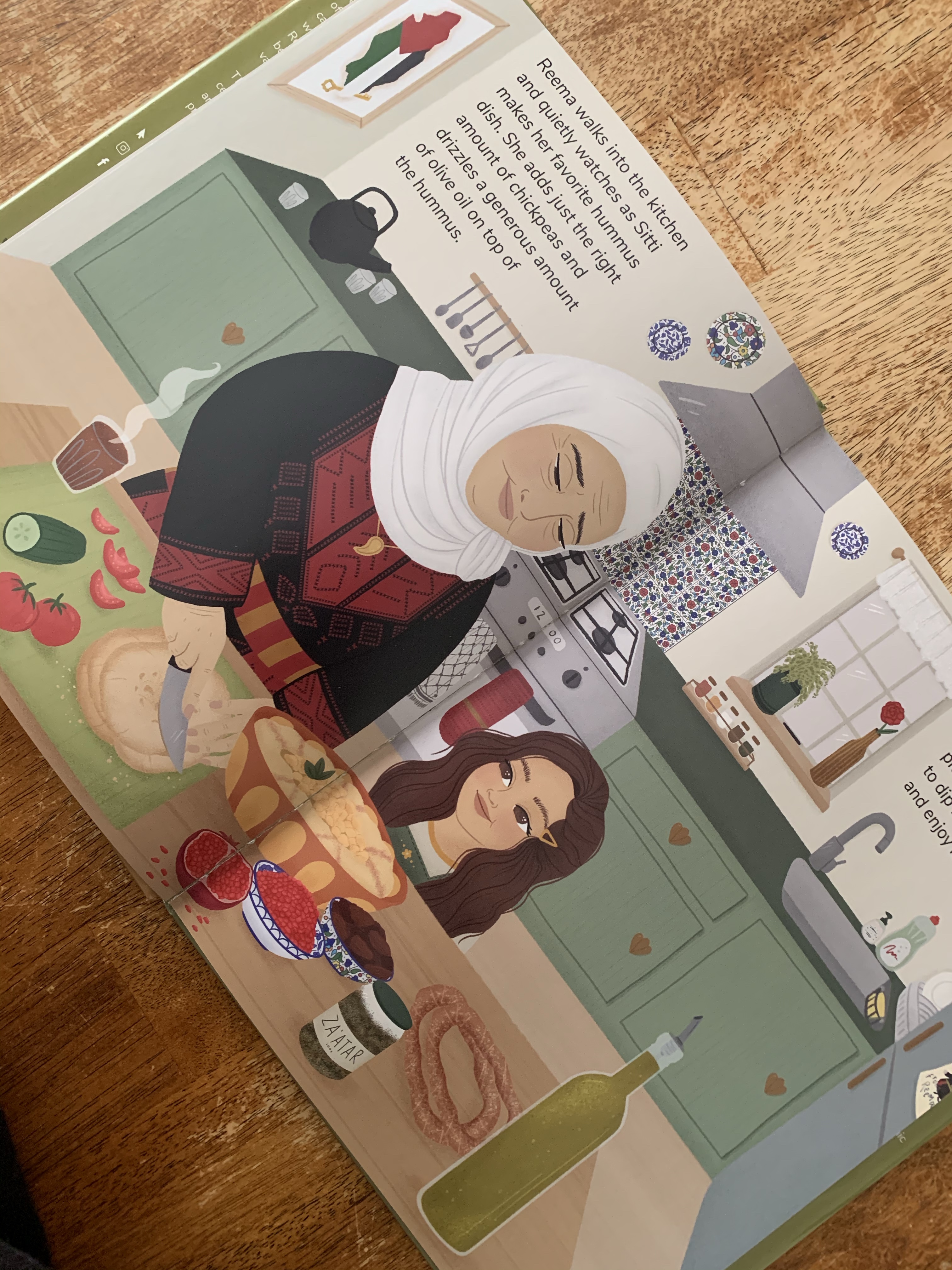
This lovely 27 page book is a story infused with love, culture, and olive oil.  The hardbound, large thick pages are richly illustrated as the text, perfect for ages preschool to second grade, tell of the olive harvesting season in Palestine.  The story is framed between a young girl learning about the past from her grandma’s memories and enjoying the olive oil sent by her uncles from their homeland.  The story is warm and informative and does not discuss politics or conflict. There is a key hanging on a map of Palestine in the illustrations, but nothing in the text.

img_1213

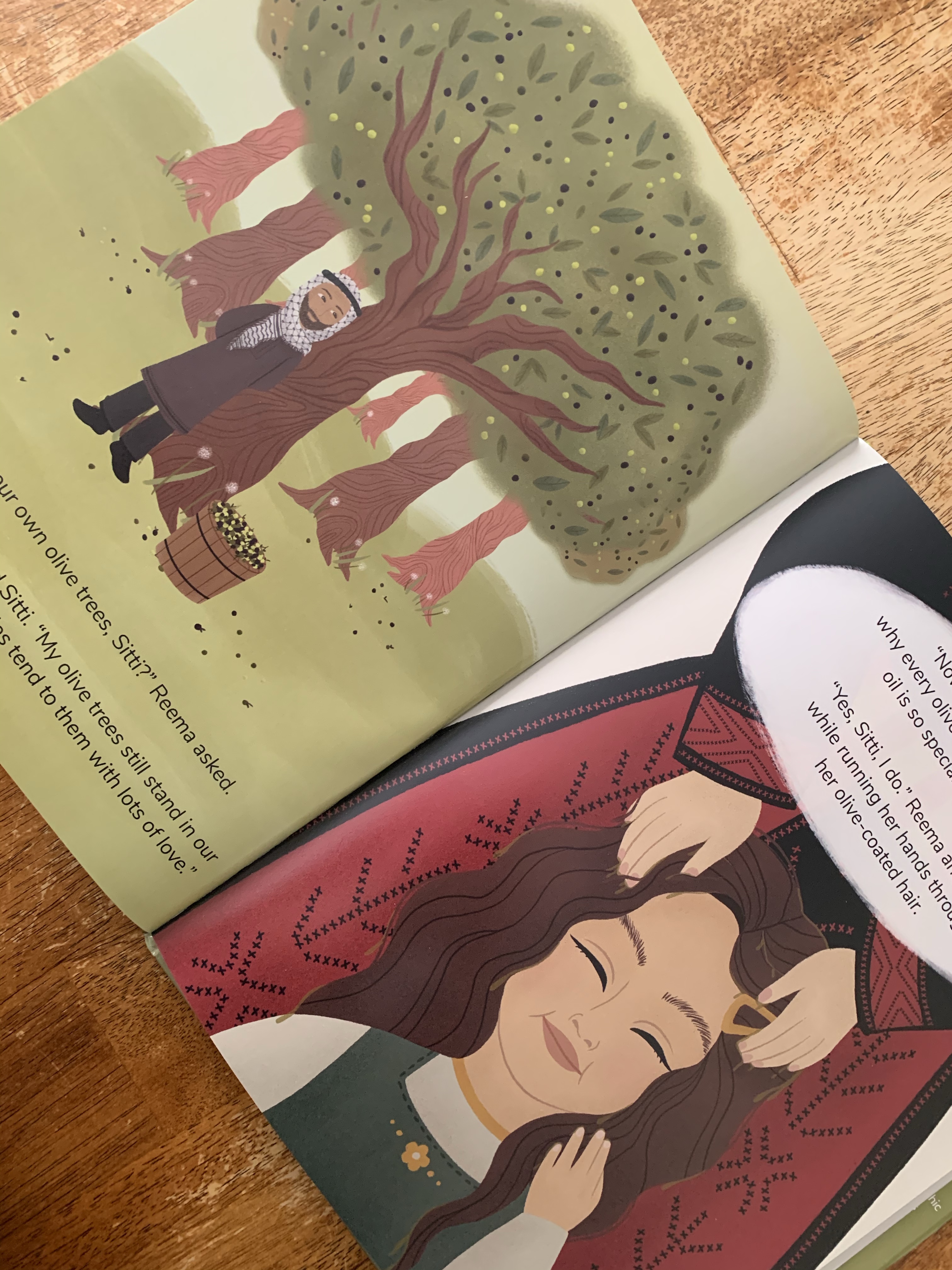
Young Reema watches her Sitti make hummus. When a drop of olive oil slips down the side of the bottle and Sitti wipes it up and rubs it in Reema’s hair.  Reema wants to know how olive oil, zeit zaytoun, can be used in such different ways. As Reema is reminded of how far the oil has traveled and recalls that her Sitti never buys olive oil at the store, the two settle in for Sitti to tell Reema some of her memories about the harvest on her ancestral land.

img_1214

Olive harvesting season comes at the end of the year and the families gather to pick the olives and fill the buckets before climbing ladders and catch the falling olives on blankets.  The elders sort them, and at the end of the day they eat and drink tea and coffee and laugh and enjoy each other’s company.

img_1215

They tell stories to pass on to the next generation just like Sitti is doing to Reema, because the olives keep the families together.  Sitti hopes one day Reema will go to Palestine and play among her family’s trees.

I wish there was a bit more detail about the hummus, it seems to imply that the garbanzo beans are whole and not smooshed or blended, also when it lists the other things Sitti’s grandparents would do with the olives, the list is olive oil, olive soap and olives for eating.  I would imagine there are more things to do with the olives, even perhaps detailing the way the olives for eating are pickled, or preserved, or prepared would have been nice.

img_1216

There is a glossary of a few terms at the end.  There is nothing religious in the text, but many of the women wear hijab in the illustrations.

Overall this book is well done and serves an important point in showing a culture that is rich and full, aside from conflict and politics.  It is a sweet story between a grandmother and her granddaughter and shows how stories, traditions, and food help pass on culture and heritage.

.