Tag Archives: dementia

Sabrena Swept Away by Karuna Riazi

Standard
Sabrena Swept Away by Karuna Riazi

The gorgeous cover of this 205 page middle grade fantasy is a great motivation for kids to pick up the book and dive into a story filled with characters from the One Thousand and One Nights. Descendant from Sinbad, Sabrena’s ailing grandma is sometimes present, and sometimes suffering from dementia, but her stories have power, they always have. As Sabrena battles her own self doubt at her new Islamic school, her ability to find her voice and speak up, and her desire to protect her grandma from being taken from her home, she will be swept off to a world far away, where she must be the hero of her own story to help her new friends and find her way back.  I was nervous to embark on an Alice in Wonderland world building framed story, but the short book, the enjoyable characters, and the consistent presence of Islamic representation actually made me forget that I don’t like that style, until the text itself drew the correlation.  In many ways the story and the predictability should also have been a turn off for me, but I absolutely loved the writing of the prologue and the first two chapters, and then I switched to the audio book, and the story just pulled me in and flew by.  The characters pray, call out to Allah swt when scared, greet one another with salaam, discuss qadr, encounter jinn and ifrits, the women wear hijab, there are mentions of Bangladeshi foods and clothes, but the book is for everyone, it isn’t preachy, it is just who Sabrena is, and in the quick paced fairytale like adventure, you will be glad you spent time with her on her adventure in both worlds.

SYNOPSIS:

The Bhuiyan family loves stories, Sabrena’s grandma spins them, and her father studies and teaches them.  Sabrena feels connected to them, but when water keeps appearing, calling out to her, and showing her visions of palaces and gates, she starts to wonder what is truth and what is just family lore about Sinbad the Sailor.  As grandma’s memory slips, Sabrena and her parents move to be closer, the new Islamic school is nice, but Sabrena seems to get tongue tied when her kind classmates try and include her.  When her mom and aunt fight about what to do about grandma, she hides away dreading their arguments.  When the sea sweeps Sabrena to a new world though, she finds herself “so alone” and forced to step up.  With new friends, a longing to return to her family, and her growing confidence, Sabrena is swept away, but determined to find her voice, save the day, and find her way home.

WHY I LIKE IT:

There weren’t really any twists or surprises for me, other than the beautiful Islamic rep inclusion and the cleanliness of the book.  I think I’ve become so cynical that the bar has dropped, and it was nice to read a tale that was decently written, with characters owning their Islam in way that made them just part of who they are and how they view the world.  Sabrena doesn’t have an identity crisis, or internalized Islamophobia, everyone is just Muslim doing their things and living their lives.  I also felt the voice and tone of the grandmother dealing with her dementia was accurate.  Having my father-in-law in our home battling memory issues, I often find rep in children’s books to be performative and saccharine, this felt grounded and used to serve an important plot point in the text, which I appreciated.

The adventure was ok, honestly nothing super memorable, but I really enjoyed the voice actor on the audio book, and was not worried if the holes were big, or adequately overcome, or probable. I was just enjoying being in the story.

FLAGS:

Mention of music, there is magic, jinn, ifrit, a talking head, some trickery and deceit, and it uses the word harem a few time without going into detail.  Disclaimer with audio books I may have missed something, but I think for the genre there is nothing too ,red flag, it is a fantasy adventure.

TOOLS FOR LEADING THE DISCUSSION:

I think discussion and maybe reading of the original One Thousand and One Nights, and then talking reading, and discussing some of the retellings, and character inspirations of Aladdin, Ali Baba, Scheherazade, Sinbad, Marjana, Duban, etc would be a delightful class or book club plan.  This book is solid middle grade, but depending on the framing, could be used for discussion in broader conversations and enjoyed by readers of all ages.

Hidden Fires by Sairish Hussain

Standard
Hidden Fires by Sairish Hussain

I will not be getting over this book any time soon. It broke my heart, and all my other critical organs, in the most delightfully well-done way possible, and undoubtedly I am better for it. I don’t read a lot of adult fiction these days, and with some diabetic retinopathy concerns, I couldn’t read the 384 page adult book about generational trauma, partition, the Grenfell Tower fire, family dynamics, bullying, self-harm, and resilience, but was pulled in to the audio book version instead. The Desi-British voices of Yusuf, Rubi, and Hassan were refreshing to my American ears.  The multi-perspective book told in parts richly develops the characters, their relationships, and their current, past, and future struggles.  The author is Muslim, as are the characters, and while they all practice in their own way, it is undoubtedly who they are, and their Islamic identity is not questioned, feared, blamed, or apologized for.

SYNOPSIS:
The book weaves three distinct voices. Yusuf, is an 80 year old an immigrant who lived through partition, raised his family in the UK, has lost his wife a year prior, and is struggling with haunting memories of the past, failing health, regular loss of friends, and loneliness.  Hassan, Yusuf’s youngest son is a workaholic who is married to a non Muslim, non Desi who is suffering from fibromyalgia and who’s mother unexpectedly passes away in Spain.  Rubi, is Hassan’s 16 year old girl who is overweight, bullied, lonely and about to take her GCSE exams when she is dumped on her grandfather Yusuf’s door while her parents head to Spain.  The book opens in Ramadan the night of the Grenfell Tower fire and the horrific event affects them all, stirs memories, and shapes futures.  From there the layers of each character slowly unravel as they cope with the swiftly changing present as they desperately work to break free from the past.  As dementia plagues Yusuf, Rubi finds purpose in being needed, and Hassan is forced to re-prioritize his life before it is too late.

WHY I LIKE IT:
The book takes a slow approach to building up the characters and their back stories. It is almost feels like world building as a book would if it were a fantasy, it doesn’t info dump, but at some point the hooks are so deeply embedded that you really cannot leave the characters and their world and you have to finish the book, just to ensure they are ok.  Because I listened to the book, I feel like there might have been some Islamic content that was not completely ok, but again I was having vision issues and couldn’t note where to go back and check.  I think it is fine, and because it is an adult read, I think the audience can discern accuracy, but please know, I’m not 100% green lighting the Islamic rep.  It is undoubtedly well done and fasting and praying are a part of the characters, but their relationship to their faith and their understanding of it, is presented as theirs, it doesn’t get preachy or make broad statements about Muslims everywhere or Islamic doctrine.  

FLAGS:
There is body shaming, self-harm, trauma, death, torture, killing, lying, abuse, fear, guilt, dementia, bullying, assault, physical violence, drug use (mentioned), attempted suicide (mentioned), music, theft, make-up, close male and female relationships, Muslim marrying a non-Muslim, hallucinations.

TOOLS FOR LEADING THE DISCUSSION:
I think mature high school seniors or possibly even juniors could benefit from this book with discussions.  I think Rubi’s voice tied to her father and grandfather, will really open up youngsters perspectives, and provide a great vehicle to hear their thoughts, fears, worries, concerns about body image, self harm, aging grandparents, accessibility to parents, etc..

House of Yesterday by Deeba Zargarpur

Standard
House of Yesterday by Deeba Zargarpur

house of yesterday

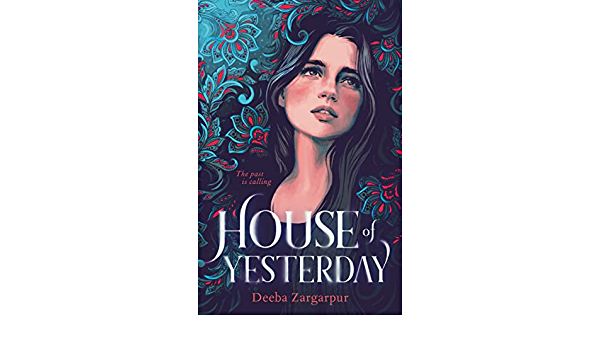
While reading this 320 page YA supernatural/contemporary book-I couldn’t turn the pages fast enough.  When finished- I was bothered that certain threads weren’t resolved, now that I’ve ruminated a bit- I think the vagueness of the author’s prose in sharing her “fever dream” on paper has lingered and the gaps not as troublesome.  The author’s OWN voice Afghan-Uzbek Muslim identity adds layers to a story that is both haunting in the literal sense and familiar in the immigration inter-generational traumas and secrets shared.  Even deeper though, the book pokes at universal themes of regret, holding on to the past, family, friendships, and grief.   The book’s characters identify as Muslim, but the story is not Islamic, nor is there much religion save a few salams and mentions of Eid.  The supernatural elements in the book, whether you understand it to be ghosts, or personified memories, or jinn, are a large part of the book, but are not framed in a belief or spiritual manner, and while some may find it Islamically off-putting, I felt the book explored what the main character was enduring and what the weight of the past was doing to her, didn’t necessarily cross the haram line.  Her father has a girlfriend he is looking to marry, but it isn’t celebrated, and there are close male/female friendships, but the book is relatively clean for the genre and would be a good fit for high school readers and up.

SYNOPSIS:

Summer on Long Island has Sara retreating into herself.  Surrounded by nearly a dozen aunts and uncles and numerous cousins, it is the separation of her parents and trouble with her best friend that makes getting out of bed every morning a challenge.  As a result, her mother ropes her in to helping with her latest remodeling project.  When she enters an old crumbling house one morning to take “before” pictures, she starts seeing things, and feeling things.  Things about her past.  Things about her beloved grandma, Bibi Jan, who is alive and deteriorating from dementia.  What is the house trying to tell her? Why won’t anyone tell the truth?

WHY I LIKE IT:

I love the mystery and the chills of the story.  As the reader you aren’t entirely sure where the story is headed, what you are to do with the bits of the puzzle you are given, but the intrigue to find out pulls you forward.  That being said, the book does reads debut, a few of the side story lines are not fleshed out enough to feel important, satisfying, or resolved and they come across as being abandoned.  I would have liked to see more of Sara and her father’s relationship, the details don’t seem to fit, and the continuity seems halfhearted.  At times so does the “night” it all changed with Sam.  I like the interpretive vagueness of the supernatural threads and that they are up for interpretation amongst readers not just at the end, but throughout the book.  I also like the family’s closeness even when they are disagreeing. For most of the book Sara and her cousins aren’t portrayed as particularly close and I didn’t invest time to differentiate one from another, but by the end, I felt that they were grounded and different and relatable, and I am not sure when that change occurred.  At times the writing seemed a bit repetitive, but the lyrical style would then catapult the story ahead.  There was one place that the fourth wall was broken though, and I was bothered by that slip.

Overall I loved that the Uzben Afghan culture sprinkles showed immigrant nuances, and that the love between the generations countered the trauma being shared as well.  The messaging is subtle but powerful long after the last page has been read.

FLAGS:

For the most part the book stays clean, the father has moved on and has met someone he would like to marry, the mom and aunts briefly recall sneaking out to attend a prom decades earlier.  There is mention of a child bride, and swimsuits, tank tops, and cocktail dresses being worn with no second thought.  For a YA book, the flags are incredibly minimal, save the “ghosts”(?). There are flags of a death that is detailed, the book is “spooky” at times, there is mental health, divorce, pain, dementia, abandonment, theft, running away, and fear.

TOOLS FOR LEADING THE DISCUSSION:

I would love to read this book with some high schoolers.  It is a quick read that would allow for a lot of self reflection, arguments, and entertainment.  The book is available here and releases in a few days, so if planning to purchase, please consider preordering and showing your support.

Unlikely Friends by Sahar AbdulAziz

Standard
Unlikely Friends by Sahar AbdulAziz

unlikely friends.jpeg

Another wonderful book by a Muslim author that doesn’t discuss Islam, but is expertly written and such a great read, that I wanted to highlight it here on the blog.  At 293 pages and involving a teen character I was really on the fence if this would qualify as “young adult,” so I reached out to the author to ask, and she, mashaAllah, responded! Unfortunately, she felt it wouldn’t quite qualify, even though it is a bit of a coming of age story.  So, why am I still reviewing it?  Because I think high schoolers (muslim and non) would really enjoy the book, and with finals nearly over, anyone in that demographic looking for feel good story that is pretty clean (Ramadan is nearly here), I think this book would be a great choice! And full disclosure, yes I’m biased, the librarian is the hero!

SYNOPSIS:

Told from multiple points of view the linear story brings together two introverts, Irwin and Harper, that have a lot of real and serious issues pressing them.  Their traumatic back stories are slowly revealed as the two unlikely friends come together to deal with their current predicaments.

Irwin is an old ornery librarian that doesn’t like people or change.  He is set in his ways and the stubborn Harper, a young high school student for some reason latches on to him.  He tries to shake her, but finds he is genuinely concerned about her and despite his better judgement finds himself helping her and getting tangled in to her messy home life.  

Surrounded by a cast of developed and diverse characters the fictional world of Irwin and Harper is both believable and realistic.  Irwin’s author neighbor is losing her memory, slowly, but noticeably, his deceased fiance’s daughter passes away shaking his routine, and his colleagues at the library are funny and annoying in their own ways.  Harper’s father is released from prison and her mother must make a stand to resist falling into old drug habits, all while trying to make ends meet and put food on the table.

WHY I LIKE IT:

I like that it reads so very smoothly.  You feel Irwin’s shell cracking and you see that he is so much more than just a stereotypical grumpy old man.  You also see Harper’s mother, Olivia concerned that her daughter and an old man are becoming friends.  You probably could predict how things will end up, but the way it is written you aren’t really worried, you are just enjoying getting to know the characters presented.  Overall, it really is a great lens to remind us all that friendship, real friendship is incredibly valuable.  In a world of filters and digital everything, sometimes our humanity is all we have.  I also like that people are given the chance to change and grow, the group of main characters are not stagnant or one dimensional, their challenges and dilemmas are brought in to the open and you feel for them as you would a real person.

The only two questions that stood out as inconsistent with the characters and story development are why didn’t Harper just get a job to help out her and her mother’s financial situation? Plenty of teens have jobs, so that seemed a little off to me.  Secondly, Olivia works at a supermarket presumably or a market of some sort, so it would seem that an employee discount or nearly expired food section would make their food insecure situation a little less severe.  Granted its fiction, but these two jarring concepts seemed to hold me back from completely being swept away.  

FLAGS:

The book is clean in terms of what is explicitly conveyed.  The details that make it possibly/probably not suitable for younger readers are the drug histories of Harper’s parents and what they did to acquire drugs, what they did when on drugs and what was allowed to take place around Harper when she was a child.  Darren, Harper’s father, believes that Harper was sexually abused by someone when he was high and this memory haunts him.  It isn’t explicit, but it is there.  Some mention of Olivia waking up in dealer’s beds is again mentioned in passing, but not detailed.  One could imagine two druggies trying to raise a child and get their next hit, but a lot of the understanding will come from the prior knowledge the reader has of such scenarios, not from the text itself. 

There is the idea that physical abuse was common between Darren and Olivia and is shown in Darren’s temper when he throws a vase against a wall after coming to Olivia and Harper’s home when released from prison.

There is some mention of Irwin’s fiance’s relationship with her ex-husband in that he cheated on her regularly.

So definitely, the book has elements for older readers, but the way the topics are discussed: drugs, abuse, infidelity, are not glorified or even detailed, more they set the stage in defining the current conflicts the characters face, the pasts they must over come, and the environments that they want to improve upon.  I think 15 and up could handle it.

TOOLS FOR LEADING THE DISCUSSION:

I’m thinking to recommend this book to the Sister that runs the high school book club.  I think there would be so much to discuss and myths to dispel that an older group would benefit from the experience and work the author does and writes about in this book.

Plus the fact that the author so easily responded to me, might inspire a group of teenagers to reach out and be equally inspired.