Category Archives: Elementary Fiction

Nasreen’s Secret School: A True Story From Afghanistan by Jeanette Winter

Standard

nasreens secret school.jpg

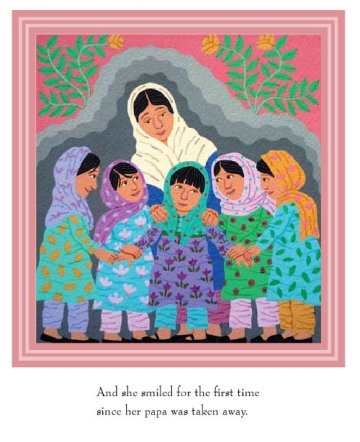
It is widely written about, even amongst children’s literature, that in parts of the world, girls are not allowed to go to school, but that many find ways to do so anyway.  What sets this book apart is that it is based on a true story, and while there is some hope for Nasreen, overall it is a really melancholy tale without a happy ending.  At 40 pages, author Jeanette Winter once again conveys a story that shows compassion instead of judgement and undeniable admiration for her characters.  Written on a 4.2 level, the story packs a lot into small, simple sentences, and her illustrations do not shy away from the realities of Afghanistan.  While I was surprised to see that twice the book was challenged, in 2014 and 2016, for showing Muslims praying and for violence, I was glad that it was never banned.   The strength and determination of Afghani women should not be silenced, it should be shared and celebrated.


The story is told from the point of view of Nasreen’s grandmother.  She is heartbroken that her granddaughter is not allowed to attend school and practice the arts as she was, and even her daughter-in-law, were able to do as children.  Since the Taliban has come things are dark.  Things get worse when one night soldiers come and take Nasreen’s father with no explanation.  When he doesn’t return, Nasreen’s mother leaves to find him, displaying her own strength to independently take on a society that doesn’t permit her to go out alone.  Unfortunately she does not return either, and Nasreen stops speaking.  Grandma learns of a secret school for girls.  Determined that Nasreen should know of the outside world, great risks are taken for many girls to learn in a private home a few doors down.  Dodging Taliban soldiers and neighborhood boys helping keep their school a distraction starts to pay off as Nasreen finds a friend and starts to open her heart.  The book ends with mom and dad still missing, but hope for Nasreen to see through the window education has opened for her, inshaAllah.

secret2


A Tale from Turkey The Hungry Coat by Demi

Standard
A Tale from Turkey The Hungry Coat by Demi

the hunger coat.jpg

It really bothered me that I didn’t love the version I read of  The Parrot and the Turkey about Nasreddin Hodja, especially after finding out how entwined he is in Turkish culture, and reading some of his tales online.  So, when I found that Demi had also rewritten and illustrated a tale from his collection I was anxious to check it out.

hungry-coat

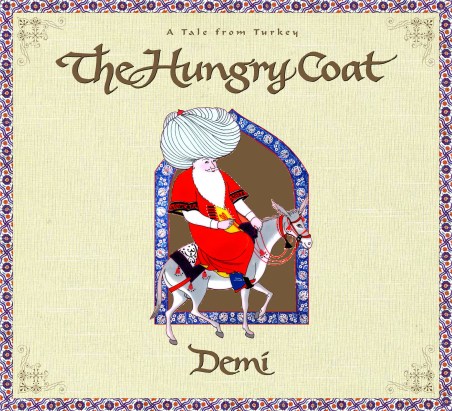
The  Hungry Coat is a charming story and Demi does a great job of bringing it to life with her pictures and storytelling abilities.  The book is 36 pages and a 4.1 on AR.  The text isn’t overwhelming in volume, but to read it definitely requires a bit of an older child’s vocabulary.  Words like caravansary, hostel, banquet, frisky, and commotion are scattered through out.  However, to listen to the story and to understand the message Nasrettin Hoca (an alternate spelling) is conveying, is easily enjoyed by children four and up.  The story flows very smoothly and the catch line of “Eat, coat! Eat!” makes the story absolutely delightful.

hungry-coat1

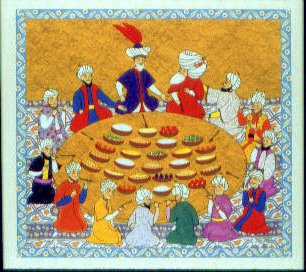
Nasrettin Hoca always keeps an apple in his pocket for any goats he might pass while he is out and about.  One day he helps round-up a goat that has gotten lost, and in all the commotion had become quite a mess and lost too much time to go home and change his clothes before heading to a friend’s house for dinner.  Deciding to go in his patchy, smelly clothes, Nasrettin soon finds that none at the dinner party will sit by him, or even sit facing him.  He slips out quietly from the gathering and has an idea.  He goes home and preens himself, and returns to the party where he is greeted with attention and kindness.  At dinner he begins placing the food in his coat, rather than eating it.  Each time he opens his coat he commands it to eat.  After he fills his coat he pats his belly to the bemusement of all around him as they ask him what he is doing.  He makes his point that when he came in his old coat he wasn’t fed, but when he came dressed so beautifully he was, and thus clearly the coat was invited to dinner, not him.  Everyone cheered and learned the lesson.

“A coat may be fine, but a coat does not make a man.”

The illustrations are rich and detailed, but I did find myself a little put off when Nasrettin seemed to go from looking like an old little man, to being very effeminate.  The inconsistency bothered me a bit, which surprised me for a Demi illustration.  Also, it is worth noting that there is mention of wine in the story, that many may find off for a children’s book, particularly one about Muslims (Nasrettin was an Imam and a Dervish, so he may have drunk, I’m just saying it surprised me).  The last two pages of the book are an afterword about Nasrettin Hoca in real life and the influence of his folk tales and lessons.

Snow White: An Islamic tale by Fawzia Gilani illustrated by Shireen Adams

Standard
Snow White: An Islamic tale by Fawzia Gilani illustrated by Shireen Adams

snow-white_cov

A lot of the twists that I was surprised by and endeared to in Fawzia Gilani’s Cinderella, seemed lacking in her re-telling of Snow White.  Perhaps it is the mere fact that Cinderella has a legacy of being re-told from different cultural perspectives and in different time periods, where Snow White doesn’t, that made this book stumble where her other sailed much more smoothly.

The basic premise of this Snow White version is naturally the classic tale.  Snow White is the envy of her stepmother, in this case however, it isn’t a magic mirror, but a jinn who answers her questions. Once the huntsman is convinced not to kill her, and a boar’s heart and liver are taken instead,  Snow White finds the companionship and shelter of the dwarves.  In this re-telling, it is a female crew with countless skills that they are happy to pass on to their newest friend.  When the evil stepmother finds out Snow White still lives she concocts poisonous dates to present in disguise to Snow White who is awaiting the appointed iftaar time.  The dwarves arrive home too late to save Snow, but see who has done the evil deed.  The Prince makes his brief appearance as he arrives at the cottage, makes dua’a for Snow and then sends his mother to nurse her back to health.  In fairy tale tradition a wedding soon follows, but the evil step mother has one more trick up her sleeve, she poisons a comb that Snow is surely to use as she prepares for the big day.  The dwarves cannot thwart the stepmother and Snow is only saved when the stepmother in all her vanity accidentally picks up the comb to fix her own hair.  Over time she recovers and Snow forgives her and they all presumably live happily ever after.

snowwhiteanislamictalepage2

Perhaps it isn’t fair to compare the two books, but I would imagine they are often purchased together and I feel like there are some notable differences that are worth mentioning.  In Cinderella, the setting is Andalusia and they are all about the same skin tone.  Snow White seems to resort back to old stereotypes and the stepmother seems to be the only one with a darker complexion with all the others being more fair.  Granted her name is Snow White, but it is established on the first page that her mother prays for a child with a “heart as pure as snow,” so really that doesn’t hold up.  Also, where I felt that Cinderella could work for Muslims and non Muslims alike, I think this one would be a hard sell for non Muslims.  There are a lot of references to dua’as of Noah and Job, there is Ramadan, the role of the jinn, she even does tayammum at one point and readers may be confused why sometimes she is in hijab, and when home with the women she is not.

Like Gilani’s Cinderella, the book is very thorough in being Islamically appropriate.  The sisterhood is a nice twist and the Prince has a really small part.

snow-white-1-300x286

The illustrator is the same, yet for some reason the pictures seem a bit dull in this book.  The bottle of poison is shimmery, but the other illustrations seem muted and almost rushed.  The book is 41 pages with a glossary and Reference for Quran in the back, and is very text heavy.  Probably 3rd or 4th grade level with some assistance on the Islamic concepts.

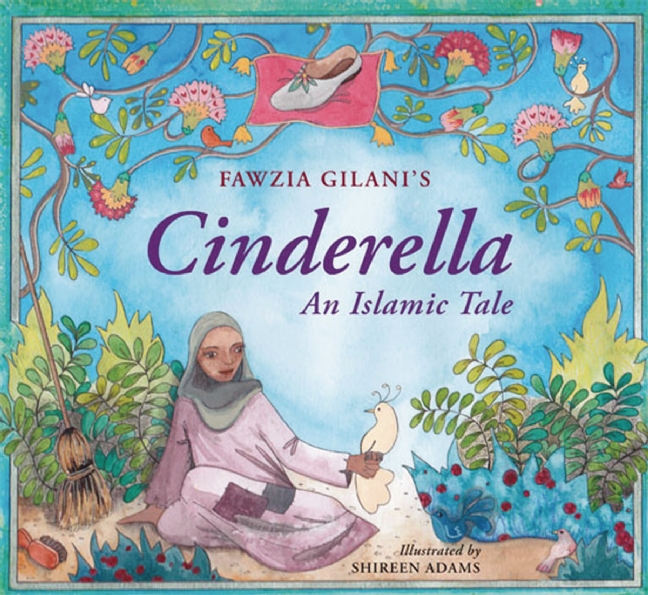
Cinderella: An Islamic Tale by Fawzia Gilani illustrated by Shireen Adams

Standard

cinderella

I’ve seen this book countless times online and honestly have never given it a second glance.  I mean Cinderella is a classic fairytale and I have a few different versions from around the world, but an Islamic one? It seemed like it would be awkward or overly preachy and forced.  I should have given Fawzia Gilani’s version a chance though, she has surprised me with her other re-tellings of Eid Kareem Ameer Saab and Nabeel’s New Pants. And, mashaAllah, to her credit she manages to weave a decent story full of Islamic tenants, void of magic, and more feminist than the Disney or Grimm versions.

I’m not going to summarize such a familiar tale, but I will point out major twists.  Zahra is a practicing Muslim who is very devout in her prayers, fasting, and reading of the Quran. Her step-sisters nickname her Cinderella after some cinders from the fire burn holes in her clothes.  A bit of a stretch, from Zahra, but I think even the youngest readers will know the original Cinderella story and be ok with it.

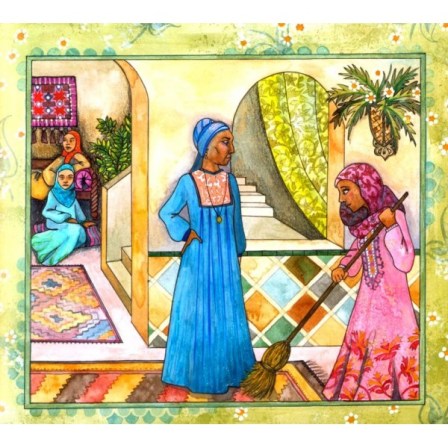
cinderella3.jpg

Cinderella is constantly remembering to be patient despite the treatment of her step family through various duaas, ayats in the quran, and fasting on the day of Arafah.  When an invitation to an Eid Party at the palace comes, she naturally is forbidden from going unless she completes all her chores.  Luckily her Grandmother returns from Hajj with servants to help clean the house and a new abaya to wear to the party.  At the palace the women and men are in different rooms, but Cinderella catches the King, the Queen, and Prince Bilal’s attention when passing in the hallway for being in full hijab.  She continues to impress the Queen, when she remains quiet during the athan, prays in jammat, and shows grace in her manners and speech. After winning over the mom, the slipper and happily ever after follow the traditional script, however, like the story of Yusuf (as) and how he forgives his brothers, Zahra forgives her step-family as well.

cinderella-text

The 41 page story is heavy on the text and is not AR.  I would imagine that it would be on a third grade level for Muslim children familiar with the vocabulary, and fourth grade for those that are not.  There is a glossary at the back, but not all of the Arabic words are included, and I’m not sure that the context would allow for them in some cases to be understood.  This book would be hard to do in a story time setting because of the length, at bedtime, however, the pictures are detailed and rich enough that one-on-one could hold a five or six year olds’ attention.

Overall the story doesn’t feel forced, and you’ll find your self smiling at some of the “islamicifaction” of the plot.  Most of it flows really well.  I love that it isn’t focused on her appearance alone.  I also like that she isn’t helplessly waiting to be saved or alleviated from her burdens.  By and large it doesn’t feel like a love story, Prince Bilal is pretty much a minor story point.  The book works for Muslims and non-Muslims alike.  It isn’t preachy, but it definitely is strong in it’s moral messages. I think non Muslims will find the Islamic version just as fun as the hundreds of other “twists” on Cinderella and Muslim children will love to see someone like them living happily ever after as well, inshaAllah.


The Sky of Afghanistan by Ana A. de Eulate illustrated by Sonja Wimmer

Standard

sky-of-afghanistan_book-cover

An Afghani girl dreams of peace in this illustrated 24 page poem.  She soars and flies like the kites against the wind and giggles and learns and hopes with her feet on the ground.  The book is written on a third grade sixth month AR level, but even at that the poem is hard to follow for elementary age children.  The voice doesn’t sound like a child’s, it is far more reflective and mature for how she is presented.  The text, not really a story, wanders and alludes to what obstacles face Afghani’s but doesn’t detail them.  The author assumes the reader knows that Afghanistan has been under war for decades, that war is painful and gloomy and gruesome.  Adults maybe can find the hope for peace and the struggles inspiring, but I don’t think children will really have a clue as to what the text is about. Luckily the pictures are AMAZING.


The illustrator does an amazing job in keeping the story light and hopeful and showing the culture without judgement or despair.  The domes of the masjids, the hijabs, the mendhi on the hands and even the smiling faces beneath the niqabs are done with lightness, kindness and beauty.  There is even a touch of whimsy that reminds the reader that this is supposed to be from a child’s perspective.

The sky can be full of kites, I think to myself,

but it can also be full of dreams…

And mine flies up high, high into the sky,

towards the stars…

The book overall is poetic and artistic.  I can see children enjoying the illustrations and maybe falling asleep to the melodious words, even if they can’t really make sense of them. The book says that profits go to charity, and that the book was translated from Spanish.   For the illustrations alone, the book has merit and older children may be inspired to take something difficult and turn it into something beautiful with their words.


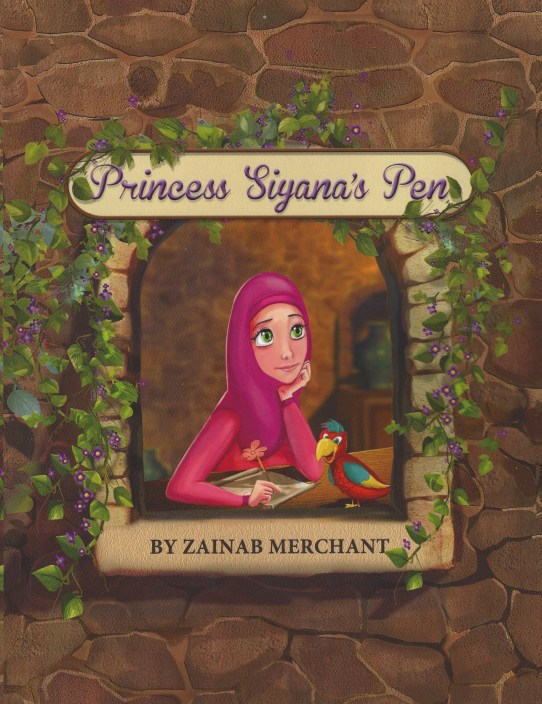
Princess Siyana’s Pen by Zainab Merchant

Standard

Princess_Siyana_s_Pen.jpg

It is hard to not compare a big, brightly colored Princess book to the golden standard of a Disney princess story, which obviously isn’t fair. But for as much as I wanted to love this strong Muslimah and her doe-y eyes as she saves herself and the kingdom, I felt the author let me down.  The plot feels overly familiar, it is like a mix of Rapunzel in Tangled (minus the tower and Mother Goethel), Anastasia (not Disney, but in the same genre), throw in Jafar and (a nice) Iago from Aladdin, sprinkle in Islamic wisdom and insights, and tada you have Princess Siyana.

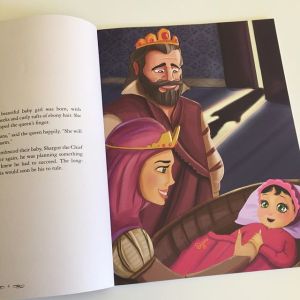
Siyana is the daughter of King Tariq and Queen Fatimah, the wonderful rulers of Lusitania.  While still a baby, the evil Chief Advisor Shargor kidnaps the young princess and leaves her in the neighboring mountainous kingdom of Baetica.  As her kingdom searches for her, a traveler in Baetica finds her and gets her to Ms. Salma at El Sol Orphanage.  Her life is good growing up. She shares her knowledge of modesty and salat with the younger girls at the orphanage, and has a very close relationship with Ms. Salma.  Meanwhile, in Lusitania, Shargor has imprisoned the King and Queen and is ruling unjustly and ineffectively.  When Siyana is 16 years old Ms. Salma surprises Siyana with a trip to Baetica for an interview at Baetica Academy, Siyana’s dream school.  While there, a tornado tears the two apart, and Siyana is rescued by an elderly couple.  This couple is struck by her name and fill her in on the story of the missing princess.  Siyana boldly journeys to the castle, storms in, frees her parents, forgives Shargor and presumably they all live happily ever after.

The author puts not just Islamic values of forgiveness, and kindness to others in the story, but pushes the point of hijab and talking to Allah (swt) as well.  Siyana discusses how at the orphanage they don’t cover, but when they go out they do.  One of the younger girls even asks her, “why wear such a pretty dress if no one can see your hair?”  Hijab comes up a few times through the book and isn’t too awkward.  However, I felt the concept of writing letters to Allah (swt) a little forced and less smooth, especially considering it is the title action of the book.  Once a week the girls at the orphanage write letters to God with special pens Ms. Salma had given them. They then drop these letters in the lake.  A bit odd for the environment in my opinion, but I get it I’m cynical.  In her first letter she writes about wanting to help others and even remarks, “Oh my Lord, my Guide, my Everything, How I’ve missed you, even though I talked to you just an hour ago in my Salaah!” The author has Ms. Salma explain that you can always talk to Allah (swt) and that duaas and letters are good, but remembering Him in your heart is the best.  Siyana writes two letters in the book, and the letters aren’t long, but it seems like the lead up in to them and after them, explaining the connection to God through many different forms is good, and which are better, and which are required, etc., gets a bit wordy.  Again I do acknowledge my own unease with writing letters so formally to Allah (swt) in literature. I have now reviewed a few books were it presents itself, and in all cases I find it weird, and I don’t know why.  Interestingly the Author never uses the word Allah (swt), but she does use hijab and salaah.  And there is space at the back of the book to write your own letter to God.

I do like that the plan is for Princess Siyana to rule the kingdom and that she is traveling for educational reasons when the tornado strikes.  I also like that Ms. Salma seems to be a strong independent woman and that Siyana, doesn’t wait around for someone to save her parents, she takes control, trusts Allah, and saves the day.

12729432_218382801843197_1944575424_n

The book is beautiful and big.  The illustrations are radiant and well done.  At 40 pages long, there is also a recipe for Macaroons and amaze at the end, the story is quite long in both the number of pages, and in the amount of text on each page.  I would place it on at least a 3rd or 4th grade level for reading, and possibly a KG or 1st grade level for story time.  The book isn’t dry, but it would definitely test a 3 or 4 year old’s attention span.  Obviously it is an Islamic alternative to the mainstream princess story, but at $19 and the way it is beautifully presented, I guess I wanted more than just Islamic morals infused into something so familiar.  I feel like the author could do more, it is definitely within her writing ability and the publisher, Sun Behind the Cloud, who it seems is responsible for the illustrations as well, definitely know what they are doing.

There is a youtube teaser: https://www.youtube.com/watch?v=6qS_Jw2rp8Q

and an interview with the author https://www.youtube.com/watch?v=HCclUg9pUXI

siyanas-pen-1-600x600


Jannah Jewels by Umm Nura illustrated by Nayzak Al-Hilali

Standard

Strong muslim girls  (check)

Historical fiction (check)

Elementary level chapter book (check)

Beautifully illustrated (check)

Action, adventure, fun (check, check, check)

Really what more can you want from a book, or better yet a series of books?

The premise of Jannah Jewels is four Muslim girls each with specific skills that travel back in time to various places in the world to retrieve artifacts to save the world before the “villians” do.  Along the way they share knowledge of hadith, Quran, and Muslim achievements and advancements while meeting with influential Muslims.  I mean really, what is there not to like.  This is historical Islamic Fiction for 2nd through 5th grade at its finest, yay!

So far there are nine books in the series, and based on the premise that they must find 12 artifacts to put in a golden clock, I would assume there will be 12 books.  I decided to review only the first two as I think they set the stage and give the reader a good feel for the series’ standards, the tone, and direction the consequent books will follow.  The series is to be read in order and they range in length from 69 pages to 165.  Each book has a description of the main characters, a visual of the supporting characters and is followed after the story by a sneak peek at the next book, a glossary, and some manga anime of the heroines.  Some of the books are co authored (Ustadha S. Karim & Tayyaba Syed), but based on the website http://www.jannahjewels.com Umm Nura is the main author and creator of the series.

SYNOPSIS:

Hidayah sees a woman with a bow and arrow and watches her for many days until finally she musters the courage to meet her.  This meeting is the start of Hadiyah’s training in present day with the Master Archer.  The story however, starts with a prologue of the past and how different approaches to archery have lead to a rift between those entrusted to keeping evil at bay.   The collision of those actions and today occur as Hidayah and her friends Jaide, Sarah, and Iman are chosen to retrieve artifacts scattered around the world and throughout time.  They must bring these artifacts and place them in the golden clock before Jaffar and his son Khan do, to obtain a secret locked away inside.  Each girl has incredible skills and strength as well as fears and doubts.  The stories are action pact as well as enlightening and empowering.  The girls are smart, strong, and supportive of one another and they use team work to make for a smart inspiring read.

In the first book the foundation is laid and the details of time travel and the task are put forth, it is a tiny bit cumbersome, but is quickly believable and accepted as the action picks up.  The Jannah Jewels travel to Timbuktu and meet with Mansa Musa to rescue a lost manuscript.  In the second book they journey to China aboard the ships of Chinese Muslim Admiral Zheng He to recover a medicinal plant.  The recap of the first book and the premise of what has to be done is seamless and quick.  Thus allowing the story to move further below the surface to provide more insight into who the four girls are, and understanding into what occurred in the past that made the Jannah Jewel adventures necessary.

WHY I LIKE IT:

I love historical fiction, so Islamic historical fiction is like a gift, when done right.  To give young muslims a glimpse at some of the remarkable accomplishments and contributions Muslims have made throughout time, in a manner they don’t even know they are learning it, is so needed.  Our kids should know about Mansa Musa, Al-Kindi, Fatima Al-Fihri, Sultan Muhammad II, and more, and sadly many are not tempted to pick up a non fiction book to learn about them.

The Jannah Jewels are also admirable and have the ability to inspire our girls to be better Muslimah’s through their examples of intelligence, strength, and deen. Each book reveals more about their hobbies, passions, and past, and does a good job of giving them each their own personalities. That being said, these books are engaging for both boys and girls.  My own children have read the first four multiple times as have I.  Initially I didn’t think my son would be interested as it seems like a very “girl power” type read, but the story is strong enough and the characters have depth that they work well for all kids and their parents.

In addition to the stories, visually the books are absolutely gorgeous and appealing.  The manga anime style of art is bright and colorful on the covers, and detailed and complimentary throughout the text.


FLAGS:

None, alhumdulillah

TOOLS FOR LEADING THE DISCUSSION:

The website is engaging for those wanting to know about the characters and writing team.  The FAQ section is good background as well.  www.jannahjewels.com

The books aren’t complicated as they are for elementary aged children, that anything more than the story is not needed.  If your readers are like mine, however, you will need some reference books or google on hand for those that would like to learn more.  I think these books would be great in a classroom setting to get students reading.  I also think they would work well in 1st grade for read a loud story time.  I don’t know that they would be ideal for book club, but definitely could be used to compliment lessons in Language Arts and Social Studies.

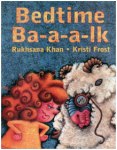
Bedtime Ba-a-alk by Rukhsana Khan illustrated by Kristi Frost

Standard
Bedtime Ba-a-alk by Rukhsana Khan illustrated by Kristi Frost

bbaaalkcover

I know, I know another book by Rukhsana Khan, but really how great is she.  She writes books with religious references sometimes, cultural ties sometimes, and sometimes just fun books. I love that kids of all backgrounds associate her with good stories, and that she hasn’t limited herself to just one demographic.  img_1893

Bedtime Ba-a-a-lk has no religious or cultural connections and is just about a girl dealing with rogue sheep in her mind that don’t want to be counted.  The AR level is 2.6 but I don’t know that 2nd graders and below would really “get” the story.  The vocabulary is great, with a little assistance: balk, conjuring, deliberate, snub, mutiny, haunches, eider-down, furrowed, etc..  And the concept of a girl creating her imaginary dream world and conversing with the characters in it, is grand, but I look forward to testing out which age groups grasp it, and which ones just think it is a funny story with an obstinate ram.

img_1894

The book is 30 pages and beautifully, playfully illustrated.  The pictures are just “fuzzy” enough to give a sleepy feel, and bold enough to stretch the imagination.  The lines do not rhyme, but flow easily.  The font is large and inviting, and well placed on the page.  The book is clean, and the girl in her pleading with the sheep uses “please” and good manners in her firm demands.   It does use the word, stupidly and darn, once each, but overall a silly fun read.


One Hundred Ice Creams by Sumayyah Hussein illustrated by Derry Maulana

Standard

one-hundred-ice-creams

This book on my first reading reminded me a lot of Amira’s Totally Chocolate World in that it takes a religious idea, in this case Jannah or heaven, and uses a child’s excitement for a favorite food to explore it.  Not a bad technique, and alhumdulillah the author was able to stay on the idea of heaven and add some additional information then just the silliness of having all the ice cream you could imagine.  The book is 36 pages and can probably be read by a first or second grader independently and appeal to story time ages of preschool 4 and up.  The book unfortunately takes a while to get going. I struggled with the first few pages, which I found really wordy, and puzzling.  The kids seem to be about 6 years old in the illustrations and in their mannerisms, but they start off the book complaining about homework and needing a break from it, which even my own children found confusing and remarked on it.  There also seems to be some unnecessary description too, in setting the stage: the day, the vehicle, the season, that it’s their favorite park, that they haven’t been there in a while, that they took a breath of fresh air, that they waited 10 minutes, etc..

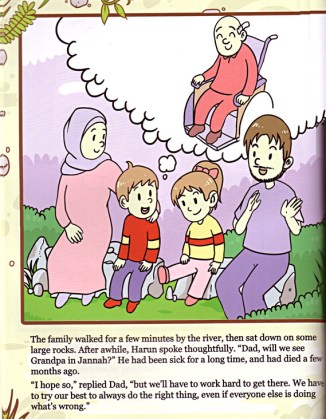
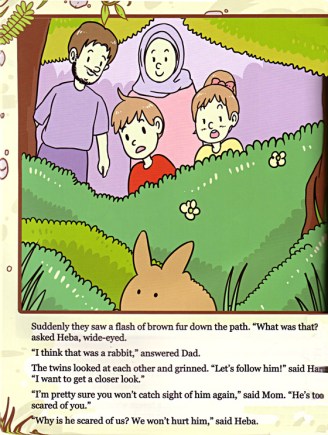
Thankfully I think once the reader’s get that the park is crowded, that the kids couldn’t enjoy the swings and slide and decide to explore the nearby woods, the story finds its rhythm and engages the reader quite well.  A few minor hiccups throughout the book are again, the abundance of details that don’t further the story and aren’t developed. The river is described when they cross the bridge, and then there is another one, or possibly the same one, as this one is now rushing, and it jars the story as there seems to be a lot of rivers in this park.   There is also a rabbit that pops up and excites the kids and then shows up at the end again, which is cute and brings the story to a happy close, but I don’t really love how the parents dismissed it.  Why not let the kids see that he is scared of them and figure out that he doesn’t know they won’t hurt him/her,  rather than have mom tell them they won’t see him again and dad quickly steering them in another direction. Granted this is my personal preference, but I like when kids figure stuff out in books and solve things themselves, rather than how perhaps it is in real life, with mom and dad constantly calling the shots.ice-creams1I really like how when discussing Jannah, they talk about the rivers of milk and honey, and I absolutely loved how they talk about Grandpa (hopefully) being in Jannah and being young and strong.  I couldn’t figure out why when in the woods and marveling at nature the characters didn’t use Islamic expressions like, mashaAllah, subhanAllah, and inshaAllah, and when I read it aloud I had to add them when we got to the pages about Grandpa.  It seemed awkward not too.  The book is clearly for Muslim children, there is a reference page in the back with the ayats from the Quran and hadeeth that tell us about Paradise, and the characters are discussing an Islamic concept, so I’m not sure why their language isn’t reflective of that.ice-creams-2

The illustrations are simple and colorful and complimentary to the story.  I don’t know why the color of the character’s skin is yellowish green.  It seems to match the ice cream and on some pages seemed more noticeable then others.  Dad’s face when he is swatting the fly is a little angry and the color of the skin makes him look mean.  Not sure why the flies are mentioned. And the illustration is not reflective of his personality in the rest of the book.
cream.JPG

Overall the book has a good message, I think I have just loved all the books at Ruqaya’s Bookshelf so much, that my expectations may have been a little too high.  I’ve never written a book and I have no idea what the publishing process for this book was, but I feel like a a few minor adjustments from an editor or proofer would have made this book absolutely phenomenal.  That is not to say it isn’t a good book,  children undoubtedly, will get a tangible understanding of Jannah after reading the story.  An additional plus is that it is on their level in both content and in perspective, meaning that there is lots to chat about after.  Concepts that the children can discuss based on what they understood from the story with little prodding from an adult.  Points from how the kids are treated at the playground, to adding what they would want they are in Jannah, and ultimately steps we can take to increase our chances of getting there, inshaAllah.

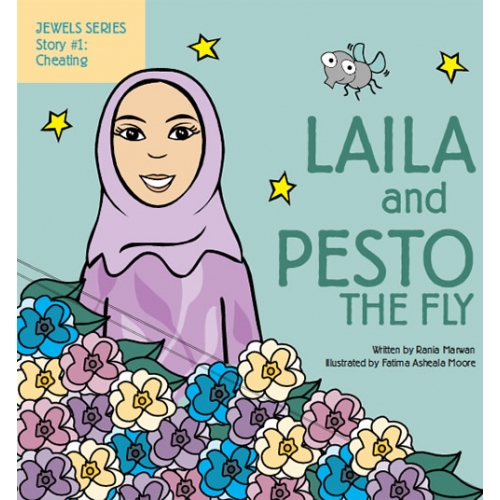
Laila and Pesto the Fly by Rania Marwan illustrated by Fatima Asheala Moore Jewel Series Story #1 Cheating

Standard

laila-and-pesto-the-fly

I ordered this book with the hopes that it would be the first book of a wonderful series teaching values in an Islamic context.   It says that it is book #1 in the Jewels Series and it focuses on cheating.  However, the book was published in 2009 and I can’t find any other books in the series.  Sadly, I can possibly see why.  The book is not great.  The illustrations make it so tempting even if all the girls are gorgeous and the illustrations simple, they would seemingly work well with a book aimed at 4 to 8 year olds, and just 24 pages long.
laila1

Unfortunately the text is lacking and doesn’t create a story worth reading more than once. The sentences are repetitive. And the same words are used over and over.  The first page alone says the word “play” four times in three sentences.  It is about 4th grade girls that play, watch cartoons and essentially hold lessons/ book clubs for each other once a week.  A lot going on for a book that on the second page says the word “flies” three times in three sentences.  Needless to say the repetition makes it hard for a story time selection, and the run on sentences hard for young readers.  The first page features a font that is probably about a size 20 and the next page it drops down to one that is about 11, the third page is about a 14 and the trend of the ever-changing font size continues throughout the book.

laila-text

Example of repetitiveness from Laila and Pesto the Fly

The story idea is a good one at its core.  A girl teaches her friends about flies.  Then the fly talks about Laila and how she is kind and honest. Then the next sections returns to Laila not being ready for a math test and she is tempted to cheat when Pesto, the fly, distracts her and writes a message for her in glitter.  I’m not sure how the glitter stays on the page, but, the message is received by Laila and emphasized by the author sharing a hadith, “He that deceives us is not one of us.” The last page of the book is a bulleted list emphasizing the harms of cheating, and how to overcome the temptation as the girls urge you to join their Cheat Deceit Foundation.

Overall, the book is awkward and doesn’t work for me.  There are a lot of better books out there.  That being said, if the author wrote another book, I may give her another chance, it isn’t hopeless. It just needs some tweaks. The fly is a silly likeable character, but the group of friends are a monolith and have no individual roles.  The message is clear and important, and we need books like this, but alhumdulillah the standards have gone up, way up, and the writing quality isn’t where it needs to be to attract Muslim children or their parents.