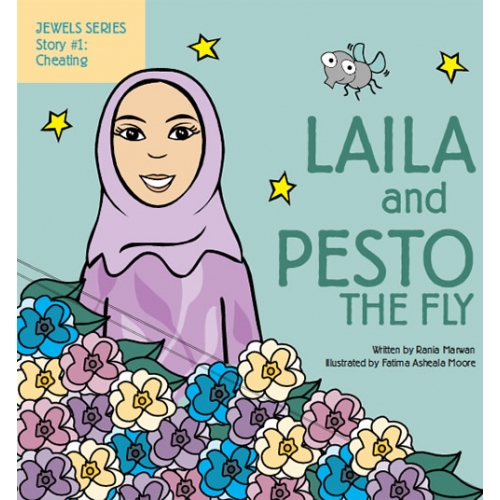
I ordered this book with the hopes that it would be the first book of a wonderful series teaching values in an Islamic context. It says that it is book #1 in the Jewels Series and it focuses on cheating. However, the book was published in 2009 and I can’t find any other books in the series. Sadly, I can possibly see why. The book is not great. The illustrations make it so tempting even if all the girls are gorgeous and the illustrations simple, they would seemingly work well with a book aimed at 4 to 8 year olds, and just 24 pages long.

Unfortunately the text is lacking and doesn’t create a story worth reading more than once. The sentences are repetitive. And the same words are used over and over. The first page alone says the word “play” four times in three sentences. It is about 4th grade girls that play, watch cartoons and essentially hold lessons/ book clubs for each other once a week. A lot going on for a book that on the second page says the word “flies” three times in three sentences. Needless to say the repetition makes it hard for a story time selection, and the run on sentences hard for young readers. The first page features a font that is probably about a size 20 and the next page it drops down to one that is about 11, the third page is about a 14 and the trend of the ever-changing font size continues throughout the book.

Example of repetitiveness from Laila and Pesto the Fly
The story idea is a good one at its core. A girl teaches her friends about flies. Then the fly talks about Laila and how she is kind and honest. Then the next sections returns to Laila not being ready for a math test and she is tempted to cheat when Pesto, the fly, distracts her and writes a message for her in glitter. I’m not sure how the glitter stays on the page, but, the message is received by Laila and emphasized by the author sharing a hadith, “He that deceives us is not one of us.” The last page of the book is a bulleted list emphasizing the harms of cheating, and how to overcome the temptation as the girls urge you to join their Cheat Deceit Foundation.
Overall, the book is awkward and doesn’t work for me. There are a lot of better books out there. That being said, if the author wrote another book, I may give her another chance, it isn’t hopeless. It just needs some tweaks. The fly is a silly likeable character, but the group of friends are a monolith and have no individual roles. The message is clear and important, and we need books like this, but alhumdulillah the standards have gone up, way up, and the writing quality isn’t where it needs to be to attract Muslim children or their parents.


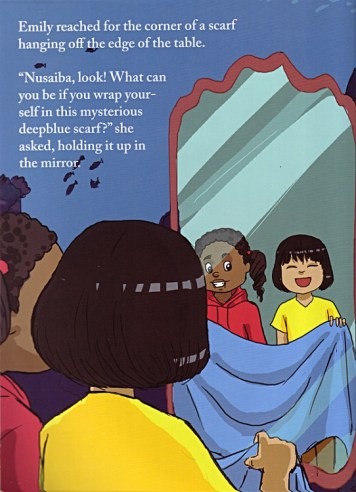


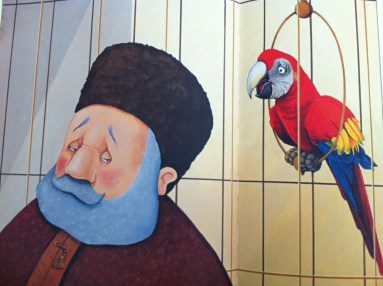
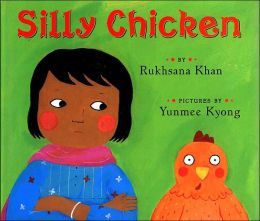


 Nadia’s aunt is getting married and she gets to be the flower girl in the Pakistani-American wedding. She also will get mehndi put on her hands for the big event. Her cousins warn her that she might mess up and even in the midst of her excitement she begins to worry what the kids at school will say when they see her hands on Monday. As her aunt prepares the mehndi and the application process begins, various uncles peek in on her and her aunt gifts her a beautiful ring. The mehndi has to sit on the skin for a while to set and as Nadia practices sabr, patience, I couldn’t help but think something seemed off in the story. I’ve been at, in, and around a lot of Pakistani and Pakistani-American weddings, and this story didn’t seem to reflect the tone of such occasions. The book doesn’t reflect the hustle and bustle and near chaos, it doesn’t sound like the tinkle of jewelry and laughter as the women sit around chatting and getting mehndi put on together, the pots on the stove are referenced but not described so that the reader can smell the sauces thickening and hear the pans crashing and taste the deep rich flavors. It is lonely. Nadia is lonely and filled with anxiety about Monday. Durring the wedding she is walking down the aisle and suddenly freezes when she looks down and doesn’t recognize her hands. Her cousins seem to show unsupportive “I-told-you-so” expressions as she searches for some comforting encouragement to continue on. When she finishes her flower girl duties, her grandma asks if she understands why looking at her hands makes her feel like she is “looking at my past and future at the same time.” Nadia doesn’t understand and the author doesn’t explain. At the end she is ready to embrace that her hands are in fact hers and that she will show her friends on Monday. But the reader has no idea how it goes, or what exactly the significance of her painted hands are. The book fails to give any insight or excitement for a culture bursting with tradition at a time of marriage.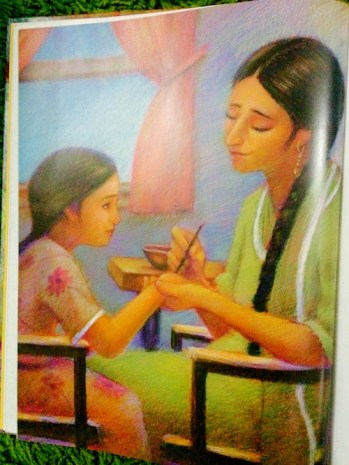



 Islamic School Librarian