

This gorgeous 40 page picture book biography is both flowing in its storytelling and informative in its sourced details of a fairly unknown, underappreciated figure. I was humbled reading this book and learning about the accomplishments of someone I had never heard of before. Truly this book, bringing to the attention of our young and old ones alike, such a remarkable figure, is a much needed gift. The publisher suggests the book for 4-8 year olds, but I think it also will appeal to older readers familiar with Copernicus, Galileo, and Ptolemy and who will appreciate the efforts driven by curiosity from someone so long ago. The diction in a few lines did give me pause, but nothing that overshadows how well the author has once again proven to master the storytelling of non fiction Muslim accomplishments in an engaging, accessible, exciting way for today’s audiences.


The book opens with a map of the Timurid Empire in 1405, before showing the reader a young prince, Ulugh Beg, gazing out and the stars and wondering how many there are. The next spread makes no sense to me, but I acknowledge others might not be bothered, how can the young boy be watching days fade into weeks, into months, into years, and then wonder how many days are in a year? Seems that either those terms weren’t yet around, or some details about the generalized meaning made him curious about the specifics. Either way, him wanting to know how many days in a year and the changing of seasons, along with counting the stars are the questions he wonders about as a child and works to answer throughout his life.
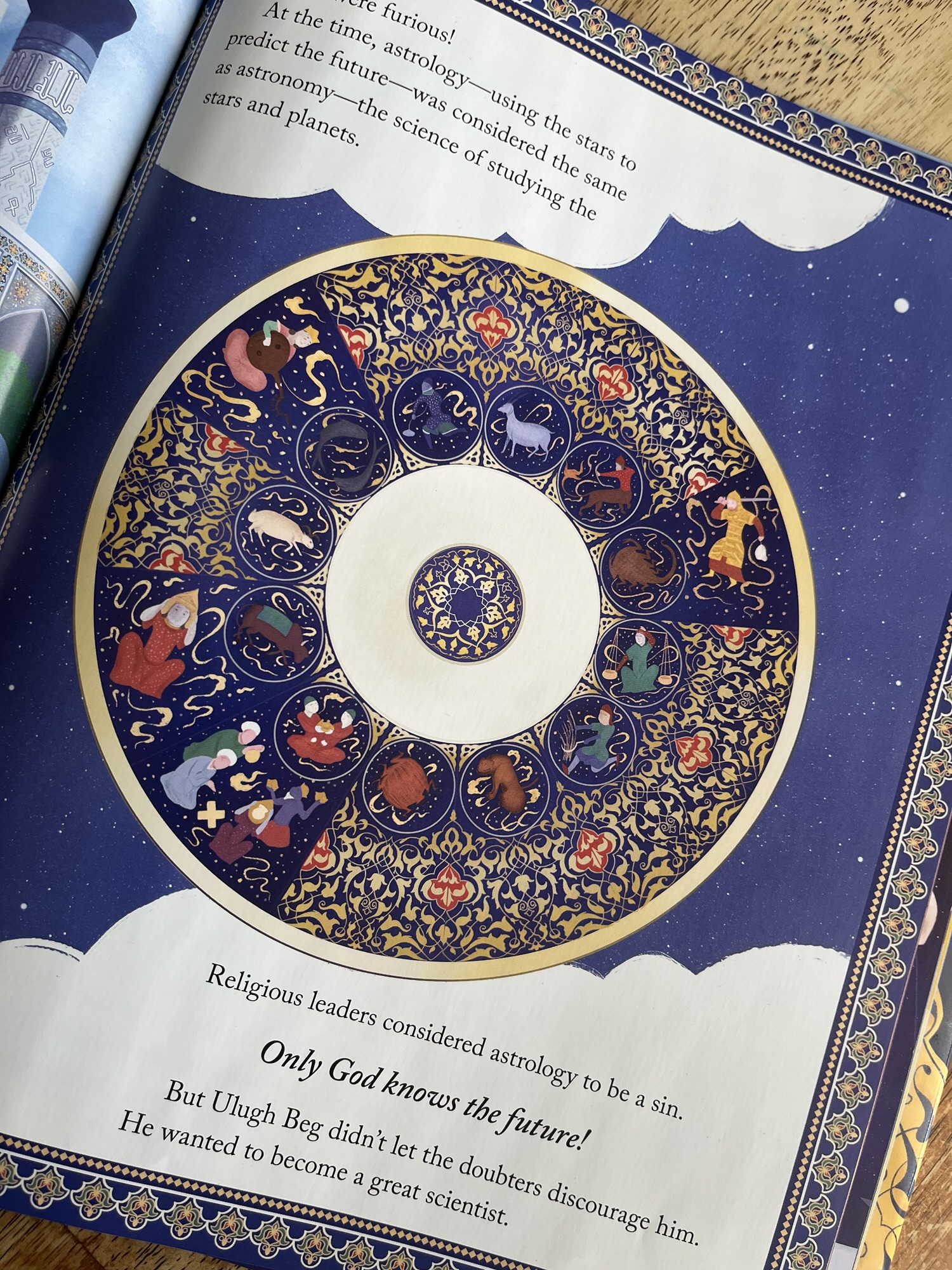
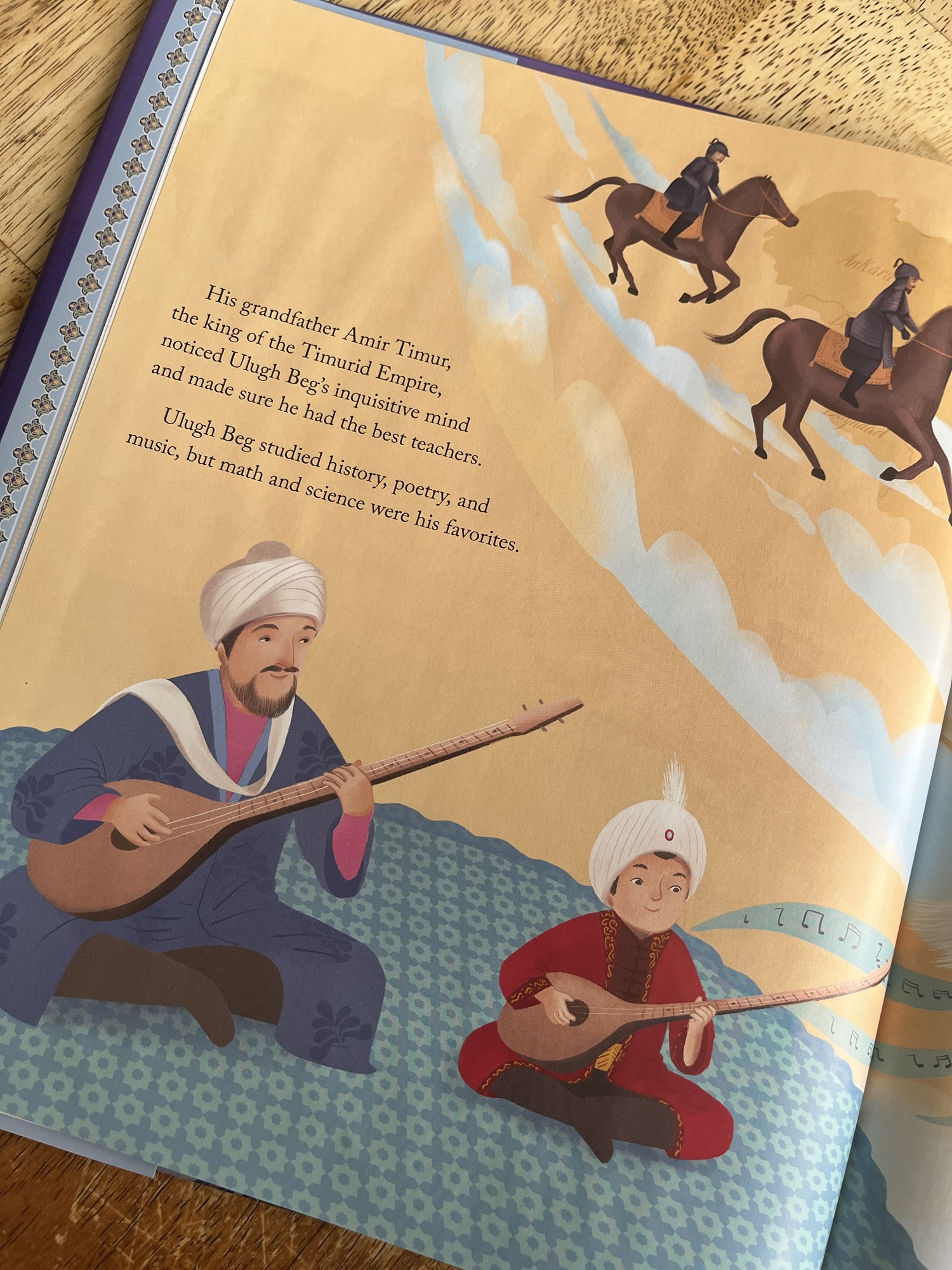
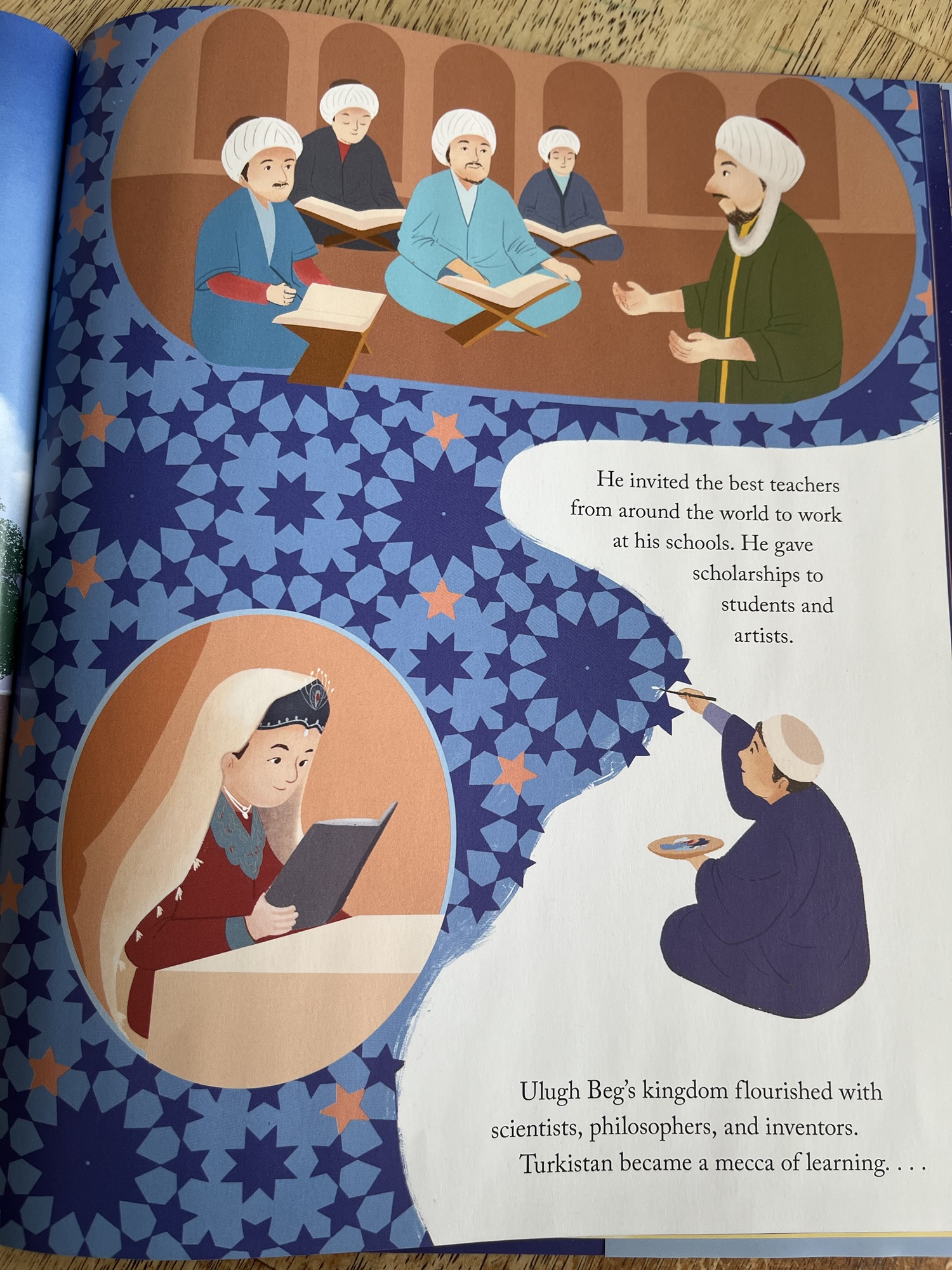
The king of the Timurid Empire, Ulugh Beg’s grandfather, insured his intelligent grandson had the best teachers and was allowed to travel, learn, and follow him curiosity. At 15, when Ulugh Beg became the ruler of Turkistan, he built a madrasa and invited scholars, artists, students, philosophers, and inventors to attend making Turkistan “a mecca of learning.” Yes, the usage of mecca here made me laugh. I know it is appropriate, but it seemed a little on the noise in a book where Mecca, the direction we pray is also mentioned. The book then details the controversy of studying the stars, as astrology and astronomy at the time, were seen as one and the same. And with only God knowing the future, he had to assert that he was curious about the science of the stars and planets.
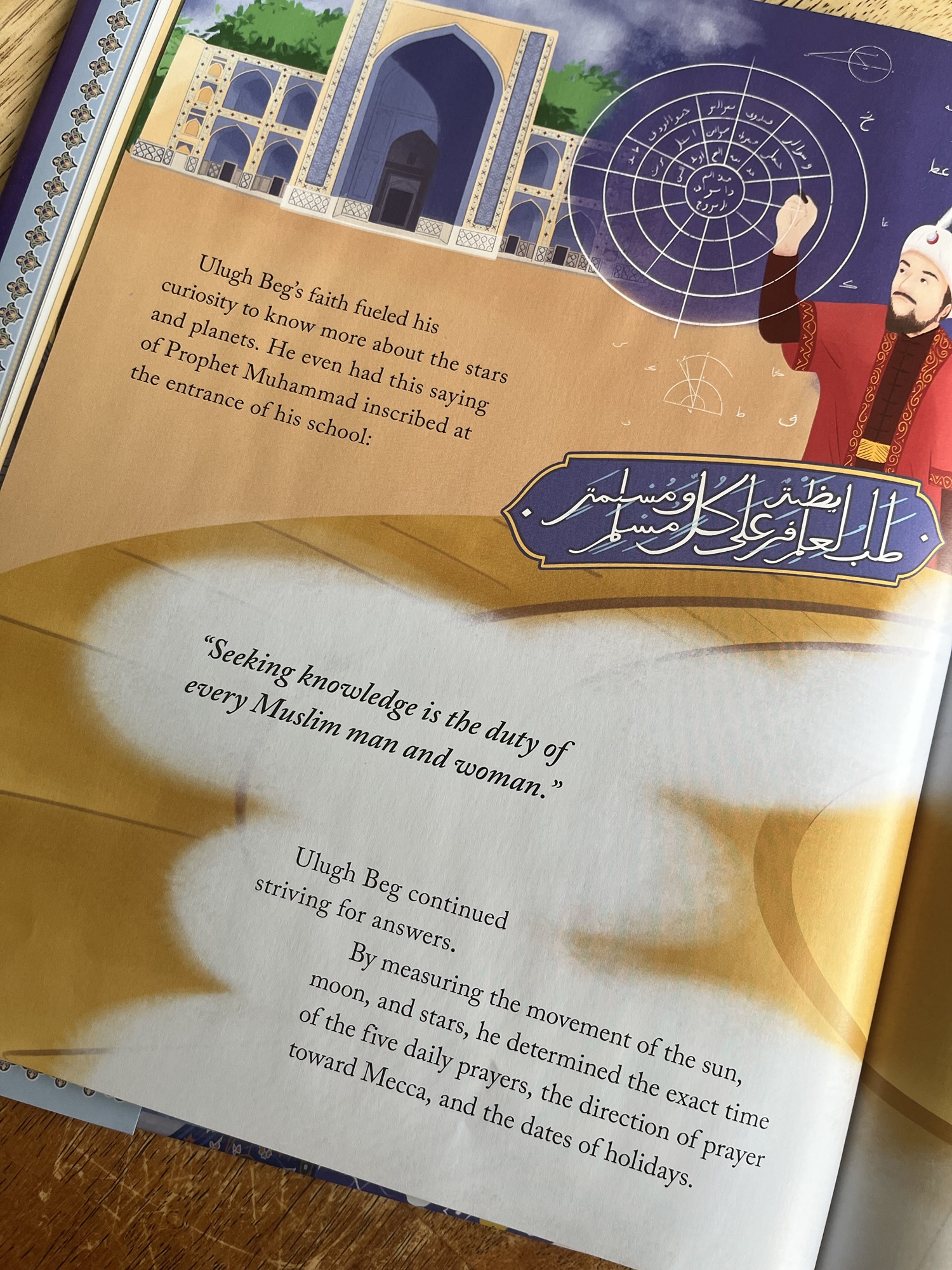
I love that faith and Islam is centered and that the inscription on his school is “Seeking knowledge is the duty of every Muslim man and woman.” But it alludes that this is a hadith, and while I agree it is inspired by a saying of Prophet Muhammad (saw), I think adding the man and woman part, where to the best of my knowledge the hadith is just “every Muslim,” is something that should be clarified. None-the-less, that it was Ulugh Beg’s motto, so to speak, and that he made a point to articulate “woman” is remarkable. He determined the exact time of the five daily prayers, the direction to Mecca, and the dates of holidays.
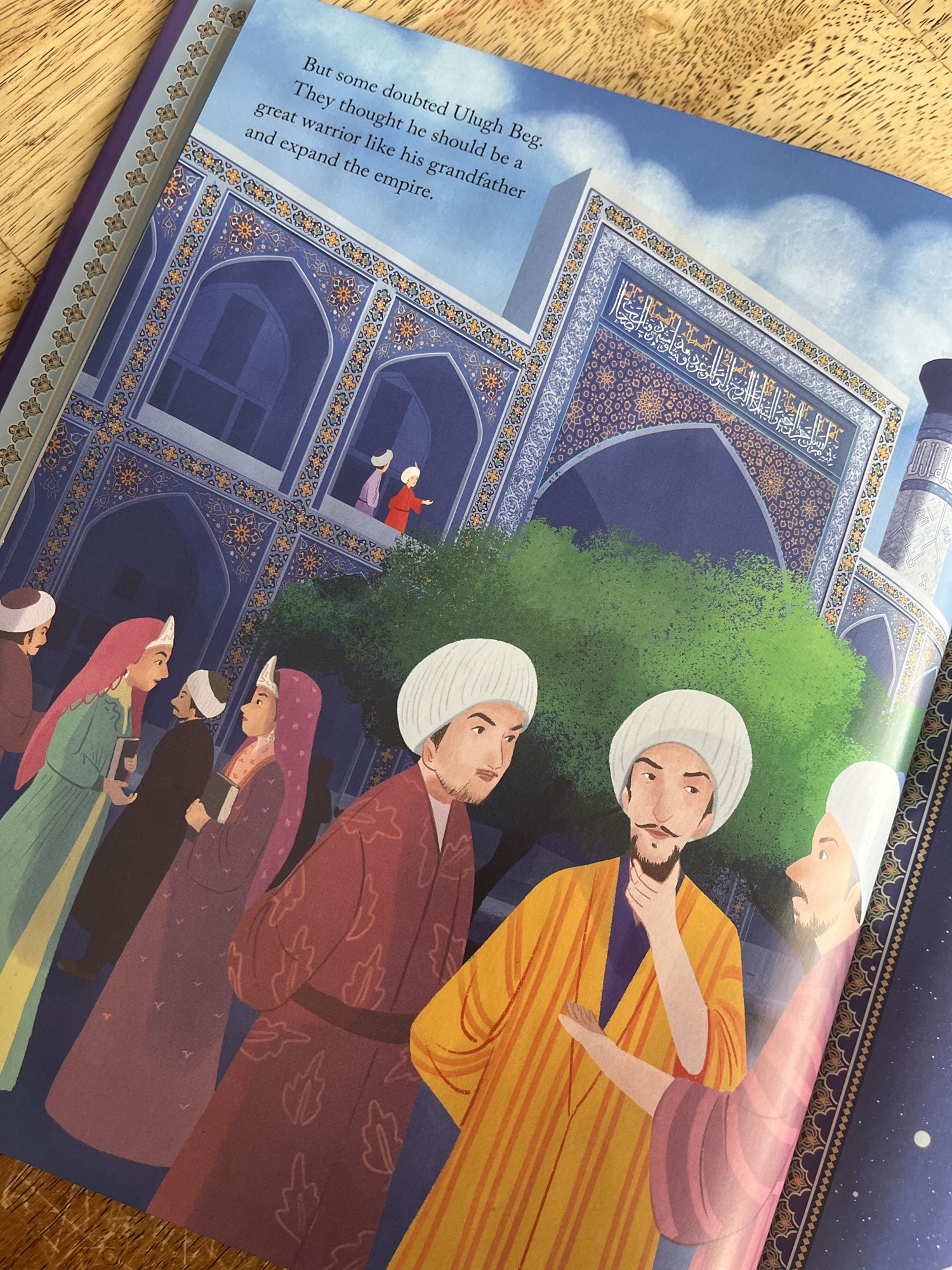
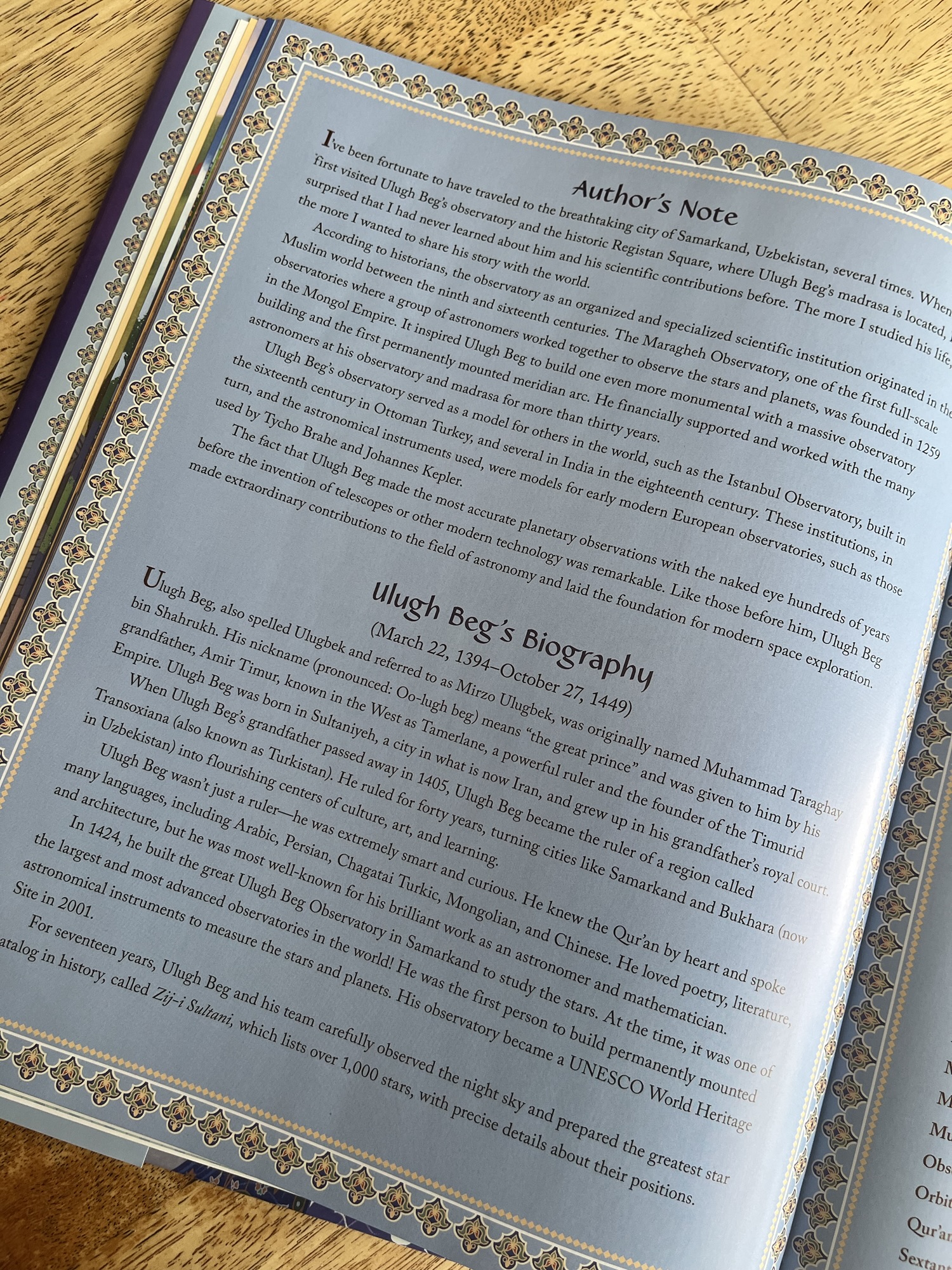
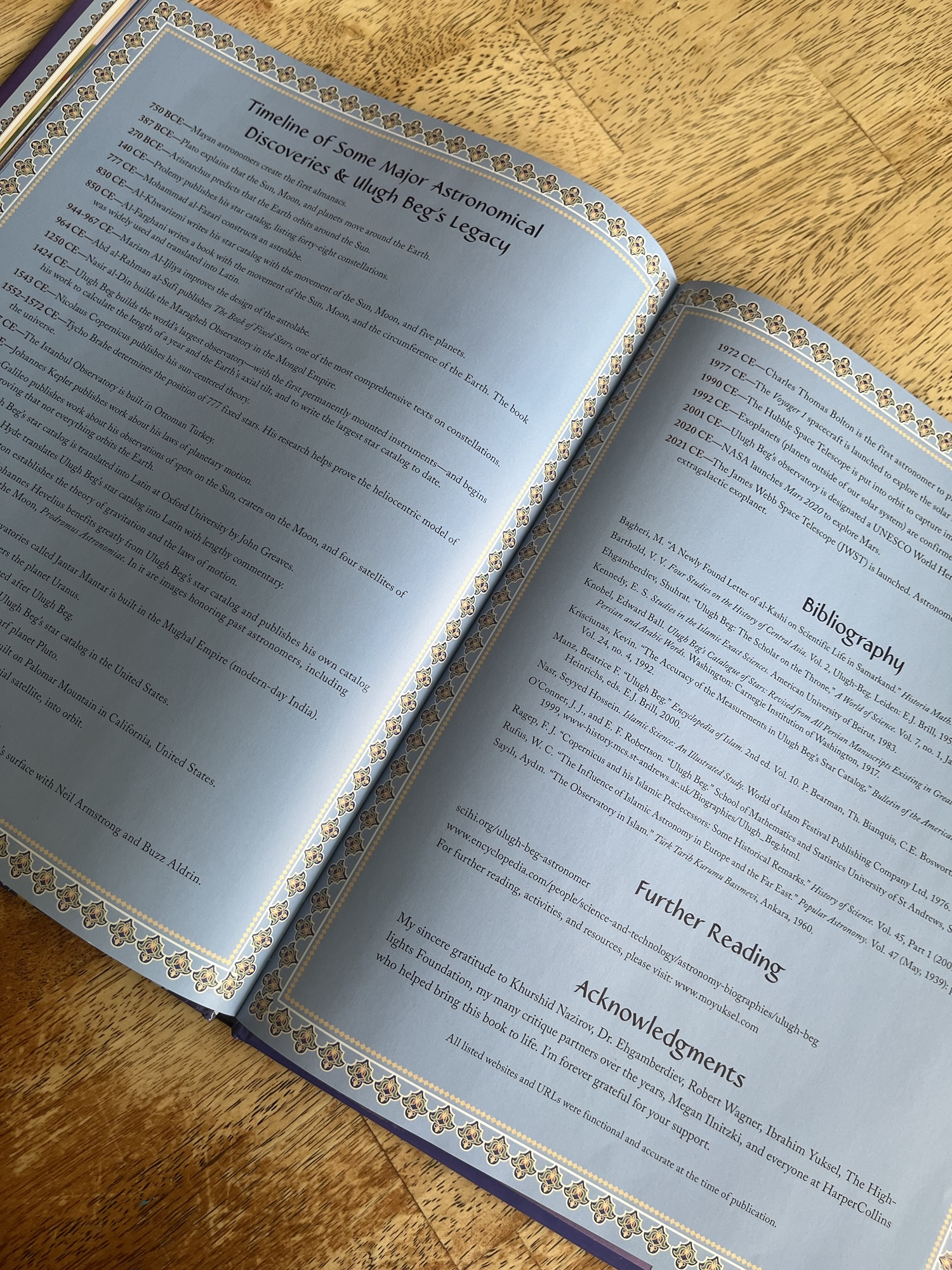
He also built the world’s largest observatory, and numerous tools, including the Fakhri sextant to measure the location of the stars and movement of planets. He encouraged being challenged and challenging others’ findings, and over 17 years wrote a star catalog of more than 1,000 stars. He answered how many days in a year, down to the seconds, why the seasons change, and inspired future astronomers and scientists.
As incredible as the story is, the backmatter is equally impressive with an Author’s Note, Ulugh Beg’s Biography, a Glossary, Astronomical Timeline, Bibliography, Further Reading, and Acknowledgements.
The illustrations are the cherry on top, somehow I don’t love the cover, but the inside spreads are nice and match the tone of the words and the detail of what he was accomplishing. The book is on preorder and I hope, teachers, librarian, and families will prioritize learning about him, and giving him credit for what he helped us to understand, about our world.

 Islamic School Librarian