Tag Archives: ramadan

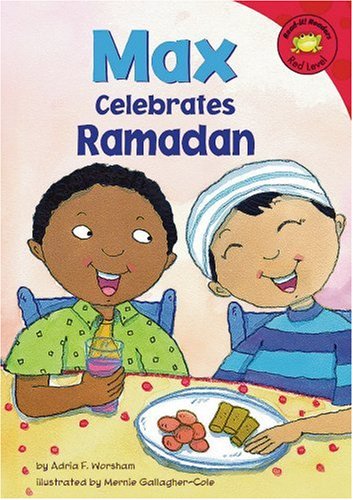
Max Celebrates Ramadan by Adria F. Worsham illustrated b y Mernie Gallagher-Cole

Standard

Max Celebrates Ramadan

Max is a character in a series of leveled readers that explores familiar topics to build reading confidence (Max Goes to the Doctor, Max Goes to School, etc.), and introduces new ideas as the reader’s skills build (Max Celebrates Cinco de Mayo, Max Learns Sign Language, etc.).  I love that Ramadan was included and this 24 page AR 2.0 book is spot on, in what a new reader can handle without getting frustrated or bored in terms of content, and ability.

max

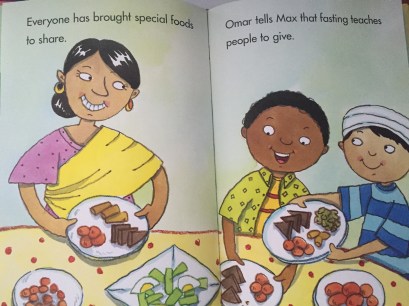
Max goes to his friend Omar’s house to celebrate Ramadan.  He learns a little about the month, what the Quran is and about Eid al Fitr too.  The foreign words are explained in the text and there is no explanation of belief or doctrine.  There are just simplified, age appropriate, descriptions of what a Muslim does and what you might see during Ramadan.  Very level appropriate for Muslim and non Muslim children.  Omar’s family is inviting and kind, and the illustrations show them to probably be of Indian decent as the mother and other females are wearing saris.  None of the women cover, but the males all wear kufis.max1

The book doesn’t stand out in any way, but most leveled readers, in my opinion, don’t.  If you have young readers check and see if your library has the book, the kids will enjoy it.  It works ok in small groups, but not for story time so well, as it is rather repetitive in a dry, not predictive way.  If you are a kindergarten through 3rd grade teacher, I think this book would be a great addition to your book shelf, as well as the others in the series as a way to learn about other people in an independent way.  My son going in to first grade read it by himself fluently and enjoyed the pictures.  Someone new to the concept of Ramadan, i think, would also be able to grasp the concepts without much outside help.


Lailah’s Lunchbox: A Ramadan Story by Reem Faruqi illustrated by Lea Lyon

Standard

Lailah's Lunchbox

Another standout in a crowded field of Ramadan picture books, mashaAllah, Lailah’s Lunchbox works well even outside of Ramadan for Muslim and Muslim children alike.  In 32 pages, the reader gets to know Lailah and understand how hard it has been for her to move to America from Abu Dhabi, make new friends, how nerovus she is to be identified as different, as well as how excited she is that her mother has finally agreed to let her fast this Ramadan.

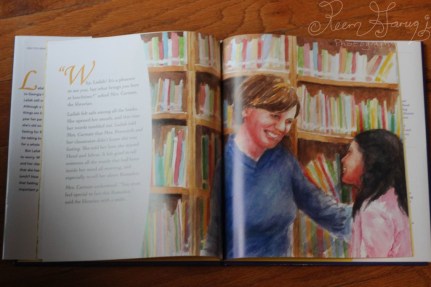
Lailah is excited to wake up and have sehri with her family before heading to her new school, fasting for the first time.  Her mother has written a note for her teacher, but on the bus, Lailah reads the note and suddenly worries if her teacher will even know what Ramadan is ,and decides not to give it to her teacher.  Lunchtime arrives, and when the teacher asks Lailah if she forgot her lunch, her voice fails her, and her classmates offer to share their lunch with her.  Lailah decides to leave the cafeteria and finds herself in the library spilling all her worries and stresses and fears to a kind librarian.  (Yes the librarian is the hero, and really no one should be surprised, right!?) With the librarian’s urging and Lailah’s determination, she writes a note to the teacher explaining that she is Muslim, and fasting, and even includes a poem.  She leaves the note on her teacher’s desk at the end of the day.  The following day, the teacher has written her back and the reader, along with Lailah, know that having courage and staying true to one’s self can often be scary, but also wonderful too.

lilah inside

While the story is billed a Ramadan Story, it really just is the back drop for a lot of really good messages.  I think 2nd and 3rd graders to early middle schoolers could really benefit from the book.  It is semi autobiographical and I think the authenticity of the emotion woven in, makes the book very relatable and powerful.  I plan to discuss it with my daughter going in to 5th grade, who is also a bit shy on occasion: the way Lailah worked out the problem, the way she found someone to trust and talk to that was patient with her, to point out to her that the kids in her class were very kind and that most of her fear and anxiety was with herself, not them.  I also really like the message that she was so excited to fast, and how her nerves took that excitement away, but having the courage to face her fear, brought back her happiness and enthusiasm.

The end of the book has an Author’s note, telling how the story came about and a bit more about Ramadan. It also tells the definition of Sehri and Iftar, the only two “foreign” words in the book.  I found it interesting that the word Sehri, an Urdu word, was used instead of Suhoor, if they are coming from Abu Dhabi, but perhaps the author is of subcontinent heritage.  The illustrations are colorful and realistic, complementing the story and tying in the range of emotions and events Lailah is experiencing.

I was pleasantly surprised at the book, and even more excited to see that it is available in the public library system.  Here is the link to the author’s blog I hope she plans to write more, as her style and message resonate with Muslim American kids, and their parents, alhumdulillah.


It’s Ramadan Curious George by Hena Khan illustrated by Mary O’Keefe Young

Standard

It' Ramadan Curious George

This highly anticipated book came with a lot of expectations and hope for many of us born and raised in America.  Alhumdulillah, Hena Khan did a great job and everyone’s favorite monkey learns and enjoys Ramadan and Eid.

The 14 page rhyming board book is festive and inviting as the tabbed ends head different aspects of Ramadan and Eid  The first tab is George helping his friend Kareem and his family get ready for Ramadan while explaining to the reader how Kareem is going to try and fast all day.  The pictures show Kareem’s mom in hijab and dad helping in the kitchen.  A banner they are hanging says Ramadan Mubarak, but there is no mention of religion or Muslims or Islam.

Curious GeorgeThe next tab has George helping Kareem get up for a predawn meal, keeping his mind off food and keeping him busy.  Not the normal mischievous George in this book, but rather a very helpful one.
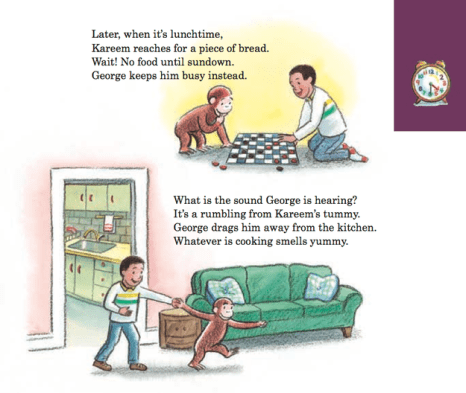
 curious george 3

The next tab talks about dates and breaking the fast and the sounds of prayer, but  again no specific mention of religion or belief.  The pictures show men and women of different skin colors, veiled and un veiled, visiting together.  The next tab is all about food, in all of its diverse glory.  The next tab has Kareem inviting George to the mosque to make food baskets for those in need.  George gets a little silly, and inspires the imam to add a clothing drive next year.  The final tabs are spotting the moon and celebrating Eid.  Gifts are given to George and the man in the yellow hat. Kareem and George are sad the month is over, but George enjoyed celebrating his first Ramadan with his friend.

curious george 1

Overall the book is great for Muslim kids, non Muslim kids, and also notably for non Muslim kids with Muslim friends.  The book does not label and discuss belief or even spirituality, but rather shows how Muslims celebrate Ramadan and Eid in its most basic way, and shows that it is a part of American culture.  For as excited as my family (and myself) were to see Curious George enjoying Ramadan and doing things we do, I can see many of my neighbors and kid’s friends also identifying that they know what George is doing too because of their Muslim friends, and getting excited.  The book works for all ages, to be read independently or aloud.

MashaAllah, don’t judge it by its size, it accomplishes a lot in just a few pages, a lot like a curious little monkey!

Ilyas & Duck and the Fantastic Festival of Eid-al-Fitr by Omar S. Khawaja illustrated by Leo Antolini

Standard
Ilyas & Duck and the Fantastic Festival of Eid-al-Fitr by Omar S. Khawaja illustrated by Leo Antolini

Ilyas & Duck and the Fantastic Festival of Eid-al-Fitr


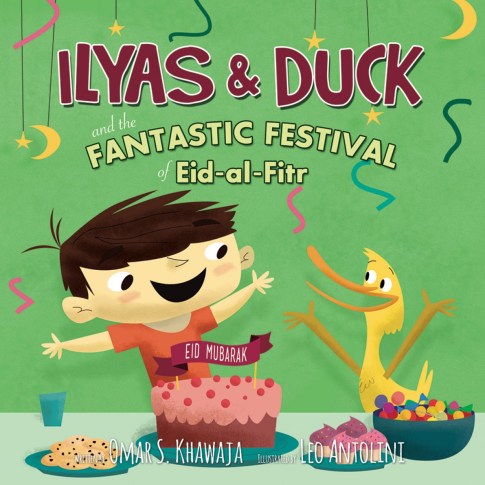
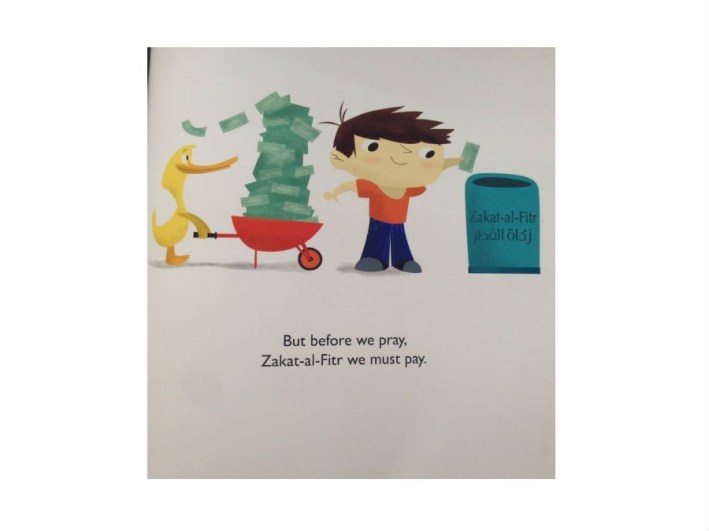
In the world of Islamic fiction, there are a lot of Eid books out there for children, but this one is definitely more fun than most, especially for the younger crowd.  The presentation of a big, bright, hardback book is aimed at 3 to 6 year olds, and reads well out loud, however, the book is very, very inviting, and older kids with happily pick it up and thumb through the 32 pages of rhyming lines as well.

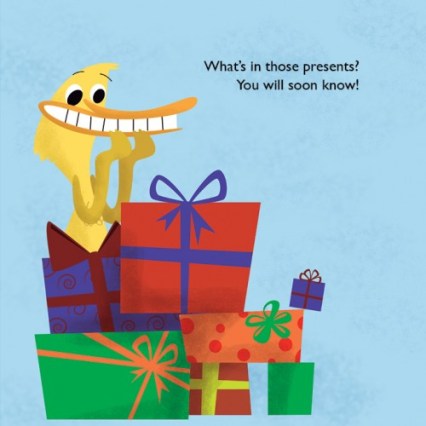
The book starts with Ilyas watching the sky to see if Ramadan is over and if Eid is here.  Duck in all his silliness doesn’t know what Eid is and rushes out to get decorations to celebrate.  he returns with a Christmas tree and ornaments.  Ilyas non judgmentally explains that those are for our Chrisitian neighbors for their holiday.  Duck then runs out again and returns with a menorah and dreidel and once again Ilyas explains that those are for our Jewish friends celebrating Hanukkah.  Ilyas and Duck then fly away in their hot air balloon to the Masjid to learn about Eid.

Ilyas and Duck2Ilayas and duck

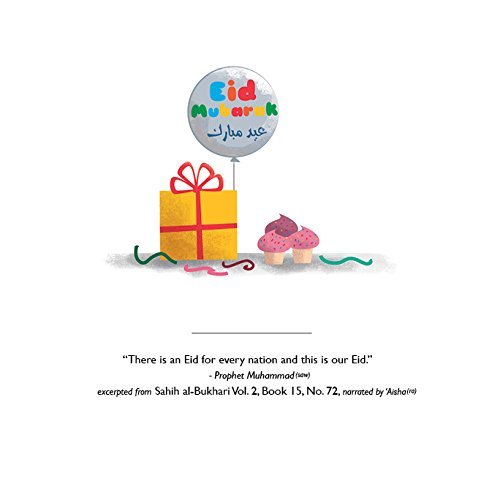
The book works for Muslim children to understand what others celebrate and works for non Muslims to see what we celebrate.  It is all done in a matter of fact way of celebration, not of doctrine.  It is built on the idea that, “There is an Eid for every nation ant his is our Eid.”ilyas and duck eid

Much like the first Ilyas and Duck book, this one is great to have around and read again and again!

The White Nights of Ramadan by Maha Addasi illustrated by Ned Gannon

Standard

the white nights of ramadan

I love learning about people’s Ramadan traditions, and am slightly embarrassed to admit that I never knew about this Gulf tradition of Girgian.  My kids and I enjoyed reading this book during the middle of Ramadan, when the moon is full and bright, and thus known as the white nights of Ramadan.  Written on an AR 3.6 level the story does a good job of blending the concepts of Ramadan, Girgian, Islam in a 32 page fiction story format for Muslim and non-Muslim children alike.  There is an Author’s note and Glossary in the back as well.

A young girl, Noor, excitedly waits and prepares for Girgian.  She explains the activites to her two younger brothers, Sam and Dan, how they will walk the streets with lanterns (fanouses) and get treats from neighbors for three nights.  But before night falls, they first have a lot to do to prepare, and with the help of their parents and grandparents, the children make and wrap the candy, decorate bags to keep the candy in, and get dressed in fancy traditional clothes.  In the process the book also explains Ramadan, and shows Noor praying and reading Quran.  Arabic and islamic words are tossed in and well explained: iftar, fanous, suhoor, dishdashas, musaher, etc.. Noor in all the excitement shares a tender moment with her grandma where they discuss how fun Ramadan is, but that the “true meaning of Ramadan is spending time with family and sharing with those less fortunate.” A religious scholar may add more to what Ramadan is, but for a children’s book, the message is beautiful and perfect.  The story concludes with Noor and her grandfather taking a basket of food to the mosque to give to the poor.

The book has a slow melancholy type feel to it and the pictures definitely help set that tone.  They are detailed and well done, but maybe not overly inviting to younger readers.

IMG_9586

white nights of ramadan

The book made me want to learn more about the tradition, and talk to people that may have celebrated it to see how it has evolved over time.  My kids liked the idea of having a musaher, a drummer walking the streets waking people up for suhoor.  As a mom of four, I can see why something fun in the middle of the month, especially when the days are so long, is a great way to re-energize the children about the fun and blessings of Ramadan.

Amira’s Totally Chocolate World by J. Samia Mair

Standard
Amira’s Totally Chocolate World by J. Samia Mair

Amira' totally chocolate wold

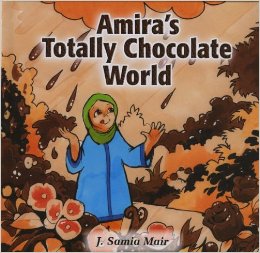
Amira’s Totally Chocolate World is a sweet story based on the idea of a young girl’s wish for the world to turn into chocolate.  As she imagines all the wonderful things that would be made better by being chocolate: flowers, grass, rain, the ocean, etc., she asks Allah swt to make a totally chocolate world.  The night before Eid ul-Fitr her mom promises to make Amira a chocolate cake with chocolate icing in celebration of Amira fasting for a part of each day in Ramadan.  When Amira wakes up the whole world is chocolate, and Amira runs out to enjoy all the chocolate around her.  Soon enough she misses the colors of the world, and the different smells, and misses the texture of grass too.  Amira remembers an Ayat of the Quran about the many colors of creation and asks Allah to turn the world back to the way he created it.  Naturally her alarm clock then wakes her up and she is now wiser, more appreciative and happy to eat her chocolate cake on the kitchen table.

Overall, the story touches on ideas of Ramadan, Eid, asking Allah swt for everything and anything, being appreciative and being thankful.  However, when read aloud I have found that the students have to be made aware of these topics to grasp them.  The text is a bit wordy and the author’s message seems to get lost in the chocolate-ness of everything.  I feel like there is just too much going on in the 23 pages of the story for a child younger than 1st grade to get much out of independently.  On the surface however, it is a fun story with adequate illustrations that kids, especially those that love chocolate, will enjoy.

(NOTE: the book is written in British English, and American children are quick to notice the difference in spelling the word color/colour.)

A Party in Ramadan By Asma Mobin-Uddin Illustrated by Laura Jacobsen

Standard

BMP_8604_JT.indd

This is a great book that works on a variety of levels.  Leena is fasting the whole day for the first time, but is also invited to a friends party.  Her mom gives her the choice to fast or not as it is not yet mandatory at her age, and she decides to fast AND go to the party.  The story takes you through the activities of the party and how some parts are easy and some harder for the fasting Leena.  The end has a wonderful surprise for both Leena and the reader as the author gives us all reason to hope that respect among friends exists, and that in fact one can stay true to their beliefs and have support from their friends.

This book is  great conversation starter for older kids who maybe have tried to fast and felt the temptations of day-to-day life in a non -Islamic environment.  With an AR level of 4.2 and 34 pages the story is strong enough to hold a fourth graders attention and get them to analyze what they would do in a similar situation.  Although the book is about Ramadan and some facets about how fasting is done, what it means, and why Muslims do it, are sprinkled in, the story isn’t overly religious in nature.  The characters are simply Muslim, they pray, they thank Allah, they wear hijab, they make duaas and they also go to friend’s parties. I think non-Muslims would benefit from this book and see the beauty of diversity as Leena and her friends support one another.  The pictures also do a wonderful job of depicting the story: the characters are warm and happy, some cover some do not, they eat chocolate pudding and Baklava and the reader sees how a Muslim family is just like any other family.

The added beauty of this book is that it also works for story time. The younger ones may or may not understand the potential stress of being the only Muslim at a party, let alone being the only one fasting, but they do understand that Leena wanted to eat and drink and she remembered that when her little sister wanted her dessert.  They also understand how sometimes it is hard to do what is right, but inshaAllah the reward is sweet indeed.

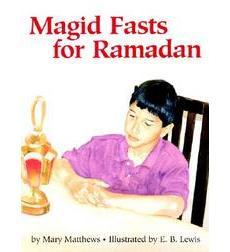
Magid Fasts for Ramadan by Mary Matthews illustrated by E. B. Lewis

Standard
Magid Fasts for Ramadan by Mary Matthews illustrated by E. B. Lewis

Magid Fasts for Ramadan

The intent of this 48 page chapter book is good, however, a few things rubbed me the wrong way about how Ramadan and Islam are presented.

Nearly eight-year-old Magid wants to fast on the first day of Ramadan, but everyone says he is much to young.  He decides to deceive everyone and fast anyway.  I’m actually okay with this main story line, as I could genuinely see a child wanting to do it so much they would lie about it.  The author even has the family sit down after the truth comes out and discuss how honesty is important and this is not how Ramadan should be celebrated.  Lesson learned for Magid and the reader, right? Nope, the author kind of blows it and takes it to the other extreme.

Magid’s sister Aisha is twelve and is “forced” to fast so she isn’t the only girl not fasting at her all girl’s school in Egypt.  What a sad reason to fast, The whole reason Magid wants to fast is to be a “truly obedient Muslim” which sounds great on the surface, but it get’s repeated so often that Magid at one point is judging a classmate who isn’t fasting and isn’t always at Jummah (Friday) prayers.  The parents decide at the end to let Aisha fast until school is out, hence shortening the day for appearance purposes, and Magid can fast til lunch.   He is told he can fast full days when the days are shorter.  Again a really odd reason to wait when fasting has been prescribed for us, to make it an issue of convenience.

So aside from the very negative view of Ramadan and the kids rejoicing at the end that they don’t “have” to fast, the lying, the disobeying your mother, and the judgmental laden diction of being truly obedient, the book does cover a lot of ground well.  The book shows the characters doing wudu and praying, it shows them trying to be kind to one another, it talks about how the Quran was revealed in the month of Ramadan and it does have a plot.

The water color illustrations are nice, and I also like how it showed a bit of Egyptian culture with the lanterns, singing, and food.  Interestingly the author says it is harder for Muslim’s in America to fast, but elsewhere says that Aisha has to watch the girls at school not fasting, eat lunch.

I really wouldn’t recommend this book, for the intended audience of 3rd through fifth graders I think it would do more harm than good in promoting Islamic values in Muslim children and in showing non-Muslims what Ramadan means to Muslims.

Ramadan by Susan L. Douglass Illustrated by Jeni Reeves

Standard

ramadanThis is a non Fiction book about Ramadan that is thorough and accessible.  It has an AR level of 3.7 (third grade, seventh month), and with the short sentences and well-spaced text, I wanted to include this book so that those looking for an informative book for their independent readers (second grade and up) would consider this one.  At 48 pages, the book isn’t divided up into chapters but there are headings that keep the book flowing from one topic to the next. The illustrations supplement the text giving them context and there is a list of “New Words” in the back making this book appropriate for Muslim and non Muslims alike.  

Overall a good read for those looking to learn more about Muslims and Ramadan, or for those looking to see themselves in a book that isn’t too childish. The book is clean and factual, and keeps a nice balance between giving solid information and overwhelming the reader with details.  The book also includes examples of Ramadan in other countries as well as students fasting in America.  We have this book in our school library and the students that have stumbled upon it are excited to check it out, and when they ace the AR test they are absolutely beaming.  


Moon Watchers Shirin’s Ramadan Miracle By Reza Jalali Illustrated by Anne Sibley O’Brien

Standard

moon watchers


This book is similar to Night of the Moon By Hena Khan as it focuses on a young girl experiencing the month of Ramadan and Eid, through the waxing and waning of the moon.  This is an AR book 3.5 and the text is driven by dialogue between nine-year-old Shirin and her Persian American family.

Too young to fast Shirin is feeling left out of the blessed month of Ramadan, her older brother Ali and her bicker until her Grandma encourages her to do “part-time fasts.”  Facts about Islam and Ramadan are slightly peppered in to the story, primarily through vocabulary, and the characters do discuss hijab and why Shirin’s mother doesn’t wear it.  It is important to note that the tale is told from a Shia perspective that is made clear as it explains how the family prays, touching the prayer stone, and kissing it three times.  The illustration here is more peculiar as it shows Shirin praying next to her dad and her brother, mom, and grandma in the row behind.

The pictures show a happy family that most readers or listeners would probably be able to identify with, along with the sibling bickering and excitement felt with the blessed month.  Persian culture is represented in the foods and sweets they prepare as a family and the henna Shirin gets on her hands.  The family prays together, spends time together and they discuss doing good deeds, not just fasting in Ramadan.

The book is beautifully done, but I think because of the brushing aside of hijab being a cultural practice, not a religious one and the presentation of prayer, I don’t know if I would give the book without discussion to a third grader in a Sunni school to read independently.  As for story time, I might simply omit those few sentences, but I’m not sure, it would depend on my audience.

If your children are aware of the differences between Sunni and Shia or you are Shia, this book is wonderful.  If your children would be greatly confused or get hung up on a few lines in a 32 page book, then it would be better to hold off.