

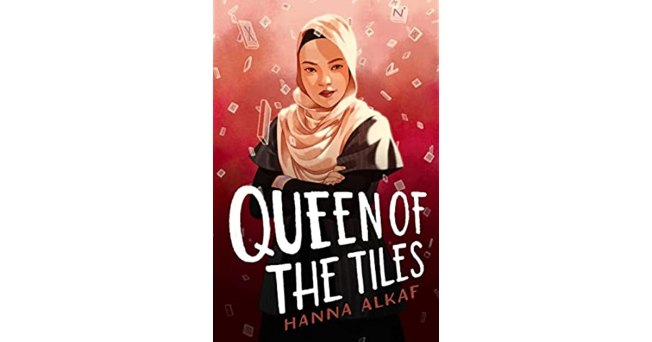
I was both nervous and excited to read this contemporary book having loved the author’s fantasy, but unsure how a Brown Muslim Pakistani American girl running away from home would be presented. Alhumdulillah, the author approached the story from a place of love. There is no internalized Islamophobia, self othering, or in broad strokes even an identity crisis. The protagonist has made decisions, drastic ones, and is trying to piece her life back together on her own terms, but the love of culture, family and faith, is always upheld. It reads like Islamic fiction, with very didactic passages and moral positioning, I’m still quite surprised that it is traditionally published. The version I read had grammar errors, so I’m hoping that they will be corrected when the book releases in a few weeks. The story is engaging, but the writing a bit monotone. Much of the story is telling, not showing, and because of the surface level spoon feeding of so much of the plot, when the catalyst or rationale is not provided, the book seems underdeveloped, or lacking, unfortunately. I would not recommend this book for the target audience of YA readers (12/13 and up) it contains sex, slut shaming, self harm, depression, suicidal thoughts, physical and emotional abuse, profanity, and mentions drug use. I do think though, early college age readers will enjoy and benefit from reading the book. At a time in the reader’s life when they are defining themselves on their own terms, owning up to their own mistakes and laying out a future path, this book will provide relatability amplified by religious and cultural touchstones. The heart of the story is the connection of a girl with Allah swt after she has sinned, the guilt and regret she feels, and how she finds herself, and returns to try and fix things with her family. The characters are flawed and the overall messaging beautiful, hopeful and uplifting. Unfortunately, it just reads like an early draft and I wish it had a bit more refinement. Keeping that in mind though, it does have a place, and I’m glad to see our “new adults” can find reflections of themselves in a piece of literature that amplifies their Islamic identity instead of criticizing or questioning it.
SYNOPSIS:
The book starts with Zahra deciding to run away from home. She parks her car, leaves her phone and catches a flight to New York from California. The reader doesn’t exactly know why she is running, only that a few days after high school graduation she is escaping a toxic home life, an impending wedding, and misery. As the story peels back layers we start to see some of the nuance of what she is running from as characters from her past find her and physical space allows her some perspective to see her own role in her “old” life. When she arrives in New York, it isn’t the city life that she seeks, but rather the nature and pace of Long Island that offers her a fresh start. She heads to the masjid, makes a friend, and starts to put her life together without parental obligation, outside interference, and self loathing. She cannot run forever though and she cannot escape herself. She must confront her past, own her mistakes, be honest with her new friends, and find peace with her family, not because she has to as a Brown daughter of immigrants, but because she trusts Allah, loves her family, and wants to “fix” things.
WHY I LIKE IT:
I’m a sucker for books that show redemption through the love and mercy of Allah (swt). Yeah her new friends were idyllic in their family life, relationships and worship, but we all want friends that make us better Muslims, so I let it slide. Islam is centered, she wears hijab, she reconnects with salat, it is her identity even when she is just going through the motions. The author at times conflated culture and faith, but it never issues blanket statements or falls into universal stereotypes for Desi culture or Muslims. She does a good job of keeping the negatives to the people and the critiques to the failure to push back on dangerous expectations. My issues weren’t the character flaws either, I’m onboard with the messiness of being human and the ability to seek and receive forgiveness from our creator. I just wanted to feel things more. So much was just told when it should have been shown. I wanted to see the stress and anguish of her family life, not simply told it was depressing. I wanted to see her cutting life long friends out and being isolated, not told she had lost her friends. The book focuses on her running, and why she ran, but a big plot point for why she ran, having sex, needed more fleshing out. Why was she driven to such an act? I know that she was depressed, I’m not belittling that, but what pushed her to such a strong stance, when she was already allowed on the school trip, she hadn’t yet been given the ultimatum and over and over the book says “I miss my family,”” I miss my home,” “I miss my mom.” I didn’t feel the connection or understand what she was feeling, thinking, and it seemed like a huge hole in the book. For all the themes of mental illness, faith, generational trauma, misogyny, abuse, expectation, depression, lying, culture, life choices, higher education, family dynamics, self harm. the book never quite felt rich with emotion or deeper than the surface level story. At the beginning the author says she first wrote the book when she was a senior in high school, and while that may have made the main character’s perspective and voice ring true, as a successful author now, I wish she would have added the nuance, the insight, the subtlety that would have drawn the reader in and allowed them to get inside Zahra’s head and heart to see her and perhaps even themselves.
FLAGS:
The author and book identify triggers in the book “please be mindful of TWs: depression, anxiety, emotional abuse, physical abuse, self-harm, suicidal ideation, slut-shaming, PTS.”
There is also music, boys and girls alone in cars together, lying, cursing, generational trauma, misogyny, abuse, expectation, depression, anxiety, guilt, life choices, higher education, family dynamics, cutting, a brother who is often high or smells like weed/pot, it mentions partying, a sexual event, deceit, physically assaulted by a parent. Nothing haram is glorified, but it is there and it is detailed, and not everything is resolved.
TOOLS FOR LEADING THE DISCUSSION:
I would not be able to shelve or teach this book in an Islamic school library, but in a college MSA book club or a youth group of a similar age this book would be incredible to read and discuss.

 Islamic School Librarian