Tag Archives: Serbs

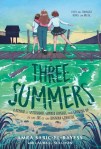
Three Summers: A Memoir of Sisterhood, Summer Crushes, and Growing Up on the Eve of the Bosnian Genocide by Amra Sabic-El-Reyess with Laura L. Sullivan

Standard
Three Summers: A Memoir of Sisterhood, Summer Crushes, and Growing Up on the Eve of the Bosnian Genocide by Amra Sabic-El-Reyess with Laura L. Sullivan

three summers

It is difficult and probably rather inappropriate for me to offer a “review” of a memoir, after all who am I to have opinions on someone’s lived experience.  And this non fiction book in particular is so desperately needed and important, as OWN voice middle grade literature about Bosnia is fairly non existent. So continue reading my thoughts with a grain of salt, suffice it to say, that I enjoyed the book, and loved the author’s YA book The Cat I Never Named, but ultimately I struggle to suggest this for the intended audience of 8-12 year olds.  As a child my family was involved with Bosnian refugees in the 90s, as an adult I understand that Islam, and being Muslim, is not a monolith, as someone who can empathize with loss and heartache, I couldn’t put the book down.  Yet, I truly doubt that many fourth graders will feel the emotional climaxes that are not shown, but told.  That they will understand the timeline and what is about to happen if the book were to continue.  That they will feel a connection to the characters who read so much older than them.  If the book was fiction, I would say the characters read YA, with the bikinis and details of body growth, kissing, making out, having boyfriends, and dancing at the discotheque, cigarette smoking, backless dresses, noting which neighbors are having affairs, and trying to become their “truest self,” but the book is a memoir, this is the author’s life when she was 11, 12, and 13.  In an environment where her maturity is noted as being heightened because of the loss of her brother and her personality, the book shows cultural norms, that will still strike contemporary reader as being much more adult in nature. Islamically, the label of Muslim and Bosniaks, is ever present.  Bosniaks were massacred for being Muslim, period.  The book never shows them praying, or mentions Allah swt or the Quran, covering is something only the older generations did, they do drink alcohol on occasion, but they have a cow slaughtered Islamically and burials are done in accordance with Islamic principles.  There is kissing, having boyfriends is not problematic unless they are Serb, the only imam mentioned does weird black magic type things.  So while the label of “Muslim” may feel to Muslims readers more like a cultural marker at times, it is none-the-less incredibly empowering to see that Amra takes pride in her Bosniak identity and doesn’t shy away from it. Other flags/triggers are domestic abuse, bullying, physical violence, attempted drowning, accidental drowning, death of a sibling, kidnapping, imprisonment, threat of war, racism, Islamophobia, music, fortune tellers, lying, threatening.  The backmatter offers a timeline and thus gives some information about the rape, torture, genocide, abuse, and destruction.

SYNOPSIS:

The book starts with a visiting fortune teller giving Amra and her family hope that her older brother Amar will be pain free soon. Amar suffers from Marfan syndrome, and is frequently weak, teased, and in pain.  But he is also wise and patient, brilliant and gentle, and beloved by so many, and Amra is broken when he passes away.  To help break her from her debilitating grief, her parents reach out to a cousin in Belgrade, who has long been estranged for marrying a Serb, to come visit for the summer.  Zana and her younger sister Vedrana, engulf Amra in warmth and adventure and the summer on the River Una is just what Amra needs.  The next summer Zana and Amra resume their idyllic adventures of swimming, make-up, crushes, and coming of age, with only a hint of fracture based on religious lines creeping in the final days.  The following summer Amra is starting to mature on her own and understand the world around her.  Her father has lost his job, been kidnapped essentially and tortured, and while nights dancing at the discotheque give laughter and light, the girls final summer, is the end of peace, and innocence for all Bosniaks.

WHY I LIKE IT:

I love the end, that there are real life updates of the people in the book.  It made me cry.  It is also so timely to what is occurring in Gaza and how no matter how clear it is that it is genocide, and it is oppression, and it is racism, some just cannot see it.  The book is joyful, but the reality of the backmatter is heavy, and real, and important.

I like that the book shows Bosnia and the culture and the traditions, the few books I’ve read focus on the war, and the rich culture and deep history doesn’t get to shine like it does here.

I do wish the book was more showing than telling.  I know it is a memoir, but at times it was just too advanced commentary and insight.  I fully believe the author is brilliant, and at 11 years old was pondering her life, but most readers just aren’t at that age, and the tangents keep the readers at arms length.  The book says it is about crushes, so I don’t want to keep harping on it, but it really is Amra and Zana and a gaggle of other female cousins quite often worrying about boys, and crushes, and kissing.  It doesn’t get obnoxious, but it isn’t a line here or there, it is the bulk of the book.

FLAGS:

Domestic abuse, bullying, physical violence, attempted drowning, accidental drowning, death of a sibling, kidnapping, imprisonment, threat of war, racism, Islamophobia, music, fortune tellers, lying, threatening, death, loss, grief, affairs, cheating, racism, bare bodies, crude jokes, crushes, kissing, making out, sneaking out, smoking, drinking, developing bodies, bullying, internalized Islamophobia, kidnapping, imprisonment, dancing, black magic imams.  The backmatter offers a timeline and thus gives some information about the rape, torture, genocide, abuse, starvation, and destruction during the Bosnian genocide.
img_4254-1

TOOLS FOR LEADING THE DISCUSSION:

I think with some context about war, about communism, the Ottoman empire even, this book could be used in a teaching setting to allow the time frame to be seen from those living it, but, for more mature middle school to early high school readers.  It is a lot for MG and that it is non fiction makes me want it to be understood and appreciated and I don’t know that for the intended demographic, even with context and guidance it would be achieved. There really isn’t a plot, it is a memoir, and the pacing and assumed context knowledge I feel like, just wouldn’t be there for the typical western middle grade reader.

World in Between: Based on a True Refugee Story by Kenan Trebinčević and Susan Shapiro

Standard

world in between

I’ve read a lot of refugee stories over the years about people leaving a variety of countries, and while each one, no matter the quality of writing, is heartbreaking and important, this middle grades 384 page historical fiction/ fictionalized biography account stands out because it is written so incredibly well.  The story shows young Kenan’s life before the Balkan War in Bosnia, a year of the war, life in Vienna, and then in the USA.  The book is personable, relatable, and informative.  I had a very hard time putting it down despite knowing that the main character, the author, obviously survived; as the story is engaging and powerful and doesn’t rely on the horrific war to carry the character building and story arcs alone.  The character identifies as Muslim, but doesn’t actively practice or know much about Islam, sports and art are highlighted as universal activities that bridge cultures, language, and foster respect.  The book mentions drinking, kissing, hints at a crush, and features bullying, death, killing, and torture.  Suitable for mature fourth graders and up.

SYNOPSIS:

Kenan has a good life in Brčko, Yugoslavia, he is good at soccer, is an amazing artist, has a bunch of friends, a teacher he likes, loving extended family, his father owns a popular gym, and his mom is an office manager, sure his older brother picks on him sometimes and he gets called, “Bugs Bunny” because of his large protruding teeth, but when it all comes crashing down because of his religion, he is at a loss as to why it suddenly matters.  While neighbors and classmates start sneaking off in the night fearing that the Serbs are going to kill all the Muslims and Catholics, Kenan’s dad holds out hope that he is well loved by everyone at his gym, no matter their religion.  But the family waits too long to leave, and friends, neighbors, classmates, and teachers quickly turn in to enemies.  Kenan’s buddies threaten and abuse him, his favorite teacher holds him at gun point, and neighbors shoot holes in their water cans.  The family ultimately has to hunker down in their apartment without much water, food, and electricity.  They get to Kenan’s aunt’s house in a safe zone, but the men have to register and his father and brother are taken to a concentration camp.  Somehow they get released, but the family’s troubles are just beginning.  Along the way they will be betrayed by people they thought they could trust and helped by people that they thought hated them- no matter the country, no matter people’s religion.  The family will get to Austria and to Kenan’s uncle, but even being away from war doesn’t give them peace.  They don’t speak the language, they can’t work, they must take charity.  Eventually they find themselves in Connecticut, and while some American’s make their difficult lives even worse, some prove to be absolute angels to a family that is trying to make a life in a new country while the war wages on back home.

WHY I LIKE IT:

I love that stories about the Balkan War are becoming more and more available, it is long overdue, and I’m glad that through literature, authentic voices are keeping the memory of the horrific acts from being forgotten.  The story is compelling, a few threads I wanted resolved that weren’t (more information on his grandma, his uncle in Vienna, his aunt that they left behind), but the narrative is rich and does a great job staying relevant to its target audience and not overwhelming the reader with politics or sensationalized emotions.  The rawness of the experience being processed by the 11 year old protagonist is impactful enough and doesn’t need to be exaggerated.  The book is not depressing, in fact there is a lot of joy and hope and kindness.  

I love that Kenan acknowledges that he has been to the mosque once with his uncle, that they don’t fast in Ramadan, but they do celebrate Eid.  It hints that at times they may drink, but they are good about not eating pork, although they eat jell-o. In shop class in the United States his first project is a replica of the mosque in their neighborhood.  Their names are known to be Muslim in Bosnia, and that is enough for them to endure the ethnic cleansing, belief or adherence, is not a factor.

I love that sports and art are universal.  Math is too, but Kenan isn’t good at math.  He wins accolades in each country for his drawings, and gets respect from classmates for his athletic ability.  Not speaking the language is hard, but being able to prove yourself in other ways is a salvation for Kenan.  He is on teams, he goes to the World Cup, he gets in fights, he is honored in the newspaper.  Life in general grounds him, yet soccer and drawing give him a release to excel in.

I love the diversity of everyone in each country.  Heroes are seen in immigrants, minorities, Americans, a Methodist preacher, an Israeli bus driver, a Serb bus driver, a Serb soldier and his family, a .  There are awful immigrants, and white Americans, and Serbs- it really shows that some people are just good and kind, and some people are not, it isn’t linked to any faith or country or culture or neighborhood or skin tone.  I was surprised that at no point were their other Muslims.   We got to know so many wonderful Bosnians in the 90s as our family helped them get settled, that I was really hoping there would be some in Connecticut working with the churches that helped settle Kenan and his family.  That isn’t a critique of the book, though, just my disappointment in my fellow Muslim-Americans for not stepping up enough in real life to make the literary cut, I suppose.

FLAGS:

Violence, torture, death, bullying, killing, shooting, hints at sexual assault, physical assault, ethnic cleansing, genocide, war.  It mentions that Kenan’s brother got to kiss a girl and have a drink, but nothing more detailed than that.  Kenan has a crush on a girl, but it manifests periodically as him just wondering if she survived and is ok.

TOOLS FOR LEADING THE DISCUSSION:

This book is on a short list for me to use next year for middle school book club.  It is a little below grade level for my group, but book club is supposed to be fun and not a burden, so I think it will be perfect.  The kids are going to absolutely love Kenan.  He is so relatable and personable, that I don’t think any supplemental questions or discussion points will be needed.  Kids will have lots of thoughts about Islam in Bosnia, friends turn enemies, restarting in new countries again and again, anger at people that didn’t step up, glee when people did, jealousy when he gets to go to a World Cup game, and hopefully empathy for so many who’s world changed so quickly.  The biggest takeaways will be how it didn’t take much to help, and I hope all readers will recognize that we can be kind and we can help and we can respect and care enough to truly help others.  

The Cat I Never Named: A True Story of Love, War, and Survival by Amra Sabic-El-Rayess with Laura L. Sullivan

Standard
The Cat I Never Named: A True Story of Love, War, and Survival by Amra Sabic-El-Rayess with Laura L. Sullivan

img_8275

This amazingly captive 370 page, nonfiction autobiography details life during 1992 through 1995 in Bihać, Bosnia through the eyes of a 16-year-old Muslim girl.  The horrors of war, her determination to survive, a lifesaving cat, and her coming of age, all come together to make for a compelling read that is both reflective and inspiring.  I had a hard time putting the YA/Teen book down even knowing that she would obviously survive and being vaguely familiar with the Serbian attacks and ethnic genocide that occurred.  In an easy to read flowing first person narrative, somehow the book avoids being overly political, while still managing to convey the role of the media, the international world, and the hateful mindset that turned friends and neighbors into enemies.  I think teens, 15 and up, should spend some time with this book as well as adults, it really serves as a wake up call to how fragile nations can be when we turn on one another.  We must know the past, to as not repeat it.

SYNOPSIS:

The book starts out with Amra on a train returning from Belgrade where she took tests as she is one of the brightest kids in the region.  Immediately it is made clear that she is incredibly smart, and independent as she travels alone into the heart of Serbia.  The war has not yet come, but on the return trip Serbian Nationalist soldiers board the train and she is desperately afraid that she will be sexually assaulted.  Fortunately, she does not “look Muslim” and the soldiers physically leave her alone.  Her naivety, however, is lost as she realizes the war is closer than her family thinks.

Her family lives in a beautiful home that they designed and saved for, they wear hand me down clothes and watch expenses as a result.  Amra has a younger brother Dino, her older brother seemed to have some disability and has passed away, her parents are honest and value education. Her family is everything to her, they are incredibly close knit.  They are ethnically Muslim, but do not practice.  She mentions it regularly, that they are being attacked for a religion they do not practice.  They wear bikinis and date, eat pork and drink alcohol, they identify first as Bosnian and then as Muslim.  But they do identify as Muslim and they suffer for it, over and over and over again.

The story sets the stage by showing how diverse Bihać is and how Serb, Croats, Bosnians, Muslims, Christians, Catholics all live together.  It is Amra’s birthday, it really isn’t, but they could not afford the food and gifts at the time of her 16th birthday, so they are celebrating it now with a sleepover with her closest life-long friends.  When Amra and her father go in to town to get the cake, they see tanks rolling in, refugees from other cities seeking safety and Amra and her father start handing out whatever money they have and take a couple home with them.  At the party, they don’t discuss what they have seen, but when Amra’s best friend, a Serb, cannot spend the night, the parties tone changes and the mood is set for the next chapter in Amra’s life.

At school she shares how Muslims are treated and forced to take Russian, while the Serbs are encouraged in English, while the children get along as many are mixed ethnicities, there is rampant favoritism from the adults.  When one day only the Muslims arrive at school, the Serbs have all secretly evacuated in the night, there is no more denying that the war has come to Bihać. With the comfort of her cat, who she simply calls, Maci, cat in Bosnian, and his “luck” to somehow delay her or warn her of bombings, she and her family endure the first wave of attacks by hunkering down in a cousins basement.

Ultimately they decide that they cannot stop living.  Death is striking at every turn and no one is more safe in one location than another and the family returns home.  They still have electricity at first, but it soon disappears, the phone lines stay, but food starts to get scarce.  At times the family goes out of the city to stay with family on a bee farm and survive off the honey, but it is not safe there either.  School resumes a few days a month, but all the Muslim’s records have been “lost” and paper is in short supply.

Over the four years of the war, Amra’s aging diabetic father is called to fight, an explosion at the house renders her mother deaf, friends and family are killed while somehow the day to day of surviving continues.  Amra graduates from high school, works as a tutor when she cannot pursue her own education, and finds work as a translator for international workers after she teaches herself english.  There are times she is so malnourished her hair is falling out, her gums are bleeding and she blacks out, and there are times when the family is able to trade honey for food and can open a small store in the corner of their house.

The resiliency and heartache is not something a review can capture, you feel for Amra at every turn, both in delight as well as in fear and devastation.

WHY I LIKE IT:

It has a map! Seriously, thank you.  I love that the book is so emotional, it doesn’t get hung up on dates and events, but how whatever is happening affects Amra and her view of the world.  As a character, ultimately a person, she doesn’t stay down, she is capable and strong, which is so remarkable in the best of times and absolutely heroic living through this war.  The cat is a remarkable character, and while at times it seems forced, it is a great thread that keeps her story being relatable on all levels.

There are a few chances for Amra to leave her family and get away to safety, the first time it is presented to her she would have to change her name, she decides she cannot.  This is a testament to her love of her family, but also to her identity.  She is proud of who she is, which is mind blowing to me.  I talked about it in my review of The Day of the Pelican, about how Bosnian refugees I got to know in the late 90s knew nothing about Islam, but were being slaughtered for being Muslim.  Repeatedly she talks about how in Bosnia there were some conservative traditional Muslims, but that most of them are not, her family is not.  Yet, my heart truly cried out when her and her mother are trying to get food from drunk soldiers and are certain that they are going to be raped or blown up by land mines and she says the only prayer she knows.  One that she learned after the war started: “Auzubillahi Minahs Shaitan ir Rajeem.  Bismillah ir Rahman ir Rahim.  Rabbi Yassir wa la Tua’ssir, Rabbi tammim bil khayr.  I seek refuge in Allah from Satan in the the Name of Allay the Most Gracious, the Most Merciful.  O God make it easy and don’t make it difficult, O’ God, complete this with good.”  

She explains the cover of the book at the end, “the book’s jacket presents my authentic self, a liberal Muslim teen, yet a Muslim who was still so profoundly hated.  The jacket illustration serves as a reminder that the hate is a product of its perpetrators rather a reflection of its victims.

FLAGS:

The book is about war, it has rape, sexual assault, death.  At times it is descriptive and detailed, not sensationalized, but powerful.  There is kissing, boyfriends and girlfriends, nothing lewd.

TOOLS FOR LEADING THE DISCUSSION:

I learned about this book from Lovely Books Podcast when she interviewed the author: https://lovelybooks.buzzsprout.com, it is a great introduction along with many of the interviews and articles that Dr. Amra Sabic-El-Reyess has done.

I would love to do this as a book club, but I think it would have be done on a high school level, not middle school.  The dialogue and understanding I would imagine surrounding this book would be compassionate and thoughtful.  I hope those leading book clubs for older students and even adults will consider this book.

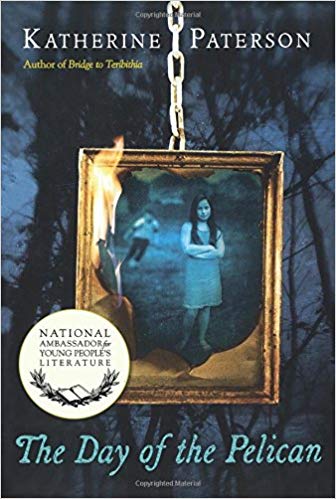
The Day of the Pelican by Katherine Paterson

Standard
The Day of the Pelican by Katherine Paterson

pelican.jpg

There is a lot to be grateful for in this 145 page AR 5.2 book before you even begin reading it.  The fact that Katherine Paterson, of Bridge to Teribithia fame, would write a middle school book about the horrors that took place in Kosovo in the late 90s and conclude with the events of 9/11 is both bold, and daring.  There isn’t a lot of mainstream YA literature about the events that happened in the Western Balkans and this book is much needed in shedding light on a history that cannot and should not be forgotten.  While the book doesn’t compel the reader to pick it up, I think as a novel study in school, or as suggested reading, kids 4-8th grade will benefit from the story and retain the humanity presented in the characters.

SYNOPSIS:

The story follows 13-year-old Meli Lleshi, an ethnic Albanian, and how her world changes as Serbian atrocities escalate. The story opens showing how while there is tension in the air, a lot of the Lleshi family’s life is relatable to today’s western readers.  The children go to school, they have a big family and help out at home.  The dad owns a grocery store under the house and the neighborhood is made up of Albanians and Serbs, Muslims and Christians.  Quickly, however, bad news of the Serbs kidnapping people and destroying homes becomes reality as Meli’s 14-year-old brother Mehmet, goes missing.  The police refuse to help and with no other recourse the family is left to wait and see if he returns.   Luckily he does, but as fears continue to grow the family leaves home to go live at the familial farm in the country.  This stop is temporary and the first of many as the family moves from one refugee camp to another.  Fighting to stay together and look forward, as that their homes, livelihood, and material goods have all been destroyed, the Lleshi’s end up in America, only to be faced with the discrimination following 9/11.

WHY I LIKE IT:

I had the priviledge of helping with a lot of Bosnian and later Albanian refugee families that came through Salt Lake City, Utah in 1998-2001.  Not in any official capacity but as outreach to help get them settled, enrolled in school, a friendly face to call on for help, and eventually a friend.  Later, I even interviewed many of them in a series I did for my journalism classes at the University of Utah.  This story rings incredibly true to what I recall hearing them speak about.  What they saw, what they had to sacrifice, what they hoped to achieve in America.  So I was almost giddy to learn about this book knowing that it wouldn’t be a “fun” read, but an important one bringing a fictionalized account of a historical horror to children that probably have never even heard about it.  I only wish so desperately that the book had a map in it.  There is a great historical note, but a map would have made it so much more impactful. 

I like that the family is Muslim, they do not practice, but they identify as Muslim and are thus tortured both in Kosovo and harassed in America.  They are served a ham at one point in America, and they eat it, noting that culturally they don’t eat it, but don’t really see the big deal in doing it.  I remember the first time my family went to meet a Bosnian family and there were no men in the house, all had been killed at the children’s elementary school at dismissal for being Muslim, and they served us beer.  The ham incident reminded me of that, that these are so often the religious rules we tell others and children about what it means to be Muslim, but in the grand scheme how important are they compared to belief in the oneness of God?  I don’t want to turn this literary blog into my theological thoughts, but its hard over the years to forget that these people died for being Muslim, but yet really didn’t know a lot about Islam.  In my safe sheltered world, I know a lot of people that know a lot about Islam, but would we be willing to die for being Muslim?  The Lleshi family don’t pray or go to the mosque, but they do sprinkle their talk with Arabic words like inshaAllah (God willing), and their names are Islamic in nature: Mehmet, Adil, Isuf, etc., they are forced to relocate because of both their nationality and their religion, where the line is between one identity and the other isn’t clear in the book, nor is it in real life.  

FLAGS:

There is a bit of articulated violence, but the book is clean for 4th grade and up.  

TOOLS FOR LEADING THE DISCUSSION:

I would absolutely do this for a Book Club selection, and if I was a upper elementary or middle school teacher for a novel study.  The book balances character narrative and historical context to the point that the book is not boring, sensationalized or easily dismissed.  I think kids will need the school environment and structure to compel them to pick up the book and finish it, but will not fight the actual reading of it.

A guide for book discussion: https://media.btsb.com/TitleLessonPlans/454.pdfTeacher’s Lesson Plan: http://mrscarafiello.weebly.com/day-of-the-pelican.html