Tag Archives: Racism

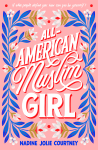
All-American Muslim Girl by Nadine Jolie Courtney

Standard
All-American Muslim Girl by Nadine Jolie Courtney

Book-Cover-All-American-Muslim-Girl

The power of own voice books is that while you may not agree with everything presented, you appreciate that it is being presented.  This 417 page high school young adult book is authentic and relatable and regardless of if you agree with the characters’ approaches, decisions, and understanding, you see and learn something about fictional characters that feels so real that you hopefully will find yourself in “real” life being a bit more understanding, kind, and accepting.

SYNOPSIS:

Allie is 16 and with her red hair and fair skin, she can pass for an all-American teen.  The only child of a college history professor and child development psychologist her family moves around a lot, but her dad’s extended family congregates in Dallas, and that is the anchor of family and love that warms the book.  Allie’s father Muhammad aka Mo is Circassian and his family speaks Arabic, including Allie’s grandma, Teta, who doesn’t speak any English.  Allie’s mom is a convert, but neither practice religion, and while Allie’s mom appreciates it, it is an incredibly hands off topic for Mo.  And Allie, well, she doesn’t speak Circassian or Arabic and knows nothing of Islam, and reinvents herself in each new school and city she finds her self in.

With Islamaphobia on the rise and Allie using her white privilege to neutralize a situation on an airplane, the reader sees as soon as they start the book, that Allie has a lot of skills to read people and understand how to handle complex situations, but that she hasn’t yet found her self.  As someone who can blend in and transform, the book is her journey to understand her heritage, her beliefs, what she wants in life and move toward finding her voice.  Much like Randa Abdel Fattah’s books which often turn the narrative from a Muslim girl rebelling against her faith and parents, this book has a young protagonist rebelling and turning to her faith.  The book seems to stem from a auto biographical place and the journey of learning about yourself, accepting yourself, and growing is universal.

Desperate to learn about Islam, Allie starts reading the Quran and hanging out with Muslims. While she knows Islam is not a monolith as she has family who cover, some that don’t, some that pray, some that don’t, some that fast, parents who drink, she still feels on the outside when she begins meeting with some Muslim girls at their weekly Quran study group.  As she gets to know the girls, she realizes how truly different Islam is for all of them, and how their experiences shape their views as well.  There is a convert, a black Muslim, a lesbian, some girls that cover, some that can’t read Arabic, some that find praying behind men misogynistic, some that feel unmosqued, they listen to music and read horoscopes, and Allie has a boyfriend.

Allie’s boyfriend, Wells, isn’t just incredibly cute and sweet, and accepting as he learns about Allie’s faith and her journey to understand it, but he is also the son of a cable shock jock toting that refugees should be stopped, and Muslims banned, yeah it is complicated.  As Allie learns more about who she is, she finds her self lying to everyone, and as she finds the courage to speak her truth, she must accept the consequences it has on those around her that she cares about.  Interwoven is a beautiful story line about her and her Teta’s relationship that is heartfelt and genuine and emotionally taxing when tragedy strikes.

WHY I LIKE IT:

I love that this book exists, and that it is written for Muslims and non Muslims alike. I think non Muslims will see that there are all types of Muslims, and we should be reminded that everyone has their own tests and is on their own path.  Paradoxically I love that it isn’t preachy, but desperately wish there was more emotional connection to Allah swt and RasulAllah, because honestly its a gaping void that makes some of the story fall flat for me.  I get that Islam is different for everyone, but while the book pushes so much that Allie wants to know about it to connect and fit in with her family, I feel like there isn’t much “spirituality” to her approach which kind of makes someone accepting religion seem lacking.  Her approach to prayer and fasting is almost robotic, and yes she says she likes it, but there isn’t any emotional resonance in her perhaps having an internal dialogue with God, or crying out to Him when her grandmother is in the hospital, instead it is read this passage from the Quran, or say this prescribed supplication, which makes her conundrum about her boyfriend, seem arbitrary.  Allie’s non believing, non practicing parents seem to have a softer spot for God, as Allie’s mom says something to the effect of it is hard to stop believing once you start, and Allie’s mom asserting multiple times that while she doesn’t practice she converted for herself, no one else.

I also kind of struggle with the attempt of getting every type of Muslim in the book to show that there isn’t a good Muslim bad Muslim dichotomy to the larger audience, but as a result seems to make the point that Islam can be changed to fit today’s world and that line makes me a bit nervous.  It is fiction, it is quite possibly the author’s own experience,  but I felt like the part of continued growth and working to follow the tenants of Islam got left out.  We all have our tests, and we all sin, but to just say ok, this is me and this is my Islam and stop there, halts the journey and character’s arc rather abruptly.

I love that the book really does a good job of laying out that there are problems, misogyny, racism, stereotypes, everywhere, not just Islam or religion, but in societal structures too, it is really shown across platforms and very seamlessly.  I like that a fair amount of side characters are fleshed out, and compassion extended even when opinions differ.  There is a lot of acceptance consistently shown from the characters and those that don’t show it are called out on it as well.

I wanted more on Allie’s dad though, to know what exactly his religious complexity entailed, I felt like I missed something, maybe I did, but just to say his relationship with religion is complicated or complex, left me wondering and wanting for details.

As it seems with so many of these YA books with female Muslim protagonists, the non Muslim boyfriends are absolutely amazing with their understanding, and patience (think A Very Large Expanse of Sea, The Lines We Cross, The Acquaintance), truly fictionalized high school boys, high five.

FLAGS:

There is Islamaphobia, kissing, drinking, death, racism, sexism, LGBTQ characters and discussions.  There is lying and talk of sex.

TOOLS FOR LEADING THE DISCUSSION:

This book is a bit advanced for middle school, the concepts and the acceptance of those concepts might not be conducive to Islamic School book clubs of high school level either.  That isn’t too say that kids can’t handle it or shouldn’t read it, but I think when presented from a school, it is assumed that you are endorsing an interpretation or practice of Islam, and this book might push that for some.

There aren’t a lot of author interviews or teaching guides, online, but if you do choice to read and discuss, you will be fine, there are a lot of layers, a lot to celebrate, and a lot to relate to in Allie’s story.


Allies by Alan Gratz

Standard
Allies by Alan Gratz
allies.jpg

This is the second Alan Gratz multi-perspective historical fiction novel I’m reviewing for its inclusion of a Muslim character.  While in Refugee it seemed a natural choice to include a Muslim family, I was completely shocked that he would feature one in a WWII D-Day novel.  With numerous storylines spread over 322 pages the book is quick, fast paced, intense and emotional.  An enjoyable read for history lovers and curious kids fifth grade and up, it is an AR 5.6 and older kids will benefit from it too.

SYNOPSIS:

The characters and timeline are fictionalized to all take place on D-Day, June 6, 1944, as the Allied forces and French resistance come together to storm German occupied France on the beaches of Normandy.  Many of the details do come from history though as detailed in the Author Notes at the end of the book.

The book starts out following Dee, a German national who left for America to escape the Nazi’s and is now returning in a Higgins boat to fight them. Knowing no one will understand, including his friend Sid, a Jew from New York, he keeps this knowledge to himself and focuses on the task ahead.

Samira and her mother are the focus of the next mission and highlight the role of the French Resistance, the Maquis.  What makes their story more meaningful is that they are spies with the French Resistance, but they are French Algerians, not really a part of France at all, and they are Muslim.  In Samira’s back story we learn how she must remove her hijab and how she is treated different at school because Algeria and France are at odds.  When her mother is taken by the Nazis before she can deliver the message to the Resistance, Samira vows to do it and get her mother back as well.

19-year-old James from Winnipeg Canada is a paratrooper who volunteered for combat to feel empowered after years of bullying. His buddy in the story Sam is a Cree Indian from Quebec, who has few rights at home, and hopes to have more success in the military.

Medic Henry is scrambling along on the beach helping anyone and everyone he can.  Having left behind a segregated US, even the military has reservations about African Americans saving and serving. As he performs one heroic act after another being questioned and doubted and insulted all along the way, readers see how ridiculous and infuriating racism is on every level.

We meet Private Bill Richards who drives a Sherman tank and is following in his fathers WWI footsteps.  But who is unfortunately killed before reaching Bayeux.   And finally we meet Monique Marchand, a French 13 year old girl, who gets caught up in the invasion because she left her swim suit in the beach hut the day before and has returned to retrieve it. Determined to do something other than cower in fear, she starts helping fallen soldiers and meets up with American journalist Dorothy, a strong woman determined to not be stopped on the basis of gender.

All the story lines criss and cross as the invasion is a chaotic mess and everyone is dropped, disembarked, or arriving in the wrong place at the wrong time.  Surviving the day is an immediate challenge and not one that everyone will succeed at.  The larger success of the mission will depend on some lucky breaks and a whole lot of teamwork.

WHY I LIKE IT:

I love that the story somehow isn’t political at all in the traditional war story, war strategy sense.  But the strength at least for me, wasn’t the horrific battle at hand, which is truly violent and abhorrent, but the relationships between the people.   The realizing what is driving them, what matters and more importantly how hard our prejudices are.  The larger story of the Allies shows British, Americans, and Canadians coming together to defeat he Nazis, but yet, a girl, an African American, and a Cree are treated as “other” irregardless of how beneficial they are even in matters of life and death.

As for the story of Samira, she is a tough girl, both clever and brave.  To have a Muslim in  an American/westerm story of D-Day and a young girl at that, to me was pretty remarkable.  There isn’t mention of faith or anything other than that she is told to take off her scarf and continues to wear a small kerchief on her head anyway, but for Muslim kids all over, this character and how she behaves will spark a sense of extra pride in the Allies success over Hitler, just as the other minority characters will for their representation in such a dramatic event.

FLAGS:

There is a bit of mild profanity.  There is violence and death, and blood, not too bad, but the point is clear, the beach isn’t pretty.

TOOLS FOR LEADING THE DISCUSSION:

I think this book would be a great supplement to any WWII history lesson.  There are great resources at the end, and maps at the beginning and a high energy, short chaptered book that doesn’t skimp on character building or war intensity.

Author’s website: http://www.alangratz.com


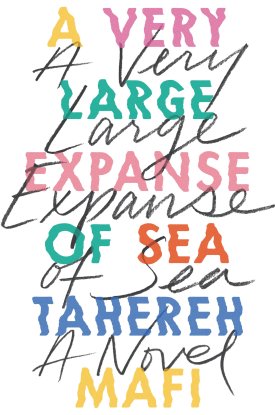
A Very Large Expanse of Sea by Tahereh Mafi

Standard
A Very Large Expanse of Sea by Tahereh Mafi

avleos

The book is often marketed as a Muslim coming of age story in a post 9/11 world.  The contemporary work is semi-autobiographical, but really I think the positioning is a bit misleading.  It’s a love story, and the main character is Muslim, and her environment is awful and she is angry. Its an engaging read, I read all 310 pages in one sitting, but I don’t know that the take-away will enlighten anyone about Islam, or really what it was like to be Muslim in the years after 9/11, I think people will remember how sweet the couple is and wonder how much of it mirrors the author and her husband, author Ransom Riggs (Miss Peregrine’s Peculiar Children), but not suddenly become knowledgable about more than what the main character experiences and endures.   I appreciate that the book challenges the stereotypes of Muslim women, there is authenticity as it comes from a writer who lives it, and I do think it shows evolution of attitudes that teens can benefit from.  The book is not yet in the AR database as it just came out, but I would imagine high school and up.  

SYNOPSIS:

Shirin’s Persian-American family moves a lot.  Her and her older brother are incredibly close as their parents are rather aloof to the day-to-day experiences the kids endure.  That isn’t too say her parents aren’t around, they eat two meals a day together and the parent’s are warm, but Shirin’s brother Navid is a much more present.  The story starts with 16-year-old Shirin starting her 12th new school.  Conditioned to not make eye contact, remember faces, or get affected by the trivialities around her, the reader sees how angry she is as she curses at a teacher that assumes she needs ESL not Honors.  Knowing how fleeting her time in any location can be, as her parents are constantly trying to find better jobs, Shirin doesn’t feel compelled to make friends or get attached to anyone or anything.  This intimidating vibe similarly keeps offers at bay, for the most part.  When she gets paired up with Ocean to dissect a cat, he tries to talk to her, and this throws her off her game.  Most every interaction she experiences at school are people making racist comments and being very one dimensional and bigoted.  Ocean tries to be nice, an attitude so foreign to Shirin that it begins to force her to change.  Simultaneously, Navid, who is charismatic and has no problem finding friends wherever they go, decides to put his and his sister’s dream into action and they start a break dancing club at school.  Three other kids join, and start becoming, not just Navid’s friends, but Shirin’s as well.  

Shirin and Ocean fall in love, despite Shirin fearing what the backlash will be for ocean.  She doesn’t really know anything about him, but feels strongly that all the racial slurs thrown at her on a daily bases will effect him and ultimately make them wish they didn’t pursue a relationship. She draws line after line in the sand, and crosses them all.  Only then does she learn how blind she has been, he is in two of her classes, not just one, he is a year older than her, and he is the golden star of the high school basketball team.  Being that the story is told from Shirin’s perspective, this is surprising to the reader as well.  The town turns on the pair and things get really ugly for Ocean who is willing to risk it all for Shirin.  Threats by the basketball coach, pictures of Shirin without her hijab being taken, accusations of terrorist ties and sympathies all challenge the couple and shape Shirin.

WHY I LIKE IT:

I really like the twist of having the relationship be difficult for the non Muslim, rather than going with the assumed Muslim girl having to sneak around.  Not saying that I support it, but interestingly she never mentions that what she is doing is going against anything religious.  She mentions twice that her parents wouldn’t like her with any guy, and that they view her as a child still, but she doesn’t explore Islamically any boundaries regarding their relationship.  She hides talking on the phone to Ocean, because her parents are adamant she gets enough sleep at night.  That is about it.  Shirin discusses that she wears hijab like an armor that she gets to pick who she shows her hair too.  I love the strength in that, but wish there was a bit of doctrine to back it up too.  At one point a Muslim, non hijabi, at school calls her out for wearing hijab and having a boyfriend, but she essential tells her it is none of her business, which it isn’t and who is to say that one sin is worse than another, but still it befuddles what exactly Shirin believes and why.  The book just paints her as a Persian Muslim, but never explores what that means other than the superficial outward appearance.  They do fast in Ramadan, no explanation about why is given, just that they not eat or drink during daylight hours, and right near the end, Shirin remarks how her mom asks her and her brother every morning if they have prayed and they lie and say yes, their mother sighs and tells them to make sure they pray the afternoon one, to which they lie and agree, only to have their mother sigh again.  AstagfirAllah, that is awful lying, and lying about Salat, but it is so real, I audibly chuckled.  

I like that the parents aren’t harsh, they just seem disinterested.  I didn’t want to read another book about the parent’s being the gatekeepers and bad guys, so that was really refreshing.  They mention they don’t celebrate Christmas, but they have an open door policy on Thanksgiving for any friends wanting to come.  I did hope for a bit more about them, why they don’t talk to the kids about moving, what makes them tick, because really they seem to have a solid relationship with the kids, they are just clueless to their social experiences and school environment stresses.

I love the growth and self reflection of Shirin, she holds a mirror to herself and she and readers are better for it.  She has to realize that she is doing so much of what she is accusing others of doing.  I love the support and genuine concern of the breakdancers and her brother.  It resonated to me as a girl with an older brother and the relationship feels very genuine. I just wanted to know more about Navid. 

FLAGS:

There is a lot of cursing. kissing, hand holding, romance, lying, and ditching school.  There is a brief mention of graffiti being sprayed.  There is racial slurs, threats of violence, violent physical outbursts by people of authority.  When a student throws a cinnamon roll at Shirin, Navid and his friends beat the kid up severely, it isn’t detailed, but it is mentioned.  Ocean  also gets suspended for a few games for a fight he engages in, and there is some detail of Shirin getting jumped in a previous city for wearing hijab.

TOOLS FOR LEADING THE DISCUSSION:

I don’t think I could in good conscience present this to a group of Muslim students.  I wouldn’t want them to think I was endorsing the violence and language and romance.  Like so many books of the genre though, if someone found it and read it on their own, I’d love to chat with them about it, as it is well written.

Youtube video about the book by the author: https://www.hypable.com/tahereh-mafi-a-very-large-expanse-of-sea-tour/