Tag Archives: Muslim Author

Colours of Islam by Dawud Wharnsby

Standard

Colours of Islam

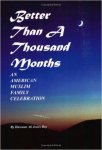
This beautiful book is a compilation of the lyrics from Dawud Wharnsby’s well known collection of songs found on the Colours of Islam CD released nearly 20 years ago.  The book states for ages 5+ and is a large and very colorful 35 pages.  The hardback binding, the inclusion of the CD, and the knowledge that royalties go to a trust fund supporting educational initiatives for children, make it a great gift item.  It looks lovely on the shelf and the children will eagerly thumb through it, once.  After that, I’m not entirely sure what to do with the book.  colours of islam2

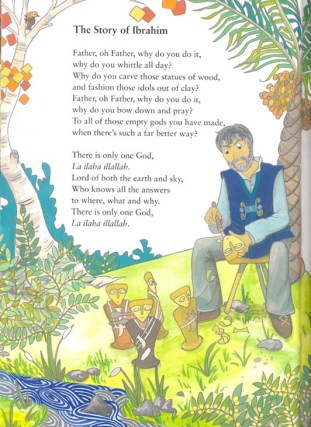
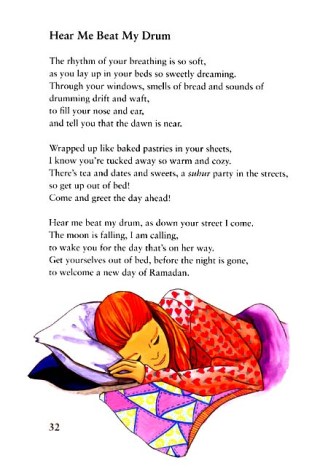
The pictures are very busy for the most part, and very detailed.  The text on the page is pretty intimidating in its line length and volume.  The songs are lovely, I’ve knows them by heart since I was a child, but I don’t know that they lend themselves directly to poetry for children.  If a child knows the songs, or is following along with the CD then yes, older children will benefit from the book.  A five-year-old or possibly a 7-year-old will not.  I can see the poems/songs supplementing a language arts lesson in a classroom, and in a library the book looks wonderful displayed.  But, as hard as it is for me to not gushingly praise a Dawud Wharnsby product, I don’t know that the book would really ever be read cover to cover and/or more than once.

colours of islam1colours of islam


Bestest. Ramadan. Ever. by Medeia Sharif

Standard
Bestest. Ramadan. Ever. by Medeia Sharif

Bestest.-Ramadan.-Ever.-by-Medeia-Sharif

This book fails on so many levels: the writing quality, the title, the representation of Islam and Ramadan, messages about weight and beauty, and female self-worth to name a few.  This 299 page 5.0 AR book looked great as I was skimming through the library book catalog.  I knew it was young adult romance and saw that it would involve crushes and boys, and “typical” teenage stuff, but really this book has so few redeeming qualities for any demographic, I’m not sure why it was written, why it was published, and why the library shelves it.

SYNOPSIS:

Almira is a 15-year-old girl of Persian-Syrian descent living an all American life in Florida. She has good friends, is a good student, and is financially well off.  She is Muslim, but doesn’t really know what Islam is, “I’ve been to a mosque exactly twice in my life” she says.  She doesn’t pray, her parents only do on occasion, yet she feels “different.”  This over stretch is the first of many plot holes, that make the tone of the book more whiney and shallow, than the premise requires.  Having tried fasting the year before and been found cheating by her culturally strict grandfather, Almira is determined to fast this Ramadan to lose weight and prove she has willpower.  There is a glimmer that her shallowness will fade, but the weight issue is mentioned every few paragraphs and thus there is no pushing it away.  The author presents Ramadan as one giant weight loss program.  There is no mention that Ramadan as a spiritual time or reflective time.  Nope.  She is fasting to lose weight, and everyone around her is supporting it, by constantly commenting at how much better her size 8 is looking as the month progresses.  The biggest storyline in the book is that Almira wants a boyfriend.  Again, this is contrary to Islamic practices, but naturally crushes and crossing rules is a reality.  However, even to girls not faced with a religion that forbids boyfriends, the messages in this book regarding boys is pretty pathetic.  Almira changes her self to impress the boy, pretending to have interests that she doesn’t have.  She is willing to sacrifice her best friend since Kindergarten to get said boy, and while they mention that everyone treats them superficial based on their looks, they too treat each other the same way.  Almira and her friends get so much of their self worth and confidence from how boys ogle them that I found myself often cringing with disappointment.  Now, granted it is a YA book, and 15-year-old romances probably are pretty shallow, but again the whininess just starts to be too much.  There is a brief glimmer of hope when the family goes to the mosque and prays and breaks fast together, but it is short lived as Almira finally gets the boy, finishes Ramadan, and celebrates in a bikini on the beach, “And look at us, half naked on Eid,” she says to her Muslim friend, Shakira, as if that is the epitome of making it in America.

I don’t expect all books to have a message, but if you are going to have a moral message in a book, I would hope that a book written on a 5th grade level would have a good one.  This book’s lesson is to lie and lead a double life.  And no that is not me over simplifying and putting my own bias on the author’s storyline choices.  “I’ll sneak out with Peter whenever I can, while I show my parents a goody-two-shoes facade that will be impenetrable.  I can keep this secret,” thinks Almira as the book concludes (page 287) and everything is right in her world. She feels a tinge of guilt that she can’t talk to her parents, not guilt at her actions, which is really the epitome of my confusion to why the book has an Islamic implied title.  Ok I get maybe she wants a bit of cultural layers to add depth to the characters, but why structure the book on religion when religion is made to be such a joke by failing to give it any substance? Had she made it more cultural and the characters culturally are Muslim, even that would have worked better.  But, they aren’t.  The parents are really really one dimensional.  Mom is “hot” and even when the family is talking she is in the corner doing crunches.  She loves karaoke and doesn’t like grandpa is about all we know about her.  Nothing about her dreams, her family, her life growing up, her fears, her education.  Dad similarly is pretty flat.  He is a dentist and just looks at people’s teeth. He goes from being uber mellow and cool, to deleting pictures on her computer and yelling at her that she can’t date.  Neither trait seem to define him, and make an already shaky premise, more awkward.  Almira whines and complains about her parents, but they overall seem supportive and kind, again a plot hole that makes the book lose traction.  Grandpa is the scary old-world stereotypical character, that calls everyone a prostitute that doesn’t dress modestly, but goest out of his way to teach Almira to drive.  The grandma fades into the back ground, but oddly enough the author takes time to mention that recently she started wearing a scarf and used to wear heels and make-up, so did grandpa call her a prostitute? Again things don’t line up and once again the female characters are defined by their looks, and the males as being hot tempered and judgemental.  It is unfortunate that the foundation of the book is so weak.   Additionally, all the pop culture references, already start to date the book (it was written in 2011), most 15 year olds today probably are not obsessed with Robert Pattinson and Angelina Jolie. The author tries really  hard to sound like a teenager, that at times it seems overly forced.

WHY I LIKE IT:

Obviously I’m not a big fan of the book, so finding things I like is a bit of a stretch.  I have more hope that girls can be strong and independent and not completely boy and appearance obsessed.  And while I know that is wishful thinking, this book just validates the sad idea that self worth is tied to looking good in a swimsuit and having a boyfriend.  I feel like our daughters deserve more, are capable of more.  I like that Almira is willing to try new things, like fasting and going to the mosque. And I do like that she more or less puts up with her grandfather in a kind manner, even though they disagree about most everything.  In terms of the “romance” aspect at least the author didn’t go overboard.  The characters kiss and hold hands, it does stay within the PG-13 guidelines. So, Alhumdulillah, if a young Muslima picks it up thinking she might actually read about an amazing, spiritual Ramadan experience, she will be terribly disappointed, but at least she wont be exposed to something R-rated.

FLAGS:

The flags are with content, presentation, and writing style. There is no language.  The idea of violence, if her grandfather caught her with her boyfriend stoning her, seems out of place and not a realistic threat.  There is nothing negative per se about Islam, as there really is no Islam in it. I doubt even someone with no Islamic knowledge would equate anything in the book with Muslims.  They may wonder if in fact we lose weight during Ramadan, but that is about it.

TOOLS FOR LEADING THE DISCUSSION:

There isn’t much to discuss in the book, just criticize unfortunately. The author’s blog reveals that Islam and cultural characters seem to be a common back drop in her books, but I doubt I’ll muster up the desire to read any other novels of hers to see if they ever serve more than that.

Lailah’s Lunchbox: A Ramadan Story by Reem Faruqi illustrated by Lea Lyon

Standard

Lailah's Lunchbox

Another standout in a crowded field of Ramadan picture books, mashaAllah, Lailah’s Lunchbox works well even outside of Ramadan for Muslim and Muslim children alike.  In 32 pages, the reader gets to know Lailah and understand how hard it has been for her to move to America from Abu Dhabi, make new friends, how nerovus she is to be identified as different, as well as how excited she is that her mother has finally agreed to let her fast this Ramadan.

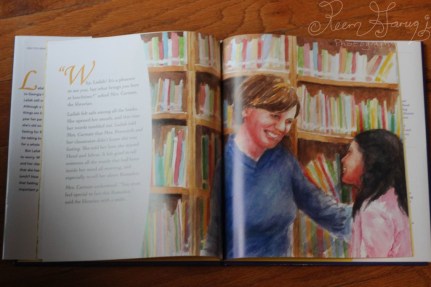
Lailah is excited to wake up and have sehri with her family before heading to her new school, fasting for the first time.  Her mother has written a note for her teacher, but on the bus, Lailah reads the note and suddenly worries if her teacher will even know what Ramadan is ,and decides not to give it to her teacher.  Lunchtime arrives, and when the teacher asks Lailah if she forgot her lunch, her voice fails her, and her classmates offer to share their lunch with her.  Lailah decides to leave the cafeteria and finds herself in the library spilling all her worries and stresses and fears to a kind librarian.  (Yes the librarian is the hero, and really no one should be surprised, right!?) With the librarian’s urging and Lailah’s determination, she writes a note to the teacher explaining that she is Muslim, and fasting, and even includes a poem.  She leaves the note on her teacher’s desk at the end of the day.  The following day, the teacher has written her back and the reader, along with Lailah, know that having courage and staying true to one’s self can often be scary, but also wonderful too.

lilah inside

While the story is billed a Ramadan Story, it really just is the back drop for a lot of really good messages.  I think 2nd and 3rd graders to early middle schoolers could really benefit from the book.  It is semi autobiographical and I think the authenticity of the emotion woven in, makes the book very relatable and powerful.  I plan to discuss it with my daughter going in to 5th grade, who is also a bit shy on occasion: the way Lailah worked out the problem, the way she found someone to trust and talk to that was patient with her, to point out to her that the kids in her class were very kind and that most of her fear and anxiety was with herself, not them.  I also really like the message that she was so excited to fast, and how her nerves took that excitement away, but having the courage to face her fear, brought back her happiness and enthusiasm.

The end of the book has an Author’s note, telling how the story came about and a bit more about Ramadan. It also tells the definition of Sehri and Iftar, the only two “foreign” words in the book.  I found it interesting that the word Sehri, an Urdu word, was used instead of Suhoor, if they are coming from Abu Dhabi, but perhaps the author is of subcontinent heritage.  The illustrations are colorful and realistic, complementing the story and tying in the range of emotions and events Lailah is experiencing.

I was pleasantly surprised at the book, and even more excited to see that it is available in the public library system.  Here is the link to the author’s blog I hope she plans to write more, as her style and message resonate with Muslim American kids, and their parents, alhumdulillah.


It’s Ramadan Curious George by Hena Khan illustrated by Mary O’Keefe Young

Standard

It' Ramadan Curious George

This highly anticipated book came with a lot of expectations and hope for many of us born and raised in America.  Alhumdulillah, Hena Khan did a great job and everyone’s favorite monkey learns and enjoys Ramadan and Eid.

The 14 page rhyming board book is festive and inviting as the tabbed ends head different aspects of Ramadan and Eid  The first tab is George helping his friend Kareem and his family get ready for Ramadan while explaining to the reader how Kareem is going to try and fast all day.  The pictures show Kareem’s mom in hijab and dad helping in the kitchen.  A banner they are hanging says Ramadan Mubarak, but there is no mention of religion or Muslims or Islam.

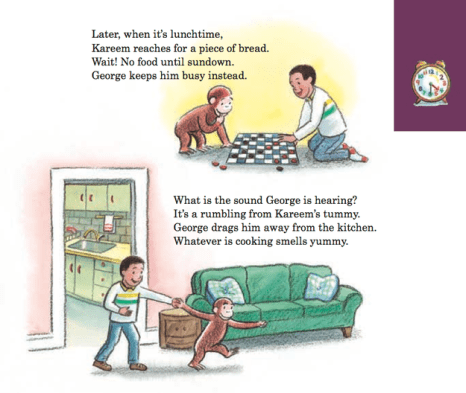
Curious GeorgeThe next tab has George helping Kareem get up for a predawn meal, keeping his mind off food and keeping him busy.  Not the normal mischievous George in this book, but rather a very helpful one.
 curious george 3

The next tab talks about dates and breaking the fast and the sounds of prayer, but  again no specific mention of religion or belief.  The pictures show men and women of different skin colors, veiled and un veiled, visiting together.  The next tab is all about food, in all of its diverse glory.  The next tab has Kareem inviting George to the mosque to make food baskets for those in need.  George gets a little silly, and inspires the imam to add a clothing drive next year.  The final tabs are spotting the moon and celebrating Eid.  Gifts are given to George and the man in the yellow hat. Kareem and George are sad the month is over, but George enjoyed celebrating his first Ramadan with his friend.

curious george 1

Overall the book is great for Muslim kids, non Muslim kids, and also notably for non Muslim kids with Muslim friends.  The book does not label and discuss belief or even spirituality, but rather shows how Muslims celebrate Ramadan and Eid in its most basic way, and shows that it is a part of American culture.  For as excited as my family (and myself) were to see Curious George enjoying Ramadan and doing things we do, I can see many of my neighbors and kid’s friends also identifying that they know what George is doing too because of their Muslim friends, and getting excited.  The book works for all ages, to be read independently or aloud.

MashaAllah, don’t judge it by its size, it accomplishes a lot in just a few pages, a lot like a curious little monkey!

Ilyas & Duck and the Fantastic Festival of Eid-al-Fitr by Omar S. Khawaja illustrated by Leo Antolini

Standard
Ilyas & Duck and the Fantastic Festival of Eid-al-Fitr by Omar S. Khawaja illustrated by Leo Antolini

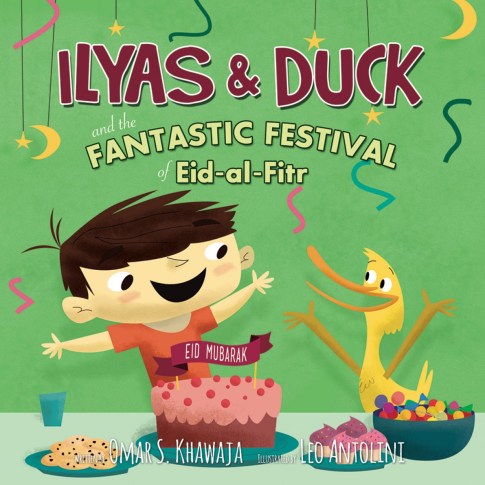
Ilyas & Duck and the Fantastic Festival of Eid-al-Fitr


In the world of Islamic fiction, there are a lot of Eid books out there for children, but this one is definitely more fun than most, especially for the younger crowd.  The presentation of a big, bright, hardback book is aimed at 3 to 6 year olds, and reads well out loud, however, the book is very, very inviting, and older kids with happily pick it up and thumb through the 32 pages of rhyming lines as well.

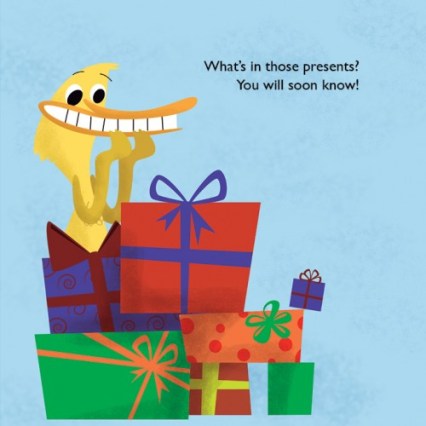
The book starts with Ilyas watching the sky to see if Ramadan is over and if Eid is here.  Duck in all his silliness doesn’t know what Eid is and rushes out to get decorations to celebrate.  he returns with a Christmas tree and ornaments.  Ilyas non judgmentally explains that those are for our Chrisitian neighbors for their holiday.  Duck then runs out again and returns with a menorah and dreidel and once again Ilyas explains that those are for our Jewish friends celebrating Hanukkah.  Ilyas and Duck then fly away in their hot air balloon to the Masjid to learn about Eid.

Ilyas and Duck2Ilayas and duck

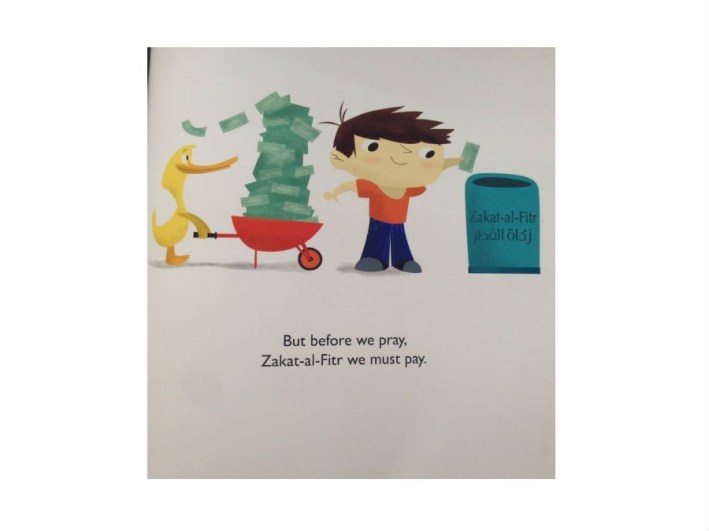
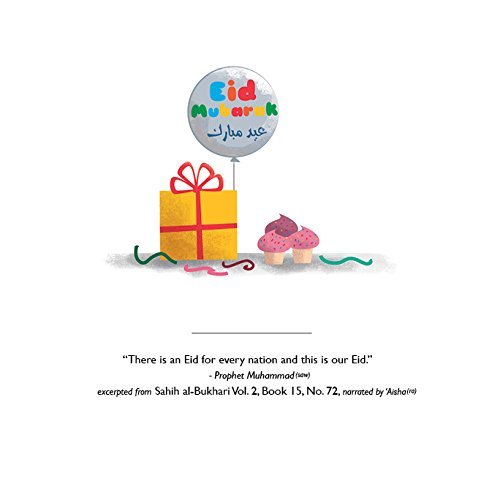
The book works for Muslim children to understand what others celebrate and works for non Muslims to see what we celebrate.  It is all done in a matter of fact way of celebration, not of doctrine.  It is built on the idea that, “There is an Eid for every nation ant his is our Eid.”ilyas and duck eid

Much like the first Ilyas and Duck book, this one is great to have around and read again and again!

The White Nights of Ramadan by Maha Addasi illustrated by Ned Gannon

Standard

the white nights of ramadan

I love learning about people’s Ramadan traditions, and am slightly embarrassed to admit that I never knew about this Gulf tradition of Girgian.  My kids and I enjoyed reading this book during the middle of Ramadan, when the moon is full and bright, and thus known as the white nights of Ramadan.  Written on an AR 3.6 level the story does a good job of blending the concepts of Ramadan, Girgian, Islam in a 32 page fiction story format for Muslim and non-Muslim children alike.  There is an Author’s note and Glossary in the back as well.

A young girl, Noor, excitedly waits and prepares for Girgian.  She explains the activites to her two younger brothers, Sam and Dan, how they will walk the streets with lanterns (fanouses) and get treats from neighbors for three nights.  But before night falls, they first have a lot to do to prepare, and with the help of their parents and grandparents, the children make and wrap the candy, decorate bags to keep the candy in, and get dressed in fancy traditional clothes.  In the process the book also explains Ramadan, and shows Noor praying and reading Quran.  Arabic and islamic words are tossed in and well explained: iftar, fanous, suhoor, dishdashas, musaher, etc.. Noor in all the excitement shares a tender moment with her grandma where they discuss how fun Ramadan is, but that the “true meaning of Ramadan is spending time with family and sharing with those less fortunate.” A religious scholar may add more to what Ramadan is, but for a children’s book, the message is beautiful and perfect.  The story concludes with Noor and her grandfather taking a basket of food to the mosque to give to the poor.

The book has a slow melancholy type feel to it and the pictures definitely help set that tone.  They are detailed and well done, but maybe not overly inviting to younger readers.

IMG_9586

white nights of ramadan

The book made me want to learn more about the tradition, and talk to people that may have celebrated it to see how it has evolved over time.  My kids liked the idea of having a musaher, a drummer walking the streets waking people up for suhoor.  As a mom of four, I can see why something fun in the middle of the month, especially when the days are so long, is a great way to re-energize the children about the fun and blessings of Ramadan.

Muslim All-Stars Helping the Polonskys by Khaleel Muhammad

Standard

Muslim All Stars

A mishmash of young teen characters come together to form the Muslim All-Stars, the first book in a new series that will hopefully stick with the same set of characters doing good deeds in their community.    With only 67 pages and colorful illustrations of a variety of sizes scattered through out, the book is enticing, but not memorable.  I never bonded with any of the characters, and really couldn’t even list them all or identify them in the pictures.  Hopefully the series will continue and their individual personalities will take shape.   There are a few plot holes: how did Leila have a note from her parents if she just read the advert, how did none of the kids know each other or recognize each other if they all went to the same school, why would something done outside of school warrant recognition in school? And some random unresolved ideas: the Polonsky’s harbored a burglar or was it a rumor, why did Mr. Polonsky call Leila three times just to tell her to go?  Despite it all however, it is overall a fun book for both girls and boys in grades 2 through 4.

SYNOPSIS:

Mr. Polonsky’s wife is coming home after having surgery and their home is a mess. Overwhelmed by the prospect of cleaning it, he gets the brilliant idea of hiring kids to do it, for cheap.  A handful of kids, all Muslim, show up to do the work.  But even overcoming Mr. Polonsky’s rotten attitude, the mountains of rubbish, the menagerie of critters that have taken up residence in the home, and a crazy washing machine, is not enough to prove themselves in the face of Mrs. Polonsky’s anger when she gets home.

WHY I LIKE IT:

I love that within the Muslim group there are kids of different ethnic and cultural backgrounds and abilities; one kid is a convert, one is Pakistani, one is good with machines, one has Aspergers, one seems to get in trouble a lot.  They all answer the advert for different reasons, but after some convincing of sorts, they all agree to help the Polonskys because it is the right thing to do.  MashaAllah the girls wear hijab, they break for salat as a group, verify the food is halal, and generally just work well together.

FLAGS:

Clean alhumdulillah

TOOLS FOR LEADING THE DISCUSSION:

There is nothing online.  It is a book that if you recommend it to a child you simply would want to follow up with them by asking about what they thought about how the kids were treated, what they would do if Mr. Polonsky treated them that way, if they were surprised by the ending etc..

The book is written in British English and American kids shouldn’t have trouble understanding what is going on, but might need some help figuring out some of the words, such as rubbish, bin liners, skip, etc..

Ibrahim’s Search by Qasim Najar illustrated by Patricia Meehan

Standard

Ibrahim's Search

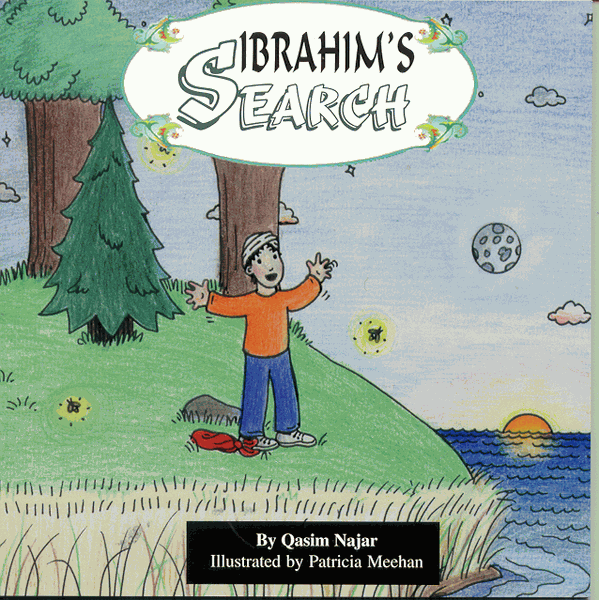
What a surprisingly insightful book, mashaAllah.  The pictures look like they are done with crayons and colored pencils, and the type set is completely uninviting.  The text  is a bit too wordy, yet somehow it does a decent job overall of conveying how a child might understand Allah (swt) in a logical, critically thinking manner.  The book works well for four year old children to maybe about 2nd grade.  There are 40 pages and the story takes on a insightful repetitive pattern as young Ibrahim searches for Allah.

The book opens with a humorous nod to moms everywhere.  Ibrahim learns that Allah is the creator of everything and wants to see Allah.  His teacher says he can’t show him Allah, so Ibrahim goes to find someone who can, his mom.  Ummi tells him that we understand Allah swt through his creations all around us, but Ibrahim is not satisfied with her answer either.  And because Muslims are encouraged to ask questions and seek knowledge, Ummi allows Ibrahim to go search for Allah so that he might thank him.

Ibrahim sees a mountain, and thinks perhaps something so big and strong is Allah, then he notices the stream running through the mountain and wonders if then the water is Allah.  When the water evaporates, he wonders if the sun is Allah, this goes on and on until he realizes that the one who made the world, holds it together, and keeps it in balance is Allah.  He also appreciates that his mother was right and goes home to tell her, Alhumdulillah.

This book goes well with Ilyas & Duck Search for Allah and Allah Created Everything if you are doing a story time, as they all convey the same information in different ways and appeal to the same audience more or less.


The Hijab Boutique by Michelle Khan

Standard

The Hijab Boutique

I was really hoping this book would help out the sparsely populated early chapter book section.  And it should, at just 52 pages with beautiful full page pencil style drawings, it just somehow seemed confused instead.  The content is much more young adult in story line, but because of the short length, the characters seem flat and underdeveloped.  My fourth grader read it in less than a half an hour. Yet, I don’t think a 1st or 2nd grader would get much out of the book.  I don’t know what kind of editing process the Islamic Foundation puts its books through, but back when I was a teacher, I would have told the student they have a wonderful, wonderful rough draft with so much potential, they just need to flesh it out and add more detail so the reader connects with the characters. The back of the  book suggests the book for ages 10 and up and content wise that is fine, but it also has a list price of $7.95 and for something that can be read in less than a half an hour, it seems a little steep. If it didn’t have so much potential, perhaps I wouldn’t be so bothered, I just feel like if she stretched it out to being 200 pages, it could be so powerful.

Farah is a fifth grader at an all girls art school.  She has a best friend, who’s mom is a soap opera star, but some popular girls still make  her nervous.  When her Social Studies teacher assigns the girls to bring in something representing her mother, she can’t find anything to share about her mother that she doesn’t think is boring.  Farah’s father passed away two years prior and with money tight, Farah’s mom is opening up a Hijab Boutique.  No real details are given about her family life with her father or the impact his death had on her, which is unfortunate.  The story discusses why the mom started wearing hijab and why it is important, but makes it seem like Farah knows so little about her mother.  Again a hole that if explored would make the book that much more interesting. Not to mention that it could prod young girls to talk to their own mothers about such things.  To no one’s surprise Farah brings in some hijabs to represent her mother and Alhumdulillah the book ends on a positive note with little fanfare, catharsis or drama.

Farah and her mom are practicing Muslims who are an active part of their western community.  It would seem Farah is the only Muslim in her school and it doesn’t seem to be an issue.  They are all upper class and a bit snobbish, but there are no flags.  If your library has the book, reading it is by no means a waste of time.  I don’t know that you’d read it more than once if you purchased it, but 4th through 6th graders might enjoy the short read, and be inspired by fashionably fabulous hijabs while furthering their understanding about why Muslimah’s are required to cover.


Adam in Lost and Found by Zanib Mian illustrated by Maria M. Goncalves

Standard
Adam in Lost and Found by Zanib Mian illustrated by Maria M. Goncalves

Adam in Lost and Found

This book resembles kindergarten and 1st grade leveled readers in both appearance (shape and size) and appeal.  It very easily could have been a picture book, with its sparse words and simple linear story, but by making it a smaller size, with a variety of playful fonts, it really excites beginning readers who pick it up and are thrilled to see Muslim characters in an Islamic book on their level.  The book is 32 pages and has nice large age appropriate pictures that work very well, even when reading the book aloud to small groups.

adam 1

The  story explores the concept of “finders keepers losers weepers” in a fulfilling way.  Adam, a young boy on a train with his family, finds a toy train and desperately wants to keep it.  His father kindly explains to him the two options before him and lets him choose.  Adam, Alhumdulillah,  chooses to give the train to the lost and found man and earn Allah’s reward.  Later, Adam realizes after much searching and help from his family, that when he found the train, he left his toy airplane.  The moral is cemented in the readers, as they too hope, with Adam, that whomever found his plane, also did the right thing and gave it to the lost and found. By coming full circle the message is conveyed, and a happy ending is had by all.

The book takes place in Britain and is book two in the Adam series.adam 2