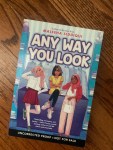

If you feel that hijab is like salat and that it should be done no matter what, even if you are being forced, your heart is not in it, or you are doing it to appease someone other than Allah swt, than this book might not be for you. I am not a scholar, I should not be giving anyone Islamic advice or suggestions, but after sitting with this book, having read all 250 pages in one go, this is the crux that I have come up with regarding who will be the target Muslim audience for the book. The Islam flows and the central Islamic message is the importance of one’s relationship with Allah swt. So whether the fictional characters are wearing hijab, considering hijab, removing hijab, I was not overly bothered, they were still praying, going to the masjid, attending halaqas, and spending time thinking about their relationship with Allah swt at present, and what they hope it will be in the future. The niqabi mother never forces her view on her daughters, the book does not get preachy, nor does it only show one perspective, as a result the reader is allowed to appreciate the other themes of the book and the impeccable writing. That being said, did I wish there was more sitting on the prayer rug conversing with Allah swt about what to do? Yes. Do I wish that everyone’s hijab journey, both real and fictitious, was easy? Yes. Do I wish we lived in a world that women were respected no matter how they dressed? Absolutely. This book is middle grade and it takes on numerous sensitive topics, and in my very biased opinion does an incredible job. The book contains sexual harassment, judgement, peer pressure, stereotypes, gender roles, bullying and so much more. I truly couldn’t put the book down, the tears of being seen kicked off the book, and then tears of strength concluded the book. Muslim and non Muslim readers alike, will be better for reading this unapologetic, OWN voice book.
SYNOPSIS:
Ainy’s life is busy: school is wrapping up, summer plans with her best friend Safiya are being made, the family has moved into the basement of her crush Izyaan’s house, her father is in Pakistan caring for an ill grandma, and Amma’s clothing store, Naseerah’s Almari, is getting busy. Ainy begs to work at the shop as Bajjo takes on a second job to help the family make ends meet, and when her Amma finally agrees, Quratulain’s best laid plans to learn how to be a designer, and have the best summer ever, are about to be challenged.
Before she can design, she has to learn how the shop works, the frustration and time involved make her unable to fulfill her plans with Safiya causing a widening rift with the life long friends. Bajjo who has always been Ainy’s role model starts shutting her out, and Izyaan’s cousin Yasir seems to be everywhere Ainy is. She is not comfortable with him showing up at her work, bumping in to her all over town, messaging her at night, and while she knows he is in the wrong, she starts to wonder if it is a result of something she has done. With no one to talk to, Ainy is left to handle the Yasir problem on her own, and the relentless anxiety, isolation, and fear begin to change Ainy and everyone is too busy to notice until all the threads combine: a big wedding order from Yassir’s mom, hijabs being taken off and put on, and Ainy taking a stand.
WHY I LIKE IT:
The book hits close to some events I have experienced in my life, to the point that I had to check if the book had the typical disclaimer that the characters are a work of fiction and any resemblance is coincidental. The characters feel that real, and their emotions that relatable, that even at my old age, I was moved, invested, and unable to look away.
I love that the author provides a lot of perspectives about hijab, but does not make a heavy handed judgement, the title of the book hints that women should be respected, and valued, no matter how they dress, and the mom in the book does a great job of setting that tone as she asks her clients how they feel in different clothes, as she models how her daughter’s choice to wear or not wear hijab is a reflection of their relationship with Allah swt, as her decision to wear niqab is hers.
There is no internalized Islamophobia, no othering, no watering down. The book is solid and I think even if you don’t agree with the choices the characters make, the writing is strong enough that you can see why the characters do what they do for them.
My only real critique is the cover. I don’t know why, but I don’t love it. It doesn’t scream fashion and Islam, and the strength of the writing, the characters, and their summer together deserve a better visual representation, sorry.
FLAGS:
Triggers for those who’ve experienced unwanted attention and sexual harassment. Does have boys and girls being friends, crushes mentioned, hijab, backbiting, bullying, stereotypes, peer pressure.
TOOLS FOR LEADING THE DISCUSSION:
While I can see why some people would not “approve” of the book, and some will love the book, I think in an environment of discussion and someone qualified (not me) to guide young readers, this book would be an incredibly empowering, book to think about, enjoy, and relate to in an Islamic school book club setting.
Please consider preordering/ordering this book. It is available here on Amazon.




 Islamic School Librarian