Category Archives: YA FICTION

Saving Kabul Corner by N.H. Senzai

Standard

kabul corner

For all of us waiting to see what happened to the characters from Shooting Kabul, N.H. Senzai answers that question in Saving Kabul Corner, while maintaining a stand alone story of mystery and family.  It is not necessary to read Shooting Kabul first, and if you have not recently read Shooting Kabul you may not even realize that some of the characters cross over into this book.  The books are drastically different in tone and style and purpose.

SYNOPSIS:

Saving Kabul Corner takes a while to get going, nearly 100 pages.  There are so many characters that I started reading this book months ago, put it down and forgot about it.  I picked it up two nights ago and resolving to just read it and not worry about who all the characters were, I finished it in two sittings and enjoyed it.  The buildup is important to set the stage, but young readers might have to be encouraged to get through all the pettiness of the characters, the numerous back stories and sub plots to get into the flow of the novel and the who-done-it aspect of the book.

Ariana is a 12-year-old Afghani-American girl with siblings, cousins, aunts, all living in their cramped townhouse.  The family owns Kabul Corner an Afghan grocery story in Freemont, California.  Things are going along fairly well, despite the recent arrival of Ariana’s cousin Laila who couldn’t be more different than Ariana, resulting in jealousy and disdain.  When a new Afghan store opens in the same plaza as Kabul Corner, tempers and old country feuds resurface.  Tribal concepts of badal, revenge, and honor start to make their way into their American lives.  When the feuding escalates to vandalism, theft, and arson, the kids of both families are convinced that a third party is pitting the stores against each other and set out to find the real culprit.

WHY I LIKE IT:

I like that the characters are American, but cultural too.  They are Muslim and mention going to the mosque, but their actions unfortunately don’t depict Islam in a consistent manner.  Most notably they do celebrate Halloween, and they lie a lot.  Because the book is a A.R. level 6.1 I haven’t completely ruled out using it as a book club book.  I think it might be a way to discuss with the students the purpose of literature.  How some books leave the reader with a moral, or something to ponder, while some are just entertainment.  The lying in this book is quite extensive and yet, both the kids and the adults have to lie to get the truth.  The author makes note of it, so at least it is identified as an anomaly, but still I’ve not yet resolved if I can explain to the kids that the ends don’t justify the means in real life.  I like that the book is a mystery, so many books with cultural twinges focus on all the “cultural” obstacles and injustices and hardships, it was nice to read a book where the characters and the store just happened to be ethnic in nature.  I think the characters’ culture adds depth, but won’t turn readers away as it is clearly written for the typical American young adult reader.  There is a glossary in the back, but it isn’t as daunting as other novels out there.  The book is 273 pages and also has an Author’s Note and a Further Reading Section.

FLAGS:

The lying for sure, and the theft.  There are no concerns with relationships, language, violence, or disrespect.

TOOLS FOR LEADING THE DISCUSSION:

Click to access 365.pdf

The Breadwinner By Deborah Ellis

Standard

breadwinner

The Breadwinner is the first book in Deborah Ellis’ four book series about 11 year-old-Parvana, her friends, and her family in Taliban controlled Afghanistan.  The remarkable thing about this book is that it is a compelling story, that has moments of intensity and reality, yet never falters from being on about a 4th grade reading and comprehension level.  The AR level is 4.5 and as a teacher I taught the book as a novel study to 4th graders, and now as a librarian I presented the book for my Jr. Book Club.  In both cases, after completion, the children are arguing and fighting for the next books in the series, Parvana’s Journey, and then Mud City, and finally My Name is Parvana.  It is not a tempting book on the shelf necessarily, but once you start, it is hard to put down.

SYNOPSIS:

The book gives readers a glimpse of how the Taliban changed the day-to-day lives of the Afghani people.  Young Parvana starts out helping her father, a  former History teacher, earn a meager living by reading and writing for the illiterate in the marketplace, and selling odds-and-ends that the family is willing to do without in order to survive.  As a young girl she is allowed to accompany her father into the marketplace, her older sister and mother, however, have not left their home in a year and a half.  When Parvana’s father is dragged off to prison, the family is in need of a provider, a breadwinner, and with some of her deceased brother’s clothes, a haircut and some courage, young Parvana becomes Kaseem.  She carries on her father’s work, digs up bones to earn more, and sells items from a tray to keep her family afloat.  In the process she meets an old classmate, Shauzia, who is also disguised as a boy, an old gym teacher, Mrs. Weera, determined to fight back through disseminating journals and magazines, and other characters that bring the horrors and hope of the Afghan people to life.

WHY I LIKE IT:

I like that it doesn’t get too political, which would bog down the story and turn off young readers, and while it presents unfair imprisonment, stadium style punishments, death and pain, it does so in a way that evokes empathy not fear.  It even at times finds a way to stay light-hearted and offer up hope as the reader sees the resilience and determination of these people.

“I’ve been thinking about starting up a little school here,” Mrs. Weera said to Parvana’s surprise.  “A secret school, for a small number of girls, a few hours a week.  you must attend.  Parvana will let you know when.””What about the Taliban?” “The Taliban will not be invited.”

FLAGS:

The book is intense at some moments, such as when the father is taken by the police, the girl’s nearly see prisoners having their hands chopped off, and the characters discuss landmines.  But it is on a child’s level, too much description is not offered and for most 3rd graders and up, I think the book is a great dialogue starter about what some people have to endure in the world.

TOOLS FOR LEADING THE DISCUSSION: (There are a lot of resources for this book)

Author’s website and study guide:   http://deborahellis.com/teacher-resources/

Unit study:  http://www.teacherspayteachers.com/Product/FREE-The-Breadwinner-Unit-Guide-for-Students-365169

Lesson plan:  http://coolkidlit-4-socialstudies.pbworks.com/w/page/27715927/The%20Breadwinner%20Lesson%20Plan

The Friendship Matchmaker Goes Undercover

Standard

friendship

I’m posting yet another Randa Abdel-Fattah book that my mom stumbled upon and sent me 10 copies to do for our Book Club. I didn’t love the book, but it is clean and brings up the issue of bullying, friendship and honesty.  So, I’ve decided to do a 3rd- 5th grade Jr. Book Club and use it as a starting point to discuss this critical social realms that they are facing.  The book is a 4.4 Accelerated Reader level and has no Muslim characters or themes.

SYNOPSIS:

This book is the second in the series, and, thankfully, having not read the first book, The Friendship Matchmaker, didn’t hinder my understanding.  Told from the perspective of Lara Zany, a former friendship matchmaker of Potts Middle School, the reader gets to know the major characters at the school and their problems.  Lara now has a best friend and has retired from the matchmaking business, but old habits are hard to kick, and as a new student from Somali out plays the school bully in soccer, Lara is forced to go undercover to help her classmates.

WHY I LIKE IT:

The book doesn’t stand out in the genre, but it is fun because I think 3rd through 5th graders deal with everything in the book, every day.  The book shows restraint where a lot of books over do it.  The characters show growth, they aren’t disrespectful and they aren’t all painted with a simplistic brush stroke.  The bully has redeeming qualities and no one is perfect or hopeless.

FLAGS:

The book is clean in regards to violence, relationships, and language.  The only concern I have is there are two major instances where the characters lie, and there are no consequences.  The smaller breaches of honesty the characters in some way or another must own up to, but there are two scenarios: a forged field trip signature, and an untruthful excuse given for being late to class, that rubbed me the wrong way.  Before allowing students to check it out for the purposes of Book Club, I sent a note to the parents with these two concerns and left it to them to encourage or discourage their student’s from checking it out.  My goal is to discuss why the author included these in the book, and realistic alternatives that would promote honesty, but still allow for a happy ending.

Where the Streets had a Name By Randa Abdel-Fattah

Standard

streets

This is the second book I have read by Randa Abdel-Fattah, and I still don’t know if I love her as an author, but I did enjoy the content of Where the Streets had a Name, much more so than I did with Does My Head Look Big in This?  The timeliness of this book is also as apparent as ever with the genocide and occupation occurring in Palestine, had I read it years ago I don’t know if it would have had the pull that it had on me, reading in now.  With all the images on social media and the news, this book really does a remarkable job of showing the daily struggles for Palestinians in terms of settlements and check points and just basic day-to-day living that is hard to imagine from anywhere outside of Palestine.  While some may find it slow moving I enjoyed the detail and childlike perspective of the world as seen through the 13 year-old characters in the book.  Despite all the material for it to be a preachy, political, and gruesome, it is not, it is undoubtedly told from a Palestinian Muslim perspective, but the supporting characters come from all backgrounds and focus on the humanity contained with in us all: Muslim, Christian, Jew, and even Israeli.

SYNOPSIS:

Hayaat’s family has been kicked out of their home by Israeli soldiers and are living cramped up in Bethlehem, struggling with no jobs, curfews, and the impending wedding of Hayaat’s sister to a boy on the other side of the checkpoint.  When Hayaat’s beloved, albeit farting, grandama, Sitti Zeynab, falls ill Hayaat believes that she needs to touch her ancestral land to recover.  With a curfew free day, her best friend Samy at her side, and an empty hummus jar, the kids sneak out from school to try and bring back a handful of dirt.  The journey is only a few miles, but with checkpoints, a protest, soldiers and documents, the chances that Hayaat and Samy will retrieve the dirt is minimal, as their priority becomes to make it out safe.  The book is fiction, but from all reviews that I’ve read, it very well could be real, it’s accuracy of the struggles endured and the hope that still remains are not completely fabricated.

WHY I LIKE IT:

I like that Hayaat is a Muslim Palestinian, Samy is a Christian Palestinian, along their journey they meet kind Israeli’s fighting for Palestine, they meet horrible people and soldier’s too, but it is never a black and white issue.  Zionism is what makes life so painstakingly difficult for Samy and Hayaat and all those around them, all the while tourists are flocking around as if walls and checkpoints are the norm.  The first 50 pages of the book are a mess, I don’t know if it is because it is translated from Arabic or if it is just the author’s style to overload and stuff everything in at the beginning that might possibly be interesting or funny to hook the reader. Either way, it doesn’t work and once you get through those 50 pages and the adventure with Samy and Haayat begins and Sitti Zeynab’s story starts to be woven through and we learn more about how Hayaat’s face was scarred, the story starts getting good.  Similarly the book is about 50 pages too long, after the adventure I was ready for the story to end, but I suppose the wedding of Hayaat’s sister, Jihan, has to take place.  Even though it is critical to see the logistical nightmare of having a West Bank girl marrying an Israeli Arab from Lod, the story gets muddled and loses its flow both at the beginning and end with the details of living in Ramallah and figuring out what roads to take to have the ceremony.  Adults may appreciate it, but with an AR reading level of 4.8, the target audience gains a better appreciation for the struggles of the Palestinians through the main story.  In total with the glossary and acknowledgement the book is 313 pages.

FLAGS:

The book is remarkably clean, there is a slight joke about birth control pills, but Hayaat doesn’t understand it, and her companions on the service (bus) don’t explain it to her, so I doubt the young readers will get it either.  (Hayaat thinks her sister shouldn’t get married if it is making her sick and she can’t understand why every day at the same time her mother makes her take a tiny pill.)

There is some violence, but it is not explicit, it is more emotional when Hayaat’s friend is killed and Hayaat’s face marred.  Similarly she blacks out during the protest, so there isn’t much description

TOOLS FOR LEADING THE DISCUSSION:

I do plan to do this as a book club book, I think the students are well aware of the situation and it might be a good place to let them voice their thoughts and emotions.  I may also have a Palestinian sit in on the discussion, to help keep it accurate.

Discussion questions:  www.panmacmillan.com.au/resources/RA-WhereTheStreetsHadAName.pdf

Author’s website: http://www.randaabdelfattah.com/

Words in the Dust by Trent Reedy

Standard

20140629-172415.jpg

I probably should not have read this so close to the book Wanting Mor, as it too is about a girl in Afghanistan, and with a cleft lip none the less.  The similarities fortunately pretty much end there.  Words in the Dust by Trent Reedy is a fictional story that sprung from his own military service in Farah, Afghanistan and brief encounter with a girl named Zulaikha, who he and his comrades pulled money together to fund her transport for surgery.  He clearly states in his Author’s Note that he had preconceived notions on Afghanis when he deployed and how those changed as he got to know the people, he also states his disadvantage in writing the book as he is neither an Afghan or a girl.  Such honesty and care with the subject matter shines through the pages and creates a glimpse at everyday life for the characters without being overshadowed by judgement.  The first 50 pages or so of the 264 total are a bit overwhelming, but if the reader plugs through, the rest is smooth sailing and hard to put down.  It has an AR level of 4.6 although there are a few items mentioned in passing that would make me nervous to let someone that young read it.  A main story plot is the marraige of Zulaikha’s sister Zeynab and preparations include her receiving marital advise that makes her blush, and following the wedding night, a cloth with Zeynab’s blood is brought to Zulaikha’s family.  No explanation is given and many readers may just brush over it, however, if asked, it could be awkward to explain to a fourth grader.  Additionally during a conversation between Zulaikha and Zeynab, Zeynab says about some of her marriage difficulties, “Every night. . .He wants me to have a son, but I don’t know, , ,”.  Definitely something to consider when recommending this book to someone younger. 

SYNOPSIS:

Thirteen-year-old Afghani girl, Zulaikha, has a tough life.  Born with a cleft lip and having lost her mother to the Taliban she spends her days with her older sister Zeynab caring for her two younger brothers, prepparing food for her father and older brother, and constantly being berrated by her step-mother.  Set in a post Taliban setting, Zulaikha stumbles across a woman in town that remembers her as a child and used to teach her mother.  Drawn to Meena, Zulaikha begins fullfilling her mother’s dream by meeting secretly with Meena to learn how to read and right and understand the poetry of her homeland.  Things really start to look up as the American army rolls in and hires her father, a welder, on some of their new buildings, and offers to fund reconstructive surgery for her lip.  Arrangements are also made for her sister to marry a prominent man in the community.  However, things don’t go exactly as planned, and Zulaikha and her family must evaluate what they want and how much they mean to each other.

WHY I LIKE IT: 

The story doesn’t assume anything about the characters or society, American and Afghan alike, which to me seems authentic.  It doesn’t feel as if stereotypes are perpetuated or intentionally broken down, there is simply diversity of thought, opportunity and action. The book doesn’t shy away from American arrogance (offering the Muslim character’s pork and shaking hands with those of the opposite gender), nor does it make them seem cold hearted (they are genuinely helping Zulaikha’s family), similarily the Afghan men are loving to their wives and children, but doemstic violence is also shown.  Some of the Afghan women are educated and independent others are illiterate and dependent.  I like that the characters are religious, and hopeful that Allah will provide what is best for them.  As the characters put their trust in Allah, and endure with sabr (patience), the reader too is relieved at the ending which is both cathartic and sweet.

FLAGS:

Reference to married life, domestic violence

TOOLS FOR LEADING THE DISCUSSION:

Depending on the audience this book could be a GREAT book club book, it would probably need parental consent for the few items mentioned regarding marital life, but I think middle school girls would gain appreciation for their own lives and opportunities after reading about Zulaikha.

The author’s website: http://www.trentreedy.com/book-witd.html

Interview with the Author and his Publisher http://www.wow-womenonwriting.com/downloads/printable/49-FE2-CaseStudyWritingMulticulturalFiction.html

The book includes an introdction by Katherine Paterson (Author of Bridge to Terabithia and numerous other books), a pronunciation guide, a glossary, an author’s note, acknowledgements, information about the poetry used in the book, and recommended reading about Afghanistan.


Does My Head Look Big in This? By Randa Abdel-Fattah

Standard
Does My Head Look Big in This? By Randa Abdel-Fattah

Image

I think I have purchased this book at least twice before and have never gotten around to reading before loaning it off to someone, that is until we were snowed in a few days ago.  Similarly bizarre, whenever I’ve asked someone who has read it what they thought of it, I’d nearly always get a a smirk, a shrug a nod of the head, and a vague response.  So when the book came in the mail and the snow hit the roads, I decided to put an end to all this none sense.  Needless to say I’m very tempted to make a video of me shrugging, smirking, and shaking my head instead of writing a synopsis, ya, it’s got a lot going on.

According to Accelerated Reader it is a 4.9, so fourth grade ninth month reading level, however, I wouldn’t encourage anyone that young to read it, you would need to be at least a junior or senior in high school for content.  It has 360 pages that fly by and is one of those books that if you put it down you could pick it up a month later and not miss anything, or you could read it in one sitting and not find it to be a daunting task.  I akin it to empty calories, a half hour sitcom, or books like Janet Evanovich’s Plum novels or Sophie Kinsella’s Shopoholic books; entertaining, light, and with a happy ending.

SYNOPSIS:

Australian born Amal Mohamaed Narullag Abdel-Hakim is considering wearing hijab and as she makes the decision, she is forced to handle obstacles in every relationship her sixteen-year-old life contains.  The only child of her Palestinian born parents, her mother is a dentist, her father a doctor, Amal seems to have it all: a few close Muslim friends from her days in an Islamic School, a few close friends at her current prep school, an amazing relationship with her parents, brains, looks, opportunity.  There is really no climax as she navigates all this other than the fact that she is a teenager and doesn’t often know what she wants.  Additionally she is Muslim and as various terrorist plots occur she is challenged with coping at school, deciding if she can achieve her goals and cover her head, if she can have male friends and go to parties, and if she can win over her critical elderly neighbor.  This book honestly has it all: Islam vs. culture, boy girl issues, gender roles, immigrant and assimilation, extremism vs liberal, weight and self esteem issues, Ramadan, cousins and family members who make things difficult, female circumcision, terrorism, drug and alcohol use, smoking, racism and bigotry,  and even at times a poignant moment or two.

But, to cram all that in to a YA book is really just too much that it gets lost and ultimately doesn’t leave a memorable place in the reader’s head or heart.

Never really getting into Amal’s head about why she wants to cover, the book stays superficial with her infatuation with Adam and her poor choices regarding her relationship with him.  A constant struggle she has is wondering if she can ever get a job and be taken serious as a professional while wearing a hijab, which seems really silly since her mom is a successful dentist who covers, but that never even is addressed.  Amal fights with her Principal, fights with classmates and at times even her parents regarding her decision to cover, and while yes you cheer for her, it seems to almost contradict how flighty she is in other capacities of her life.  The other main story line is with Amal’s Muslim friend Leila who’s parents are “cultural” and not very religious and thus oppressive in letting Leila practice Islam.  A worthwhile story line, however it almost makes Amal’s family in contrast seem “too perfect” which after a while just seems unrealistic.  The character fasts and prays and does many of the prescribed aspects of faith, but Amal seems in many regards to lack spirituality or enthusiasm or even a deeper connection for Islam.  She is a character who is Muslim, but not necessarily defined internally by her love of Allah, she just wears it on her head.

WHY I LIKE IT:

Many reviews of the book remark that it is a book that “needed to be written and needs to be read,” and I think yes, if you are an avid reader that is looking for a quick entertaining read about a Muslim, by a Muslim, go for it.  I don’t foresee me using this as a book club selection, but i think in a few years there are some students that I would recommend picking it up and reading it.  To some non-Muslims I think it would show that Muslim’s have the same everyday problems that everyone has, and in fact we are not all extremists.

FLAGS:

There is a little cursing in the book, girl/boy issues of dating, kissing,  mentioning of porn and prostitution, there is alcohol, drug use by a minor character, smoking, and lying to parents as a norm.

TOOLS FOR LEADING THE DISCUSSION:

Click to access RA-DMHLBITNotes.pdf

A little about the author and why she wrote the book:

http://www.randaabdelfattah.com/index.asp


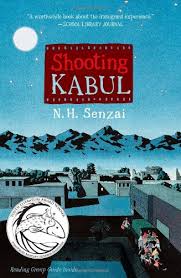
Shooting Kabul By N.H. Senzai

Standard

ImageShooting Kabul is another book that I just re-read to see if it would be a good fit for our 5th – 8th grade Book Club, and I think it will be a perfect fit, so much in fact that i just ordered enough copies to use for our next selection, inshaAllah.  It has an AR level of 5.4, perfect for our age group, and depending on the copy and extra glossary, book discussion and extra pages, about 262 pages of story. I haven’t decided if I will have everyone read it, or divide the group on gender lines, have the boys read Shooting Kabul, and the girls read When Wings Expand.  Senzai’s book is definitely not a “boy” book, but knowing the boys in the school, and how tender-hearted they all seem to be to their little sisters and the preschool students, I may divide the genders so they feel a bit more free in discussing.  Not sure yet, will keep you posted.

SYNOPSIS:

Told from the 11-year-old perspective of Fadi, the reader is taken on an adventure that is both heart-wrenching and plausible.  Fadi’s family makes the decision to leave Afghanistan as the Taliban’s power grows and threatens the family.  In their covert escape, Fadi’s six-year-old sister Mariam is left behind and the family must continue on to America, obviously all completely destroyed by their loss.  Once in California the family struggles with fitting in, making their way, and living through September 11th and the repercussions of the aftermath on Muslims.  Fadi turns to photography and finds a niche, as well as hope that perhaps he can win the grand prize in a photography contest that will take him to India, that much closer to where his sister might be found.

WHY I LIKE IT:

The book, while political does not make it a black and white issue, like some YA novels dealing with Afghanistan.  Similarly while September 11, is a huge incident in the book, it is presented from the perspective of how it makes Fadi feel, and the bullying that comes with it, again keeping the terror a bit at arms length and consumable by a younger audience.  Being that the book is loosely based on the Author’s husband, and his family’s escape I think it would be permissible to say that the account and portrayal of life in Kabul and immigrating to America is realistic.  As a result, the authenticity of Islam is also kept.  The characters are Muslim and it defines them, it gives the character’s depth, but is not forced upon the reader.  Fadi goes to Jummah, he ponders points about the khutbah (sermon), he and his father discuss how the Taliban uses Islam to their advantage, not in the way the Qur’an and Hadith present it.  The reader, either Muslim or non, I doubt would be overwhelmed by the religious presentation, it simply shows that aspect of the character.  Fadi is not questioning his faith, nor is it being forced on him, it is simply who he is, and something that defines him, something I think will be identifiable to my students and allow them to imagine what they would do if they were in Fadi’s place.

In a few parts the story gets a bit slow, but I think if the connection is made, the students will not be bogged down by his internal struggles to tell everyone that he blames himself for the loss of his sister.  And if they do, they are short lived pauses and the book flows fairly smooth and quick as a whole.

FLAGS:

The book is clean of language, boy girl issues, violence and content.

TOOLS FOR LEADING THE DISCUSSION:

The author’s website is helpful

Home

If your copy doesn’t have the readers guide it can be found here:

Click to access SHOOTING%20KABUL_reading%20guide.pdf

I liked these interviews with the author:

http://www.mitaliblog.com/2010/06/chat-with-n-h-senzai-author-of-shooting.html

http://carpekeyboard.blogspot.com/2010/10/talking-with-n-h-senzai-author-of.html


UPDATE:

Yes that is the author down in the comments section, commenting, amazing I know. And get this I emailed her AND she responded, amazing indeed, subhanAllah, so here is what I wrote her:

Hi, wow, I’m still a kid in the sense that I feel author’s aren’t real people, so to get a comment from you, blows me away 🙂 thank you.  I will absolutely let you know how it goes, if you get a few minutes, I’ve read a number of your interviews, but was wondering why you chose to use your initials rather than your first name? And also, since I’m sure there will be a cynic or two in the group, as a writer/ storyteller, did you ever consider not having Mariam found and returned? If so why did you go with the “happy ending.”  Love your book, need to read Saving Kabul Corner.
Thank you so much,
and her reply:
no need to feel like a little kid! but i know what you mean… i still feel like that when i meet authors i love and respect!  regarding the initials — it would make a foreign name longer and harder to remember — plus since its a boy book I wanted to have an ambiguous authorship.  since its a kids book it “had” to have a positive ending, thus mariam was found…. but when i talk to kids i tell them that thousands of children are not found in war/conflict.

hope you guys have fun reading it!

best,
Naheed

N.H. Senzai
www.nhsenzai.com

Ask Me No Questions By Marina Budhos

Standard
Ask Me No Questions By Marina Budhos

Image

Before posting my thoughts of Ask Me No Questions, by Marina Budhos, I re-read the book. Luckily at only 162 pages and an Accelerated Reader Level of 4.8, the fast paced plot made for a quick read.  Having read it in 2007, when it first came out, I recall having liked it, and could recall the basic plot, but absolutely nothing else.  In hopes of finding a Book Club book I reread the novel to refresh my memory.  With the passing of time, the book drastically lost it’s relevance.  Although I know people that face the fear of deportation at every moment, I know people that registered and left as part of post 9/11 Muslim Registration Act, and still have been able to reapply and be reunited with their families on American soil; I think the young adults that once might have found themselves in this book have all grown up, and the new demographic as a whole doesn’t relate.  And, unfortunately, because of the lacking depth of character and plot development, most students I doubt will find much to relate to in the book.

SYNOPSIS:

A Bengali family living in New York on expired visas seek asylum in Canada after 9/11.  Told from Nadira, a fourteen-year-old girl’s perspective, the book details life as Nadira’s father gets detained at the Canadian border, her mother stays at a near-by shelter, and Aisha, Nadira’s older sister, and Nadira head home to New York to resume life, and carry on as if everything is the same.  The premise of how to live with the constant fear of being found out, especially at a time when people were “disappearing” for no reason and without cause is a compelling story line.  As the back of the book says “Suddenly being Muslim means you are dangerous- a suspected terrorist.”  However, the characters don’t act or practice anything Islamic, perhaps that on some level makes the book more ironic that they are targeted for having come from an Islamic country and having Muslim names, but for me, it just made the characters seem that much more shallow.  I never connected with the characters, any of them, and there are a lot of them.  There are so many side characters that do nothing to develop the main characters, nothing to move the plot, and really take away from the bonding with the turmoil that Aisha and Nadira are feeling.  One minor character is presented as religious and mosque going, and by default that the dad had given him some money to keep, implies the dad went to the mosque, but religion only shapes their lives in that they feel that is why they are being targeted.  On the other hand, they don’t seem very “cultural” either, yes they live among many Bangladeshi families, but you don’t see their identity developed there either.  Rebels to the norm are presented, but not articulated to reflect on who Nadira is and provide some resonance to her with the reader.  The characters seem isolated even within their cultural and religious community, which doesn’t fit , perhaps had the immigration situation isolated them it could be overlooked and understood, but rather it just makes Aisha seem petty and whiny and Nadira clueless, one dimensional attributes that leave the characters flat on the page.

By the end of the book, the title of the book starts to feel  like a cruel joke.  I had so many questions, why did they leave Bangladesh, why didn’t that father stay working in Saudi Arabia, why did they feel living illegally was alright, what happened to various friends that disappeared, not because of deportation, they just stopped being mentioned, where did the mom get her strength from and what is her background story?

FLAGS: 

By and large the book is clean, a cousin has a boyfriend that she is regularly sneaking off with, but nothing romantic is described, they are sneaking off to do political activist work.  Another character, a thug type, is shown to be able to acquire things illegally, and Nadira’s helps her friend Lily, discover that Lily’s dad is having an affair and has another family.

WHY I LIKE IT:

If I wasn’t look for a book to present to students, I probably would not have been bothered by a lot of the critiques in this post.  But because, my hope is to find something the students can identify with and take pride in, I was harsh with my view on the story.  There are redeeming qualities however, as immigration reform is still a hot topic, students need to be able to put their feet in someone else’s shoes to better understand an issue, and this book, for the age level, can provide that.  As a story of two sisters having to put their differences aside to help each other and their parents, this book gives some insight.  And naturally if I know of a student who has gone through a similar situation, I think they would benefit reading it, not in that they would agree or be inspired, but at least in feeling less alone.

TOOLS FOR LEADING THE DISCUSSION:
At the moment I don’t see me discussing the book, but I will definitely keep it on the book shelf in the library.  If things change, the following websites are useful:

An article about immigration by the author, Marina Budhos

http://www.huffingtonpost.com/marina-budhos/were-ready-for-immigration_b_2617581.html

The first chapter of the book:

http://www.marinabudhos.com/ask_me_no_questions.html


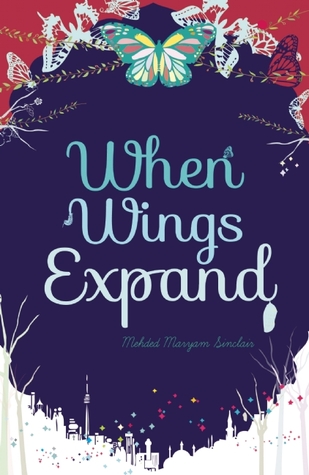
When Wings Expand By Mehded Maryam Sinclair

Standard

Image

When Wings Expand, by Mehded Maryam Sinclair, was loaned to me by a friend who knew I was looking for books that might appeal, positively to 7th and 8th grade Muslim girls.  While this book would definitely appeal to that demographic it would not be limited to such a small population.  I plan to open it up to all the girls 5th – 8th grade for the Book Club, and recommend it to parents with older daughters to read together.  While the book is an easy read in terms of grammar, vocabulary and style, (150 pages written as journal entries), the content is emotional and religious.  The book is not AR, so I will have to make a quiz, but I would assume it would be about a 5th grade reading level.

SYNOPSIS:

Canadian teenager Nur, chronicles her mother’s onset of cancer, her death, and life after the loss of her mother through journal entries.  Using simple symbolism of a butterfly’s life cycle, Sinclair shows how Nur must not only grieve and accept her mother’s death, but also reaffirm her faith and trust in Allah (swt) and His plan.

WHY I LIKE IT:

I love that at it’s center the book is about two relationships; a young girl and Allah (swt), as well as a young girl and her Mother, both dear to her heart, neither tangible.  Any one with a heart can imagine the immense pain in losing one’s mother.  Teenage girls particularly need to be reminded that while they may constantly butt heads with their mothers, to lose their mom would be devastating; the book makes that point abundantly clear.  Nur and her mother seem to have a “perfect” relationship, at least in that Sinclair doesn’t detail any strain between the two of them, but I think the readers can supply their own baggage and imagination and still be able to connect with the character.  I like that Nur’s mom is Turkish and that her Father is a convert, I think that so many youth today are from mixed backgrounds and the juggling and sorting of customs is something they can relate to as well.  The book is clean of boy/girl issues, language, violence etc.  In some areas it is a bit too “perfect” so to speak, in how understanding Nur’s father always is with her and her brother and how readily their uncle swoops in to take them hiking or on a picnic, but it some ways the simplicity of it all is also it’s charm.  As the book progresses Nur, must help a cancer patient with some of her own faltering faith issues, and with strong Quranic examples, seerah examples, prayer, and love, the reader is able to reflect on the message, rather then getting caught up in some fast passed action sequence.  I think the book has a place, and I hope that it reminds the girls how short this life is, the value of their mothers,  the pain associated with loss, strength of family, and Allah’s mercy.

TOOLS FOR LEADING THE DISCUSSION:

A box of tissues

Honestly because the cycle from sadness, to anger to acceptance to peace is fairly universal, I plan to simply let the students talk about the book, to see it through their perspective.  I don’t think much prodding will be needed.