Category Archives: YA FICTION

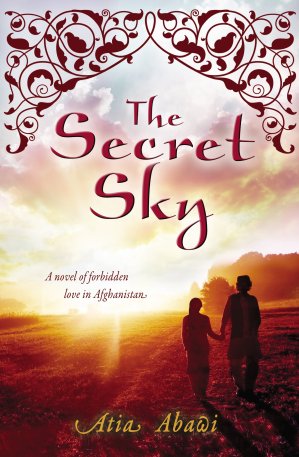
The Secret Sky: A Novel of Forbidden Love in Afghanistan by Atia Abawi

Standard

The Secret Sky A novel of Forbidden love in Afghanistan

This was another book I stumbled upon in the Scholastic Teen Book Flyers, and I wanted to read it to see, once again, how Muslims are being portrayed in books presented and widely distributed in the school markets.    I didn’t figure given the “romantic element” it would be a candidate for our Book Club, but none-the-less wanted to know if it should at least be on our library shelves in the Middle School section.  The book is not in the Accelerated Reader data base, bur for content I would think 11th or 12th grade.  The book is written by a woman whose family left Afghanistan right before she was born and later returned as a television correspondent.  Her story is included as the introduction of the book and a glossary at the end make the total length 292 pages.

SYNOPSIS:

A boy from a landowning family, Samiullah, and a girl whose family works the land, Fatima, have known and played together their whole lives.  When Sami comes home, however, after realizing that the madrassa, religious school, he was sent to is a sham, he  finds he is still in love with his childhood friend.  Knowing that their families would never allow their union, Sami is in the midst of working up the courage to share his feelings with Fatima and try to convince her family, when Rashid, a cousin discovers them talking in the woods alone and rats them out.  The role of culture and religion make this turn of events a dire one for the couple.  As shame has been brought to Fatima’s family, her father arranges to have her married to a good friend of his, as a second wife.  Fatima’s mother, responds very harshly by beating her and pouring boiling water on her arms.  Sami is beaten as well, but not to Rashid’s satisfaction and thus he decides to go “tattle” to the local Taliban leader.  As the story unfolds it becomes clear that Mullah Latif is not religious in the least and that he has no conscious.  Latif and his gang leave a path of murder and suffering as they set out to make an example of the couple in the name of religion and culture.

WHY I LIKE IT:

The author actually does a pretty good job of making in clear that Latif and Rashid are one extreme of bad; manipulating religion to justify their acts.  As Rashid realized how little Latif even knows about Islam he sets to distance himself from the gang.  Latif at one point doesn’t even want to enter a mosque.  The opposite of the Latif character is Mullah Sarwar who is good, and kind, and gentle, and loving.  Overall the author doesn’t paint one group with a broad stroke, there are good and bad land owners, workers.  There is even a grandma who supports women being educated and marrying for love, contrasted with a mother who wants to see her daughter killed for her actions.  The story is also pretty universal and has some Romeo and Juliet similarities, simply set in Afghanistan.  Some of the culture shines through to add context and understanding outside of the story alone, and that is nice.  Fatima logically works through why she can’t marry her fathers friend.  And in some ways you see why the country struggles as it does in real life, and why there isn’t an easy fix.  Each chapter is told from a different perspective, either Fatima’s, Samiullah’s, or Rashid’s which does give a more rounded view of the events.  But in some cases, not quite enough.  One thing I didn’t find believable was how purely evil Rashid was one minute, and then his quick change (SPOILER).  The reader is not given much insight into him and yet he has such a huge influence on every aspect of the story that it seemed a little abrupt and unrealistic.

FLAGS:

The love story aspect is actually pretty clean and sweet in many ways.  The unexpected violence, however, is a huge flag to me. (SPOILER ALERT) It mentions in some detail that Sami left the madrassa when he caught the head of the school sodomizing a young village boy.  It isn’t graphic, but it is detailed enough to be noted.  Fatima’s younger sister is also killed when Latif breaks her neck with his bare hands, again incredibly brutal, horrific and sad.  Mullah Sarwar is murdered and hanged in the village.  All reasons why the book in my opinion is for older and mature audiences.

A small religious point, that I think most would be fine with, but just in case should be mentioned, is that Sami goes to pray at a shrine.  The author explains how it evolved as a place to pray to Allah for matters regarding love, but it could be construed as being inappropriate.

TOOLS FOR LEADING THE DISCUSSION:

I wouldn’t teach this book to the ages I currently work with, but here is a little insight from the author about what she wanted the readers to take away from her novel: https://www.youtube.com/watch?v=M2rMD16g23E
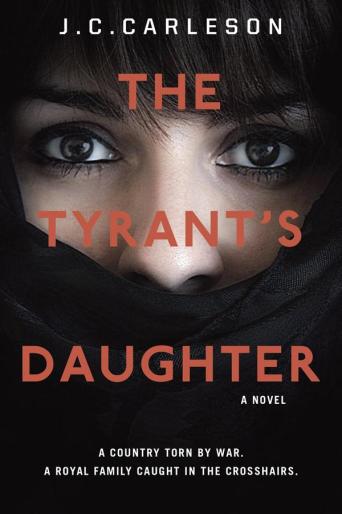


The Tyrant’s Daughter by J.C. Carleson

Standard

the tyrant's daughterI was intrigued to see this book offered by Scholastic in the teen Reading Club Catalog as it sounded both action packed and cultural.  The jacket cover summary was vague in describing the characters as being from an “unnamed Middle Eastern country,” but with the slightly veiled girl on front, I figured they probably are Muslim, and I should at the very least how they/we are being portrayed.  The book is 295 pages long and that includes the story, the Author’s Note, and a  Truth in Fiction section.  The author is a former undercover CIA officer and the intense action, intertwined with cultural  understandings, leave the reader second guessing and on the edge until the end.  The AR level is 5.1, but with the profanity, sexual situations, and violence I would recommend the book to those in high school and up (15+).
SYNOPSIS:

Fifteen-year-old Laila flees her homeland, when her father, the head of the county, is killed.  Trying to fit in, in Washington, D.C. is not easy for a girl raised like a princess.  She has to navigate not only the social norms and high school drama that most kids her age do, but she also has to examine what type of ruler her father was and what price her privilege came at.   There are a lot of plot twists, and her mother’s efforts to broker deals with rebel fractions and CIA operatives, keep the plot moving forward.  The interpersonal relationships in the background give the characters some depth and memorable traits by contrasting the intensity of a country on edge with the daily dramas of daily life.  Surprisingly with so much going on, I thought the book was well written, my only major critique being,  I wish i knew more about Laila, the main character telling the story.

WHY I LIKE IT:

It’s a fun story, simple as that. The plausible political plot, the young adult characters with their own heightened sense of self worth, is well crafted by-in-large and the book was engaging.  I read it quickly because I wanted to see how it unraveled and it kept my interest.  Will I remember it a month from now? Probably not, but often books like this as YA or adult fiction are delicious empty calories and nothing more-or-less than that.

FLAGS:

The “royal” family is “Muslim.” Yes, the quotes are intentional, because they don’t identify as Muslim, yet those in America identify them as such.  A teacher asks her if she is ok with dissecting a fetal pig and she seems confused as to why that would be a problem.  A boyfriend is nervous to make a move, and again she seems taken aback that there would be a religious reason not to, as she sees it as a cultural one only.  Even at the end when she is discussing going back to her country her mother remarks that she hates wearing a veil and Leila says she never really minded it.  Laila’s mom drinks alcohol and always has, as many heads-of-states of Muslim countries are assumed to do. There is violence, some crude language, and some relationship situations.  Again I would not recommend it for younger teens.

One aspect that is worth noting is how the “bad guy,” Laila’s uncle, is painted as being “religious.”   I would hope that readers would realize that he is an extremist, an exception to the mainstream followers of Islam.  But I don’t know if they would.  He is harshly critical of how Laila and her mom dress calling them “whores,”  he uses religion as a means of power to oppress and condemn others and is just generally awful.  I think the author by largely leaving religion and the name of the country out of the book, isn’t making a judgement on the faith or region, as much as providing plausible pieces to craft an interesting story.  That is just my opinion though, and it could probably be changed.

TOOLS FOR LEADING THE DISCUSSION:

I wouldn’t teach this book, or use it for Book Club, but the supplemental information in the back of the book is definitely interesting, and I think among friends, good discussions about the story’s origins would be fruitful, speculative and engaging.

In a high school setting you could definitely connect it to a Social Studies unit or the Arab Spring.


The Red Pencil by Andrea Davis Pinkney illustrated by Shane W. Evans

Standard

The Red Pencil.jpg

I didn’t realize the book was written in prose until I opened it up to read, and immediately taken-aback I rechecked the AR level and sure enough, this 309 page book that is written in prose and covers the genocide in Darfur, is written on a 4.2 level. And it is amazing. I forced myself to stop reading at one point so as to not rush the depth and soul of the simple words from being lost in haste.  It is truly, in my opinion, a beautifully remarkable feat to convey such horrific atrocities with such hope and integrity to young adults in a palatable and inspiring way.

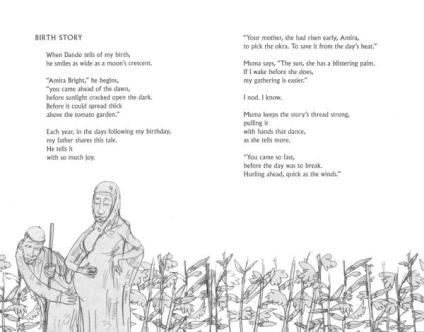
“Allah is the light,” he says.

I ask,

“How do you find Allah’s light?”

Old Anwar says,

“Take the path that shines the brightest.”

SUMMARY:

Amira’s life on her family’s farm is by no means easy, but she has loving parents, a little sister, her beloved sheep, and a dream of going to school.  Her father advocates for her, but her mother, steeped in tradition, sees education only as a waste of time.  The illustrations and sparse words manage to convey fairly solid understanding of Amira’s life, optimism, and relationships with those closest to her.  Although warned of the dangers the Janjaweed could cause, Amira remains fairly unconcerned about the mounting political unrest around her, until it is too late.  When death and the destruction of her home force the surviving members of her family and neighbors to seek refuge in a camp many miles away, the reader sees how truly horrific her experiences have been.  She refuses to speak or rather cannot, when a chance encounter with an aid worker brings her the prospect of getting her voice back, through the empowerment of a red pencil.  With restored determination she convinces an elder neighbor to teach her, but it is not enough for Amira Bright.  Her sparrow needs to soar free.

WHY I LIKE IT:

You expect a book written in verse to have a lot of imagery and symbolism, and The Red Pencil does a good job of balancing the story and the description, to keep the book on track.  The linear story line remains focused on telling the story at hand, making it attainable for elementary and middle school children.  The Darfur conflict is complicated at best, and using verse to convey it from a young girl’s voice allows a lot of the politics and dirtiness of war to be side-stepped without dismissing it.  Amira’s optimism and hope is at times naive, but more as a reflection of her personality then out of ignorance. She sees things, and feels things, and must deal with things, no child should, but her spirit shines through and keeps the book from being depressing, while still being sad.

Today the red pencil does more

than beg for my hand.

It makes me a promise.

It tells me to try.

The characters are Muslim and they rely on Allah, and pray, yet Amira’s thirst for knowledge includes that of learning the Koran (Qur’an) as that knowledge too, has not been readily available to her  There is a lot to discuss in the book, both what is written and what the reader brings to it.  I look forward to teaching the book, and re-reading it once again to savor in the rich images.

Here,

Muma stoops.

Here,

she has nothing to reach for.

FLAGS:

Their is violence when the Janjaweed attack her family.  But I think it is conveyed in a manner suitable for 3rd grade and up.  It is not celebrated or glorified, it is traumatic and has repercussions that are respectfully conveyed.  There is also mention of a child bride, but not in so many words, that in all honesty I doubt most young readers will be as bothered by it as perhaps they should.

TOOLS FOR LEADING THE DISCUSSION:

There is a discussion guide in the back of the book along with an Author’s Note, Acknowledgements, Glossary/Pronunciation Guide, Character/Location Pronunciations, and Important Terms that Appear in the Book.

An Educators Guide: http://media.hdp.hbgusa.com/titles/assets/reading_group_guide/9780316247801/EG_9780316247801.pdf

A study guide and quiz: http://www.bookrags.com/studyguide-the-red-pencil/free-quiz.html#gsc.tab=0

The Red Pencil 1

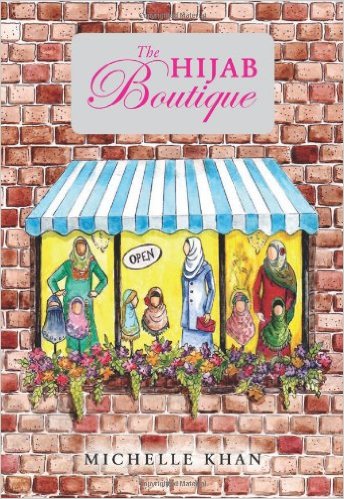
The Hijab Boutique by Michelle Khan

Standard

The Hijab Boutique

I was really hoping this book would help out the sparsely populated early chapter book section.  And it should, at just 52 pages with beautiful full page pencil style drawings, it just somehow seemed confused instead.  The content is much more young adult in story line, but because of the short length, the characters seem flat and underdeveloped.  My fourth grader read it in less than a half an hour. Yet, I don’t think a 1st or 2nd grader would get much out of the book.  I don’t know what kind of editing process the Islamic Foundation puts its books through, but back when I was a teacher, I would have told the student they have a wonderful, wonderful rough draft with so much potential, they just need to flesh it out and add more detail so the reader connects with the characters. The back of the  book suggests the book for ages 10 and up and content wise that is fine, but it also has a list price of $7.95 and for something that can be read in less than a half an hour, it seems a little steep. If it didn’t have so much potential, perhaps I wouldn’t be so bothered, I just feel like if she stretched it out to being 200 pages, it could be so powerful.

Farah is a fifth grader at an all girls art school.  She has a best friend, who’s mom is a soap opera star, but some popular girls still make  her nervous.  When her Social Studies teacher assigns the girls to bring in something representing her mother, she can’t find anything to share about her mother that she doesn’t think is boring.  Farah’s father passed away two years prior and with money tight, Farah’s mom is opening up a Hijab Boutique.  No real details are given about her family life with her father or the impact his death had on her, which is unfortunate.  The story discusses why the mom started wearing hijab and why it is important, but makes it seem like Farah knows so little about her mother.  Again a hole that if explored would make the book that much more interesting. Not to mention that it could prod young girls to talk to their own mothers about such things.  To no one’s surprise Farah brings in some hijabs to represent her mother and Alhumdulillah the book ends on a positive note with little fanfare, catharsis or drama.

Farah and her mom are practicing Muslims who are an active part of their western community.  It would seem Farah is the only Muslim in her school and it doesn’t seem to be an issue.  They are all upper class and a bit snobbish, but there are no flags.  If your library has the book, reading it is by no means a waste of time.  I don’t know that you’d read it more than once if you purchased it, but 4th through 6th graders might enjoy the short read, and be inspired by fashionably fabulous hijabs while furthering their understanding about why Muslimah’s are required to cover.


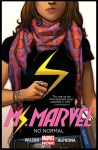
Ms. Marvel No Normal & Generation Why by G. Willow Wilson illustrated byAdrian Alphona & Jacob Wyatt

Standard
Ms. Marvel No Normal & Generation Why by G. Willow Wilson illustrated byAdrian Alphona & Jacob Wyatt

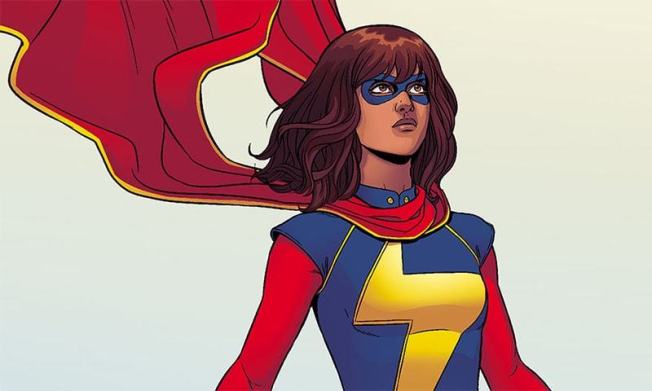
I have to be completely honest these are the first comic books I’ve ever read from cover to cover.  So, while I’m in no position to review the art work, or historical role of the original Ms. Marvel or even have a valid opinion on the superhero story lines, I do want to cover the Islamic elements because even as someone as outside the comic book world as I am, I knew that Marvel’s new Ms. Marvel is a Pakistani-American Muslim girl from Jersey and that’s pretty big.

I was intimidated to read No Normal, I ordered it from Scholastic and have had it on my shelf for a while, I was excited, but nervous. But then I ordered the second one, which is also a collection of 5 comic books, and thought, let’s do this.  Both collections are easy reads, and the text and what to read first in each story frame is clear.  As with comics and graphic novels the pictures convey much of the story so there isn’t a lot of “explanation,” but the story is compelling enough, that even a novice like me didn’t get too hung up on what was going on and how it could be possible.   While it may tempt younger children, I would hold off until the reader is a teen, especially if the reader is Muslim.  There is a bit of drug use and alcohol in No Normal and obviously violence, but at it’s core it is a story of a girl trying to discover who she is and there is some angsty teenage stuff that someone who hasn’t gone through the emotions, might take as attacks on Islam, parents, and culture.

Kamala Khan is a high school student in Jersey City, New Jersey.  She has a Muslim friend, Nakia, who wears hijab, and non Muslim friends of both genders that seem to support her faith and culture, almost more than she does.  The story opens with her sniffing bacon and her friends humoring her oddness.  Having grown up with the same group of friends around her, they understand her quirks and nerdiness and she seems to fit in.  As with most teens though, she feels on the “outside” and Kamala right away tries to seem cool with the more popular crowd.  She  is struggling to find herself within her Pakistani culture, her American life, her Islamic beliefs and teenage friends, information all presented in the first few pages while at the local convenience store hangout.  A lot for Kamala to balance and she hasn’t even discovered her “powers” yet.

Kamala’s parents initially seem more “cultural” than religious as her father chastises Kamala’s brother Aamir for being too religious, yet is constantly on Kamala, presumably because she is a girl.  In a fit of defiance against her parents strict curfew, Kamala sneaks out of the house to attend a party, accidentally drinks alcohol (she spits it out) and gets caught in some “fog” that gives her morphing, stretching, embiggening, and quick healing powers.

As Kamala tests how her powers work, and what they mean, there are a few funny asides that appeal to Muslim readers: she attempts to use her Burkini as a base for her super hero disguise, and her mother threatens to send her to the Sheikh if she gets caught sneaking out again.  Her parents start to grow on you though, the mom is a very stereotypical immigrant mother who cares for her daughter in a worrying nagging way, the dad actually tries to communicate with Kamala and comes across a little more genuine toward the end of the first collection.  Her brother seems to be level headed, but a minor influence.  He sticks up for her and tries to help, but it doesn’t seem like they are that close.   The final scene in No Normal left a little bit of a bitter taste in my mouth and I was glad that I already had Generation Why to dive right into and not let the conclusion of the first one fester in my head.  Kamala shows up to a wedding late, complete in Shalwar Kameez (Pakistani clothing) and gets in an argument with her mom.  Kamala says, “You and Baba want me to be a perfect little Muslim Girl–straight A’s, med school, no boys, no booze, then some hand picked rich husband from Karachi and a billion babies.”  The mom says, “Your father and I want the best for our only daughter our expectations are high so that your successes will be many.”  It goes back and fourth then the mom says she is grounded and the book ends with Kamala retorting, “wanna bet…?”  While I’m sure most every Muslim American teen has felt this way, I don’t think I’d want my 9 year-old-daughter thinking that is how narrow success is defined, or that being the best you can be is a punishment. It’s probably a realistic gripe, but to have it be the last impression, naturally brought out my defensive instincts.

A lot of the awkwardness and stage setting in No Normal is resolved by Generation Why and I found I enjoyed it a lot more than I thought I would.  I might even be anxiously waiting to see what happens next.  Kamala is sent to the Sheikh and while she is intentionally vague about telling him what is going on with her, she does suffice it to say she is trying to help people and he responds by telling her to do it with as much honor and skill as she can. I love that he wasn’t putting her down, but rather trying to mentor her spiritually to find her self and do so honorably.  Really the only other religious/cultural scene is when Lockjaw a giant dog with transporting abilities shows up to help Kamala and her parents say he can stay, but outside because he isn’t clean.  I don’t know if non-Muslims will fully understand why, but it made me chuckle.  It also made me like her family a bit more.  They are strict, but not unreasonable.  They didn’t say, “no” they found a compromise.

Generation Why contains more action than back story.  I’m not entirely sure why Wolverine shows up, I have no idea who the lady in charge of stuff is with Captain America, and I’m not sure why no one finds it odd that the Inventor is a bird man, but hey it is fun.  And it definitely had me cheering on Ms. Marvel as she empowers her generation and learns that being American Muslim might be the easiest of her identity issues when she learns she is inhuman.  It gets a little cheesy, but the foundation of comic books being good against evil, lends itself to that right?

Overall, I think I would recommend both collections are read together, as it gives a better picture of what Ms. Marvel is and can be.  I think thus far the author has done a good job of showing that she is Muslim and that her faith adds depth to the character.  Her tenacity, persistence, determination, compassion for animals, her humor, her nerdiness, all make her very like-able and admirable.  I probably wouldn’t do it as a Book Club selection, because our school only goes to 8th grade and being an Islamic School I don’t know that most of the students feel the identity crisis until possibly much later if at all.  But I think the books would work well for discussion with older kids.  Topics of what youth can do, their role in preserving the planet, discovering your sense of self and purposes are all there in comic book, super hero, action packed form!

Kamala Khan


The Visitors by Linda Delgado (Book #1 of Islamic Rose Books)

Standard

Islamic Rose Books The Visitors

I first read this book in 2004 and it was pretty much my first introduction to what elementary aged/young adult Islamic fiction could and should be.  It set the standard and I think subconsciously I’ve held every other Islamic fiction book up to this series as a comparison.  I’ve taught it to 4th graders and 5th graders, I’ve purchased the series and left it for the students at every school I’ve ever been a part of, I’ve even exchanged emails with the author with students’ questions and been impressed by her responses.  So, after reading so many other books in putting this blog together, I thought it is finally time to revisit a book and series that is dear to my heart, and see if my memories are accurate.

Alhumdulillah, they are.

The book is a bit bumpy at first with the chattiness of the main character Rose, but either like real children, you grow accustomed to her and find her endearing, or the author pulls back as the story progresses and the book finds a more readable and engaging rhythm.  Either way, I still felt a pull to keep reading the book, and feel confident that those that read it, and the entire series (I haven’t read the latest book, “Reunion”) are better for it, alhumdulillah.

SUMMARY:

Nine-year-old Rose is excited that her grandparents, who live next door, are going to be hosting two Saudi Arabian Police Officers who are coming to America to learn English and train with the Arizona Police Department.  In anticipation of their arrival Rose and Grandma do what they can to learn about the food, culture and religion.  Rose’s dad however, is not comfortable with Abdul and Fahd being so close to his family, and for Rose to be so curious about Islam.  Rose works on PLAN after PLAN to try and help her dad and the officers connect, but will it be enough?

WHY I LIKE IT:

The book actually addresses some harsh realities of how Muslims are perceived, yet does so in a tender way.  When Rose wants to go to the Islamic Center and her father objects, or she talks about Muslims at school and her teachers get mad, it opens the discussion for why people may have negative views of Muslims, how to deal with such negativity and how to move past stereotypes.  The book also does a really good job of introducing Islam and Saudi culture to its readers in a fairly non preachy manner.  The inner workings of Rose’s family are also surprising raw and relatable.  Her Mom is not in the picture and Rose must deal with the stresses of a single parent home, luckily her grandparents are next door, but even then, there are stresses and issues that arise.  Rose also deals with a friend moving away, teasing at school, and disappointment.

FLAGS:

None, just some of the stereotypes from Rose’s Dad that may introduce some negative views non Muslims have of Muslims, such as: Muslims as terrorists, Muslim’s being abusive and controlling to women, etc.

TOOLS FOR LEADING THE DISCUSSION:

There are a few different versions of the book, mainly just cover changes depending on the publisher, but this version:

The Visitorshas appendixes in the back that include a glossary and recipes and facts about Islam as well as Arizona.  The newer version (as pictured at the top of the post) doesn’t include everything and refers those looking for more to see a website.  That website however and all other links to online study guides and reader guides are no longer available or now have different owners.  I’m not sure what happened to Linda Delgado, and if anyone knows how to contact her, I’m hoping you will let me know.

So as of now there are no links to suggest for teaching the book unfortunately.

The Great Race to Sycamore Street by J. Samia Mair

Standard

the great race to sycamore street

A fun book for elementary aged children looking for a fast paced, energetic read, with Islamic morals and lessons.  Overall a great book about character, being a good neighbor, and never giving up, The Great Race to Sycamore Street is not in the AR database, but I estimate it at about a 4.3 level and think even for higher readers there is plenty to learn about archery and peach trees, and plenty to enjoy as Amani and Hude take on bullies, grumpy neighbors, dogs, and making the most of a summer with their grandma in the country.  There are 180 pages followed by acknowledgements, references, and glossaries explaining archery terms, Islamic terms, and where the hadith and Quranic ayats come from, theoretically making the book accessible to Muslim and non Muslims alike.  I however, think the book would be a bit preachy to non Muslims or to those unfamiliar with Islam.

SUMMARY:

Siblings Amani and Hude arrive in Fairfax County, Maryland to spend the summer with their Grandma Hana in the quiet town of Cherry Hill, for what they think will be a slow laid back summer of reading, swimming in the lake, and preparing for the County Fair.  Grandma Hana has the undisputed best peach tree in the county and makes the best pies to enter in the pie competition at the fair, and this year Amani gets to help.  Hude is a budding archer and with his recently deceased grandfather’s journal and old archery regalia he is determined to compete and win the archery competition.  But their simple plans quickly meet twist after twist: from bullies on the train, to swarms of cicadas greeting them on arrival, to a new neighbor who discovers the beloved peach tree is actually on his property and he wants it gone, to the bullies on the train ruling over the lake and proving to be great archers themselves.  Can the  peach tree be saved? Can they be victorious at the fair? With lots of stories about Prophet Muhammad (Peace be upon Him) woven in, and ayats from the Quran used to emphasize points, not only is the book a quick action packed story, but it is also poignant, educational, and memorable as well.

WHY I LIKE IT:

I love that it is clean and requires the brother and sister duo to work together to do something that is bigger than themselves.  I also love the way that Islam is given practical uses for the children, it isn’t taught in the abstract they must pull on their understanding of their deen to decide what to do, how to act and what the next step should be.  I also like how the fast paced story is set in contrast to the slow thematic ideas of a peach tree, baking, archery, and a stereotypical summer with grandma.  Most readers I would assume don’t know that much about fruit trees and county fairs and archery, and I think the author does a good job of introducing the audience to these concepts and weaving Islam into it while keeping the story exciting and moving along.

FLAGS:

Clean, alhumdulillah.

TOOLS FOR LEADING THE DISCUSSION:

The plot is pretty linear, and a quick discussion of what every one liked and perhaps what surprised them would be a sufficient review of the story. From there I would probably go through the reference of hadith and ayats from the Quran to guide the discussion, you can get the online reference of that here:

http://www.kubepublishing.com/the-great-race-to-sycamore-street-free-reference-sheet/

scroll to the bottom and click on the link to download the text.

The Cat at the Wall by Deborah Ellis

Standard

The Cat at the Wall

 I had really high hopes for this book after reading and loving all of Deborah Ellis’s Parvana books and thoroughly respecting her ability to take highly complicated world events and presenting them in a compassionate palatable manner for elementary aged students to digest and benefit from.  The premise of the book intrigued me, a reincarnated 13 year-old-girl comes back as a cat in the middle of Bethlehem and is soon in the middle of a village conflict between Israeli soldiers in a Palestinian’s home.  I wanted to love it, but ended up just liking it and wishing there was more substance.  I was hoping for more understanding of the conflict and the history not just of an arrogant bratty girl, reflecting back on her life as a human now that she is a cat in a volatile region. The book is a fairly easy read as you really have only three main characters that you get to know, the others just transparently breeze through, and the book is only 144 pages and an AR level 4.8.

SUMMARY:

Clare is an incredibly abrasive teen that bullies students at school, lies to teachers and her parents, constantly berates her sister, steals, cheats, and who is not someone you would want to be around or be like in any way.  So while her dying is sad, in and of itself, when she comes back as a cat with the exact same characteristics, she is still hard to like and root for as a whole.  As a cat, Clare understands all languages and finds herself in a home that is being commandeered by two Israeli soldiers, Simcha and Aaron.  Simcha is an American who has come to Israel, joined the IDF, knows little about the Palestinians and is full of hostility.  Aaron is Israeli and speaks Arabic and has more compassion. Clearly Ellis was trying to show that while both are soldiers their attitudes are vastly different, even if their actions are more or less the same.  While scrounging for food, Clare realizes, with her heightened cat smell, that there are more than just the two soldiers in the small home, there is a boy hiding in a trap door in the floor.  The soldiers are at a loss what to do with this small terrified seven or eight year-old-child who recites the same poem over and over and rocks back and forth.  As the soldiers spy on the neighbors, their presence is uncovered and a stand-off between the angry villagers, the people inside the home and the Israeli army ensues.  What can be done to prevent the loss of life? What can Clare the cat do? What is she willing to do, if anything at all?

WHY I LIKE IT:

The words and sentences are simple, which balances out the flashbacks that could be confusing to students younger than fourth grade.  The story flows between the current situation, Clare’s life as a human, and Clare’s life as a cat before coming to the home with the soldiers and boy.  I like that it isn’t made a black and white issue, but I don’t know if based on the book alone the reader truly understands why the villagers would be upset, how much of a reality it is to be berated by soldiers, to have your home taken over, to have kids being beat by soldiers and the dehumanization of checkpoints.  Ultimately the story is about Clare and if she can change, if she wants to change and can she make a difference in the world, the backdrop is simply the Israel Palestine conflict.  Obviously I would be nervous to introduce the concept of reincarnation in an Islamic school setting, but I have recommended the book to certain students who are mature enough to respect that some people do believe this, that the book is fiction, and are aware of the daily oppression of the Palestinians, and the violence that is a reality for so many.   I think as a teaching tool the book offers a lot in terms of teaching point of view, personification, and organization.

FLAGS:

There is violence and the threat of violence, but it is handled respectfully.There is talk of Christianity and Jesus that most students would be fine with.  Reincarnation is present, but played down at the end leaving the door open for interpretation. The human Clare is rather despicable, but she is painted as such and her flaws are not celebrated.

TOOLS FOR LEADING THE DISCUSSION:

There is a nice question and answer section with the author at the end of the book.

The author’s website: http://deborahellis.com/books/#cat-at-the-wall

An educator’s guide: http://groundwoodbooks.com/wp-content/uploads/2015/01/9781554984916_guide.pdf

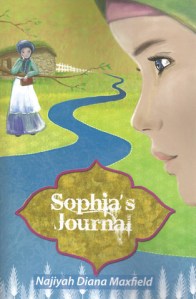
Sophia’s Journal by Najiyah Diana Maxfield

Standard

Sophia_s_Journal_Final_large

It is not terribly uncommon for my mind to remain stuck in books long after I have read the last page, but it has been a while since an Islamic young adult book has held me hostage.  This book was recommended to me by Anse Tamara Gray whose Daybreak Press published the book, and while I tried not to have any expectations, even if I had, the book would have blown them out of the water, mashaAllah.  The book is not in the Accelerated Reader database, but I added it to our school’s so that the students could read it, test on it, and then gather together during our next book club to discuss it.  I estimated it at about a sixth grade level fifth month, and would recommend it for middle school, high school students, and adults alike.

SUMMARY:

Sixteen year-old Sophia is on a family bike ride when she finds herself falling into the Missouri River and waking up in 1857 Kansas.  The acclamation of a 21st century Muslim girl in to what history will name Bleeding Kansas is both heart warming and inspiring in its details of every day life.  Sophia takes a hands-on active approach to helping the kind family, the Sampsons, that takes her in, and she learns everything from shooting to cooking to riding a horse.  As she learns the skills needed to survive, she truly becomes one of the family.  The beautiful way that Islam is woven in as such a seamless part of Sophia, whether she is in the present or the past, is inspirational for readers of all ages and made me at least question if I would be that strong.  Sophia’s relationships with the other characters is what makes the story so magical, getting to see the humanity and strength of people coupled with the same emotions of heartache, longing, and love we can relate to, in our own lives, draws the reader in and makes the story fascinating and hard to put down.  In addition to the story, the historical setting of slavery and relations with the native populations add depth that many students should already know about, and will enjoy seeing in a fictionalized account.  The twists and climax keep the reader engaged, and keep me from spoiling too many plot details in this admittedly vague summary.

WHY I LIKE IT:

I enjoy historical fiction and to blend that with a Muslim character is a great premise in my eyes.  Seeing a strong Muslimah lead in a quality entertaining book that is tactfully done is such a rare find.  Sophia’s strength is quiet, yet powerful, and the slower pace forces the reader to analyze themselves as they discover the characters.  It reminded me of Anne of Green Gables in its tone and style and I think that our middle schoolers need this change of pace and I can’t wait to see how Book Club goes.  I love how strong Sophia is with her deen, her convictions about slavery, her determination to help others, and to learn.  She easily could whine and complain that her cell phone is dead and she misses her family, but she doesn’t, she has a tenacity and attitude that elevates her to a status that you want the readers to look up to her and emulate her.

I also like that Sophia is respectful of other’s religions and they are respectful of hers, the author draws on similarities and discusses Islam in a way that shows it as a living breathing part of life, that is truly a breath of fresh air.  The climax and ending are not predictable and I appreciate that as well.

FLAGS:

There is referred to violence violence, slavery, racism, a tinge of  romance (in an 1857s kind of respectful way), but nothing overly graphic or sensationalized.  Overall nothing a middle school student and up could not handle.

TOOLS FOR LEADING THE DISCUSSION:

There are no reading guides or outlines to teach the book, however, I think there is PLENTY in the book to discuss and if you are like me and the few students I’ve already asked to read the book, not talking about it is harder than finding meaningful points to discuss.

From Somalia With Love By Na’ima B. Robert

Standard
From Somalia With Love By Na’ima B. Robert

somalia

This book was a great glimpse into Somali Muslims in the UK, a world I admittedly know nothing about.  Whether accurate or not, I loved the incorporation of words, foods, culture, all of it.  And most of all I love that the main character Safia is a Muslima.  Yes, the point of the book is a coming of age story as she searches to find herself and define who she is, but in every sphere she is defining herself in, Islam is present.  Her home-life, her friendships, her poetry, all of it.  My only concern in recommending the book to my students. I think 7th and 8th graders, even in an Islamic School, can understand the temptation of going to the movies with someone of the opposite gender, of sneaking out, I think they can understand dealing with someone they love that is making bad decisions, in this case her brother experimenting with drugs and alcohol (the author doesn’t go into explicit detail).  But, truly one page (page 128) just goes too far for my students.  Had he tried to hold her hand, or kiss her even, I think the message would still come back to her conscience and her repentance, but the implied attempted rape pushes the issue over the line in my view, for my sheltered students.  High School students I think can handle it and I think lends itself well to a discussion on boundaries, respect, and sexual violence.  The AR level of the book is a 5.1 and it is a quick 159 page read.  There is a glossary of terms and phrases in the back and the font and book size make it very approachable and inviting to readers.

SUMMARY:

Safia Dirie is a 14 year-old-girl living in East London with her Mom, two brothers, and in close proximity to her large extended Somali family.  Safia is a good student, very close to her mother and very devout in her Islamic faith.  Like most teenagers she is defining who she is in a world that doesn’t seem to understand her.  Unlike most however, she has the added burden of being a religious and cultural minority.  In addition to handling friends, and temptation, she also learns that her father who has been missing in Somalia for the last 12 years has been found and is coming to live with them in London. The focus through the whole story is Safia and the reader is definitely drawn into her struggles of how to help her brother, who is rebelling, how to be a good daughter, and with her internal debates to drift closer to a less religious cousin who encourages her join in activities that Safia is hesitant to be a part of. Once her father arrives everything she has known is threatened and the issues and struggles intensify.  Despite efforts Safia can’t connect to her father and the changing dynamic of the family tests her in ways that while fiction and extreme, I think many can relate to and sympathize with.

WHY I LIKE IT:

The book does a good job of showing how people are not “good” or “bad” and how often mistakes, are just that, mistakes. It also provides hope that people can recover and improve.  The heart of this book is Safia’s and Safia’s heart is pure and has a strong connection to Allah (swt).  She sways and swerves, but never loses sight of who she is at her core, and i think for many young Muslim’s today that is an incredibly strong message.  That mistakes can be made, and Allah (swt) will forgive.  That intentions and repentance are real and valid, irregardless of where you are in life.  From friends Safia wrongs, to a brother who realizes what he is doing is wrong, to a cousin who is passed around without a permanent place to belong, to a mom trying to balance a returned husband, every character is fallible, yet not beyond hope.

FLAGS:

 The attempted sexual violence.  The implied drug abuse and lying of Ahmed, Safia’s brother.  The lying of Safia to her mom and parents about her whereabouts.

TOOLS FOR LEADING THE DISCUSSION:

The Author’s blog about the book: http://fromsomalia-withlove.blogspot.com/