Tag Archives: planets

The Prince of Stars: Ulugh Beg’s Quest to Map the Stars and Seasons by M.O. Yuksel illustrated by Zelma Firdauzia

Standard
The Prince of Stars: Ulugh Beg’s Quest to Map the Stars and Seasons by M.O. Yuksel illustrated by Zelma Firdauzia

This gorgeous 40 page picture book biography is both flowing in its storytelling and informative in its sourced details of a fairly unknown, underappreciated figure.  I was humbled reading this book and learning about the accomplishments of someone I had never heard of before.  Truly this book, bringing to the attention of our young and old ones alike, such a remarkable figure, is a much needed gift.  The publisher suggests the book for 4-8 year olds, but I think it also will appeal to older readers familiar with Copernicus, Galileo, and Ptolemy and who will appreciate the efforts driven by curiosity from someone so long ago. The diction in a few lines did give me pause, but nothing that overshadows how well the author has once again proven to master the storytelling of non fiction Muslim accomplishments in an engaging, accessible, exciting way for today’s audiences.

The book opens with a map of the Timurid Empire in 1405, before showing the reader a young prince, Ulugh Beg, gazing out and the stars and wondering how many there are.  The next spread makes no sense to me, but I acknowledge others might not be bothered, how can the young boy be watching days fade into weeks, into months, into years, and then wonder how many days are in a year? Seems that either those terms weren’t yet around, or some details about the generalized meaning made him curious about the specifics.  Either way, him wanting to know how many days in a year and the changing of seasons, along with counting the stars are the questions he wonders about as a child and works to answer throughout his life.
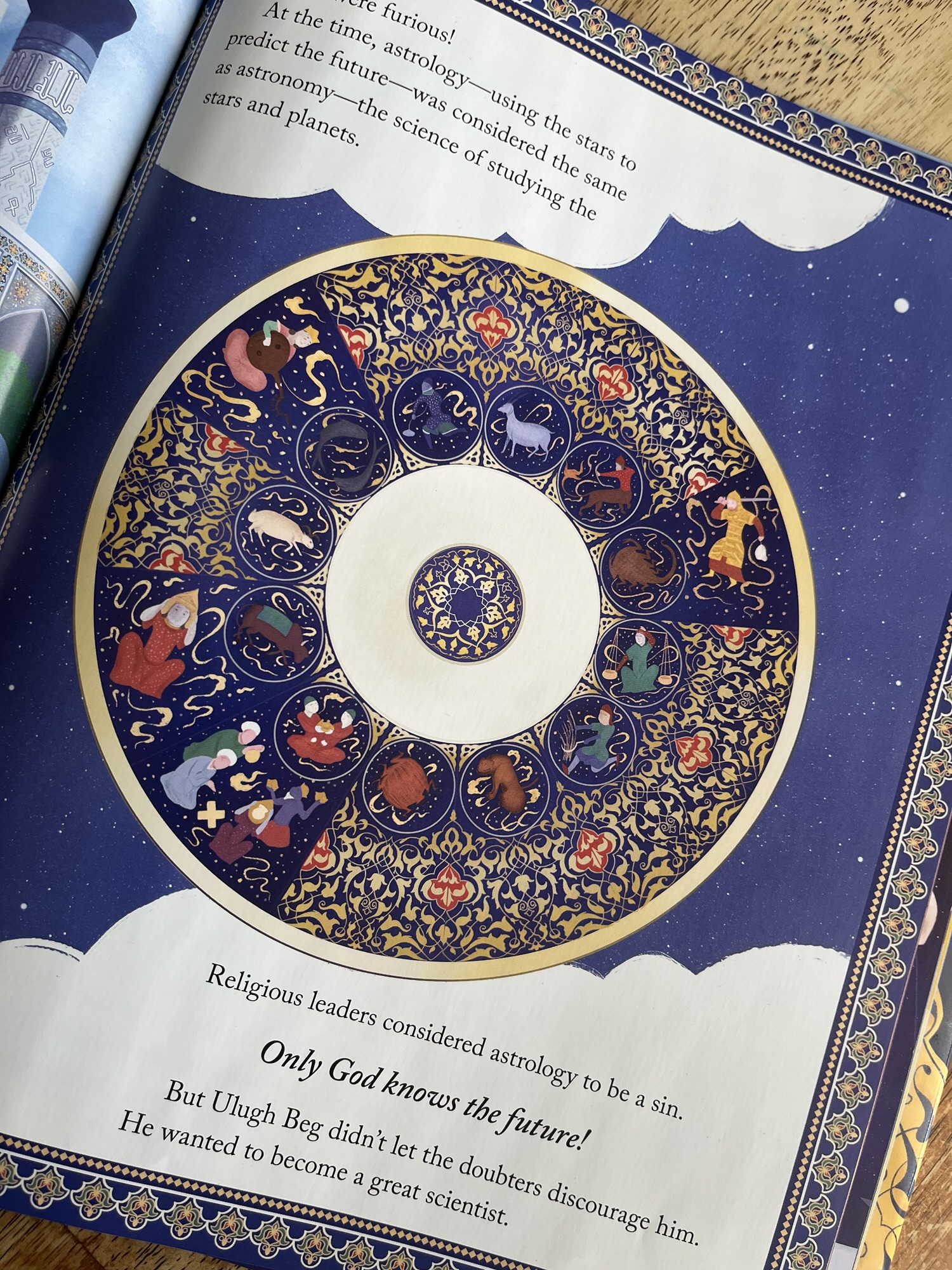
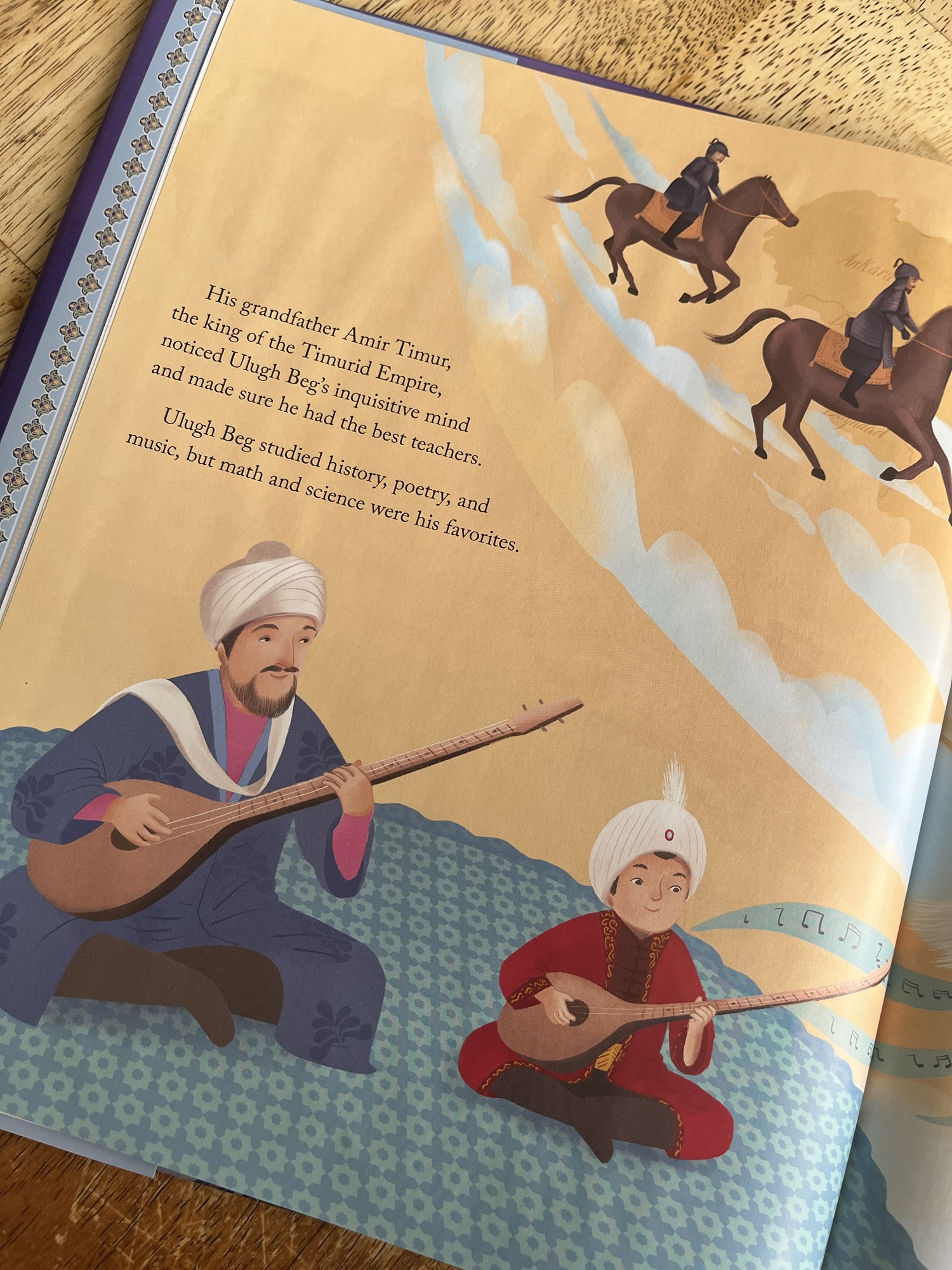
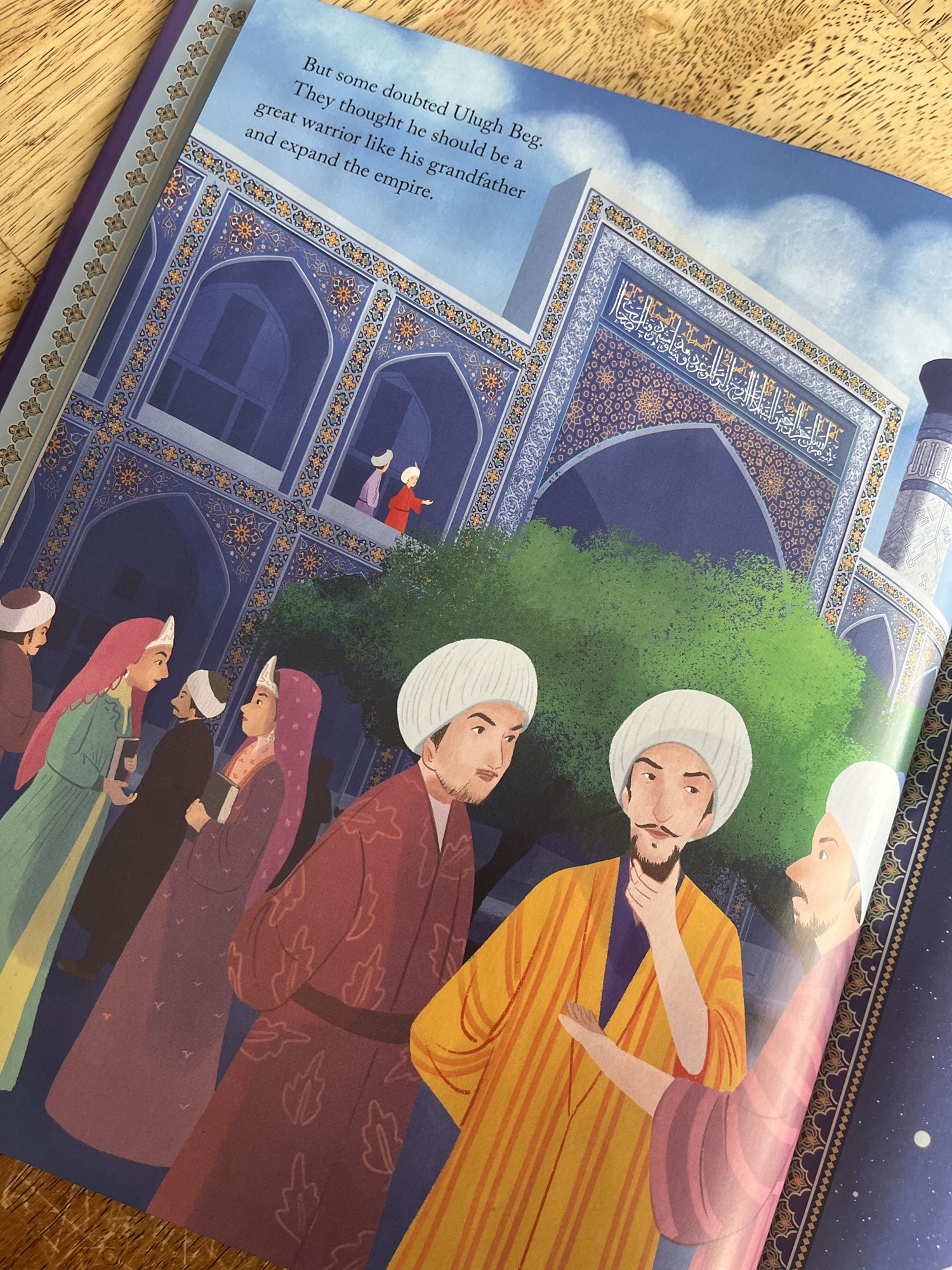
The king of the Timurid Empire, Ulugh Beg’s grandfather, insured his intelligent grandson had the best teachers and was allowed to travel, learn, and follow him curiosity.  At 15, when Ulugh Beg became the ruler of Turkistan, he built a madrasa and invited scholars, artists, students, philosophers, and inventors to attend making Turkistan “a mecca of learning.”  Yes, the usage of mecca here made me laugh.  I know it is appropriate, but it seemed a little on the noise in a book where Mecca, the direction we pray is also mentioned.  The book then details the controversy of studying the stars, as astrology and astronomy at the time, were seen as one and the same.  And with only God knowing the future, he had to assert that he was curious about the science of the stars and planets.
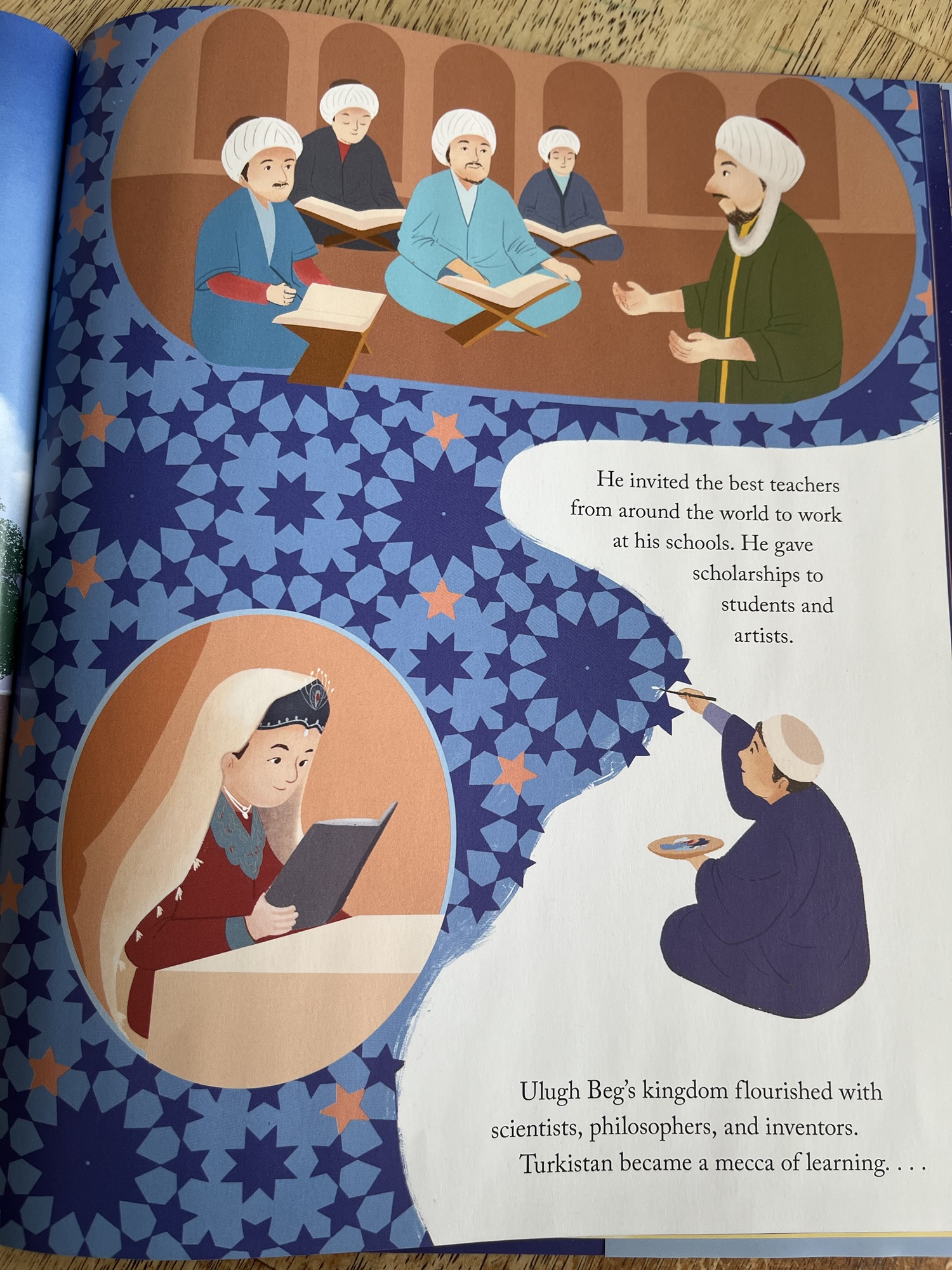
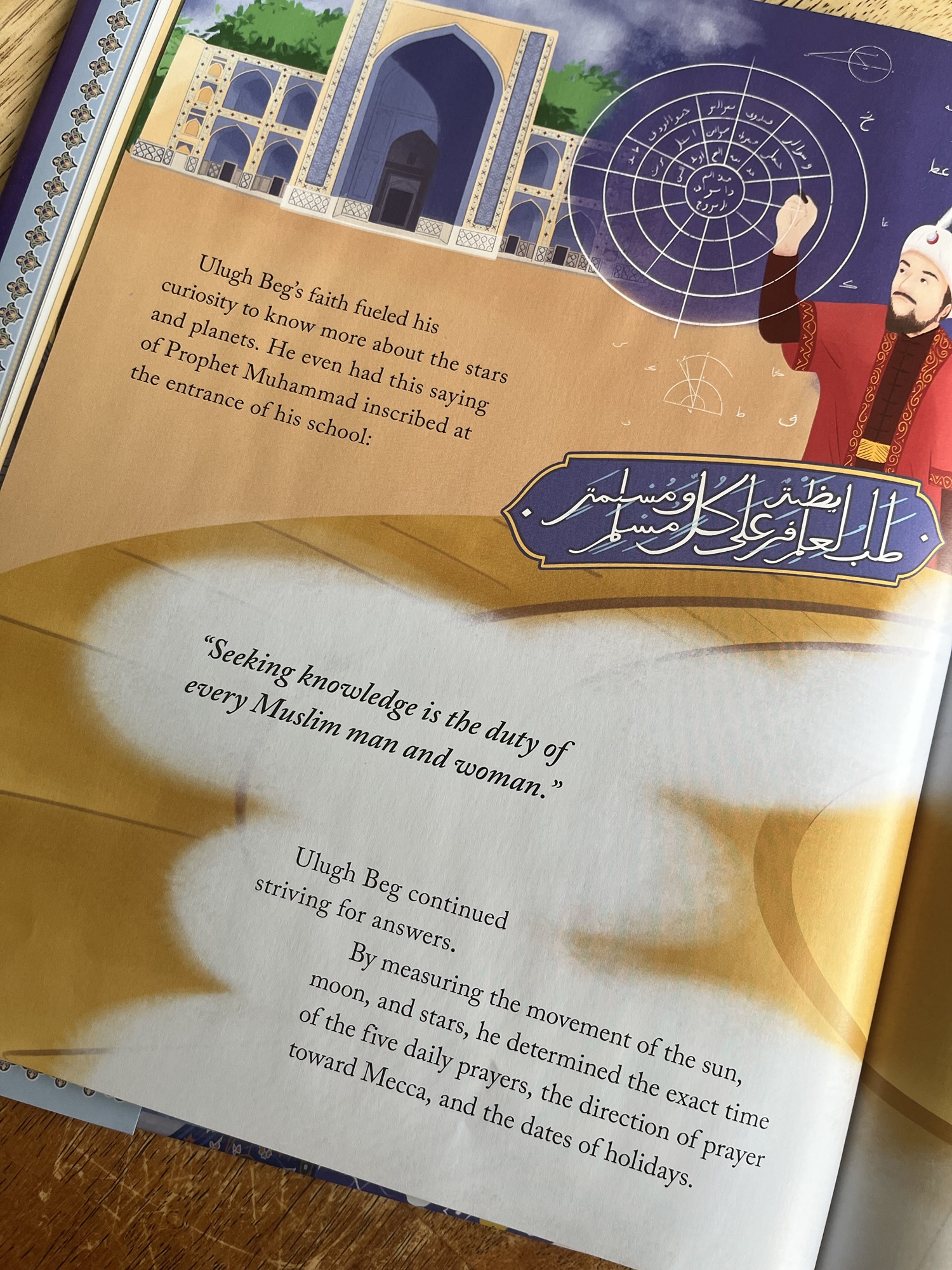
I love that faith and Islam is centered and that the inscription on his school is “Seeking knowledge is the duty of every Muslim man and woman.” But it alludes that this is a hadith, and while I agree it is inspired by a saying of Prophet Muhammad (saw), I think adding the man and woman part, where to the best of my knowledge the hadith is just “every Muslim,” is something that should be clarified. None-the-less, that it was Ulugh Beg’s motto, so to speak, and that he made a point to articulate “woman” is remarkable.  He determined the exact time of the five daily prayers, the direction to Mecca, and the dates of holidays.
He also built the world’s largest observatory, and numerous tools, including the Fakhri sextant to measure the location of the stars and movement of planets.  He encouraged being challenged and challenging others’ findings, and over 17 years wrote a star catalog of more than 1,000 stars. He answered how many days in a year, down to the seconds, why the seasons change, and inspired future astronomers and scientists.

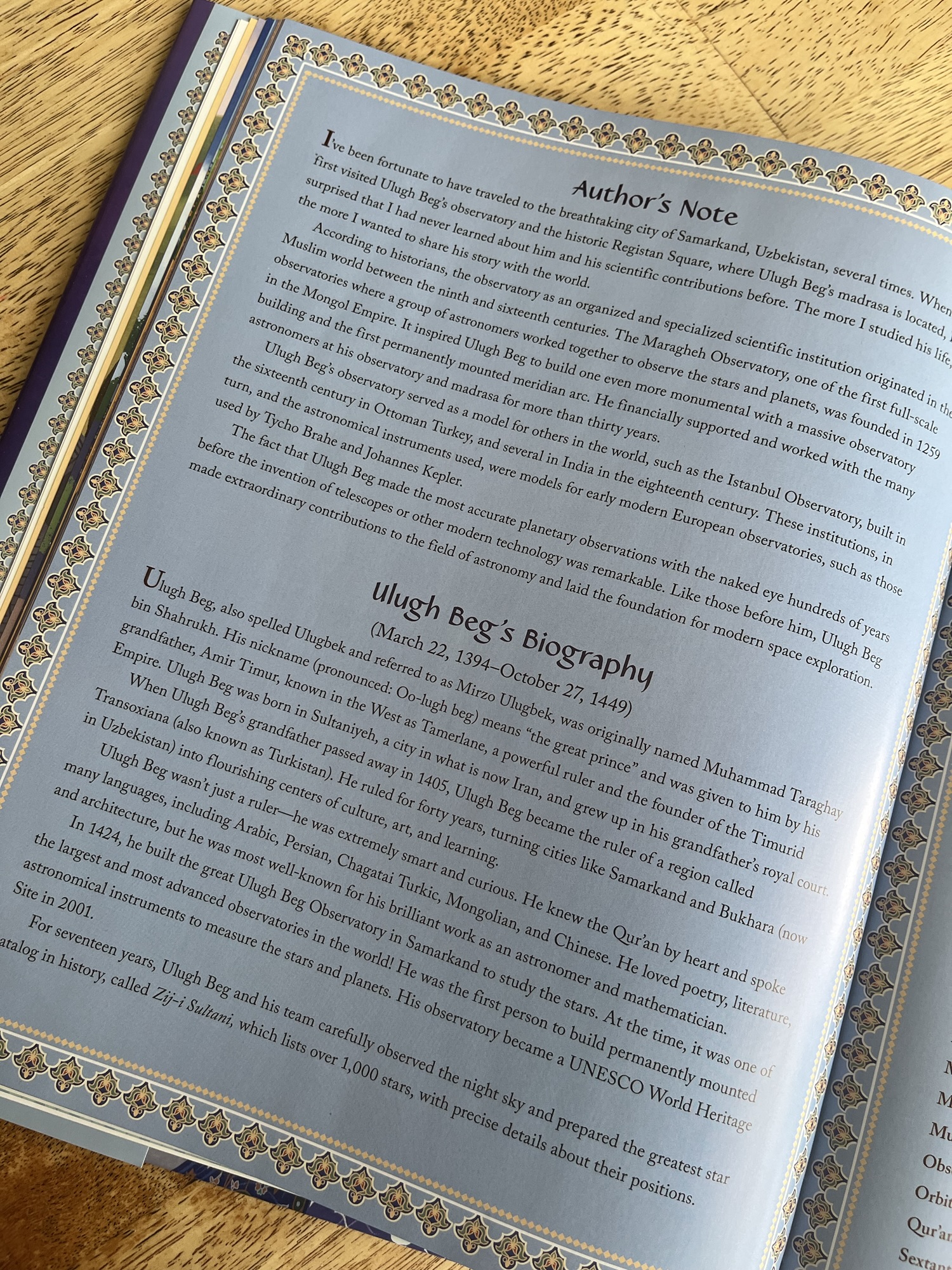
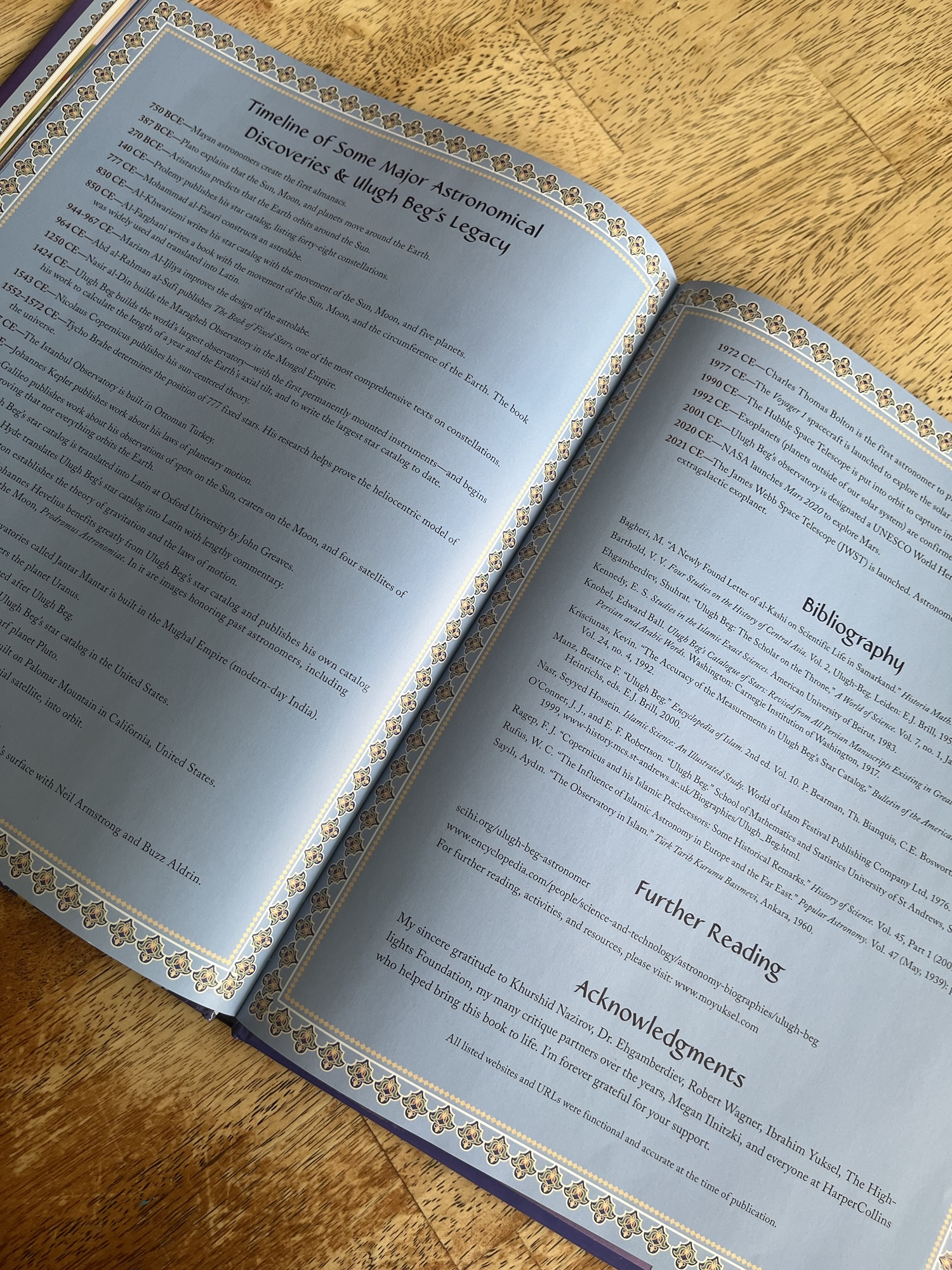
As incredible as the story is, the backmatter is equally impressive with an Author’s Note, Ulugh Beg’s Biography, a Glossary, Astronomical Timeline, Bibliography, Further Reading, and Acknowledgements.
The illustrations are the cherry on top, somehow I don’t love the cover, but the inside spreads are nice and match the tone of the words and the detail of what he was accomplishing.  The book is on preorder and I hope, teachers, librarian, and families will prioritize learning about him, and giving him credit for what he helped us to understand, about our world.

Ibn Yunus: The Father of Astronomy by Ahmed Imam

Standard
Ibn Yunus: The Father of Astronomy by Ahmed Imam

ibn yunus.jpg

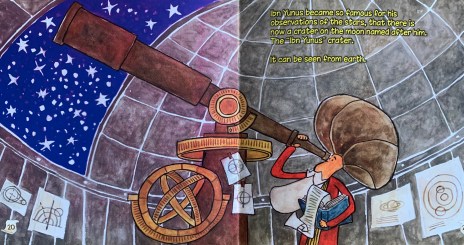
This book is part of a new Muslim Scientist Series featuring 24 glossy colorful 8×8 pages highlighting a great Muslim from the Golden Age of Islam.  Meant for Muslim children ages 4-7, the book sets out to teach and inspire little Muslims, and does a pretty decent job of presenting it in a memorable easy to understand way.  Adults might have to explain and help out a bit, but the book accounts for that too.

C6059DA8-08CC-41FE-9088-086C38EE07AC

The book starts off with some “Notes to Parents and Teachers” about supplemental activities and conversation starters to make the book relevant, and show how beneficial their contributions to science were and still are today.

A3210097-9DBA-49CC-B370-25187E4DCA3E

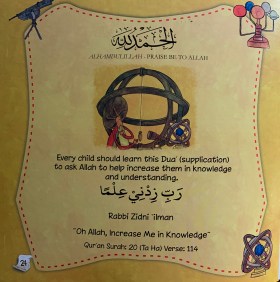
The book is a simplified biography of Ibn Yunus, and I would imagine the other books: Ibn Majid, Ibn Battuta, Ibn Al-Batar, follow the same pattern.  It tells about where he was born and when, and what he is famous for, before telling a bit about his family, an ayat from the Quran that inspired him is then given in English and Arabic and translated, before it shows how he worked toward his goal, and the accomplishments he made in his lifetime that still are used today.

938B76A9-E626-4B09-936E-446183F3141D

The fun illustrations make Ibn Yunus’s field of study easier to understand and will keep the littler listeners interested.  Adults will hopefully also learn something in the reading, and feel the same pride and inspiration of Muslim’s contributions to science.

13D95DDB-5EE2-4354-801D-85E561DABC86

It is critical to teach our children about the accomplishments and discoveries of Muslims, and this non fiction series is a great introduction to Muslim scientists, scholars, and adventurers, that they might not otherwise learn about.

The Cosmos That Allah Has Designed by Zenubia Arsalan illustrated by Ada Konewki

Standard
The Cosmos That Allah Has Designed by Zenubia Arsalan illustrated by Ada Konewki

2E77412C-8D86-40DC-AC49-0409390CAD93

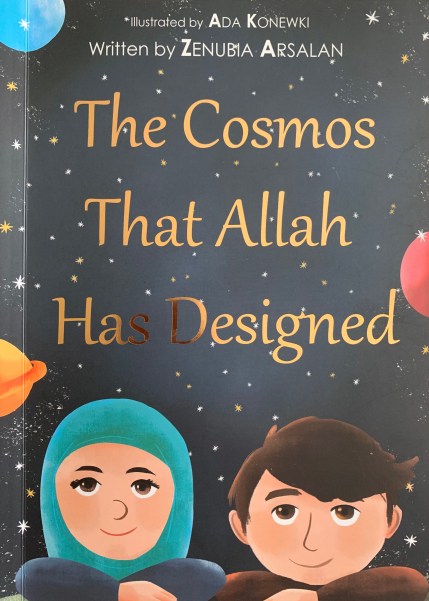
This 22 page beautifully illustrated picture book clarifies that it is not a science book, but rather an invitation to think deeply.  For ages 4 and up the rhyming pages will appeal to children’s sense of wonder and Allah’s perfection and precision.  Older kids will appreciate the journey through the cosmos and how limitless Allah swt is in all things.

1CE0C4F4-1AE9-4738-9D3E-BFAACA4A8186

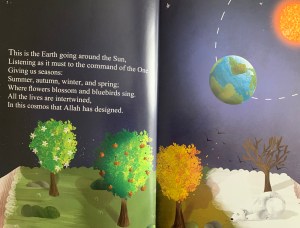
The book starts with Earth and how the spinning of our planet on its axis allows for the alternation of night and day, it then moves to how going around the sun at Allah’s command gives us our seasons.  But because it rhymes and is not a science book, the text is more imagery and tangible in nature, rather than a list of facts.

68DD1DA3-102B-417D-B24D-435B8DFC3FF0

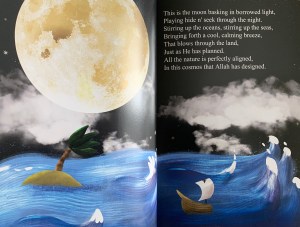
It touches on the moon reflecting borrowed light and the power and strength of the sun before moving on to the planets and gravity.

53909F77-D035-4FB9-BB77-3429E64A948E

It then extends out to the Milky Way and has a page on black holes before coming back to Earth for us to recognize how we only are a small part of something so much bigger.

31117DCF-73A0-4ABE-BD01-80AC92AA3843

There are two pages at the end with talking points, an ayat from the Quran, and emphasis that science and Islam are not at odds as Allah is the creator and governor of all things.

EFCD5023-940B-4D63-88FA-338A7F76C2D3

The book is 6×9 and with the beautiful illustrations I truly wish the book was larger.  Not only to dive in to the glossy pages easier, but also so that the book could be used at story time to small groups.  The tone is contemplative and marveling as it challenges the readers to find mistakes or flaws in the perfection of outer space. I love that science-y Islamic kid books are now available that appeal to children’s sense of wonder and understanding.  Really the only other suggestion I would have liked to see, would have been a page defining the word “cosmos” as it is used on every page, and while I think kids will figure it out as the continue through the book, I think it is a bit of a block for the younger readers.