Tag Archives: phones

Saving Sunshine by Saadia Faruqi illustrated by Shazleen Khan

Standard
Saving Sunshine by Saadia Faruqi illustrated by Shazleen Khan

img_9623

The themes, messaging and Islamic and cultural representation in this upper MG/lower middle school graphic novel are wonderfully unapologetically present.  Yet somehow, I never connected with the characters, and the plotting seemed stiff.  I don’t regret reading the book, and I’m sure most readers will be delighted with the main story of sibling annoyance, a sick turtle, and independent kids with reflective flashbacks and OWN voice threads of Islamophobia, immigration, starting to wear hijab, identity and othering.  I just felt the tropes were predictable, stereotypical even, and when the dad takes a stethoscope to a medical conference and the TSA agent doesn’t know what it is, I cringed.  Seriously, who takes a stethoscope on vacation? Who doesn’t know what one is? I normally love the author’s characters and wish for more Islam, this book gave me the Islam, but I really disliked the siblings, they were mean, angry, and annoying.  I own that reading a book about bickering kids a few days before my own five children returned to school may have jaded me, and I do think I found the religious touchstones predictable because I do read a lot of kid lit and I’m older, so while I’m not gushing in my praise for this book, I will be preordering a copy for myself and the school library. How is that for having an opinion and then completely walking it back? Yeah, it happens.

SYNOPSIS:

Twins Zara and Zeeshan bicker, a lot.  Zara loves animals and nature, Zeeshan space exploration, and both love their phones.  When the family heads to a medical conference in Key West where their mom is getting an award, the kids get their phones taken away by their parents when the two won’t stop fighting. The parents stick to their policy and the two are forced to stick together and entertain themselves while their parents attend lectures.  At one point they find a turtle and Zara takes the lead to try and help Sunshine, but will need her brother along the way.

WHY I LIKE IT:
I love that the characters identifying as Muslim was central and unapologetic.  I liked the flashbacks that provided a little bit of depth to the parents coming to America and their life in Pakistan, along with the personal reflections about starting to wearing hijab and when the kids started to go their own way.  But the airport scene, the identity issues, and the Islamophobia seemed a little superficial and over done.  The heart to hearts with the dad and his son and mom and Zara were sweet and insightful about belonging and where you come from, and not being so angry, but they also seemed very natural and in-character for the parents which is a disconnect from the anger the kids seem to carry.  If the parents are talking to them and modeling all this, it is a bit of a stretch that they are reacting as they are in the book.

I have a brother, it is just the two of us, we aren’t twins, but growing up in the 80s as the only Muslims in the area with a convert mom and immigrant dad, we came together a lot because only each other could understand the stresses we faced in and outside our home.  I thought this book would draw on that universal theme, and I was surprised that the point of the book felt a little underdeveloped.  I know MG can handle more than we give them credit for, but I felt like this book built up to have more of a warm hug, than I felt.  I wanted more of them plotting together, I didn’t feel like Zara really needed her brother to stick up for her, she wanted it sure, but that was a foot in the door that I think was missed.  She is strong, yet was being vulnerable with her brother, and he was able to step up for her, but it needed a few more beats to be appreciated.  I also wanted more connection to the turtle, his name is in the title, I thought he’d have a bigger role.

FLAGS:

Disrespect, lying, anger, yelling, bullying, teasing, Islamophobia, stereotypes, prejudice

TOOLS FOR LEADING THE DISCUSSION:

The book would allow for discussion for middle grade readers who might see themselves in the family dynamic or be able to relate to some of the Islamophobia.  It could also cause some worry for some children that being visibly Muslim or having cultural names, and wearing cultural clothes will bring negative differential treatment to them.

Available for order here

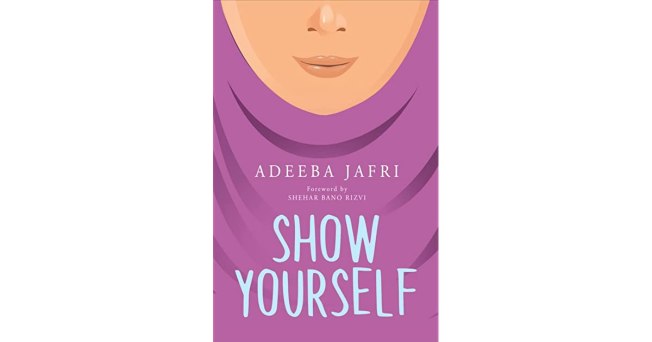
Show Yourself by Adeeba Jafri

Standard
Show Yourself by Adeeba Jafri

show yourself

At 98 pages the book claims to be two YA mental health novellas that bring attention to mental health in a relatable and contemporary audience through Muslim characters.  As someone with some experience in loving individuals going through some of the issues addressed in the book, I was thrilled that voices were making it on to the page and in a capacity to increase discussion about self-harm.  Unfortunately, the presentation of the two short stories baffled me and I don’t think the book will find its way in to many YA reader’s hands.  I don’t know why it is two novellas when the characters are the same and it very easily could, and should, have been fleshed out into a single longer novel.  I think it would have shown a better well-rounded understanding on the importance of knowing and recognizing signs of someone struggling with their mental health, how coping skills aren’t often enough and outside help is needed, how assumptions and stereotypes further alienate those suffering, and just overall made the characters deeper and more relatable.  Instead we get two isolated snapshots that subtly try to discuss mental health, but use a very immature cover story that misses the target audience.  The book as is, is better suited for middle school readers, but I think even they would get a limited view of how to help those close to them, or reach out themselves if they are hurting.  It needs to be five short stories with different characters and a unifying theme, or one complete novel.  Unfortunately, as much as I wanted to share this book with my teen daughter so we could discuss, I couldn’t convince her to read it, which is unfortunate, because the author can write, it just isn’t tempting presented as it is.

SYNOPSIS:

The book is two novellas, the first focuses on three female Muslim friends and one’s little sister.  The girls all go to school together, but are of different economic statuses, have different interests but support one an other, and have different family dynamics, that all come in to play.  The close knit community means the parents are social with each other as well, and one parent or another is always picking or dropping them off at each other’s homes.  When Hana gets a new phone, Aliya is clearly jealous, Lena tries to brush it off and keep the peace, but, when Hana’s phone goes missing, even she has to admit that “rebel” Aliya is looking guilty. As the girls search for the phone, Lena spends time with her family, goes to her brother’s robotics tournament and finally confronts Aliya.  Aliya’s mom has disappeared earlier, and with her purple dipped hair, sudden influx of funds for Ubers and new accessories, the girls fight and Aliya pulls away.  When Aliya and her dad don’t attend Hana’s younger sister, Sara’s ice skating performance, it seems the friendships are irreconcilable.  Aliya, however, shows up to the after party things are revealed and amends are made.

The second novella is the story of what happened with Aliya’s parents, particularly her mother.  Similar to Sara, Aliya’s mother was harming herself and eventually abandoned her family.

WHY I LIKE IT:

I like that it shows Muslims suffering, coping, and dealing with mental health issues.  The topic is way too taboo and it effects all swaths of the human population, we need to normalize discussions about it.  I wish the novellas would have stressed getting professional help more, sure it is great that Hana is going to try and put her phone down and pay attention to her younger sister, but that is not always enough.  Aliya mentions that after her mom left her and her dad went to therapy, but the mom claimed to leave to get help and then never came back.  I think there needs to be A LOT more emphasis on what “good” help looks like and what it can do to change lives.

The book is self published it seems through a publisher, so hopefully the author could ramp up the story telling, character building, and messaging, to really make the book shine.  I don’t understand the title, I don’t know why it is under a hundred pages.  I don’t know who the forward is written by.  If you want to write a book about mental health you really need to have done a lot of research, not just necessarily your own experience, and you probably should have a bunch of letters after your name.  Otherwise just write a work of fiction and touch on some of the issues that you want to support discussions about.  The book seems to straddle committing to one or the other, and ultimately it falters because of it.

I do like that the characters are Muslim, the book is not preachy, some seem to be more religious then others, but it isn’t really part of the story.  The characters’ culture and nationalities seem to be left intentionally vague.  It mentions gossip from the ladies at the masjid, which I think should have been drawn out more.  Really if you ask me, this is a great rough draft, it needs fleshing out is all, build it up to 250 pages and set out to reach middle school readers instead, and it will resonate and have the effect I think the author is hoping for.

FLAGS:

Self harm, abandonment, assumptions about a man Aliya seems to be sharing a meal with in a photograph, gossip, lying.

TOOLS FOR LEADING THE DISCUSSION:

Because it doesn’t seem to stress how to help and what help is out there, I don’t know that the book would be a great read for all.  I think if you are looking to open a discussion with a small group of readers or individually, you may be able to assign the book and discuss in a safe environment.