

A lot of us Muslims name drop Muhammad Ali and Malcolm X in discussions about civil rights quite often, and at least, speaking for myself, I thought I had the general idea about the relationship between these two iconic figures. I have read a fair amount of books in my quest to identify books that show how Islam shaped the men as opposed to those that tend to gloss over their eventual conversion to Sunni Islam, but I read this book as if it were fiction and I didn’t know what was going to happen next. I have not read the original Blood Brothers, but this young readers adaptation is well done in conveying the politics, environment, struggles, and humanity of these two men. Their flaws and growth, their tests, their friendship, it really is a compelling read. The focus on their friendship puts Nation of Islam as the focus, but the book does a good job of identifying it as being different than Islam. As their friendship falters, Malcolm X goes for Hajj and is seen to change, and choices made by Cassius Clay show the men quite distant at the time of el-Hajj Malik el-Shabazz’s assassination, even though eventually their paths proved quite similar. The 240 page book is MG, but I think middle school readers (in classrooms, book clubs, and on their own) will better appreciate the intersection of these two giants, the events of their time, and the legacy they have left for us all.
SYNOPSIS:
The book is a snapshot in time, sometimes focusing on Malcolm X, sometimes on Cassius Clay, sometimes of their time together. It starts with background insight and then shares the rise of both of them in their respective worlds, Nation of Islam and boxing. Threaded through it all is the influence that Elijah Muhammad had on them, and key events they experienced that shaped their thoughts and opinions on race relations, politics, religion, and life. It shows Malcolm X as the teacher, and leader taking in Clay and believing in him against the Nation’s wishes and thus when Muhammad Ali pushes him away the reader sees the Champ in a different light. It shows deception and manipulation, as deep and riveting as the best fiction out there, but is very vulnerable in showing regret and both individuals’ ability to keep learning and growing. The conclusion highlighting Muhammad Ali reaching out to Malcolm X’s daughter Attallah, and the forgiveness that took place in restoring the love between the two men and their families, really was a cathartic release that reminds readers that for as idolized as these two figures are in pop culture and history, they were very real people. The book has a Biography at the end that breaks down sources by Government Documents, Archival Collections, Newspapers, Magazine Articles, Books, and Websites. It is a “Selected Biography” that is seven pages long.
FLAGS:
Racism, manipulation, assassination, hate crimes, stereotypes, propaganda, oppressions, abuse, police brutality, assault, bombing, arson, attempted murder, fear, threats, killing.
TOOLS FOR LEADING THE DISCUSSION:
I have preordered a book for my own children to read and one for the school, I really think this book needs to be easily accessible for middle school students in libraries, classrooms, and homes. I would love to do this as a middle school book club, I think the authentic perspective will give our youth who have heard of Malcolm X and think they know Muhammad Ali some insight into really spending time with what they did, what they faced, and how remarkable their friendship was.


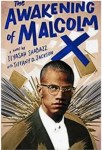
 This historical fiction piece about Malcolm X follows him through incarceration with flashbacks to his childhood and teenage years. Written by his daughter it is hard to know where this 336 page book is factual and where it takes artistic freedom with filling in the blanks. A few creative liberties are mentioned in the author’s note at the end, but some sources in the back would help clarify, as she was a toddler when her father was killed. The time frame of Malcolm X’s life and a large portion of the book covers his introduction and conversion to The Nation of Islam, but it never mentions even in the timeline at the end that he left it, or that they were responsible for his assassination. The book is beautiful and heartbreaking at the same time, it is also so very humbling and empowering. I just don’t know that younger middle school readers (the stated intended audience is 12-18), will really grasp the content, his condition, and his searching, while trying to keep all the characters, time frame references, and slang straight. With the mention of his girlfriend who he is/was sleeping with, as well as the drugs, the alcohol, and the abuses occurring in prison, older teens might be able to handle the book better, and be tempted after to dig deeper to learn about him going for Hajj, becoming Sunni, changing some of his views, and ultimately being gunned down in front of his family.
 Islamic School Librarian