
Again I break from my fiction preference to review another book about these two remarkable individuals: Malala and Iqbal. In this beautiful book linking two brave children from Pakistan, Jeanette Winter’s brings their stories to a young audience in a powerfully simplistic way. Written on an AR 3.6 level, each story is 20 pages and presented in a flip book format. Before each story there is a brief Author’s Note about each character in a broader view, for context to be given as needed to the adults to share with the children listening to the book, or for older children to read and deepen their understanding and appreciation. The sentences are short and the font and presentation is inviting to even early readers. The pictures are wonderful and do a tremendous job showing the intensity of the environment Malala and Iqbal face, while not frightening the reader.
The Malala portion of the book starts with the Taliban asking for her on the bus and like her biography, then takes the reader to the threats and deterrents they made to girls in school, but on an audience appropriate level. It tells how they stopped wearing uniforms so that they could be harder to identify and how even burning the girls school didn’t stop them. It then returns to her being shot and going from the hospital in Swat to one in England. It concludes with her speaking to the U.N. on her 16th birthday.

The story of Iqbal is a bit harder I think for children to understand as they may not know what a loom is or have ever thought about who makes carpets. Also the words bondage, Peshgi, outlawed, and mourners are not in their vocabulary . They should understand that he is sold for an unpaid $12 debt, but that too may need to be stressed and explained. If the kids can grasp this, I really think children as young as kindergarten can appreciate his story. I love that the author didn’t shy away from the fact that he was shot and killed. Even if they do not understand all the facets that make Iqbal’s work so incredible. They will feel inspired that someone so young was so brave. 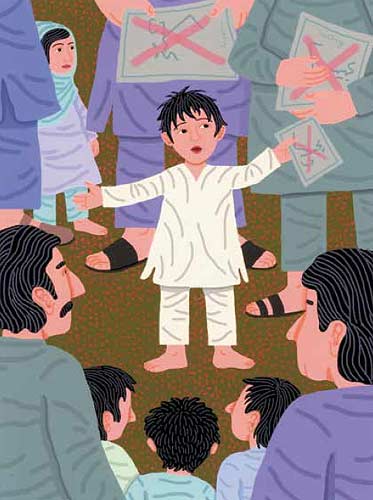
 Nadia’s aunt is getting married and she gets to be the flower girl in the Pakistani-American wedding. She also will get mehndi put on her hands for the big event. Her cousins warn her that she might mess up and even in the midst of her excitement she begins to worry what the kids at school will say when they see her hands on Monday. As her aunt prepares the mehndi and the application process begins, various uncles peek in on her and her aunt gifts her a beautiful ring. The mehndi has to sit on the skin for a while to set and as Nadia practices sabr, patience, I couldn’t help but think something seemed off in the story. I’ve been at, in, and around a lot of Pakistani and Pakistani-American weddings, and this story didn’t seem to reflect the tone of such occasions. The book doesn’t reflect the hustle and bustle and near chaos, it doesn’t sound like the tinkle of jewelry and laughter as the women sit around chatting and getting mehndi put on together, the pots on the stove are referenced but not described so that the reader can smell the sauces thickening and hear the pans crashing and taste the deep rich flavors. It is lonely. Nadia is lonely and filled with anxiety about Monday. Durring the wedding she is walking down the aisle and suddenly freezes when she looks down and doesn’t recognize her hands. Her cousins seem to show unsupportive “I-told-you-so” expressions as she searches for some comforting encouragement to continue on. When she finishes her flower girl duties, her grandma asks if she understands why looking at her hands makes her feel like she is “looking at my past and future at the same time.” Nadia doesn’t understand and the author doesn’t explain. At the end she is ready to embrace that her hands are in fact hers and that she will show her friends on Monday. But the reader has no idea how it goes, or what exactly the significance of her painted hands are. The book fails to give any insight or excitement for a culture bursting with tradition at a time of marriage.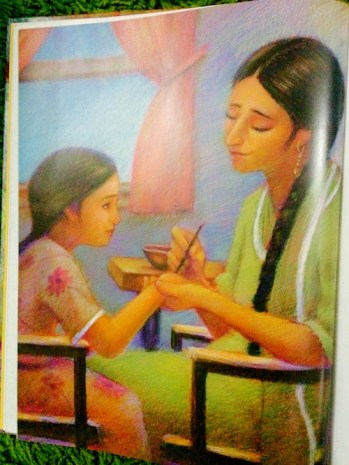




 The next tab has George helping Kareem get up for a predawn meal, keeping his mind off food and keeping him busy. Not the normal mischievous George in this book, but rather a very helpful one.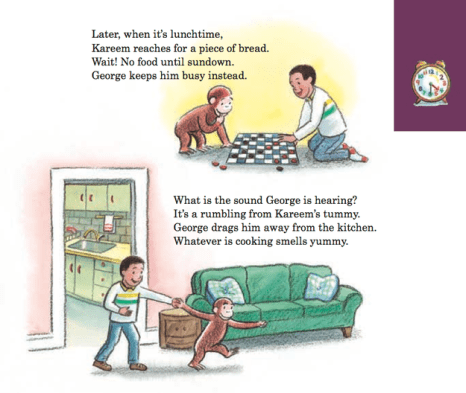



 Islamic School Librarian