Tag Archives: erasure

A Map for Falasteen by Maysa Odeh illustrated by Aliaa Betawi

Standard
A Map for Falasteen by Maysa Odeh illustrated by Aliaa Betawi

img_5521-1

This 40 page OWN voice written and illustrated picture book for kindergarten to elementary, addresses the question and provides some answers that Palestinian diaspora children have faced for years, about the attempted erasure of Palestine by way of not labeling the country on maps.  The book does not name the occupiers, so hopefully it will avoid bans and censorship, as it does not shy away from articulating the taking of land, theft of homes, and renaming of villages.  The refrain is that “Palestine lives in you and me,” and that can never be taken away.  That the book stays on level and is traditional published is quite impressive for the contents contained. I love that their are resources as the beginning for adults to learn more, that Isha prayer is mentioned, The Proudest Blue is in an illustration, that rohi, omri and habibti are woven in, and the Author’s Note is detailed. 

img_5522-1

The book starts with little Falasteen at school, the class has a new map of the world and everyone is taking turns telling about where their families are from.  Let me pause here and say, this was my biggest, only real problem with the book, the illustration hints that the map is the rug, and the rug is just shapes of the continents, it is not a political maps that shows country boundaries, but I also read an e-arc so maybe something will change in the illustrations, but none-the-less, I note it here because it is the first page.  Moving on, when it is Falasteen’s turn she doesn’t see Palestine and when she asks her teacher, her teacher tells her, “I think there is no such place.” I wish I could say this is extreme, but I’ve been hearing similar conversations from friends for over 30 years, at least in the book the teacher isn’t mean about it, just ignorant, real life sadly, is often much more aggressive.  This is the catalyst though that prompts Falasteen to start asking her question.

When she gets home, she asks her Jido, who is tending the grape vines, why Palestine is not on the map, and he draws her a map to take to school the next day to share with her friends and teacher.  He tells her, her “teacher needs teaching.” Let me pause again her, I was initially a little surprised at this tone, and SPOILER that at the end it doesn’t circle back to her teaching her teacher and class, but on the second reading, I was glad for it.  No one should have to prove their existence, that is my bias of wanting to be accepted or palatable to an outside gaze.  Teachers all the time get asked something they don’t know and if it on topic will go and find an answer, to dismiss little Falasteen intentionally or out of ignorance regarding her home country, is not something that needs outside approval, or that needs to be proven.  Outside acceptance is not required in this example of reality. 

She then asks her Teta who is cooking in the kitchen, why Palestine is not on the map.  Teta tells her about when soldiers came with their tanks and guns, and burned their fields, and she had to leave with Falasteen’s mom in her arms to keep her safe.  She shows her the key that she keeps from her home that was taken, and how she longs to return.

img_5524-1

After Isha prayer, Falasteen asks her mother the same question.  Her Mama tells her that some places don’t need a map to be found, and that “Palestine lives in you and me.”  That even though Falasteen has never seen Palestine it is within her.  When she tells her mother that her teacher told her it doesn’t exist, her mom explains that those that say it doesn’t exist, that make the maps, cannot erase them, their memories, their culture. 

The remainder of the book is more hopeful and prideful of the places where Palestine is found and the hope that someday they can visit. I enjoyed the read, it is important, it is needed, and I hope you will preorder/order it to show your support.

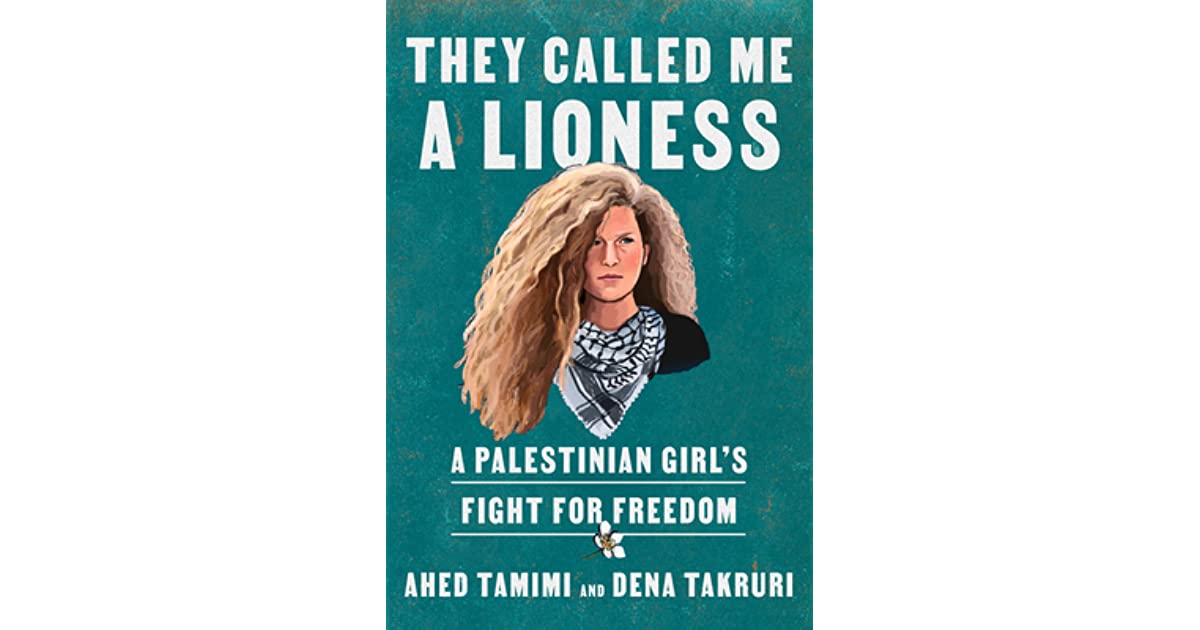
They Called Me a Lioness: A Palestinian Girl’s Fight for Freedom by Ahed Tamimi and Dena Takruri

Standard
They Called Me a Lioness: A Palestinian Girl’s Fight for Freedom by Ahed Tamimi and Dena Takruri

lioness

The writing style makes this book easy reading, but the content contained is absolutely horrific, heart breaking, and hard to truly comprehend.  If this was fiction it would be overkill, barbaric, cruel; the fact that it is factual, current, and ongoing is inexcusable.  There is no humanely possible way that we can still be ignorant or apathetic to the plight of the Palestinians.  It is an occupation.  It is apartheid.  It is oppression.  I often don’t review adult non fiction, but because this is ongoing and we have the power to do something, BDS, I’m reviewing this book.  The book describes torture, death, abuse, cruelty, you name it, but I think mature young adult readers can and should read it, along with every adult. A history of major events in Palestine interwoven with Ahed Tamimi’s own experiences in the last few years, she was 16 when imprisoned, so the recent past, as lived by her and understood by her, is powerful, moving, and inspiring.

SYNOPSIS:

The book shares a lot of facts, but because the facts are contextualized you feel yourself absorbed by what it means to have your land taken, your home bulldozed.  It isn’t just statistics of growing settlements, it is being cutoff from the Mediterranean Sea that you can see from the hills in your village, but cannot access because of checkpoints and armed guards, and walls.  It is understanding why throwing a rock, or slapping and kicking are a form of defiance, not terrorism.  It is truly seeing the situation from someone living it every day.  There is nothing for me to critique or opine about in her story, nor in the book and presentation. It is hard to read, it is harder yet to know that it still persists.

WHY I LIKE IT:

I love that I sobbed and clenched my fist and Googled again what companies and organizations to Boycott, Divest and Sanction (BDS).  That is what the book is asking those of us who support the Palestinian cause to do.  She says they don’t want our pity, they want our action.  They want us to look at South Africa and realize the power of economic efforts by the global community on an issue. They want us to be educated about what they endure and educate others.  They want us to help stop the erasure of Palestine and Palestinians.  I’m so grateful that the book pointed out the direction we should take, a bleeding heart is not enough.

I love that Ahed owns her own learning and growth as she got to know Israeli Jews sympathetic to the right of Palestinians, that protested with her and her village, that fought the legal battles using their privilege to help the oppressed. I love that the book is personal and that she doesn’t apologies, that she addresses the criticisms against her, that she calls on her own people to unify, and that she is so so fierce. 

I can’t imagine what her life is like, and it is truly humbling to imagine yourself in her shoes, in her mother’s shoes, her father’s.  It isn’t a life anyone would chose, it isn’t a spotlight you would want.  No parent would willingly push their child to this, so that she at such a young age had to endure and become what she is today, is humbling.   

Islam is not a big part of the book, but Ramadan, and jummah prayers, janaza and praying salat are occasionally included.  

FLAGS:

Death, fear, torture, killing, murder, oppression, loss, hate, racism, everything you can imagine and then some.  There is also mention of two men having sex and a man stripping, while on prison to court transport.

TOOLS FOR LEADING THE DISCUSSION:

I would love to attend a book club or panel discussion by Palestinians in the community using the book as a starting point for telling their own stories.  I think a high school book club could handle the book, but nothing younger than that. Please purchase a book, check it out from your library, request your library to shelve it, and spread the word about this memoir that is both personal and informative.