Tag Archives: fire

Hilwa’s Gift by Safa Suleiman illustrated by Anait Semirdzhyan

Standard
Hilwa’s Gift by Safa Suleiman illustrated by Anait Semirdzhyan

img_6526-1

I’ve read a few children’s picture books about harvesting olives, and even some about Palestine’s olives, but this one really stands out because it is just so very joyful.  There is information about picking the fruit, processing, and making soap and oil with olives, but the book’s take away is just sore cheeks from smiling, and a full heart from feeling the importance, love, and tradition of olives, family, and being together.  The text and illustrations combine beautifully allowing the story of Hilwa, the olive tree, Ali and his Seedo to say a lot without having to spell it all out. And that it is traditionally published at such a critical time, is truly a gift.  There is nothing religious in the text, there are a few #Muslimsintheillustrations, and the author is Muslim. Additionally there is nothing about the current situation, the politics, the upheaval, or the occupation. The book follows Ali as he arrives after a long journey to his Grandparent’s home, it is harvesting season and  he is about to see all of the gifts that come from olives with the guidance of his grandfather, the cheering of his cousins, and the offerings of his beloved Hilwa.

The book starts with Ali and his parents arriving exhausted after their long flight to Palestine.  Greeted by Seedo, when Ali sees Hilwa, the olive tree his grandfather planted with his grandfather, the tiredness disappears.  When he hears Sitty whacking the trees and his cousins singing, “Zaytoon, ya zaytoon.”  He is ready to help harvest.  But, he doesn’t want to hurt Hilwa and decides to pick the olives one by one.  After his arms are tired and the basket is empty, he gently tries the traditional method and makes the zaytoon rain down with his grandparents and cousins cheering him on.

Hilwa has many gifts, and the next day they load up the olives to be taken to the press, they then prepare and enjoy the olives being pressed in to oil.  They bring the oil home to cook with, eat, turn in to soap, and the pulp is used to build the fire.  The best gift of all however, is the family, friends, and neighbors gathering to share and be together.

I read an early copy, and hope that the beginning will be smoothed out a bit.  It actually read as if a page was missing.  If the family had just arrived from overseas, and the grandfather was so excited, why wouldn’t the grandmother and cousins also leave what they are doing to great the just arrived family? It seemed a bit off, but once the story recovered, the text and story flowed without incident, so perhaps the disjointedness has been resolved.

img_6527-1

It is so important to show the richness of cultures to those that might be unaware, for a culture that is relentlessly villainized, even more so.  This 40 page picture book is great for ages 3 and up, and while it doesn’t detail Palestinian culture, it highlights a central component and shows the vibrancy and warmth of a people and their relationship to the land and the importance of olives and olive trees.  There is a glossary at the end with words in English and written in Arabic scripts as well as an Author’s Note.
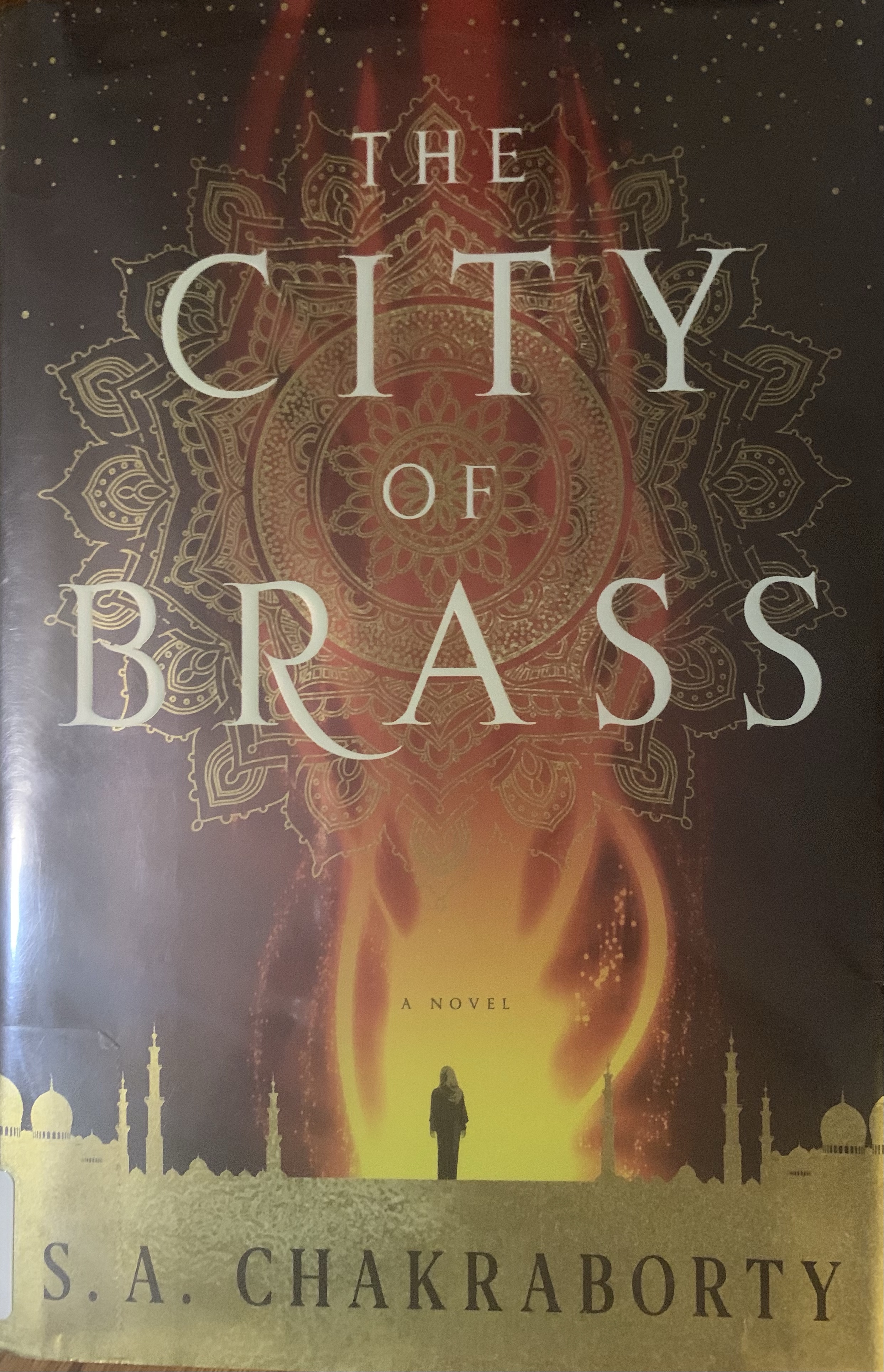
The City of Brass by S.A. Chakraborty

Standard
The City of Brass by S.A. Chakraborty

This series is adult fantasy written by a Muslim author for her ummah and contains Muslim characters. I think the series as a whole is definitely not YA, as the main characters would age out of the target demographic, but I think that book one could qualify. I’ve contacted the author to get her perspective on the matter, and will update this if I hear back. So why am I reviewing it? Because it is so good, and I’ve heard of a lot of people letting/encouraging their teens to read it, and honestly, I did as well. There is complex world building, implied physical interactions, one hinted at gay romance, alcohol, concubines, violence, djinn, ifrits, killing and one kiss/slight make out session. There is also Middle Eastern culture, Islam, and a fiery protagonist that make the 530 pages in the first book fly by. I’m only reviewing the first book, and I think 14 years and up can handle it, I know my 14 year old and I haven’t stopped talking about it, and it has been quite fun to fan girl with her over it.

SYNOPSIS:

Nahri is living in 18th Century Cairo. She is completely alone and always has been. To survive she relies on her healing abilities and her ability to steal, cheat, and con her way to food and shelter. She knows nothing of her past, but is able to pick up any language after hearing a few words. At a performance to con a family needing help healing their daughter, she accidentally summons a djinn, Dara, which in turn awakens a graveyard full of ifrit, and sends Nahri on the run. Not trusting Dara they are travel companions none-the-less as they make their way to Daaevabad, a protected home of the fire beings, and the only place Dara thinks she will be safe. Along the way on the month long journey, Nahri tries to learn about the djinn, called Daeva, and the creatures they are running from. She also learns that she is the last surviving Nahid, healer, and while she may be a shafit, a half blood, she has powers and lineage the kingdom desires. Dara isn’t forthcoming with information, as a result his dark past and incredible powers keep Nahri on edge. She is constantly plotting her escape from the magic carpet carrying them and the future that she doesn’t understand let alone know if she wants.

The book is told from Nahri’s perspective and from Ali’s as well. Ali is the second born son to the king of Daevabad and has been raised away from the palace at the citadel. With a soft spot for the shafit, second class citizens of Daevabad, he gets tangled up in a plot to free child slaves and gets called back to the palace to be watched and tested as his brother’s future Qaid, the top military official that he has been preparing for his entire life. Ali is already an outcast to his family, as a devout Muslim in practice, belief, and actions, unlike his family who identify as Muslim for political unity.

Once Nahri and Dara cross in to Daevabad and the two narratives come together, the politicking, deception, deceit, and historical complexities get intense. The king demands that Ali get to know Nahri so that she can be persuaded to marry the emir, Muntadhir, but Nahri is in love with Dara and struggling to learn how to be a healer in the mythical world. To say that the story gets messy with the djinn tribes, and the manipulation of power and historical atrocities would be a simplification. But the writing is superb, and the world building encompassing. The book doesn’t drag and even after reading all three volumes, you’ll find yourself thrilled to know that the author has some additional points of view online.

WHY I LIKE IT:

The author takes a lot of liberties with Prophet Suleiman’s story, but it is fiction and I don’t think that anyone would be mislead by the information given about him and his control over the djinn. The “Islamic” elements in the book are really just that, elements, they aren’t plot lines, or more than just a layer to the setting and the characters. The history and the cultural richness is made more complete by the foods, clothes, and salat times mentioned, but there is nothing Islamic fiction about the text.

I love the writing. Period. It is engaging and doesn’t lag or feel repetitive. The characters are very fleshed out: no one is good or bad, the entire cast is shades of gray, and their motives and intentions are often debatable. My daughter and I have argued and I don’t think we have tried this hard to convince each other about characters since Harry Potter, and it is so great!

FLAGS:

SPOILERS: Dara and Nahri have chemistry and they kiss and long for each other, but it isn’t the bulk of the story line. Ali starts to fall for Nahri, but he has poor judgement so it is by and large dismissed. Muntadhir is always drinking wine and courting courtesans and is never in his own bed, nothing is detailed, it is said in passing, or implied. It is also hinted that Muntadhir is in love with his best friend, a male, and pretty much everyone knows, and they just look the other way. It does not state anything explicitly about them, but it is hinted at, implied, and mentioned by the other man’s father that the prince has broken his son’s heart numerous times.

Wine is always present, as is stealing, and lying. There is a lot of violence, not overt gore, but occasionally graphic as Nahri is a healer and there is a war simmering in the current time line, and a historical one that wiped about a whole tribe that is discussed throughout.

TOOLS FOR LEADING THE DISCUSSION:

I wouldn’t be able to do this for middle school, but perhaps closer to the end of the school year, I would suggest that the high school book club consider it. There is a ton online for this award winning debut novel, so I’ll just include the author’s website: http://sachakraborty.com

Happy Reading!