

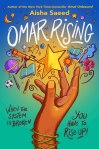
I was hesitant starting this 384 page middle grade novel in verse, because the stereotype of having to disguise yourself as a boy to make things happen, seems like a western performative troupe that reinforces stereotypes, and has been done a fair amount in literature. Pushing down my disdain, I opened the book to numerous pages of cricket terminology and rules, which further served as a barrier. I do not understand the info dumping, literally, at the start of the book, and to top it all off it is not needed. The book is blurbed as being a cricket loving, girl dressing as a boy in a patriarchal society, but really those are the most forced aspects of the all over the place narrative. Cricket is underdeveloped and her actually playing is very minimal and lacking. Aarzu disguising herself as a boy is a blip that she admits to a few pages after she gets the job, and thus the story that remains is an orphaned girl with a mean uncle trying to find a way to help pay for her younger sister’s medical bills. Which isn’t a bad story it is all just so very disjointed. And the verse is not written well, there are no beats or flow, it just seems to be a few decent poems in a sea of jumbled ones. About 40% when the Islam starts to shine, I felt a brief connection to the book and the characters, but the loose threads and telling over showing, found skimming the pages to find out if the sister survived, if Aarzu got in trouble, and how cricket fit into it all. The weak climax and sloppy resolution, combined with the premise, marketing, and info dumping, makes me recognize that I am not the target audience as a cynical Pakistani American reader, but truly makes me wonder who is. I don’t know that the words on the page or the story at hand are going to resonate with middle graders. I appreciate that Islam and culture are separated, that the mean uncle is confined to him and him alone, not a label on Pakistani men, but it feels like the editor took a day off or didn’t want to help the author make the story cohesive, which is unfortunate.


SYNOPSIS:
Aarzu and her younger sister have come to live with her poor maternal aunt’s family in Karachi after her parents are killed in an earthquake. She is treated like a servant by the family, not allowed to watch cricket let alone play, and her government public school is hardly a challenge. When Sukoon’s kidney failure worsens and dialysis is needed, as they wait for a kidney transplant match, Aarzu decides to find a way to make money. She starts frying onions and selling them at the local market, the labor intensive and odorous job helps, but not enough. When a nearby bungalow preparing for a wedding, needs laborers, her friend Nazia encourages her to cut her hair to look like a boy and apply. Lying to her aunt about where she is, she spends her time after school getting to know the kids that live at the bungalow, confessing that she is a girl, and playing cricket. The money helps her sister and things are starting to look up, until the truth comes out, Sakoons health worsens, finances at home hit rock bottom, and friendships frazzle. Luckily though SPOILER the wealthy family likes her and solves all her problems and bribes the right people for her to make the cricket team.


WHY I LIKED IT:
Some parts, mostly the Islam, really spoke to me. I love that distinctions were made between religion and culture, that she taught the wealthy girl how to pray, that Aarzu is Muslim and loves her faith and relies on her relationship to Allah swt in handling every aspect of her life. The rep feels real and sincere and while it made me force a friend to read the book, it also highlighted how weak the other aspects were. We, the reader, see so little of what Aarzu’s world is, we are just told. There are no flashbacks to her life with her parents juxtaposing her current situation that would have connected us to her. The poverty, the mean uncle, the cricket, the sick sibling, they all just seem like plot points, not pieces to this girl. She compartmentalizes them in a way that make it hard for the reader to see the overlap, or that she is keeping all of these parts close to her heart at all times.
The resolution was disappointing, it felt half hearted. Why have wealthy saviorism? Dreams coming true from bribery? It took the grit out, and made the messaging fall less on hard work and perseverance, and more on, don’t be poor.
I did appreciate the kidney disease representation, having seen a loved one endure failure and daily dialysis, I appreciated the mention of dietary changes, and swelling, and lethargy, it was well done. I wish the emotional impact, though not just the sibling love, but the fear of demise, could have come through stronger.


FLAGS:
Lying, physical abuse, theft, fear, illness


TOOLS FOR LEADING THE DISCUSSION:
I don’t know of a kid I would recommend the book to, but I would shelve it, let nine and up read it, and happily discuss with whoever wants to chat about it.



 Islamic School Librarian