Tag Archives: Golbarg Bashi

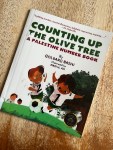
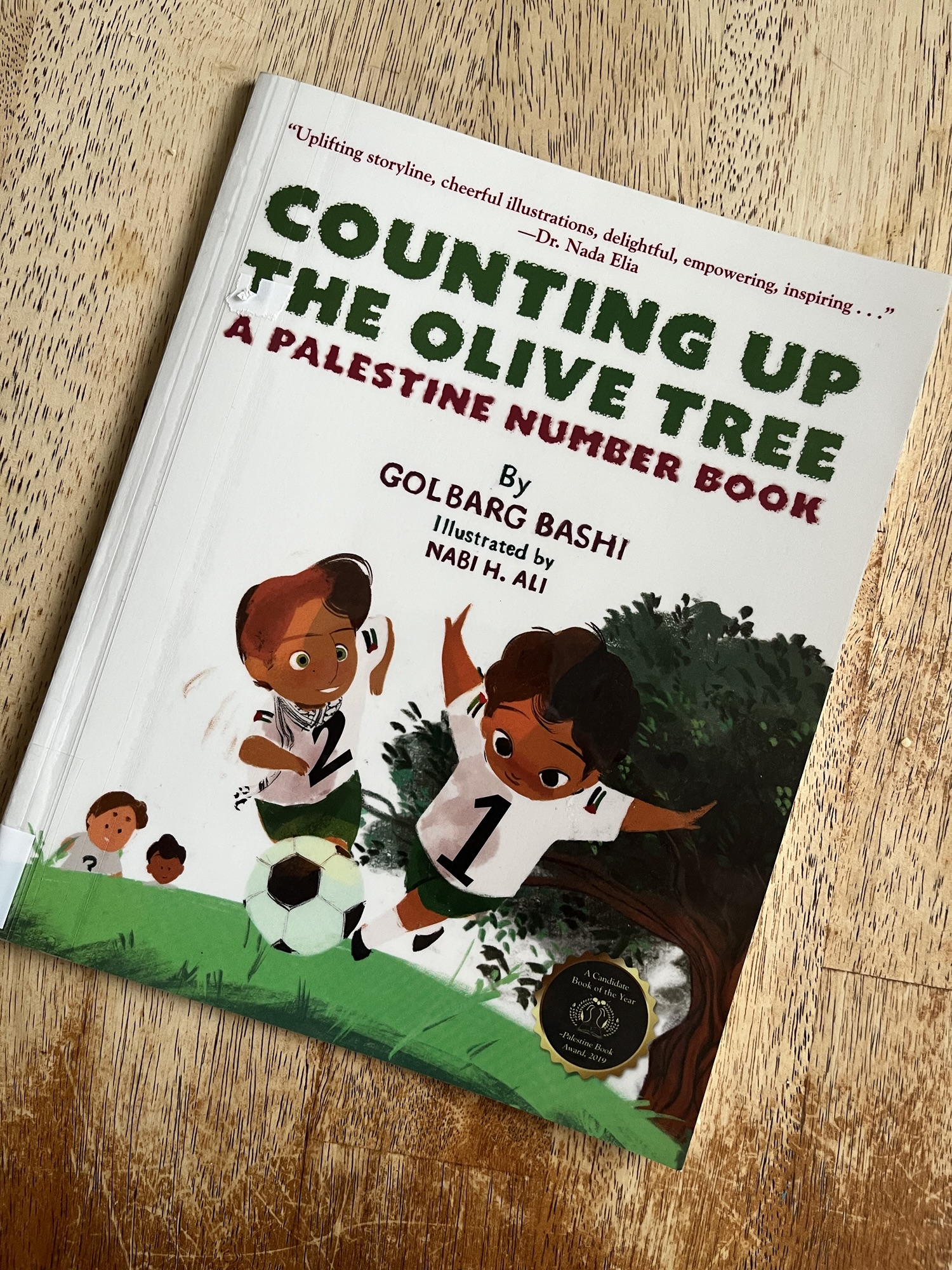
Counting Up the Olive Tree: A Palestine Number Book by Golbarg Bashi illustrated by Nabi H. Ali

Standard
Counting Up the Olive Tree: A Palestine Number Book by Golbarg Bashi illustrated by Nabi H. Ali

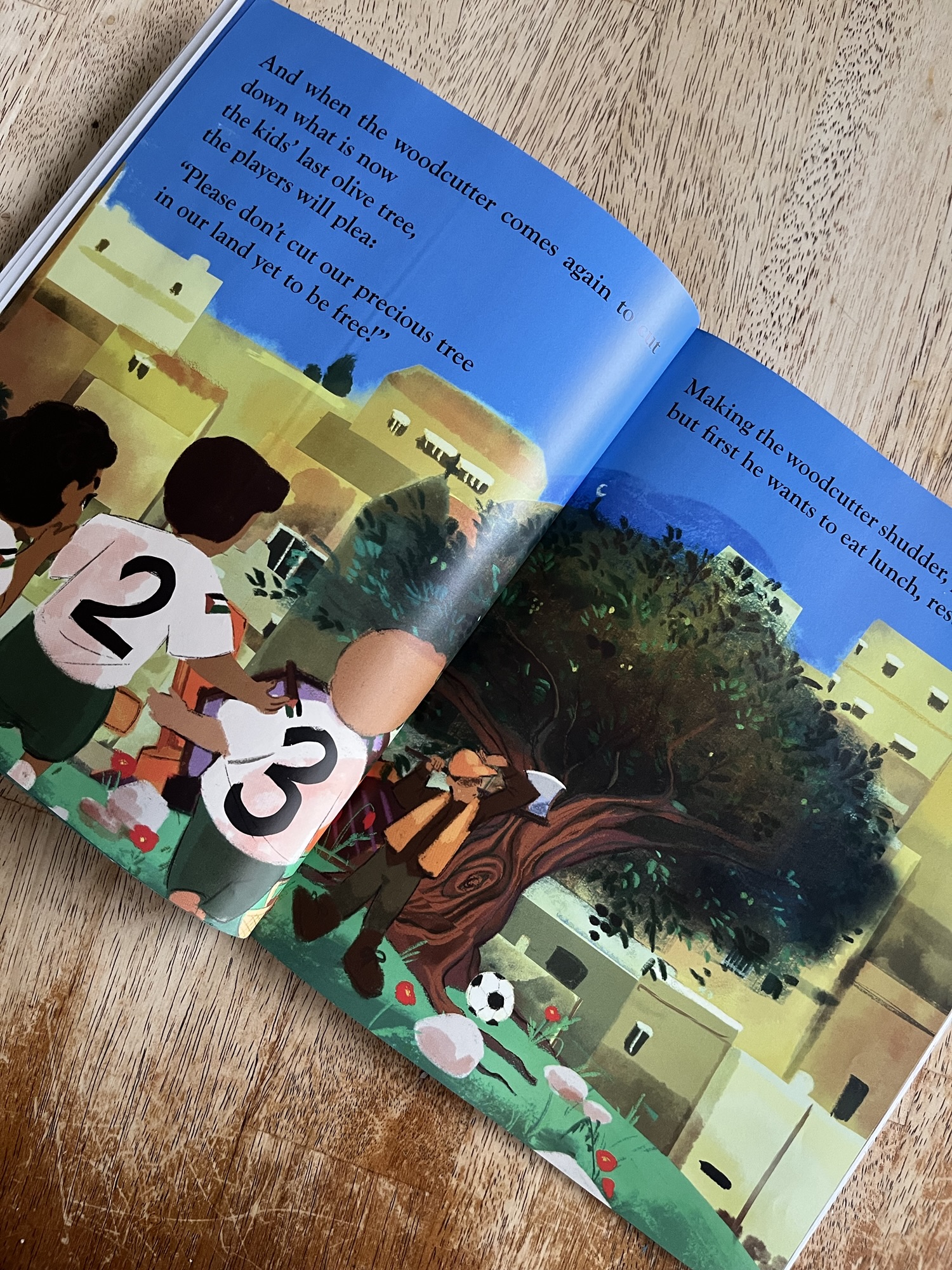
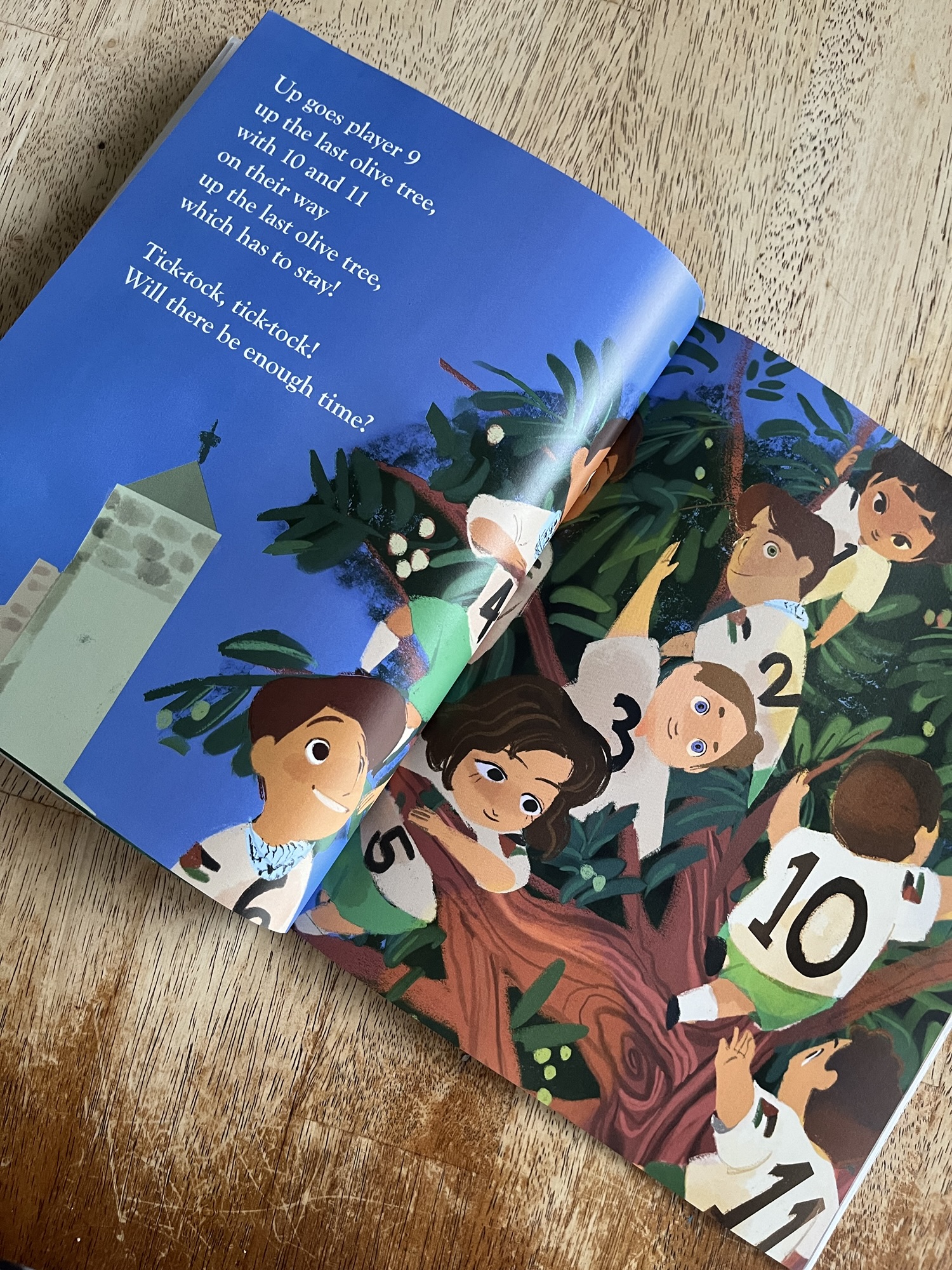
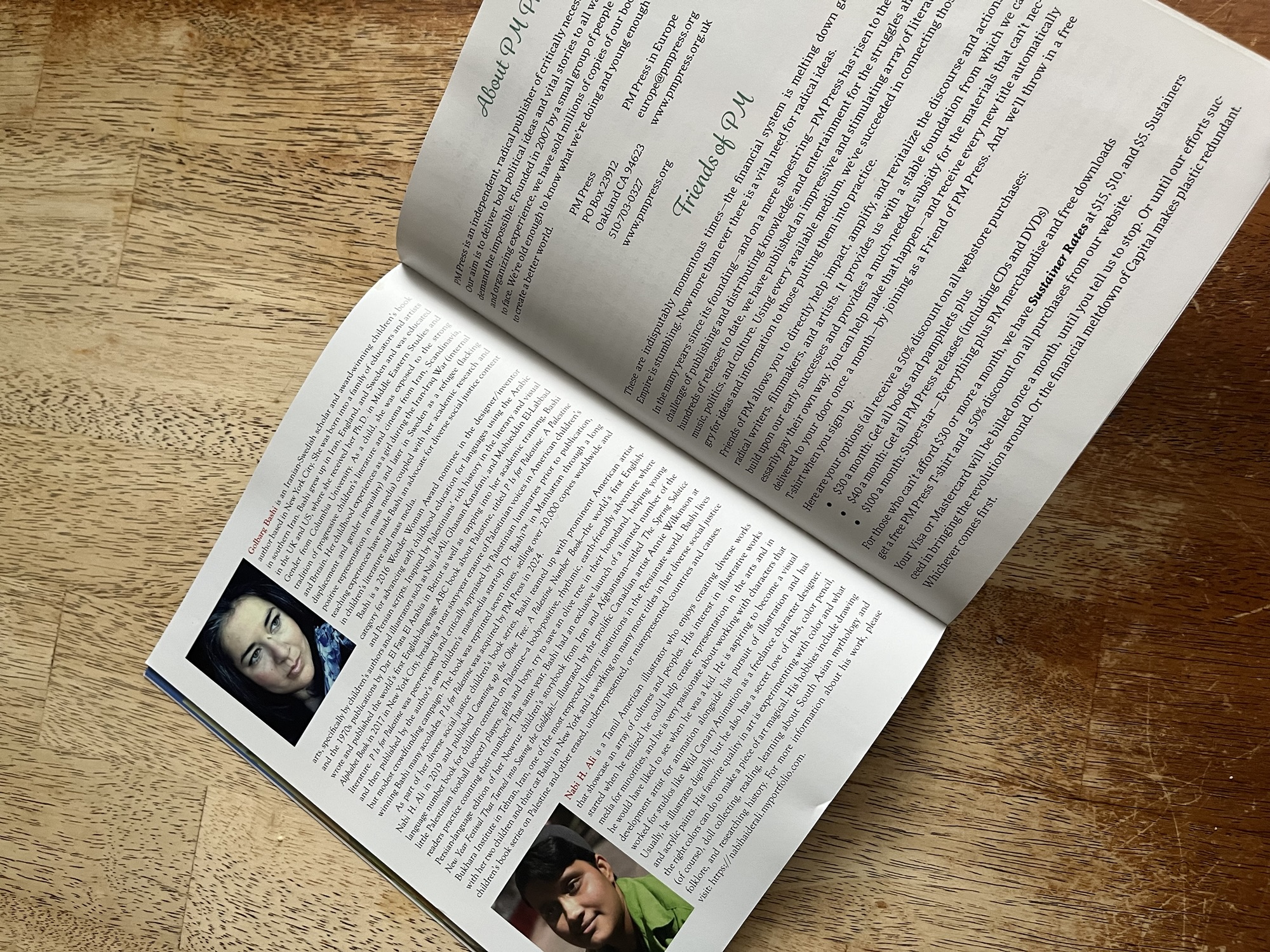
I love the idea of this book: kids saving a tree by working together, set in Palestine and calling for freedom, homage to “Chicka Chicka Boom Boom,” the girls’ soccer/football team providing reinforcements,  but alas the words are muddled, the rhyme painfully forced, and the counting of players in positions, a little awkward. I think the point is fun with numbers, but a little plot of why the woodcutter is called to cut the tree, or who hired him, and thus why he feels the burden of apologizing, would have really gone a long way to make the book cohesive. I also wish the backmatter was more about Palestine and the destruction of trees rather than the lengthy bios of the author and illustrator.  With a little telling of the story and not reading the words as written, editing as you go, and some practice, the book can make for a decent read aloud and provide teachable moments about Palestine, teamwork, resisting, and soccer.  If you really work to sell it,  the book and the numbered soccer players can also be a bit of silliness and fun too.
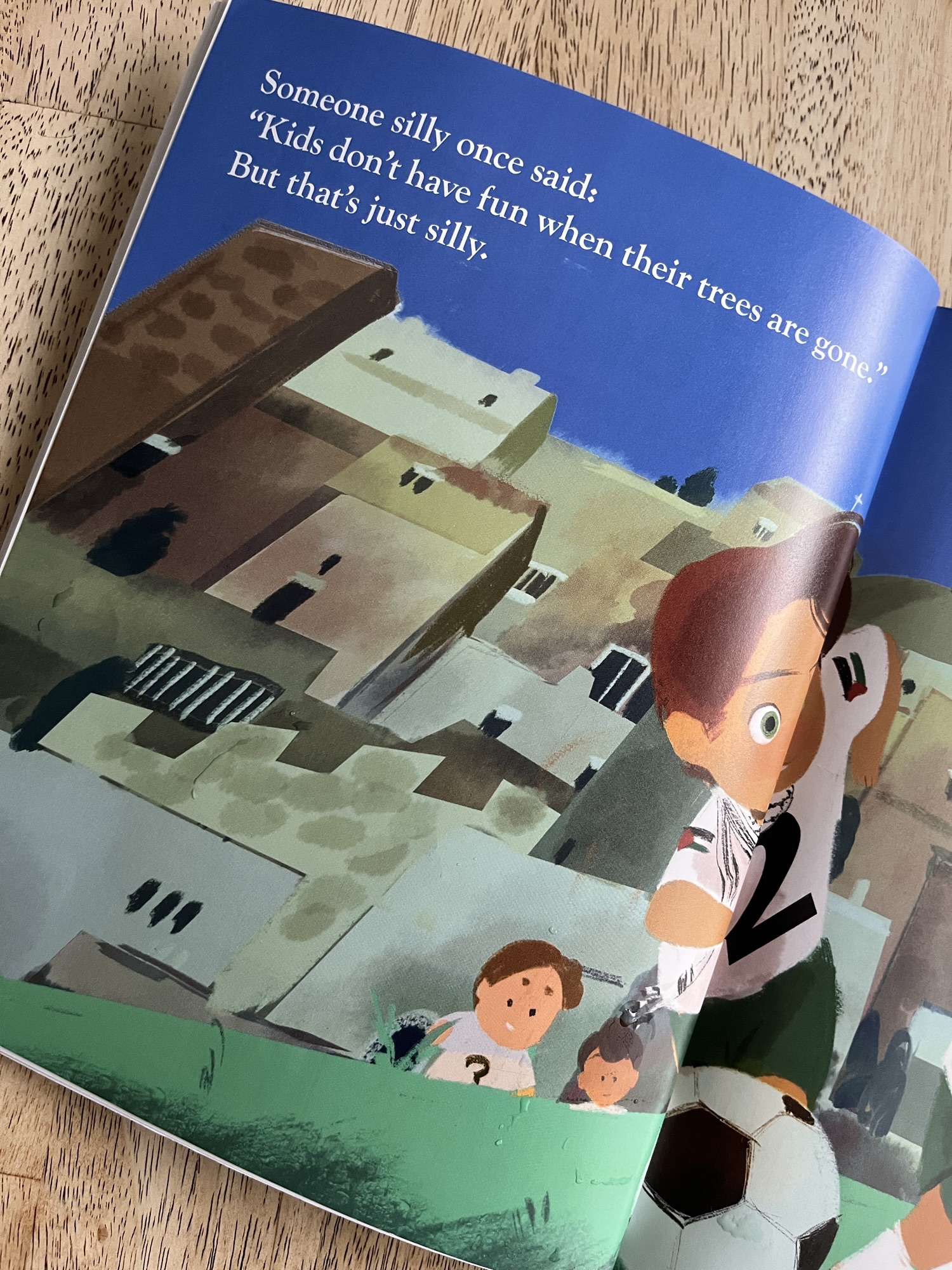
The book starts horrendously.  The first page, or rather the first two lines should have been the inscription and the third line completely removed, as the first page makes no sense.  Had the story started with the second page and the “let’s play ball” sentiment, readers wouldn’t immediately be confused and off put going in to the story.  “Someone silly once said: ‘Kids don’t have fun when their trees are gone,’ but that’s just silly,” un no that isn’t silly, it is actually the point of the book.

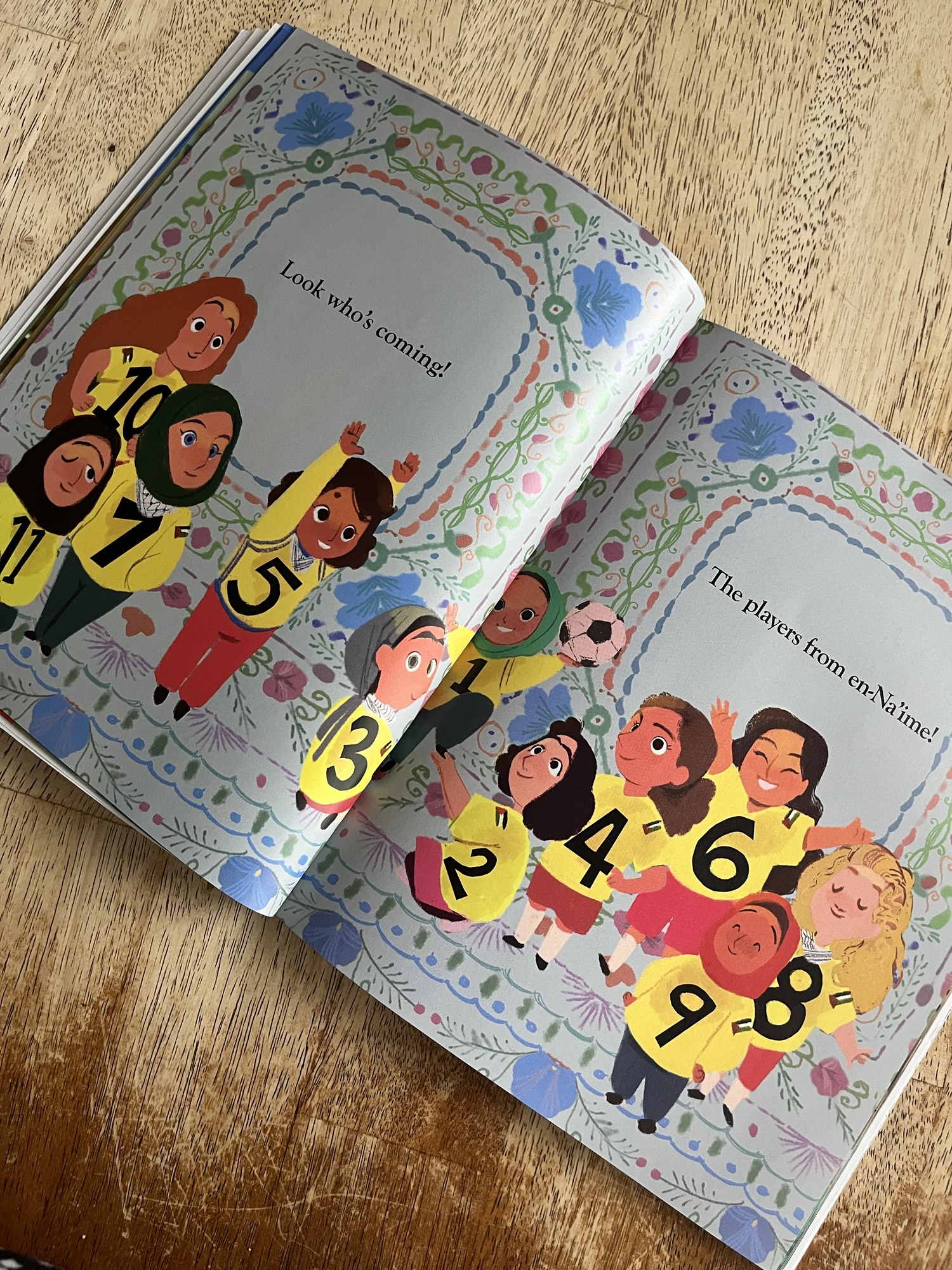
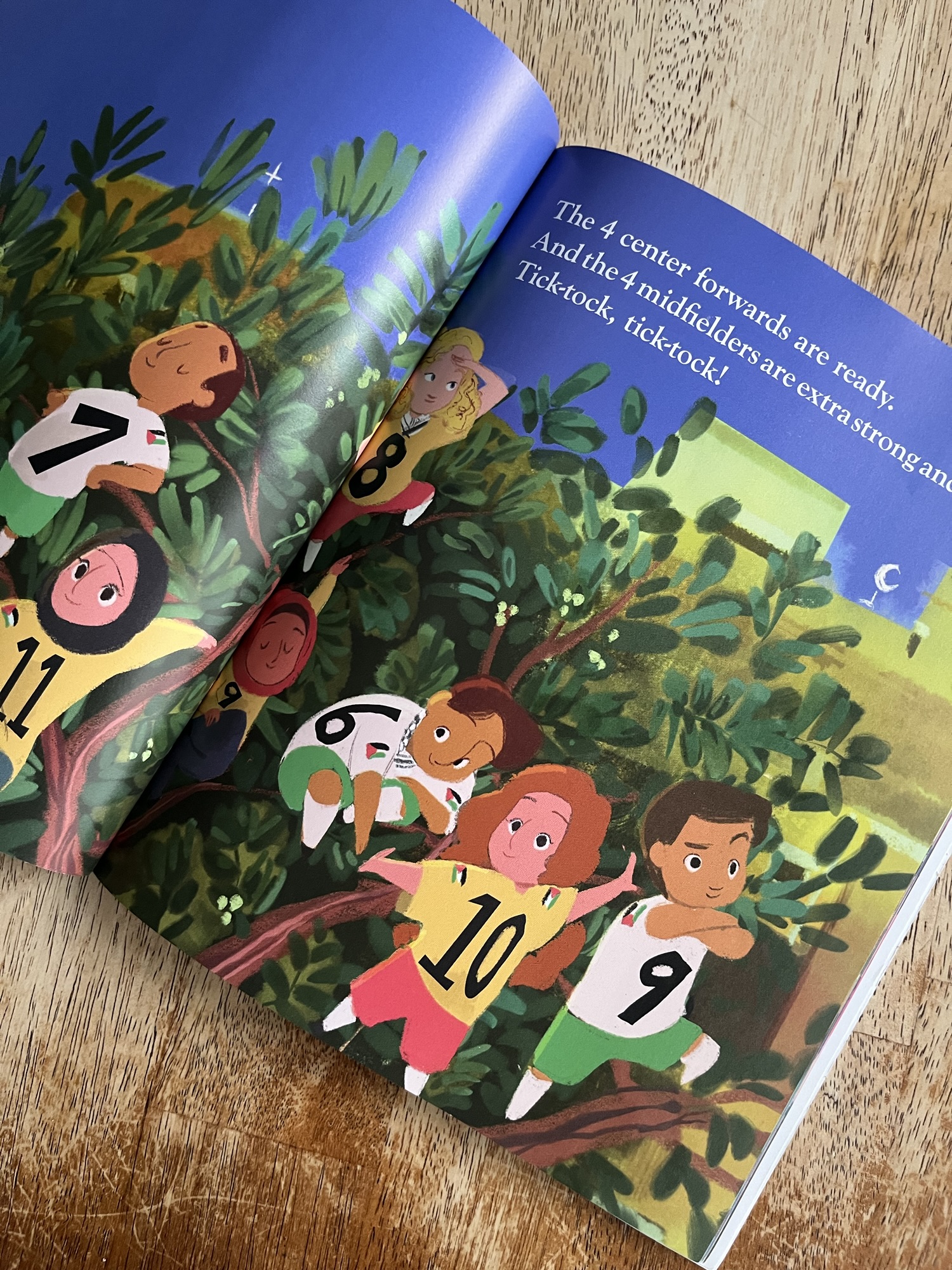
The remainder of the book is in fact the soccer/football team climbing up the tree to keep the woodcutter, who is sleeping, from chopping down their olive tree when he wakes. Eleven players going up to protect, and with the girls team joining that makes 22.  Two goalies, a whole slew of defenders, and forwards, and midfielders, and when the woodcutter awakes, he has a whole lot of people to apologize to.

As to why the woodcutter was there, why the change of heart, why the need to apologize, why there is only one tree in the first place, and why the kids love this tree, sigh, we will never know.  Free Palestine, though, and Save the Trees.

The book is not OWN voice for the author nor illustrator, and there is no religion in the book save a few hijabs in the illustrations and a masjid and church lingering in the background.
P is for Palestine: A Palestine Alphabet Book by Golbarg Bashi illustrated by Golrokh Nafisi

Standard
P is for Palestine: A Palestine Alphabet Book by Golbarg Bashi illustrated by Golrokh Nafisi

p for pale

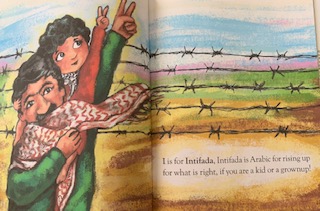
I first heard about this book maybe a year ago when it was making waves for including such passages as “I is for Intifada, Intifada is Arabic for rising up for what is right, if you are a kid or a grownup!” The book was in limited supply however and hard to find.  Recently a 2nd edition came out and is widely available in major outlets. 

IMG_2401

The book follows the well established genre of giving each letter in the alphabet a page to depict in picture and words details about a given subject.  The form usually rhymes and appeals to little kids learning about something specific, and adults, who enjoy the topic at hand.  

IMG_2399

While this book is fabulous because it exists, and praiseworthy because it celebrates Palestine, Christmas and Eid and the birthplace of Jesus and Lebneh and Quds and olives and grape leaves and everything else that makes Palestine so close to one’s heart, the stanzas themselves are really forced and inconsistent in rhyme and meter.

IMG_2400

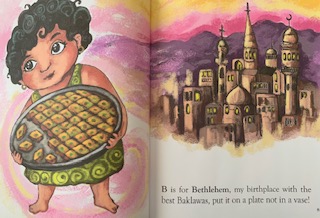
Granted, one doesn’t buy or even pick up a book like this for its literary merits, but the text is really a bit all over the place.  “Can we sing the ABC anywhere? With a woolly bear or in thin air? L is for Labneh is like yogurt.  I eat it for lunch, wearing my loafer! B is for Bethlehem, my birthplace with the best Baklawas, put it on a plate not in a vase! K is for Kuffiya, the best kind you can hang on a hook in Hebron souk! E is for Eid, it means Festival, like the Muslim Eid al-Fitr when we eat enticing eats, get excited over gifts, and enjoy seeing out extended families. J is for jesus, Jesus was born in my hometown (Bethlehem), not Jamestown!”

IMG_2403

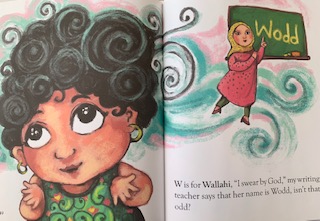
I of course overlooked some of the awkwardness because the illustrations are lively and beautiful and the parts I thought needed explaining, I chalked up to me not being Palestine, nor having visited there.  

Many of the passages are touching and memorable and make the book so important.  M is for Miftah, Key of Return…Mama’s Mama, and my Jiddah’s Mama’s, for which I yearn! T is for Thob, a traditional dress wtih tatreez (embroidered pieces).  Takes time to make, with thousands of tiny threads, if you please!

IMG_2405

There is an Appendix in the back, giving a tad more information on the main idea mentioned for each letter.  There is also a Publisher’s note.  While there was some controversy that the book is anti Semitic or spreading propaganda, I think the book comes from a place of love and culture.  There is Christian and Muslim concepts and a character named David making grape leaves.  It does not mention Israel or Zionism blatantly, which I think shows that Palestine has its own culture and isn’t solely defined  by the crimes committed against them.  Interestingly, the author is from Iran.