Tag Archives: death

Unlikely Friends by Sahar AbdulAziz

Standard
Unlikely Friends by Sahar AbdulAziz

unlikely friends.jpeg

Another wonderful book by a Muslim author that doesn’t discuss Islam, but is expertly written and such a great read, that I wanted to highlight it here on the blog.  At 293 pages and involving a teen character I was really on the fence if this would qualify as “young adult,” so I reached out to the author to ask, and she, mashaAllah, responded! Unfortunately, she felt it wouldn’t quite qualify, even though it is a bit of a coming of age story.  So, why am I still reviewing it?  Because I think high schoolers (muslim and non) would really enjoy the book, and with finals nearly over, anyone in that demographic looking for feel good story that is pretty clean (Ramadan is nearly here), I think this book would be a great choice! And full disclosure, yes I’m biased, the librarian is the hero!

SYNOPSIS:

Told from multiple points of view the linear story brings together two introverts, Irwin and Harper, that have a lot of real and serious issues pressing them.  Their traumatic back stories are slowly revealed as the two unlikely friends come together to deal with their current predicaments.

Irwin is an old ornery librarian that doesn’t like people or change.  He is set in his ways and the stubborn Harper, a young high school student for some reason latches on to him.  He tries to shake her, but finds he is genuinely concerned about her and despite his better judgement finds himself helping her and getting tangled in to her messy home life.  

Surrounded by a cast of developed and diverse characters the fictional world of Irwin and Harper is both believable and realistic.  Irwin’s author neighbor is losing her memory, slowly, but noticeably, his deceased fiance’s daughter passes away shaking his routine, and his colleagues at the library are funny and annoying in their own ways.  Harper’s father is released from prison and her mother must make a stand to resist falling into old drug habits, all while trying to make ends meet and put food on the table.

WHY I LIKE IT:

I like that it reads so very smoothly.  You feel Irwin’s shell cracking and you see that he is so much more than just a stereotypical grumpy old man.  You also see Harper’s mother, Olivia concerned that her daughter and an old man are becoming friends.  You probably could predict how things will end up, but the way it is written you aren’t really worried, you are just enjoying getting to know the characters presented.  Overall, it really is a great lens to remind us all that friendship, real friendship is incredibly valuable.  In a world of filters and digital everything, sometimes our humanity is all we have.  I also like that people are given the chance to change and grow, the group of main characters are not stagnant or one dimensional, their challenges and dilemmas are brought in to the open and you feel for them as you would a real person.

The only two questions that stood out as inconsistent with the characters and story development are why didn’t Harper just get a job to help out her and her mother’s financial situation? Plenty of teens have jobs, so that seemed a little off to me.  Secondly, Olivia works at a supermarket presumably or a market of some sort, so it would seem that an employee discount or nearly expired food section would make their food insecure situation a little less severe.  Granted its fiction, but these two jarring concepts seemed to hold me back from completely being swept away.  

FLAGS:

The book is clean in terms of what is explicitly conveyed.  The details that make it possibly/probably not suitable for younger readers are the drug histories of Harper’s parents and what they did to acquire drugs, what they did when on drugs and what was allowed to take place around Harper when she was a child.  Darren, Harper’s father, believes that Harper was sexually abused by someone when he was high and this memory haunts him.  It isn’t explicit, but it is there.  Some mention of Olivia waking up in dealer’s beds is again mentioned in passing, but not detailed.  One could imagine two druggies trying to raise a child and get their next hit, but a lot of the understanding will come from the prior knowledge the reader has of such scenarios, not from the text itself. 

There is the idea that physical abuse was common between Darren and Olivia and is shown in Darren’s temper when he throws a vase against a wall after coming to Olivia and Harper’s home when released from prison.

There is some mention of Irwin’s fiance’s relationship with her ex-husband in that he cheated on her regularly.

So definitely, the book has elements for older readers, but the way the topics are discussed: drugs, abuse, infidelity, are not glorified or even detailed, more they set the stage in defining the current conflicts the characters face, the pasts they must over come, and the environments that they want to improve upon.  I think 15 and up could handle it.

TOOLS FOR LEADING THE DISCUSSION:

I’m thinking to recommend this book to the Sister that runs the high school book club.  I think there would be so much to discuss and myths to dispel that an older group would benefit from the experience and work the author does and writes about in this book.

Plus the fact that the author so easily responded to me, might inspire a group of teenagers to reach out and be equally inspired.

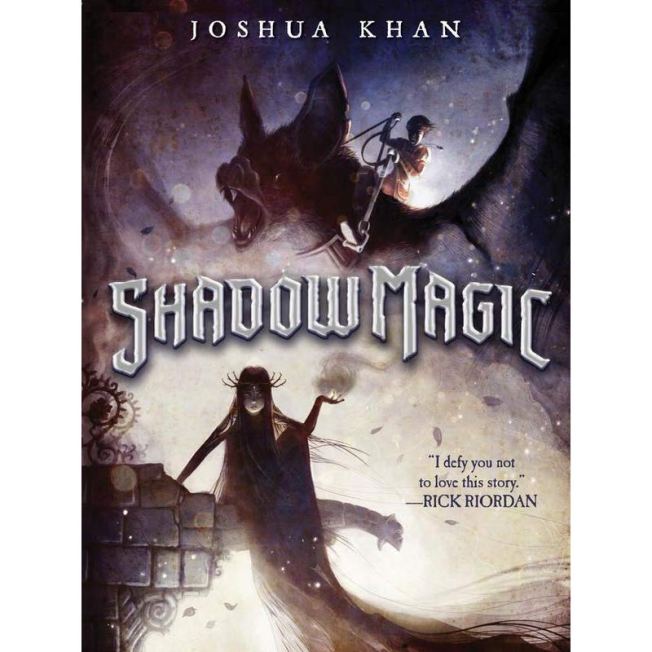
 

Shadow Magic by Joshua Khan illustrated by Ben Hibon

Standard
Shadow Magic by Joshua Khan illustrated by Ben Hibon

shadow magic.jpg

This book is fun and enchanting, whether you read all 321 pages and fall in to the occasional illustrations and pour over the map, or listen to the audio and get swept away.  It is an AR 4.1, and the first in the three part series.  Told by the point of view of two characters, the book’s short chapters and high action speed are expertly crafted to keep suspense and interest high, while maintaining solid world building events and making the character’s history come alive.  There isn’t anything Islamic in the books, save some critical and cleverly named characters and ideas, but the author in interviews has said he is Muslim, and that is enough for me to share a book I thoroughly enjoyed on this blog!

SYNOPSIS:

Thorn is a fugitive kid, on the run from something left intentional vague and possibly the son of an outlaw.  Raised on the edge of Herne forest (earth), he is good with animals, feels comfortable in nature, has a soft heart for doing what is right, and isn’t afraid of hard work.  He finds himself being sold as a slave to the executioner of Gehenna, Tyburn, and is off to Castle Gloom where he will meet and befriend the new ruler of House Shadow (death/darkness), Lily.

Lillith Shadow’s parents and brother have been murdered and she is now the ruler of Gehenna.  She is also still a child and events around her require her to grow up fast.  To end hostilities with House Solar she is to wed Prince Gabriel, a pompous idiot, who she despises in principle and in person.  

When an attempt is made on Lily’s life, Thorn and an unexpected ally, K’leef a Prince from the Sultanate of Fire, must work together to figure out who is trying to kill Lily, possibly who killed her parents, where Thorn’s father is, who is raising an army of zombies, and now how to get out of this wedding without causing continued war.

The history of the six founding houses that make up this world, and their elemental magical rules and limitations as magic dies out with each passing generation, come together and a tale is told that contrasts easy everyday language in a mystical proper world of royalty and dukes, colored by the dark of death and necromancy and shadows, while somehow remaining light, and funny, and completely relatable as the kids come of age and learn who they are and what they are capable of doing and accomplishing.

WHY I LIKE IT:

I love that the book is clean and that it has both Thorn and Lily’s perspectives to move the story along and give insight into the characters.  I love the world building and how the history of each of the houses is so well thought out and clear.  

“The whole idea of House Shadow is based on the Middle-East. Lily’s dad’s name is Arabic for the devil. Her mother’s the great villainess of the Old Testament and Lily is Lilith, a Hebrew demoness. The view people have of House Shadow mimics the fear the West has of East, and specifically Islam. For that reason all of House Solar is named after archangels. . . Some houses were easier to establish than others. House Djinn was fire as djinns are (out of Arabic lore) beings of smokeless fire. Herne’s an ancient English forest deity, so again a pretty easy fix” (http://www.cybils.com/2017/03/interview-with-joshua-khan.html).

A big plot point is that Lily is magical, and it is against ancient laws, meaning all six houses agree, that women cannot practice magic.  The irony is great, in that even kids can pick up on the fact that the six brothers and founders of the magical houses acknowledge that the source of their magic comes from their mother, a woman, and the hypocrisy of it all is frustrating.  I love that three very different characters have to work together, and pick their battles, it really is a testament to the strength of friendships even with people so very different than yourself.

FLAGS:

Pretty clean, not recalling anything cringeworthy as we listened to it in the car (kids ages 3, 8, 9, 12).  The book is dark in that it takes place in Gehenna and there is talk of the undead and bringing the dead back to life and they really celebrate Halloween in their own dark way.  There is murder and death and assassinations, but it isn’t overly morbid or gory or violent.

TOOLS FOR LEADING THE DISCUSSION:

I think I’ve already 90% decided to start next years middle school book club off with this book.  It is fun and engaging and the discussions would connect this fantasy story to so much in the kid’s lives and greater world that I get giddy just thinking about how fun a discussion it will be.  Sadly the school year is wrapping up and I’ll have to wait until fall.  Here are some of my favorite interviews online with the author:

http://www.cybils.com/2017/03/interview-with-joshua-khan.html

https://www.greenhouseliterary.com/authors/joshua-khan/

Author’s Website: http://www.joshuakhan.com/


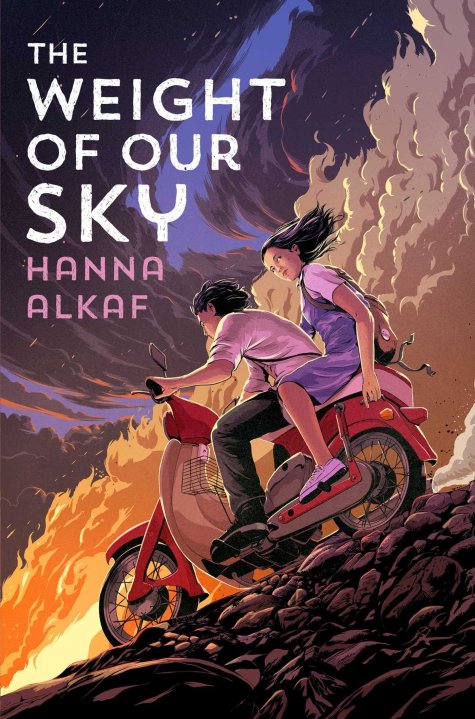
The Weight of Our Sky by Hanna Alkaf

Standard
The Weight of Our Sky by Hanna Alkaf

sky.jpg

This brand new middle school read is like a quick picture of a young girl’s life.  You get to know her as she is, you briefly meet those around her, you see a week or so of her life and then the book ends and you aren’t the same.  You wonder about her, you worry about her, and you find yourself wanting to reach out to those that maybe remind you of her.  Truly a wonderful book of 277 hard-to-put-down-pages that give insight into Malaysia in 1969, OCD, and the beauty of people willing to show their humanity in dire circumstances. My only concern is that I don’t know that there is anything relevant to the typical target audience western reader that would compel them to pick up the book and see it through.  All the reviews online that praise it seem to be from people older than the YA demographic.  Yes, I really enjoyed the book, but I know who the Beatles are, who Paul Newman is, I am a Muslim, I recently went to Kuala Lumpur, Malaysia and saw the diversity of religions and culture, I know people struggling with mental illness to the point of disability and the exhaustion that ensues; yet I don’t know if I could convince my 12 year old daughter to read it.  If I forced her, I don’t know that she would find the book as beautiful and powerful as I do.  I think a lot of it, she simply wouldn’t get, and even less of it she would relate to.  I probably will force her to read it at some point, and I’ll happily revise this review and swallow my assumption about what the youth these days can handle and identify with, but until then, please let me know if you are in the YA demographic and what you thought of the book. Thanks.

SYNOPSIS:

Melati is a 16 year old Malay girl in 1969, living with her mother, a nurse.  Her father, a police officer, has recently died, and with his loss, she has become crippled by OCD and the fear that her mother too, will die.  Counting numbers move from consoling her and keeping the horrific thoughts at bay, to becoming almost like an incantation that must be performed nearly constantly to keep her mother safe.  As race riots between the Chinese and ethnic Malays engulf the city one fateful afternoon when Melati and her best friend Safiyah are at the movie theater after class, watching the latest Paul Newman movie, the reader is shown how even in calm situations, keeping the OCD from consuming her is a full time job.  With no knowledge of treating and even diagnosing mental health, Melati tries to hide her visions and ticks from those around her as it has alienated extended family, and worries her mother.  The conclusion instead is that she is being haunted by a djinn and thus her mother takes her to different imams and healers, to no avail, and knowing that the common treatment at the time is to have those suffering carted off to an asylum and experimented on, something Melati’s mom, Salmah vows never to let happen, Melati suffers alone.

Once the movie ends, gangs enter the theater and Saf and Melati are separated.  Melati is saved by a stranger, a Chinese lady named Auntie Bee, and Saf is left at the hands of a Chinese gang.  Violence erupts, lasting for days, and curfews prevent Melati from searching for her mother.  While Auntie Bee and her family care for her and take in other neighbors, it is made clear that tensions between the two ethnic groups are high and have been for some time, but that good people exist on both sides too.  People who see people as people not just their culture. 

It is a YA book, so there is a little suspension of reality to reunite a number of the characters and give them the happiest ending such a gritty book can muster, but the author does warn the reader before the story begins that this book has violence and anxiety triggers, and death, she actually urges those that will be inversely affect by such things, to not read her book.  And it makes sense, it is graphic at times, and characters also die, and the tone is powerful, and the OCD is intense.

WHY I LIKE IT:

I love that the book embraces all its themes wholeheartedly, there is no happy ending, or magic cure for Melati’s illness, within one family there is racial tension and beautiful examples of selflessness, that two people can save each other but not like each other, and that families can be really disappointing.  At times the presence of the djinn is so annoying that the reader feels how crippling it must be to Melati, as it cripples the story as well, the balance is perfect though, it doesn’t drag the book to the point of wanting to put it down, if anything it makes you cheer harder when her little victories take place.  

I like that there isn’t a huge sappy reunion, because the danger is still going on and the characters presence of mind to the tasks still at hand is actually a subtle, yet powerful nod to the hope that Melati and her mom will be ok.  Can you tell I’m trying not to spoil too much, just suffice it to say, the women in this book are strong and determined and inspiring.

I like that Islam is present and that Melati has to grapple at times with her faith to find where it lies and how she accepts some of the events that have taken place, and the djinn fighting to consumer her. In many teens it is a right of passage, but for her it is amplified by the horrors she has lived through and seen and her own mental state.  Clearly the author is Malay and Muslim as she sprinkles words and phrases and traditions seamlessly into  the narrative that makes it flow with authenticity and vibrance.

I wish at times we knew more about the history of what lead up to the violence, or maybe even more about some of the characters, but alas I think this is Melati’s story and those that have turned their back on her and her mom really don’t deserve the ink needed to share their roles.  Some details about the resolution of the riots or how the country came back together might be nice, but a quick Google search can quell any curiosities.  I appreciate that the writing is smooth and intentional and well crafted and not a distraction to the internal turmoil and story being conveyed.

FLAGS:

Violence, racial tension, graphic death, anxiety triggers.  Melati and Vincent hold hands, it is a bit fuzzy if it is out of reassurance or something more.  There isn’t explicit sexual violence, but Melati does see a soldier pressing his body against a school girl who is of a similar age to her.  

TOOLS FOR LEADING THE DISCUSSION:

I want to do this as a book club, but I don’t know that the students will read it voluntarily.  I may have to bribe them and get permission from the school counselor.  I think they would benefit immensely from the insight in to mental illness and feel comfortable talking about their understanding of it, being it is presented in a fictional format.  I think the violence, because it is rooted in history can be understood and be discussed.  

Interview with the author: http://richincolor.com/2019/02/interview-with-hanna-alkaf-the-weight-of-our-sky/

Author’s website: https://hannaalkaf.com/the-weight-of-our-sky-2/


Whichwood by Tahereh Mafi

Standard
Whichwood by Tahereh Mafi

whichwood.jpg

I am admittedly late to the Tahereh Mafi fan club, and to rectify that I checked out all her books from the library (There’s quite a few).  Yeah, I have four kids and not a ton of time, so I decided to start reading Whichwood thinking then I could review it here due to it’s jacket claiming “Persian Fantasy,” plus noticing characters having names tinged with Islamic culture: Benyamin, Roksana, and Laylee Layla Fenjoon.  So, while I guessed the 368 AR 7.5 wouldn’t have anything Islamic, I figured it would at least give Muslim kids a taste of themselves in some of the words and representation by the hijab wearing author. And I think I was right. 

SYNOPSIS:

Laylee is a mordeshoor, which means she is responsible for caring for the dead and moving them to the next world. Its hard physical work, and since her Maman has passed away and her Baba has gone a bit crazy, the grueling job is left to her.  She is desperately tired and overworked and behind, and the people of the town, Whichwood, abuse and ridicule her relentlessly.  Laylee’s world is a frozen wonderland filled with odd characters and occurrences and magic of all random and gruesome sorts.  Two children, Oliver and Alice, from a different magical land show up unexpectedly to help Laylee with her burden, but Laylee is not well and is on the verge of death, and their help is not initially wanted.  As Laylee starts to die, it will take her living friends, with their variety of magical gifts to bring her back to life, and the dead ghosts that she can speak with, to help her live a life worth enjoying.

WHY I LIKE IT:

I love that Rumi is mentioned and quoted.  I love that words such as hamam and halva are tossed in, it gives flavor to a book that doesn’t need it, but is enhanced by it none-the-less.  The world created is so bizarre, that I was pleasantly surprised how the author kept the descriptions from becoming confusing albeit at times circular and tedious, the book starts out slow, but speeds up as you progress.  The narrator is telling the tale, and speaks often directly to the reader, which is a literary device that one doesn’t see that often in YA books, and I really enjoyed it.  It kept the book inline and avoided plot holes, as the narrator could just tell you how she knew and keep the timeline of the story intact.  

The characters are amazing.  Laylee is 13 and on her own, washing and scrubbing and pulling nails out of corpses before burying them in the frozen earth.  All while being harassed by the ghosts around her.  She has dropped out of school, the community doesn’t even pay her financially or with respect for the work she does, and yet she plugs along.  The reader wants to feel sorry for her, but there isn’t time, there is a lot going on.  Alice’s magic is she can color the world, and Oliver has the gift of persuasion.  Benyamin, Laylee’s closest neighbor on the peninsula, has insects and spiders that live in him and that he can communicate with.  His ailing mother can speak with whales, and rides inside them as a form of transport.  Yeah, it’s a bit nuts.  And because it is so fantastic, at times the story isn’t predictable or even really seeming to move to a clear climax, there is just so much to take in.  

I don’t really even know what to critique in terms of what I wish I would have seen or felt was lacking because there was no expectation.  The book is a companion book to Furthermore, which I think I will do as later as an audio book with my kids.  Perhaps once I read that one I’ll know more about Oliver and Alice’s gifts as the book is about them, as I do have some lingering questions about their whimsical abilities and backstories.  I would have also like a bit more on the mordeshoors, how they are trained, when they marry what enchantments that entails etc.  Seems like the concept in its most basic form could have benefitted from a little more detail.

The book is dark, and there is some darkness in Laylee, and I think that is what makes me like her as a character.  There are some emotions that she really has to work through, and I like that it is fuzzy and messy, I think the target audience of the book will really identify with some of Laylee’s internal struggles. The heart of the book is solid and is very grounded in reality even with all the fantasy on the surface.  I love that Laylee isn’t affected by what other’s expect her to be, there is amazing strength in this being brought to the forefront.  Also, the crystallization of giving someone what they need, not what you think they need is a lesson that will hopefully linger in the readers. 

FLAGS:

The book could be seen as grotesque, but I didn’t find it overly icky, I think middle school and up will  be perfectly ok with all the death.  Oliver is completely star struck and in love with Laylee and her beauty.  But, the book hints only at a future romance.  Similarily, Benyamin and Alice might have a future, but it isn’t mentioned more than a crush and isn’t dwelled on or annoying to the action of dead bodies coming out of their graves or anything like that.

TOOLS FOR LEADING THE DISCUSSION:

Author’s Website: http://www.taherehbooks.com/

A youtube review: https://www.youtube.com/watch?v=bgwtFqiFIi0