Tag Archives: Australian

Courting Samira by Amal Awad

Standard
Courting Samira by Amal Awad

img_2245-1

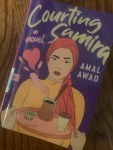
Authored by a Palestinian-Australian and featuring a protagonist of the same background, this adult rom-com, is pretty halal all things considered.  The book is not preachy, hijab and not drinking alcohol are all discussed as being religious decisions, but there is no insight as to how or why they are part of Islam, they just are, and because the characters are Muslim that is what they do.  I found myself reading while cooking, which means I was invested enough to keep reading, but if I missed a line or two, to pull something out of the oven, I didn’t need to go back and find my exact spot.  It reads a lot like a Confessions of a Shopaholic or Bridget Jones Diary, Islamically it is on par with a Hana Khan Carries On or Finding Mr Perfectly Fine, where the characters are Muslim and that sets parameters, their culture adds the flavor, and the love triangle and writing adds the plot, yeah it is tropey, but most people wouldn’t be picking this up for literary insights, it is meant to be fun, and it is.  Three things bothered me with this book that gets a lot right. One, the cover, I find it ugly, additionally it mentions multiple times in the book that her eyes are blue, clearly on the cover they are brown.  Second, the labeling of “moderate,” “conservative,” “liberal,” and “fundy” Muslims.  There isn’t internalized Islamophobia, every one of the main side characters practices Islam in their way, the other characters accept it, and the stereotyping that the religious one is mean or critical is not present at all (alhumdulillah), the labels just bother me.  Finally the kiss at the end before marriage, they are engaged, and it probably is still better than many YA Muslamic romances out there, but as an Islamic school librarian, I have to mention it.

SYNOPSIS:
Samira works at a Bridal magazine, writing on occasion, but mostly getting coffee.  The book opens with her mid door-knock, looking at the manga hair of a yet another prospective husband, come to drink coffee and eat biscuits with his parents to meet her and hers in another meeting that will end with no match made.  Her parents don’t force her, she plays along willingly, venting to her cousin Lara who refuses to humor her parents, and her co-worker Cate who’s own dating dramas show Samira she isn’t really missing out.  When evil cousin Zahra is suddenly getting engaged, Samira is sucked in to familial obligations and involvement.  Menem, a guy she met at a team building activity, works near her, and they keep meeting, the icing on the cake is that his brother is Zahra’s groom. As things start to heat up with Menem, old family friend Hakeem starts acting weird, and Samira finds herself caught in a love triangle.

WHY I LIKE IT:

There are a lot of tropes of being 27 and unmarried, being a disappointment for having a liberal arts degree and the like, but at least there are not mean parents, forced religiosity, or the what will everyone say storylines present. A lot of the fun is found in the references to pop culture, that surprisingly didn’t bother me.  I was, however, annoyed when suddenly 80 pages in the fourth wall was broken.  It broke the tone, but it didn’t become a regular things, so I carried on.  A side character asks if Samira’s actions are Muslim or Arab and I like that, that distinction is presented.  I wish there was more culture, Samira is Palestinian, Menem is Lebanese, but there isn’t a lot of cultural sprinklings throughout that are specific to the two cultures. There are also a lacking of salams/assalamualaikums in their daily interactions.  It does mention Samira praying quite frequently, which I most definitely appreciated though.

Plot and character development was decent for the genre.  The pacing makes this book a quick read, I read it in two days (while cooking).  I never quite felt a connection to Lara, or rather why Samira and her were so close other than for a lack of options.  She just kind of annoyed me throughout, and never seemed to be a great friend (cousin).  A few times the book would seem to hint at something and nothing would come from it, take Zahra touching her stomach while picking out ice cream, or why Hakeem says he knows Samira can’t call her brother when she has car trouble.

FLAGS:

A kiss, a few hugs, hints at haram acts in earlier days, alcohol, music, belly dancing, texting, emailing, chatting freely with opposite gender.

TOOLS FOR LEADING THE DISCUSSION:

I wouldn’t use this as a book club book, but I would be ok having it on the library shelf for high schoolers.
You Must Be Layla by Yassmin Abdel-Magied

Standard
You Must Be Layla by Yassmin Abdel-Magied

layla

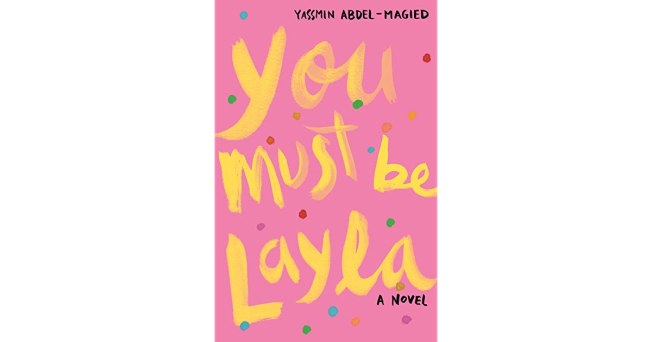
This OWN story, upper middle grades book, is heavy on the pop culture, relatable on the Islamic family presentation and honest in its portrayal of Islamaphobia, yet somehow the tidiness in which everything wrapped up seemed too forced and a bit flat.  At 293 pages, including a three page glossary, the book is a quick read meant mainly for girls.  It involves robotics, academic achievement, and invention, while also discussing crushes, a character coming out to his family and friends, and mention of girls not praying at certain times of the month.

SYNOPSIS:

Layla lives in Australia and goes to the Islamic School of Brisbane. Her Sudanese family: older brother, younger twin brothers, and parents, her Doctor mom and medical machine tech dad, are active Muslims and proud of their culture.  They assimilate to Australian norms in varying degrees, but with all the kids at ISB, Layla doesn’t feel all that different in her school and social life.  Unfortunately she wants more, she wants to be an adventurer, and when she meets Adam over the break and learns about the various opportunities he has it his school, Layla decides she wants to prove herself on a larger stage.  Going in to “shut down” mode Layla has tunnel vision to ace the scholarship and entrance exam and go to a new school.

She gets in to Mary Maxmillion Grammar School and when she goes to meet the board they let her know that the decision to accept a girl like her was not unanimous.  Layla is an immigrant, she is black, she wears hijab, she is loud and proud, and apparently very smart, but as one trustee asks, is she brave?  On the first day of school she arrives late to first period, insults the teacher repeatedly and also makes friends with a group of slightly diverse boys.  At the end of the day however, Peter, a boy who had insulted her earlier, reinforces his disapproval of her being allowed at their school and pushes her.  Standing her ground, she verbal attacks and then head butts the boy in front of a large portion of the school at dismissal.  No one offers any help, nor speaks up when she is suspended for a week, her scholarship and admission put on probation, no one even asks for her side of the story, Peter, is let off completely free, as he is also the son of the Board Chairman.

Layla decides to prove she belongs at the school she is going to win a prestigious robotics competition and since everyone already is on a team, she decides to go for it solo.  The only problem, is she doesn’t know what to invent.  When she returns to school, her friend that she is crushing hard on is acting weird, and she gets caught up in a lie of sorts that serves as both the idea and silliness turned cleverness of the book.  While choking on gummy worms, she says she is working on an edible actuator for her robot, and somehow has to make that come to fruition.

The rest of the book is Layla making a lot of silly errors of judgement: missing classes being in SD mode in the workshop, forgetting to file the paperwork and registration to actually compete in the competition, and leads up to the resolution between her and Peter, learning her crush is gay, and deciding to be herself and proud of it.

WHY I LIKE IT:

I actually like the majority of the book, I really like how Islam is presented and lived.  They pray and say salam and cover, and recite tasbeeha to reflect, and quote hadith very naturally, even how others attack them, and the anger that Layla’s brother Ozzie feels at his inability to get a part time job reads and feels very authentic.  I also like how one of the teacher’s own experience as being a descendant of the forgotten generation and being a first nations ethnicity is woven in.  I felt the side character being gay was added and forced in as an after thought and I don’t know why, as it didn’t show Layla to be a particularly good friend.  She handled his coming out well, but when he was miserable she was wrapped up in her own stuff and didn’t reach out very well, even though he ended up being the spark for her invention.  Her friend at ISB is also an under developed character, that while I get is used to show another side of Layla, in many ways also showed her to be a rather poor friend.

I found the pop culture references annoying, not in and of themselves, but in knowing that they will date and make the book irrelevant in a few short years.  There is a lot of repetition of phrases and ideas that a few times when I put the book down I struggled to re-find my place (I know bookmarks, right?) but certain refrains and paragraphs seem so very similar.  I

There is a lot of good information about Sudan and their food and culture and traditions.  There is also a decent amount about Muslims in Australia.  I like that even within her family there are different views on how much to assimilate, and how much to fight back against perceptions, the fact that there is a lot of gray makes non Muslims and non immigrants reading the book hopefully realize how diverse all people are and to not assume anyone is only one way.  I would have liked more about Layla’s mom and being recruited to come to Australia, and how she was perceived at work, by patients and colleagues.  I also would have liked some sort of resolution about Ozzie and his job search.  Really though my biggest complaint is Layla, herself.  What does it even mean to want to be an adventurer? I like that she is fallible and human and in some ways she does grow, but I felt like her being smart and a go-getter is the foundation of the story, but that she didn’t seem to have much common sense seems a bit off.  Yes she is loud and funny and puts in hard work, but the way she talks to teachers, and misses classes and deadlines, and behaves seems like a disconnect from the pages constantly telling me how smart she is.  To me, part of being smart is knowing when to lash out and when to listen, I don’t feel like her growth arc was all that great, in a nut shell, she changed schools and confronted a bully, that is the story, while not a bad story, it could have been so much more.

FLAGS:

There is crushing, violence, a gay character, mention of alcohol at a party Layla didn’t attend, talk of hooking up in passing and some language.  There is lying but it is acknowledged guiltily, and not familiar with Australian slang, regular use of the phrase, Janey Mack, which according to google is a replacement for Jesus Christ.

TOOLS FOR LEADING THE DISCUSSION:

I don’t know why I wouldn’t use this book as a book club selection.  It just didn’t strike me as something they would benefit from.  I wouldn’t be opposed to someone picking it up and reading it in my house, but I doubt I’ll recommend it to my daughter and she is the ideal reader: she wears hijab, is in 8th grade at an Islamic school, and loves to read.  The book is really not memorable as good or bad, it just fell flat and I doubt I’ll read it again, luckily it only took two sittings to read, so I don’t feel like it was a waste of time, but seeing as I had to pay cover price and international shipping, I kind of regret rushing to buy it.

Teacher guide: https://www.penguin.com.au/content/resources/TR_YouMustBeLayla.pdf