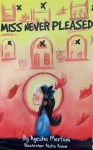

I’ve been accused of being brutal in my reviews. And while I don’t enjoy being mean, I do take some pride in the attribute, as I am paying for these books myself (unless I get them at the library) and it takes time out of my day to write these reviews. I don’t get paid, I do it because I love books, I like supporting Muslim authors and those including Muslim characters in their stories. I take recommending books to others serious, and can’t remember things if I don’t write them down, so here I am. With this review I don’t want to be rude, or overly critical nor do I want to sound pompous and arrogant and privileged, but at the same time, I ordered the book off of Amazon for $7.99 so a fair review shouldn’t hold punches to spare what the author is trying to do and appreciating that she is writing for a cultural audience.
Please believe me it isn’t personal, I am reviewing it based on my same criteria I review all the books through, my own personal bias. That being said, if the reader is living in Pakistan, or has recently lived in Pakistan and English is a second or fifth language the 70 page story with games and activities at the end is decent. Meant for ages 7-12 in that situation, that are intrigued by the moral lesson presented, I think the plot holes can be forgiven. For those without ties to Pakistan, or with loose ties like me (I’m half Pakistani and grew up spending my summers visiting family) the book will be choppy, culturally specific, confusing and lacking.
SYNOPSIS:
The book opens with Habiba being distraught over her world crashing down on her and the pain she has caused her relatives consuming her. She then opens her diary that she has kept for six years, starting back when she was seven recounting how she as Miss Perfect justified her self in incident after incident. Thirty-one incidents to be exact, detailing how she would rat out her cousins, or critique elders food, or her tell her friends how to dress and what to study because it was the honest thing to do. How she would decide who should be friends with who, if her family should go on picnics and how she didn’t want gifts but didn’t want to not get gifts either. All-in-all Habiba is a self righteous awful, awful girl, I don’t think it is her trying to be perfect, I think she is just awful. At the beginning she attributes it to praise she received as a child from her mom and grandma, but for this behavior to have gone on for so many years, I don’t think it was their praise, it was their lack of discipline that leads up to her catastrophic moment. She fails her exams and then learns what her family really thinks about her in a poem, with a way too forced rhyme scheme, left lying around. The story then returns to her undoing and a faqeer coming to cure her and her parents taking the blame for her poor upbringing. She crosses out the title on her journal from Miss Perfect to Miss Never Pleased, to presumably denote how nothing could satisfy her. The story then skips forward to her returning after University as the best international psychologist.
WHY I LIKE IT:
I love the concept of the book, that a girl thinking she was so perfect could realize in fact she is not. The idea is great. I think it is a bit sad that her parents and involved extended family took so little interest in correcting her behavior, but at the same time I didn’t think it believable that she was absolved of all responsibility either.
I feel like this book was a great first draft. It needs some fleshing out, and some continuity corrections. Incident #3 makes no sense, it starts with a party, then her ruining the mood of everyone at the party, and then her crushing her cousin’s dream of being in a play for her own twisted reasons. But the jump from one idea to another seems like something got edited out and the rest of the four-and-a-half-page story didn’t get altered to reflect the missing details. I have no idea what the party was for, what a wish gift is, and why anyone in their right mind would take a child’s opinion regarding someone else’s life so strongly.
There are also contradictions, for example on page 14 she makes a big huff about her cousin wanting to study to be a teacher saying she wouldn’t be good at it, then on page 49 saying she would be marvelous, and this is before her climactic change of heart. There are some awkward passages as well, that I had to read a few times, which could have been do to a different style of English, but sometimes I think it was confusing on its own. Page 24 was all over the place with her not wanting to thank people for giving her a gift because she deserved the gift, but then telling them she appreciated it, along with her saying the gift, a dress, appealed to her, but that they should not have gotten it because it was an inferior quality. Inferior to what we don’t know. So she didn’t say thank you, but said she appreciated it, isn’t that the same thing? She didn’t like the dress, but it had appealed to her? Very confusing and just one example.
I say it is for Pakistani’s because I don’t know that anyone outside the subcontinent would know what a faqeer is, yes there is a glossary at the back, but it seems assumed in the story as a religious practice, which I find some issue with. When Habiba was trying to dress everyone she says that a fishtail would look nice on her cousins and she gets a blue one. I have no idea what a fishtail is. It is not really explained, an illustration would have been helpful, but is not provided. She also once refers to her cousin as “dark” in a negative connotation, and that seemed very out of place and inappropriate to me. And ultimately, if you don’t know the Pakistani school system I’m not sure you would understand how important the exam she failed is, nor why the scores are in the newspaper, or that they have to pick their fields of study so early. That being said, how did she get to University and do so well? If at 13 they had to choose their college and she didn’t pass wouldn’t she not be allowed to continue? I am so confused. And then she comes back after University, but is already being written about in the papers as if she has had a long and successful career.
The book doesn’t tell how she makes things right with all those she wronged either, after so many incidents, I think a little self reflection and humbling should have occurred to those that felt her wrath for so many years. There isn’t really even a solution, her dad comes and talks to her, she reads what people think about her and then boom, happily ever after.
The illustrations are sporadic, but not consistent in the book. The style seems to be different in each sketch.


FLAGS:
The girl lies and is incredibly mean but there isn’t anything inappropriate in terms of language or violence. Islam is mentioned at the end when she thanks Allah swt for His help.
TOOLS FOR LEADING THE DISCUSSION:
I wouldn’t do this as a book club because it is so short, and I don’t know that kids would be compelled to read past the first few pages if it was in a classroom library.
Book Video https://www.youtube.com/watch?v=QWoCiEnvg5U
If this book would have been written 20 years ago or so, I think readers everywhere would have given it a try as there was so little to choose from in Islamic Fiction, but there are options now, and much better ones. I feel awful that I didn’t love the book, but I can’t suggest it either. I plan to read one more book of the author’s to see if this one just didn’t work for me, and I’ll let you know what I think.
 Islamic School Librarian