Tag Archives: Muslim coded

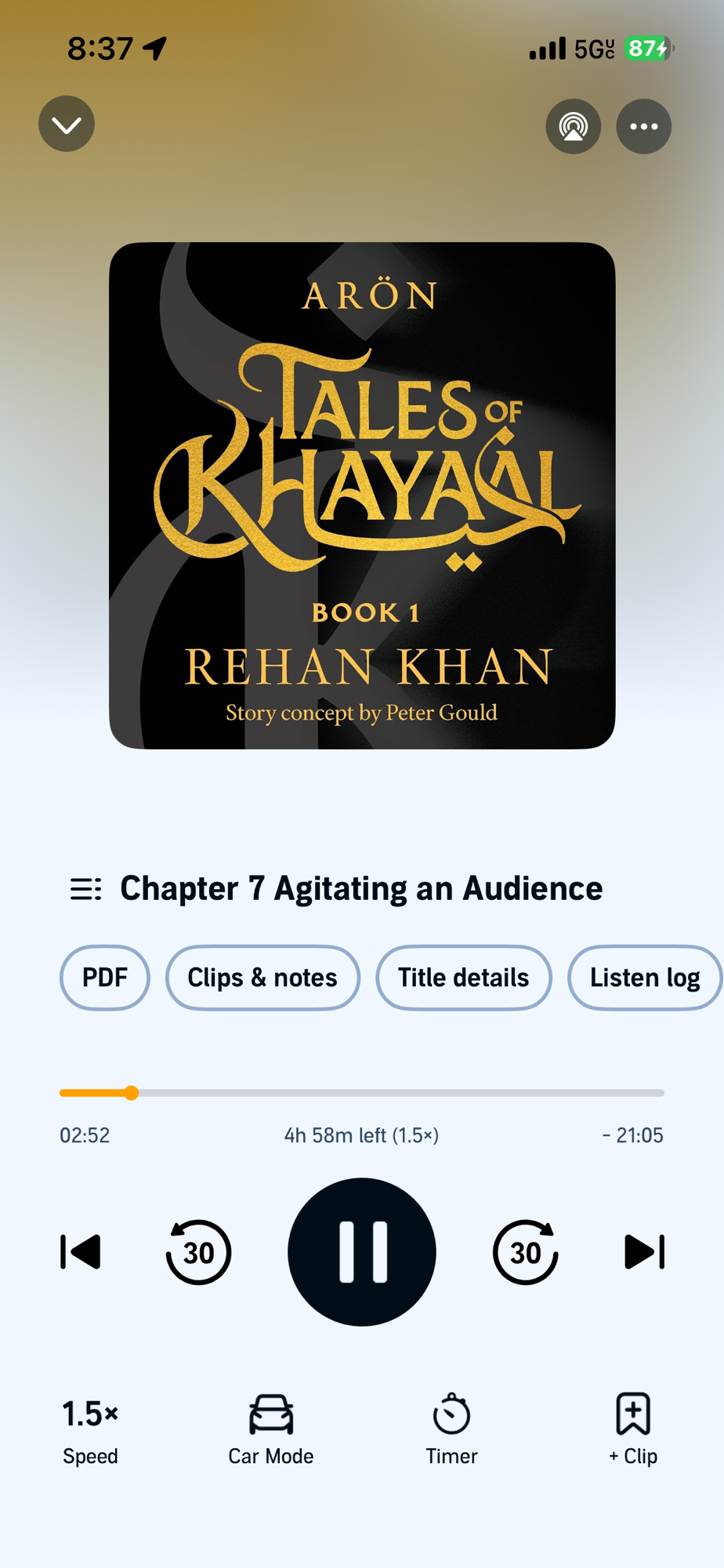
Tales of Khayaal: Arön by Rehan Khan and Peter Gould

Standard
Tales of Khayaal: Arön by Rehan Khan and Peter Gould

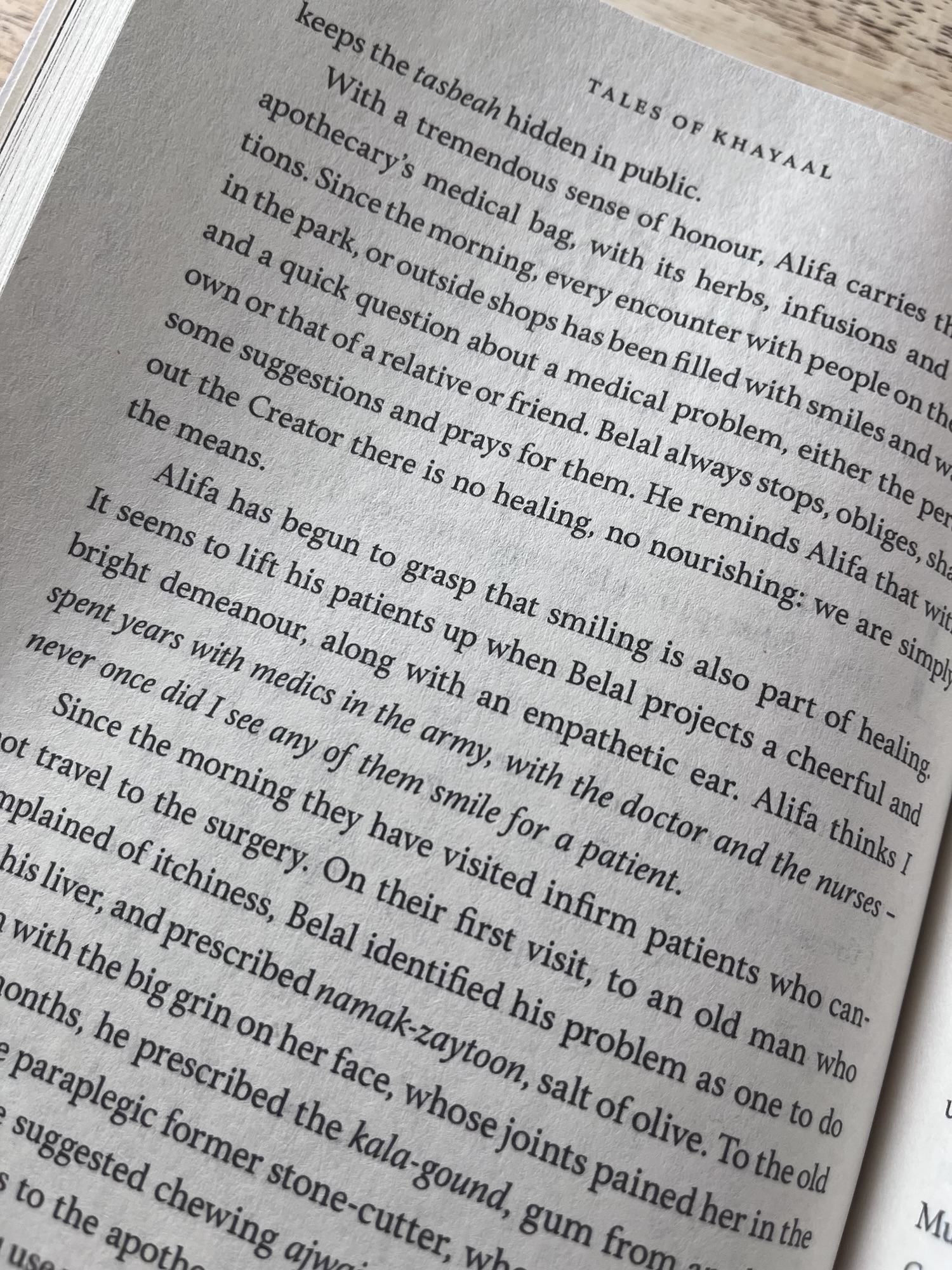
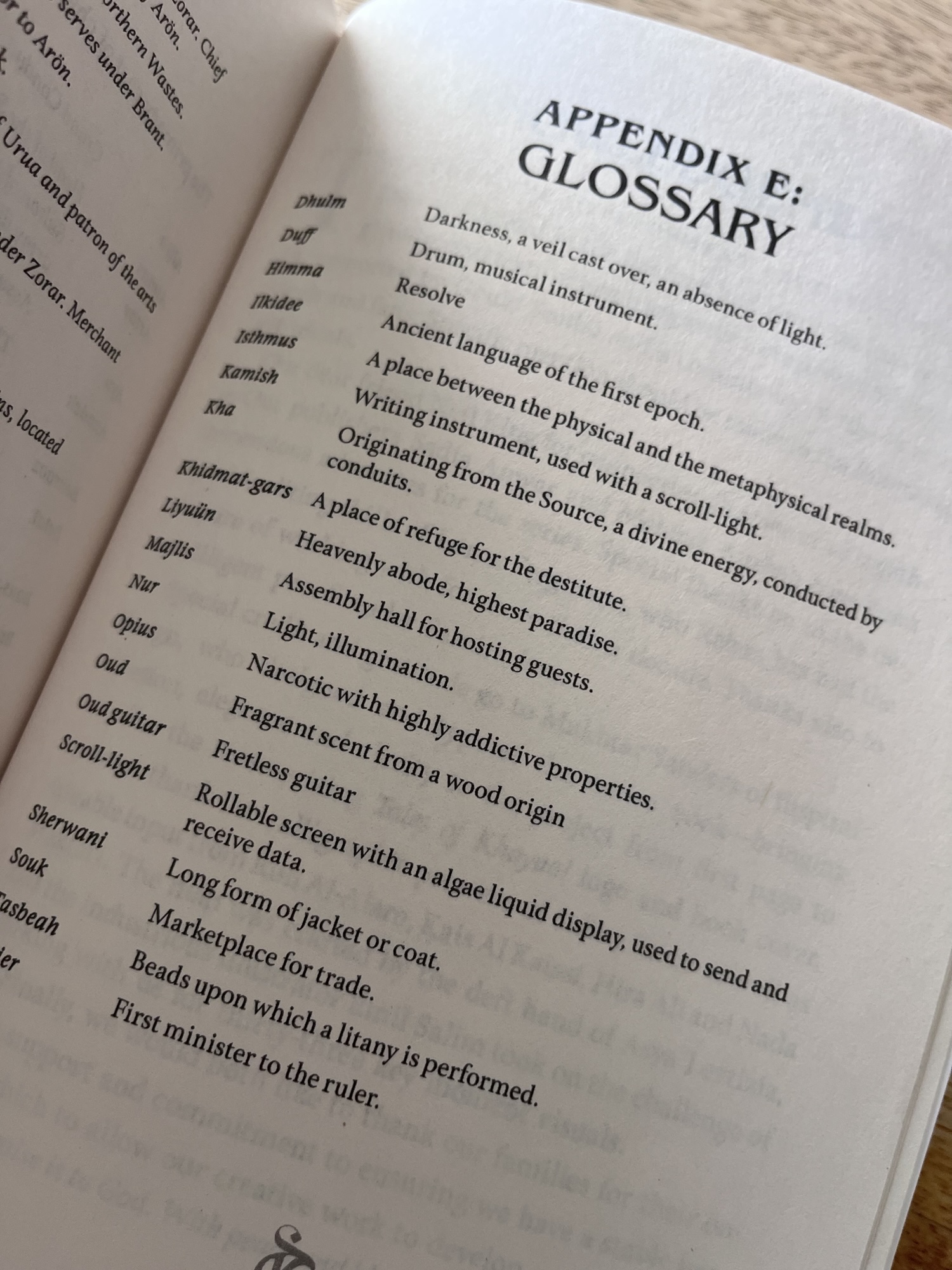
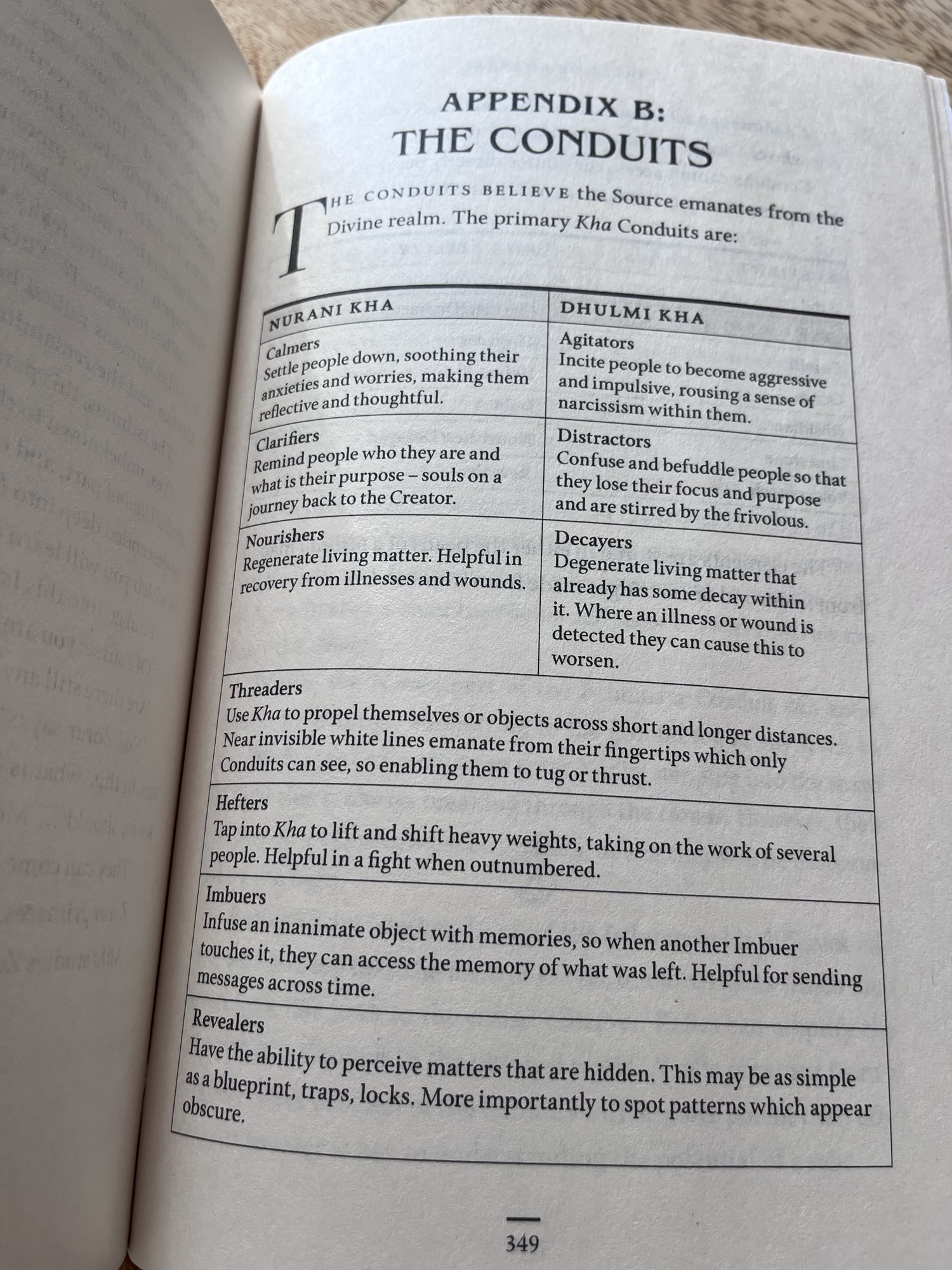
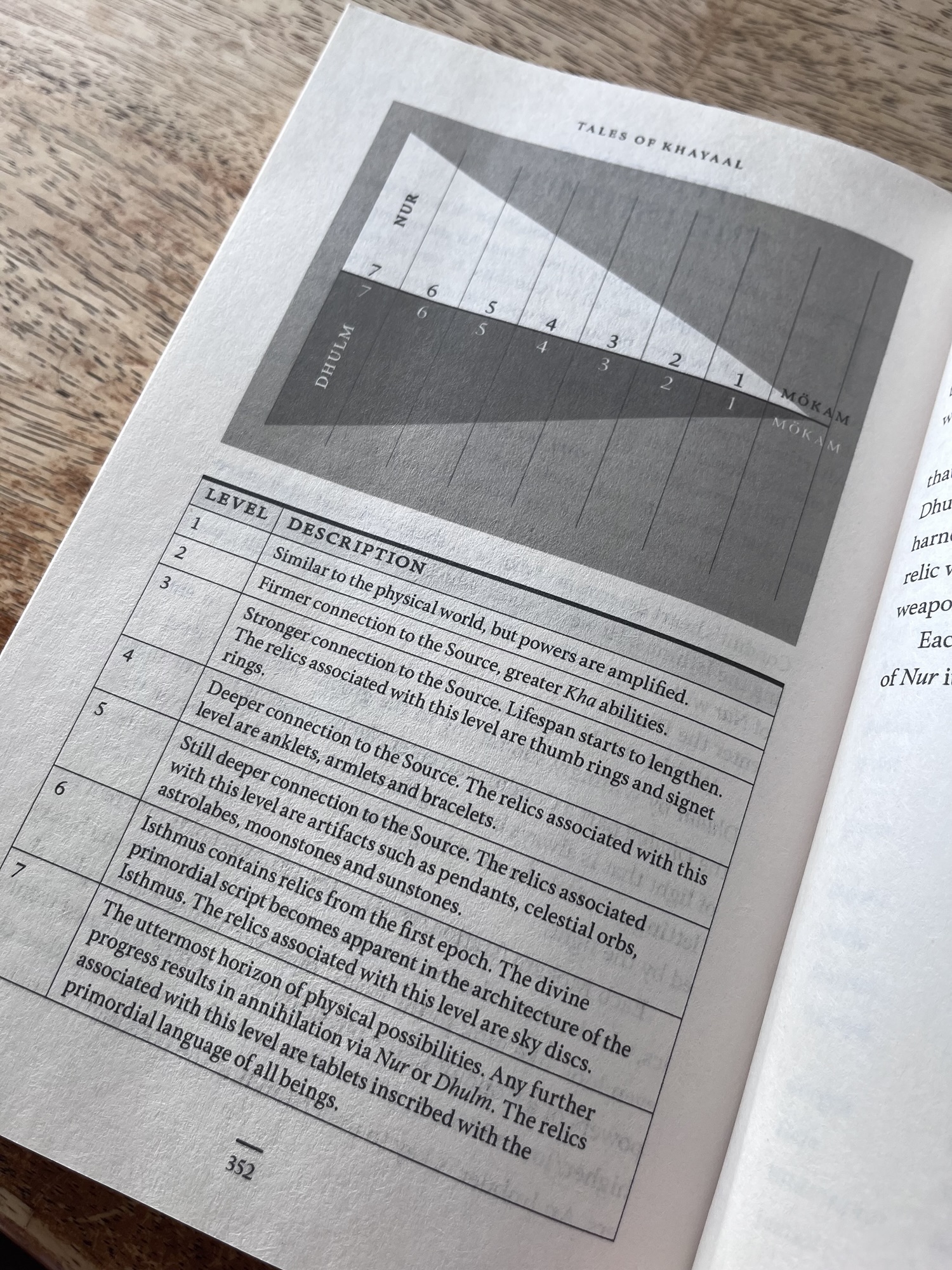
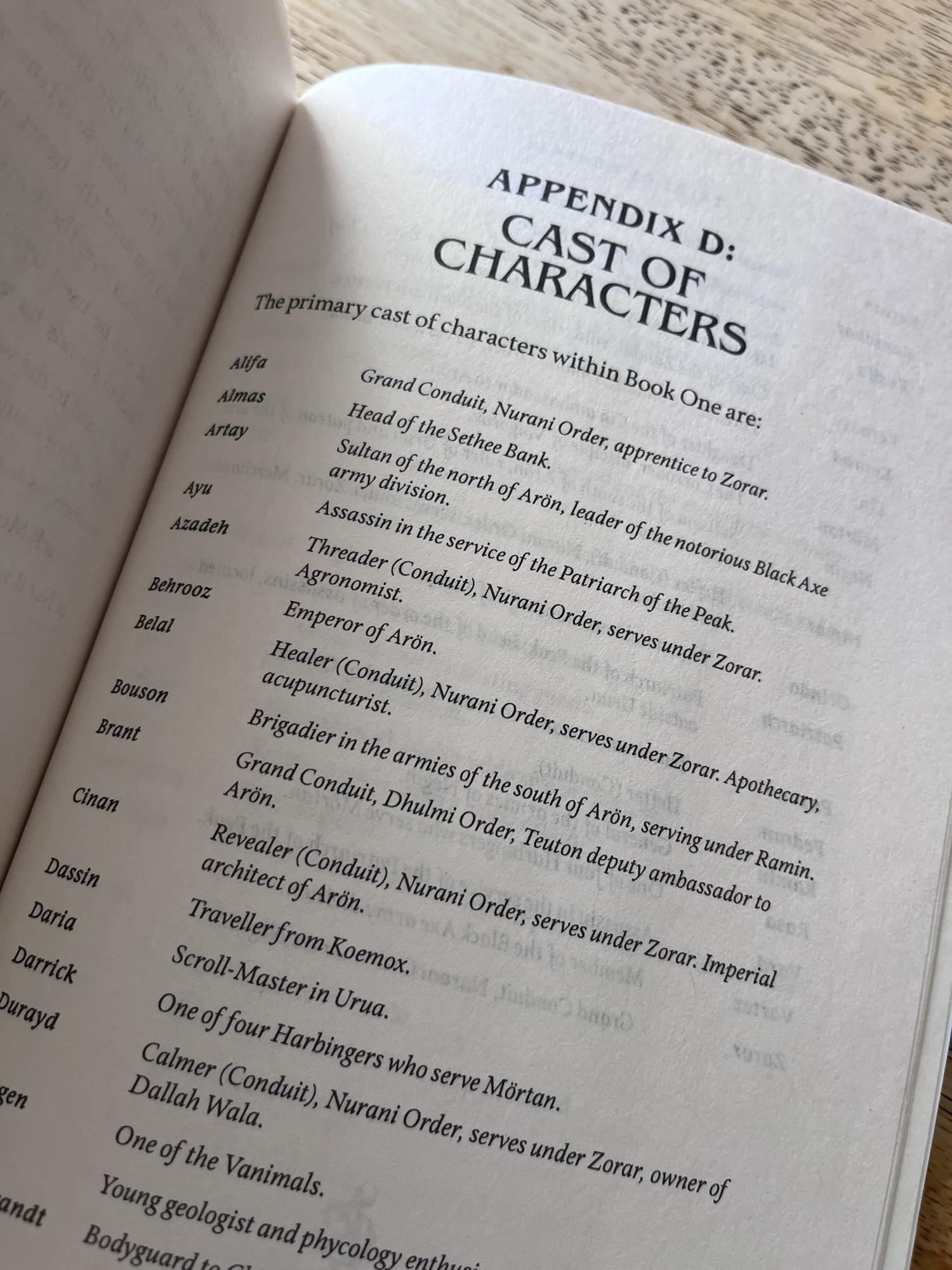
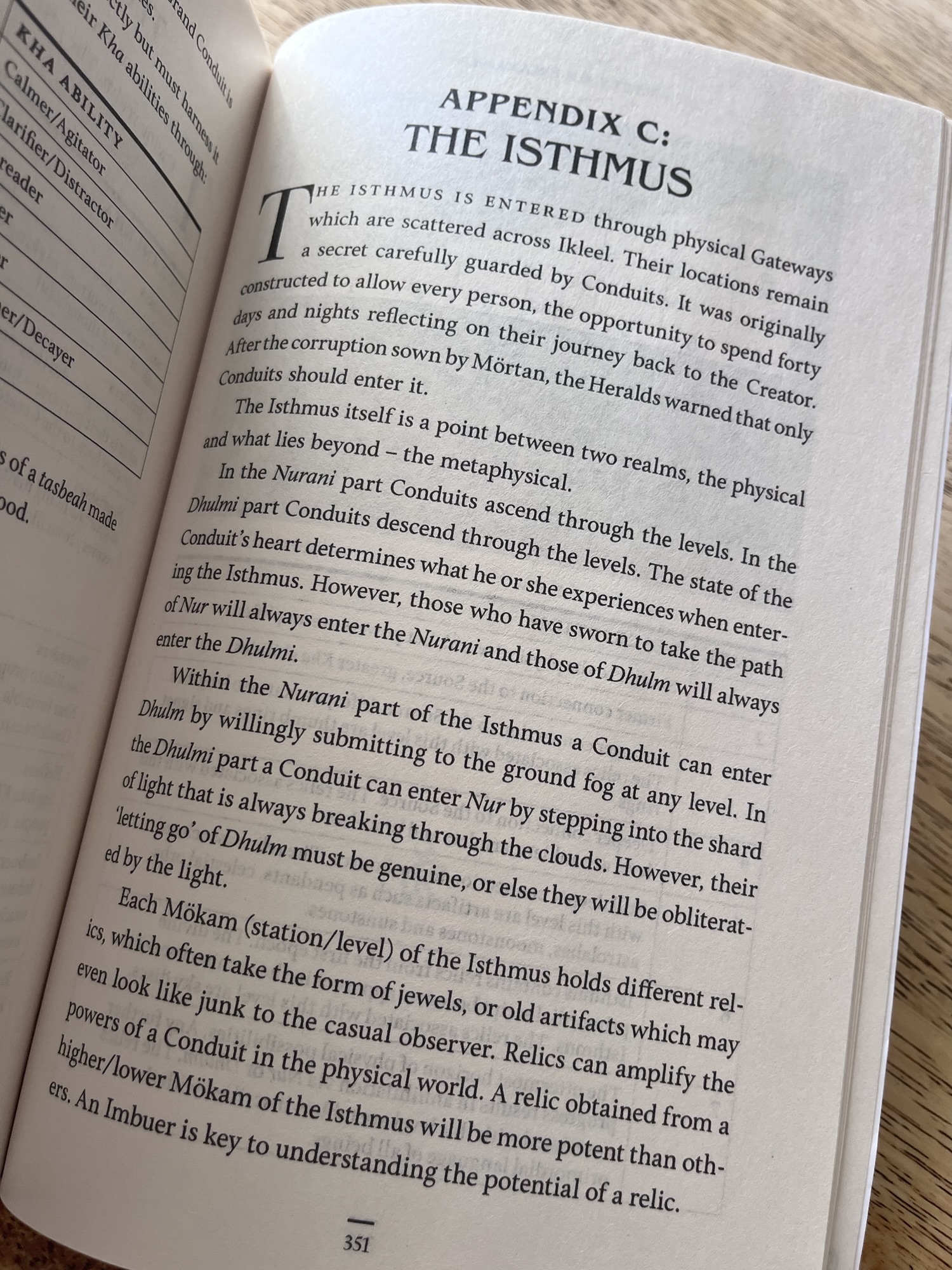
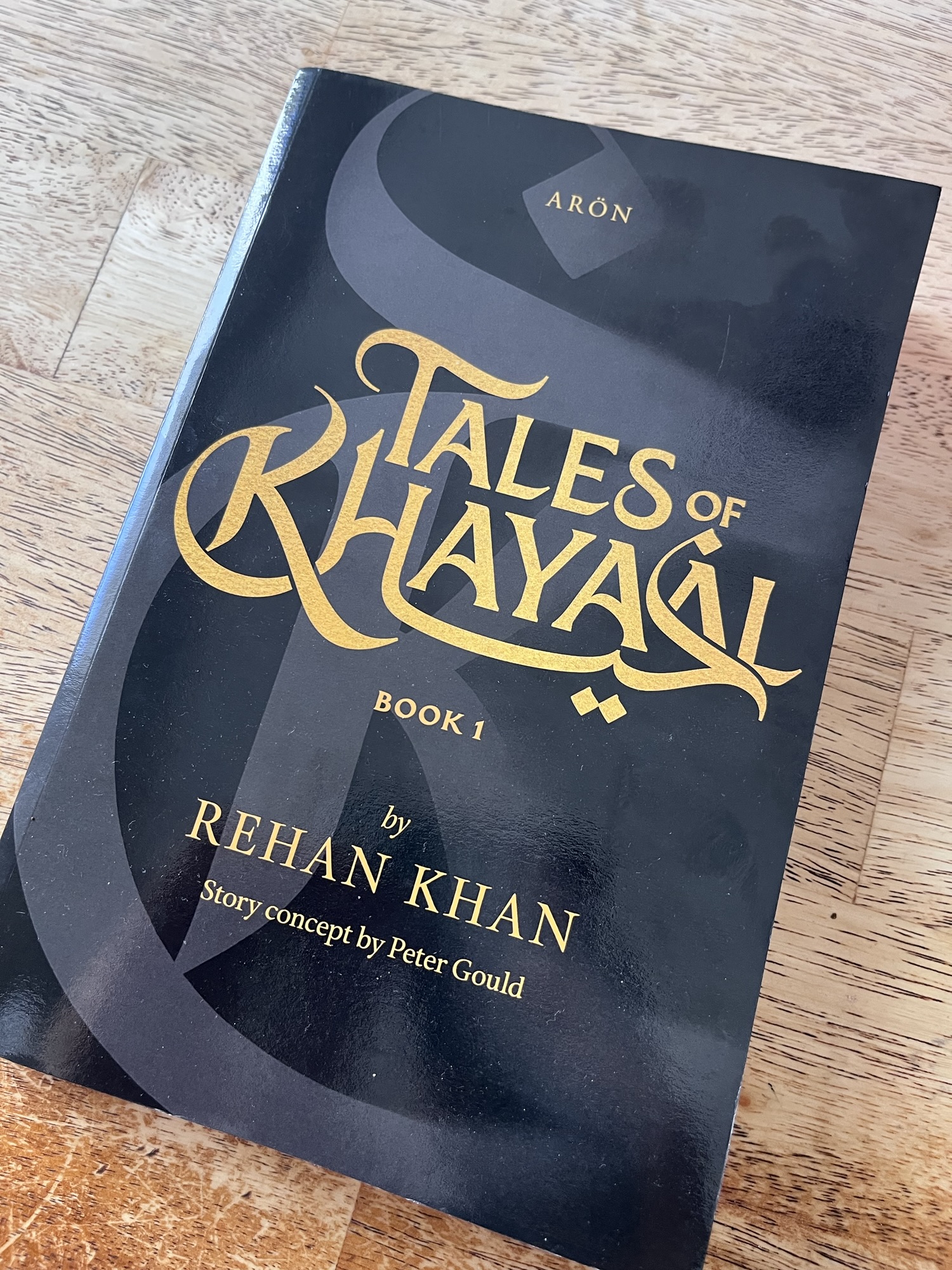
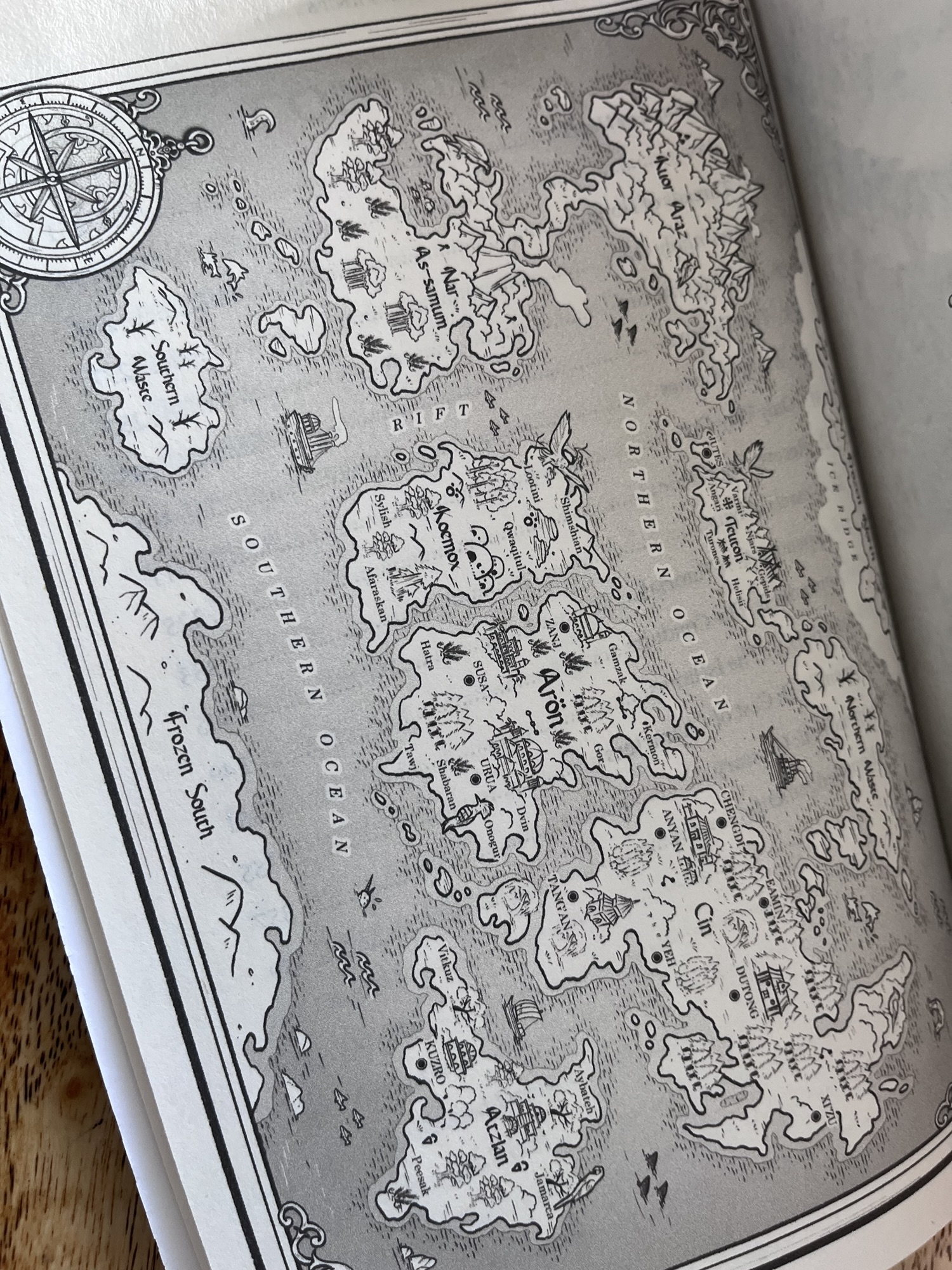
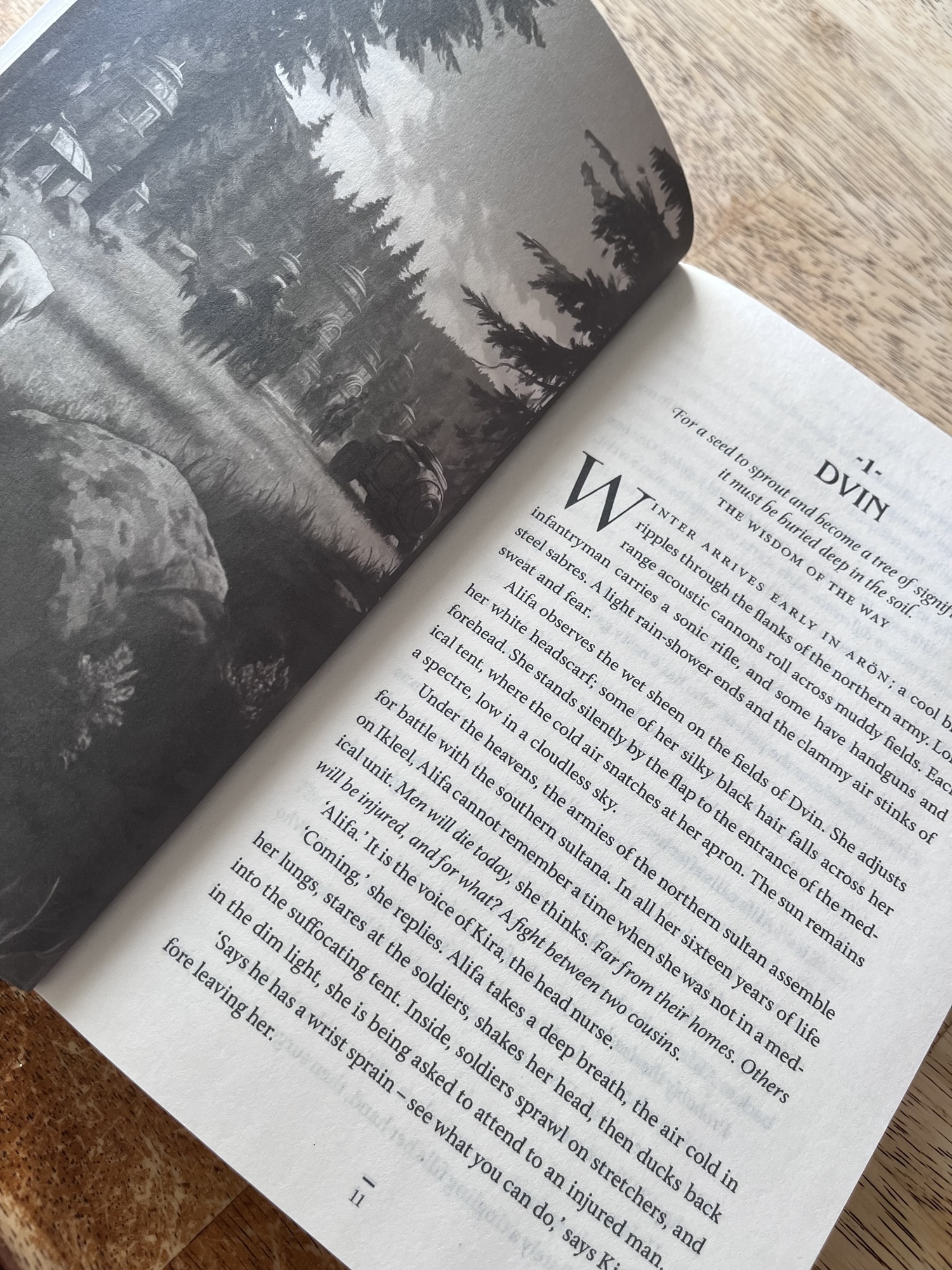
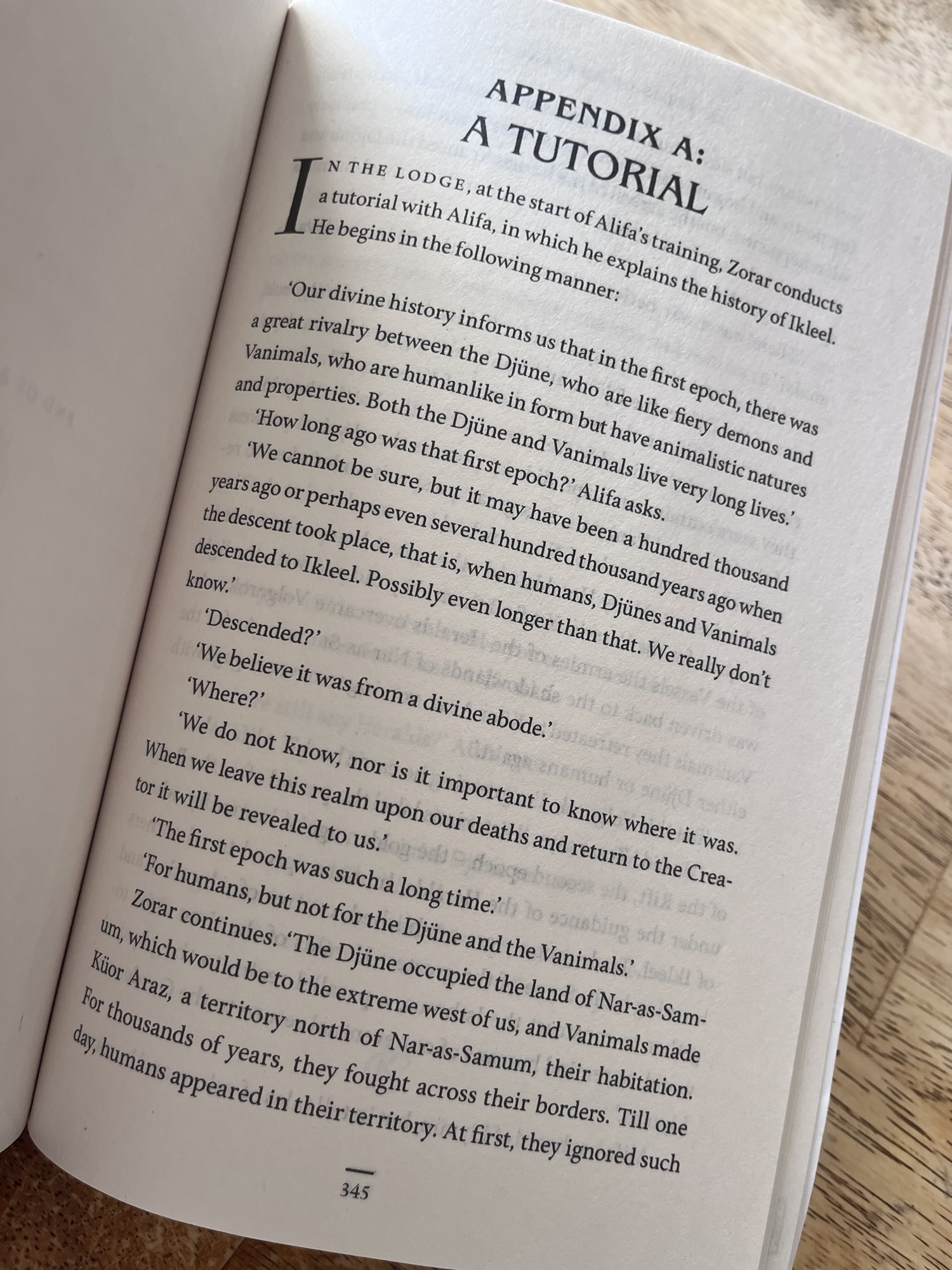
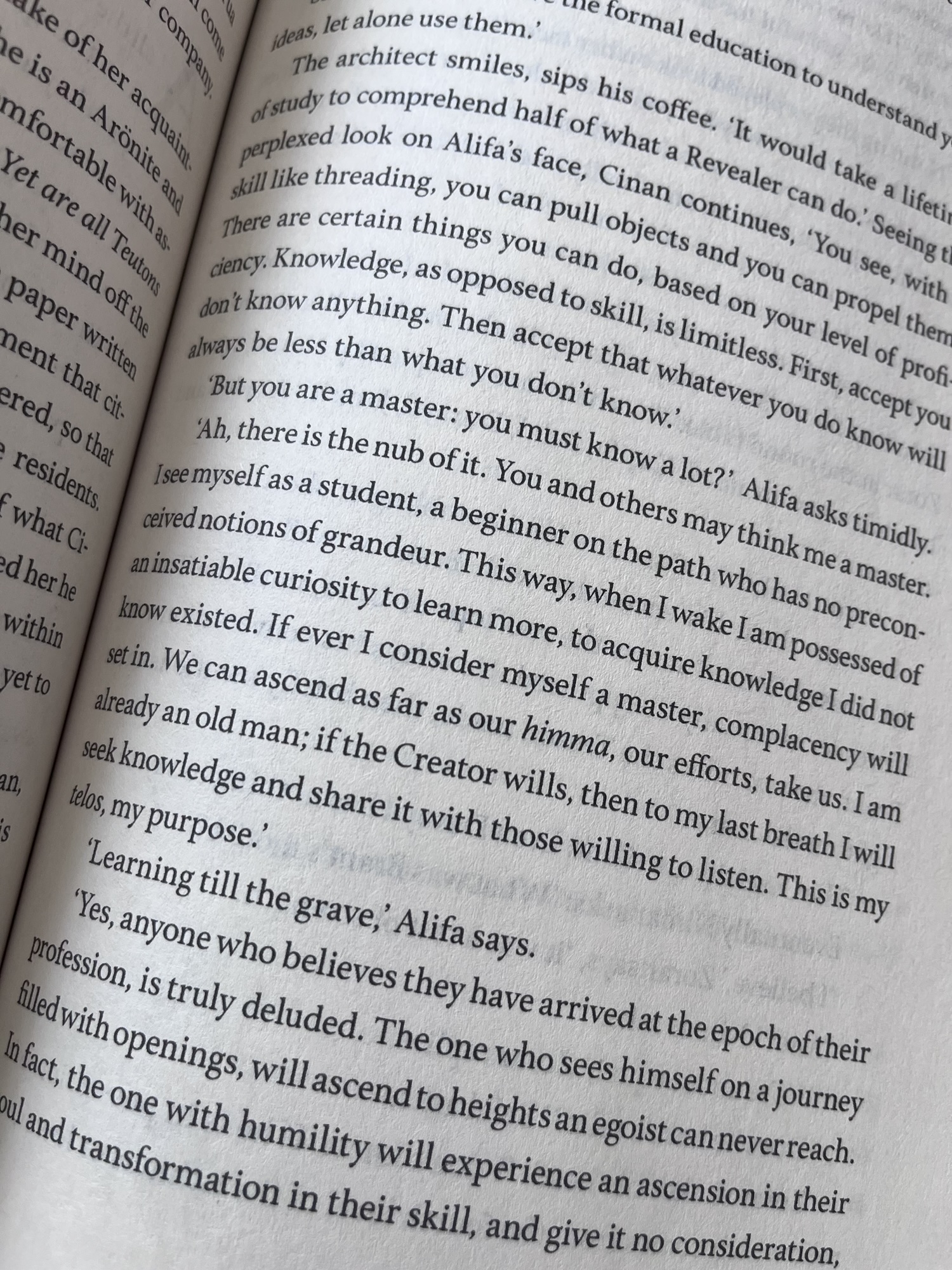
I am so late to the party that is Tales of Khayaal, but alhumdulillah everything has a time, and I have been thoroughly swept away just in time for Book 2 to come out soon inshaAllah.  At 366 pages, this YA fantasy, sci-fi, adventure story is suitable for YA readers/listeners 13 and up with plot appropriate instances of violence, the end of the world, killing, torture, powers, drugs, politics, corruption, prejudice, and hints of romance.  Islam is not named, but it is more than just Muslim-coded, the world and the characters are heavily steeped in religious concepts, ideology, sunnahs, spirituality, morality, and culture.  I started reading the book and immediately loved that there is a map at the start and robust backmatter in the end that aids in the world building, fictional structures, power constructs, terminology, and that there is even a character list.  There is also a fully produced audio book that comes with the supplemental pdfs. So even if you are a fantasy newbie, whether you listen or read the book, you will have resources to make slipping into the third epoch on Ikleel smooth.  A bit of a heads up, initially the book feels a little simplistic and familiar in its world building, I reached out to more seasoned fantasy readers, and was told it has a term, derivative fantasy, it subsides well before the halfway point, when the action picks up, but it gave me a little pause early on, that maybe this book wouldn’t have the layered plot lines and character arcs that I was hoping for.  If you feel it too, keep going, I couldn’t stop reading/listening to the second half of the book and regret nothing.
SYNOPSIS: (FROM PUBLISHER)
Set in the third epoch of the planet Ikleel, the arrival of a comet signifies the approach of the Final Standing, an apocalyptic end time when an ancient enemy of humanity, Mörtan, is set to return.

Zorar and his apprentice Alifa, both Grand Conduits of Nur, urgently prepare for the coming time along with other Nurani Conduits. Meanwhile, Arön, their home, has fallen under the control of the Syndicate, a sinister organisation seeking to plunder centuries of imperial wealth.

Cataclysymic events, a fracturing of society, a loss of what was sacred, will all beg the question – what does it mean to be human in a time of relentless techno-scientific change?

WHY I LOVE IT:

I loved all the hadith, not attributed, and ayats worked into the advice from smiling as an act of charity, to finding peace in the remembrance of the One creator.  I want to have a non Muslim read it and get their feedback, Muslims will love the terms, concepts and Islamic framing and structures.  The writing style is easy, I’m still not completely sure how I feel about the scroll lights feeling like Harry Potter’s wand selection and the Isthmus giving vibes of the Ways from Wheel of Time, but I can think of other books that also take from those structures, and I don’t read enough fantasy to know what came first, so I’ll just suffice it to say that between the Islam and some key world building machinations, on top of the backmatter, and the book feels intuitive and familiar.

FLAGS:
mentioned above, but in addition there are assassins, and theft, and ensuring that a female prisoner has not been touched, nothing is detailed or sensationalized.  I am tempted to do the audio again with my 11 year old, I think anything “flag worthy” would be taken in the context intended and anything implying something more would fly under his radar, but even if it didn’t it would be a teachable moment, and the way it is presented would not be too mature for him.

TOOLS FOR LEADING THE DISCUSSION

I would love to read this with a diverse group (ages, faith, gender, familiarity with the genre) and discuss.
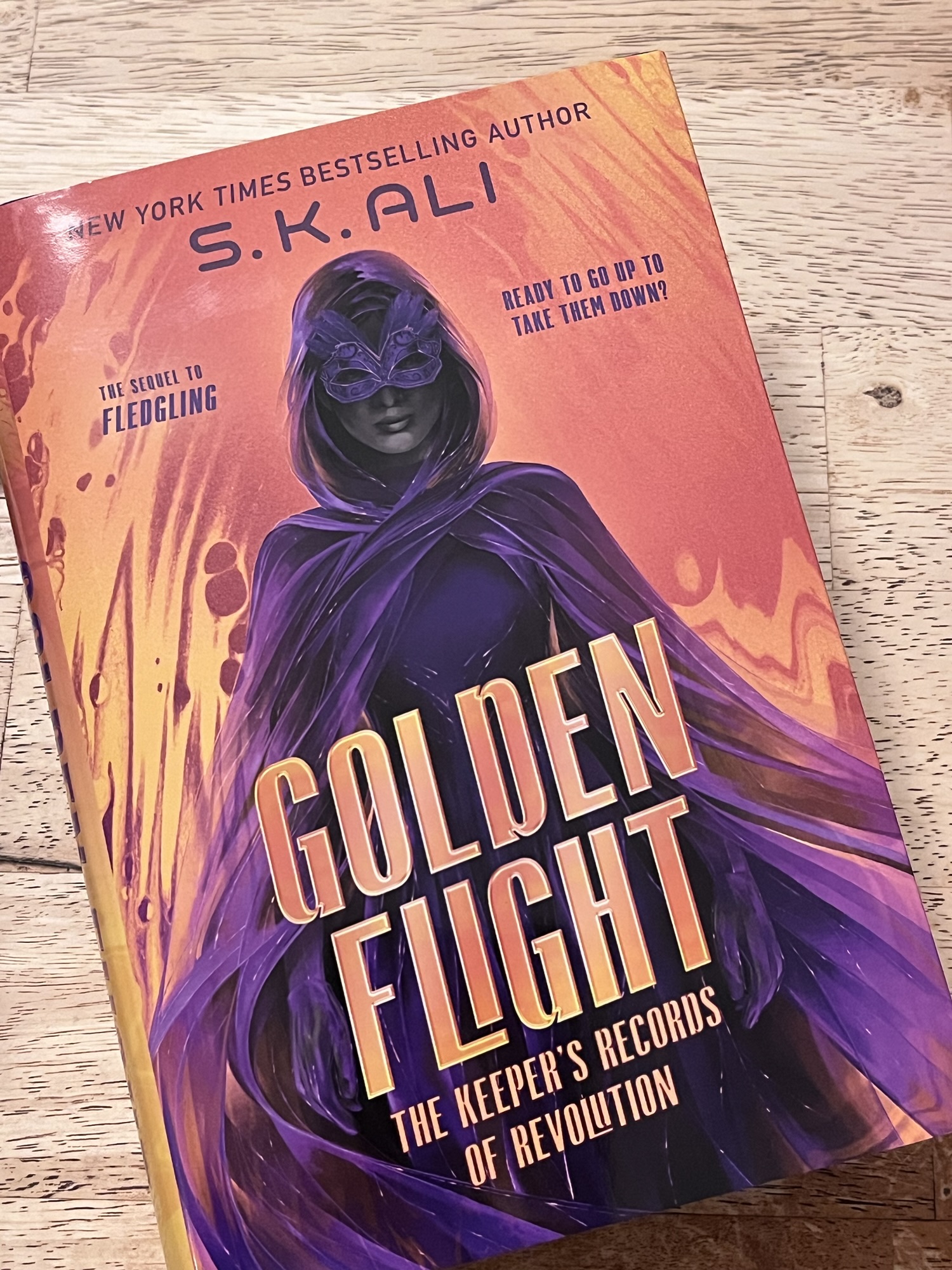
Golden Flight: The Keeper’s Records of Revolution by S.K. Ali

Standard
Golden Flight: The Keeper’s Records of Revolution by S.K. Ali

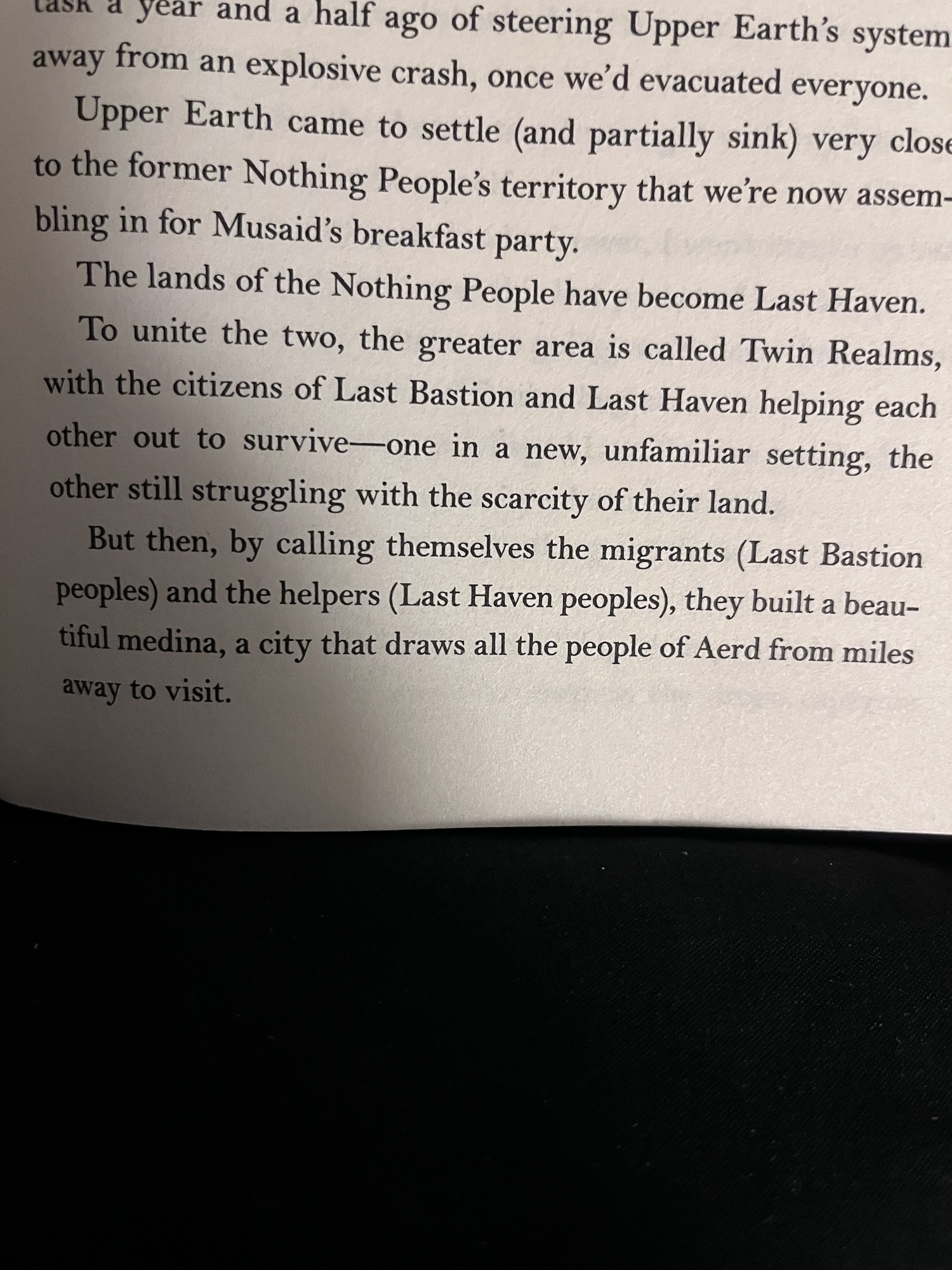
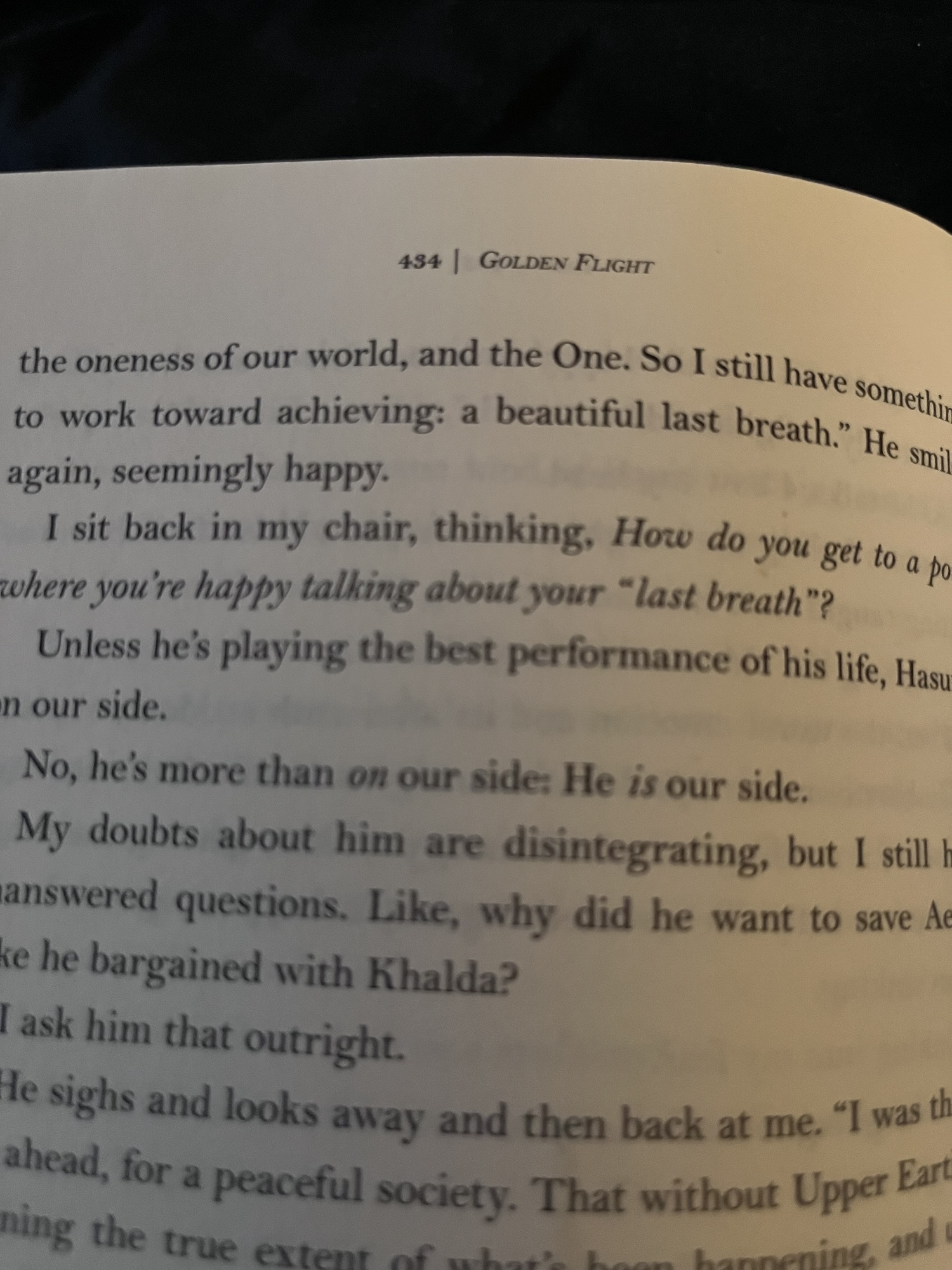
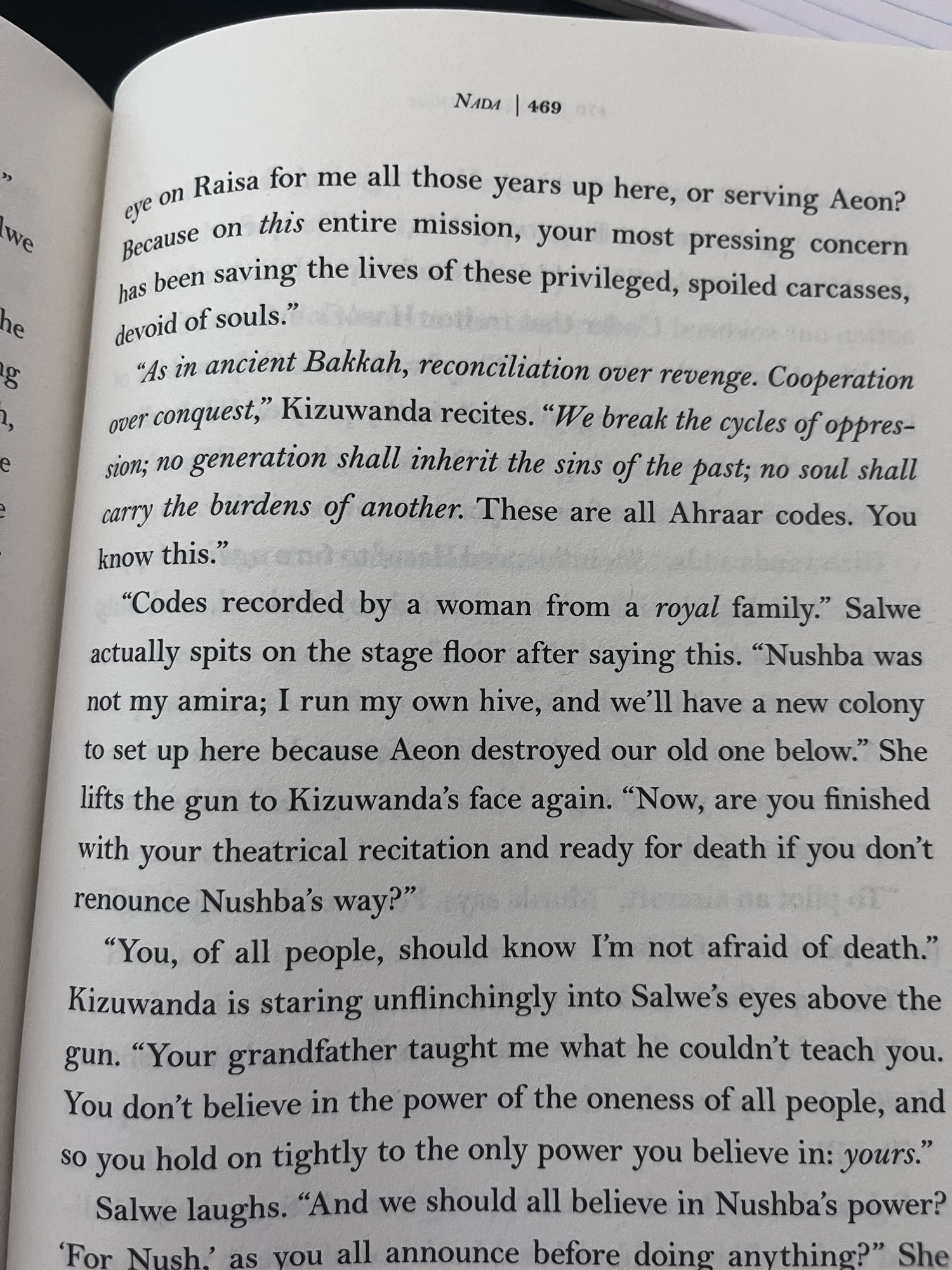
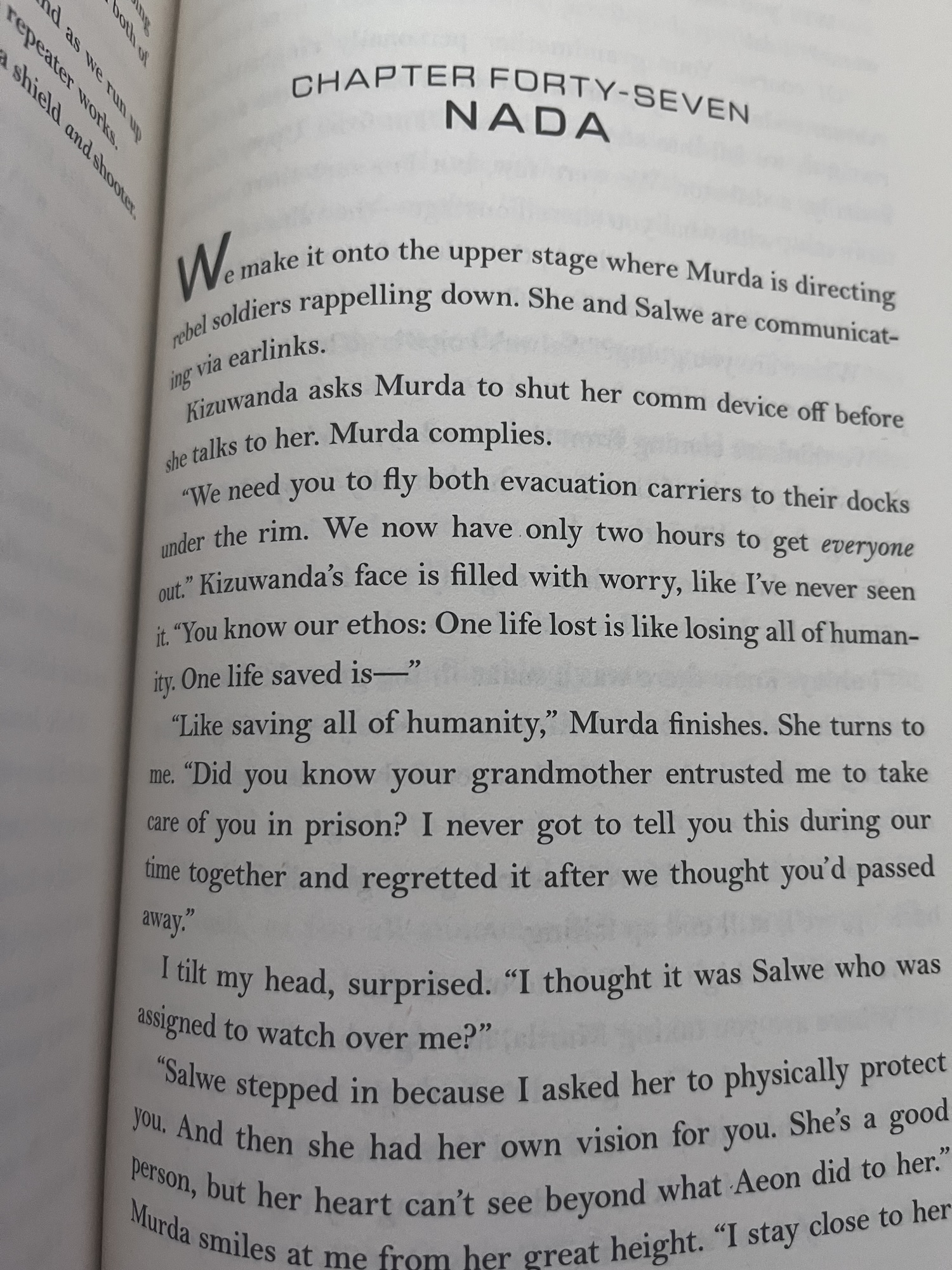
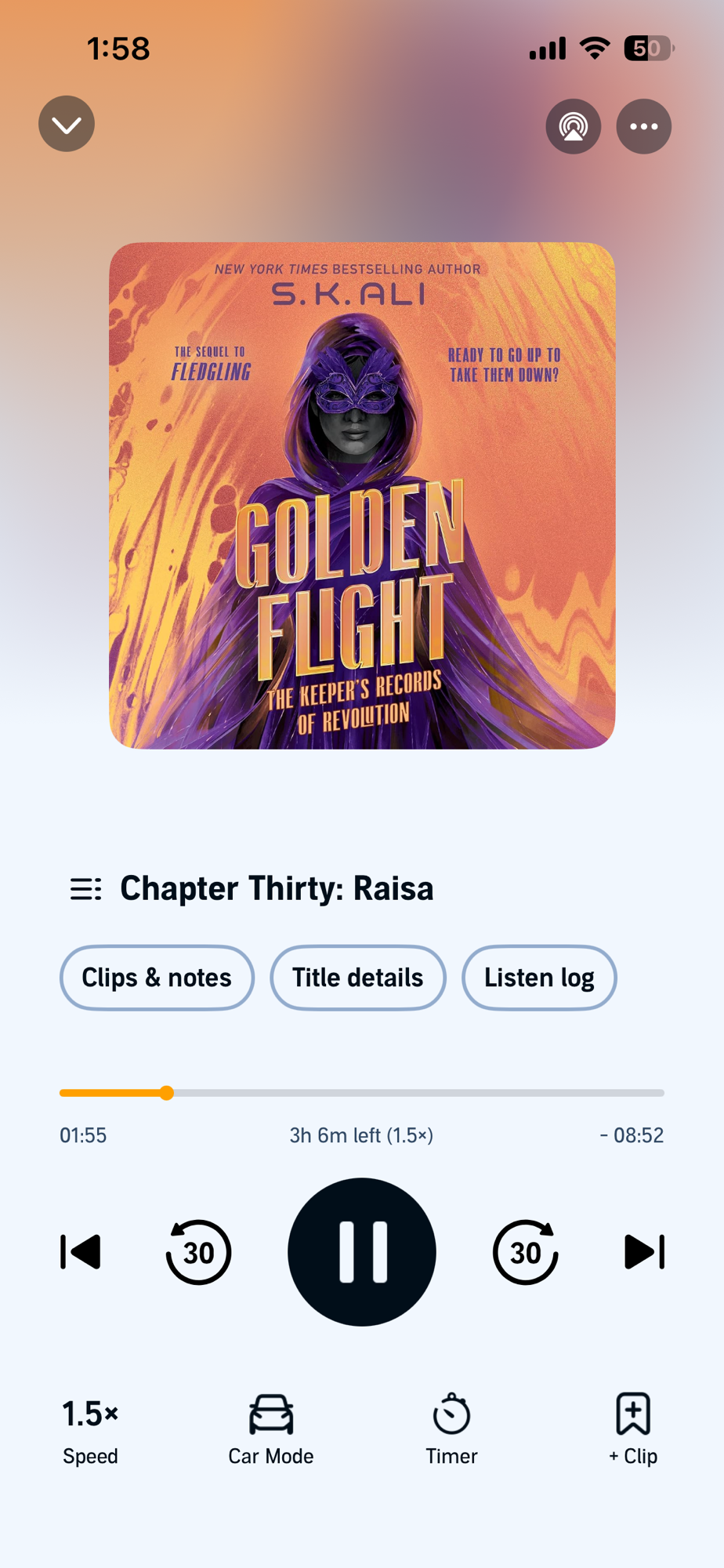
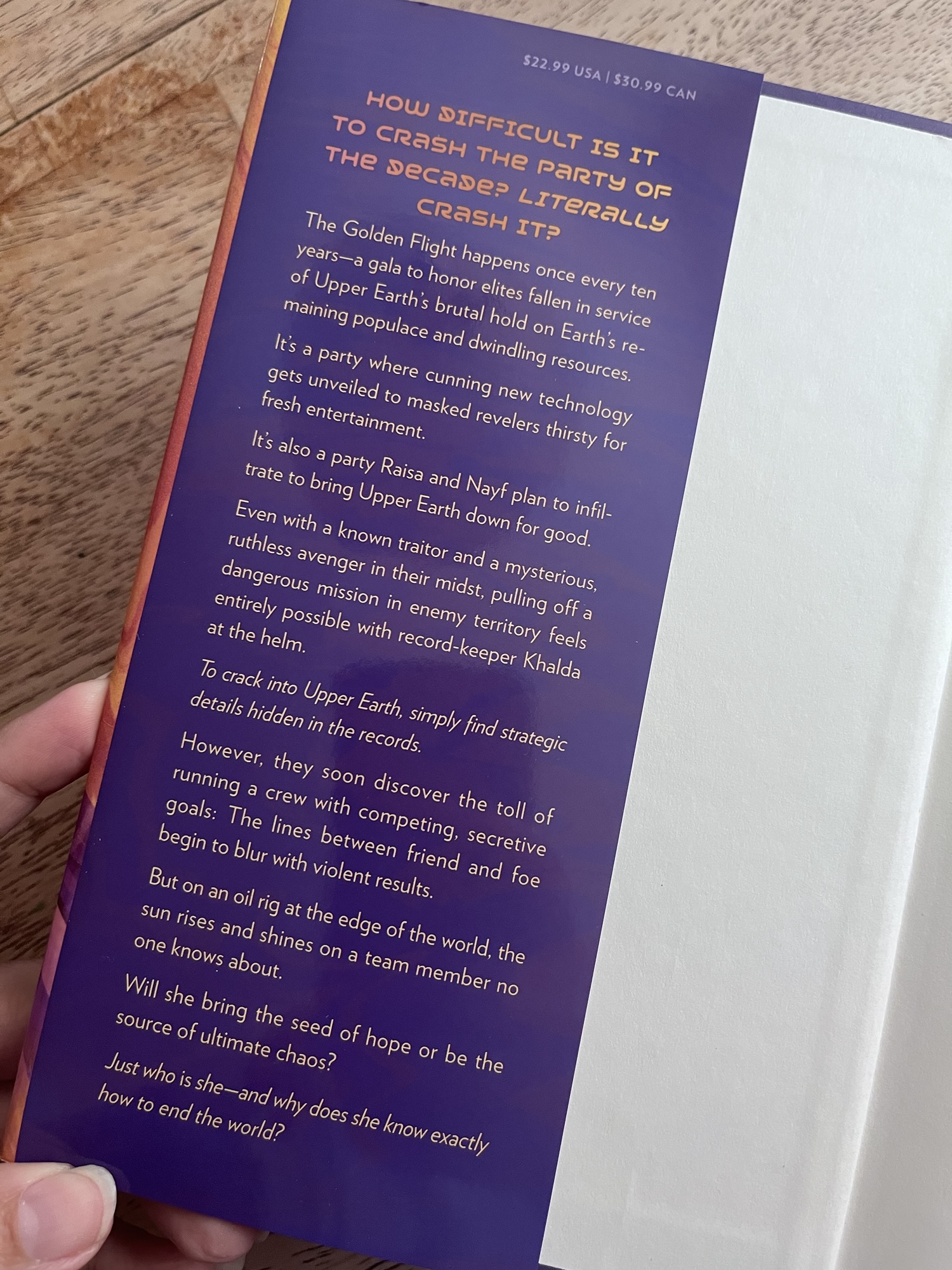
I had preordered this book, but there was a delay, so I purchased the audio book and started there. When the book was delivered, I switched to it and admittedly got a bit stuck. I didn’t recall the details of book 1, Fledgling, and was struggling with the six or seven alternating points of view, alhumdulillah, a massive road trip had me returning to the audio book (which has different voices for each pov), and the rest as they say, was history.  I was sucked in, caught up, and truly invested in the heist, the characters, the fate of the world, and how it would all come together, or not, in the 514 pages of this concluding book of the YA duology.  The best part for me was the coded Islam sprinkled in, like squeal worthy inclusions of doing right by the One, multiple Ahraar principals such as how to treat prisoners, saving a person is like saving humanity, and the “fictional” political dynamics mirroring those here in our reality are truly chef’s kiss. The book juggles a lot of characters, plots, science-y details and while I won’t win an argument with seasoned sci fi dystopian readers, from my perspective, I was satisfied that character arcs, relationships, reveals, and logic were all accounted for by the last page, and my heart felt content with the outcome, those that survived, those that were lost, and the fate of the Aerd moving forward.
I don’t normally write up reviews for second books in series, add in that I would not want to spoil the fates of Raisa, Nayf, Musaid, Devon, Eyas, Khalda, Lein, Kizuwanda, Salwe, Hasuf, Jansu, Dr A, One-One-Eight, and Aeon, and this is all you are going to get out of me.  For those still considering if they should read the book: if you cannot recall book one, I think by the midpoint of this it will come back, and if you are struggling with keeping everyone straight while reading, I would highly recommend the audio version.  There is some romance, and death and destruction, nothing high school and up will find jarring, and while I hope everyone will read the series, I particularly hope Muslims will support the book, the author, and the political and societal commentary threaded through action story at hand.

The Lustrous Dark by Loretta Chefchaouni

Standard
The Lustrous Dark by Loretta Chefchaouni

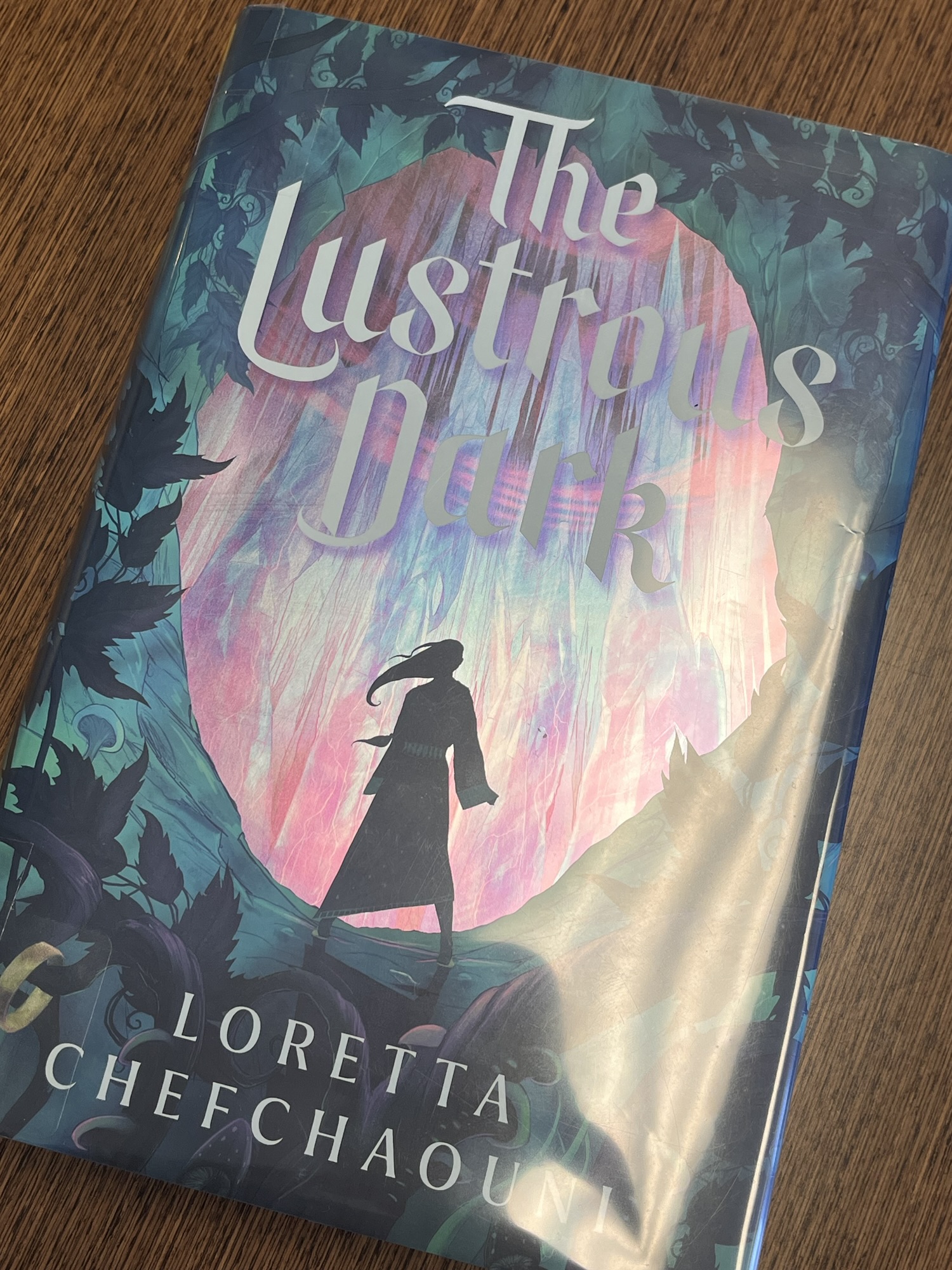
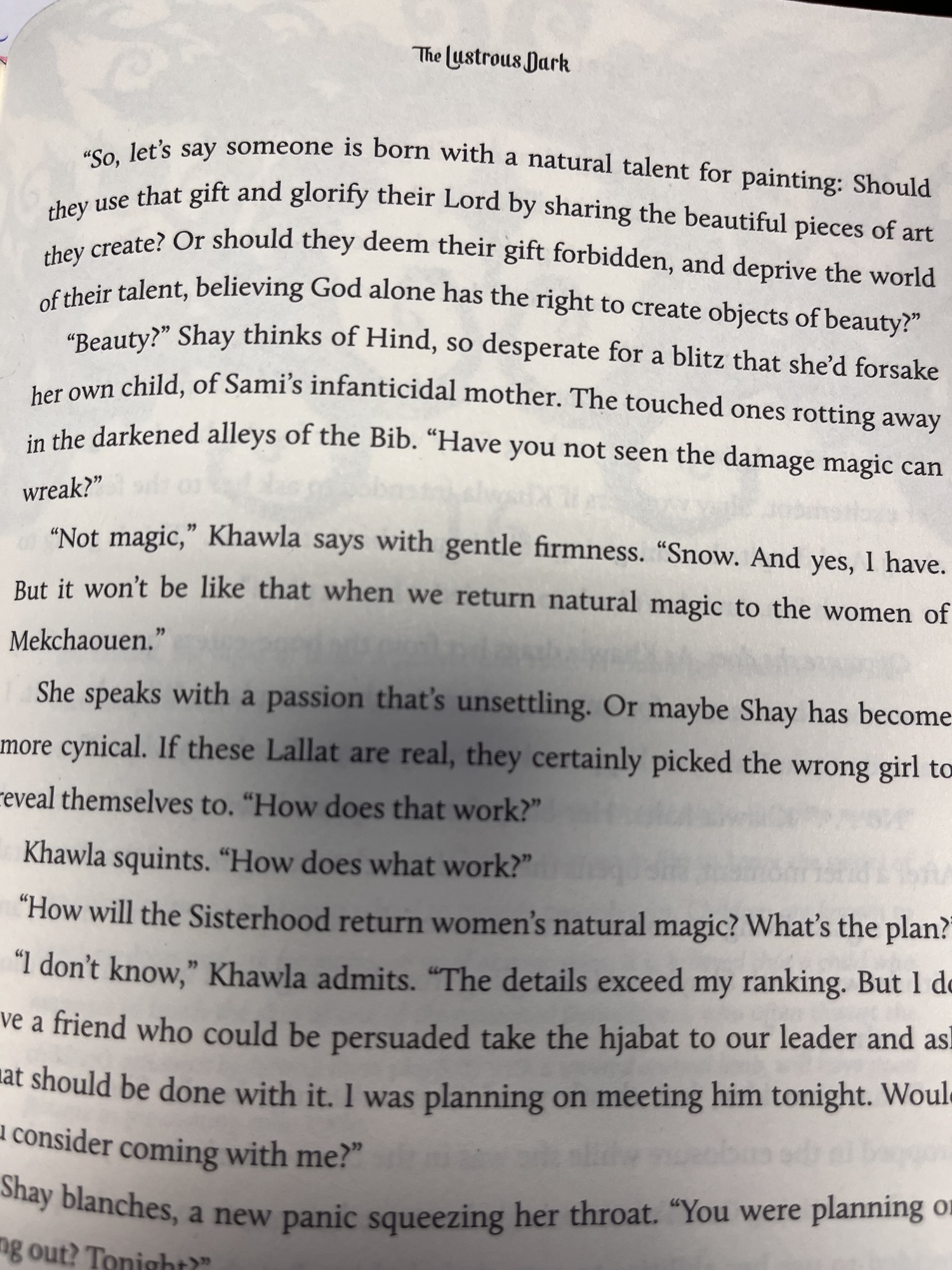
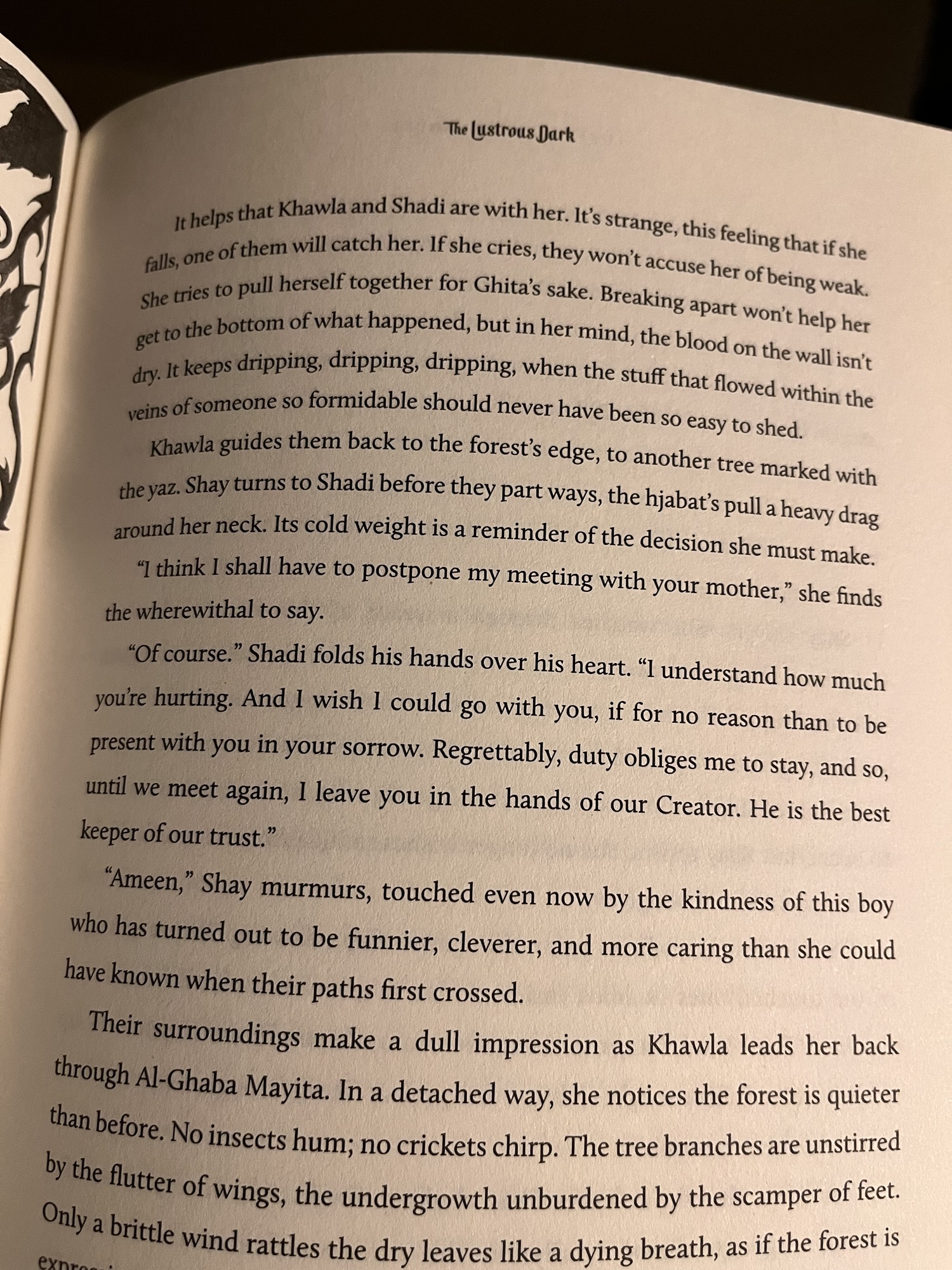
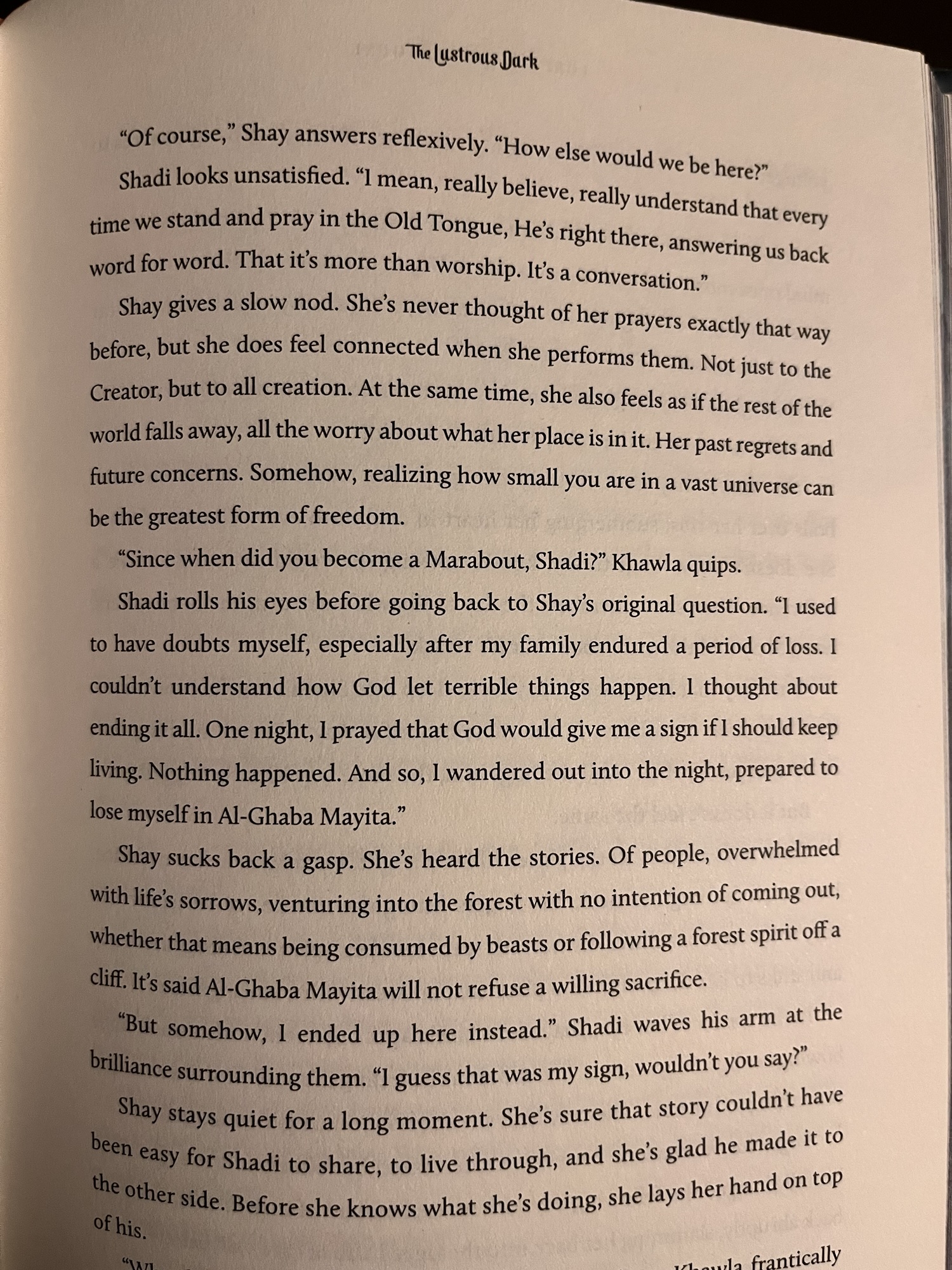
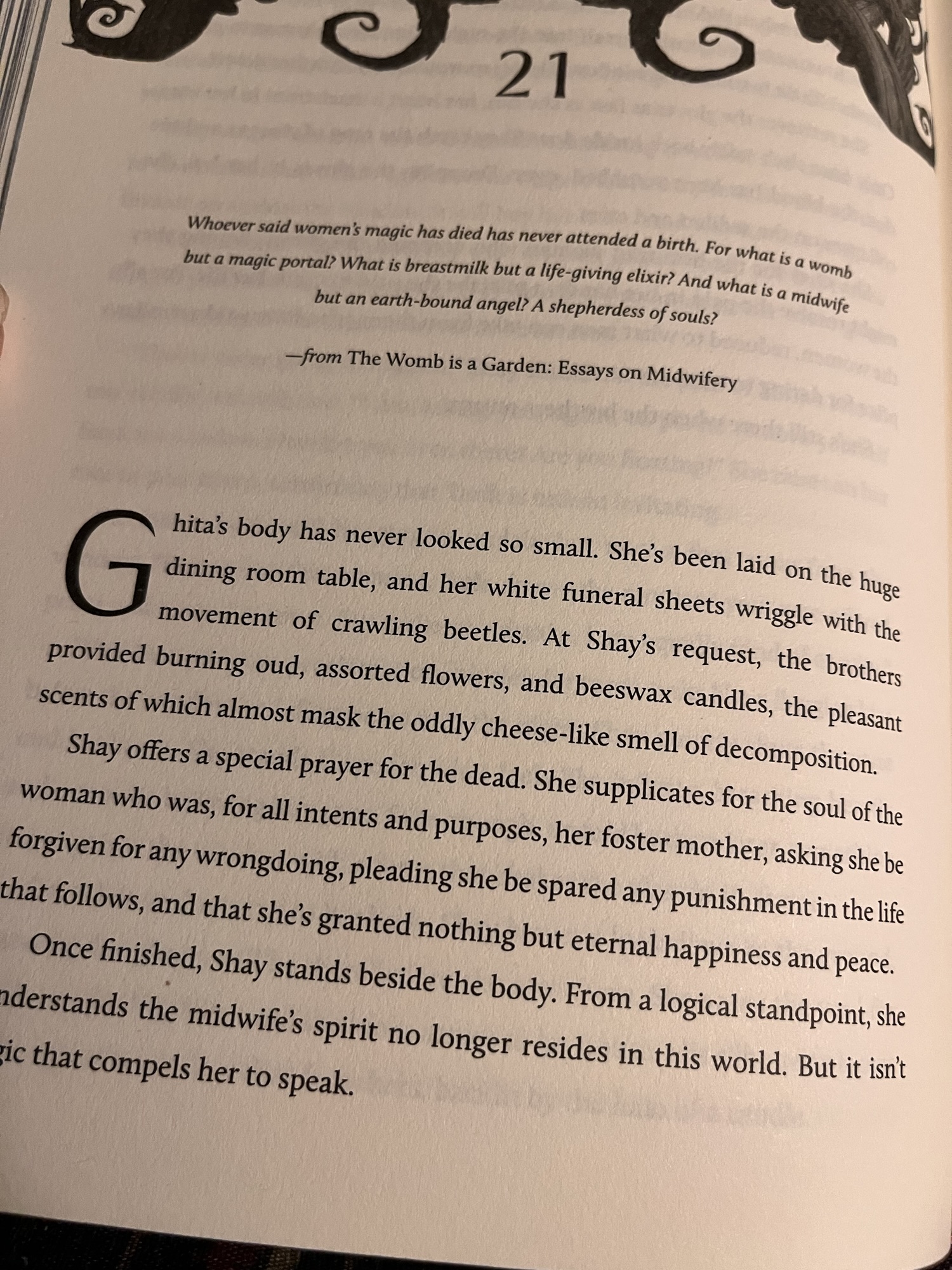
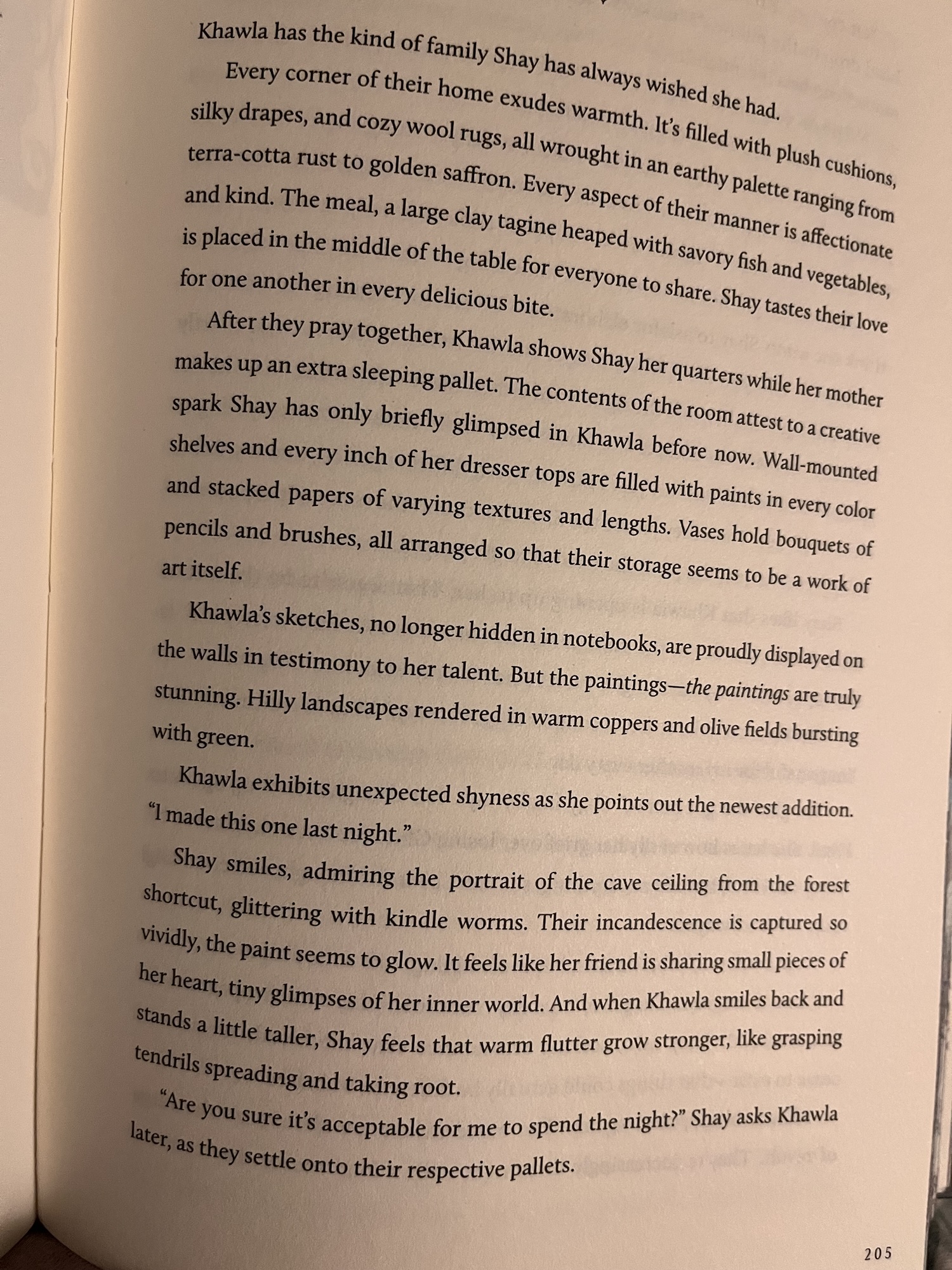
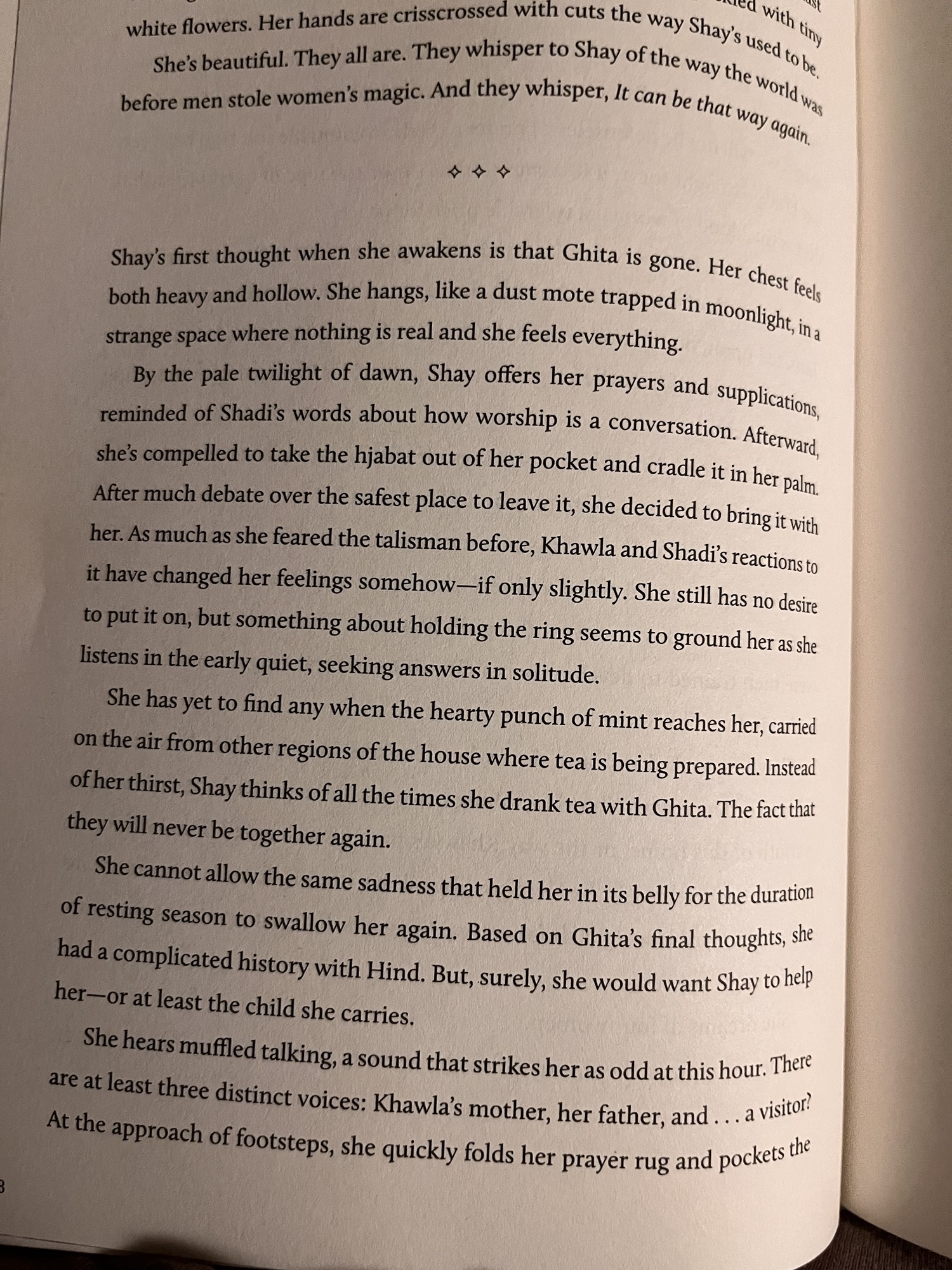
Parts of this 368 page YA fantasy were gripping and impossible to put down, other parts slow and disjointed making the book hard to pick back up. The book almost seems to function in acts, with the first act being the midwife premise, the second act in the forest with the campy/creepy version of the seven dwarfs and a vampire, and the third being the rushed climax of what presumably is the plot that will carry into the second book in the duology. The choppiness and inconsistent pacing made me feel like the world building at times took over the story, at the risk of understanding exactly how the threads of themes and characters were meant to make this a feminist fantasy. I appreciated the abandonment and found family aspects, but the political positioning and fighting the patriarchy aspects read painfully forced and underdeveloped.  As for the fairy tale retelling, I found it silly and inconsistent with the amazing night hag creatures. If the back of the book blurb didn’t position this as covering all the aforementioned themes, I might have enjoyed it more, it seemed to force themes that didn’t naturally come from the characters, plot, and prose naturally. I do acknowledge that the second book may illuminate some of the telling in a more showing manner and resolve the lost plot critique I’ve asserted, but I honestly don’t know if I am compelled to see how the second half of the story plays out. The book is a mature read with death, drug addiction, hangings, rape, violence, an assortment of relationships and gender identities, oppression, threat, etc.  I do not think this qualifies as OWN voice for the Moroccan cultural rep, the author I believe is not Arab, but I think the characters might be Muslim just not by name, which would qualify it as such. The protagonist prays “predawn prayers” in the “old tongue” and translated phrases after death reflect on the one-ness of the creator, and at times the characters even opine on their thoughts of Muslamic concepts. I don’t know if that was the author’s intent or if it is meant to come from the Morrocan culture, but I don’t know that it ultimately matters. The world created within the pages is rich and unique, I just didn’t connect with the story or characters. If someone 16-17 and up wanted to read it that enjoyed fantasy, I wouldn’t dissuade them, but for novice fantasy readers like myself, it was at times difficult to get through.
SYNOPSIS: TAKEN FROM THE PUBLISHER:

For fans of Sabaa Tahir and Guillermo del Toro comes The Lustrous Dark, a sweeping YA fantasy inspired by a Moroccan folktale, in which a young midwife’s apprentice rises up to take back the power that’s been stolen from women.

Orphaned as a baby, Shay has spent her life training as the midwife’s apprentice. Her role grants her stability, yet Shay has always yearned for more. Namely, motherly affection and answers regarding her mysterious birth—neither of which the midwife deems practical to provide.

After Shay discovers her birth mother, Hind, is still alive and addicted to a magical drug called Snow, she determines to get the woman clean. But when Hind betrays Shay to get her hands on more Snow, Shay’s abandoned within a deadly forest and forced to rely on a band of monstrous ghouls for safety.

Shay’s realm has long stood on the brink of war between the men who control magic and the revolutionaries who want to eliminate it. But in the forest, Shay hears the pleading call of ancient spirits who claim that not only has magic been stolen, but she has the power to return it. With the help of a spitfire revolutionary and the boy who’s winning over her heart, Shay discovers the horrific truth of who produces Snow and will have to decide for herself whether to heed the spirits’ charge or fade into obscurity.

This emotionally raw and gorgeously rendered fairytale combines the lush worldbuilding of This Woven Kingdom with the mother trauma of Snow White and a dash of Tim Burton. Steeped in mysticism and mythology, The Lustrous Dark confronts injustices against women with a righteous scream that’ll inspire readers to rally against the patriarchy and oppressive regimes worldwide.

Perfect for readers who love Political Revolutions, Fighting the Patriarchy, Toxic Mothers, Reawakening the Gods, Ancient Magic, Bone-Chilling Monsters, Haunted Forests, Female Friendships, Fairytale Retellings, North African Folklore, and Cinnamon Roll Love Interests.

WHY I LIKE IT:
I really liked many of the parts in isolation, the midwife beginning, the ending with the night hags, even at times the bone eaters, but as a cohesive story I feel it leaves too much to be desired.  Why was the forest such a plot point to navigate early on, but largely not a threat after the midpoint?  Where did Khawla just appear from, and did her family live in the forest? And then suddenly the two girls, Marjan and Yara, who are perceived to be quite young and shy suddenly are transversing the forest alone and emerging as strong capable decision makers.  The age of many of the characters seems inconsistent, or maybe rather their maturity, at times even the protagonist feels very young compared to other times. Ultimately the women’s magic and reclaiming it for women specifically, seems so forced that it took me out of the story. I get that Shadi is an ally, but seems like he is the most honest of the bunch. Multiple women are manipulative and corrupt, the mothers come to mind, and I think it could have been shown more how they were made that way by systems, but I felt it just kept telling us that Jawad is bad, and that men took the power, rather than showing it being more systemic and patriarchal in nature. Routinely the book seemed to build up to big plot points and then just have Shay go along with it, to the detriment of giving her a clear character arc of growth and coming in to her own, which sadly kept me from ever clearly cheering for her, or knowing what I hoped she could accomplish.