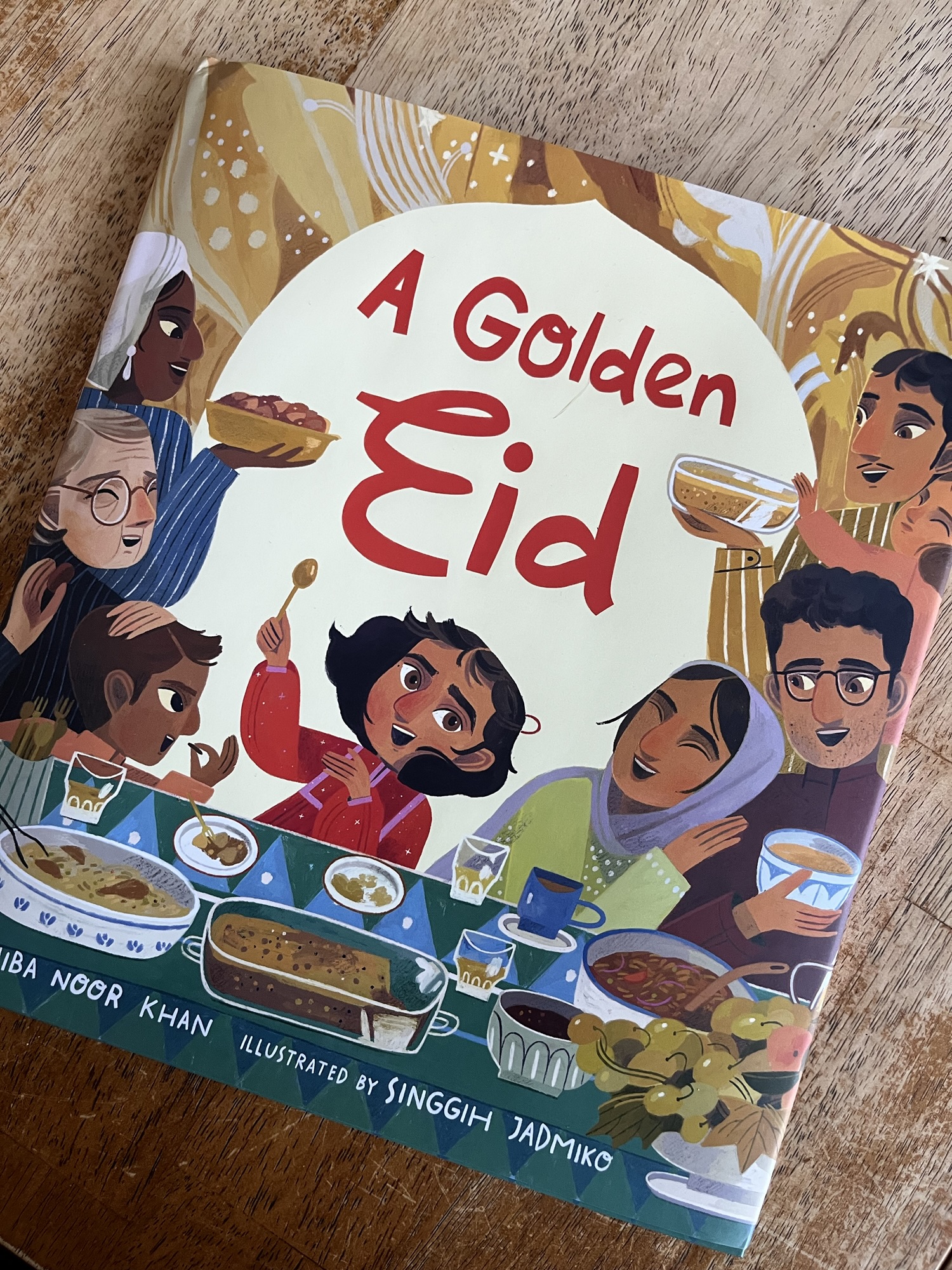
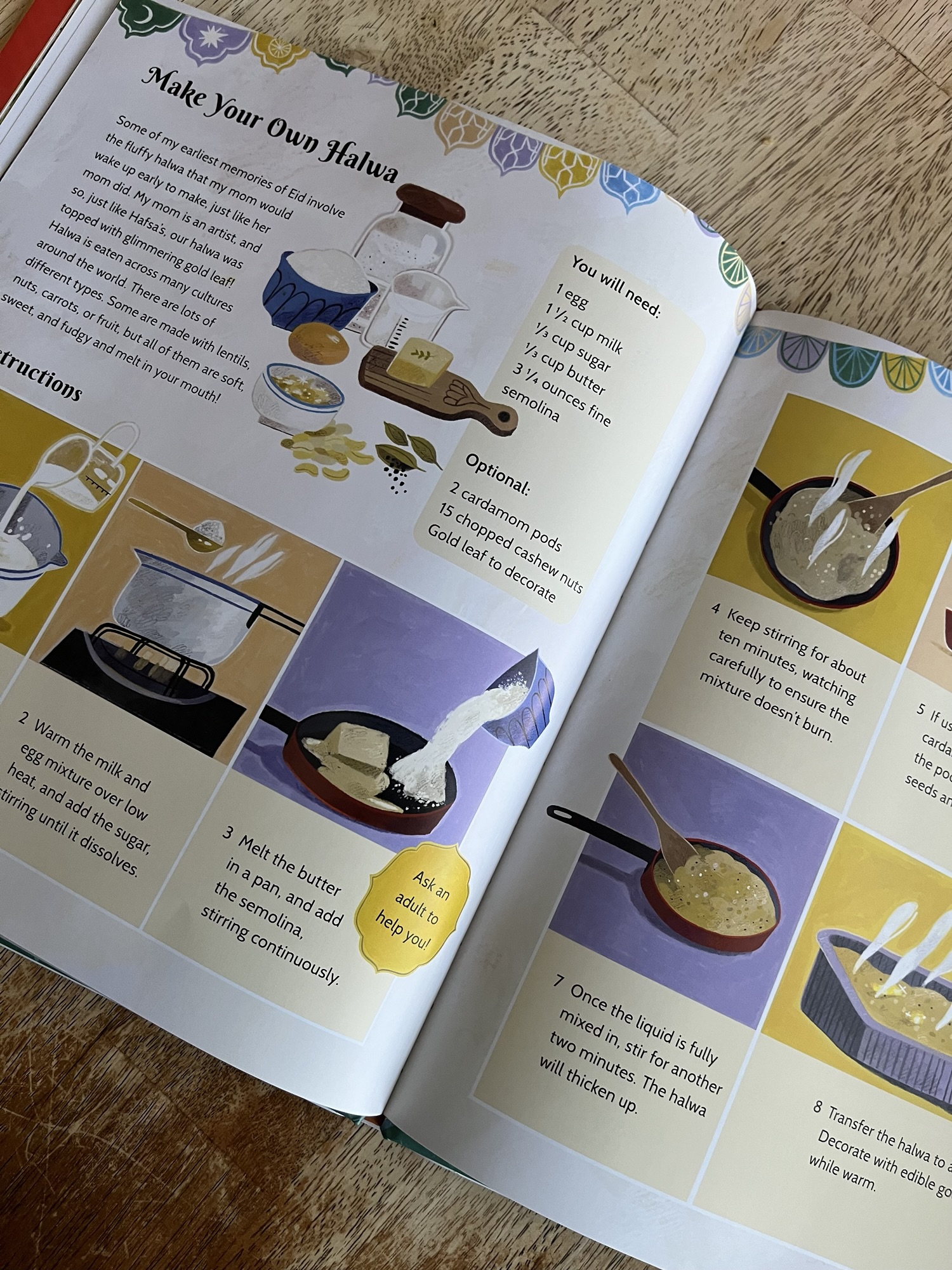
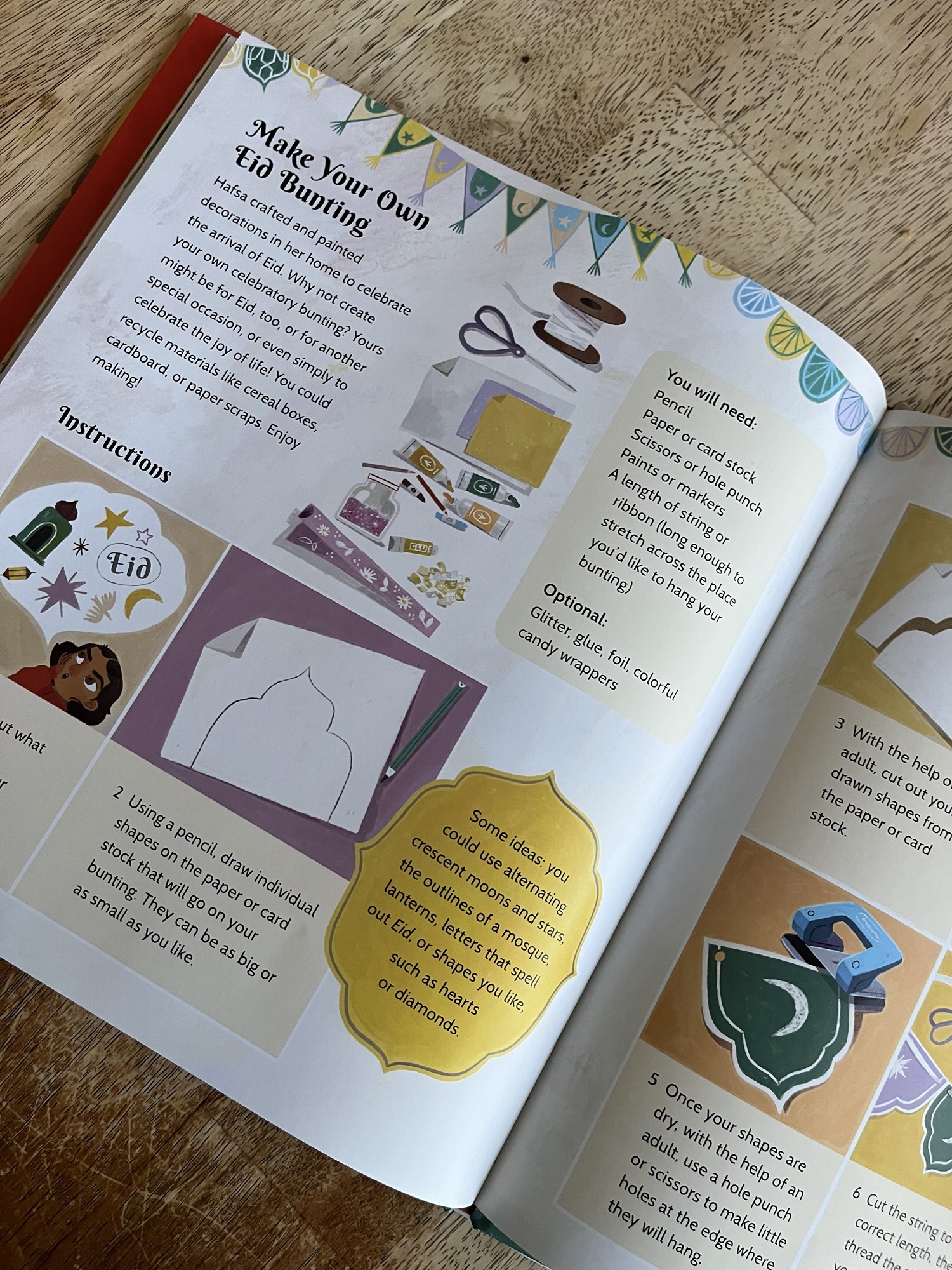
This 32 page picture book about Eid al Fitr, starts as many do with the last night of Ramadan carrying into the day of celebration itself. The book is plot based with a soft moral message to be generous with others. It refrains from info dumping, but does show reading Quran, making duas, and going to the mosque. I think if you are looking for a new book to read to a non Muslim class or group, the book is sufficient in opening a window and showing a relatable family celebrating Eid with hints of culture, religion, and community, but unfortunately there are predictable tropes and since I read a lot of Eid books, it ultimately doesn’t make the book stand out for me. The focus is on food, and how the family comes together to make the beloved halwa, and then when food is taken to the neighbors, the protagonist, Hafsa, shares her beloved treat by choice, yet is sad none-the-less that there in no longer any for her. That is until everyone shows up to return the favor and make Eid better than she could have imagined. The book features a two page spread of a recipe for halwa at the end, as well as directions to make your own Eid bunting. The illustrations are sweet and will engage readers with the book’s 11 x 10 inch size in read alouds or at bedtime.
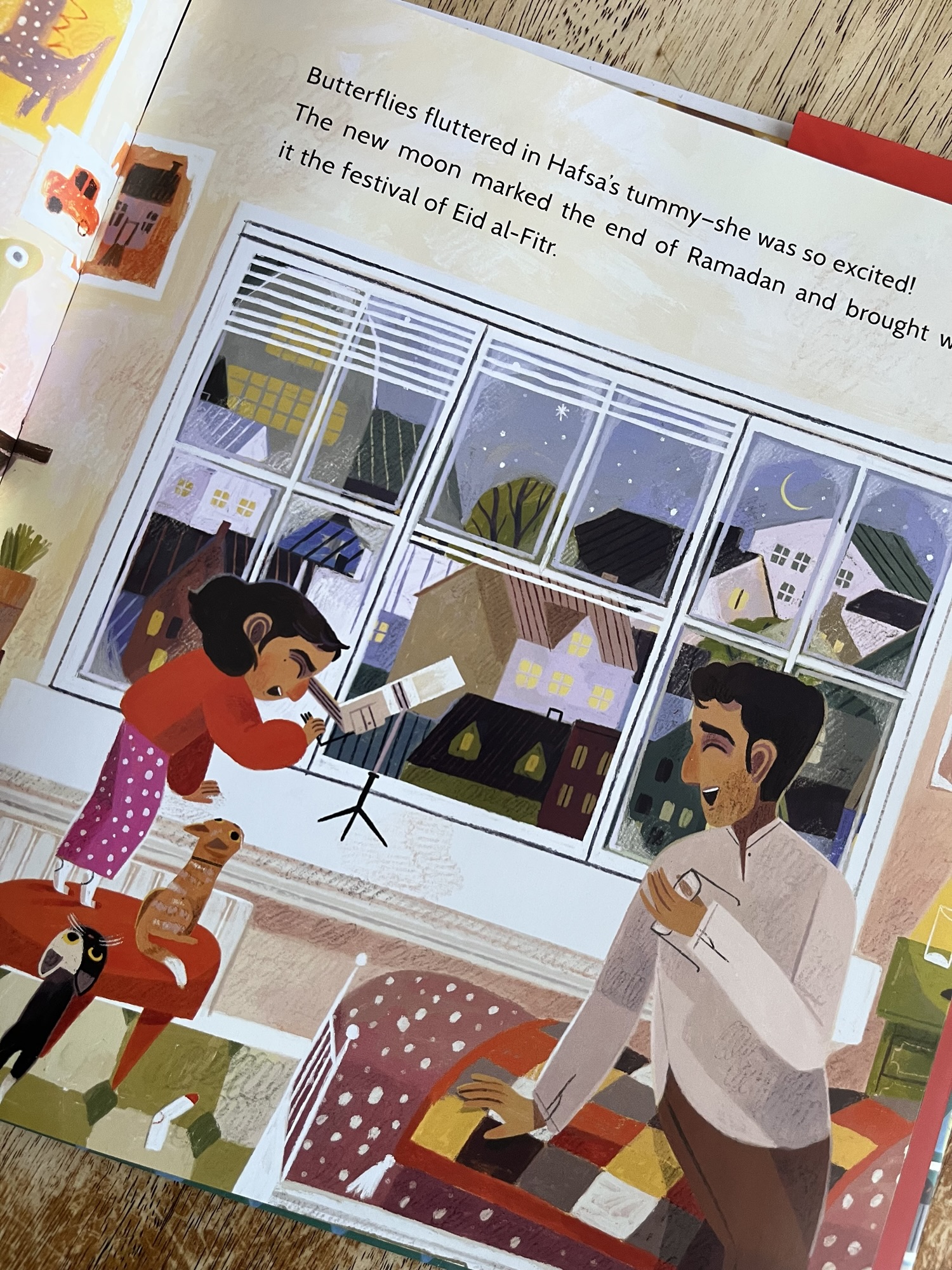
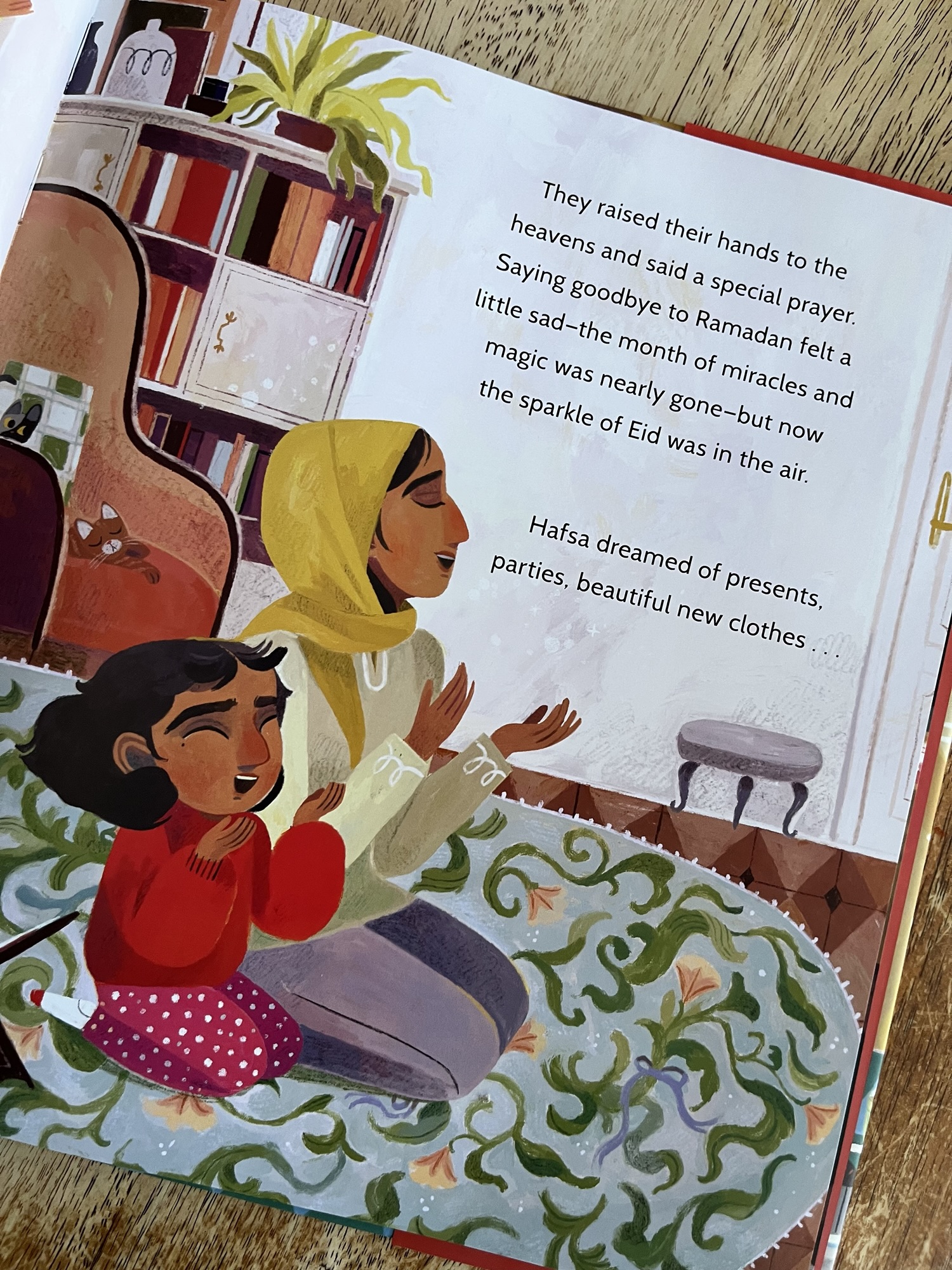
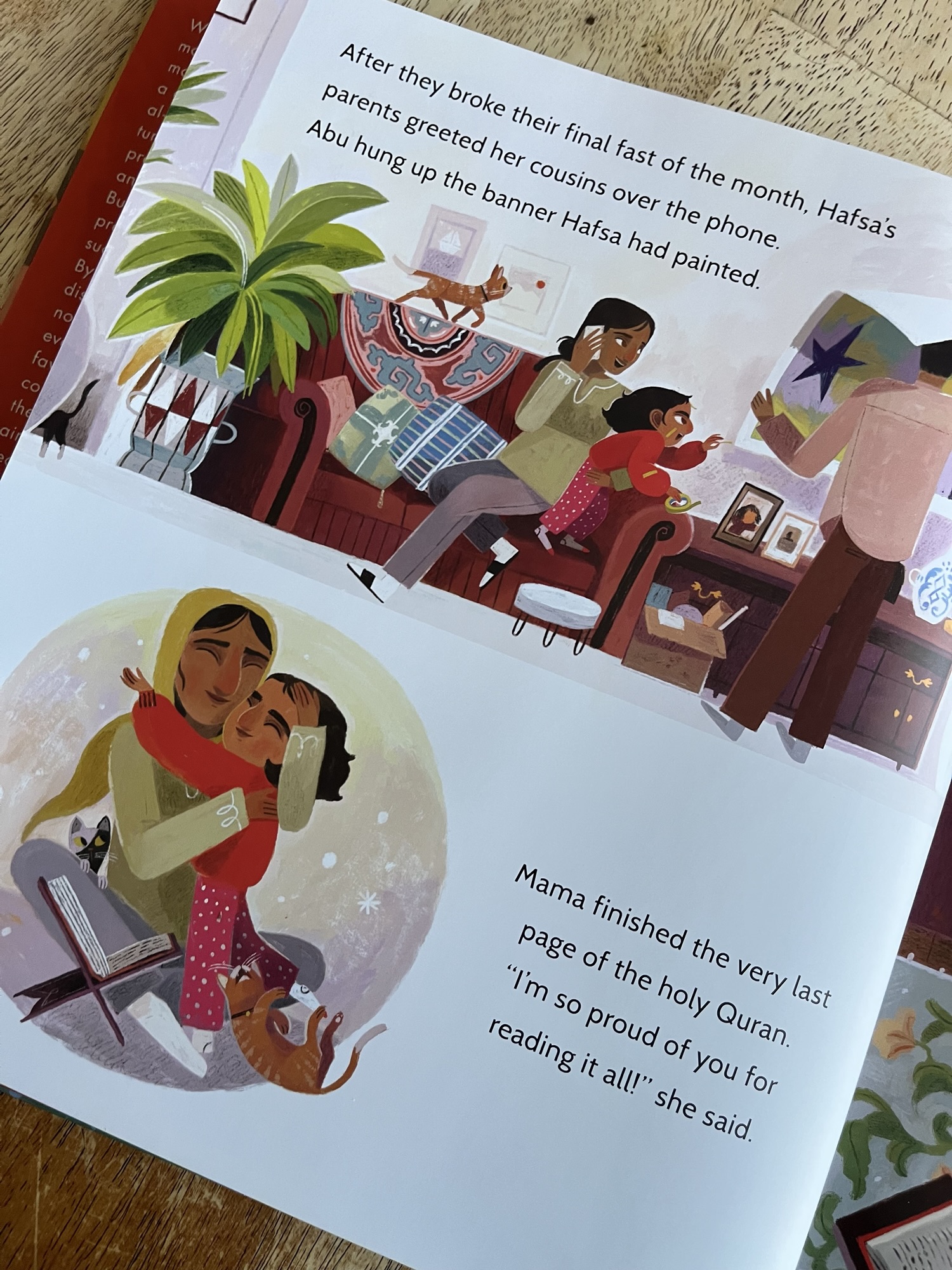
The book starts with Hafsa peering through her telescope looking for the Eid moon. Once spotted, cousins are called, Quran is finished, duas are made, and the feast preparations begin. It is a lot of work, and when they are done, Abu starts packing everything up.
Shocked, Hafsa is reassured that some halwa will be kept to be enjoyed on Eid, and then Abu and her are off to share with friends and neighbors. When they get to Mrs. Adams’ house, Hafsa notices the cupcakes have run out, and runs home to get the halwa to give to their neighbor.
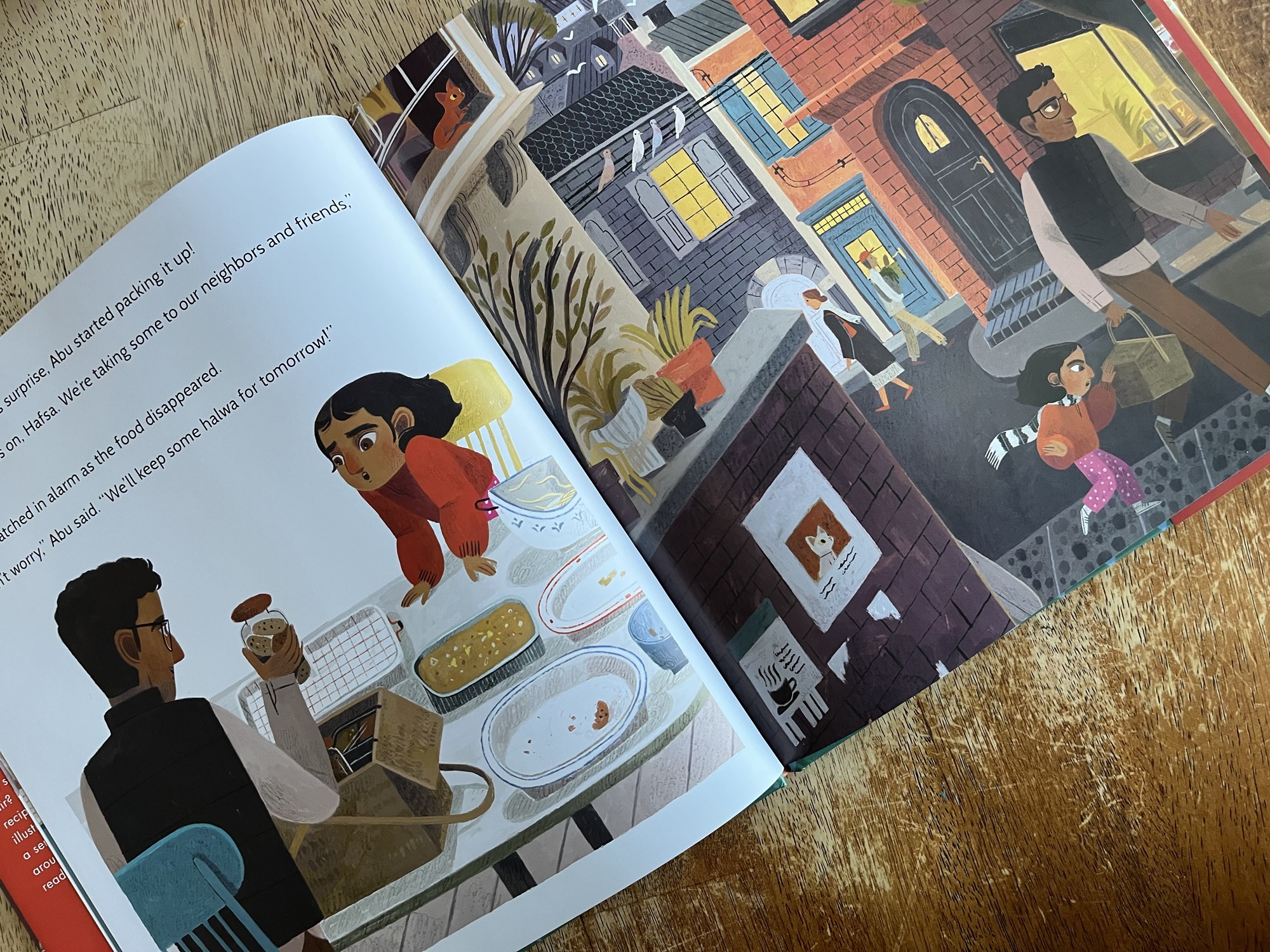
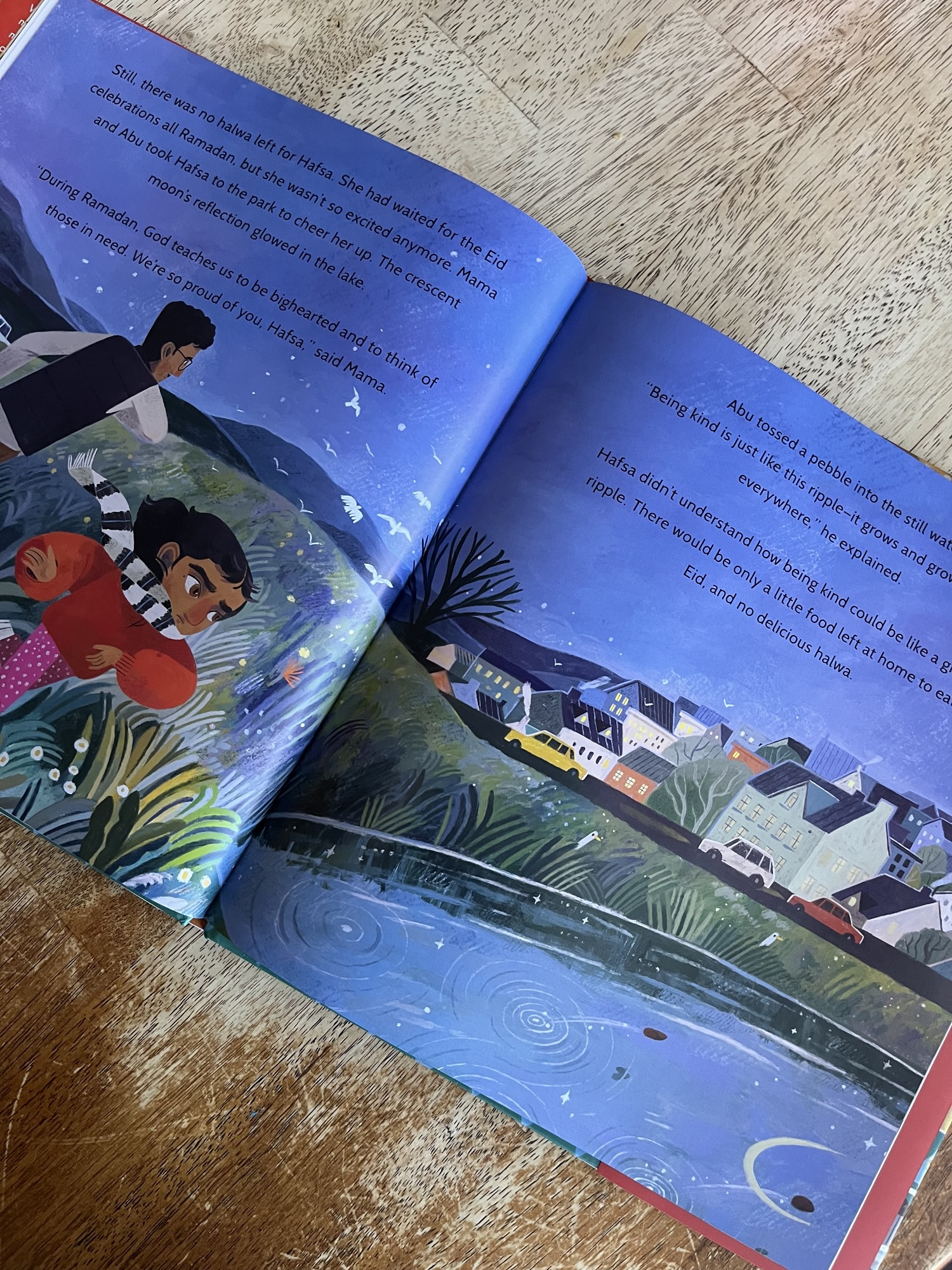
Later the family heads to the park, and a sad Hafsa is reminded that, “During Ramadan, God teaches us to be bighearted and to think of those in need.” Even the next morning though, as se puts on her fancy clothes and heads to the mosque she is feeling sad about her dessert.
Back at home as friends and family start pouring in, they come with full arms and big hearts, and Hafsa ends up with six different types of halwa to delight in.
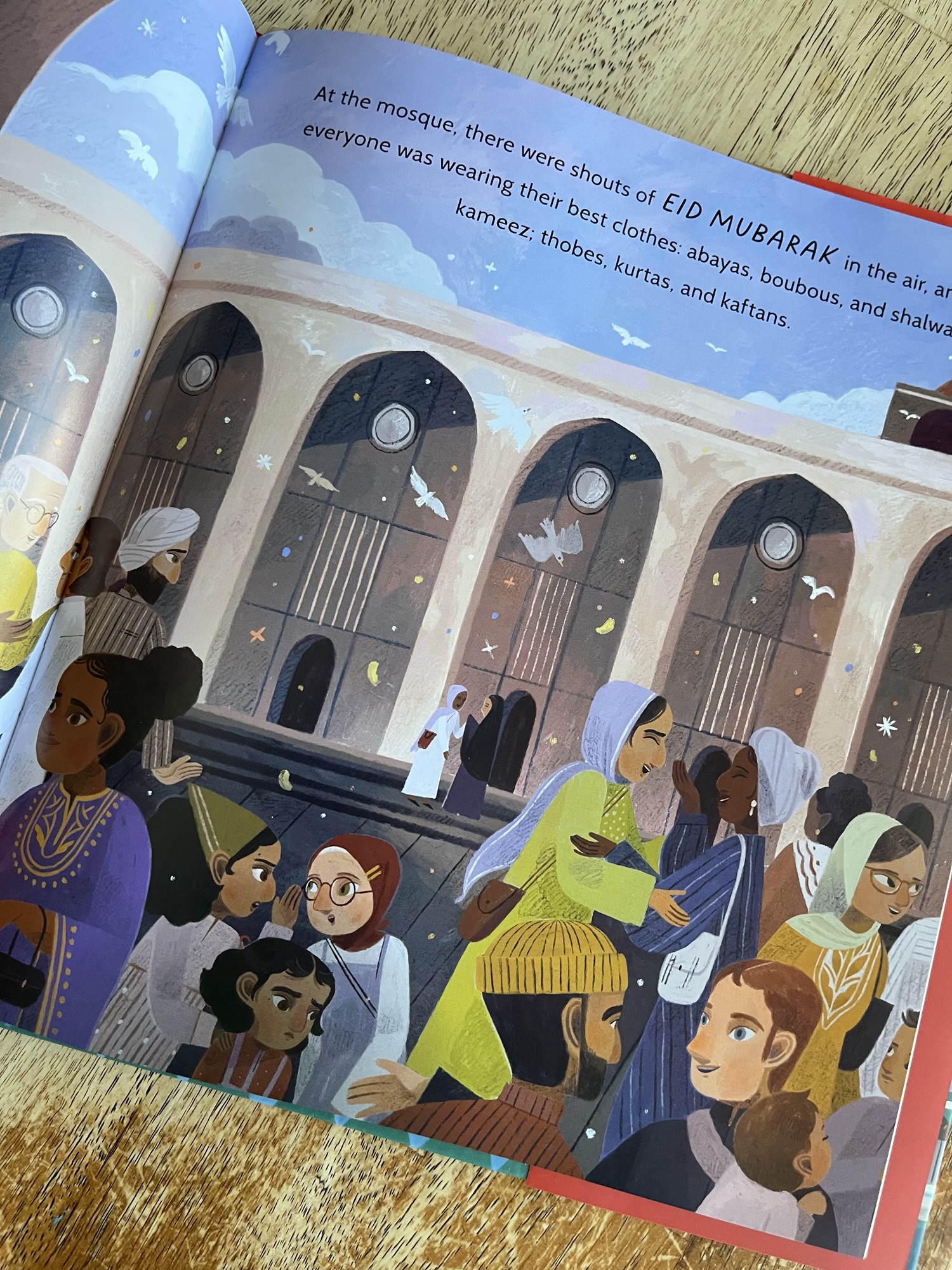
I like that mom and dad are both involved in the food preparation and that religion is not completely sidelined. I feel like their is a bit of a disconnect with what Mrs. Adams’ need is and was surprised little Hafsa could run back home and then come again independently. I did appreciate that at the start when looking through the telescope the sky was not dark as the Eid moon shows for a short time, but was surprised later when hours after dark they are playing in the park under the crescent moon. That spread at the park, to me honestly didn’t seem needed, I know it was to share the moral messaging, but I felt it just indulged the food aspect of a very religious and sacred holiday, and made Hafsa seem uncharacteristically whiney about not getting a dessert, when up until that point she had shown some independence and maturity. It is one thing to be sad, but belaboring it, shifted the focus of what could have been a standout book.

 Islamic School Librarian